Knowing how to fix pallet jack problems quickly keeps your material flow safe, efficient, and profitable. This guide walks through core mechanics, typical hydraulic failures, and clear repair steps so you can diagnose issues instead of guessing. You will also see how maintenance schedules, repair-versus-replace decisions, and simple digital tools cut downtime and lifecycle cost. Whether you maintain a single jack or a fleet, you will get a structured, practical roadmap for reliable operation.
Understanding Pallet Jack Mechanics And Failure Modes

Key components of a manual pallet jack
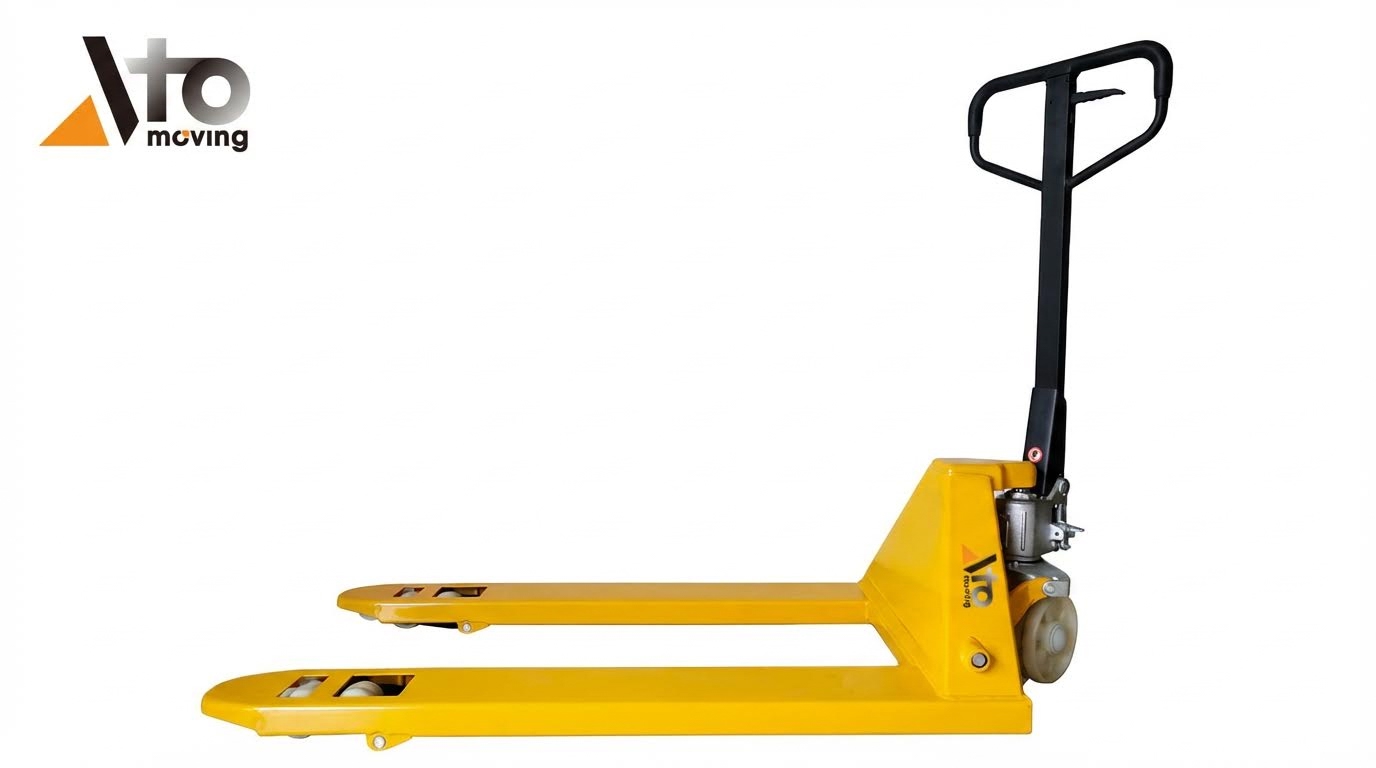
Before you learn how to fix pallet jack faults, you need a clear picture of its main mechanical and hydraulic parts. These components work together to convert your handle force into lifting force under the forks.
- Handle and control lever
- Provides steering and pumping action.
- Control lever selects RAISE, LOWER, or NEUTRAL (drive) positions.
- Linkage connects to the pump and lowering valve to open/close oil passages.
- Steer wheels and axle
- Carry most of the jack’s own weight and part of the load.
- Allow tight turning in aisles.
- Wear, flat spots, or debris here increase push–pull force and can mimic “hydraulic problems.”
- Forks and fork tips
- Support the pallet and transfer load into the frame.
- Fork height range is typically from just above floor level to around 180–200 mm, depending on model.
- Bent or twisted forks are a structural defect, not a hydraulic issue, and usually justify replacement rather than repair.
- Load rollers
- Located near fork tips to roll under pallets.
- Take high impact when entering or exiting pallets.
- Damage or seized bearings increase drag and can overload the hydraulic system.
- Hydraulic pump unit
- Converts handle strokes into oil flow at pressure.
- Contains pump pistons, check valves, reservoir, and seals.
- Internal leakage here is a prime cause of “won’t lift” or “won’t hold load” complaints. Hydraulic lift system failures typically involve loss of pressure, internal leakage, contamination, or mechanical misadjustment.
- Lift cylinder and piston rod
- Transforms oil pressure into linear motion.
- Rod movement drives the scissor or link mechanism that raises the forks.
- Worn rod seals cause external leaks and loss of holding pressure.
- Lowering valve and return circuit
- Controls oil return from the cylinder back to the reservoir.
- Actuated by the control lever and linkage.
- Misadjustment here can cause both failure to lift and failure to lower. If the pallet jack fails to lift or lower the forks, the lowering valve may need adjustment.
- Chassis, linkages, and pivot pins
- Steel frame ties all components together and carries the load path.
- Link bars and pivot pins transfer cylinder motion to fork movement.
- Lack of lubrication accelerates wear and creates play, which can reduce lifting height and cause uneven fork movement. Monthly inspections are recommended to replenish lubrication at key points such as wheels, axles, and grease fittings.
Typical failure modes by component
- Hydraulic pump / cylinder – loss of lift, can’t hold load, slow or spongy lifting.
- Lowering valve / linkage – jack won’t lift (valve stuck open) or won’t lower (valve stuck closed or over‑tightened).
- Seals and O‑rings – external oil leaks, gradual sink under load, air ingress.
- Wheels and rollers – high rolling resistance, vibration, track marks, difficulty starting motion.
- Frame and forks – visible bending, cracks, misalignment, unsafe to repair in many cases.
How hydraulic lift circuits generate pressure

Understanding the hydraulic circuit is the foundation of knowing how to fix pallet jack lifting issues. The system is a simple, closed loop that uses small handle forces to create high pressure in the lift cylinder.
| Hydraulic element | Function in the circuit | Typical failure effect |
|---|---|---|
| Reservoir | Stores hydraulic oil and supplies the pump inlet. | Low level causes loss of pressure and failure to lift. Low hydraulic fluid prevents the pump from generating sufficient pressure. |
| Hand pump | Moves oil from reservoir to lift cylinder on each handle stroke. | Internal leakage or wear leads to weak or no lifting. |
| Inlet and outlet check valves | Force oil flow in one direction and trap pressure in the cylinder. | Leaking check valves cause the forks to drift down or never reach full height. |
| Lift cylinder | Converts oil pressure into upward force on the forks. | Worn seals or scored bore reduce effective pressure and allow sink‑down. |
| Lowering valve | Opens to return oil from cylinder to reservoir for lowering. | Stuck or misadjusted valve can hold forks up or prevent lifting. |
| Air in oil | Compressible volume inside the circuit. | Spongy feel, slow lift, or complete failure to lift until bled. Trapped air is a frequent cause of pallet jacks not lifting or feeling spongy. |
When you pump the handle in the RAISE position, the pump piston draws oil from the reservoir on the backstroke and pushes it through a check valve into the lift cylinder on the downstroke. Because oil is nearly incompressible, pressure rises quickly as the cylinder meets load, multiplying your input force.
In the LOWER position, the control linkage opens the lowering valve. This creates a return path so pressurized oil flows back into the reservoir, and gravity plus load weight bring the forks down in a controlled way. If the valve is partially open even in the RAISE position, pressure bleeds off and the jack will not lift properly.
Several common failure modes disrupt this pressure generation process:
- Low or incorrect hydraulic oil
- Insufficient volume lets the pump suck air, causing cavitation and pressure loss.
- Too high viscosity oil increases flow resistance and slows lifting. Specialized hydraulic oil with viscosity around ISO VG32 is typically required; higher viscosity may hinder the lifting mechanism.
- Trapped air in the hydraulic circuit
- Air compresses under load instead of transmitting force efficiently.
- Handle feels bouncy or “spongy,” and forks may refuse to rise under load.
- Bleeding restores solid oil columns. To resolve, place the control lever in the release position and pump the handle 10–20 times to displace air back to the reservoir.
- External hydraulic leaks
- Oil escapes at seals, fittings, or hose connections, reducing available fluid and letting air in.
- Visible wet areas around pump body, cylinder gland, or connections are key clues. External leaks reduce effective fluid volume and introduce air, causing spongy lifting and capacity loss.
- Internal leakage through worn seals and O‑rings
- Oil bypasses pistons or valves inside the unit instead of building pressure.
- Forks may lift with no load but sink or stall with rated load.
- Seal kits restore tightness. Worn O-rings and seals lead to internal leakage and loss of holding pressure; they should be replaced and lubricated with compatible hydraulic oil.
- Contamination and misadjusted linkage
- Dirt in valves prevents full sealing, causing slow leaks and drift.
- Incorrect linkage length can hold the lowering valve slightly open even in RAISE.
- Regular inspections and correct valve adjustment are essential to stable pressure.
Why this matters for real-world troubleshooting
- If the jack won’t lift at all, suspect low oil, major air ingress, or a lowering valve held open.
- If it lifts but won’t hold, focus on internal leaks in cylinder seals, check valves, or O‑rings.
- If it feels spongy or slow, prioritize bleeding air and checking for external leaks.
- Combining visual inspection with an understanding of the pressure path lets you pinpoint the root cause quickly and choose the right repair instead of guessing.
Step‑By‑Step Repairs For Common Pallet Jack Problems
This section shows you exactly how to fix pallet jack hydraulic faults in a safe, methodical way. Follow these steps before you decide to replace the unit, and always work with the forks fully lowered and the jack unloaded.
Pallet jack won’t lift: hydraulic troubleshooting
When a pallet jack will not lift, the cause is almost always in the hydraulic circuit or the lowering valve adjustment. Use this structured workflow so you do not miss obvious faults.
Safety and tools checklist before starting
- Unload the pallet jack and fully lower forks.
- Use wheel chocks to prevent rolling.
- Wear eye protection and gloves when working with hydraulic oil.
- Have rags, drip tray, metric spanners, hex keys, and a flashlight ready.
Start with simple external checks, then move to fluid level and valve settings.
- Check control lever and linkage operation
- Move the handle through LOWER, NEUTRAL/DRIVE, and RAISE positions.
- Confirm the lever returns positively to each detent.
- Inspect the linkage rods and pins to the valve block for bends, missing clips, or excessive play, which can prevent the pump check valves from closing and opening correctly. Hydraulic lift failures often involve misadjusted handle linkage and valve train.
- Verify hydraulic oil level
- Lower forks completely.
- Access the reservoir fill plug on the pump body.
- Remove plug and check level; it should sit roughly 20–25 mm below the top of the fill port. Low hydraulic fluid prevents the pump from generating pressure.
- If low, top up with the specified hydraulic oil (commonly ISO VG 32–46), then bleed air from the system after refilling.
- Inspect for external leaks
- Check pump body, hose joints, cylinder gland, and around the lowering valve for wet areas or drips.
- Any visible leak means loss of effective fluid volume and possible air ingress, which causes weak or no lift. External hydraulic leaks reduce usable oil volume and introduce air.
- Bleed air from the hydraulic circuit
- Place operating lever in LOWER / RELEASE position.
- Rapidly pump the handle 10–20 times to circulate oil and push air back to the reservoir. Trapped air is a frequent cause of jacks that will not lift or feel spongy.
- If fitted with a bleed screw, open it slightly until a steady, bubble‑free oil stream appears, then close firmly.
- Adjust the lowering valve (if jack still will not lift)
- With forks lowered, locate the lowering valve adjustment screw on the pump block.
- If the jack will not lift, the valve may be held slightly open; back the screw off a small amount (typically 1/8–1/4 turn) and test lift. Incorrect lowering valve adjustment can prevent lifting or lowering.
- Adjust in small steps and re‑test to avoid blocking the lowering function.
- Assess internal leakage and seal condition
- If the jack lifts slightly but cannot reach full height, or the load slowly sinks, suspect worn O‑rings or seals causing internal bypass.
- At this point, a seal kit and partial pump/cylinder strip‑down are usually required. Degraded O‑rings and seals lead to loss of holding pressure.
Use this sequence every time you consider how to fix pallet jack lifting problems; it prevents random part swapping and reduces downtime.
Bleeding trapped air from the hydraulic system
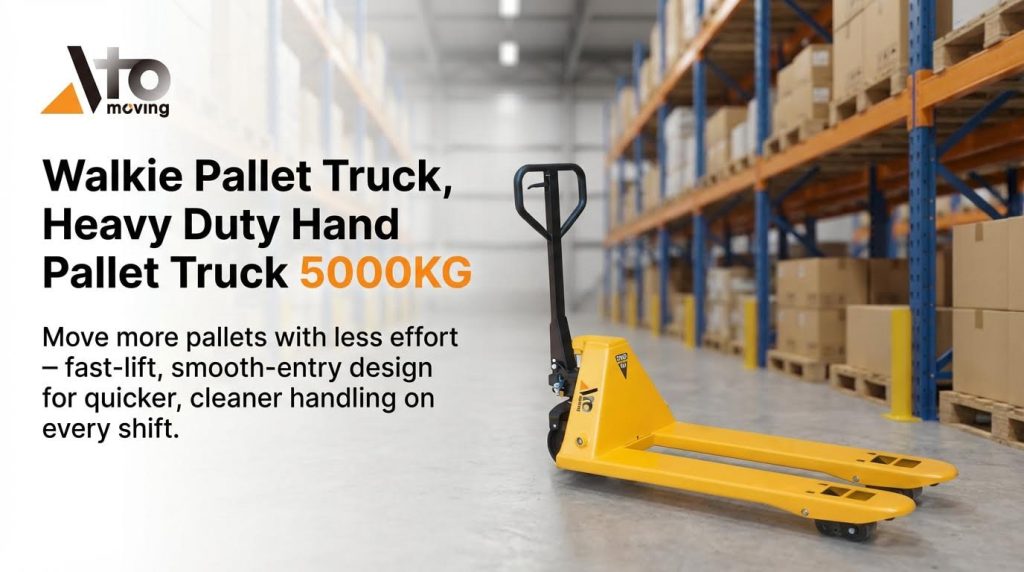
Air in the hydraulic circuit makes the pallet jack feel spongy, reduces capacity, and often stops the forks from rising at all. Bleeding is a low‑skill, high‑impact task that should be done after any oil refill, seal change, or transport where the jack lay on its side.
| Symptom | Likely cause | Bleeding action |
|---|---|---|
| Handle pumps easily but forks do not rise | Large air pocket in pump or cylinder | Cycle handle with lever in LOWER position 10–20 strokes |
| Forks rise slowly and feel bouncy under load | Smaller air bubbles mixed in oil | Repeat bleed cycles and check fluid level |
| Forks rise, then drift down with no visible leak | Possible internal leak plus air | Bleed system first; if issue remains, inspect seals and valves |
- Standard bleeding procedure (no bleed screw)
- Place operating lever in the full LOWER / RELEASE position.
- With forks unloaded, pump the handle up and down 15–20 times.
- This cycles oil through the valve block and pushes air back into the reservoir. Pumping with the control lever in release position is a standard air‑bleed method.
- Re‑test lifting with a light load; repeat if the action still feels spongy.
- Bleeding with a dedicated bleed screw
- Locate the bleed screw on the pump or cylinder (usually a small hex or slotted screw).
- Place a container under the screw to catch oil.
- Set lever to LOWER, then crack the screw open slightly.
- Slowly pump the handle until a steady, bubble‑free oil stream flows out, then close the screw firmly. A steady, bubble‑free stream indicates air removal.
- Confirm and stabilize fluid level after bleeding
- Lower forks fully and re‑check reservoir level.
- Top up only to the recommended height (around 20–25 mm below fill port) to leave expansion space.
- Use the specified hydraulic oil grade; mixing random oils can change viscosity and reduce performance. Using higher‑viscosity oil can hinder lifting.
When repeated bleeding does not solve the problem
- If the jack still will not lift after several bleed cycles and correct oil level, suspect internal leakage across seals or valves.
- Check for slow fork drop under static load, which indicates bypass past piston or check‑valve seals.
- Plan for a seal kit and internal inspection rather than further bleeding attempts.
Fixing external leaks, seals, and O‑rings
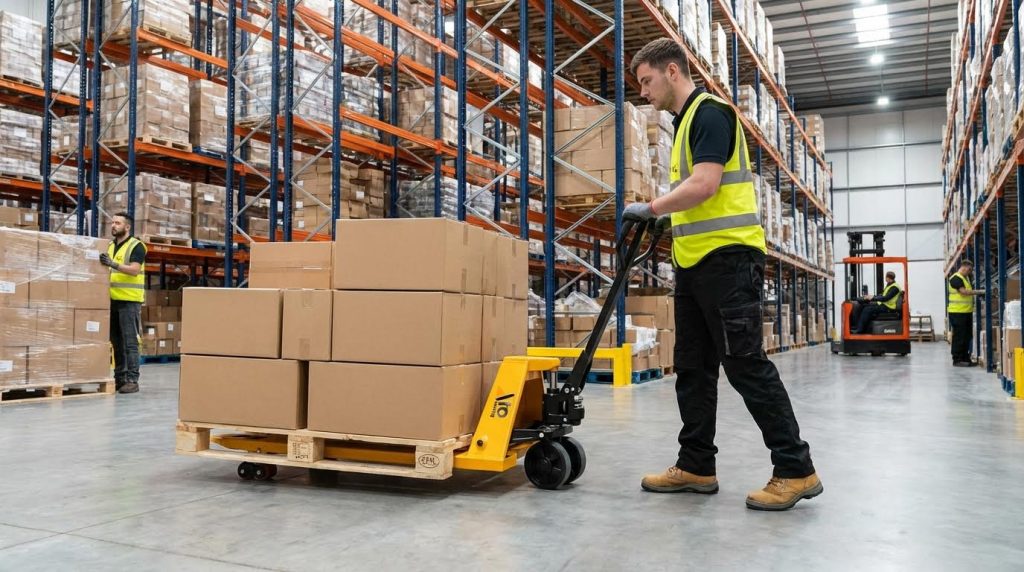
External leaks waste oil and pull air into the system, while worn seals and O‑rings cause internal bypass and loss of holding pressure. Correcting these issues is a core part of how to fix pallet jack hydraulic failures and restore safe capacity.
| Leak location | Typical cause | Primary repair action |
|---|---|---|
| Hose connections / unions | Loose fitting or damaged copper / sealing washer | Tighten to spec; replace washer or hose if damaged |
| Pump body joints | Gasket or O‑ring degradation | Strip joint, clean faces, fit new gasket / O‑ring |
| Cylinder rod gland | Rod seal wear or rod scoring | Replace gland seal; inspect rod, polish or replace if badly scored |
| Lowering valve stem | Stem O‑ring wear or contamination | Remove valve, replace O‑rings, clean seat |
- Locate and classify the leak
- Clean suspected areas with a rag so fresh oil traces become visible.
- Operate the jack through several lift / lower cycles and watch for new wet spots or drips.
- Differentiate between sweating (minor seepage) and active dripping, which indicates a more urgent seal or hose failure. External leaks at pump body, hose connections, and cylinder gland are common.
- Correct fittings and minor thread leaks
- Gently tighten leaking hose or pipe fittings; do not overtighten and strip threads.
- Replace damaged copper or soft sealing washers at banjo or flare fittings.
- For slight thread seepage, use an approved hydraulic thread sealant where allowed, then re‑test under load. Approved hydraulic sealants can restore integrity on minor thread leaks.
- Replace worn O‑rings and seal kits
- Obtain the correct seal kit for the pump and cylinder model.
- Strip only one sub‑assembly at a time (e.g., pump block, then cylinder) to avoid mixing parts.
- Remove old O‑rings and seals, clean grooves and metal surfaces thoroughly.
- Lightly lubricate new seals with compatible hydraulic oil before installation to prevent damage during assembly. Technicians should lubricate replacement O‑rings with compatible hydraulic oil.
- Refill, bleed, and static‑load test
- After reassembly, refill the hydraulic reservoir to the correct level with the specified oil.
- Bleed air by cycling the handle with the lever in LOWER, as described earlier.
- Perform a static load test: lift a rated load, hold it for several minutes, and check for any fork drop or new leaks. Static load tests confirm seal replacement success.
When to stop repairing and consider replacement
- If the hydraulic unit shows severe corrosion, bent rods, or repeated leak history, full replacement is often more economical than another rebuild.
- Factor in technician time, downtime, and the risk of recurring failures when comparing repair versus replacement. Rebuilding is suitable only when structural integrity remains sound.
- If in doubt, document findings and consult your maintenance standards or a qualified technician before putting the jack back into service.
Optimizing Reliability, Maintenance, And Repair Decisions
Preventive maintenance schedules and lubrication points
Preventive maintenance is the cheapest way to reduce downtime and avoid learning how to fix manual pallet jack failures the hard way. A simple, repeatable schedule keeps hydraulics, wheels, and linkages in working condition and extends service life. Use time-based checks plus quick pre‑shift inspections.
Recommended maintenance intervals (overview)
Intervals below assume normal indoor use. Increase frequency for wet, dirty, cold, or multi‑shift operation.
| Task group | Typical interval | Main checkpoints |
|---|---|---|
| Pre‑shift / daily | Before each use | Visual damage, leaks, bent forks, smooth steering and lifting, correct lowering |
| Monthly inspection | Every 4 weeks | Hydraulic leaks, wheel and axle cleaning, lubrication of pivots and linkages, chain position |
| Hydraulic oil check | Every 6 months | Oil level and condition, contamination, correct grade |
| Hydraulic oil change | 12 months (typical) | Drain and refill with specified hydraulic oil, then bleed air |
Key preventive maintenance actions focus on cleanliness, correct oil level, and lubrication of all moving pivots. These directly reduce common hydraulic failures like loss of lift, spongy feel, or slow lowering. Regular checks for leaks and fluid level were recommended as monthly tasks.
Hydraulic oil level and change – best practice
Hydraulic oil tasks are critical because low or degraded oil directly affects lifting pressure.
- Check oil level with forks fully lowered and truck level.
- Typical level: just below the bottom or 20–25 mm under the top of the fill port, depending on design. Low fluid was identified as a common cause of loss of lift.
- Use the specified hydraulic oil, typically ISO VG 32–46 or similar low‑viscosity oil. Guidance suggested oil around 30 cSt at 40°C and roughly 0.4 L capacity.
- Change oil at least annually, or sooner if it looks milky, dark, or contaminated.
- After refilling, always bleed air by cycling the handle with the lever in the LOWER or RELEASE position.
Correct lubrication cuts friction and wear in the steering head, pump linkage, and wheel axles. Lack of grease here often shows up as stiff steering, uneven lowering, or noisy travel long before users ask how to fix manual pallet jack performance.
- Lubrication points (typical):
- Steer wheel bearings and axle.
- Load wheel axles and bushings.
- All pivot pins in the pump linkage and control handle.
- Grease fittings (zerks) on axles or linkages, if present.
- Chain pivot and anchor points.
- Lubrication schedule:
- Re‑grease monthly under normal use. Monthly lubrication of wheels, axles, and grease points was recommended.
- Lubricate immediately after pressure washing or exposure to rain to prevent corrosion.
Wheel, chain, and safety checks
These quick checks prevent many failures that later look like hydraulic problems.
- Clean wheels regularly to remove string, film, or debris that can jam or flat‑spot wheels. Wheel cleaning and avoiding curbs were highlighted to prevent cracks and damage.
- Inspect the chain so it sits correctly on its sprockets and anchors; mis‑positioned chain can stop forks from lowering properly. Chain misalignment was noted as a common cause of lowering issues.
- Check the lowering valve function. If lift or lower is inconsistent, a small adjustment to the valve screw can restore operation, then mark its position. Adjustment of the lowering valve screw was recommended when lift or lowering failed.
- Store trucks unloaded with forks fully lowered to protect hydraulic seals and reduce pressure on components. Storing in the lowered position was advised for longer life.
Repair vs. replace: cost, safety, and lifecycle
When a jack fails, deciding whether to repair or replace is as important as knowing how to fix manual pallet jack components. Use a structured decision rule that weighs safety, repair cost, downtime, and remaining life. This avoids pouring money into equipment that will soon fail again.
| Factor | Favors repair | Favors replacement |
|---|---|---|
| Safety / structural integrity | Frame, forks, and handle are straight, no cracks or severe corrosion. | Cracked or bent forks, twisted frame, heavy rust, or damaged welds. |
| Hydraulic condition | Single leak, worn seals, or low pressure but cylinder rod and housing are sound. | Bent rod, pitted chrome, repeated leaks, or severe corrosion on pump or cylinder. |
| Cost vs. new | Total repair cost (parts + labor + downtime) < ~50–60% of new unit price. This 50–60% threshold was recommended for industrial equipment decisions. | Repair cost > ~60% of new, or repeated failures make total cost of ownership higher than replacement. |
| Age / lifecycle stage | Operating life < ~70% of expected hours; otherwise in good condition. Repair was cited as reasonable when equipment had used about 70% of its life. | Wear > 80% of life; metal clearances and wheels are near limits; frequent breakdowns. |
| Parts availability | Seal kits, wheels, and key components are readily available with short lead times. | Major parts obsolete or on long lead times, causing extended downtime. |
| Sustainability / ESG | Repair reduces waste and avoids emissions from building and shipping new units. Repair was highlighted as beneficial for reducing landfill and emissions. | Replacement may still be chosen if safety or compliance is at risk. |
Most hydraulic issues on structurally sound pallet jacks are economical to repair. Replacing O‑rings and seals, refilling and bleeding hydraulic oil, or tightening fittings usually costs far less than a new unit and restores full function. Seal replacement and air bleeding were presented as standard fixes for loss of lift.
- Choose REPAIR when:
- The frame and forks pass a visual and load test.
- Failures are limited to hydraulics (leaks, trapped air, worn seals) or wheels.
- Repair cost (parts + labor + downtime) is comfortably below 50–60% of a new jack.
- Parts are easy to source and your team already knows how to fix manual pallet jack hydraulics.
- Choose REPLACE when:
- There is any doubt about fork or frame strength, or visible cracks or bending.
- The jack has a history of repeated leaks or failures even after proper repair.
- Wear is near end of life and breakdowns are becoming frequent.
- Downtime cost from another failure would exceed the savings from repairing again.
Total cost of ownership (TCO) checklist
To compare repair vs. replace, consider total cost over the remaining life, not just this week’s invoice.
- Direct repair cost: parts, seals, wheels, oil, labor.
- Downtime cost: lost moves per hour × hours out of service.
- Future failures: probability of another breakdown in the next year.
- Safety and compliance: risk of injury, claims, or regulatory issues.
- Disposal and purchase costs: scrap value of old jack and price of new unit.
- Energy / ergonomic cost: newer designs may roll easier and reduce strain.
Similar TCO logic was used in industrial equipment decisions, where frequent breakdowns or outdated technology pushed the choice toward replacement. Total cost of ownership was recommended as the comparison basis.
Using digital tools for predictive maintenance
Digital tools turn scattered repair notes into data that shows exactly when and how to fix manual pallet jack fleets for minimum downtime. Even simple apps or spreadsheets can track failures and reveal patterns by model, location, or operator. Over time, this supports predictive maintenance instead of reactive firefighting.
- Core digital tools to use:
- Computerized maintenance management systems (CMMS) for work orders, asset history, and parts.
- Mobile inspection apps that let technicians log checks and attach photos on the floor.
- QR codes or asset tags on each pallet jack for quick identification and history lookup.
When technicians record every leak, seal change, and oil top‑up, you can calculate time‑between‑failures and identify weak points. Digital logging of failures and inspection records was recommended to support predictive strategies.
| Data to capture | How it helps | Example predictive action |
|---|---|---|
| Failure type (leak, no lift, no lower, wheel damage) | Shows dominant failure modes and bad actors. | Standardize seal kits and wheel types for faster, cheaper repairs. |
| Operating hours or months since last repair | Reveals average time‑between‑failure for hydraulics and wheels. | Plan seal replacements just before typical failure interval. |
| Location / environment | Identifies harsh areas (cold rooms, wet docks, debris‑heavy zones). | Increase inspection frequency or upgrade wheel and seal materials in those zones. |
| Technician notes and photos | Improves root‑cause analysis and remote support. | Spot patterns like recurring contamination sources or misuse. |
From preventive to predictive maintenance
Digital history lets you move beyond fixed calendars.
- Use CMMS reports to find jacks with repeated hydraulic issues.
- Flag units with above‑average repair frequency for deeper inspection or replacement.
- Define triggers (for example, third leak in 12 months) that automatically prompt a replace‑instead‑of‑repair decision.
- Schedule proactive seal and wheel changes at 80–90% of their observed life instead of waiting for failure.
Similar approaches in other industrial sectors used repair records to enhance predictive strategies and reduce total cost. Final Thoughts On Safe, Cost‑Effective Pallet Jack Repair
Safe, cost‑effective pallet jack repair depends on understanding how each component carries load and pressure. When you link mechanical checks with hydraulic theory, you diagnose faults quickly instead of swapping parts. Clear steps for oil level checks, bleeding air, seal replacement, and valve adjustment turn “no lift” complaints into predictable repair tasks.
Preventive maintenance then locks in these gains. Regular lubrication, leak checks, and wheel cleaning protect the hydraulic circuit from contamination and overload. Structured repair‑versus‑replace rules keep technicians from investing in jacks with bent forks, twisted frames, or end‑of‑life hydraulics. This protects people first and also protects your budget.
Digital records add the final layer. CMMS data, inspection apps, and simple logs show which units fail early and why. You can then schedule seal changes and wheel work before breakdowns, and retire bad actors on time.
For operations and engineering teams, the best practice is clear. Standardize inspection checklists, train staff on the step‑by‑step hydraulic workflow, and track every repair in a digital system. Use repair only on structurally sound units and replace anything with doubtful integrity. This approach keeps Atomoving pallet jacks lifting safely, with minimum downtime and the lowest total lifecycle cost.
Frequently Asked Questions
How do I reset a pallet jack?
To reset a pallet jack, start by turning it off and unplugging it from the power source. Locate the emergency stop button and press it to release any hydraulic pressure. Wait for 30 seconds, then press the emergency stop button again to reset the system. Afterward, plug the pallet jack back in and turn it on. Pallet Jack Reset Guide.
Why won’t my pallet truck go up?
If your pallet truck isn’t lifting, it could be due to low hydraulic fluid levels, air trapped in the system, or worn seals and valves. Start by checking the hydraulic fluid and adding more if necessary. If air is trapped, you may need to bleed the system. For worn components, replacement might be required. Regular maintenance can prevent these issues. Hydraulic Jack Troubleshooting.
How much does it cost to repair a pallet jack?
The cost of repairing a pallet jack depends on the issue and local labor rates. Typically, repairs involve diagnosing the problem, replacing parts, and labor charges. Instead of specific pricing, which varies widely, consider that routine maintenance often prevents costly repairs. If the repair costs approach the price of a new manual pallet jack (around $200-$300), replacement might be more economical.