Understanding how high a pallet truck can lift is fundamental for safe, efficient warehouse and production logistics. This article maps typical lift-height envelopes for manual pallet trucks, high-lift trucks, manual stackers, and electric pallet trucks and stackers, with practical engineering limits. It then links lift height to load capacity, stability, and hydraulic performance, highlighting how geometry and standards constrain safe operation. Finally, it provides facility-focused selection guidance so engineers and planners can match pallet truck types and lift heights to racking, workflows, automation strategies, and long-term lifecycle costs.
Key Pallet Truck Types And Lift Height Ranges
Engineers and facility planners often ask a simple question: how high can a pallet truck lift. The answer depends strongly on truck type, hydraulic design, and the intended use case. This section compares manual pallet trucks, high-lift units, manual stackers, and electric pallet trucks and stackers from a lift-height perspective. It links typical height envelopes to real warehouse tasks so you can specify the correct equipment with adequate safety margins.
Manual Pallet Trucks: Typical Lift Heights
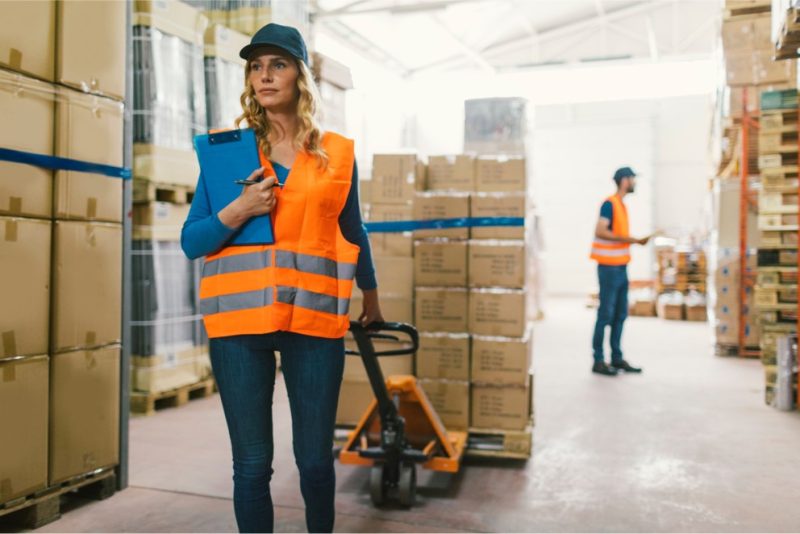
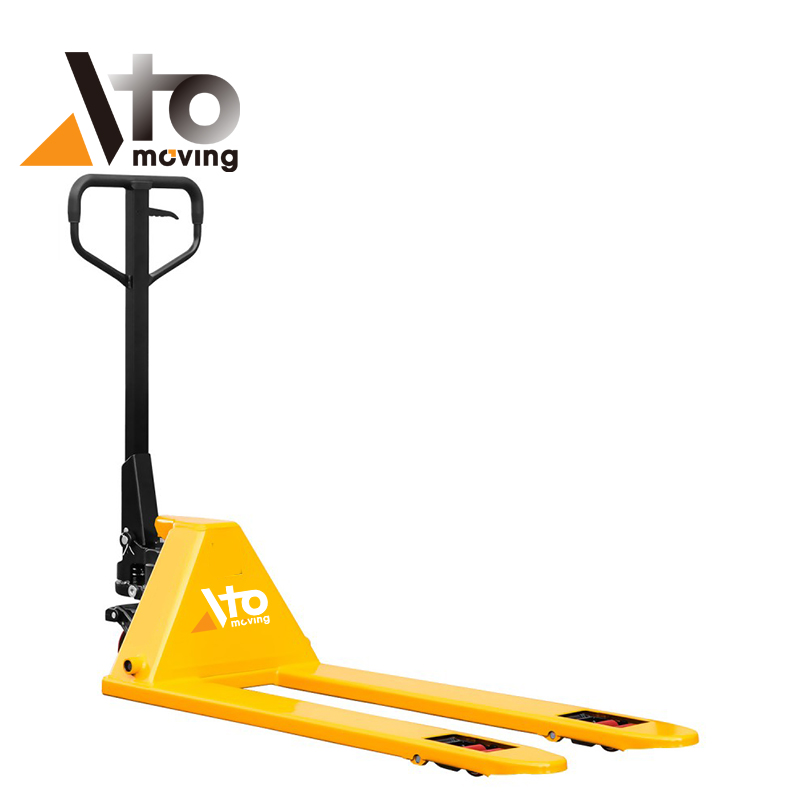
Standard manual pallet trucks lifted low for stability and short-distance transport. Typical specifications showed a minimum fork height near 75 mm and a maximum lift height close to 200 mm, roughly 7.9 inches. That range raised the pallet just enough to clear floor irregularities and dock plates while keeping the combined center of gravity low. When asking how high can a pallet truck lift in its most basic form, the realistic answer was about 200 mm for rated loads between roughly 2200 kg and 3000 kg. Engineers should not treat these units as stacking devices because the low lift limited them to ground-level handling, truck loading, and staging at floor height. Attempting to use improvised blocks or ramps to gain extra elevation violated safety principles and typical regulatory guidance.
High-Lift And Manual Stacker Height Capabilities
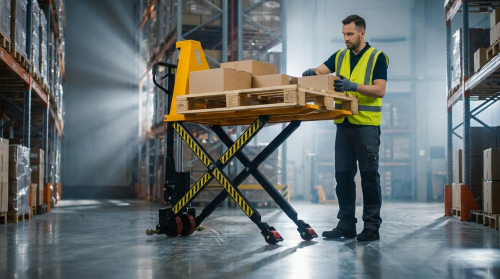
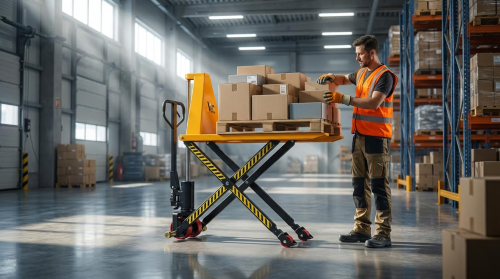
High-lift pallet trucks and manual pallet stackers extended the functional envelope well beyond 200 mm. Product data indicated maximum lift heights in the 1200 mm to 1600 mm range for manual stackers with rated capacities around 1000 kg to 3000 kg. Some high-lift designs and stackers reached up to approximately 1500 mm or slightly higher, enabling placement on low racking or workstations. However, the question how high can a pallet truck lift safely required attention to effort and stability. Manual crank or pump forces in the 24 kg to 40 kg range made frequent full-height cycles physically demanding. Stabilizing legs and modified fork geometry became essential to control tipping risk as the load center rose. These units suited intermittent stacking, machine feeding, and ergonomic height adjustment rather than continuous high-bay operations.
Electric Pallet Trucks And Stackers: Height Envelope
Electric pallet trucks that only transported loads typically shared the same basic lift band as manual trucks. They usually raised forks to about 200 mm, just enough for travel with loads between roughly 1800 kg and 4000 kg at a 600 mm load center. When configured as electric pallet stackers, the answer to how high can a pallet truck lift changed significantly. Electric stackers commonly operated above 1600 mm and, depending on mast design, could approach or exceed 3000 mm. This height range overlapped with lower selective racking levels and light-duty warehousing tasks. Electric drives and powered hydraulics reduced operator effort and delivered controlled lift speeds, for example around 40 mm/s under load. Engineers had to consider turning radius, typically 1585 mm to 1750 mm, and gradeability when specifying these machines for narrow aisles or ramps.
Defining Use Cases By Required Lift Height
Specifying the right truck started with mapping tasks to lift-height bands. For purely horizontal transport, dock work, and floor-level staging, the practical answer to how high can a pallet truck lift was 200 mm, which standard manual and electric pallet trucks provided. For ergonomic work positioning and low-level stacking up to about 1500 mm to 1600 mm, high-lift pallet trucks and manual stackers offered a mechanically simple solution, albeit with higher operator effort. Where workflows required repetitive stacking above 1.5 m, or occasional lifts toward 3 m, electric pallet stackers became more appropriate due to powered lift and enhanced stability features. Facilities with mixed tasks often combined low-lift trucks for high-throughput transport and a smaller fleet of high-lift or electric stackers for vertical handling. Matching these height ranges to racking geometry, load mass, and operator capability ensured both productivity and compliance with safety expectations.
Engineering Limits: Capacity, Stability, And Safety
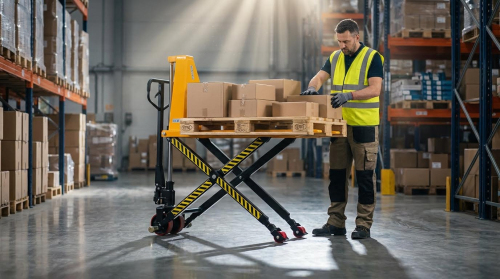
Engineering limits determine how high a pallet truck can lift while still operating safely. Capacity, load center, wheelbase, and hydraulic design define the rated lift height envelope. Stability margins reduce as the forks rise, so geometry and control precision become critical. Safety standards and operator training connect these technical limits to real-world, compliant use.
Load Capacity, Load Center, And Rated Lift Height
Rated lift height answers the question “how high can a pallet truck lift” for a given load and load center. Standard manual pallet trucks typically lifted up to about 200 mm, just enough for ground-level transport. Their rated capacities ranged from roughly 2200 kg to 3000 kg, or up to about 5000 lb, at a 600 mm load center. Manual pallet stackers and high-lift trucks reached far higher, often 1500 mm to 1600 mm, but usually at lower capacities around 1000 kg to 3000 kg.
Engineering teams balanced lift height against the overturning moment created by the elevated load. As the forks rose, the load center height increased, which multiplied the tipping torque about the support polygon. Designers controlled this by limiting rated height at maximum capacity and by clearly marking both values on the data plate. Operating above the marked capacity or with an extended load center reduced the effective safe lift height, even if the hydraulics could physically raise the load higher.
Stability At Height: Forks, wheels, And Support Geometry
Stability at height depended on the relationship between fork length, wheel positions, and the combined center of gravity of truck and load. Low-lift pallet trucks, which only raised to about 200 mm, maintained a wide, low support polygon, so lateral stability remained high during transport. High-lift pallet trucks and manual stackers, which could lift to 1500 mm or more, required additional stabilizers or outriggers to keep the center of gravity inside that polygon. Some high-lift designs used front stabilizing legs that contacted the floor once the forks passed a threshold height.
Wheel selection also influenced stability limits. Polyurethane or vulcollan fork wheels with diameters around 83 mm and drive wheels around 212 mm to 250 mm provided predictable rolling behavior on flat warehouse floors. On uneven or sloped surfaces, even small height increases significantly reduced stability margins, so guidelines advised avoiding turning or side loads when the forks were raised. Engineers validated stability envelopes with tilt and static load tests, then converted those results into conservative maximum lift height ratings for real operations.
Hydraulic Systems, Lift Speed, And Control Precision
The hydraulic system defined not only how high a pallet truck could lift, but how controllably it reached that height. Manual pallet trucks used compact hand-pumped hydraulic circuits designed to raise heavy loads up to about 200 mm with limited operator effort. Manual stackers and high-lift units extended the cylinder stroke to reach 1500 mm to 1600 mm, but required higher crank or pump forces, often in the 24 kg to 40 kg range. Electric pallet trucks and stackers added powered lift, with motors around 2.0 kW at 24 V driving hydraulic pumps.
Typical electric models achieved lift speeds around 40 mm/s under load and 50 mm/s unloaded, with lowering speeds in a similar range or timed cycles of about 2.0 s to 2.5 s for the full stroke. Engineers tuned flow control valves and orifices to prevent sudden movements, especially near maximum height where stability margins were lowest. Fine control at low speeds allowed operators to position loads precisely into racking without shock loading the structure or the mast. Relief valves limited maximum system pressure, preventing operators from forcing a load higher than the rated capacity even if they attempted to exceed specifications.
Safety Features, Standards, And Operator Training
Safety engineering constrained how high a pallet truck could lift in practice, beyond the pure mechanical limits. Standards and guidelines required clear marking of maximum load, load center, and lift height, and recommended regular inspections, typically every six months for intensive use. Features such as overload protection valves, foot brakes, and parking brakes on electric units reduced the risk of incidents during lifting and travel. High-lift trucks and stackers often included stabilizing legs that automatically engaged at elevated fork heights.
Regulators and industry bodies emphasized that operator behavior strongly affected real safety margins. Training programs taught operators to keep forks as low as practical during travel, usually only 20 mm to 50 mm off the floor, even though the truck might lift to 200 mm or more. They also highlighted that high-lift and electric stackers, which could reach above 1.5 m, required stricter controls for turning, speed, and surface conditions. Incident data historically showed that misuse and overloading, rather than pure design failure, caused a significant share of injuries, so modern engineering practice combined robust hardware with clear procedures and documented training.
Selecting The Right Pallet Truck For Your Facility
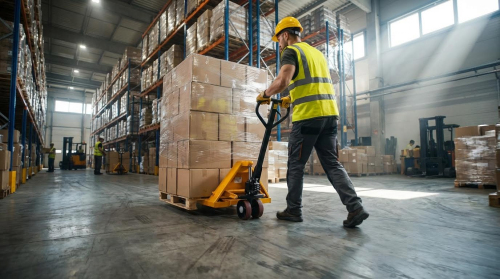
Facility managers who ask “how high can a pallet truck lift” should link that question directly to workflow, storage geometry, and long-term cost. This section explains how to translate required lift heights into concrete pallet truck choices, considering racking design, automation plans, and ergonomics. It focuses on real lift envelopes, from 200 mm transport height to high-lift and stacker ranges above 1500 mm, and connects them to safety and productivity.
Matching Lift Height To Workflow And Racking Design
Start by mapping every handling task to a required lift height range. Standard manual pallet jack typically lift to about 200 mm, which was enough for ground-level loading, unloading, and short-distance transport. These units supported workflows where operators only needed to clear floor irregularities, dock plates, and truck beds. If your racks or workstations require placing pallets above 200 mm, you need high-lift trucks or stackers.
Manual high-lift pallet trucks and manual stackers usually operated between 1200 mm and about 1600 mm, with some designs exceeding 1500 mm for light stacking. Electric pallet stackers extended that envelope, often reaching above 1600 mm and in some cases over 3000 mm, depending on mast design. For each bay level, check beam height and pallet thickness, then add at least 100 mm clearance to define the minimum rated lift height. Choose equipment whose maximum lift height exceeds that requirement while still matching the rated capacity at the specified load center, typically 600 mm.
When planning aisles, consider turning radius and fork length alongside height. A truck that can technically reach 3000 mm may still be unsuitable if it cannot maneuver safely between racks. For low-level picking or cross-docking, a 200 mm lift manual or electric pallet truck usually gives the best throughput and lowest cost. For mixed operations, facilities often combined low-lift pallet trucks for transport with a smaller fleet of high-lift or electric stackers dedicated to vertical storage tasks.
Lifecycle Cost, Maintenance, And Energy Use
Lifecycle cost analysis should compare manual, high-lift, and electric pallet trucks over five to ten years. Manual trucks with 200 mm lift heights had low acquisition cost and minimal maintenance, mainly wheel replacement, lubrication, and hydraulic seal checks. However, they relied entirely on human power, which limited throughput and increased fatigue in high-volume operations. High-lift manual stackers introduced more complex hydraulics and linkages, which required more frequent inspection and seal replacement due to higher operating pressures.
Electric pallet trucks and stackers carried higher initial cost but delivered higher productivity, especially when lifting above 1500 mm. Their lifecycle cost included traction and lift motors, controllers, batteries, and chargers. You should factor battery replacement intervals and charging infrastructure into total cost of ownership. Electric units consumed electrical energy instead of human energy, which shifted costs from labor to utilities. In multi-shift facilities, opportunity charging or battery exchange systems reduced downtime and improved asset utilization.
Maintenance regimes also differed by lift height. Equipment operating near its maximum rated height experienced higher mast and chain loads, which accelerated wear. Schedule periodic inspections of mast rollers, chains, and hydraulic cylinders, particularly on stackers that frequently reach heights above 1600 mm. For all truck types, maintaining correct fork height calibration ensured that actual lift matched the rated specification, which was critical when operators worked close to rack beams. A structured preventive maintenance program usually reduced unplanned downtime and extended service life, improving lifecycle economics.
Integrating With Cobots, AGVs, And Digital Twins
When integrating pallet trucks with cobots or AGVs, lift height compatibility becomes a hard interface requirement. Cobots that palletize or depalletize usually operate within a defined vertical envelope, often below 2000 mm. If the question is “how high can a pallet truck lift” in that context, the answer must align with the robot’s reach and the designed pallet patterns. Manual or electric low-lift trucks that raise pallets to about 200 mm often worked as feeders to fixed-height cobot stations or conveyor infeed points.
AGVs and automated pallet trucks frequently used standardized fork heights and load centers to ensure repeatable engagement. For high-bay storage, automated stackers needed precise mast positioning control across the full lift range, sometimes beyond 3000 mm. Digital twins of the facility, which modeled racks, pallets, and vehicle kinematics, allowed engineers to simulate reach, clearances, and deflection at maximum height. This reduced commissioning risk and helped verify that the selected pallet trucks could safely place and retrieve loads at all intended levels.
Data from connected pallet trucks, including lift height usage profiles, informed optimization. If historical data showed that operators rarely exceeded 200 mm, you might standardize on low-lift equipment and allocate high-lift units only where truly necessary. Conversely, frequent lifts above 1500 mm indicated that electric stackers or automated solutions could deliver productivity gains and ergonomic benefits. Integration planning should address safety interlocks, speed reduction at height, and geofencing to manage interactions between humans, cobots, and mobile equipment.
Ergonomics, Manual Effort, And Safety Compliance
Ergonomics directly linked to both lift height and power source. Manual pallet trucks that lifted to 200 mm required repeated pump strokes and pushing forces that increased with load mass. Manual stackers capable of 1500 mm to 1600 mm lift demanded even higher input forces, with reported crank efforts between 24 kg and 40 kg. For frequent vertical handling, this manual effort could exceed recommended limits in occupational health guidelines. Electric lift and drive systems reduced physical strain, which supported compliance with ergonomic standards and reduced injury risk.
At higher lift heights, stability and visibility became critical safety factors. Operators needed clear sightlines to forks and rack beams, especially above 1500 mm. Electric stackers often incorporated speed reduction and more precise lift controls when the load approached maximum height. Regardless of type, trucks had to comply with relevant standards for stability, braking, and labeling of rated capacity versus lift height. Facilities should verify that the maximum rated lift height, typically marked on the data plate, matched the tallest intended storage position.
Training programs must explain not only “how high can a pallet truck lift” but also “how high it should lift for safe operation.” Operators should keep loads as low as practical during travel, usually near the 200 mm range, and only raise to rack height when positioned. Emphasize correct body posture, pushing instead of pulling where possible, and avoiding side pulls at elevated heights. Regular safety audits, including observation of real operating practices, helped align day-to-day behavior with written procedures and regulatory requirements.
Summary And Practical Selection Guidelines
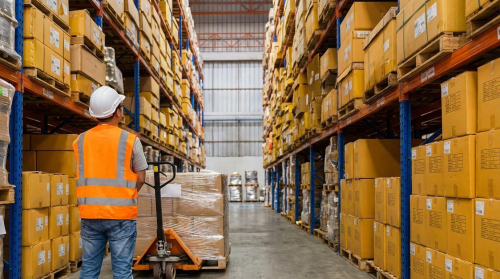
The core question in most projects is “how high can a pallet truck lift” for a given load and aisle layout. Standard manual and electric pallet trucks typically lifted to about 200 mm, which suited ground-level handling and short-distance transport. High-lift pallet trucks and manual or electric stackers extended that range to roughly 1200–3300 mm, enabling stacking into lower and mid-level racking. Facilities therefore selected equipment by mapping these height bands to workflow, racking geometry, and operator capabilities.
From a technical standpoint, the rated lift height always linked to a specified capacity and load center, commonly 600 mm. Exceeding either reduced effective height and stability, regardless of whether the truck was manual, high-lift, or electric. Manual pallet trucks usually handled 2000–3000 kg within their 200 mm lift envelope, while manual pallet stacker reached around 1500–1600 mm but required higher human input forces. Electric pallet trucks and stackers combined lift heights above 1600 mm with capacities up to about 4000 kg, supported by controlled hydraulic systems and electromagnetic braking.
Future developments pointed toward closer integration with AGVs, cobots, and digital twins, which would require precise, repeatable lift positioning and reliable sensor feedback at height. Engineers and facility planners should balance initial purchase price against lifecycle cost, including energy use, hydraulic maintenance, and downtime risk. A practical selection process starts with defining the maximum pallet height needed at the highest storage level, then working backward through capacity, aisle width, surface conditions, and safety standards. This approach produced a balanced, future-ready choice across manual, high lift pallet truck, and hydraulic pallet truck options.