Pallet truck lifting height is a critical parameter influencing warehouse efficiency and safety. Understanding the engineering principles and practical considerations behind lift height helps in selecting the right equipment for specific applications. This article explores key design factors, application requirements, and safety protocols related to pallet truck lifting height.
We will examine types of pallet trucks, their lift capabilities, hydraulic systems, and mast configurations. Additionally, the discussion covers operational best practices and compliance with regulatory standards to ensure safe and effective use.
Types and Design Factors Affecting Pallet Truck Lift Height
Manual, Electric, and Rider Pallet Truck Lift Capabilities
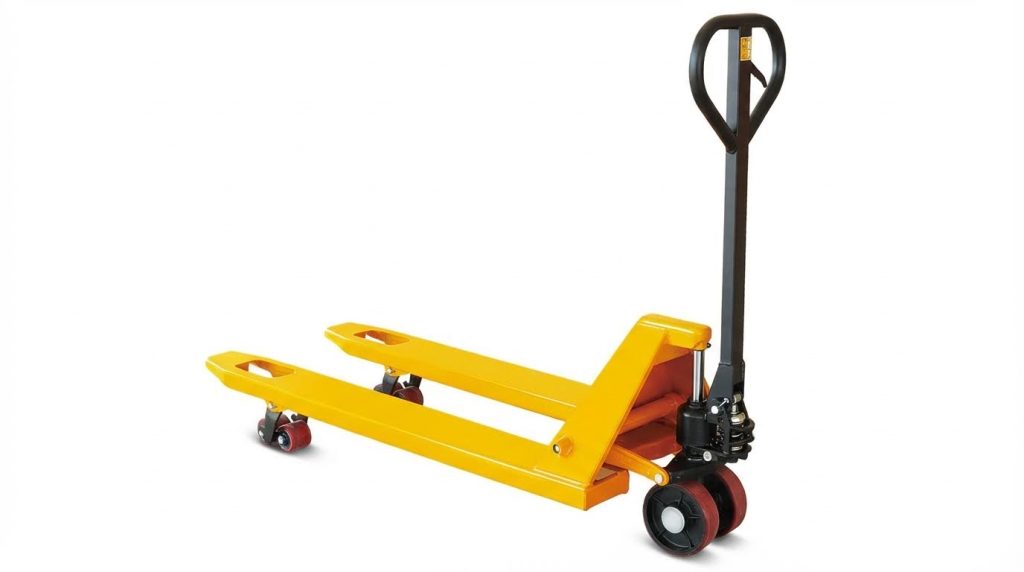
Manual pallet trucks typically offer lift heights up to 200 mm, suitable for ground-level load handling. Electric pallet trucks extend this range, providing lift heights between 200 mm and 400 mm, facilitating easier stacking and transport. Rider pallet trucks, equipped with powered masts, can achieve lift heights exceeding 6 meters, enabling efficient high-bay storage operations.
Mast Configurations: Single, Duplex, and Triplex Designs
Single mast designs provide straightforward lift mechanisms with limited height, generally up to 3 meters. Duplex masts incorporate two-stage telescoping, doubling lift height capabilities to approximately 6 meters. Triplex masts add a third stage, allowing maximum lift heights beyond 7 meters while maintaining a compact lowered profile for clearance in doorways and aisles.
Hydraulic System Power and Load Capacity Influence
The hydraulic system’s power directly affects the achievable lift height and load capacity. Higher pressure hydraulics enable lifting of heavier loads to greater heights without compromising stability. Load capacity ratings must consider hydraulic performance to prevent system overload and ensure safe operation under maximum lift conditions.
Role of Counterbalance Weights in Stability at Height
Counterbalance weights are critical for maintaining pallet truck stability during lifting operations. Increased lift heights shift the center of gravity upward, necessitating larger or strategically placed counterweights to prevent tipping. Proper counterbalance design ensures safe maneuvering, especially when handling heavy loads at elevated positions.
Application-Specific Lift Height Requirements and Selection
Low-Level Storage: Manual and Basic Electric Trucks
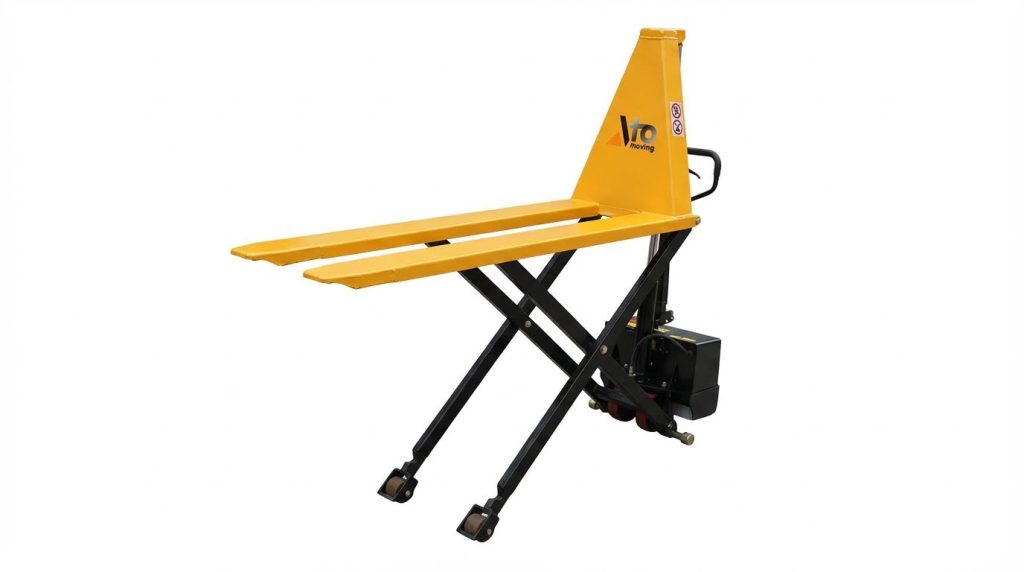
Manual and basic pallet trucks typically serve low-level storage applications. Their lift height usually ranges from 100 mm to 200 mm, sufficient for moving pallets onto ground-level racks or loading docks. These trucks prioritize maneuverability and ease of use over high lift capabilities, making them ideal for confined spaces and short-distance transport.
Mid-Level Stacking: Duplex Mast Electric Pallet Trucks
Duplex mast electric pallet trucks accommodate mid-level stacking requirements with lift heights generally between 1.5 m and 3 m. The duplex mast design provides a two-stage lifting mechanism that balances height and stability. These trucks enable efficient stacking in warehouses with moderate ceiling heights and improve space utilization without compromising operator visibility.
High-Bay Warehousing: Rider Trucks with Triplex Masts
High-bay warehousing demands pallet trucks capable of reaching lift heights above 4 m, often up to 6 m or more. Rider trucks equipped with triplex masts offer a three-stage telescoping mast system that maximizes vertical reach while maintaining compact footprint. These trucks incorporate advanced hydraulic systems and counterbalance weights to ensure stability and safety during high lifts and long travel distances.
Fork Dimensions and Free Lift Functions for Clearance
Fork dimensions directly affect lift height and clearance, especially in narrow aisle environments. Free lift functions allow the forks to raise without increasing the overall mast height, critical for operations with low overhead obstructions. Typical free lift ranges from 100 mm to 400 mm, enabling trucks to lift pallets within restricted vertical spaces while maintaining maneuverability.
Safety, Compliance, and Operational Best Practices
Regulatory Thresholds: PUWER vs. LOLER for Lift Heights
The Provision and Use of Work Equipment Regulations (PUWER) and the Lifting Operations and Lifting Equipment Regulations (LOLER) set distinct compliance requirements for pallet trucks. PUWER addresses general equipment safety and operator competence, while LOLER specifically governs lifting equipment, focusing on inspection and safe lifting practices. For pallet trucks with lifting heights exceeding 1 meter, LOLER mandates regular thorough examinations and documented maintenance. Adherence to these regulations ensures operational safety and legal compliance in industrial environments.
Operator Training and Load Handling Techniques
Effective operator training is critical to safe pallet truck use, especially at elevated lift heights. Training programs emphasize correct load positioning, controlled lifting and lowering, and awareness of the truck’s stability limits. Operators learn to assess load weight and center of gravity to prevent tipping. Proper handling techniques reduce accident risks and enhance efficiency during stacking and retrieval tasks in warehouses.
Maintenance and Inspection Protocols for High-Lift Trucks
High-lift pallet trucks require rigorous maintenance schedules to maintain hydraulic integrity, structural soundness, and control system responsiveness. Inspections focus on hydraulic fluid levels, mast alignment, fork condition, and safety devices such as load backrests. Preventive maintenance minimizes downtime and extends equipment lifespan. Documented inspection records support compliance with LOLER and PUWER regulations and facilitate early detection of wear or damage.
Safe Travel Heights and Stability Considerations
Operating pallet trucks safely at height involves limiting travel speeds and lift heights during movement to maintain stability. Manufacturers often specify maximum travel heights and load limits to prevent tipping. Using counterbalance weights and ensuring even load distribution enhances stability. Operators should avoid sudden maneuvers and operate on level surfaces to reduce risk. Implementing these practices safeguards personnel and equipment during high-lift operations.
Summary of Pallet Truck Lift Height Considerations and Trends
Pallet truck lift height is a critical specification influencing operational efficiency and safety. Design factors such as mast configuration, hydraulic power, and counterbalance weights directly affect achievable lift heights. Application requirements vary from low-level manual trucks to high-bay rider trucks with triplex masts, necessitating tailored solutions for different warehouse environments.
Regulatory frameworks like PUWER and LOLER impose safety standards specific to lift heights, mandating rigorous operator training and maintenance protocols. Technological advances focus on enhancing stability and load handling at greater heights, driven by the increasing demand for vertical storage optimization.
Industry trends indicate a shift towards more versatile electric and rider pallet trucks with improved mast designs and free lift capabilities. Practical implementation requires balancing lift height with load capacity and travel stability to minimize risks and maximize productivity. Overall, evolving pallet truck technologies reflect a move towards safer, higher-reaching, and more efficient material handling equipment.