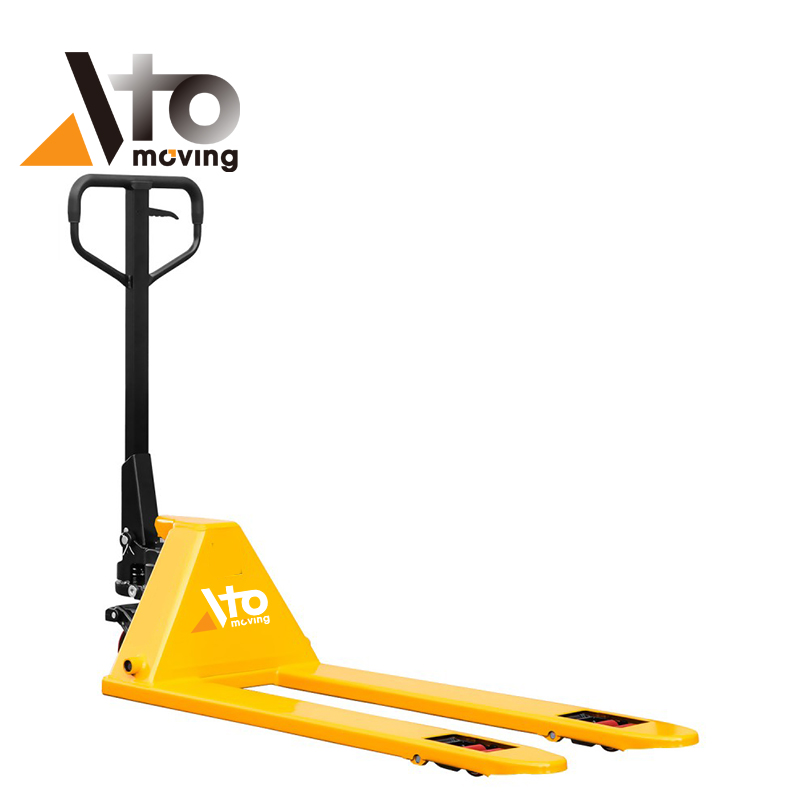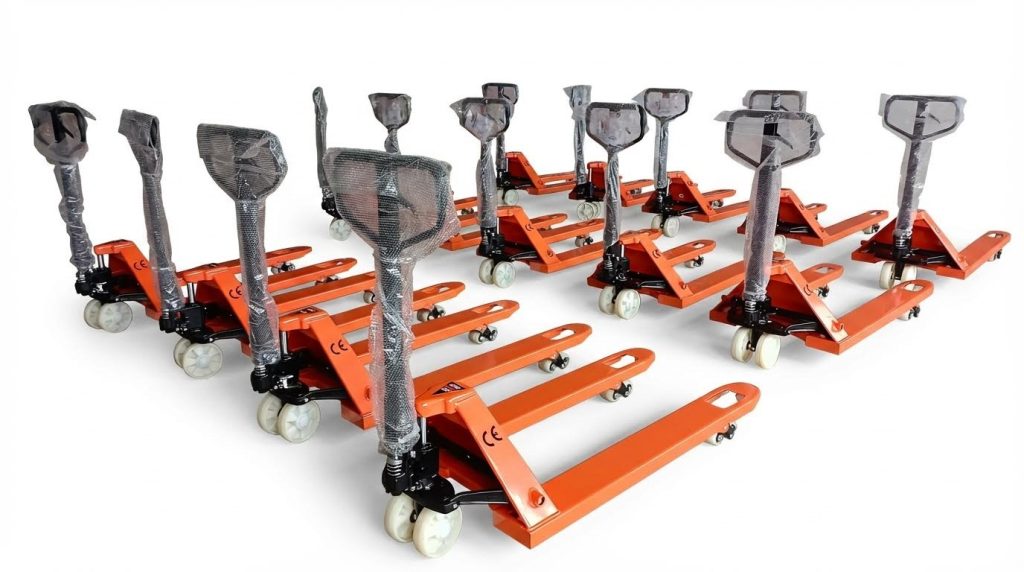
Understanding how much a pallet truck can lift is fundamental to safe and efficient material handling. This article explains pallet truck load capacity from first principles, then compares how rated values differ from real-world usable capacity across manual and powered models. It examines the engineering factors that determine capacity, including structural design, hydraulics, and running gear, and links these to floor conditions and terrain. Finally, it provides a decision framework for choosing between manual pallet jack and walkie pallet truck and summarizes how to match capacity to specific application needs without compromising safety or productivity.
Defining Pallet Truck Load Capacity

When professionals ask “how much can a pallet truck lift,” they refer to its rated load capacity under defined conditions. Load capacity describes the maximum mass a pallet truck can safely raise and move without exceeding structural, hydraulic, or stability limits. Understanding how this rating translates into real-world usable capacity prevents overloading, premature wear, and safety incidents. The following subsections break down rated versus practical capacity, typical ranges for manual pallet jack and powered models, and how load center, pallet size, and load geometry influence the answer to how much a pallet truck can lift in actual operations.
Rated Capacity vs. Real-World Usable Capacity
Rated capacity is the value stamped on the pallet truck nameplate, usually in kilograms and pounds. It assumes a standard pallet, a specified load center, level floor, and evenly distributed weight. Under those controlled conditions, a hydraulic pallet truck might be rated up to about 2 500 kg, while powered units may exceed 3 000 kg. Real-world usable capacity is often lower because of uneven loads, damaged pallets, slopes, or poor floor conditions. Operators should apply a safety margin, typically 10–15%, and treat the rated capacity as an upper engineering limit, not a target for every lift.
Typical Capacity Ranges: Manual vs. Electric
Manual pallet trucks usually lift between 1 000 kg and 2 500 kg, with common ratings around 2 200–2 500 kg. These units suit light to medium-duty tasks where operators move fewer pallets per shift and travel distances remain short. Electric pallet trucks typically start around 2 500–3 000 kg and can exceed 3 600 kg in heavy-duty designs. In imperial terms, manual models often handle up to about 2 270 kg (5 000 lb), while powered units frequently exceed 2 700 kg (6 000 lb) and can reach about 3 600 kg (8 000 lb). When deciding how much a walkie pallet truck should lift for a given site, engineers match these ranges to peak load weights, not just average values.
Load Center Concepts Applied to Pallet Trucks
Load center is the horizontal distance from the fork heel to the load’s center of gravity. Capacity ratings for pallet trucks assume a standard pallet, typically 1 200 mm by 1 000 mm, with a central, evenly distributed load. As the load center increases, the overturning moment rises and effective capacity decreases, similar to forklift behavior. For example, a truck rated at a given mass for a 600 mm load center will not safely lift the same mass if the load center extends to 700–800 mm due to long or overhanging goods. Engineers therefore verify both load weight and load center when answering how much a pallet truck can safely lift in a specific application.
Effects of Pallet Size and Load Geometry
Pallet size and load geometry strongly influence usable capacity, even when the rated value appears sufficient. Oversized pallets shift the center of gravity forward or sideways, increasing moments on the forks, frame, and wheels. Tall, top-heavy loads reduce stability and can cause tipping at capacities well below the nameplate rating, especially during turning or on uneven floors. Irregular loads, such as machinery or bundled steel, often concentrate weight on a small fork area, locally overstressing forks and bearings. To keep within safe limits, engineers check pallet dimensions, stacking height, and weight distribution, then may derate capacity or specify a higher-capacity or powered pallet truck to maintain an adequate safety margin.
Engineering Factors That Drive Capacity Rating
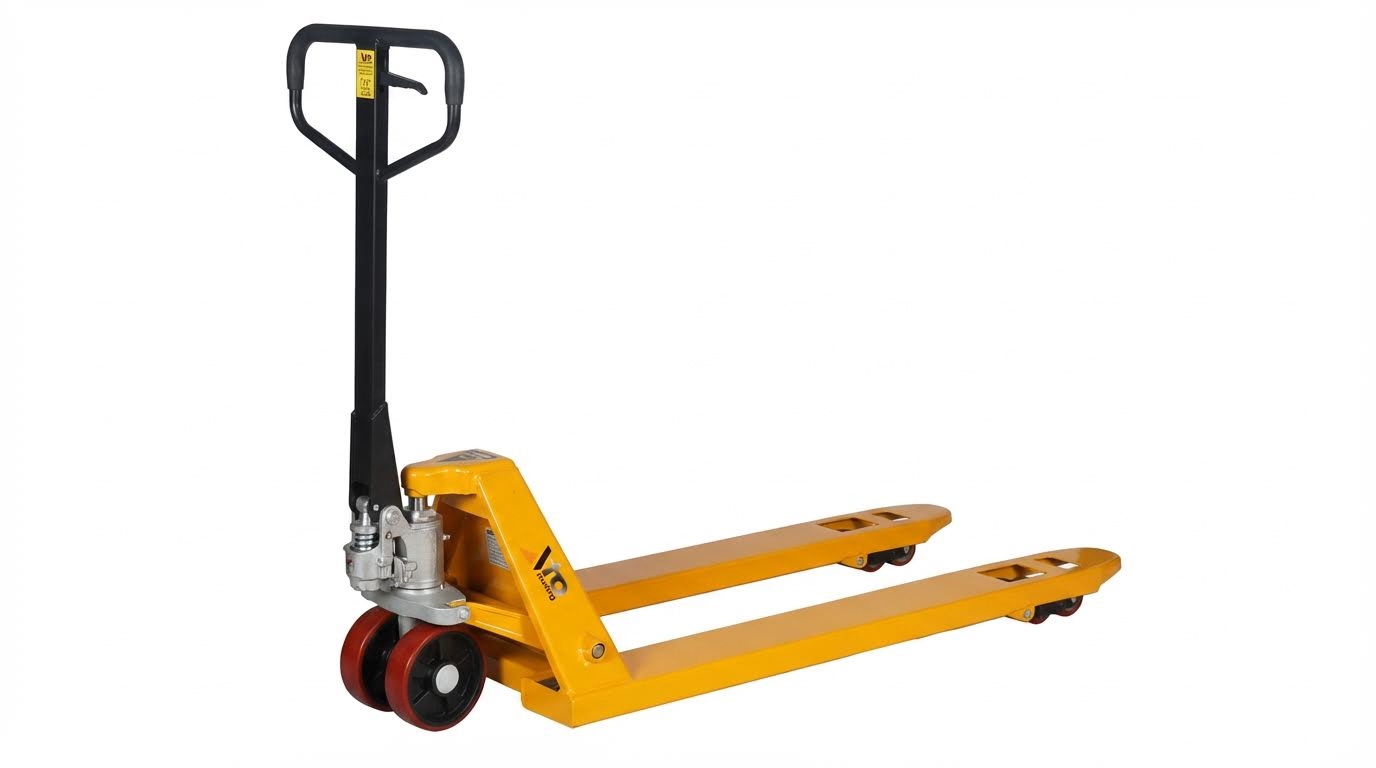
Engineering limits determine how much a pallet truck can lift safely and repeatedly. Capacity ratings result from structural design, hydraulic performance, running-gear limits, and interaction with the floor. Understanding these factors helps engineers and operators translate the nameplate rating into a realistic answer to “how much can a pallet truck lift” in actual service.
Frame, Fork Section, and Structural Design Limits
The frame and fork structure set the primary static limit for pallet truck capacity. Engineers size fork thickness, width, and section modulus so elastic deflection remains small at rated load, and peak stresses stay below yield with a defined safety factor, typically 1.5–2.0. High-capacity manual trucks that lifted 2 500 kg used thicker, wider forks and reinforced fork heels, while powered units above 3 000 kg often used boxed or ribbed fork sections. Designers also considered load center: increasing fork length or handling overhanging pallets raised bending moments and reduced the practical “how much can a pallet truck lift” value, even when the nameplate capacity stayed unchanged. Weld design, heat-affected zones, and stress concentrations at fork-to-frame joints required careful control and inspection because fatigue cracks there directly reduced safe capacity.
Hydraulic System Design and Safety Factors
The hydraulic circuit defined how much a pallet truck could lift before pressure, seal stress, or component strength became critical. Manual trucks used operator pumping to generate pressure, so rated capacity typically stayed near 2 000–2 500 kg to keep handle forces within ergonomic limits. Powered trucks used electric pumps that sustained higher pressures, which enabled capacities of 3 000–3 600 kg and answered “how much can a pallet truck lift” for heavy-duty applications. Engineers sized cylinder bore, rod diameter, and wall thickness so burst pressure exceeded maximum operating pressure by a substantial margin, often 2.5–4.0 times. Integrated relief valves limited peak pressure, preventing overload from turning into a catastrophic lift, while check valves and flow controls managed controlled lowering if a hose or seal failed. Oil viscosity, temperature range, and contamination control also affected real-world usable capacity because internal leakage increased under high load and reduced effective lifting performance.
Wheel, Axle, and Bearing Load Constraints
Running-gear design strongly influenced how much a pallet truck could lift and still roll safely. Each load wheel and steering wheel had a rated dynamic and static load; engineers summed these and applied safety factors to set the truck’s overall rating. High-capacity models used larger-diameter load wheels, wider treads, and higher-spec bearings to keep contact stress and rolling resistance under control at 3 000 kg and above. Axles and stub shafts required adequate diameter and fillet design to resist bending and shear, especially when operators pushed trucks over joints or small obstacles, which generated impact loads above the static rating. Wheel material selection mattered: polyurethane treads offered lower rolling resistance and better floor protection than nylon, but heat buildup at high loads and high duty cycles had to stay within bearing and tread limits. If wheels or bearings wore, chipped, or seized, the practical “how much can a pallet truck lift” dropped sharply, even though the hydraulic system and forks could still support the nominal load.
Floor Conditions, Gradients, and Terrain Impacts
Floor and terrain conditions converted theoretical capacity into real, usable capacity. Rated values assumed level, smooth, dry concrete; any deviation reduced how much a pallet truck could lift and still move controllably. On gradients, the component of load parallel to the slope increased required push or pull force, and standards typically restricted pallet truck use to small slopes, often below 5%, especially for manual units. Rough or damaged floors introduced shock loads into forks, axles, and the hydraulic system, which effectively lowered safe capacity because peak stresses exceeded those used in rating calculations. Outdoor or uneven terrain required larger, softer wheels and reinforced frames, but even then, engineers usually derated capacity relative to indoor figures to account for higher dynamic loads. For operators asking “how much can a pallet truck lift on a ramp or rough floor,” the engineering answer was usually lower than the nameplate rating, and risk assessments or internal derating tables defined the allowable working load under those specific conditions.
Choosing Between Manual and Powered Pallet Trucks
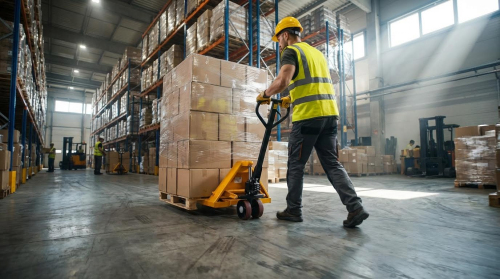
Choosing between manual and powered pallet trucks depends on how much a pallet truck can lift, how far it must travel, and how often it operates. Manual units typically handle up to about 2 500 kg, while powered units often exceed 3 000 kg and reach roughly 3 600 kg or more. However, capacity alone does not define the best choice. Engineers also evaluate ergonomics, energy use, maintenance, and lifecycle cost for the specific application.
Throughput, Distance, and Duty Cycle Analysis
Throughput analysis starts with pallets moved per hour and peak versus average load weight. A manual pallet truck that lifts up to about 2 000–2 500 kg suits low to moderate throughput, short runs under roughly 20–30 m, and intermittent use. When operators must move 30 or more pallets per hour over longer distances, powered pallet trucks become more efficient. Field data showed typical manual operation around 30 pallets per hour, while powered walkie pallet truck achieved 60–70 pallets per hour with similar staffing. For high-duty cycles, powered units also maintain rated capacity better because operator fatigue does not limit practical lift capability.
Ergonomics, Injury Risk, and Safety Compliance
Manual pallet trucks rely on the operator to generate hydraulic pressure via pumping and to provide tractive effort. As load weight approaches the rated capacity, push and pull forces increase and raise the risk of musculoskeletal injuries, especially to the back, shoulders, and wrists. Powered pallet trucks use electric drive and lift to decouple load weight from operator effort, which allowed facilities to cut wrist and back injuries by up to about 40% compared with manual handling. Safety features such as emergency reverse buttons, automatic speed reduction in turns, and regenerative braking further reduce incident rates. From a compliance perspective, risk assessments often justify powered units once repetitive high-mass loads or long travel distances are present.
Battery Technology, Energy Use, and Maintenance
Powered pallet trucks historically used lead–acid batteries, which required daily watering, equalization charges, and 6–8 hour charge windows. Modern designs increasingly applied lithium-ion packs, which delivered 3–4 times more charge cycles and typical 2–3 hour full charges. Opportunity charging during breaks supported multi-shift operation without battery swaps. Energy use per pallet moved generally decreased with powered units at high throughput because constant-speed electric traction used energy more efficiently than fatigued manual effort and repeated starts. Maintenance programs must include battery health checks, charger inspection, and monitoring of battery management systems, in addition to standard hydraulic and mechanical inspections common to both manual and powered trucks.
Lifecycle Cost, Downtime, and Digital Monitoring
Manual pallet trucks have low purchase cost and minimal components, which keeps initial capital expenditure small. However, in operations where a pallet truck must lift near its rated capacity for most cycles, manual units can drive higher labor cost and slower throughput. Powered pallet trucks cost more upfront but reduce handling time per pallet and lower injury-related costs, especially in multi-shift warehouses. Lifecycle analysis should combine acquisition, energy, maintenance, labor, and unplanned downtime. Digital monitoring options on powered units, such as hour meters, fault logging, and connectivity to fleet management platforms, help schedule preventive maintenance and avoid overload events. These tools allow engineers to verify whether actual loads remain within rated capacity and to answer operational questions about how much a pallet truck can lift in real-world use without compromising safety or availability.
Summary: Matching Capacity to Application Needs

Understanding how much can a pallet truck lift requires aligning rated capacity with the real working environment. Manual pallet trucks typically covered 1 000–2 500 kg, while powered units frequently exceeded 3 000 kg and sometimes approached 3 600 kg. However, gradients, floor conditions, pallet geometry, and duty cycle always reduced the practical figure below the data-plate rating. Engineers and supervisors had to treat the nameplate as a limit, then derate for real-world conditions.
From a capacity-matching viewpoint, manual trucks fit short-distance, low-throughput operations with relatively flat, smooth floors and loads below approximately 2 000 kg. They minimized capital cost but increased operator effort, so they suited intermittent use rather than continuous shifts. Powered pallet trucks better matched high-throughput flows, frequent lifting, and heavier loads, especially where operators moved 60–70 pallets per hour or worked on ramps and mixed terrain. Their higher capacities only remained safe when operators respected the specified load center and kept the heaviest mass close to the fork heels.
Future practice pointed toward more precise capacity control, using integrated scales, load indicators, and digital monitoring of overload events. Lithium-ion batteries and smart battery management systems supported multi-shift use without sacrificing lifting performance. For any facility planning upgrades, the practical approach was to classify applications by maximum load, pallet dimensions, travel distance, gradient, and shift pattern, then select manual or powered trucks with at least a 10–20% capacity margin. This balanced safety, ergonomics, and lifecycle cost while ensuring each pallet truck could reliably lift the loads assigned to it.