Engineers who ask how does a pallet truck work need to understand both the load path in the steel structure and the pressure path in the hydraulic circuit. This article breaks down forks, chassis, wheels, and linkages, then follows the oil from pump to cylinder to explain compact lifting systems.
You will see how Pascal’s principle, valve logic, and seal design set real capacity limits, and how fork geometry, wheel materials, and floor conditions affect stability, rolling resistance, and noise. The final sections connect design choices with maintenance strategy, failure modes, lifecycle cost, and practical selection tips for matching manual and electric pallet trucks to specific duty cycles and environments.
Core Components And Force Transmission Path
Engineers who ask how does a pallet truck work must first map the force path from pallet to floor. This section explains how forks, chassis, hydraulic linkages, and wheels share loads and convert small handle forces into safe pallet movement. It also compares manual and electric layouts so designers can match mechanics to duty cycles and floor conditions.
Forks, Chassis, And Load Path To The Floor
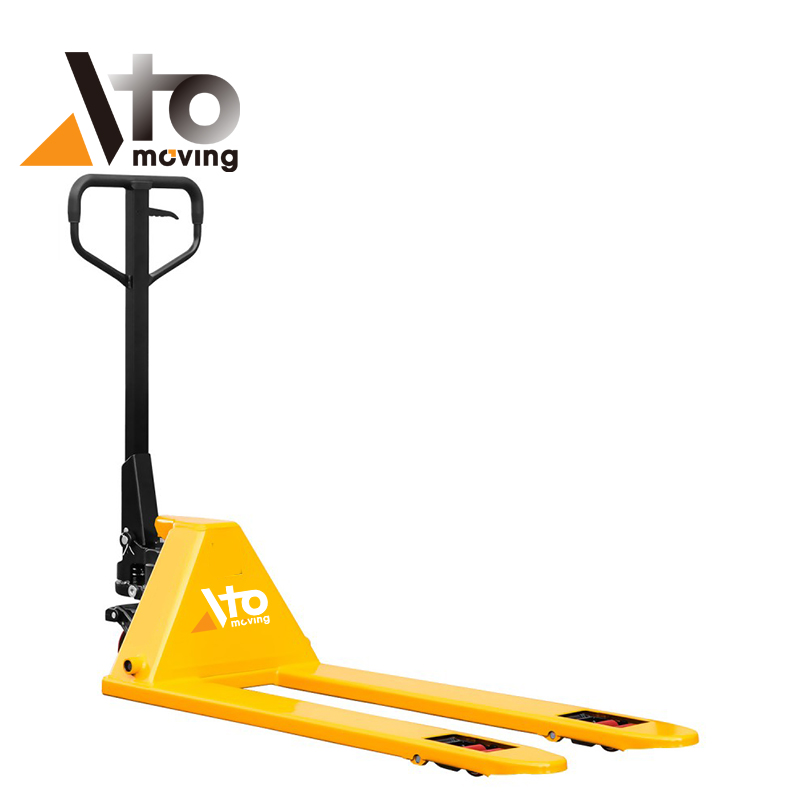
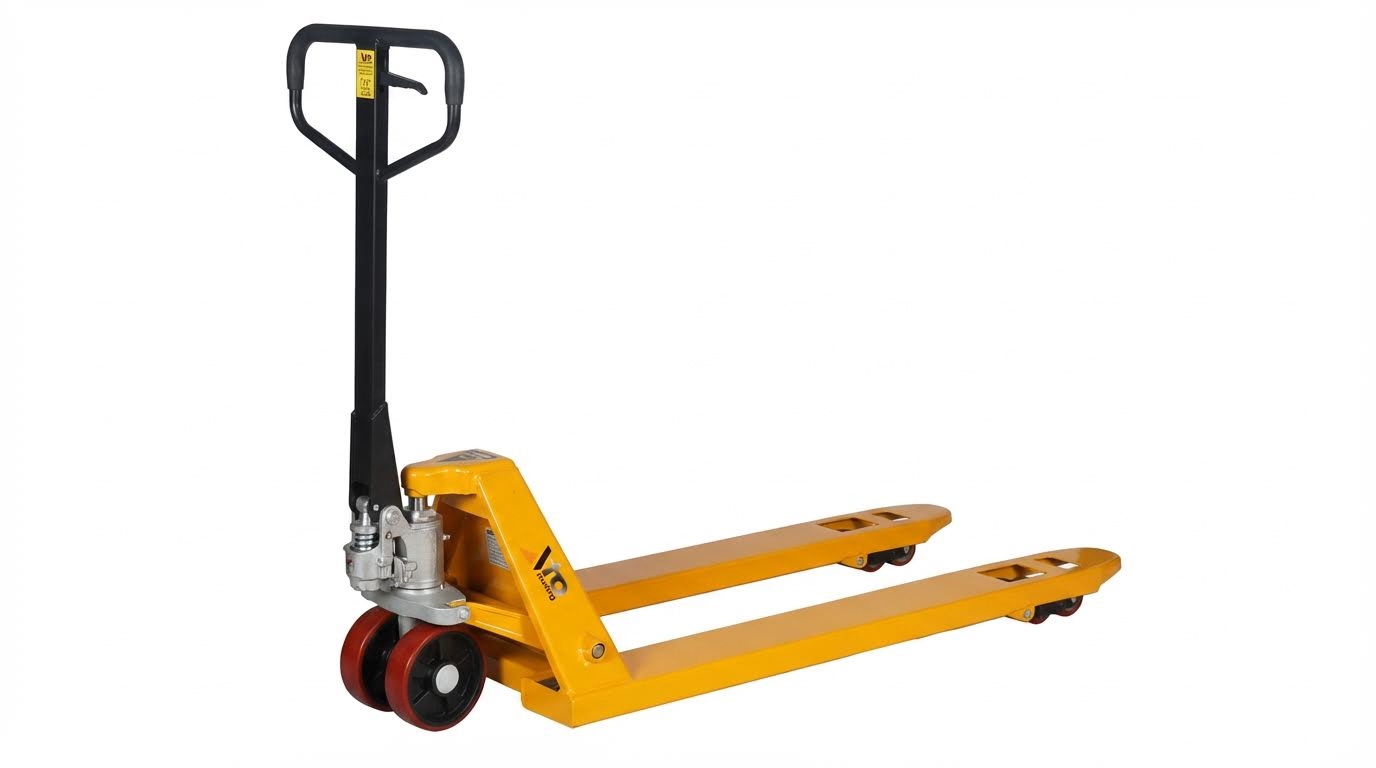
The forks carry the pallet and define the primary load path. Each fork behaves as a beam that transfers pallet weight to the front load wheels and then into the floor. The rear of the forks pins into the chassis and lift linkages, which guide vertical motion and resist bending.
Structural design focuses on three zones. The fork tips need enough stiffness for entry under pallets without permanent bend. The fork heels near the hydraulic linkage see the highest bending moment. The central spine or chassis plate ties both forks together and spreads forces into the steering wheel area.
Typical design checks include:
- Fork deflection under rated load and safety factor.
- Yield and fatigue strength at heel welds and pivot points.
- Contact pressure at load wheels versus floor rating.
When the operator lifts, the hydraulic cylinder pulls a linkage that rotates the fork assembly upward around the front load wheels. The load then flows through two main supports only: the pair of front load wheels. During travel, part of the load shifts toward the steering wheels, especially on slopes or uneven floors.
Steering And Load Wheels: Materials And Layout
The wheel layout answers a key part of how does a pallet truck work in tight spaces. Two larger steering wheels sit at the rear near the handle. Two or four smaller load wheels sit under the fork tips. This short wheelbase allows tight turning inside pallet aisles.
Wheel material selection balances rolling resistance, noise, and floor wear. A simple comparison helps design decisions.
| Material | Typical Use | Key Traits |
|---|---|---|
| Polyurethane | Indoor, smooth floors | Low noise, good traction, protects floors |
| Nylon | Rougher floors, heavier loads | Hard, low rolling resistance, noisier |
| Rubber | Uneven floors, ramps | High grip, good shock absorption |
On smooth warehouse slabs, polyurethane wheels reduce noise and keep push forces low. On harsher floors, harder wheels resist cutting but transmit more shock into the chassis and handle. Wheel diameter also matters. Larger wheels roll over joints and debris better and cut starting force but raise fork height in the lowered position.
Pump Handle, Linkages, And Operator Ergonomics
The pump handle is the main human interface. It acts as a long lever that multiplies operator effort into hydraulic pressure and steering torque. When the operator pumps, the handle drives a small piston pump. This pump pushes oil into the lift cylinder and raises the forks in short strokes.
The control head on the handle usually offers three quick positions:
- Lift: closes the release valve and strokes the pump.
- Neutral: allows steering with no lift or lower.
- Lower: opens the release valve for controlled descent.
Linkages inside the tiller head convert small finger inputs into valve motion. Good designs minimize required force, reduce play, and avoid pinch points. Ergonomics targets include comfortable handle height, limited wrist bend, and low steering force at full load on level floors. Designers also consider return springs so the handle stays in a safe upright position when released.
Manual Vs. Electric Pallet Trucks In Practice
Manual and electric versions answer how does a pallet truck work under different duty and load profiles. Manual trucks rely on human power for both lifting and travel. They suit short distances, moderate loads, and intermittent use. Their layout stays compact with a simple hydraulic pump, small cylinder, and mechanical steering only.
Electric pallet trucks add a traction motor and often a powered lift motor. The core fork and wheel geometry stays similar, but the chassis grows to house batteries, controllers, and drive units. Power assist reduces push forces and supports higher throughput in long aisles or ramps.
Key engineering contrasts include:
- Energy source: muscle power versus battery and motor.
- Component stress: higher dynamic loads and duty for electric types.
- Maintenance focus: more on hydraulics for manual, more on electrics and batteries for powered units.
Selection usually depends on cycle count, route length, and peak load. Manual units keep cost and complexity low. Electric units justify their complexity where productivity and reduced operator strain are critical.
Hydraulic Circuit Design And Lifting Mechanics
Understanding the hydraulic circuit explains how a pallet truck works from an engineering view. The system converts small manual forces at the handle into high lifting forces at the forks. Designers must balance pressure, flow, seal friction, and safety margins. This section focuses on how the closed oil circuit delivers repeatable and controlled lifting.
Applying Pascal’s Principle In Compact Systems
A pallet truck shows Pascal’s principle in a very compact package. The operator applies a force on the pump handle. The linkage multiplies this force and acts on a small pump piston. Pressure in the closed oil volume rises and spreads evenly in all directions. That pressure acts on the much larger area of the lift cylinder piston. The force at the piston equals pressure times piston area, so it is much higher than the input force. This ratio allows a person to lift loads in the 1–3 tonne range with modest effort. Designers size piston diameters so typical working pressures stay within usual hydraulic limits around 10–12 megapascals. The small internal volumes keep oil compressibility effects low, so the forks respond quickly to each pump stroke.
Pump, Cylinder, And Valves: Detailed Operation
The pump, cylinder, and valves form one integrated hydraulic block in most pallet trucks. During the upstroke of the handle, an inlet check valve opens and draws oil from the reservoir into the pump chamber. During the downstroke, that valve closes and an outlet check valve opens. Oil flows into the lift cylinder and drives the piston upward. The piston connects through a rigid linkage to the fork frame, so fork height rises. When the operator stops pumping, both check valves hold pressure in the cylinder. The load stays at height because oil has no return path. A separate release valve connects the cylinder back to the reservoir when the operator moves the control lever to the lower position. Flow through this valve is restricted to keep the lowering smooth and slow. In electric pallet trucks, an electric motor drives the pump, but the basic circuit logic remains the same.
Oil Selection, Pressure Ratings, And Seal Design
Hydraulic oil choice affects how a pallet truck works in real use. The oil must keep stable viscosity across typical warehouse temperatures. Designers often select ISO VG32 or ISO VG68 grades, depending on climate and duty. Too thin oil reduces lubrication and increases leakage past clearances. Too thick oil increases pumping effort and slows response. All pressure containing parts must match the target pressure rating with a clear safety margin. Typical working pressures for pallet trucks sit below common industrial limits, but designers still consider peak loads and misuse. Seal design is critical because even small leaks lower pressure and reduce lift height. Common seal types include U-cups and O-rings around the pump piston, cylinder piston, and control valves. Materials must resist wear, mineral oil, and possible dirt. Short oil paths and few joints reduce leak points and simplify maintenance.
Overload Protection And Controlled Lowering
Overload protection is central to safe pallet truck operation. A typical circuit includes a pressure relief valve that opens if system pressure rises above a set limit. When a user tries to lift a load above the rated capacity, this valve bypasses oil back to the reservoir. The forks then stop rising even if the operator keeps pumping. This protects the cylinder, frame, and seals from overload and limits pressure spikes that could reach values above safe design levels. Controlled lowering uses a metered flow path from the cylinder to the reservoir. The release lever links to a small spool or needle valve. Partial opening gives a slow, smooth descent, even with heavy loads. Full opening allows faster lowering when the forks are empty. Engineers size orifices so the maximum lowering speed stays safe and avoids shock to the load or floor. In electric pallet trucks, proportional valves and electronic control can further refine lowering speed and allow features like creep lowering near floor level.
Design Choices, Sizing, And Maintenance Strategy
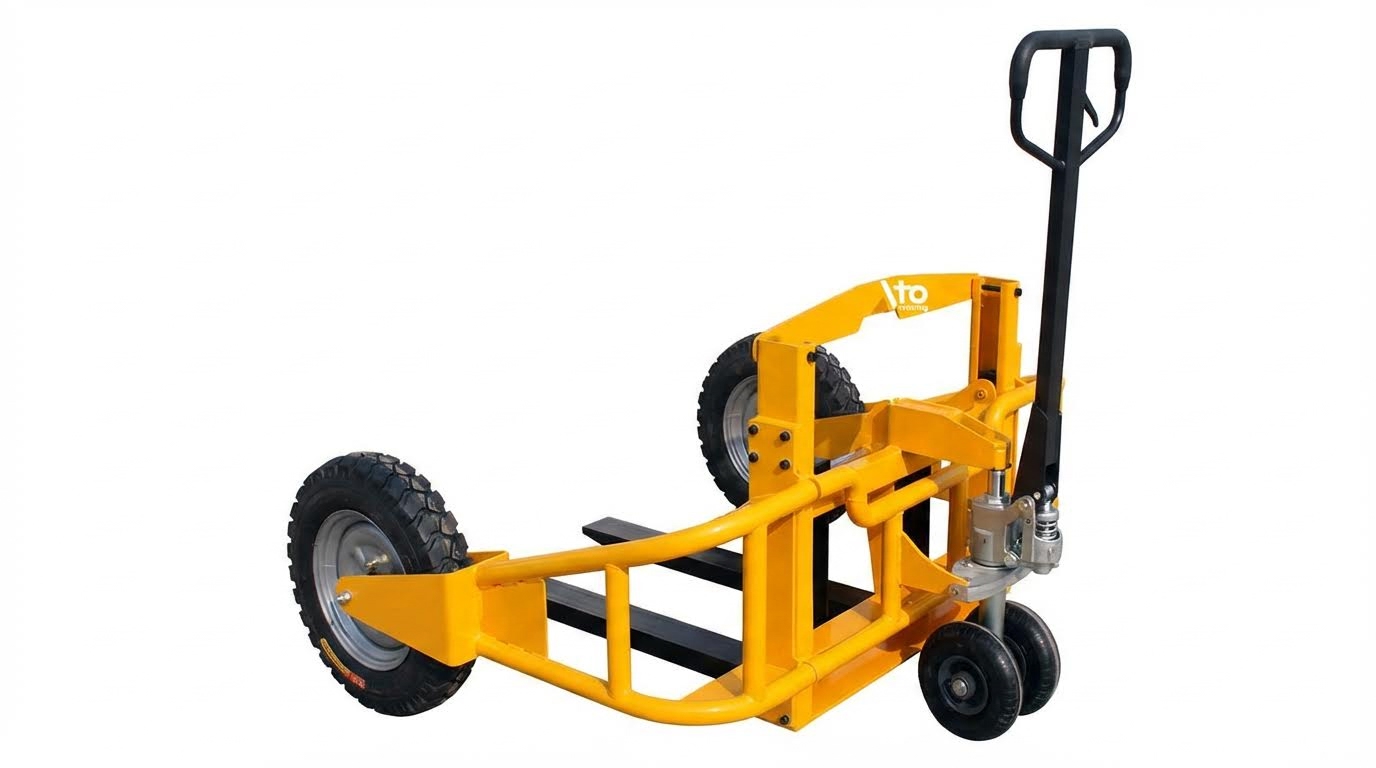
Design choices in a pallet truck answer a core question for engineers and buyers: how does a pallet truck work reliably over years of use. Capacity, fork geometry, wheels, and service strategy all shape that answer. This section links structural and hydraulic design choices to stability, noise, wear, and lifecycle cost. It helps you match pallet truck design to load patterns, floor conditions, and maintenance capability.
Capacity, Fork Geometry, And Stability Limits
Rated capacity defines how does a pallet truck work under real warehouse loads. Typical manual units carry about 1 000–2 500 kilograms. Heavy duty designs go higher but need stronger steel sections and higher pressure hydraulics. Engineers size the frame and cylinder so peak stresses stay below material fatigue limits with margin.
Fork geometry decides how that load reaches the floor. Key dimensions are:
- Fork length versus pallet length
- Fork width across the pair
- Fork height in lowered and raised positions
Longer forks spread load over more deck boards but increase turning radius. Short forks turn tighter but raise tip loading and risk pallet damage. Wide fork spacing improves lateral stability but must still match pallet openings. Stability limits depend on the combined centre of gravity of truck and load. The safe zone keeps this point well inside the wheel polygon. Overloading or off‑centre pallets shift it toward the fork tips and can overload front wheels or the hydraulic system.
Wheel Material, Floor Conditions, And Noise
Wheel selection shows another side of how does a pallet truck work in daily use. Wheel material sets rolling resistance, noise, and floor wear. Engineers balance hardness, compression set, and abrasion resistance.
Common choices include:
| Wheel material | Best floors | Key traits |
|---|---|---|
| Polyurethane | Indoor smooth concrete | Low noise, low rolling resistance, protects floors |
| Nylon | Rougher or slightly uneven floors | Hard, durable, higher noise, higher point loading |
| Rubber | Delicate or coated floors | Very quiet, higher rolling resistance |
On smooth warehouse slabs, polyurethane wheels reduce noise and keep push forces low. On harsher floors, harder wheels resist cutting but transmit more shock into the chassis and handle. Wheel diameter also matters. Larger wheels roll over joints and debris better and cut starting force but raise fork height in the lowered position.
Preventive Maintenance Intervals And Tasks
Maintenance planning closes the loop on how does a pallet truck work over its full life. A basic schedule groups tasks by operating hours or calendar time. Light use sites can work with monthly checks. High throughput sites often move to weekly visual checks and quarterly detailed inspections.
Typical preventive tasks include:
- Check hydraulic oil level and top up with the specified grade
- Inspect for leaks at cylinder, pump, hoses, and fittings
- Grease pivot pins, linkages, and steering joints
- Check wheels for flat spots, cracks, and free rotation
- Verify forks are straight and not cracked at welds
Oil change intervals depend on hours and contamination risk. Dusty or wet areas justify shorter intervals. After any oil change or seal work, operators cycle the handle to purge air so the lift stays smooth and predictable.
Common Failure Modes, Fatigue, And Lifecycle Cost
Understanding failure modes explains how does a pallet truck work right up to end of life. The main structural risks are fork bending, cracked welds near the fork heel, and worn pivot bores. These follow repeated overloading or shock from drops and impacts. Hydraulic failures usually start with seal wear, pitted cylinder rods, or scored pump bores. Small leaks first show as slow creeping down under load.
Wheel and bearing wear drive rolling resistance up and raise operator effort. Ignoring this damage also increases shock loads into the frame and handle. A simple lifecycle view compares three cost groups:
- Acquisition: truck price and any options
- Operation: labour effort, rolling resistance, and downtime
- Maintenance: planned parts like wheels and seals versus unplanned failures
Well sized capacity, correct wheel material, and a basic service plan usually cut total cost more than a lower purchase price alone. For multi shift work, many sites standardised on robust designs and documented maintenance to keep trucks predictable and safe.
Summary: Key Design Insights And Selection Tips
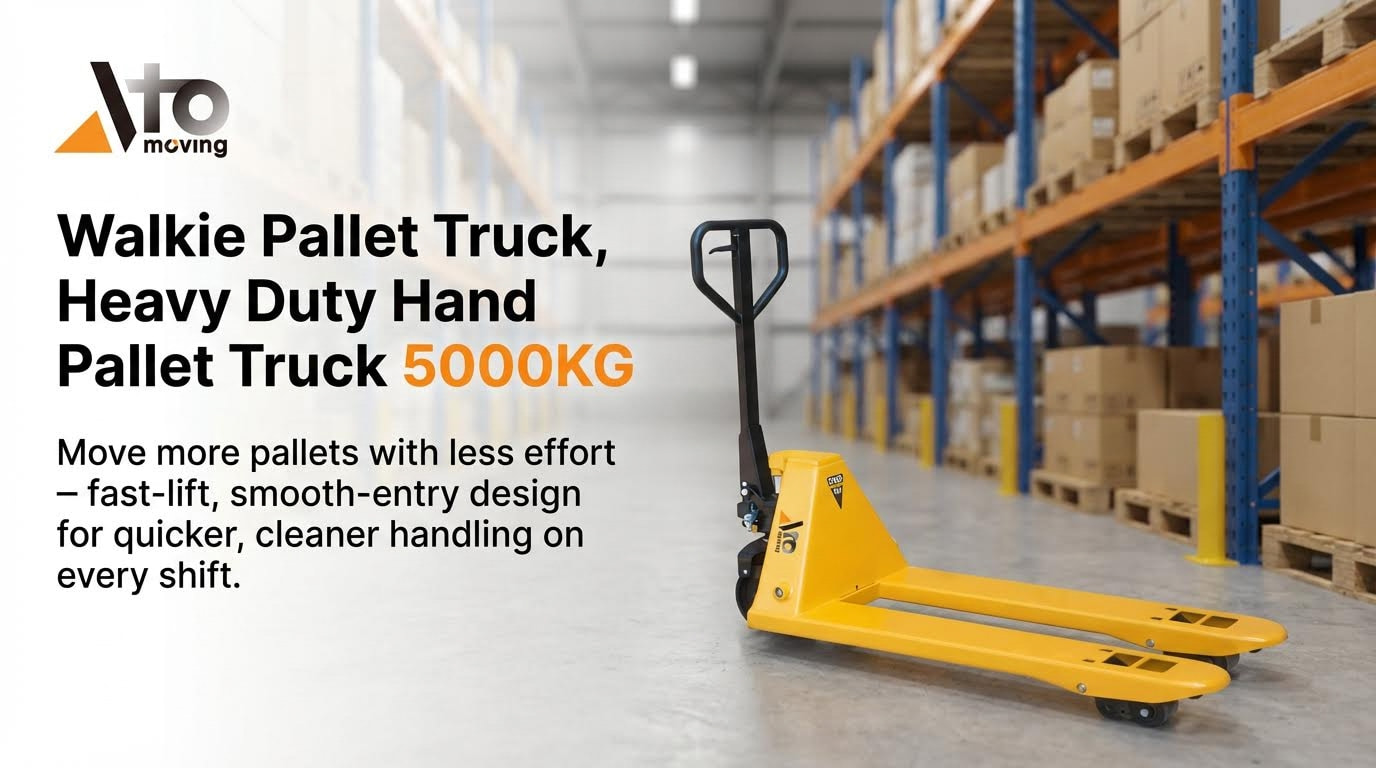
The core answer to the query how does a pallet truck work is simple. The truck converts small handle forces into large lifting forces through a sealed hydraulic circuit and a stiff steel structure. Forks carry the pallet, wheels support the load on the floor, and the hydraulic pump raises or lowers the forks in a controlled way. Every design and selection choice links back to this force path and how efficiently it runs through the frame, wheels, and oil column.
From a design view, capacity, fork geometry, and wheel layout define stability and usable maneuverability. Hydraulic sizing, seal quality, and overload protection define how safely the truck handles real-world abuse, including shock loads and partial pallets. Manual trucks suit short moves and moderate loads, while electric units fit long travel or high-shift duty where operator fatigue matters. Wheel material and bearing quality must match floor roughness, gradients, and noise limits.
For buyers, good practice is to choose rated capacity above the heaviest pallet, keep typical use below continuous 80% loading, and match fork length to pallet size to avoid cantilevered loads. Planned maintenance around oil changes, leak checks, and wheel replacement extends life and lowers lifecycle cost. Looking ahead, better seal materials, compact electric drives, and condition monitoring will improve efficiency but will not change the basic answer to how a pallet truck works. It will still rely on a short, rigid load path and a conservative hydraulic design.
,
Frequently Asked Questions
How does a pallet truck work?
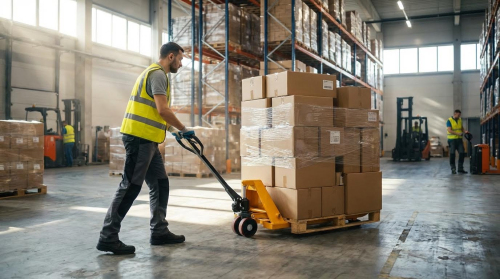
A pallet truck, also known as a pallet jack, works by lifting and moving pallets using hydraulic or mechanical systems. In the hydraulic version, a pump generates pressure to lift the forks off the ground via a hydraulic ram. Hydraulic Jack Guide.
- The operator pumps the handle to build hydraulic pressure, raising the forks.
- Once lifted, the pallet can be moved by steering the pallet truck.
- To lower the pallet, a release valve is used to relieve hydraulic pressure.
Do you need training to use a pallet truck?
Yes, proper training is required to operate a pallet truck safely. Training includes practical skills, equipment knowledge, risk awareness, and safety protocols. Pallet Truck Training Guide.
- Operators must complete an assessment and earn certification.
- OSHA classifies pallet trucks as powered industrial trucks (PITs).
- Only trained and certified individuals are allowed to operate them. OSHA Pallet Truck Rules.