Facility managers who ask how much does a pallet truck weigh usually face floor load limits, tight transport spaces, and safety rules. This article explains typical pallet truck weights by type and shows how dead weight combines with load to affect slabs, ramps, racks, and vehicles across the whole operation.
You will see how truck mass, wheel loads, and surface strength interact, from thin mezzanine decks to tail lifts and yard ramps. The article also links pallet truck weight to ergonomics, maneuverability, and system design, including emerging smart and connected trucks. The final section gives a practical method to pick safe, floor-friendly pallet trucks that fit your site, from light manual units to heavier powered models from suppliers such as Atomoving.
Typical Weights by Pallet Truck Type

Engineers who ask how much does a pallet truck weigh need clear ranges by design type. Truck dead weight drives floor loads, ramp limits, and transport capacity. It also affects ergonomics and usable payload in racks, vans, and tail lifts. This section groups typical pallet truck weights so planners can size floors, platforms, and logistics systems correctly.
Manual Low-Lift Pallet Truck Weights
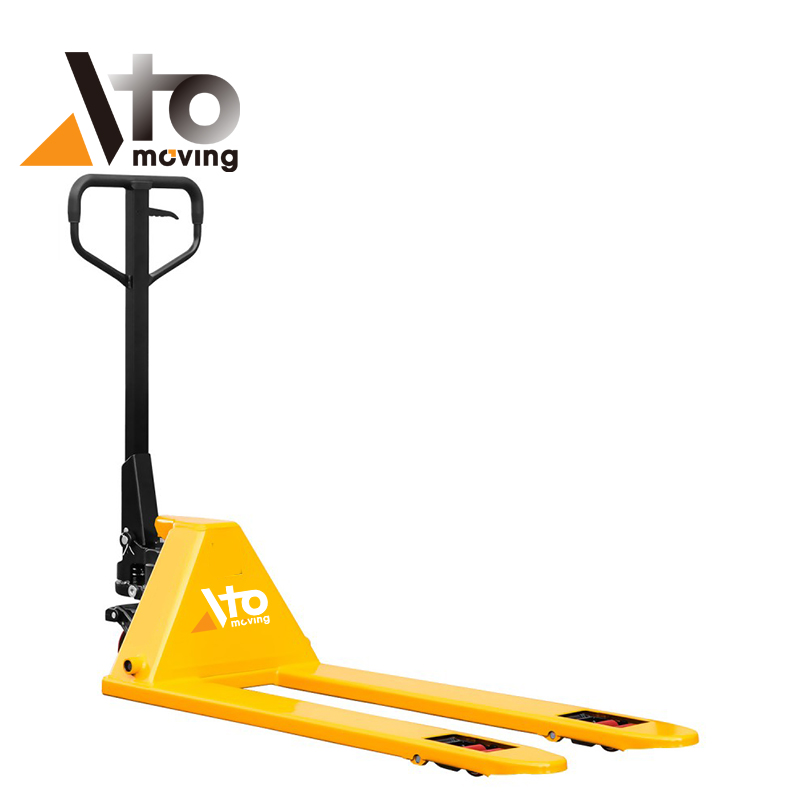
When people search how much does a pallet truck weigh, they usually mean a standard manual low-lift jack. A typical manual pallet truck weighs about 65 kilograms. In practice, most models fall between 75 and 90 kilograms for 2 to 3 tonne capacity. Short-fork versions can weigh around 55 to 62 kilograms, while long-fork designs can reach 80 to 120 kilograms.
The main weight drivers are frame thickness, fork length, and steel grade. Key components include drawbar, hydraulic cylinder, fork weldment, and rollers. Longer or wider forks shift more mass forward and increase overall dead weight. For tight aisles and vans, lighter short-fork units reduce push forces and floor stress.
| Type | Approx. weight |
|---|---|
| Standard manual (2–3 t) | 65–90 kg |
| Short forks 600–800 mm | 55–59 kg |
| Standard 950–1,150 mm forks | 62–75 kg |
| Extended forks 1,500–2,500 mm | 82–123 kg |
These values help estimate total transport weight. Add pallet and load mass to check floor ratings, tail lift limits, and rack beams.
High-Lift, Scissor, and Weigh-Scale Truck Weights
High-lift and scissor pallet trucks use extra steel structure and longer stroke cylinders. This raises their dead weight above simple low-lift units. Typical manual high-lift trucks weigh about 100 to 150 kilograms. Scissor lift trucks often sit around 120 kilograms for an 800 millimetre lift height.
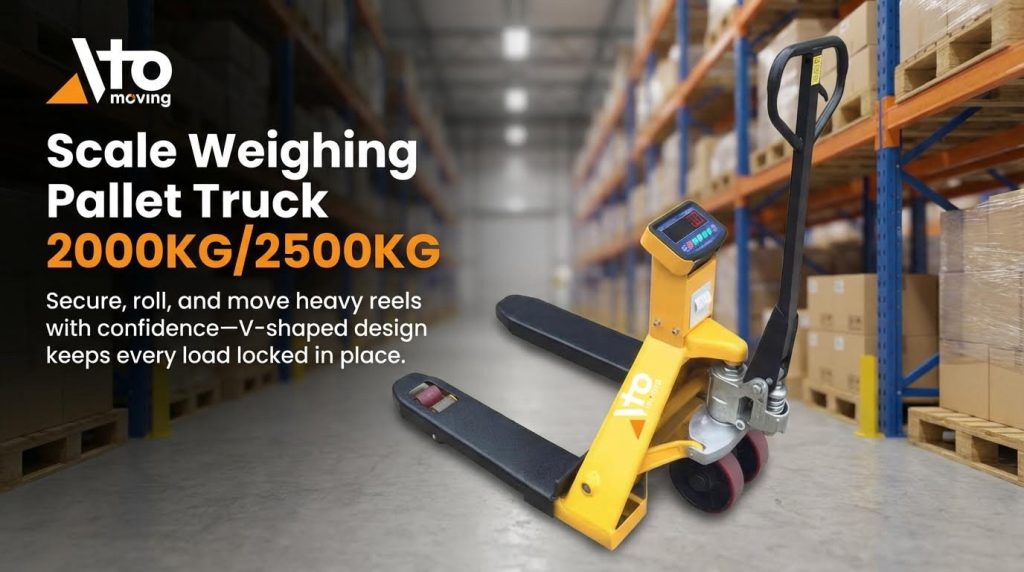
Weigh-scale pallet trucks integrate load cells, electronics, and sometimes printers. A basic weighing truck usually weighs about 110 kilograms. Printer options can add 1 to 3 kilograms. High-lift electric versions can reach about 260 kilograms, especially when lift heights approach 2,500 millimetres.
- High-lift manual: about 100–150 kg, 1,000–1,500 kg capacity
- Scissor lift: about 120 kg, 800 mm lift
- Weigh-scale manual: about 110 kg plus options
- High-lift electric: about 200–260 kg
These higher dead weights increase point loads on slabs and platforms. Engineers should check wheel spacing and wheel material against concrete, tiles, or steel grating limits.
Electric Pallet Trucks and Battery Weight Ranges
Electric pallet trucks answer the question how much does a pallet truck weigh with much higher numbers. Walk-along electric units typically weigh about 180 to 320 kilograms. Compact semi-electric models can be near 140 kilograms. Heavy-duty or ride-on variants can approach 400 kilograms or more.
Battery type is a major driver. A lead-acid battery can weigh about 60 to 70 kilograms. A lithium-ion pack of similar capacity often weighs only about 20 to 30 kilograms. This 30 to 50 kilogram difference shifts axle loads and ramp performance.
| Type | Approx. truck weight |
|---|---|
| Compact walk-along electric | 140–200 kg |
| Standard walk-along electric | 180–320 kg |
| Heavy-duty / rider style | 300–400+ kg |
| Lead-acid battery | 60–70 kg |
| Lithium-ion battery | 20–30 kg |
Designers must include truck dead weight in total floor load checks. Higher mass improves traction and stability but raises risk on weak slabs, old mezzanines, and tail lifts.
Off-Road and Specialty Pallet Truck Weights
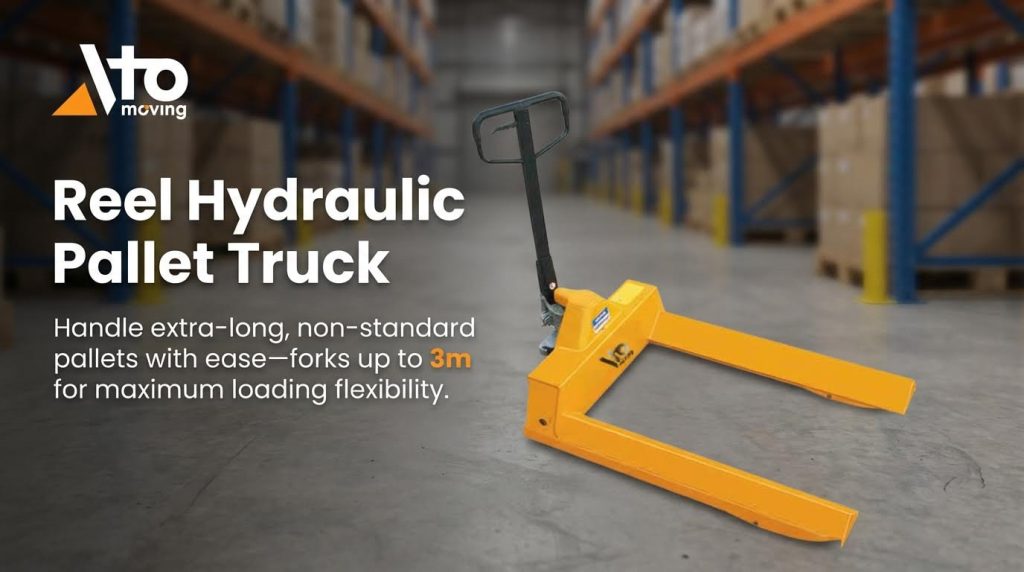
Off-road and specialty pallet trucks use reinforced frames and large wheels. This makes them heavier than standard warehouse units. A typical off-road pallet truck weighs about 200 to 220 kilograms. Some all-terrain designs in the 1,000 kilogram capacity range weigh around 190 to 200 kilograms.
Specialty all-terrain models with higher capacities or heavy-duty frames can weigh well above 200 kilograms. Industrial examples in rough-duty series have listed masses from about 150 kilograms up to more than 240 kilograms. Added weight comes from wider axles, larger pneumatic tyres, and braced fork structures.
These trucks can run on gravel, meadows, and uneven yards, as well as concrete and asphalt. However, their higher dead weight and larger contact patches change how loads transfer into slabs, ramps, and vehicle decks. Engineers should verify bridge plates, dock levelers, and temporary platforms against these higher wheel loads before regular use.
How Pallet Truck Weight Affects Floors
Engineers who ask how much does a pallet truck weigh should also ask how that weight reaches the floor. The truck mass, plus the load, converts into concentrated wheel forces that act on slabs, ramps, and platforms. Poor matching between truck type and floor design can crack concrete, deform steel decks, or overload mezzanines. This section explains how to calculate those loads, how wheel contact areas drive surface damage, and how to select pallet trucks that stay within structural limits.
Floor Load Calculations and Safety Factors
Floor design always sees the total system weight, not only the pallet load. The correct question is not only how much does a pallet truck weigh, but what is the combined mass of truck, pallet, and goods. Typical manual pallet trucks weigh around 65–90 kg, while electric models often start around 180 kg and can exceed 400 kg. High-lift and scissor trucks can reach 120–260 kg because of taller masts and reinforced frames.
Engineers convert this mass into force using gravity and then divide by the number of load wheels. Static wheel load is lower than dynamic wheel load during braking, turning, or driving over joints. Design checks should therefore use conservative dynamic factors and apply safety factors in line with local codes. A simple checklist helps keep calculations consistent:
- Include truck dead weight, pallet, and product.
- Use worst-case rated capacity, not typical load.
- Account for impact factors on ramps and at thresholds.
- Compare wheel loads with slab punching and rack beam ratings.
Standards such as OSHA workplace rules and rack design codes like ANSI MH16.1 require that operators respect posted floor and rack load limits. Accurate truck weight data and clear documentation help prove compliance.
Point Loads, Wheel Loads, and Surface Damage
Even when average floor capacity looks high, wheel loads can still damage surfaces. Small nylon or steel rollers create high contact pressure because the load acts on a small area. Heavier pallet trucks with narrow hard wheels concentrate force and can crush weak screeds or chip concrete at expansion joints. Softer polyurethane wheels spread the load more but still transmit significant pressure when the truck carries its full rated capacity.
Key damage modes include:
- Surface spalling at joints and cracks due to impact.
- Rutting or polishing of asphalt under repeated traffic.
- Tile cracking where subfloors are thin or poorly bonded.
- Indentation and delamination in resin or epoxy toppings.
When asking how much does a pallet truck weigh, planners should also ask how large each wheel footprint is. A heavier electric truck with larger, softer wheels may be kinder to a coated floor than a lighter manual unit with small, hard rollers. Regular inspections around turning points, dock doors, and lift entrances reveal where point loads exceed what the surface can tolerate.
Matching Truck Weight to Slabs, Ramps, and Platforms
Matching pallet truck weight to each floor type reduces structural risk and repair cost. Ground-bearing concrete slabs usually handle higher loads than suspended slabs, mezzanines, or vehicle tail lifts. Ramps and platforms often have lower design capacities because of longer spans and higher bending moments. The total transport weight, including the truck, must stay within these ratings.
When engineers evaluate how much does a pallet truck weigh for a route, they should map every surface the truck will cross. Typical paths include warehouse slabs, dock levelers, truck floors, tail lifts, and external pavements. Each element can have a different allowable wheel load. A practical approach is:
| Element | Typical concern |
|---|---|
| Warehouse slab | Punching under concentrated wheel loads |
| Mezzanine or rack-supported floor | Beam bending and deflection |
| Ramps | Combined bending and impact at joints |
| Tail lifts and van floors | Local yielding and permanent deformation |
Off-road and specialty pallet trucks have higher dead weight because of larger wheels and reinforced frames. They work better on gravel or yards but can exceed the limits of light-duty platforms. Before approving a truck type, engineers should confirm truck mass, wheel layout, and route, then document any restrictions in site operating procedures.
Transport, Ergonomics, and System Design

Engineers who ask how much does a pallet truck weigh rarely stop at a single number. They must see how truck weight combines with load, racking limits, vehicle decks, and human capability. This section links pallet truck dead weight to transport safety, ergonomics, and overall system design. It shows how weight choices affect racks, aisles, vans, tail lifts, and long term injury costs.
Total Transport Weight and Rack Load Compliance
When planning any move, treat the pallet truck as part of the load. A typical manual pallet truck weighs about 65–90 kg, while electric walk-along units often weigh 180–320 kg and larger electric trucks can reach 400 kg or more. High-lift and scissor types usually sit around 100–150 kg, and reinforced off-road models often exceed 200 kg. These values matter whenever you calculate how much does a pallet truck weigh in a real transport scenario.
For safe design, combine four elements in every calculation:
- Truck dead weight
- Pallet weight
- Product weight
- Any added tools or attachments
Compare this total with floor and rack ratings. Use published rack load tables and follow standards such as ANSI MH16.1 for steel storage racks. Overlooking truck weight can push beam loads beyond design, increase deflection, and overstress welds and connectors. On trailers and tail lifts, the same oversight can exceed deck ratings or axle limits. Always document the worst case combination, not only the average load.
Maneuverability in Aisles, Vans, and Tail Lifts
Pallet truck weight strongly affects how the unit behaves in tight spaces. Lighter manual trucks turn easier in narrow aisles and inside vans, especially when the floor is uneven or contaminated. Heavier electric trucks add mass and longer chassis length, which can increase turning radius and side clearances. Designers must balance weight, wheelbase, and fork length against aisle width and vehicle geometry.
Key layout checks include:
| Aspect | Design focus |
|---|---|
| Aisle width | Allow turning plus safety clearance for operators |
| Vehicle interior | Check door height, wheel arches, and pillar intrusions |
| Tail lifts and ramps | Verify slope, surface friction, and rated capacity |
| Thresholds and curbs | Confirm wheel size and approach angle |
On ramps and tail lifts, extra truck weight increases required traction and braking force. A heavy electric truck with a full load can overload small tail lifts if you ignore the truck mass. Shorter wheelbase trucks with lower dead weight help when operators must pivot inside delivery vans or small retail backrooms.
Ergonomic Risk, Injury Costs, and Truck Selection
Ergonomics links directly to how much does a pallet truck weigh and how often operators move it. Manual trucks require human force to start, steer, and stop the combined mass of truck and load. High dead weight and high rolling resistance increase push and pull forces, which raises the risk of back and shoulder injuries. Industry data showed that most musculoskeletal cases came from overexertion and that back injuries were the main cost driver.
Electric pallet trucks reduce the force needed to move heavy loads. They shift effort from the operator to the drive motor and hydraulic system. This lowers peak push forces and reduces fatigue over long shifts. However, heavier electric units still need careful route planning, because stopping distances and impact energy rise with total mass. When you select between manual and electric trucks, consider:
- Average load mass and peak load mass
- Trip distance and slope profile
- Shift length and task repetition
- Injury history and compensation costs
In low volume zones with short runs, a lighter manual truck can be acceptable if loads stay within ergonomic force limits. In high volume or long distance routes, electric trucks usually cut injury risk and lifetime cost, even with higher purchase price.
Emerging Tech: Smart, Efficient, Connected Trucks
Recent pallet truck designs used connectivity and smarter power systems to manage weight and performance. Compact lithium-ion batteries reduced battery mass compared with traditional lead-acid units. This helped lower overall truck weight or freed mass for stronger frames without overshooting floor or lift limits. Lighter batteries also improved charging flexibility and reduced maintenance downtime.
Connected trucks added sensors and telematics. These systems tracked how much does a pallet truck weigh in operation by combining truck mass with measured or entered load data. They could flag overload events, log impacts, and monitor travel patterns. Engineers used this data to refine aisle layouts, ramp designs, and rack loading rules.
Smart control systems also optimized acceleration and braking curves. This limited peak forces on floors, tail lifts, and racking while still keeping cycle times high. Over time, fleets that used connected pallet trucks could match specific truck weights and features to each zone: light, agile units in tight retail spaces and heavier, high capacity electric units in bulk storage or cross-dock areas. Atomoving and similar manufacturers followed this direction with more efficient drivetrains and better energy management.
Summary: Choosing Safe, Floor-Friendly Pallet Trucks
When planners ask how much does a pallet truck weigh, they really ask how that dead weight affects floors, racks, and people. Typical values ranged from about 65 kilograms for basic manual low-lift trucks to 200 kilograms or more for electric units, and above 250 kilograms for high-lift or off-road designs. Longer forks, reinforced frames, and integrated scales all added weight but also increased capability and durability. Battery choice changed electric truck weight as well, with lead-acid packs far heavier than lithium-ion units.
These weight ranges mattered for floor load checks, especially on older slabs, mezzanines, vans, ramps, and tail lifts. Engineers needed to include truck weight plus payload in every load case to stay within slab ratings, rack beam capacities, and platform limits. Heavier trucks spread loads over more structure but increased point loads at wheels and raised surface damage risk on weak or soft floors.
Weight also shaped ergonomics and system design. Lighter manual trucks stayed easier to steer in tight aisles but demanded more human effort and raised overexertion risk. Electric and high-lift trucks reduced strain and injury rates but required layouts that accepted higher dead weight, turning radii, and charging zones. Future connected trucks and smarter batteries would not remove these trade-offs. They would instead help operators and engineers see real loads, protect floors, and pick pallet trucks that stayed both safe and floor-friendly over the full life of the system.
Frequently Asked Questions
How much does a pallet truck weigh?
A standard hand pallet truck typically weighs around 54 kg. This weight can vary slightly depending on the load capacity and design of the pallet truck. For example, a model with a load capacity of 2,500 kg and a fork length of 1,150 mm may have a tare weight of 54 kg Pallet Truck Specifications.
What factors influence the weight of a pallet truck?
The weight of a pallet truck is influenced by several factors:
- Material: Steel or aluminum construction impacts the overall weight.
- Load Capacity: Higher load capacities often require more robust designs, increasing weight.
- Features: Additional features like reinforced forks or ergonomic handles add to the weight.