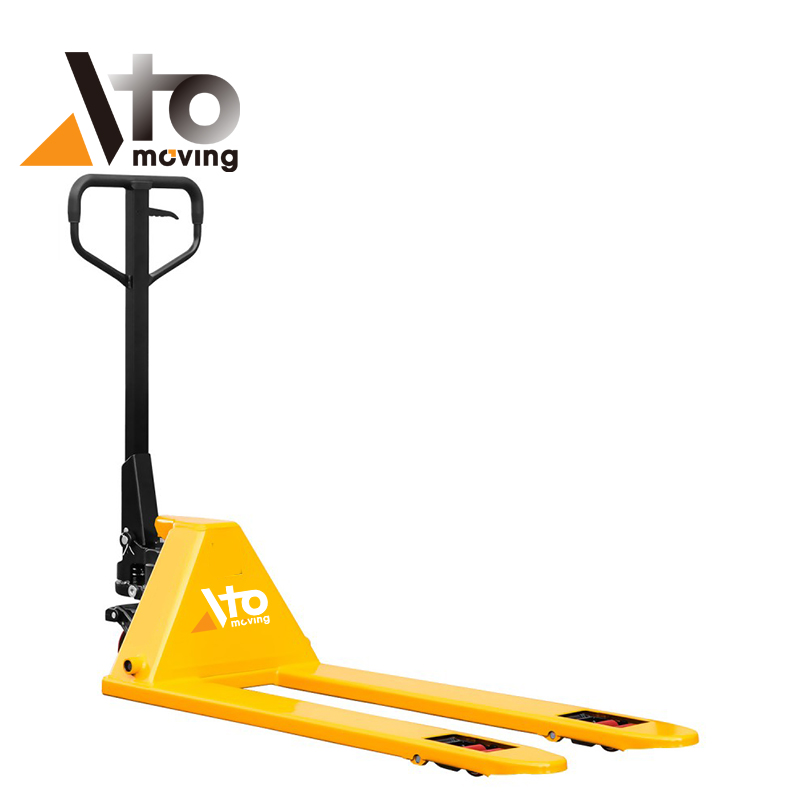
If you are asking what is a powered pallet truck, this guide walks through the essentials from an engineering and operations standpoint. We will break down how these trucks are built, typical specs and safety systems, and how they compare to manual options in real-world duty cycles. You will also see how to match models to your throughput, shifts, and budget so you can justify the investment with clear TCO and ROI. Use this as a practical reference when standardizing equipment across warehouses, production areas, or logistics hubs.
What A Powered Pallet Truck Is And How It Works
Definition And Key Components
For anyone asking what is a powered pallet truck, it is a wheeled, battery-powered industrial truck designed to lift and move palletized loads over short distances with minimal manual effort. Unlike a manual pallet jack, it uses electric drive and lift motors to move and raise the load, so the operator mainly steers and controls speed. This reduces strain, increases throughput, and makes it suitable for higher volume warehouse, manufacturing, and loading dock operations.
Key components typically include:
- Forks and mast/rigid frame: Steel forks support the pallet; a rigid chassis maintains alignment and stability under load.
- Drive system: An electric traction motor (for example, a 24 V, 0.7 kW drive motor) powers the drive wheel to move the truck forward and backward. Typical powered pallet trucks use separate drive and lift motors.
- Lift system: A dedicated electric lift motor (e.g., 24 V, 2.0 kW) drives a hydraulic pump to raise and lower the forks. Electric-hydraulic lift systems allow repeatable, controlled fork movement.
- Battery pack and charger: Trucks commonly use two 12 V deep-cycle batteries in a 24 V system, with an integral charger and battery level gauge for easy charging and status monitoring. A pair of 12 V, 95 Ah lead-acid batteries is a typical configuration.
- Control handle (tiller): The handle integrates throttle controls for travel, lift and lower buttons, a horn, and an emergency reverse “belly” switch that backs the truck away from the operator when pressed. Handles usually combine speed, lift, and safety functions in one assembly.
- Braking and safety systems: An electromagnetic “dead man” brake applies automatically when the operator releases the handle, and additional electromagnetic service brakes are common on electric pallet trucks. Electromagnetic brakes are standard on many powered pallet trucks.
- Wheels and tires: Polyurethane (PU) drive and load wheels are typical, balancing low rolling resistance with floor protection. Common wheel sizes include drive wheels around 230×75 mm and load wheels around 80×70 mm.
In operation, the operator walks behind or alongside the truck, uses the throttle to control speed and direction, and raises or lowers the forks electrically. The combination of powered traction and lifting allows the truck to move heavier loads faster and with less fatigue than manual pallet jacks, which is central to the value proposition behind powered pallet trucks.
Typical Specs And Performance Ranges
To fully answer what is a powered pallet truck from an engineering point of view, it helps to look at common specification ranges. While exact figures vary by model and duty class, most powered pallet trucks fall within a predictable performance envelope that suits standard pallets and warehouse layouts.
Typical capacity, dimensions, and performance
| Parameter | Typical Range / Example | Notes |
|---|---|---|
| Rated load capacity | Approx. 2,000–3,000 kg | Common ratings include 2,000 kg, 2,500 kg, and 3,000 kg at a 600 mm load center based on typical electric pallet truck data. |
| Load capacity vs. lift height | Approx. 1,000–2,000 lbs (450–900 kg) | Example: 2,000 lbs from 0–62″, 1,500 lbs from 62–118″, 1,000 lbs from 118–150″ as lift height increases. Capacity often derates at higher lift heights. |
| Fork dimensions | Width ~ 680 mm; length ~ 1,050 mm | Example: 26-3/4″ overall fork width and 42″ fork length for standard pallets. Sized to handle common pallet footprints. |
| Fork height (lowered / raised) | Lowered ~ 55–90 mm; raised up to ~1,500 mm | Example: 2-1/4″–3-1/2″ lowered and raised heights of 62″, 118″, or 150″ for high-lift units. High-lift designs extend beyond simple ground transport. |
| Overall dimensions | Length ~ 1,800–1,900 mm; width ~ 700–750 mm; height ~ 1,400–1,500 mm | Example: 1,850 mm length, 725 mm width, 1,435 mm height. Compact enough for narrow aisles. |
| Wheelbase | ~ 1,400 mm | Balances turning radius with longitudinal stability. Typical wheelbase around 1,400 mm. |
| Travel speed | ~ 5–6 km/h | Example: 5.2 km/h when loaded and 6.0 km/h when empty. Speeds are set to balance productivity and safety. |
| Lift speed | ~ 40–50 mm/s | Example: 40 mm/s laden, 50 mm/s unladen. Faster unladen to speed up empty travel. |
| Gradeability | ~ 8% laden; up to ~15% unladen | Suitable for gentle ramps and dock plates. Typical maximum grades are modest for safety. |
| Operating time per charge | ~ 3–8 hours, depending on duty | Example: up to 8 hours on intermittent use, around 3–4 hours under continuous heavy use. Battery life depends strongly on load and duty cycle. |
| Truck weight | ~ 430–585 kg | Example: 950–1,290 lbs depending on configuration. Weight impacts floor loading and transport. |
From a facility-planning perspective, these specs help answer what is a powered pallet truck in practical terms: a compact, electric, low-lift truck optimized for moving one pallet at a time in tight warehouse aisles at walking speed. Operators typically handle dozens to well over a hundred pallets per shift, with powered travel and lift allowing consistent performance across an 8-hour shift. Understanding capacity, fork geometry, and speed ranges is essential when matching truck models to pallet sizes, aisle widths, ramp gradients, and target throughput in real-world operations.
Engineering Design, Safety Systems, And Powertrain
Drive, Lift Motors And Battery Technologies
Understanding the powertrain is central to answering what is a powered pallet truck in engineering terms. Most units use separate electric motors for traction and lifting so you can drive and raise loads independently. Typical configurations include a 24 V, 0.7 kW drive motor paired with a 24 V, 2.0 kW lift motor, supported by two 12 V, 95 Ah deep‑cycle batteries for intermittent use up to a full shift at light to medium duty in typical warehouse conditions. Battery chemistry is usually lead‑acid in entry models and lithium‑ion in higher‑duty fleets, with lithium offering faster charging, deeper discharge tolerance, and better cold‑storage performance down to around -15 °C with insulation and heaters in refrigerated applications.
From a performance standpoint, powered pallet trucks are engineered for predictable cycle times and energy use. Typical travel speeds fall around 5–6 km/h laden and unladen, while lift speeds are in the 40–50 mm/s range depending on load and model design for standard warehouse trucks. Energy consumption averages about 0.08 kWh per pallet moved, which can deliver roughly one‑third energy savings versus combustion alternatives over time in distribution operations. With a spare battery and planned change‑outs, fleets can maintain near‑continuous 24‑hour operation without sacrificing throughput.
Key powertrain design points
- Separate drive and lift motors improve control and reliability under mixed duty cycles.
- Lead‑acid batteries suit single‑shift or low‑intensity work; lithium‑ion suits multi‑shift, high‑throughput sites.
- Energy‑efficient electric drives cut operating costs and support tighter environmental targets.
Braking, Stability And Safety Compliance
Braking and stability systems are engineered to keep a powered pallet jack stable at its rated capacity and speed. Modern units use electromagnetic service brakes that apply automatically when the operator releases the tiller or drive control, acting as a “dead‑man” brake to stop the truck and hold it on level ground or modest gradients in standard warehouse designs. Gradeability is usually around 8% when loaded and up to 15% when empty, so ramp and dock design must respect these limits to prevent rollback or overload of the braking system in typical warehouse layouts.
Stability is managed through wheelbase geometry, low‑mounted batteries, and strict capacity ratings. Common rated capacities are 2,000–3,000 kg at a 600 mm load center, and trucks must display these ratings clearly so operators do not exceed the safe envelope for standard pallet sizes. Safety standards for powered industrial trucks require that modifications affecting capacity or stability are not made without written engineering approval, and that only stable, safely arranged loads within the rated capacity are moved under applicable regulations. Emergency reverse or “belly” switches on the handle further protect operators by automatically driving the truck away from the body if the switch is pressed against them during operation in tight aisle situations.
Stability and safety design checklist
- Electromagnetic “dead‑man” braking tied to tiller position.
- Clearly marked capacity plate with load center information.
- Anti‑crush belly switch and controlled reverse function.
- Compliance with powered industrial truck safety and modification rules.
Ergonomics, Controls And Operator Training
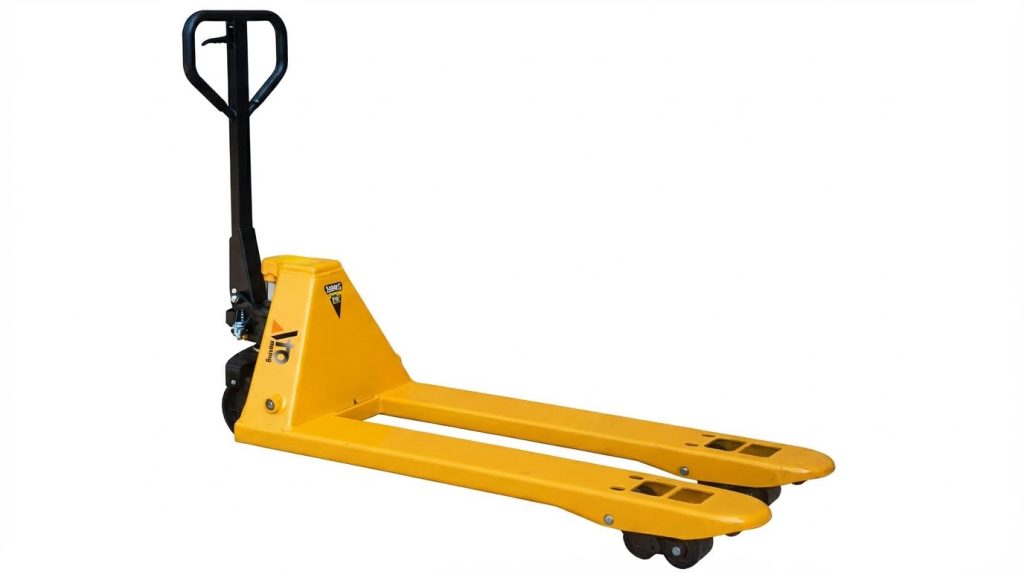
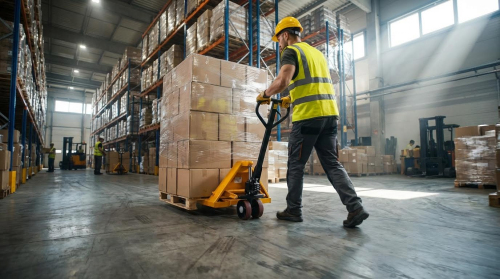
Ergonomics and controls are where the engineering design of a powered pallet truck directly impacts fatigue, errors, and safety. Tiller heads typically integrate throttle, lift, and lower functions along with horn and emergency reverse controls, allowing one‑handed operation and smooth modulation of speed and lift height during precise pallet positioning. Polyurethane drive and load wheels reduce rolling resistance and noise while improving grip on smooth warehouse floors, which helps maintain control at typical speeds and under changing floor conditions in indoor environments.
Operator training is mandatory for powered industrial trucks and is a core part of defining what is a powered pallet truck from a regulatory standpoint. Training must combine formal instruction with hands‑on exercises and cover truck‑specific topics such as controls, visibility, capacity, stability, inspection, and refueling or charging, as well as workplace topics like surface conditions, pedestrian traffic, ramps, and hazardous locations in line with safety requirements. Employers must certify each operator, maintain training and evaluation records, and provide refresher training when unsafe behavior, incidents, or major process changes occur to stay compliant. Well‑designed controls combined with structured training reduce musculoskeletal stress, cut incident rates, and improve throughput, making the equipment safer and more productive over its service life.
Ergonomic and training essentials
- Intuitive tiller controls that combine drive, lift, and safety functions.
- Low‑effort steering and optimized wheel materials for reduced operator strain.
- Documented operator certification, evaluations, and refresher training.
Matching Powered Pallet Trucks To Your Operation

Application Scenarios And Duty Cycles
When you assess what is a hydraulic pallet truck for your site, start with volume, shifts, and travel patterns. Manual equipment usually fits sites moving fewer than 60 pallets per day on a single shift, while electric units are better suited to 60–180 pallets per day, especially with two shifts and high labor costs. Decision matrices show powered units recommended for higher daily pallet counts and multi‑shift use. Map your flows (receiving, put‑away, picks, loading) and identify where operators walk long distances, climb ramps, or work in tight aisles; these are prime zones for powered pallet trucks.
- Light duty: Single shift, intermittent moves, long idle periods. Manual or small powered walkies may be sufficient.
- Medium duty: 60–150 pallets/day, mixed horizontal transport and loading. Standard powered pallet trucks are typically optimal.
- Heavy duty: 150+ pallets/day, multi‑shift, frequent ramp work or cold storage. Higher‑capacity batteries and spare packs are justified.
Throughput capability is a key differentiator. Powered units can handle around 22–28 pallets per hour compared with about 12 pallets per hour for manual models, which nearly doubles handling capacity in the same time window. This higher throughput also supports 15–25% gains in daily warehouse output when deployed correctly. In multi‑shift operations, a powered pallet truck with one spare battery can effectively deliver 24‑hour coverage, while manual solutions see efficiency drop after several continuous hours of use. Studies report up to 18% performance decline for manual units after 6 hours of continuous work.
Environment and task-specific considerations
Consider cold storage, slopes, and floor quality. Electric pallet trucks maintain performance in cold stores down to around -15°C with suitable battery insulation, while purely manual hydraulic systems experience oil thickening at lower temperatures. This makes powered units more consistent in chilled logistics. If your operation involves frequent lifting cycles to rack height, the faster lift speeds of powered equipment can cut cycle times significantly, for example from 55 seconds to 28 seconds on a typical 2.7 m lift path. This directly increases picks per hour and reduces congestion in narrow aisles.
Selection Criteria, TCO And ROI Considerations
Once you understand your duty cycle, you can define selection criteria and total cost of ownership (TCO) for powered pallet trucks. Initial investment per powered unit typically ranges from $2,500 to $5,000, with warehouse integration adding roughly 15–20% for charging points and layout adjustments. Infrastructure upgrades such as electrical work and any floor reinforcement can represent up to 30% of first‑year expenses. Plan for 3–5 days of transitional downtime per deployment zone, during which throughput may drop by roughly 18–22% as staff adapt to new workflows. This temporary loss should be factored into your implementation schedule.
| Cost / Benefit Element | Typical Impact For Powered Pallet Trucks |
|---|---|
| Operator training | 8–12 hours per person at about $150–$300 per operator |
| Annual labor savings | Approx. $7,200 per operator via higher productivity |
| Maintenance cost | About $1,200/year vs. ~$500/year for manual units |
| Energy use | Roughly 0.08 kWh per pallet moved, about 33% less than diesel options |
| Injury cost reduction | Musculoskeletal injury costs may drop from $8,400 to $1,100 per year per risk profile |
These figures show why ROI can be attractive in the right setting. High‑volume operations handling 150+ pallets per day often reach payback in about 9 months, while medium‑volume sites (80–150 pallets/day) see payback around 14 months. Low‑volume facilities usually face ROI periods longer than two years, which may favor manual solutions. Over a five‑year horizon, mid‑sized warehouses can avoid roughly $12,000–$18,000 in energy costs compared with internal‑combustion alternatives, thanks to the lower energy consumption per pallet. This compounds with labor and safety savings to drive TCO down.
- Hard savings: Fewer labor hours per pallet, reduced overtime, lower workers’ compensation claims, and lower energy spend.
- Soft savings: Higher throughput, fewer product damage incidents, and more consistent service levels.
- Safety and compliance: Lower musculoskeletal injury rates (up to 67% reduction in high‑tonnage facilities) and up to 52% lower claim severity, which can reduce insurance premiums by nearly 19%. These factors improve both worker welfare and long‑term cost stability.
Practical decision checklist
To decide if powered pallet trucks are right for you, combine the technical understanding of what is a semi electric order picker with a simple checklist: daily pallets handled, number of shifts, typical travel distance per move, ramp and cold‑store usage, labor cost per hour, and current injury or damage rates. For operations below 60 pallets/day with low labor costs and simple layouts, manual trucks may still be the economical choice. For 60–180 pallets/day, multi‑shift work, or expensive labor markets, powered pallet trucks usually deliver a faster payback and lower TCO. Aligning equipment type with these parameters ensures that your investment supports both safety and long‑term productivity.
“”
Final Thoughts On Adopting Powered Pallet Trucks
Powered pallet trucks sit at the point where mechanical design, electrical systems, and operator safety meet. Geometry, wheelbase, and fork dimensions control how the load acts on the truck and floor. Capacity ratings, grade limits, and speed caps then define a safe operating envelope that engineers and supervisors must respect in every task plan.
Electric drive and lift motors, paired with the right battery chemistry, turn that envelope into predictable cycle times and energy use. Braking systems, low battery placement, and safety devices such as dead‑man brakes and belly switches protect the operator when conditions change or mistakes occur. Ergonomic tillers and polyurethane wheels reduce strain so operators can keep performance steady through a full shift.
For operations teams, the message is clear. Treat powered pallet trucks as engineered systems, not just upgraded jacks. Match truck class to pallet count, shifts, ramps, and cold‑store needs. Build ROI models that include labor, energy, training, and injury costs, not only purchase price. Then lock in safe use with structured training, inspections, and clear rules on capacity and gradients.
When you follow that approach, powered pallet trucks from Atomoving can raise throughput, cut injuries, and lower total cost over the full life of the fleet.
Frequently Asked Questions
What is a powered pallet truck?
A powered pallet truck, also known as an electric pallet jack or electric pump truck, is a type of material handling equipment designed to make transporting heavy loads easier. These machines are commonly used in warehouses and distribution centers for moving pallets efficiently. Electric Pallet Trucks Guide.
Is a powered pallet jack considered a forklift?
Yes, a powered pallet jack is classified as a Class III forklift under OSHA regulations (29 CFR 1910.178). This means it falls under the category of powered industrial trucks, and operators must undergo training that meets OSHA standards to ensure safety. OSHA Forklift Classification.
What factors affect the lifespan of a powered pallet truck?
The lifespan of a powered pallet truck typically ranges from 5 to 10 years if well-maintained. However, several factors influence its longevity:
- Frequency of use: Daily use in high-demand environments causes more wear.
- Maintenance practices: Regular servicing extends the equipment’s life.
- Operating conditions: Harsh environments can reduce durability.