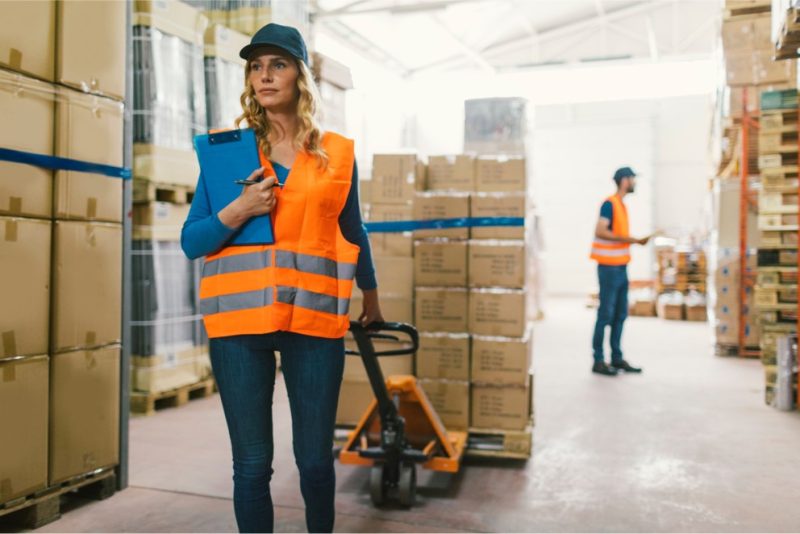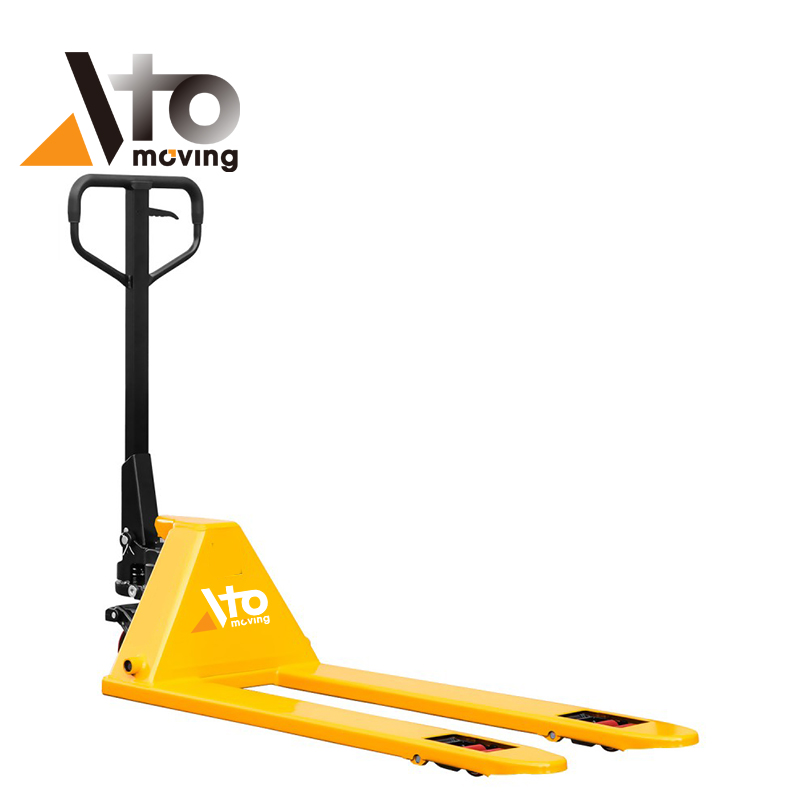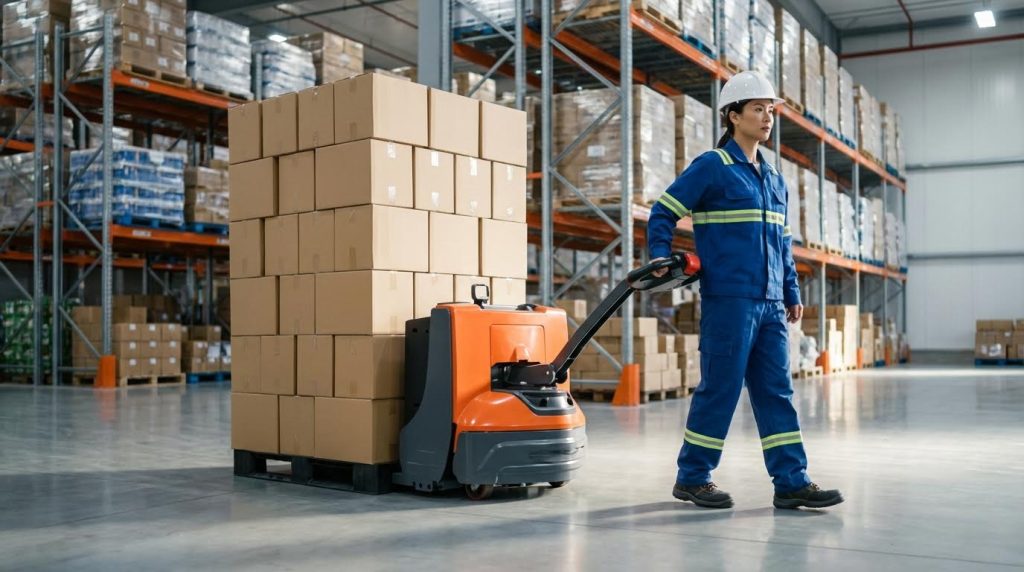
In every warehouse, the simple question “should you push or pull a pallet jack” has real consequences for injuries, product damage, and throughput. This guide explains how pallet trucks transmit force, how pushing versus pulling changes the physics and body loading, and when each method is safest in real facilities. You will learn practical rules for visibility, body position, ramps, and load limits so operators move pallets with less strain and lower risk. Use it to standardize procedures, train staff, and align your site rules with ergonomic best practice.
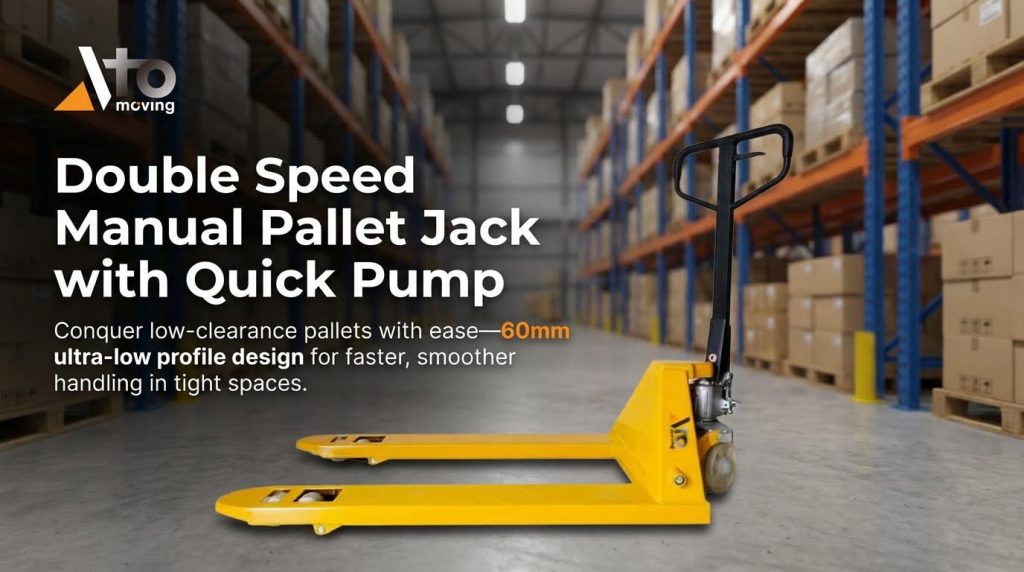
Understanding Pallet Jack Dynamics And Risk Factors
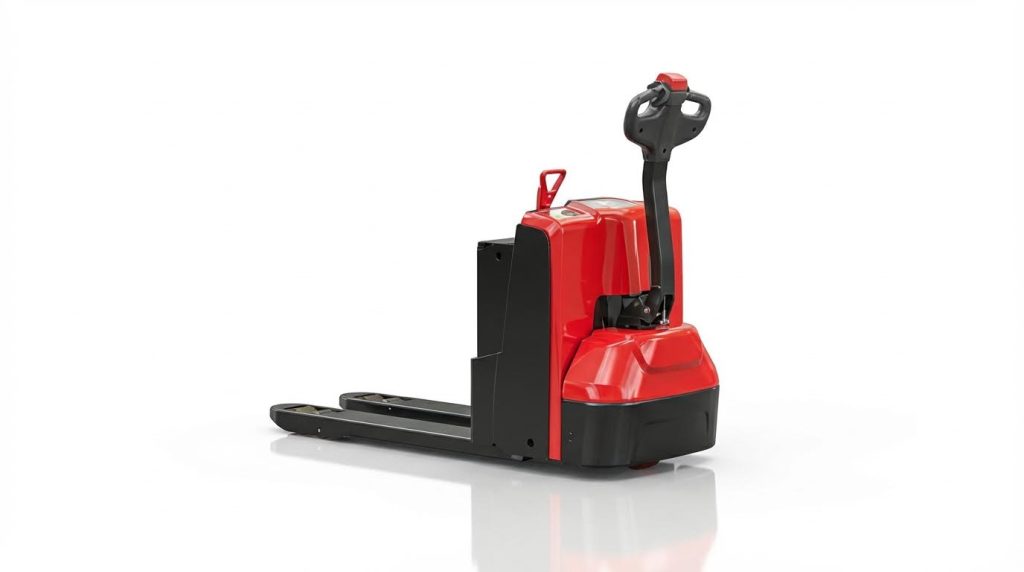
How Manual And Electric Pallet Jacks Transmit Force
Manual and electric pallet jacks move loads the same basic way: wheels carry the weight and the handle or tiller transmits operator input. On a manual unit, the operator applies force through the handle, which converts push or pull into horizontal force at the steer wheels and forks. With an electric pallet jack, a drive motor creates the horizontal force while the operator mainly steers and modulates speed, so physical strain is lower but kinetic energy and stopping distances are higher. In both cases, poor maintenance, flat‑spotted or damaged wheels, and worn components increase rolling resistance and instability, which raises the force the operator must apply and the risk of loss of control. Daily inspections and defect reporting are therefore critical before deciding whether you should push or pull a pallet jack.
- On manual jacks, most of the operator’s effort goes into overcoming rolling resistance and any floor irregularities.
- On electric jacks, the operator’s main ergonomic risk shifts from high push–pull forces to collision, foot injury, and ramp/runaway hazards due to higher speeds and mass. Training and inspections help control these risks.
- Hydraulic systems only lift the load; they do not help with horizontal movement, so poor load positioning or overloading sharply increases required push or pull force. Hydraulic pallet truck reduce this effect.
Key risk factors in force transmission
Major risk factors include exceeding the rated capacity, which for many manual units is around 2000–2500 kg with some models up to 5000 kg, increasing structural and stability risk. Staying within the nameplate capacity helps keep forces in a manageable range. Poorly stacked or unsecured loads create shifting centers of gravity, which can amplify side loads on the operator during turns. Finally, uneven floors, slopes, and debris increase rolling resistance and can cause sudden spikes in handle force, especially if the jack is being pulled with the operator’s back turned.
Physics Of Pushing Versus Pulling Heavy Loads
The core physics question behind “should you push or pull a pallet jack” is how the direction of force affects your body and the load. When you push, you lean your body weight into the handle, using large leg and glute muscles and keeping your spine more neutral, which typically reduces back and shoulder strain. Humans can usually generate higher safe force when pushing than when pulling because pushing allows a more stable stance and better muscle recruitment. Ergonomic studies have shown that pulling places the shoulders and lumbar spine in less favorable positions, increasing injury risk at the same load.
- Pushing a pallet jack generally improves control and lets the operator use body weight to overcome rolling resistance with lower muscular effort. Guidance documents therefore recommend pushing as the default on level floors.
- Pulling can increase maneuverability in tight spaces and sometimes visibility of the path, but it also raises the chance of back and shoulder strain and of the jack striking the operator’s feet or heels. Back and shoulder injuries from forceful pulling are a documented risk.
- On slopes, gravity adds or subtracts from the push or pull force. If the load is “above” you on a ramp, pushing can let the load run away, while pulling with the jack in front of you keeps the mass downhill and more controllable. Drum dolly and ramp safety recommendations therefore call for the jack to remain in front of the operator on descents.
Force, friction, and real-world exceptions
From a physics standpoint, the horizontal force you need is mainly set by load weight, wheel condition, and floor friction. Whether you push or pull does not change that friction value, but it changes how safely your body can apply the required force. In some special tasks, such as lifting a small hand cart or light pallet over a curb, pulling at an angle can be more energy-efficient because you partly unload the wheels and reduce friction. This effect is real but applies mainly to lighter, intermittent moves, not to routine transport of heavy pallets in warehouses. For typical warehouse operations with pallet jacks near their rated capacity, pushing on level ground and pulling only when required for ramps, tight spaces, or visibility offers the best balance of physics, ergonomics, and safety.
Ergonomic And Safety Rules For Push Vs. Pull
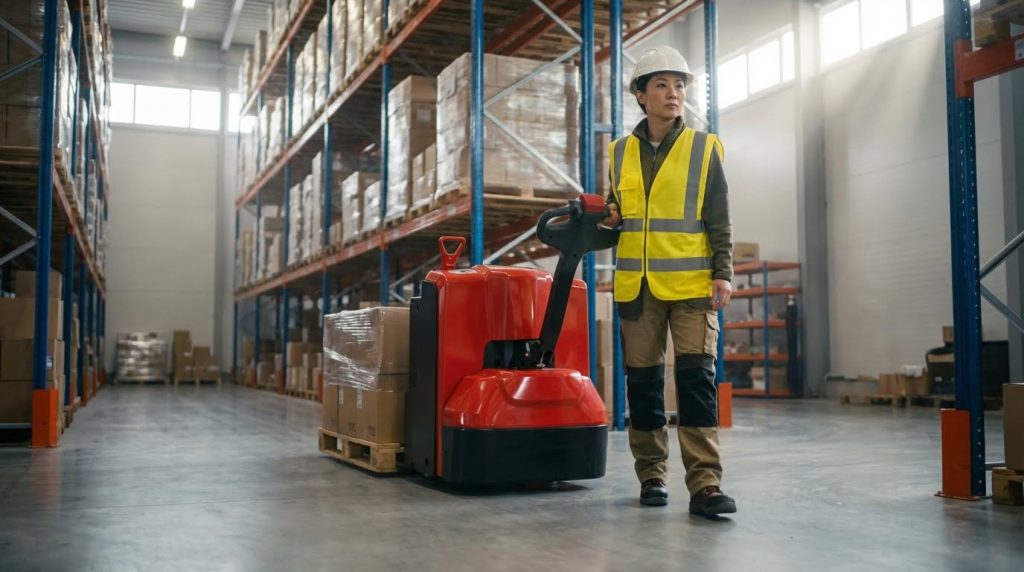
When You Should Push A Pallet Jack
In most flat, level conditions, the safest answer to “should you push or pull a pallet jack” is to push. Pushing lets you lean your body weight into the handle, so your legs and core do more work and your spine stays in a neutral posture. This reduces back and shoulder strain compared with pulling, which often twists the torso and loads the smaller shoulder muscles. Guidance for pallet jack operation notes that pushing usually provides better control and uses body weight more effectively than pulling. Pushing is generally recommended due to better control and the ability to use body weight. From an ergonomic standpoint, humans can safely generate more force when pushing than when pulling because the joints are in stronger positions and larger muscle groups are engaged. Pushing tasks typically allow more favorable postures and muscle recruitment. In practice, pushing is preferred when:
- The floor is level, dry, and free of debris.
- Aisles are straight enough that you can stay behind the load.
- The load is within the rated capacity and stable on the forks. Most manual pallet jacks are rated around 2000–2500 kg, with heavy-duty units up to 5000 kg.
- You have clear visibility ahead and enough space to stop and turn smoothly.
When you push, keep the handle between about waist and mid‑chest height, walk at a controlled pace, and avoid sudden jerks that could shift the load. Smooth, controlled operation helps prevent tipping or loss of stability. This approach keeps forces predictable and reduces cumulative strain over a shift.
When Pulling Is Safer Or Unavoidable
Even though pushing is preferred, there are situations where pulling is safer or simply unavoidable. In very tight spaces, narrow doorways, or when maneuvering around fixed obstacles, pulling the pallet jack can give you a shorter turning radius and finer steering control. Some safety guidance also notes that pulling may improve your ability to see hazards ahead when the load height blocks your view while pushing. Pulling can sometimes offer better maneuverability and visibility of obstacles. On ramps and slopes, the rule changes: many safety programs require the pallet jack and load to remain downhill of the operator. When descending, that usually means the operator walks uphill of the load and the jack is effectively being pulled down the ramp in front of them, so it cannot run over their feet if it accelerates. Guidance recommends keeping the pallet jack in front of the operator on slopes and avoiding turns on ramps. However, pulling increases the risk of back and shoulder injuries if you lean back, twist, or jerk the handle. Safety resources warn that forceful pulling of pallet jacks has caused back trauma and shoulder dislocations. Pulling pallet jacks forcefully has been linked to back and shoulder injuries. To reduce these risks when pulling is necessary:
- Keep the handle close to your body and stay between the jack and the clear travel path.
- Walk, do not run, and avoid twisting your torso; turn with your feet.
- Reduce load weight where possible and ensure the pallet is stable and low to the ground. Loads should be stable, within the rated capacity, and kept close to the floor.
- Never pull backward blindly into intersections or pedestrian areas; stop and check first.
In summary, when you ask “should you push or pull a pallet jack” for a given task, choose pulling only when space, visibility, or slope conditions make pushing less safe, and then strictly control posture and speed.
Body Position, Visibility, And Injury Prevention
Body position and line of sight are the main controls you have to prevent musculoskeletal injuries and collisions when deciding whether you should push or pull a pallet jack. Ergonomic research shows people can safely apply more force in pushing because the spine stays more upright and the shoulders are in stronger positions. Pushing generally places the body in more biomechanically advantageous postures than pulling. When you push, walk slightly to one side of the handle so you can see past the load, keep your elbows close to your body, and keep your feet clear of the wheels to avoid crush injuries. Safety resources stress the importance of keeping feet away from the jack path and wearing protective footwear. Hard-toe boots and awareness of pinch points help prevent foot injuries. Visibility is equally critical. In congested aisles and near intersections, slow down, use the horn if fitted, and ensure you can see pedestrians and other equipment. Limited visibility around pallet jacks increases collision risks in congested areas. If the load blocks your forward view while pushing, consider:
- Reducing the stack height or repalletizing the load.
- Switching to a pull with extra caution in a low-speed, low-traffic area.
- Using a spotter in high-traffic zones or at blind corners.
Injury prevention also depends on basic operating discipline. Keep loads within the rated capacity, centered on the forks, and just high enough to clear the floor. Stable loading and low fork height reduce tipping and loss-of-control risks. Move at walking speed, avoid sudden changes of direction, and stop if you lose visibility or footing. Combined with training and PPE, these habits significantly cut the risk of back, shoulder, and impact injuries during pallet jack operation.
Operating Best Practices In Real-World Facilities
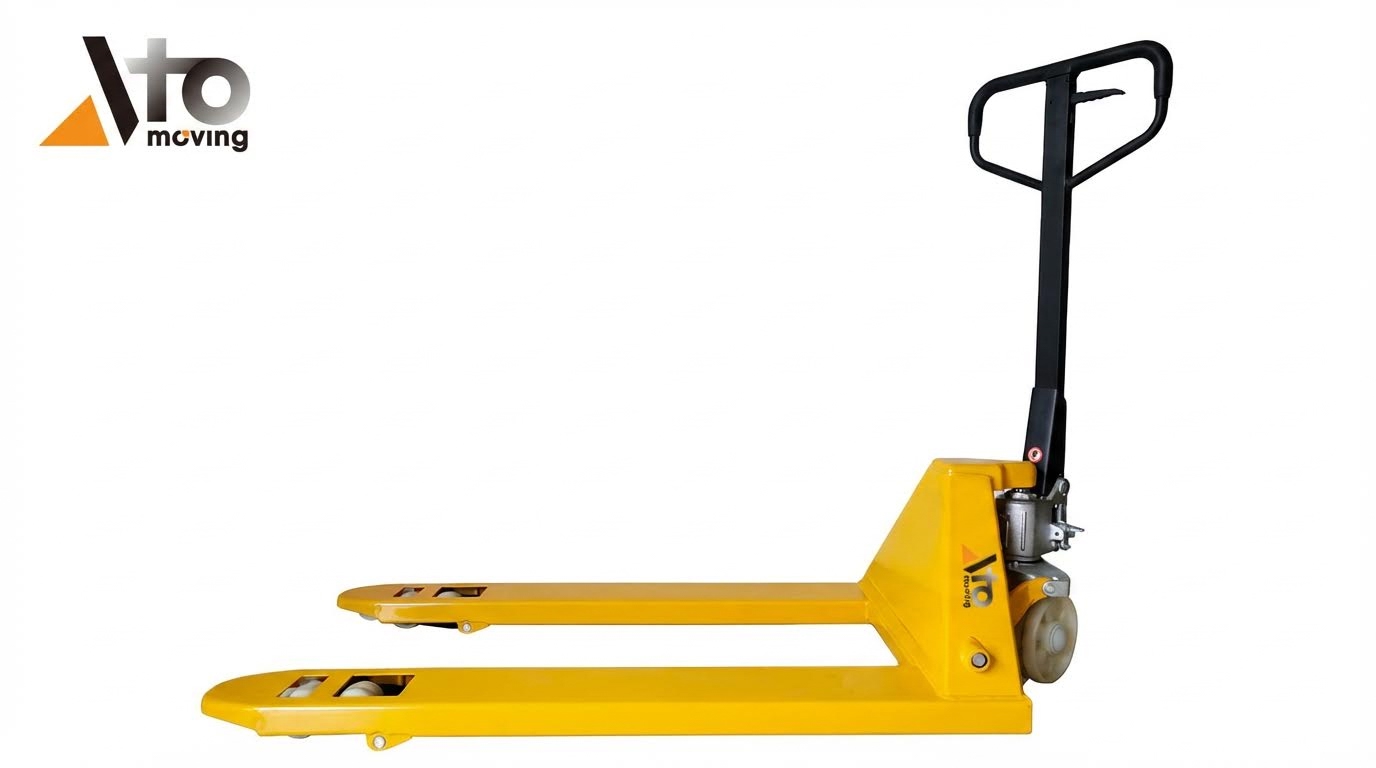
Pre-Use Checks, Load Limits, And Fork Height
Before you decide whether you should push or pull a pallet jack, confirm the equipment is safe and suitable for the load. Inspect the wheels, forks, handle, and hydraulic unit for cracks, flat spots, leaks, or bent components, and verify that the lift and lower functions operate smoothly. Pre-operation inspection should include hydraulic leaks, fork condition, and wheel integrity. Damaged equipment must be tagged out and reported instead of used.
Always match the pallet jack’s rated capacity to the job. Most manual units are designed for roughly 2,000–2,500 kg, with heavy-duty versions up to about 5,000 kg, so exceeding the nameplate rating increases the risk of structural failure and loss of control. Always confirm the maximum capacity on the label before lifting or moving a load. Keep loads stable and centered on both forks, and secure any loose or top‑heavy items with wrap or straps to prevent shifting during starts, stops, and turns. Even fork loading and proper stacking greatly reduce tip and collapse risk.
Fork height control is critical for stability and obstacle clearance. On level floors, keep the forks just clear of the surface, typically about 2–5 cm (1–2 in), to lower the center of gravity and reduce trip hazards. Transporting with minimal fork height improves stability. On ramps or uneven transitions, slightly increase fork height so tips do not dig into joints, plates, or dock lips, but avoid lifting higher than necessary to prevent an unstable, top‑heavy condition. Operate smoothly without sudden jerks so the load does not shift or walk on the forks. Smooth, controlled travel reduces tip and strain risks.
Quick checklist before moving any load
- Inspect wheels, forks, handle, and hydraulics; report defects.
- Verify rated capacity vs. load weight and avoid overloading.
- Center and stabilize the pallet on both forks; secure unstable stacks.
- Set fork height just clear of the floor, slightly higher at ramps or thresholds.
- Plan the route, including where you will push or pull, before moving.
Ramps, Slopes, Congested Aisles, And Docks
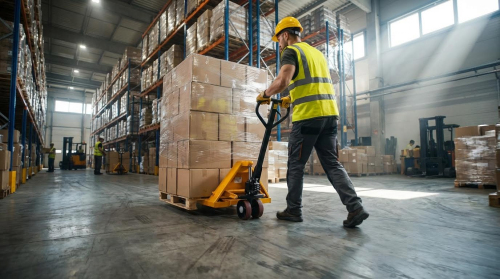
Environment strongly influences whether you should push or pull a pallet jack. On flat, open floors, pushing is usually safer and more ergonomic because you can use leg drive and body weight while keeping the load ahead and your spine in a neutral posture. Guidance generally favors pushing for control and reduced strain. In very tight aisles or when approaching blind corners, short controlled pulling moves may be necessary for maneuvering, but they should be brief and done with bent knees, engaged core, and the handle kept close to the body to limit shoulder and back load. Forceful, extended pulling increases back and shoulder injury risk.
Slopes and ramps add gravity into the equation, so direction and position become critical. For manual pallet jacks, the safest method on a downgrade is typically to keep the jack in front of you with the load downhill, moving backward so the equipment cannot run over your feet or pin you. The pallet jack should remain in front of the operator when descending ramps. Never turn on a ramp, and avoid using pallet jacks on steep inclines where a runaway load is possible; if a slope is unavoidable, keep speeds very low and maintain a firm two‑hand grip. Turning on ramps and using jacks on significant inclines is discouraged.
In congested aisles and intersections, collision risk often exceeds ergonomic concerns. Use horns at blind corners, reduce speed well before entering crossings, and maintain eye contact with pedestrians where possible. Limited visibility and congestion are major contributors to pallet jack collisions. Choose push or pull based on visibility first: you must be able to see the path, floor condition, and pedestrians. In many cases this means pushing with the load leading, but in a blind, narrow doorway you may briefly pull to “peek” the jack through while keeping your body out of the pinch zone.
Loading docks combine edges, slopes, and traffic, so controls must be strict. Verify trailer restraint, chocks, and dock plates are in place before entering, and keep loads low to maintain stability over dock transitions. Specific dock and incline protocols help prevent roll-off and trailer creep incidents. In these areas, the answer to whether you should push or pull a pallet jack depends on edge distance, slope direction, and where pedestrians or forklift traffic are moving; whichever method you choose, keep speeds low, maintain three‑point contact when stepping across gaps, and never allow the jack or load to point toward an unprotected edge.
Environmental best-practice snapshot
| Condition | Preferred Motion | Key Controls |
|---|---|---|
| Flat, open floor | Mainly push | Low fork height, smooth speed, clear line of sight |
| Tight or congested aisle | Mostly push, short controlled pulls as needed | Slow travel, horn at corners, protect shoulders and back |
| Ramp or slope | Jack in front on downgrade, avoid steep inclines | No turning, low speed, firm grip, stable load |
| Loading dock | Case-by-case, prioritize edge safety and visibility | Dock plate secure, restraints in place, low load height, watch pedestrians |
“”
Summary: Choosing Push Or Pull For Safe, Efficient Handling
Safe pallet jack operation depends on how force, geometry, and environment interact. The jack, the floor, and the load set the required horizontal force. Your choice to push or pull decides how safely your body applies that force. Pushing on level, open floors uses stronger leg and core muscles and keeps the spine neutral, so strain and fatigue drop. Pulling increases reach, twisting, and heel strike risk, so treat it as a controlled exception, not the rule.
Stability comes from three basics: sound equipment, stable loads, and correct fork height. Pre‑use checks catch wheel and hydraulic defects that raise rolling resistance and stopping distance. Centered, wrapped loads and low fork height keep the center of gravity inside the wheelbase, which cuts tip and shift risk when you start, stop, or turn.
Environment then fine‑tunes the decision. Push on flat floors with clear sight lines. Use short, careful pulls only for tight maneuvers, blocked visibility, or controlled ramp work with the jack in front. For operations and engineering teams, the best practice is clear: standardize “push by default,” define limited pull scenarios, train posture and visibility rules, and enforce inspections. This approach aligns physics, ergonomics, and site safety to protect people and product while keeping throughput high with Atomoving pallet equipment.
Frequently Asked Questions
Should you push or pull a manual pallet jack?
It is safer and more efficient to push a manual pallet jack rather than pull it. Pulling can strain your back and increase the risk of musculoskeletal injuries. Pushing gives you better control and reduces physical strain. Pallet Truck Safety Guide.
Should you push or pull an electric pallet jack?
For electric pallet jacks, the operation typically involves pulling, as they are controlled with a handle and controller. However, for manual pallet jacks, pushing is generally safer and requires less effort. Pulling manually can twist your body and strain your lower back. Pallet Jack Operation Tips.