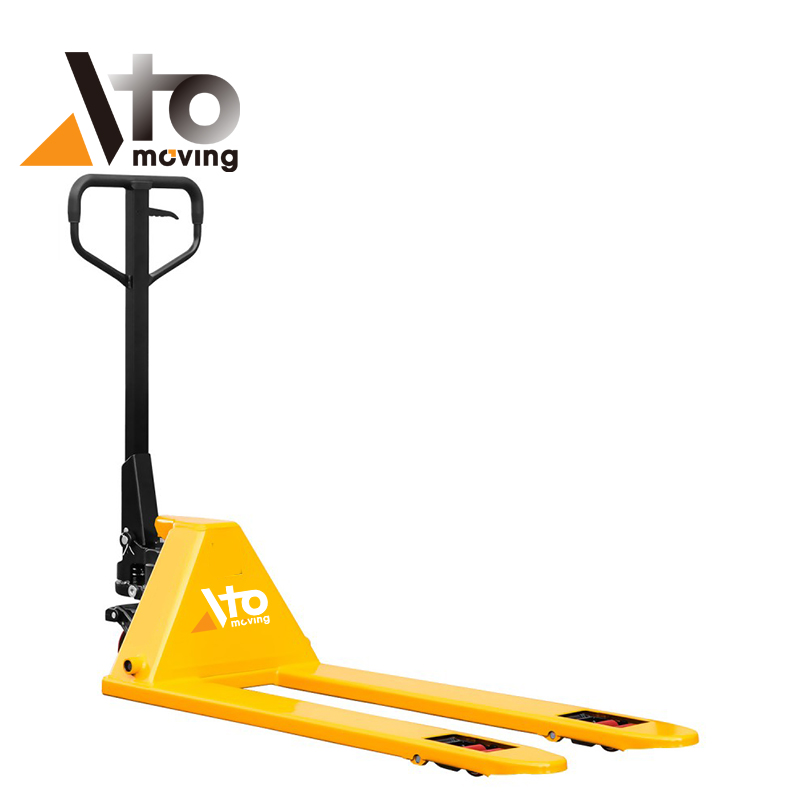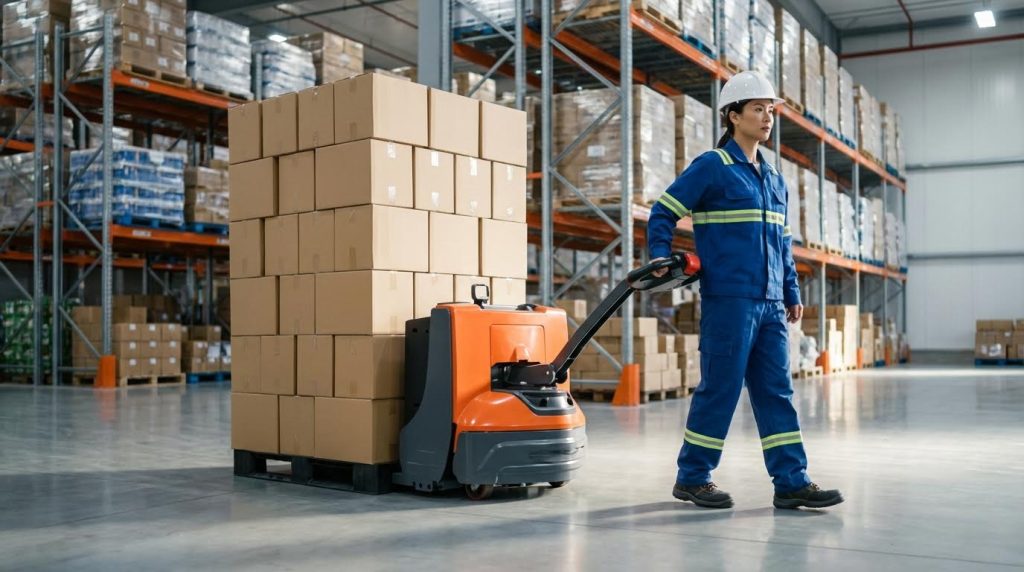
If you are asking what is a manual pallet jack, you are likely comparing options for safer, faster pallet movement in busy warehouses or docks. This article explains how walkie pallet truck work, how they differ from walkie and manual units, and which key specs matter most for your operation. You will see how capacity, speed, ergonomics, and safety systems translate into real productivity and lower operator fatigue. Use this guide to match equipment choice to your aisle layout, pallet flow, and safety requirements.
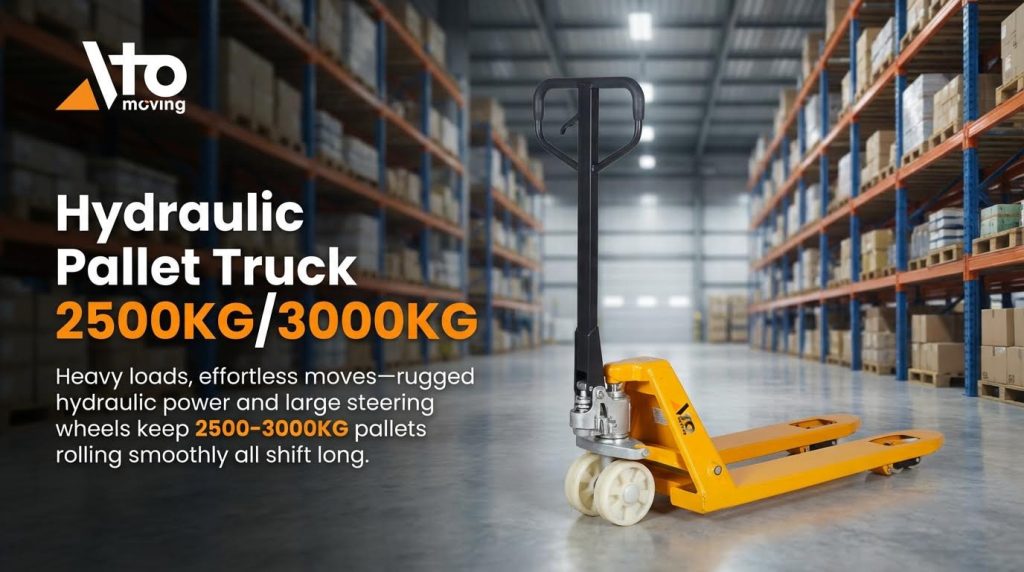
What Is A Rider Pallet Jack?
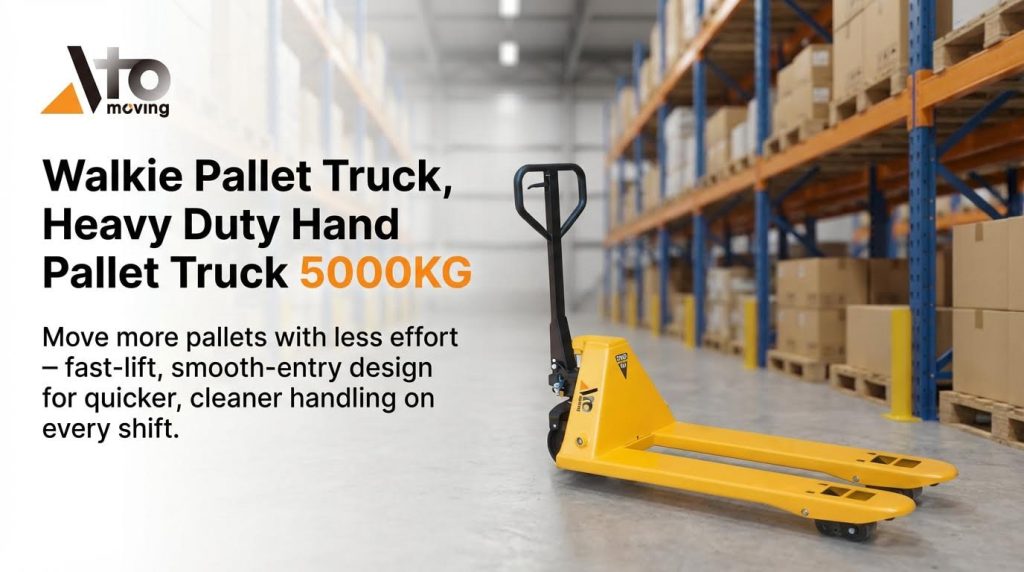
Core definition and operating modes
In warehouse terms, what is a rider pallet jack? It is an electric pallet truck with a built-in standing platform so the operator rides on the machine instead of walking beside it. The drive motor powers both travel and lift, allowing the unit to move palletized loads over longer distances with much less physical effort than a manual jack. Typical rider pallet jacks handle loads in the 6,000–10,000 lb range, making them suitable for heavy-duty distribution and manufacturing work. Load capacities of 6,000–10,000 lb are common for rider models. They use an electric powertrain, usually at 24 V, to keep performance consistent across the shift. 24‑volt electrical systems are a standard configuration.
Rider pallet jacks support several operating modes, depending on the task and aisle conditions:
- Riding mode: Operator stands on the platform for horizontal transport, typically at 5–6.5 mph under load for high pallet‑per‑hour productivity. Full-load travel speeds of about 5–6.5 mph are typical.
- Walk-along (tiller) mode: Operator walks beside the truck using the control handle, useful in tight aisles or near dock edges where riding is not practical.
- Creep / turtle mode: Low-speed, high-control mode for inching into trailers, racks, or congested areas, often activated by a dedicated button on the handle.
Modern rider jacks are designed for frequent start‑stop cycles, dock work, and cross‑docking. They combine powered lift, high travel speed, and compact overall length, which can range roughly from 80 to 155 inches depending on fork length and chassis design. Overall lengths in the 81.5–155.7 in range and widths around 32.5–40 in are common.
Rider vs walkie and manual pallet jacks
When asking what is a rider pallet jack in comparison to other pallet trucks, it helps to contrast it with walkie and manual types. All three move palletized loads, but they differ in power source, ergonomics, and best-fit applications.
| Type | Power source | Typical capacity range | Operator position | Best use case |
|---|---|---|---|---|
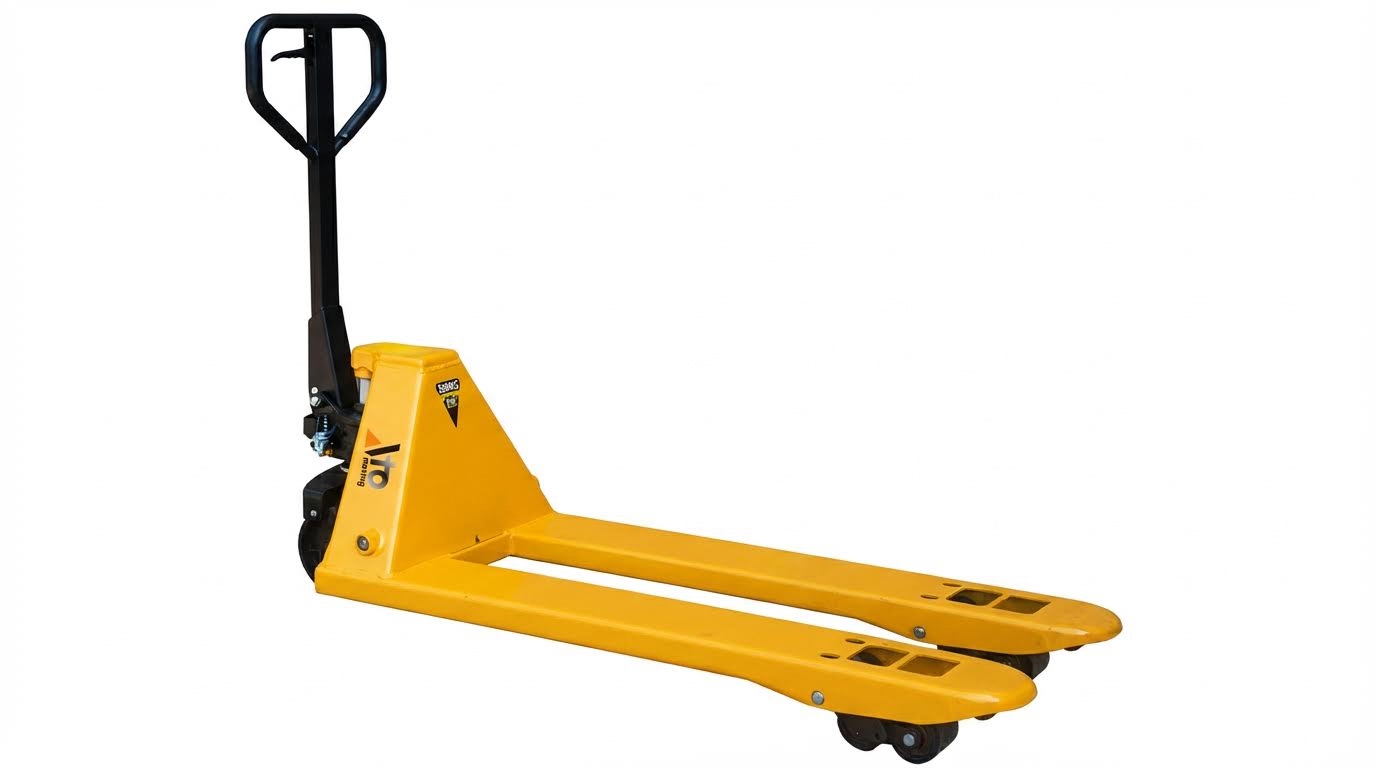
| Manual pallet jack | Human push / pull, manual pump | About 2,500–5,500 lb for most models Typical capacity range is 1.2–5.5 tons | Walk-behind only | Light-duty, short distances, small stockrooms |
| Walkie electric pallet jack | Electric drive and lift | Similar to manual or higher, depending on model | Walk-behind with control handle | Medium-duty, moderate distances, tighter aisles |
| Rider pallet jack | Electric drive and lift | Commonly 6,000–10,000 lb Rider capacities are typically in the 6,000–10,000 lb band | Standing rider platform, plus walk-along mode | High-volume, long runs, dock and cross-dock work |
Manual jacks rely entirely on operator effort and are best where usage is low and distances are short. Walkie electric units add powered lift and travel but still require the operator to walk, which limits speed and can increase fatigue over long runs. Electric pallet equipment in general can move roughly twice as many pallets per hour as manual jacks, which translated into significant labor savings in many studies. Analyses have shown electric pallet jacks transporting around 60–70 pallets per hour vs about 30 with manual units, with payback periods of roughly 5–8 months from labor savings.
Rider pallet jacks extend these electric advantages by putting the operator on the truck. This reduces walking time, increases average travel speed, and lowers strain on knees, hips, and shoulders during long shifts. They are especially effective where operators move more than 50 pallets per day or shuttle loads continuously between docks, staging, and storage. In those high‑throughput environments, a rider pallet jack often offers the best balance of speed, ergonomics, and cost per pallet moved.
Key Design Features And Performance Specs

Load capacity, speed, and gradeability
When people ask what is a rider pallet jack, they usually start with how much it can move and how fast. Typical manual pallet jack handle about 6,000–10,000 lb, which suits heavy, high-throughput warehouse work load capacities ranging from 6,000 to 10,000 pounds. Full-load travel speeds usually fall in the 5–6.5 mph range, which is fast enough for productivity but still controllable in busy aisles full load travel speeds between 5 to 6.5 miles per hour. Gradeability under load is typically 8–10%, allowing safe travel on dock plates, slight ramps, and sloped transitions between areas maximum gradeability under full load 8% to 10%. These three specs—capacity, speed, and gradeability—should always be matched to pallet weights, travel distances, and ramp conditions in your facility.
| Key spec | Typical rider pallet jack range | Selection note |
|---|---|---|
| Load capacity | 6,000–10,000 lb | Size for heaviest pallet plus margin |
| Travel speed (loaded) | 5–6.5 mph | Balance throughput with safety in traffic areas |
| Gradeability (loaded) | 8–10% | Check against ramps, dock plates, and slopes |
Powertrain, batteries, and charging options
Rider pallet jacks use electric drive and lift systems, most commonly with a 24 V architecture that supports consistent performance and simple service electrical systems operate at 24 volts. Understanding what is a rider pallet jack also means understanding its battery choices. Many models still use lead-acid batteries, but lithium-ion packs increasingly dominate because they hold voltage better under load, support opportunity charging, and offer a longer service life with no daily watering lithium-ion batteries offer higher efficiency, 3–4x longer life and 2–3 hour charging times. Cold-storage options protect the powertrain and electronics from condensation and low temperatures, which is critical in freezers and chill rooms cold storage options to protect components from condensation and low temperatures. When specifying a truck, align battery type and charger strategy (single-shift, multi-shift, or opportunity charging) with your operating hours and break patterns.
Common battery choices and use cases
- Lead-acid: lower upfront cost, 6–8 hour charge, needs watering and equalizing; suited to single-shift, lower-intensity use charging times (6–8 hours) and daily maintenance.
- Lithium-ion: higher purchase price, but faster 2–3 hour charging, no maintenance, and long cycle life; ideal for multi-shift, high-throughput operations 3–4x longer life cycle and opportunity charging.
Ergonomics, displays, and operator compartment
A key part of explaining what is a rider pallet jack is its focus on operator comfort over long shifts. Control handles are designed for low effort, often with dual thumb wheels and grouped lift, lower, and horn controls to reduce wrist movement and fatigue low-effort operation with dual thumb wheels and lift/lower and horn buttons. Operator compartments typically include padded backrests and knee pads to support the body during continuous riding and frequent direction changes padded backrests and knee pads. A digital display gives at-a-glance status on battery state, operating hours, and sometimes fault codes, and it can allow adjustment of performance profiles for different tasks or operators digital display provides quick access to key information and customization of performance parameters. Reinforced undercarriages using steel or ductile iron, stainless pins, and fork-height travel interlocks add durability and help maintain stable, predictable handling over rougher floor transitions reinforced undercarriages and fork height travel interlocks.
Safety, Applications, And Selection Criteria
Safety systems and standards compliance
When facilities ask what is a rider pallet jack, safety systems and standards should be part of the answer. Modern rider pallet jacks use multiple electronic safety layers, such as emergency reverse buttons, automatic speed reduction in turns, regenerative braking, and optional load indicators or scales to reduce collision risk and operator strain. These features have been reported to cut wrist and back injuries by up to 40% versus manual handling. Effective programs combine these built‑in systems with disciplined pre‑use inspections, including checks for hydraulic leaks, fork and wheel damage, and confirmation that the rated capacity matches the intended load. Operators also secure unstable loads and position pallets evenly on the forks to prevent tipping.
- Rider pallet jacks must comply with industrial truck safety standards such as EN ISO 3691‑1 in Europe and ANSI B56.1 in the USA, which define braking performance, stability, controls, and warning requirements. Depending on region, CE, UL, or ETL certifications may be required.
- Safe operation procedures include starting smoothly, using the truck’s braking system instead of abrupt manual stops, and scanning the floor for obstacles, cables, or uneven areas before travel. Guidelines recommend avoiding turns on ramps, keeping the load uphill on slopes, and descending inclines in a controlled manner.
- Traffic management is just as important as onboard safety: operators yield to pedestrians, use horns at intersections, and keep aisles free of debris or wet spots that could cause slips or sudden jolts. Training materials stress pedestrian right‑of‑way and visibility at blind corners.
- Ongoing training and maintenance close the safety loop. Best practice is to train operators on model‑specific controls, load limits, and emergency protocols, and to schedule regular lubrication, hydraulic inspections, and replacement of worn parts.
Common unsafe practices to avoid
Overloading beyond rated capacity, using damaged trucks, pushing instead of pulling in tight spaces, and parking with forks raised are recurring causes of incidents. Rider pallet jack programs should explicitly prohibit these behaviors and reinforce correct parking, with forks fully lowered and stored in marked areas away from emergency exits.
Matching jack dimensions to aisle and pallet layout
Another part of answering what is a rider pallet jack is understanding how its geometry fits the warehouse. The truck must match pallet size, load weight, and aisle width to achieve safe throughput. Rider pallet jacks typically handle heavier loads than manual units, with many models rated in the 6,000–10,000 lb range, so the selected capacity should exceed the heaviest pallet plus any added packaging or attachments. This higher capacity makes them suitable for high‑density, high‑throughput applications.
Overall truck dimensions drive aisle design and turning clearances. Rider pallet jacks are available with overall lengths roughly from 81.5 in up to about 155.7 in, and widths around 32.5–40 in. Longer platforms and forks increase pallet support and operator comfort but require wider cross‑aisles and staging areas to turn without damage. For standard 40 × 48 in pallets, fork length is usually chosen to fully support the pallet without excessive overhang, while custom or half‑pallet operations may need shorter forks for maneuverability.
- Warehouse layout has a strong effect on storage density. Optimizing aisle width for the chosen pallet jack can increase storage capacity by up to 20%, but aisles must still allow safe passing, turning, and visibility.
- Terrain and gradients also influence selection. Electric pallet trucks are better suited to ramps, cold storage, and rougher surfaces than manual jacks, but gradeability is typically limited to modest slopes, so steep dock approaches may still require alternative equipment.
| Selection factor | Typical engineering check |
|---|---|
| Pallet and load | Match fork length and width to pallet footprint; choose capacity above maximum pallet weight. |
| Aisle width | Verify the rider pallet jack can turn and pass with clearance; consider impact on storage density. |
| Travel paths | Assess ramps, dock plates, and floor quality; confirm gradeability and wheel type are adequate. |
| Throughput | Use rider pallet jacks where high pallet counts per hour justify powered travel and riding position. |
By aligning capacity, dimensions, and layout, facilities ensure the rider pallet jack can move efficiently without frequent three‑point turns, pallet damage, or congestion, which directly supports both safety and productivity.
“”
Final Thoughts On Rider Pallet Jack Benefits
Rider pallet jacks bring together capacity, speed, and smart geometry to move heavy pallets quickly without overloading operators. When you size capacity above your heaviest pallet, match gradeability to every ramp, and keep speeds in the 5–6.5 mph band, you protect stability while still hitting strong throughput targets. Correct fork length and overall truck length let operators turn cleanly inside your aisle layout instead of fighting tight corners or dragging pallets.
Electric powertrains with well-planned charging keep performance consistent across shifts, while ergonomic platforms, padded supports, and low-effort controls cut fatigue and injury risk. Built-in safety functions only work at their best when you pair them with disciplined inspections, clear traffic rules, and model-specific training.
The practical takeaway is simple: treat rider pallet jacks as engineered systems, not just powered carts. Start with your pallet weights, aisle widths, gradients, and daily pallet counts, then select trucks and batteries to match. For high-volume shuttle work, a well-specified rider pallet jack from Atomoving often delivers the lowest cost per pallet moved, while also raising safety and comfort for your team.
Frequently Asked Questions
What is a Rider Pallet Jack?
A rider pallet jack, also known as a pallet truck or pump truck, is a tool used in warehouses for lifting and moving pallets. It is commonly found in warehouses for moving goods within the confines of the warehouse. There are two types of pallet jacks: manual and electric, each with their strengths, weaknesses, and specific uses within a warehouse operation. Pallet Jack Types.
Is a Rider Pallet Jack Considered Industrial Equipment?
Yes, a rider pallet jack is classified as industrial equipment. According to OSHA, pallet jacks fall under Class III: Electric Motor Hand Trucks or Hand/Rider Trucks. This classification highlights their role in material handling operations. OSHA Pallet Jack Classification.