Knowing how to lift a heavy pallet safely required more than good technique; it depended on understanding loads, risks, and regulations across the entire operation. This article examined how to assess heavy pallet loads, identify injury mechanisms, and decide when to automate. It then compared suitable equipment, from manual pallet jack to AGVs and vacuum lifters, and detailed engineering controls such as ergonomics, floor conditions, and digital monitoring. Finally, it integrated these aspects into a summary framework so operations teams could align safe heavy pallet lifting with productivity and compliance goals.
Assessing Heavy Pallet Loads And Risk Factors
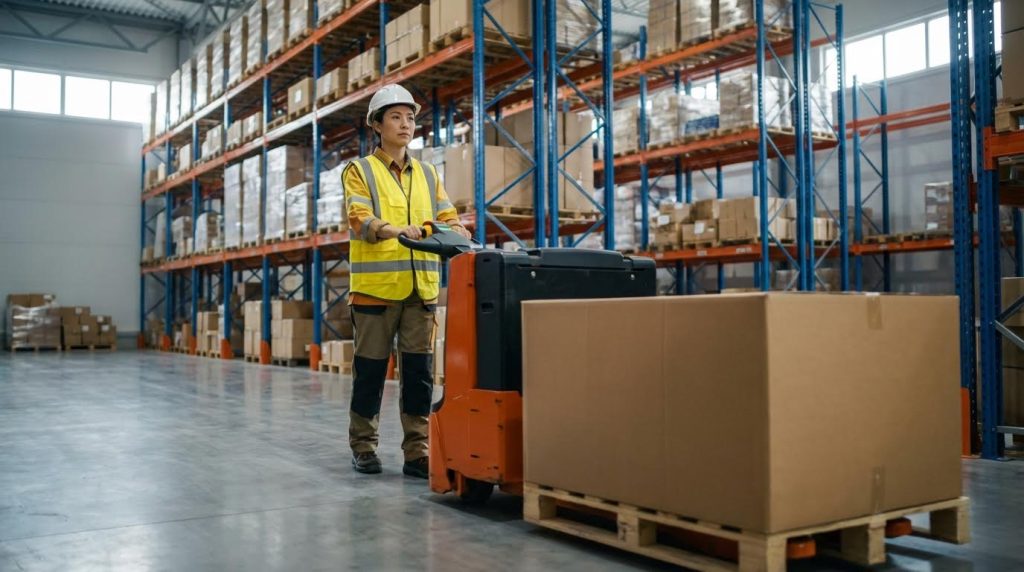
Understanding how to lift a heavy pallet safely starts with a structured assessment of the load and the task. Engineers and safety managers must quantify pallet mass, geometry, and handling frequency before deciding on equipment or procedures. This section explains what qualifies as a heavy pallet, how injuries occur, which regulations apply, and when to switch from manual to powered or automated handling.
Defining “Heavy” Pallets And Load Characteristics
In industrial practice, a “heavy” pallet usually exceeds safe manual handling limits for one worker. Many ergonomists treated repeated lifts above 20–25 kilograms as high risk, especially below knee height or above shoulder height. Warehouse pallets often reached 500–1,200 kilograms when fully loaded, which required mechanical assistance. Engineers evaluated not only total weight but also load distribution, center of gravity, and pallet stiffness. Unevenly stacked boxes or liquids in drums shifted during transport and increased tipping risk. Low-friction interfaces, such as shrink wrap on smooth deck boards, reduced stability under acceleration or braking. When planning how to lift a heavy pallet, practitioners specified pallet type, dimensions, and load geometry to match jacks, lift stacker, or level loaders with adequate capacity and fork spacing.
Common Injury Mechanisms In Pallet Handling
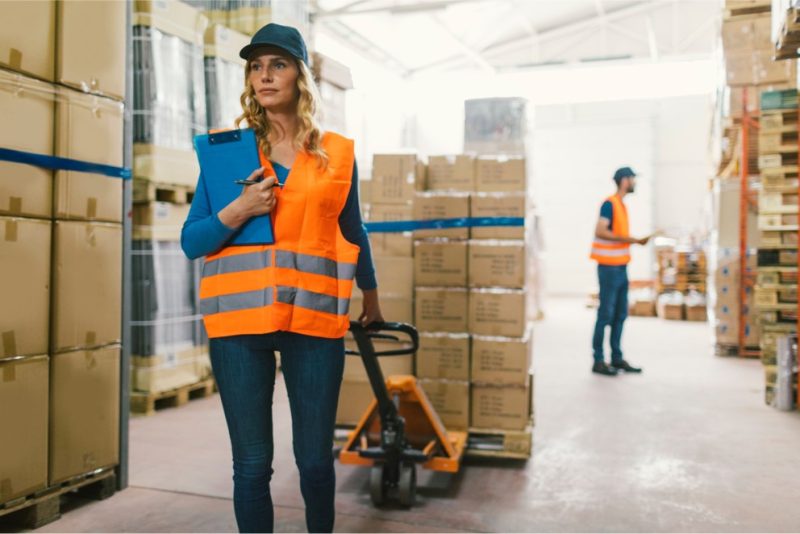
Most pallet-related injuries arose from overexertion, awkward postures, and unexpected load movement. Workers frequently bent at the waist to place 80–100 pound cartons on the lowest pallet layer, which created high spinal compression and shear forces. Repetitive pulling and pushing of manual pallet jack on rough floors increased hand, wrist, and shoulder strain. Flat-spotted wheels or under-maintained bearings raised rolling resistance and forced operators to apply excessive force to start or stop loads. Crush and foot injuries occurred when pallets shifted, fell from unstable stacks, or rolled unexpectedly on inclined or uneven floors. When defining procedures for how to lift a heavy pallet, safety teams prioritized waist-height handling, minimized twisting, and used turntables or rotators to avoid manual repositioning of loads.
Regulatory And Standards Considerations (OSHA, ISO)
OSHA regulations required employers to maintain safe material handling systems and to train workers in proper lifting and powered truck operation. While OSHA did not publish a single numeric lifting limit, it expected employers to follow recognized ergonomic guidelines and to reduce overexertion hazards. ISO standards, such as those covering industrial trucks and ergonomics, defined design and safety requirements for pallet jacks, stackers, and AGVs. These standards addressed braking performance, stability, control layout, and visibility around loads. Compliance meant specifying rated capacities in kilograms, verifying that equipment could handle the heaviest pallet plus attachments, and ensuring that safety devices functioned correctly. Documentation of risk assessments, inspections, and operator training formed part of a defensible approach to how to lift a heavy pallet in line with global best practice.
When To Automate Versus Manual Handling
Deciding between manual, powered, or automated handling depended on load mass, task frequency, travel distance, and environmental constraints. Manual pallet jacks suited occasional movement of moderate-weight pallets over short, level distances with good floor conditions. Once operators repeatedly handled pallets above roughly 500–700 kilograms, or pushed loads across long routes or uneven floors, powered equipment significantly reduced ergonomic risk. Heavy-duty electric pallet jacks, electric high lift pallet truck, or level loaders maintained optimal working height and minimized bending. Automation with AGVs, cobots, or vacuum-assisted lifters became attractive when flows were repetitive, predictable, and continuous. These systems reduced direct human contact with heavy pallets and lowered injury rates but required higher capital investment and layout standardization. Engineers evaluating how to lift a heavy pallet safely compared lifecycle costs, injury statistics, and throughput requirements before justifying a shift from manual to automated solutions.
Selecting The Right Equipment For Heavy Pallets
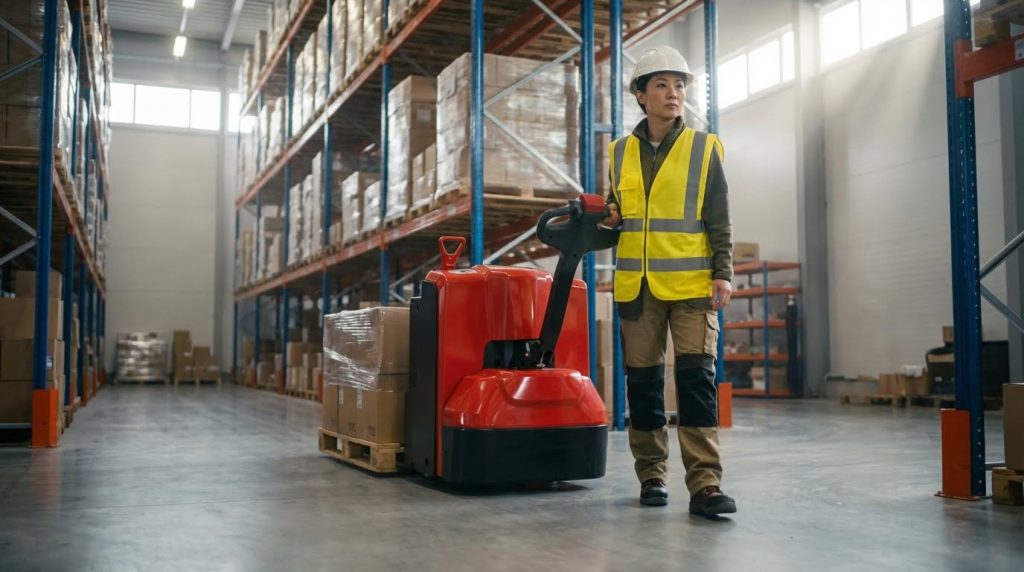
Choosing the correct equipment is central to any strategy for how to lift a heavy pallet safely and efficiently. The goal is to transfer most of the load from the operator’s body to engineered systems while matching capacity, environment, and duty cycle. Engineers should compare manual, semi-powered, and fully automated options based on mass, center of gravity, travel distance, and required lift height. This section explains how to map typical pallet weights, floor conditions, and process constraints to suitable handling technologies.
Manual Jacks, High-Lift Trucks, And Level Loaders
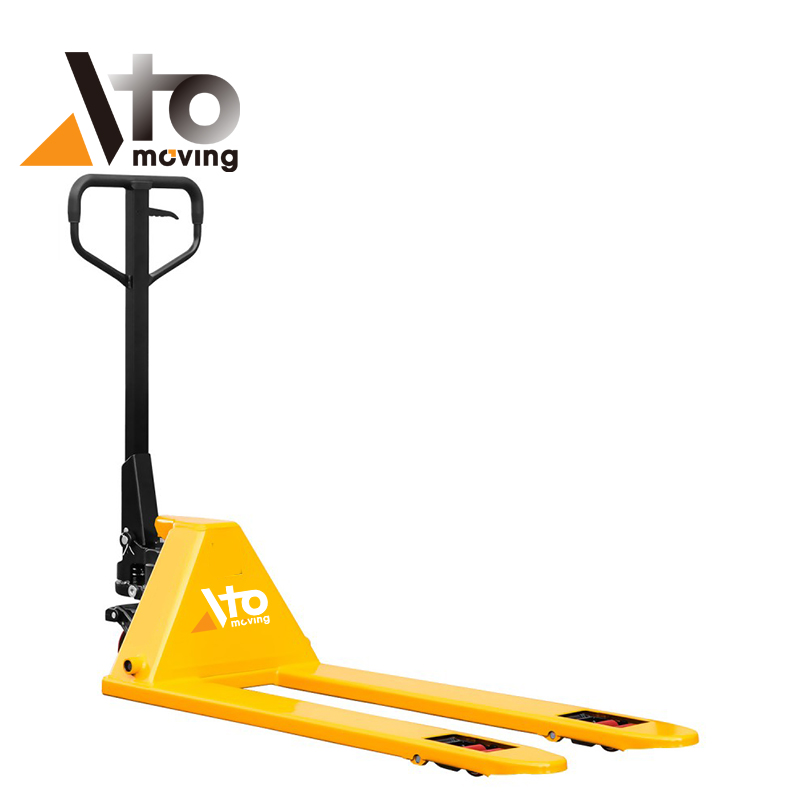
Manual pallet jacks suited heavy pallet handling only when load mass, travel distance, and frequency stayed low. Typical rated capacities ranged from 2,000 kilograms to around 3,000 kilograms, but ergonomic limits of push–pull forces governed safe use well before nameplate ratings. For engineers evaluating how to lift a heavy pallet manually, key parameters included handle geometry, wheel material, and lift height, which was usually below 250 millimetres. High-lift pallet trucks bridged the gap between transport and ergonomics, raising open-bottom skids to roughly waist height for picking or packing, with capacities near 700 kilograms. Dedicated level loaders and pallet positioners, including purely mechanical spring units and pneumatic or hydraulic tables, kept the pallet top within an ergonomic band, typically 700–1,100 millimetres, reducing trunk flexion and repetitive stooping. These devices rotated or elevated the load so workers could build or break down heavy pallets while maintaining neutral postures.
Heavy-Duty Electric Jacks And Transporters
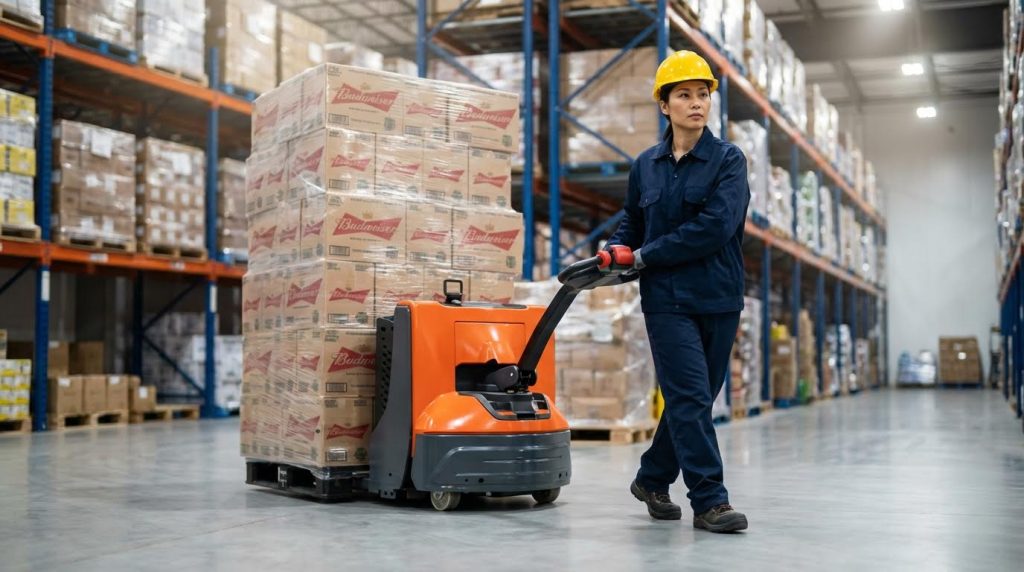
Heavy-duty electric pallet jacks and transporters handled individual loads from roughly 5 metric tons up to more than 500 metric tons. They used low lift strokes of about 50–100 millimetres to raise steel pallets or blocked loads, eliminating reliance on overhead cranes for heavy pallet moves inside plants. AC drive and steering motors with ±90° steering capability allowed tight manoeuvres in congested aisles while keeping required operator effort low. Motorized steering, tiller, platform, pendant, or radio remote controls reduced push–pull forces and supported safer strategies for how to lift a heavy pallet over longer distances. Lithium battery options shortened charging times to about two hours and supported multi-shift use. Engineers could specify fork length, width, travel speed, slope performance, and wheel compounds, including polyurethane or solid rubber, to match floor roughness and ramp gradients. Integrated safety features such as laser scanners, bumpers, and ultrasonic sensors mitigated collision risks, especially when transporting high-mass pallets with limited visibility.
AGVs, Cobots, And Vacuum-Assisted Lifters
Automated guided vehicles (AGVs) moved heavy pallets along predefined paths with minimal human intervention, improving repeatability and reducing manual exposure to high loads. In applications where the primary question was how to lift a heavy pallet repeatedly with minimal strain, AGVs with pallet forks or load platforms replaced manual jack travel between fixed points. Collaborative robots and vacuum-assisted lifters addressed the vertical lifting and positioning tasks rather than horizontal transport. Vacuum lifters used suction feet to grip cartons, bags, or even pallet layers up to roughly 270 kilograms, then raised and lowered them with minimal operator effort. Wire hoists with fork tools or hooks provided precise placement for lighter palletized loads under about 120 kilograms, especially in workstations requiring fine alignment. Integrating these systems into a cell allowed workers to supervise and control flow instead of performing high-frequency lifts, improving both throughput and musculoskeletal risk profiles.
Special Environments: Freezers, ATEX, And Rough Floors
Cold stores and freezer warehouses introduced unique constraints for how to lift a heavy pallet, including low-friction floors, condensation, and reduced battery performance. Equipment required low-temperature-rated seals, lubricants, and electronics, plus wheel materials that maintained grip on smooth or icy concrete. In ATEX or IECEx hazardous zones, such as paint booths or chemical plants, pallet transporters and AGVs needed explosion-proof designs, certified enclosures, and non-sparking components. Heavy-duty electric pallet trucks with compliant protection concepts allowed movement of high-mass pallets without introducing ignition sources. Rough or damaged floors demanded larger-diameter wheels, softer rubber compounds, and reinforced chassis to maintain stability and limit shock loading into the frame and cargo. Engineers should always pair equipment selection with floor repair or resurfacing plans, since even the best pallet truck performed poorly on rutted or uneven surfaces. Matching equipment design to temperature, atmosphere classification, and floor profile ensured that heavy pallet handling remained both safe and reliable over the full equipment lifecycle.
Engineering Controls For Safe Operation
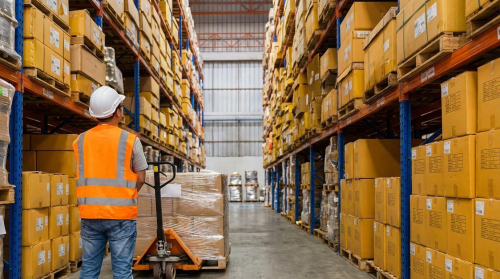
Engineering controls define how to lift a heavy pallet safely by shaping equipment behavior, workspace conditions, and operator interfaces. Effective controls reduce peak push–pull forces, limit awkward postures, and stabilize loads during transport. They also support compliance with occupational safety regulations by embedding protection into the design instead of relying only on personal behavior.
Ergonomic Height Control And Pallet Positioning
Ergonomic height control is central to how to lift a heavy pallet without overloading the spine. Height-adjustable level loaders, high-lift trucks, and scissor tables kept the work zone near elbow or waist height, usually between 800 millimeters and 1,100 millimeters. This range minimized trunk flexion and reduced disc compression during case picking or layer building. Mechanical, pneumatic, or hydraulic actuators automatically compensated for changing load weight, so the top layer stayed within the optimal handling zone as workers added or removed cartons. Rotating turntables further reduced twisting by allowing operators to bring each pallet side into reach instead of stepping around the load.
Floor Conditions, Wheels, And Stability Control
Floor and wheel conditions strongly influenced the actual forces required to move heavy pallets. Smooth, well-maintained concrete floors with no ruts, spalls, or bumps lowered rolling resistance and reduced whole-body vibration from powered trucks. Polyurethane wheels typically offered low rolling resistance and good load capacity, while solid rubber wheels tolerated rough surfaces but could develop flat spots over time. Engineering controls included periodic wheel inspection, replacement schedules, and specified maximum gradient values for ramps to limit uncontrolled acceleration. Stability systems, such as low center-of-gravity chassis, wide track widths, and electronic traction control, helped keep heavy pallets stable during cornering, braking, and travel over minor floor defects.
Operator Training, Procedures, And PPE
Engineering solutions only worked when operators understood how to lift a heavy pallet within the equipment’s design envelope. Structured training covered pre-use inspections, safe approach speeds, correct fork positioning, and limits for stacking height and pallet condition. Standard operating procedures described step-by-step sequences for picking, transporting, and staging loads, including rules for travel on inclines and through blind intersections. PPE, such as safety footwear with toe protection, cut-resistant gloves, and high-visibility garments, reduced injury severity when incidents occurred but did not replace engineering controls. Refresher training and practical assessments reinforced correct techniques, such as lifting with the legs, keeping loads close to the body, and avoiding manual handling when mechanical assistance was available.
Predictive Maintenance, Sensors, And Digital Twins
Predictive maintenance and sensing technologies improved control over heavy pallet handling by detecting problems before they created hazards. Condition monitoring on electric pallet jacks and stackers tracked wheel wear, brake performance, battery health, and drive motor temperatures. Sensors such as laser scanners, ultrasonic detectors, and sensitive bumpers supported collision avoidance, speed reduction in congested zones, and automatic stopping near obstacles. Digital twins of warehouses and equipment fleets allowed engineers to simulate traffic patterns, turning radii, and load distributions for different pallet weights and dimensions. These models helped optimize routes, specify safe speed limits, and validate that equipment selection matched the heaviest expected pallet loads, improving both safety and throughput.
Summary: Integrating Safe And Efficient Pallet Lifting

Safe strategies for how to lift a heavy pallet required an integrated approach that combined engineering controls, equipment selection, and operator behavior. Facilities that evaluated pallet mass, center of gravity, packaging stiffness, and floor conditions reduced overexertion, crush, and tipover injuries. They aligned practices with OSHA and ISO requirements, and used clear decision criteria to choose between manual, powered, and automated handling.
In practice, organizations that handled heavy pallets safely standardized equipment choices by load range and environment. They used height-adjustable level loaders, high-lift trucks, and stackers to keep work near elbow height and limit torso flexion. For higher masses, they deployed heavy-duty electric pallet jacks, stackers, or AGV-style transporters to eliminate manual pushing and pulling. In freezers, classified hazardous zones, or rough-floor areas, they specified suitable wheels, corrosion-resistant structures, and ATEX-compliant designs.
Future trends pointed toward greater use of sensors, digital twins, and data logging to monitor impact events, overloads, and near-misses during heavy pallet moves. Predictive maintenance reduced steering effort, wheel flat spots, and brake failures that previously increased musculoskeletal risk. At the same time, collaborative robots and vacuum-assisted lifters extended ergonomic protection to mixed-load picking and partial pallet handling.
Implementing these solutions effectively required phased deployment, task-based risk assessment, and rigorous operator training on how to lift a heavy pallet with minimal spinal loading. Facilities benefited when they coupled engineering controls with PPE, clear traffic management, and consistent pre-use inspections of pallets and equipment. This balanced approach recognized that technology alone could not eliminate risk; safe heavy pallet lifting depended on compatible equipment, disciplined procedures, and a sustained safety culture.