Safe pallet jack operation depends on simple, repeatable habits that protect people, loads, and floors. This article covers pallet jack types, key parts, and how load limits affect stability in real warehouse conditions. You will see how pre-use checks, PPE, and site preparation reduce failures before a single load moves.
The core sections explain how to lift a low profile pallet jack correctly, position forks, travel on ramps and in elevators, and lower loads without damage. The final part links daily safety practices to equipment life, downtime, and total lifecycle cost so engineering, safety, and operations teams can work from one shared standard.
Pallet Jack Types, Components, And Load Limits
This section explains how to lift a pallet jack safely by linking design, components, and load limits. Understanding type, structure, and rating helps operators choose the right jack and avoid overload or tip events. Engineers can also specify suitable equipment for floor conditions, temperature, and duty cycle.
Manual Vs. Electric Pallet Jacks In Industry
Manual pallet jacks rely on human force for both traction and lifting. The operator pumps the handle to pressurize the hydraulic unit and raise the forks. Typical rated capacities range from 1 000 kilograms to 5 000 kilograms. They fit short travel, flat floors, and low duty applications.
Electric pallet jacks use a traction motor and lift motor powered by batteries. Rated capacities often fall between 1 000 kilograms and 2 500 kilograms with a standard 600 millimetre load center. They reduce push and pull forces and support higher throughput. Electric units suit long runs, frequent cycles, and docks where operators lift a pallet jack load repeatedly in a shift.
When planning how to lift a pallet jack load efficiently, facilities often pair manual units with light picking zones and electric units with shipping lanes. This split reduces capital cost while controlling fatigue risk.
Key Mechanical Components And Their Functions
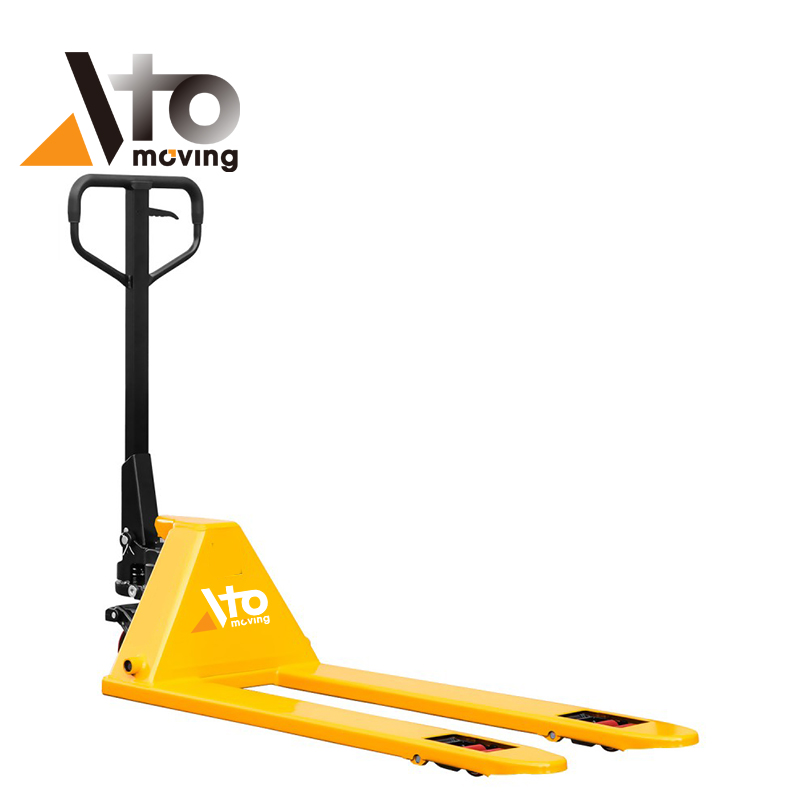
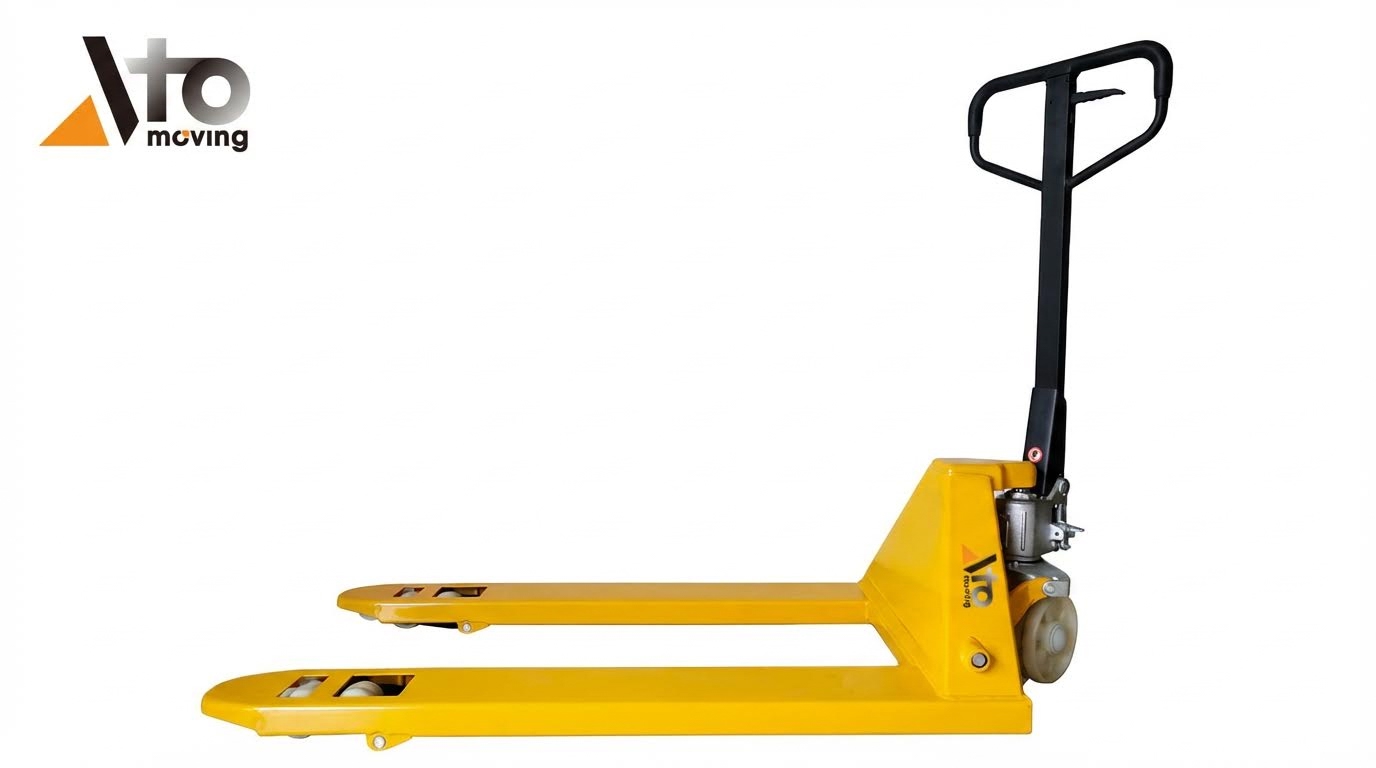
A pallet jack frame carries the forks and transmits load to the wheels. Forks support the pallet stringers and transfer weight to the hydraulic assembly. Typical fork lengths range from 800 millimetres to 2 000 millimetres. Narrow or wide fork spacing must match pallet openings.
The hydraulic pump converts handle strokes into lifting motion. A small piston pressurizes oil, which raises a larger ram connected to the fork linkage. To lift a pallet jack correctly, operators move the control lever to the lift position, then pump with smooth strokes until clearance reaches about 25 to 50 millimetres.
Steer wheels and load rollers guide motion and share load. Polyurethane tread reduces rolling resistance and floor damage. The control handle combines steering, braking, and lift or lower control. In electric models, a tiller head adds throttle, horn, and emergency stop. All components must work together to give predictable lift height and travel behaviour.
Rated Capacity, Load Center, And Stability Basics
Every pallet jack carries a data plate that lists rated capacity and load center. Rated capacity is the maximum mass the jack can lift and move on level ground. Common values include 2 000 kilograms or 2 500 kilograms for both manual and electric units. Exceeding this value increases risk of structural failure and brake loss.
The load center is the horizontal distance from the fork heel to the load centre of gravity. Standard pallet ratings assume a 600 millimetre load center. If the load is longer or off centre, the effective load center increases. This reduces safe capacity even when the mass stays below the nameplate value.
To lift a pallet jack load safely, operators should:
- Confirm the load mass does not exceed the rated capacity.
- Place heavy items low and centred between the forks.
- Avoid overhanging loads that shift the centre of gravity forward.
Stable operation depends on a wide support polygon between steer wheels and load rollers. Sudden steering, ramps, or impacts shrink the safety margin.
Environmental And Floor Condition Considerations
Floor conditions strongly affect how to lift a pallet jack and then move it. Smooth, level concrete gives low rolling resistance and predictable braking. Rough surfaces increase push force and vibration. Cracks or expansion joints can stop load rollers and cause abrupt deceleration.
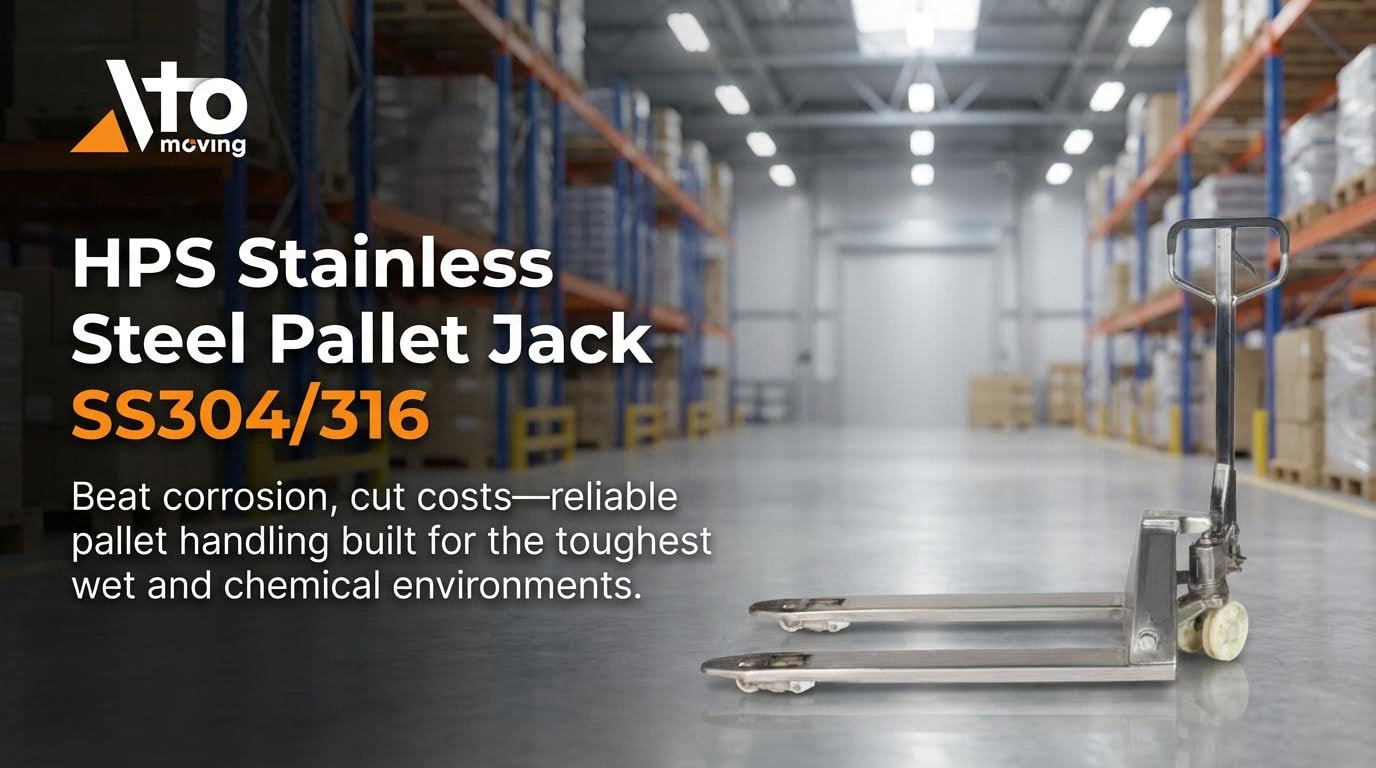
Wet or oily floors reduce friction between wheels and floor. Stopping distance grows, and steering accuracy drops. Cold storage areas harden polyurethane wheels and can reduce traction. In these zones, operators should lower travel speed and keep lift height minimal, just enough for clearance.
Slopes and ramps change stability. When lifting on a ramp, gravity shifts the combined centre of mass downhill. Best practice keeps the operator on the high side of the ramp and avoids turning. Facilities should also check floor load ratings. Concentrated wheel loads from high capacity jacks can exceed slab design in older buildings.
Before lifting, operators should scan for debris, drain covers, and threshold plates. Removing these hazards protects wheels and reduces shock loads on the hydraulic system.
Pre-Use Inspection, PPE, And Site Preparation
Pre-use checks answer a key part of how to lift a manual pallet jack safely. A short, structured routine prevents hydraulic failures, wheel damage, and lost loads. It also prepares the operator and the work area before any lifting, lowering, or travel. This section links daily inspection, PPE, and site setup into one repeatable process.
Daily Mechanical And Hydraulic Inspection Steps
Start with a quick walk-around before you lift a manual pallet jack under any load. Look for oil on the floor under the pump area because this often shows a hydraulic leak. Check forks for cracks, bent tips, or twisted blades. Inspect wheels and rollers for flat spots, chips, or wrapped debris.
Test the handle in all positions. Move it to lower, neutral, and raise. The movement should feel smooth and firm. Pump the handle several times with empty forks. The forks should rise evenly and hold height without sinking. If the jack sat unused, bleed air from the hydraulics by lowering the handle and pumping 4–6 times.
Confirm the rating plate is readable. Compare the rated capacity with the planned load. Never plan to lift above that value. This check is part of learning how to lift a hydraulic pallet truck load without overstressing the frame or pump.
Required PPE And Operator Readiness Checks
Before touching the jack, confirm basic PPE. At minimum, use safety shoes with toe protection, close-fitting work clothes, and snug gloves with good grip. In noisy areas, add hearing protection. In cold rooms, choose gloves that still allow firm control of the handle.
Check your own condition as well. Do not operate if you feel dizzy, tired, or under the effect of drugs or alcohol. Make sure you know the specific model controls, including the neutral position and the lowering trigger. Review any site rules about speed limits and pedestrian routes.
This preparation supports safe technique when you learn how to lift a pallet jack, because you can focus on fork placement and body posture instead of discomfort or confusion.
Evaluating Aisles, Ramps, Vehicles, And Elevators
Inspect the route before raising the load. Walk the planned path from pick-up point to drop-off point. Look for wet spots, loose wrap, broken boards, and sharp debris. Remove small hazards by hand or report large ones.
In aisles, confirm enough width to turn without striking racks or columns. Check that lighting allows you to see floor joints and thresholds. For ramps, verify the surface is dry and free of loose material. Never plan tight turns on a slope.
When loading vehicles, chock wheels and confirm dock plates are rated for the total mass. In elevators, confirm the capacity covers jack, load, and operator together. The load should enter first, and the operator should stand clear of pinch points at doors.
These checks let you lift a pallet jack load only after the path is ready, which cuts collision and tip-over risk.
Lockout, Parking, And Storage Best Practices
Lockout steps matter when a jack is damaged or under repair. Tag the handle with a clear “Do Not Use” sign. If possible, remove it to a maintenance area. For electric units, isolate the battery or main switch according to site rules.
When parking during a shift, lower forks fully to the floor. Leave the handle in neutral or brake position so the jack cannot roll. Never leave it on ramps, in doorways, or blocking emergency exits.
For end-of-shift storage, use a marked area away from fire equipment and walkways. Align forks straight and flat. This habit prevents trip hazards and protects forks from impact. It also supports long component life, so the jack is ready the next time someone needs to lift a pallet jack and move a load safely.
Correct Techniques For Lifting, Moving, And Lowering
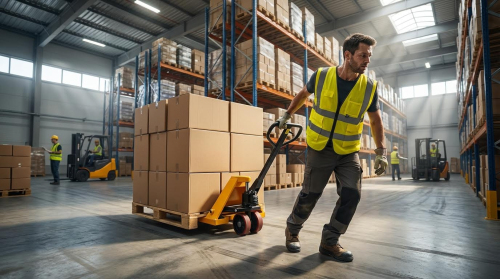
This section explains how to lift a pallet jack load safely from approach to final unloading. It links fork placement, lifting height, travel speed, and ramp technique to stability and injury prevention. The focus stays on repeatable methods that work for both manual pallet jack and electric pallet jacks in typical warehouse layouts.
Approaching Pallets, Fork Positioning, And Entry
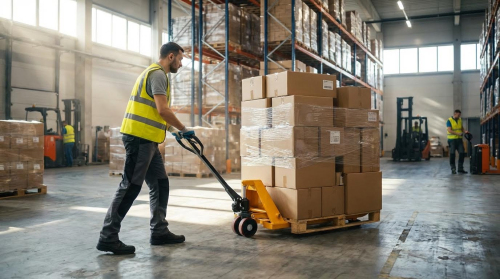
Safe operation starts before you touch the pallet. Approach the pallet straight, with the drive wheels centered on the pallet width. Keep walking speed low and stop at least one fork length from the pallet. Check for broken boards, loose wrap, or offset loads before entry.
For correct fork positioning, follow this sequence:
- Align forks with the pallet openings and keep them level.
- Set forks to the correct width if the design allows adjustment.
- Lower forks fully before entry to avoid catching boards.
- Advance slowly until the heels of the forks almost touch the opposite deck boards.
Full fork insertion is critical. Partial entry shifts the load center forward and reduces stability. Fork tips should extend under the entire pallet length where possible. If the pallet is shorter than the forks, ensure no fork tip projects into walkways or strikes racking. Keep bystanders out of the entry zone in case the pallet breaks or shifts.
Safe Lifting, Travel Speed, And Steering Control
When operators search how to lift a pallet jack safely, they usually mean how to raise the load without strain or loss of control. Stand behind the handle with feet clear of the steering wheels. For manual units, use short, smooth pump strokes. Avoid fast, jerky pumping that can twist the wrists and overload the pump. Raise the forks only high enough to clear floor defects, usually 25–75 millimetres.
Travel speed must match the conditions. Use walking pace or slower in tight aisles or near doors. Slow further on wet or damaged floors. Always push the pallet jack when possible. Pushing lets you use body weight, reduces back strain, and improves sight lines. Pull only for short repositioning or when space is very limited.
Steering control depends on handle angle and wheel condition. Keep the handle at a comfortable angle that allows full left and right rotation without overreaching. Start turns early and wide when loaded. Heavy loads increase stopping distance, so plan braking space. Never ride on the pallet jack or allow others to do so.
Operating On Ramps, Vehicles, And In Elevators
Ramps and transfer points create extra risk because gravity helps the load move. On any slope, keep the operator above the load. That means stand on the high side and keep the pallet jack below you. Do not turn on a ramp. Move in a straight line only. If the ramp is steep or slippery, lower the load and use other equipment.
When entering trucks or trailers, check the dock plate rating and surface first. Verify that vehicle brakes and wheel chocks are in place. Enter slowly, with forks just clear of the floor. Sudden floor level changes can cause the load to bounce and shift. In tight trailers, plan your route before moving.
Elevator use needs strict weight control. Confirm that the elevator rating covers the pallet jack, load, and operator. The load should enter first so it cannot roll toward the doors. Only the operator should ride with the pallet jack. Move in and out at low speed and keep the forks as low as possible while still rolling freely.
Lowering, Unloading, And Common Errors To Avoid
Lowering and unloading complete the handling cycle. Position the pallet square in the drop zone with enough clearance for fork withdrawal. Check that the floor is level and free of holes. Stand to the side of the handle, not in front of the forks. Use the lowering control slowly so the pallet settles without impact. Sudden drops can damage product and pallet boards.
After the pallet rests on the floor, pull the pallet jack straight back until the forks clear the pallet. Watch for wrap, straps, or nails that might snag on the forks or wheels. If the load needs extra stability, apply straps or corner boards after the pallet jack is clear. Park the pallet jack with forks lowered when the task is complete.
Several routine errors cause most pallet jack incidents:
- Lifting higher than needed, which raises the center of gravity.
- Exceeding the rated capacity or ignoring uneven weight distribution.
- Pulling heavy loads over distance instead of pushing.
- Turning sharply at speed with raised forks.
- Leaving forks raised in aisles, which creates trip and impact hazards.
Training operators on how to lift a hydraulic pallet truck load correctly, plus regular refreshers, reduces these errors. It also cuts equipment damage and extends the service life of wheels, forks, and hydraulic parts.
Summary: Key Safety Practices And Lifecycle Impact
Pallet jack safety depends on three pillars. Operators must know how to lift a pallet jack correctly. They must follow site rules. They must keep the equipment in good condition.
From a technical view, safe use starts before movement. Operators inspect hydraulics, forks, and wheels. They confirm the rated capacity and load center match the load. They check floor conditions, slopes, and congestion. These steps cut the risk of tip-over, runaway loads, and crushed feet.
How to lift a pallet jack safely has clear rules. Approach the pallet square. Fully insert forks under the deck. Center the load. Pump the handle with smooth strokes. Raise only enough to clear the floor. Push instead of pull for better control and less strain. On ramps, keep the load uphill and avoid turns.
Lifecycle impact links directly to these habits. Correct lifting and controlled travel reduce shock loads on wheels, axles, and hydraulic seals. Regular cleaning, lubrication, and oil checks delay corrosion and leaks. Planned maintenance and operator training extend service life and reduce downtime. Future practice will add more sensors, digital checklists, and simple assist features. Still, disciplined technique and respect for load limits will remain the core of safe pallet jack use.