Plants that ask how a hand truck is used to move two barrels safely need clear engineering and safety rules. This article walks through the full framework, from basic drum loads and hand truck design to selection, operation, and maintenance standards.
You will see how typical drum weights, wheel layouts, and ergonomic force limits define the safe envelope for barrel hand trucks. The middle sections explain how to choose and operate specialized trucks that can handle multiple barrels or kegs without overload or loss of control.
The final part turns these points into practical checklists for plant engineers, safety teams, and supervisors. It supports standard work instructions, toolbox talks, and procurement specs for safe use of specialized hand trucks for moving multiple barrels.
Engineering Basics Of Barrel And Drum Hand Trucks
Engineers who design or specify equipment for plants often ask how a hand truck is used to move two barrels safely and repeatably. This section explains the engineering basics behind specialized barrel and drum hand trucks. It links typical drum loads, frame geometry, wheel systems, and human force limits into one consistent design approach. The goal is a hand truck that moves one or two heavy barrels without overload, instability, or ergonomic risk.
Typical Drum Weights, Sizes, And Load Cases
Standard industrial drums and kegs create the baseline load cases for design. Common steel or plastic drums had nominal volumes of 114 litres (30 gallons) and 208 litres (55 gallons). Filled 55‑gallon drums often weighed roughly 180 kilograms to 360 kilograms, depending on liquid density. Beer kegs around 50 litres weighed about 70 kilograms to 80 kilograms when full.
When a hand truck is used to move two barrels, engineers must consider combined mass, centre of gravity, and impact loads. Typical design load cases included:
- Static vertical load when the truck stood parked and tilted.
- Dynamic load during tipping from vertical to the transport angle.
- Shock loads on thresholds, steps, or rough floors.
- Side loads from cornering or cross‑slopes.
Designers usually sized frames and wheels for rated capacities between 300 kilograms and 450 kilograms for two loaded drums, with safety factors above 2.0 against yield in key members.
Key Structural Features For Barrel Stability
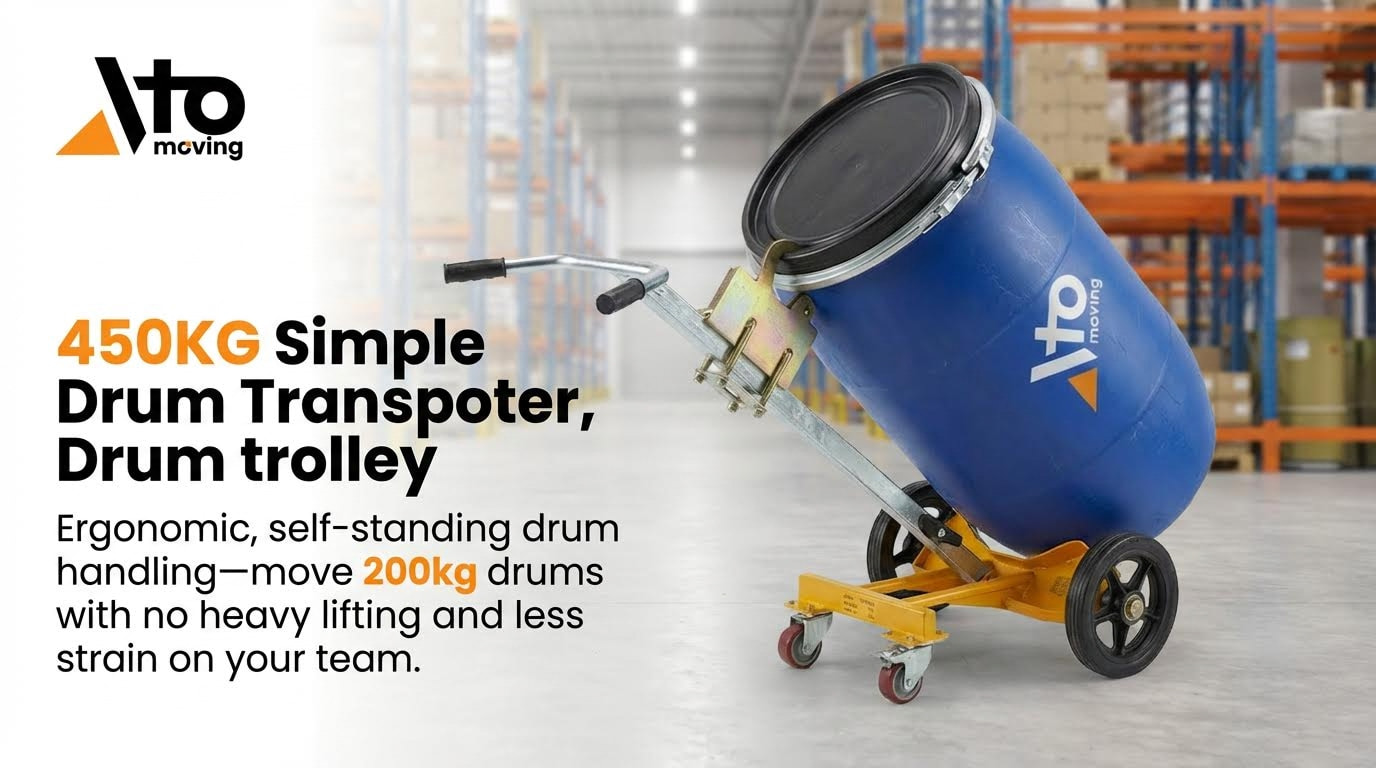
Barrels and drums were round, tall, and often smooth. They could slip or roll if the support geometry was wrong. Specialized hand trucks therefore used curved back frames that matched drum curvature. This increased contact area and reduced local pressure on the shell. Adjustable chime hooks or keg hooks locked onto the drum rim and stopped vertical or rotational movement.
When a hand truck is used to move two barrels, the frame usually had either:
- Stacked vertical positions for two drums in line, or
- Side‑by‑side cradles with shared toe plate support.
Cross‑bracing between uprights limited racking when turning or braking. Extended toe plates or extruded aluminium base plates supported the lower chime and spread bearing stress into the frame. Dual grip handles gave the operator better control of tilt angle and yaw, which reduced the chance of side tipping on slopes or uneven floors.
Wheel, Hub, And Bearing Design Considerations
Wheel systems set rolling resistance, stability, and service life. Typical barrel hand trucks used wheels around 300 millimetres in diameter and 50 millimetres wide. Larger diameters rolled more easily over thresholds and small steps. Puncture‑proof or solid wheels removed the risk of flats in debris‑prone areas.
Hubs often used cast iron bodies with roller bearings around 25 millimetres bore. Roller bearings cut friction and allowed smoother starts under heavy loads. This mattered when a hand truck is used to move two barrels, because combined weight could approach 300 kilograms or more. Precision bearings also reduced side play, which kept the load stable when cornering.
Some designs added stair glides or long skids on the rear frame. These helped move drums up or down short stairs by sliding rather than lifting. Wheel guards sometimes supported part of the load and shielded the operator from splash or contact with the rotating wheel.
Force Requirements And Ergonomic Load Limits
Ergonomics defined how much force an operator could apply safely. Industry guidance indicated that the horizontal force to roll a hand truck was often about 2% to 3% of the total load on level, smooth floors. For a 300‑kilogram combined drum load, this gave a typical rolling force band of 60 newtons to 90 newtons. Rough floors, sand, or mud increased this value.
However, peak forces during initial tipping and starting were higher. When a hand truck is used to move two barrels, designers tried to keep:
- Initial push or pull forces within accepted ergonomic limits for the target workforce.
- Required hand heights near waist level to avoid shoulder strain.
- Torso bending under roughly 10 degrees and reaches under about 400 millimetres.
Frame geometry, wheel diameter, and axle position all affected the mechanical advantage. By placing the axle correctly relative to the load centre, engineers reduced the handle force needed to balance the truck at the transport angle. This cut fatigue and lowered the risk of back or shoulder injuries over a full shift.
Selecting The Right Hand Truck For Multiple Barrels
Plants that ask whether a hand truck is used to move two barrels need clear selection rules. The correct truck must match drum mass, diameter, and count while staying within ergonomic force limits. This section explains how capacity, fixtures, wheel choices, and maintenance plans work together for safe two‑barrel moves. It focuses on practical engineering checks that safety, maintenance, and operations teams can apply on the shop floor.
Matching Capacity To Drum Size, Weight, And Quantity
A hand truck is used to move two barrels only when rated capacity exceeds the combined load plus a safety margin. A full 55‑gallon drum often weighs 180–360 kilograms, so two drums can reach 720 kilograms. Many drum hand trucks list capacities between 300 kilograms and about 450 kilograms, while some heavy models reach 800–1,000 pounds. Engineers must compare the worst‑case drum weight against the truck rating, not just typical values.
Frame geometry also matters. Curved backs support cylindrical shells and reduce point loads on the drum wall. When moving two barrels, side‑by‑side or stacked, the center of gravity must stay inside the wheelbase after tipping. Plants should standardize a simple rule: if the total drum mass or geometry pushes the center of gravity beyond the axle line during tilt, use another method.
A short checklist helps selection:
- Confirm maximum single drum weight and maximum pair weight.
- Check hand truck rating and frame style for drums or kegs.
- Verify that the footprint and back frame can seat two barrels without overhang.
- Test tilt effort with a loaded sample before fleet rollout.
Toe Plates, Chime Hooks, And Keg-Specific Fixtures
The toe plate carries the vertical load. For two drums, plate width and depth must support both bases without sharp edges. Extruded aluminium plates resist cracking better than thin cast plates under repeated impact. A wide nose, for example around 400 millimetres or more, reduces edge loading and improves stability.
Chime hooks or drum clamps stop barrels from sliding during tilt and travel. Adjustable hooks lock on the upper or lower chime of 30‑ and 55‑gallon drums. For two‑barrel moves, independent hooks for each drum give better control than a single shared strap. Operators should be able to engage and release hooks without placing fingers in crush zones.
Keg‑specific fixtures use shaped cradles or hook assemblies. These match common keg diameters and keep the shell from rotating as the truck tips back. For beer or beverage plants, a dedicated keg hand truck reduces damage to fittings and improves stair handling. Dual grip handles give better steering leverage when managing two heavy kegs on slopes or thresholds.
Wheel Materials For Slopes And Uneven Surfaces
Wheel choice controls rolling resistance, required push force, and stability. Typical drum hand trucks use wheels around 300 millimetres in diameter and 50 millimetres in width. Larger diameters roll more easily over thresholds and rough joints. Precision bearings and cast iron hubs support high radial loads from two full barrels.
The force to move a loaded hand truck on level ground usually sits near 2–3 percent of total weight. Rough concrete, sand, or mud can raise this sharply. Plants should match wheel material to the worst surface on the route:
| Surface | Preferred wheel type | Main benefit |
|---|---|---|
| Smooth indoor floors | Hard rubber or polyurethane | Low rolling resistance, quiet |
| Rough concrete, outdoor yards | Pneumatic or foam‑filled | Shock absorption, better grip |
| Areas with sharp debris | Puncture‑proof solid wheels | No flats, higher uptime |
When a hand truck is used to move two barrels down a slope, wheel grip and brake control become critical. Operators should keep the truck below its rated slope limit and maintain both hands on the grips. Stair glides or skids help when short flights or high thresholds are unavoidable.
Maintenance, Inspection, And Service Intervals
Regular inspection keeps rated capacity meaningful. Plants should treat two‑barrel hand trucks as load‑bearing tools, not simple trolleys. A quick pre‑use check can catch cracks, loose fasteners, or bent frames before a failure under full drum weight. Any visible deformation near the axle, toe plate welds, or handle joints should trigger removal from service.
Typical maintenance tasks include:
- Check wheel wear, tread damage, and free rotation of bearings.
- Verify that chime hooks, straps, and fixtures latch and release correctly.
- Inspect toe plate edges for chips that could cut drum shells.
- Lubricate bearings according to the supplier schedule, especially in wet or dusty areas.
Service intervals depend on duty cycle. High‑throughput filling lines may need monthly detailed inspections, while low‑use stores may schedule them quarterly. Training should teach operators to tag out damaged units and avoid overloading “just this once.” A clear asset ID on each hand truck helps link inspection records, repairs, and incident reports.
Safe Operating Procedures For Moving Multiple Barrels
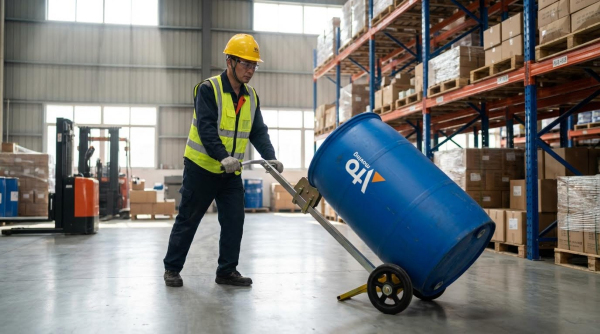
Safe use of specialized hand trucks protects operators, product, and plant assets. A hand truck is used to move two barrels in many breweries, chemical plants, and food factories. Procedures must control pre-use checks, loading, travel on difficult ground, and personal protection. The goal is simple. Move full drums with low push forces, no spills, and no crush injuries.
Pre-Use Checks, Labeling, And Hazard Assessment
Operators should treat every barrel move as a short risk assessment. Start with the product label and the Safety Data Sheet. Confirm if the contents are flammable, corrosive, toxic, or food grade. If a drum is unlabeled, treat it as hazardous until you confirm the contents.
Inspect each barrel before loading. Look for leaks, bulging, corrosion, or missing bungs. Replace loose or missing closures before you tilt or roll the drum. Check the hand truck frame, welds, and chime hooks for cracks or deformation. Spin the wheels to confirm free rotation and no flat spots.
Before a hand truck is used to move two barrels, confirm total mass. A typical 55‑gallon drum could weigh 180–360 kilograms. Two drums plus truck weight may exceed 400 kilograms. Verify the rating plate on the truck and compare it with the actual load. If the surface is sloped or uneven, increase the safety margin and reduce the planned load.
Loading, Securing, And Stacking Techniques
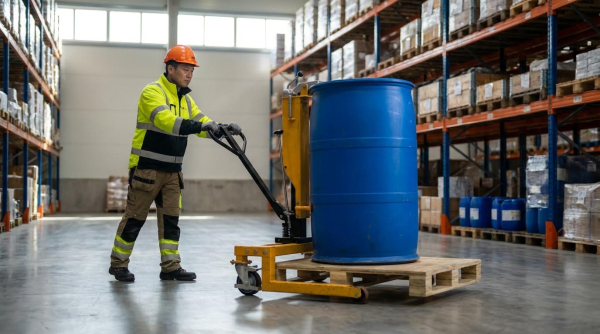
Loading method strongly affects stability when a hand truck is used to move two barrels. Position the truck so the toe plate and drum cradle sit tight to the first barrel. Keep feet clear of the plate. Use your legs, not your back, to tilt the barrel onto the truck.
Key loading steps usually include:
- Place the heaviest drum on the lower position or closest to the frame.
- Engage chime hooks or keg hooks on both barrels when fitted.
- Center the barrel axes over the wheel line to reduce side tipping.
- Use straps or chains when the route includes thresholds or bumps.
Do not stack loose drums vertically on a hand truck platform. If the design allows two-tier transport, use formed cradles or saddles for the upper drum. Avoid mixed barrel sizes on one truck unless the fixtures support each size. When unloading, support the drum with one hand and use a foot on the axle or toe plate to ease the truck out, not by jerking the handle.
Maneuvering On Slopes, Stairs, And Rough Surfaces
Travel technique changes when the route includes ramps, steps, or rough ground. On gentle slopes, keep the truck below the load so the barrels cannot run over the operator. Maintain a firm two‑hand grip and short, controlled steps. Keep the load speed low, especially with full liquid drums that can slosh.
Force to move a correctly loaded truck on a smooth floor is often 2–3% of total weight. This value rises on slopes, sand, or damaged concrete. If you must lean your body weight hard into the handle, the load is likely too heavy or the wheels are wrong for the surface. Switch to larger diameter or puncture‑proof wheels for soft ground.
For stairs, only use hand trucks with stair glides or skids and rated for that duty. One person should control the handle while a second person spots from the side when loads are near the limit. Take one step at a time and keep the centerline of the barrels close to the stair nose. Avoid diagonal travel across slopes, which increases tip risk.
On rough surfaces, pick the smoothest available path. Cross expansion joints and thresholds at 90 degrees. Reduce speed before each obstacle so the wheels climb rather than strike. Reassess the route if the truck starts to bounce or sway.
PPE, Operator Training, And Incident Prevention
PPE and training close the loop on safe use when a hand truck is used to move two barrels. At a minimum, operators should wear safety shoes with toe protection. Add gloves with good grip, eye protection, and chemical‑resistant clothing when contents are hazardous. For flammable liquids, enforce no‑spark tools and proper grounding during related transfer tasks.
Training should cover four blocks:
- Hazard recognition from labels and SDS documents.
- Correct lifting posture and neutral spine positions.
- Hand truck limits, push forces, and route planning.
- Emergency response for leaks, spills, and trapped limbs.
Supervisors should review incident reports and near misses. Look for patterns such as overloading, rushed work, or poor route design. Improve floor conditions, lighting, and storage layouts to cut push forces and sharp turns. Reinforce a rule that operators stop and get help when a move feels unsafe, even if a hand truck is rated for the weight. This culture prevents long‑term back injuries and high‑energy tip events.
Summary And Practical Takeaways For Plant Teams
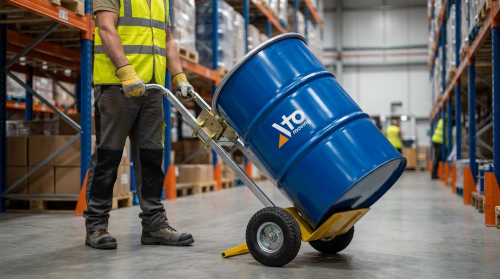
Plant teams that move drums daily should treat hand trucks as engineered tools, not simple trolleys. A hand truck is used to move two barrels safely only when capacity, technique, and route are all controlled. The safest operations combine proper truck selection, disciplined procedures, and routine checks of both equipment and operators.
From an engineering view, teams should confirm that rated capacity covers the worst case. That includes two full 200 litre drums plus dynamic effects on slopes or rough floors. Wheels, hubs, and bearings must match site conditions, especially where stairs, ramps, or thresholds exist. Supervisors should standardize one or two approved models for drums and kegs and ban improvised devices.
In daily work, operators should follow a short, consistent routine. They should inspect frames, toe plates, chime hooks, and wheels before use. They should keep the heaviest drum low and closest to the frame and maintain three points of control when tilting and parking. Routes should avoid steep slopes, tight turns, and soft ground where push forces rise sharply.
Looking ahead, plants will rely more on ergonomic limits and measured push forces to set rules, not only on nameplate ratings. Digital checklists, near-miss logs, and simple force gauges can support this shift. However, the core controls stay basic: the right truck, the right number of barrels, trained operators, and strict respect for load limits and surface conditions.
Frequently Asked Questions
What is a hand truck?
A hand truck is a wheeled cart with long handles designed to move heavy objects. It is also commonly referred to as a dolly or two-wheeler. Using a hand truck makes it easier to transport items that are too heavy to carry by hand. Hand Truck Definition.
How to properly use a hand truck?
To use a hand truck effectively, tilt the load slightly forward and slide the hand truck’s ledge underneath. Then, carefully tilt the hand truck and the load backward while holding it firmly. This technique helps in balancing and moving heavy items like barrels safely. Using Hand Trucks.
Should you push or pull a hand truck?
It is safer to push a hand truck rather than pull it. Pushing allows you to see where you are going and enables you to use your body weight and larger muscles, reducing strain on your back and shoulders. Push Don’t Pull Guide.
How to move something heavy with a dolly?
When moving heavy objects like barrels with a dolly, ensure the load is balanced and secure. Tilt the object onto the dolly and use your body weight to push it carefully. Always prioritize safety by checking your path and maintaining control of the dolly. Moving Heavy Loads.