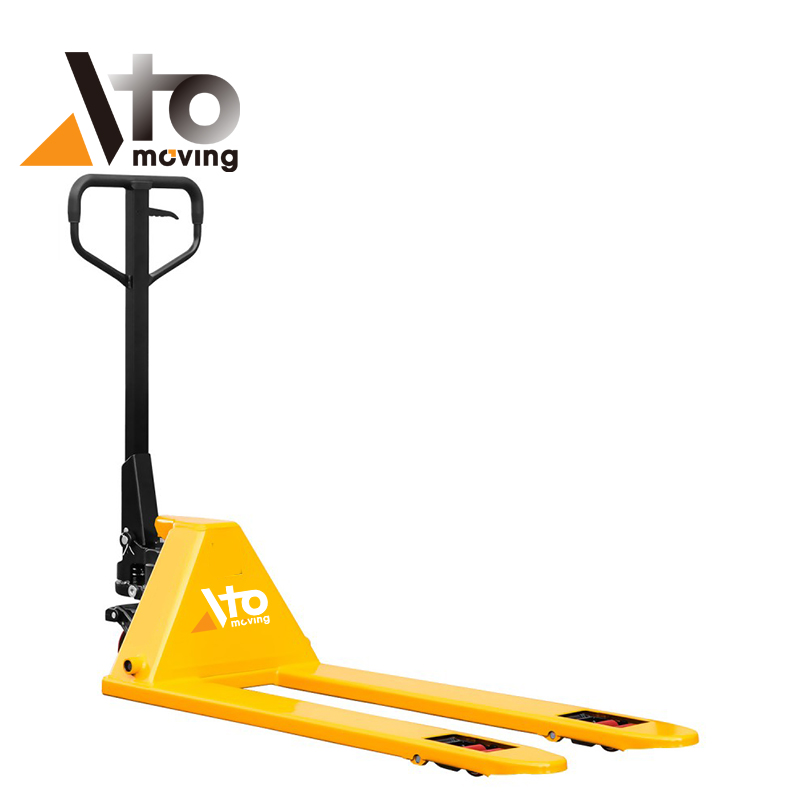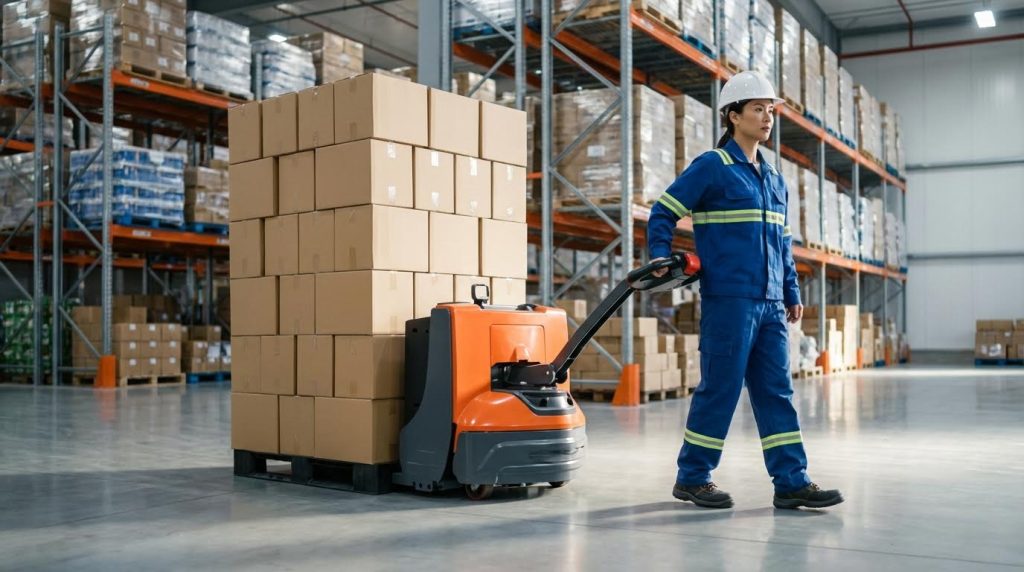
Knowing how much can a pallet jack lift is fundamental to safe, efficient material handling. This guide explains what capacity ratings really mean, how engineering factors limit maximum load, and how different pallet jack types compare. You will see how geometry, stability, and powertrain design affect real-world performance, and how to match capacity to your application and total cost of ownership. Use it as a practical reference when specifying, operating, or maintaining pallet jacks in any warehouse or industrial environment.
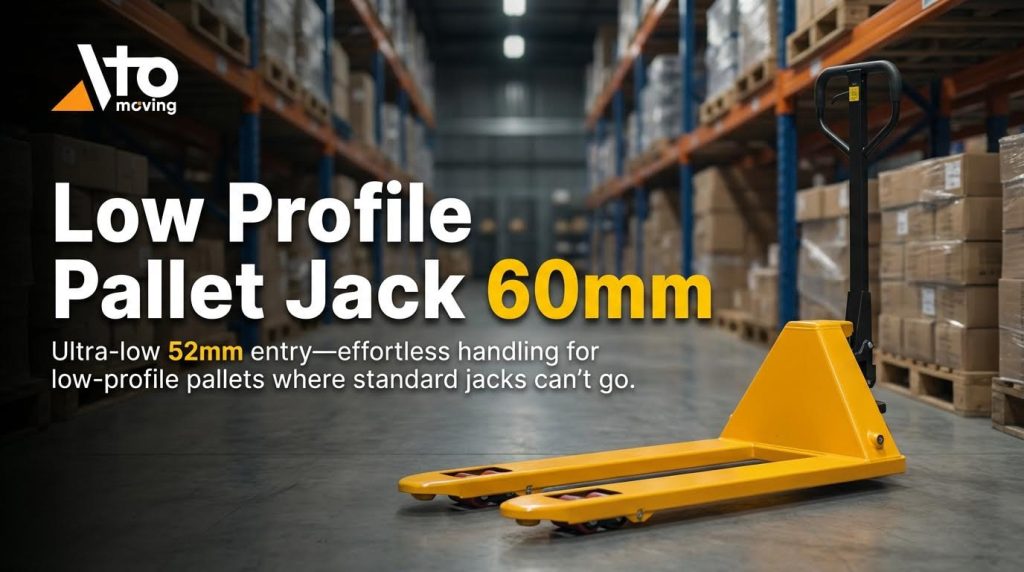
Defining Pallet Jack Capacity And Key Load Limits
What “Rated Capacity” Really Means
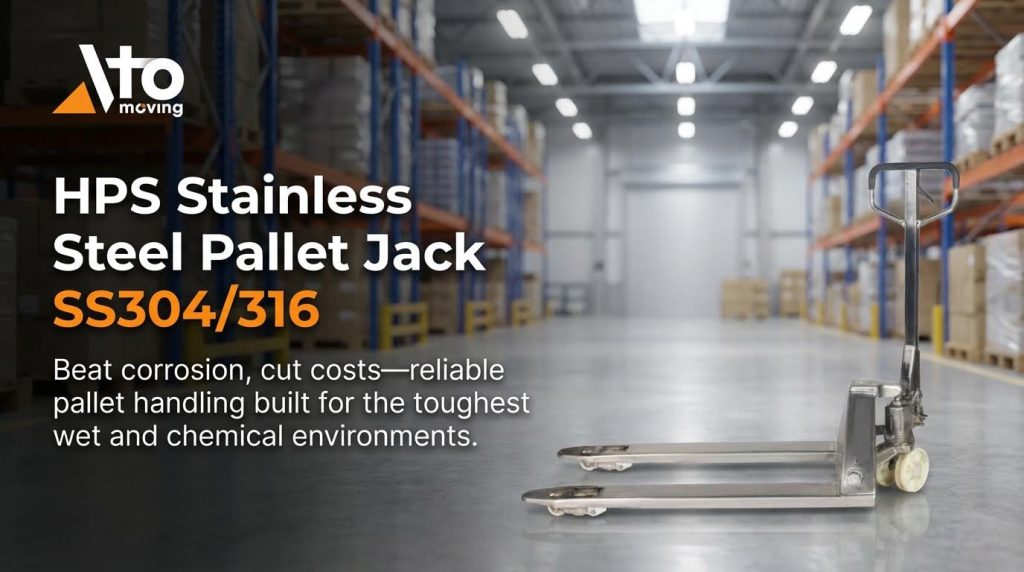
Rated capacity is the maximum load a pallet jack can lift and move safely when the load is positioned as the manufacturer specifies. It answers the practical question “how much can a pallet jack lift” under normal, controlled conditions. This rating assumes the load is centered on the forks, within the standard fork length, and the pallet is in good condition. If the load is off-center, overhanging, or stacked too high, the safe working capacity can drop well below the nameplate figure, even though the unit can still physically lift it. Operators should always treat the rated capacity as an upper safety limit, not a target to exceed.
Key points about rated capacity
- Defined at a specific load center (distance from fork heel to load centerline).
- Assumes level, suitable floor and correctly sized pallet.
- Valid only when the pallet jack is in good mechanical condition.
- Exceeding it increases risks of tip-over, fork bending, wheel failure, and operator injury.
Understanding rated capacity also means understanding partial de-rating in real operations. Rough floors, ramps, tight turns, or frequent stop‑start cycles all increase dynamic forces in the structure and wheels, so engineers and safety managers often apply their own internal safety margin below the plate rating. For example, if a manual pallet jack is rated around 4,500–5,500 lb, many sites will cap typical loads 10–20% lower to extend equipment life and reduce incidents. This conservative approach gives a more realistic answer to “how much can a pallet jack lift every shift, all year, without excessive failures.”
Typical Capacities By Pallet Jack Type
Typical pallet jack capacity varies widely by design, from light manual units to heavy-duty riders. The table below summarizes common ranges and typical use cases based on published product data. Values are indicative, not a substitute for checking the actual data plate on your specific truck.
| Pallet jack type | Typical max load capacity | Typical applications |
|---|---|---|
| Manual pallet jack | Up to 2,300 kg (≈ 4,500–5,000 lb) | Loading/unloading, short moves, light to medium warehouse work |
| Manual high-lift pallet jack | Up to 1,000 kg (≈ 2,200 lb) | Work positioning and ergonomic picking at bench height |
| Compact electric pallet jack | Up to 1,500 kg (≈ 3,300 lb) | Dock work, delivery vehicles, tight storage areas |
| Standard electric pallet jack | Up to 2,000 kg (≈ 4,400 lb) | General warehouse transport, bulk storage |
| Heavy-duty electric / rider pallet trucks | Up to about 3,600–3,640 kg (≈ 7,900–8,000 lb) | High-throughput dock work, long-distance transport, bulk handling |
| Platform pallet trucks | Up to 2,500 kg (≈ 5,500 lb) | Order picking, rider operation, mixed transport tasks |
| Low-level order picker pallet trucks | Up to 2,700 kg (≈ 6,000 lb) | Intensive case picking and horizontal transport |
| Pallet trucks with mast (stacker-style) | Up to 1,200 kg (≈ 2,600 lb) | Short-distance moves plus lifting into low racking |
Across these types, manual pallet jacks typically fall in the 4,500–5,500 lb range, while electric models often span from about 4,500 lb up to 8,000 lb or more depending on design. Heavy-duty rider and order-picker trucks sit at the top of this band, supporting higher pallet weights and more aggressive duty cycles. When deciding how much can a pallet jack lift in your facility, you should match these typical capacity bands to your heaviest real pallets, including packaging, dunnage, and any seasonal overload scenarios.
Practical selection tips by capacity band
- Up to ~1,000 kg: Best for high-lift work positioning, not bulk transport.
- 1,000–2,500 kg: Suits most general warehouse and dock tasks.
- 2,500–3,600+ kg: For heavy pallets, high throughput docks, and rider applications.
Engineering Factors That Determine Max Load
Fork geometry, wheel type, and load distribution
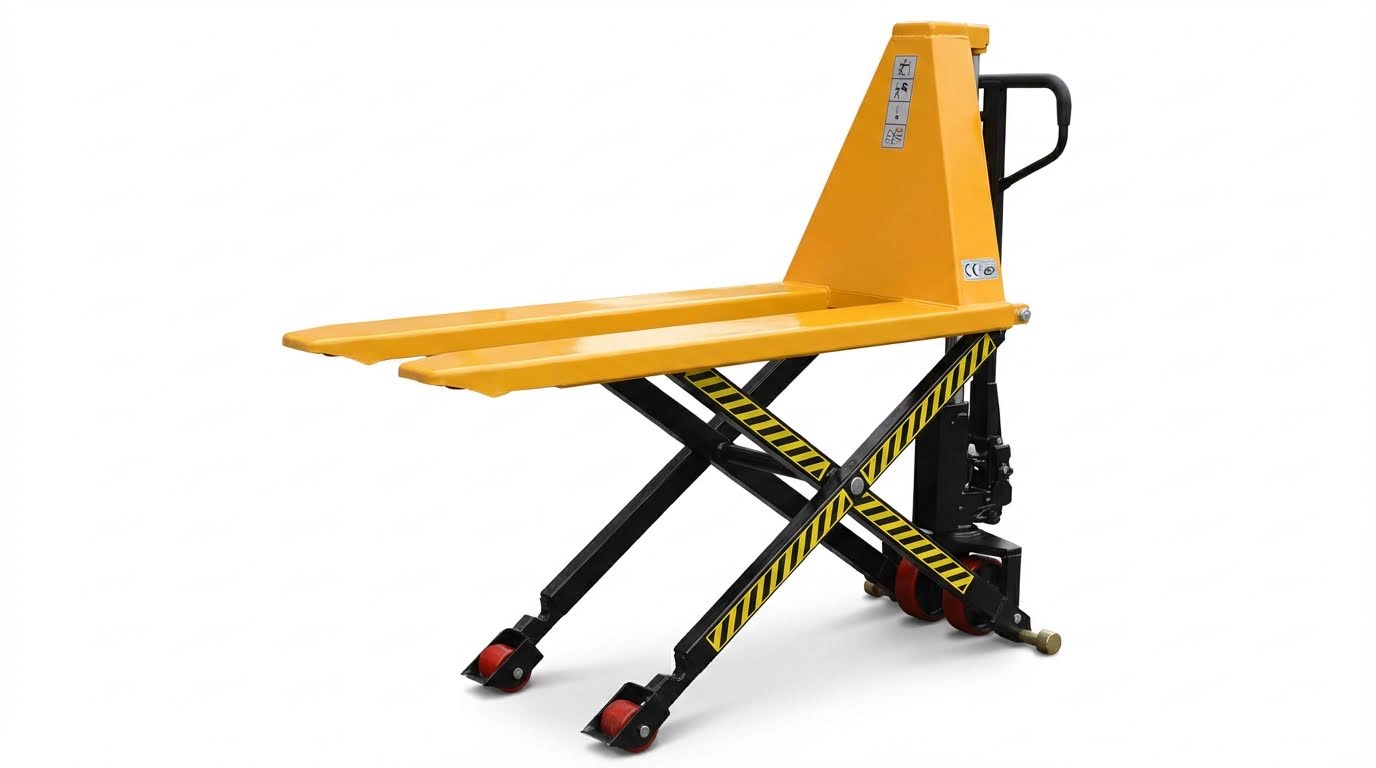
Fork geometry and wheel configuration are core engineering factors that decide how much can a manual pallet jack lift safely. Longer forks allow handling oversized pallets but increase bending stress, so rated capacity often assumes the load is centered over the fork length, not hanging off the tips. Thicker, deeper fork sections resist bending and deflection under high loads, which is critical as manual pallet jacks commonly handle around 4,500–5,500 lb while electric units can reach 8,000 lb or more load capacities from 4,500 to 8,000 lbs or higher. Wheel type and location also affect usable capacity: larger load wheels reduce rolling resistance and point loading on the floor, while harder tread materials roll easier but transmit more shock into the frame and forks.
- Dual load wheels spread the load and help protect floors, which supports higher practical capacities on poor surfaces.
- Steer wheel size and bearing quality influence how much force the operator needs to start and stop a fully loaded jack.
- Uneven or off-center loads shift forces into one fork and one wheel set, reducing the real-world safe load versus the nameplate rating.
For engineers and safety managers, the key is to assume the rated capacity applies only when the pallet covers both forks, the load is evenly distributed, and the wheels run on a flat, suitable floor. Any deviation (short pallets, point loads, broken deck boards, ramps, or floor defects) should trigger a conservative derating of “how much can a manual pallet jack lift” in that application.
Stability, center of gravity, and lift height
Stability is governed by the relationship between the combined center of gravity (truck plus load) and the pallet jack’s support polygon formed by the wheels. As the forks rise, the center of gravity moves upward and can shift toward the steer wheels, reducing the tipping margin, which is why high-lift pallet jacks are typically rated much lower than standard models; many high-lift designs are limited to about 1,000 kg compared with 2,300 kg for standard manual units standard manual pallet trucks up to 2,300 kg and high-lift models around 1,000 kg. The higher the lift height, the more sensitive the system becomes to sudden movements, floor slopes, and uneven pallet loading.
- Short, dense loads keep the center of gravity low and close to the drive end, improving stability.
- Tall or top-heavy loads can approach the stability limit well below the rated capacity, especially when turning or braking.
- Side shifts in the load (loose shrink wrap, leaning stacks) can move the center of gravity outside the wheelbase.
Engineers answer “how much can a high lift pallet truck lift” at a given height by considering the worst-case center-of-gravity position, not the ideal one. This is why pallet trucks with masts, which can lift up to around 1,200 kg to heights above 4,000 mm, carry lower capacity ratings than low-lift riders or heavy-duty electrics that stay near floor level while handling 3,000–3,640 kg loads rider and walkie rider pallet trucks up to 3,640 kg and pallet trucks with mast up to 1,200 kg at 4,300 mm. Any slope, ramp, or dock plate further reduces the safe working capacity and should be accounted for in site-specific risk assessments.
Powertrain, batteries, and duty cycle constraints
On powered equipment, the hydraulic and traction powertrain, plus the battery system, place additional limits on how much can a semi electric order picker lift and move repeatedly through a shift. Electric pallet jacks commonly carry 2,000–3,600 kg loads in dock and bulk storage work, but these ratings assume a defined duty cycle and adequate battery capacity for the shift electric and heavy-duty pallet trucks up to 3,600 kg. Undersized motors, overheated controllers, or low battery voltage can all reduce lifting speed and tractive effort, effectively lowering the usable capacity in real operations.
- Hydraulic pump size and relief-valve setting define the maximum pressure available to raise rated loads without stalling or overloading components.
- Traction motors must generate enough torque to start and stop a fully loaded jack on typical gradients without overheating.
- Battery chemistry and charging strategy matter: modern lithium-ion packs can reach about 60% charge in roughly 40 minutes, which supports opportunity charging and higher daily throughput without deep discharge damage lithium-ion batteries reaching 60% charge within 40 minutes.
Duty cycle—how often you lift, how far you travel, and at what speed—directly affects thermal loading in motors and hydraulics. Electric pallet jacks that run close to their maximum load for long periods, at travel speeds up to about 3.5 mph, experience higher wear and heat stress than units working at partial loads travel speeds of up to 3.5 mph. For engineering and safety planning, the rated capacity should therefore be treated as a ceiling under ideal conditions; continuous heavy-duty use, steep ramps, or poor maintenance all justify applying a conservative derating factor when deciding how much a pallet jack can safely lift in your facility.
Matching Capacity To Application And TCO
Sizing manual vs. electric pallet jacks
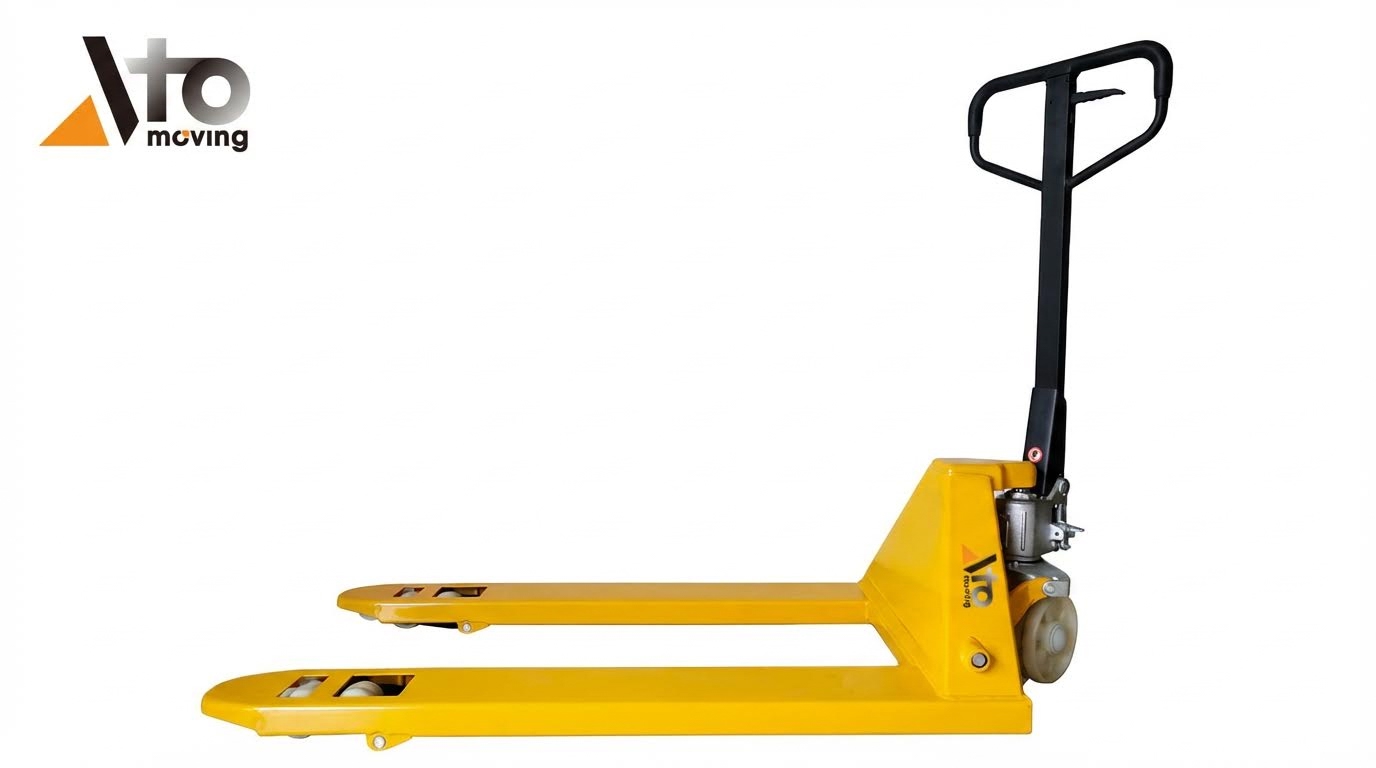
When you ask how much can a pallet jack lift, you first need to separate manual from electric designs. Typical manual pallet jacks handle about 4,500–5,500 lb in day‑to‑day use load capacities ranging from 4,500 to 5,500 lbs. Electric pallet jacks usually start at similar capacities but can reach 8,000 lb or more for heavy-duty applications support load capacities from 4,500 to 8,000 lbs or higher. The right choice depends less on absolute capacity and more on how often you move that weight, over what distance, and in what environment.
Use manual pallet jacks where:
- Loads are within the 4,500–5,500 lb range and movements are infrequent or over short distances.
- Travel speeds are low and congestion is high, so powered speed offers limited benefit.
- Budgets are tight and a low purchase price plus minimal maintenance are priorities lower upfront cost and minimal ongoing expenses.
Electric pallet jacks fit better when:
- You run high-volume operations that need faster pallet cycles and higher travel speeds travel speeds of up to 3.5 mph.
- Operators handle many loads per shift and fatigue or strain injuries are a concern electric pallet jacks reduce strain through powered operation.
- You need higher capacities within the 4,500–8,000 lb band on a routine basis.
To size correctly, calculate the heaviest pallet you actually move (including packaging and any added fixtures), then add a safety margin of 10–20%. Select a manual or electric model whose rated capacity comfortably exceeds that figure, and remember that real-world conditions (ramps, floor quality, duty cycle) effectively reduce how much a pallet jack can lift safely on a daily basis.
Capacity, safety standards, and maintenance planning
Rated capacity only delivers full value if you operate within safety limits and maintain the equipment. Overloading a pallet jack, even by a few hundred pounds, increases stopping distance, stresses forks and hydraulics, and raises the risk of tip‑over or component failure. Electric units add higher travel speeds and more kinetic energy, which is why they include features such as automatic braking and emergency stops that demand proper operator training advanced safety features such as automatic braking systems, horn signals, and emergency stops.
Maintenance planning should match both capacity and duty cycle to protect total cost of ownership (TCO). For manual pallet jacks, daily visual checks, simple hydraulic tests, and weekly lubrication keep the rated load available without expensive failures daily check includes a 30-second visual scan and weekly lubrication routine. Electric pallet jacks need structured battery care, electrical inspections, and brake checks to avoid unplanned downtime and capacity loss during the shift inspect battery cables, controls, and braking system.
From a TCO standpoint, manual pallet jacks usually win on purchase price and low maintenance, especially in light-duty or small facilities economical for small-scale operations. Electric pallet jacks, while more expensive upfront, can reduce labor hours, cut fatigue-related injuries, and support higher throughput, which often offsets the extra maintenance and battery costs over their 7–12 year lifespan higher initial investment but offer long-term savings. Aligning capacity, safety practices, and a realistic maintenance plan ensures the pallet jack you choose can safely lift what you need, for the full life of the asset, at the lowest practical cost per pallet moved.
“”
Final Thoughts On Choosing The Right Load Capacity
Pallet jack capacity is not just a number on a plate. It is the result of fork geometry, wheel layout, stability limits, and powertrain strength working together. When you push beyond that engineered limit, you do not just risk slower performance. You increase the chance of fork bending, wheel damage, tip‑over, and injury.
Operations teams should start with the heaviest real pallet, include packaging and rare peak loads, then add a 10–20% margin. Engineers must then check how that load behaves on actual floors, ramps, and dock plates, at the lift heights and duty cycles in the site. Rated capacity always assumes a sound pallet, even load distribution, and a flat, suitable surface.
For low-throughput, short moves, a manual pallet jack often gives the lowest total cost. For high-volume work, electric models justify their higher price through speed, reduced strain, and better productivity. In every case, pair correct sizing with strict loading rules, operator training, and planned maintenance.
Use the capacity plate as a hard ceiling and your site conditions as the real design case. That approach lets you choose Atomoving pallet jacks that stay safe, durable, and cost-effective over their full working life.
Frequently Asked Questions
How much weight can a pallet jack lift?
A standard pallet jack typically has a lifting capacity ranging from 5,000 to 5,500 pounds (approximately 2,268 to 2,495 kilograms). However, the exact capacity depends on the model and manufacturer. For more details, you can refer to this Pallet Jack Weight Guide.
Can a pallet jack lift a car?
No, a pallet jack is not designed to lift a car. While theoretically possible under extreme caution, pallet jacks are not intended for such use and could get damaged or cause harm. Automotive facilities typically use specialized equipment for lifting vehicles. For more information, check out this Forklift vs Pallet Jack Guide.