

Knowing how to operate a battery pallet lift safely required more than basic driving skills. This article walked through regulatory rules, operator training, and OSHA requirements that applied to electric motor hand trucks. It then explained structured daily checks, covering both motor-off and motor-on inspections, plus simple maintenance habits that kept trucks reliable.
You also saw how control layouts, operating modes, and maneuvering limits affected stability, speed, and visibility in tight warehouse spaces. The final section tied these points into a clear safety summary so supervisors and operators could align procedures, checklists, and records with current compliance standards while improving throughput.
Regulatory Requirements And Operator Training
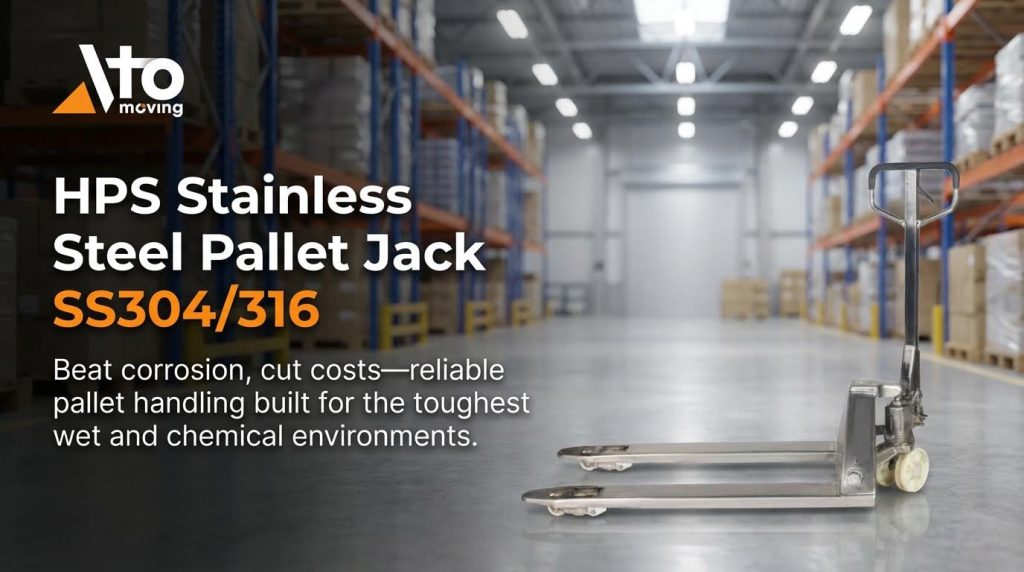
Anyone learning how to operate a battery pallet lift must first meet legal and training rules. These rules set minimum age, required instruction, and documented checks before use. Clear procedures reduce crush risks, foot injuries, and damage to stock. This section explains how OSHA rules, site policies, and records work together to keep electric pallet jack use compliant and repeatable.
OSHA Class III Rules And Age Requirements
OSHA classified electric pallet jacks as Class III electric motor hand trucks under 29 CFR 1910.178. This classification placed battery pallet lifts under the same powered industrial truck standard as forklifts. Under this rule, operators had to be at least 18 years old. Employers had to block minors from using powered pallet jacks, even for short moves.
For SEO users asking how to operate a battery pallet lift, this legal frame is the starting point. OSHA required that operation follow written procedures, pre-use checks, and safe driving rules. The standard also required that only trained and authorized workers drove or inspected the equipment. These points shaped every compliant training program and safety manual.
Required Certification And Refresher Training
OSHA required that operators of Class III trucks receive formal training, practical instruction, and an evaluation. Employers had to certify each operator. The record had to show the operator’s name, training date, and evaluator identity. No one could legally operate a battery pallet lift until this process was complete.
Refresher training was mandatory when an operator had an accident, a near miss, or a poor evaluation. It was also required when workplace conditions or truck types changed. Many sites also set a fixed refresher cycle, often every three years, to keep skills current. Modern courses on how to operate a battery pallet lift covered controls, load limits, charging, and parking, and linked each topic to CFR 1910.178 clauses.
Site-Specific Rules And Traffic Management
OSHA rules set the baseline, but each facility added its own traffic and layout rules. These rules reflected aisle width, ramps, dock edges, and pedestrian density. They also defined where battery pallet lifts could travel and where they were banned.
Typical site rules included:
- Marked travel lanes with one-way flow in narrow aisles.
- Speed limits in metres per second or kilometres per hour.
- No-go zones near offices, break areas, and emergency exits.
- Right-of-way rules between pedestrians, forklifts, and pallet jacks.
Supervisors explained these rules during site induction. Practical walk-throughs showed operators blind corners, pinch points, and high-traffic crossings. This local knowledge was vital for safe daily use, even for experienced staff who already knew how to operate a battery pallet lift in other buildings.
Documentation, Checklists, And Recordkeeping
Paperwork supported compliance and consistent operation. Before using a battery pallet lift, operators had to complete a pre-use checklist. The form covered both motor-off and motor-on checks. Items such as leaks, loose parts, fork damage, horn, brakes, and alarms were standard line items.
The operator marked “YES” if a point passed and “NO” if it failed. They added comments for any defect and then handed the checklist to a supervisor. If any safety-critical item failed, the operator removed the key or disabled the unit and tagged it out. Only trained maintenance staff could repair it.
Training records, incident reports, and maintenance logs had to be stored and easy to retrieve. These files helped during audits, insurance reviews, and root-cause investigations. They also showed that the employer had taught staff how to operate a battery pallet lift safely and had enforced the rules in daily practice.
Daily Pre-Use Checks And Maintenance Basics
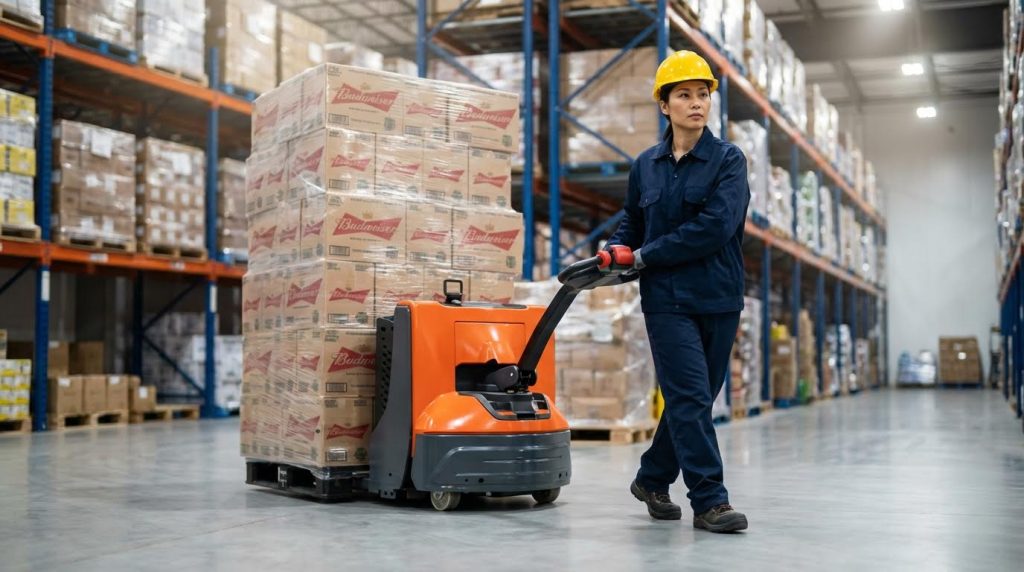
Daily checks are the backbone of safe electric pallet jack use. They link directly to how to operate a battery pallet lift without surprise failures. A structured pre-use routine also protects batteries, hydraulics, and drive parts from early damage. This section explains what to check with the motor off, motor on, and how to keep the truck clean and on schedule for service.
Motor-Off Inspection: Structure And Hydraulics
Start every shift with the pallet jack parked, power off, and forks lowered. Walk around the truck and check the floor for oil or hydraulic fluid under the pump, cylinders, or hoses. Look for cracks, bends, or impact damage on the frame, forks, handle, and covers.
Confirm all guards and bolt-on parts sit tight and do not move by hand. Check forks for straightness, no twisted blades, and no chipped tips. Inspect wheels and rollers for flat spots, broken chunks, or embedded debris that could affect steering or stopping.
Hydraulic checks focus on leaks and smooth travel. Pump the handle or use the lift control and watch fork rise. The movement should be even, with no jerks or sudden drops. If you see leaks, hear loud squeals, or the forks drift down under load, tag the unit out and record “NO” on the checklist.
Motor-On Inspection: Brakes, Drive, And Alarms
Turn the key or power on and stand clear of the forks. Test drive in forward and reverse at low speed. The truck should start smoothly and stop without delay. Steering must feel light and accurate through the full range.
Apply the service brake and any plug braking or automatic braking. The jack must stop in a short, predictable distance. Listen for grinding, clunks, or vibration from the drive unit or gearbox. These signs often point to bearing or gear wear.
Check all safety alerts. Press the horn. Confirm any lights, buzzers, or travel alarms work. Watch the battery discharge indicator and hour meter for normal display. If any control sticks, fails to respond, or alarms do not function, remove the truck from service and report it. Never bypass a fault just to keep product moving.
Battery, Charging, And Electrical Safety
Safe battery care is central to how to operate a battery pallet lift for a full shift. Check the state of charge before work. Do not start heavy tasks with a low battery. Inspect cables, plugs, and strain reliefs for cuts, burns, or loose contacts.
Look at the battery case for swelling, cracks, or wet spots that suggest leaks. For lead–acid units, follow site rules for electrolyte checks and topping. Always wear eye and hand protection in charging areas. Keep metal tools and jewelry away from terminals to avoid short circuits.
During charging, confirm correct charger match and intact labels. Ventilation in the charge area must be clear of obstructions. After charge, inspect terminals for corrosion and clean them with approved methods only. If you find hot smells, melted insulation, or exposed conductors, isolate the truck and call maintenance.
Cleaning, Wear Monitoring, And Service Intervals
Clean equipment runs cooler and lasts longer. At the end of use, remove dust, film, and pallet chips from the forks, wheels, and mast or support arms. Keep sensors, decals, and capacity plates free of grime so operators can read them fast. Do not use high-pressure water on electrical parts unless the design rating allows it.
While cleaning, look for repeat wear patterns. Common points include fork heels, load wheels, drive tires, and pivot pins. Record any cracks, deep gouges, or uneven tire wear in the maintenance log. Early notes often prevent larger failures in busy seasons.
Follow the maker’s schedule for lubrication, hydraulic oil changes, and full inspections. Typical intervals range from every 3 to 6 months, depending on hours and environment. Tie daily checklists to these service dates so supervisors can plan downtime. A consistent loop of inspection, cleaning, and scheduled service keeps the pallet jack safe, compliant, and ready for the next shift.
Controls, Operating Modes, And Safe Maneuvers
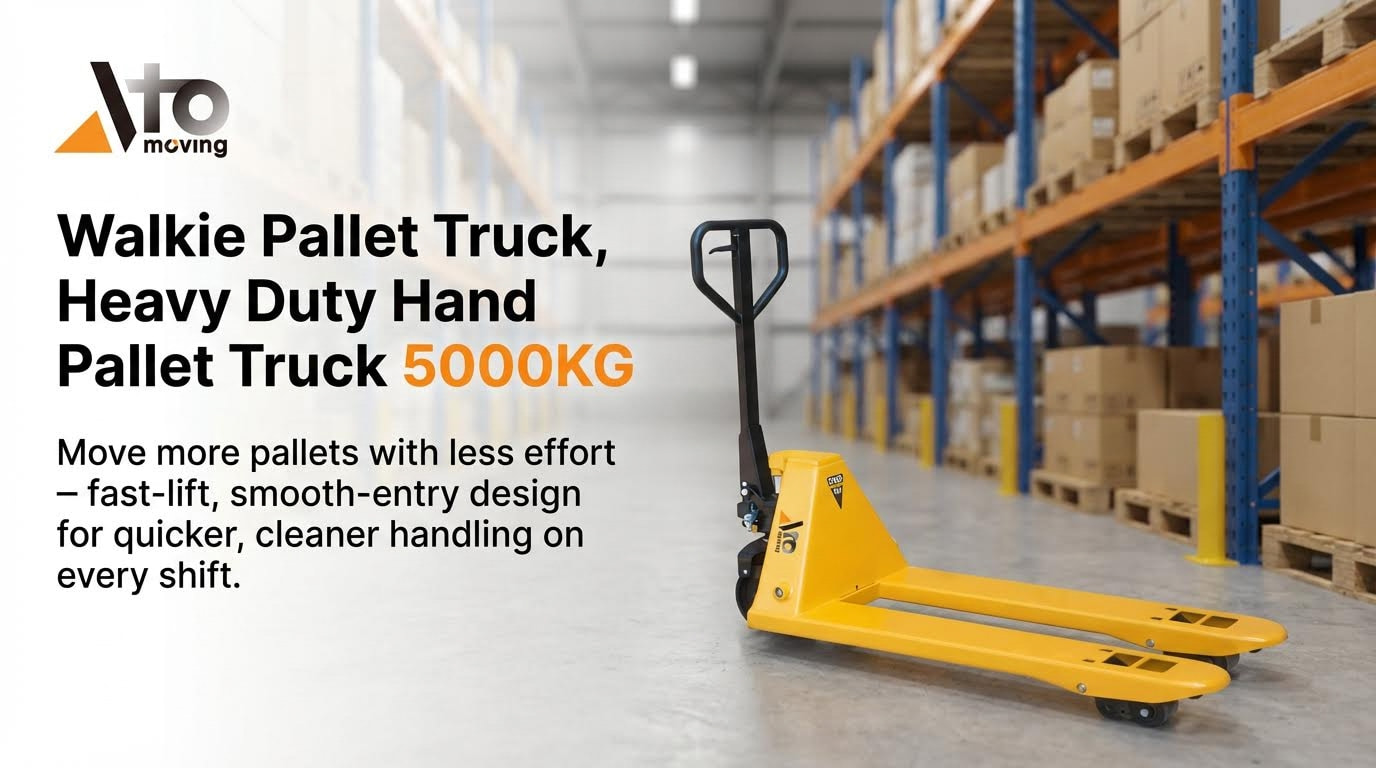
Operators who search for how to operate a battery pallet lift usually want clear steps and control logic. This section explains how each control affects traction, braking, and stability. It links operating modes and walking patterns to safe maneuvering in tight warehouse aisles. The focus stays on repeatable habits that limit impact loads, foot injuries, and tip risks.
Control Handle, Emergency Stop, And Reverse
The control handle is the main interface on any battery pallet lift. It usually combines traction, lift, and lower functions. Operators must test all functions during the pre-use check before moving a load. A smooth response confirms that the control signals and drive system work correctly.
Most units use a twist grip or thumb control for forward and reverse. Small input changes should give predictable speed changes. Jerky motion may indicate drive or control faults and should trigger a stop and report. The operator must never try to “fight” a runaway truck with body force.
An emergency reverse or “belly” button sits at the top of the handle. When it hits the operator, it drives the truck away and stops. Operators must know its exact position and test it in a clear area. An emergency stop or key switch isolates power and is part of lockout steps.
Load Handling Limits, Stability, And Positioning
Every battery pallet lift has a rated capacity plate. Operators must keep the total load at or below this value. Typical ranges run from about 1 000 kilograms to 3 600 kilograms. Overload increases stopping distance and can damage forks, wheels, and the hydraulic unit.
Stable handling depends on the combined center of gravity of truck and load. Operators should insert forks fully, keep the load low, and center weight between forks. Uneven or high loads shift the center of gravity and raise tip risk, especially in turns. Sharp steering inputs with a raised load must be avoided.
Good positioning improves both safety and productivity. Operators should stop fully before lifting or lowering. They should check floor and rack clearances before setting down a pallet. For stuck pallets, small controlled lift and lower cycles can free the load. If that fails, only a trained forklift operator should assist.
Walking, Visibility, And Speed Control
Safe answers to how to operate a battery pallet lift always include walking discipline. Operators must stay beside or ahead of the truck, never in front of it. They should keep feet clear of the steer wheels and load wheels. Wide swing of the power unit can crush ankles during tight turns.
Visibility drives walking position. Operators should face the travel direction and avoid walking backward. If the load blocks the view, they should pull the truck instead of pushing it. They must slow or stop at blind corners and intersections and use the horn.
Speed control protects people and product. Operators should use the lowest speed that meets the task in crowded areas. Many trucks include a “creep” or “turtle” mode for tight spaces. This mode limits speed while allowing full steering angle. It is ideal for trailers, docks, and congested racks.
Parking, Securing, And Lockout Practices
Parking rules complete safe operation of a battery pallet lift. Operators must choose a spot that does not block aisles, doors, or emergency gear. They should stop on level ground, then lower forks fully to the floor. Raised forks create a trip hazard and can damage other equipment.
Once parked, operators must neutralize the traction control and apply any parking brake. They should turn off the power. On key units, they must remove the key to prevent unauthorized use. On keyless models, they should follow site rules for access control.
Basic lockout steps apply during faults or maintenance. Operators should isolate power using the key or main disconnect. They must tag the truck as out of service and report the defect. Only trained and authorized maintenance staff should remove the tag and return the unit to service.
Summary: Key Safety Practices And Compliance
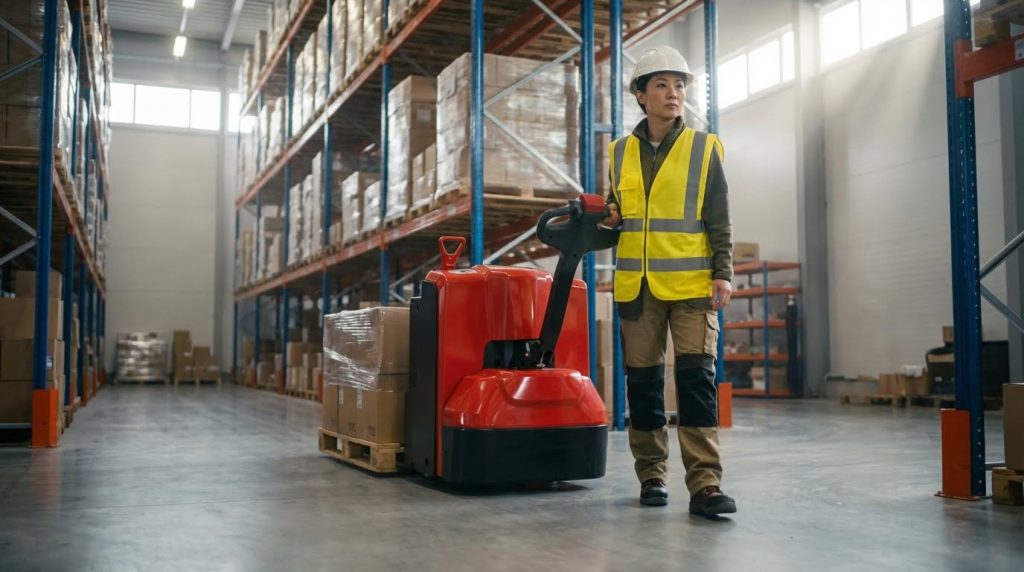
Knowing how to operate a battery pallet lift safely required more than basic driving skills. Operators needed training, daily checks, and strict control of loads and travel paths. Facilities that aligned procedures with OSHA Class III rules reduced incidents and unplanned downtime.
Core practices started before movement. Trained operators completed a motor-off and motor-on checklist, removed defective units from service, and reported faults. They inspected forks, hydraulics, wheels, controls, and safety devices, and confirmed capacity plates and labels were readable. This routine supported safe use and longer component life.
During operation, safe load handling was critical. Operators kept loads within the rated capacity, centered on the forks, and raised only enough to clear the floor. They maintained a clear line of sight, faced the travel direction, and avoided sharp turns and ramps. These habits limited tip-over risk and foot injuries, even though loaded units could weigh as much as a small car.
Compliance also depended on parking, charging, and recordkeeping. Operators lowered forks to the floor, removed the key or disconnected power, and avoided blocking exits or emergency gear. Sites kept training records, inspection forms, and maintenance logs to show control of risk. As equipment and batteries evolved, facilities that updated procedures, refreshed training, and integrated simple digital checklists stayed ahead of both safety expectations and productivity goals.
FAQ
How to Operate a Battery Pallet Lift Safely?
To operate a battery pallet lift, first ensure the equipment is powered off and disconnected from the power source. Check that the battery is fully charged and properly connected. Locate the control handle and use it to maneuver the pallet lift. Move slowly and steadily, keeping an eye on the load and surroundings. Always follow OSHA guidelines for safe operation. Pallet Jack Safety FAQs.
How to Reset an Electric Pallet Jack?
If your electric pallet jack stops functioning correctly, start by turning it off and disconnecting it from the power source. Find the reset button, typically located near the battery compartment. Press and hold the reset button for 10-20 seconds. Reconnect the power source and perform a test run to confirm it’s working again. Reset Guide.
Do You Need Certification to Operate an Electric Pallet Jack?
Yes, according to OSHA standard 1910.178, workers must complete proper training and certification to operate an electric pallet jack safely. This ensures they understand safety protocols and operational best practices. Newly hired employees in warehouse environments are required to earn this certification before operating any powered pallet jack. OSHA Certification FAQs.