
Moving a full 55-gallon drum is a high-risk task: a single drum can weigh 400–800 pounds, carry hazardous contents, and easily become unstable if handled the wrong way. This guide explains how to move a full 55 gallon drum using safe, ergonomic methods that protect workers, product, and equipment. You will learn the key risks, how to choose the right drum handling equipment, and step-by-step procedures for moving, tilting, and storing drums. Use it as a practical reference to reduce injuries, spills, and downtime in any facility that handles bulk liquids or chemicals.
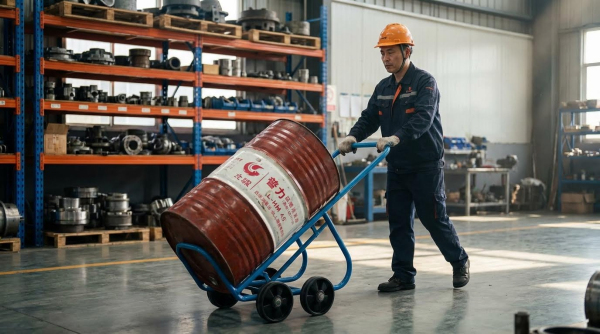
Understanding Full Drum Risks And Constraints
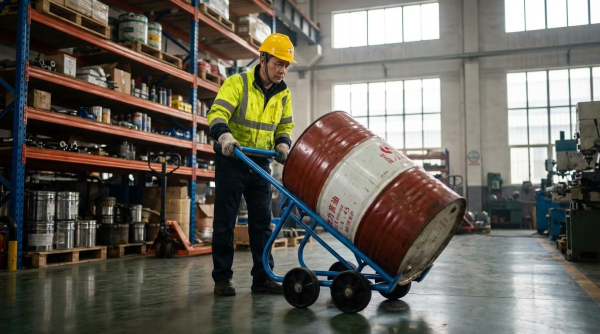
Typical drum weights and stability limits
When you plan how to move a full 55 gallon drum, start with its weight and center of gravity. A typical full 55‑gallon drum can weigh roughly 400–800 lb depending on the product density and fill level 400-800 pounds. This load is far above safe manual lifting limits for a single person, so you should assume mechanical assistance is required for any vertical lift or long horizontal move. The drum’s tall, narrow geometry makes it prone to tipping if pushed sideways, rolled on uneven floors, or carried on undersized platforms.
- Plan handling based on worst‑case weight (heaviest product you store).
- Use equipment rated comfortably above the maximum drum weight, including pallet jacks, drum trucks, and below‑the‑hook devices.
- Keep drums on level, non‑slip surfaces; avoid ramps and gaps that can shift the center of gravity.
- Secure drums during transport with chocks, curbs, or restraints to prevent rolling and tip‑over.
Stability limits also depend on stacking. For typical 55‑gallon drums, storing in rows no more than two drums high and two drums wide improves inspection access and reduces instability from variable drum strength and pallet loading two drums high and two drums wide. When you choose how to move a full 55 gallon drum from storage, always verify that stacked drums are not distorted, corroded, or leaning before you disturb the stack.
Hazard identification, SDS, and PPE requirements
Before you decide how to move a full 55 gallon drum, you must know what is inside. Operators should read the drum label and consult the Safety Data Sheet (SDS) to determine if the contents are hazardous, corrosive, toxic, or flammable read the label and consulting the Safety Data Sheet (SDS). Any unlabeled drum should be treated as hazardous until the material is positively identified unlabeled drums should be treated as hazardous. This risk assessment drives your choice of equipment, route, and spill containment measures.
- Inspect drums for dents, corrosion, bulging, and leaks before moving.
- Verify bungs and lids are present and tight to prevent leaks during handling missing bungs or lids should be replaced and secured.
- Stage absorbents and compatible cleanup materials if any seepage is found appropriate cleanup materials should be prepared.
- Ensure required secondary containment is in place where 55‑gallon containers of flammable or toxic liquids are stored or transferred containers holding 55 gallons or more … be surrounded by dikes or pans.
The SDS also specifies personal protective equipment. Typical PPE for drum handling includes chemical‑resistant gloves, eye/face protection, and safety footwear, with additional gear as required by the SDS appropriate PPE, including gloves, eye protection, safety shoes. Matching PPE to the identified hazards reduces the risk of chemical exposure, splash injuries, and crush injuries while you move, tilt, or store drums.
Engineering Controls: Choosing The Right Drum Handling Equipment
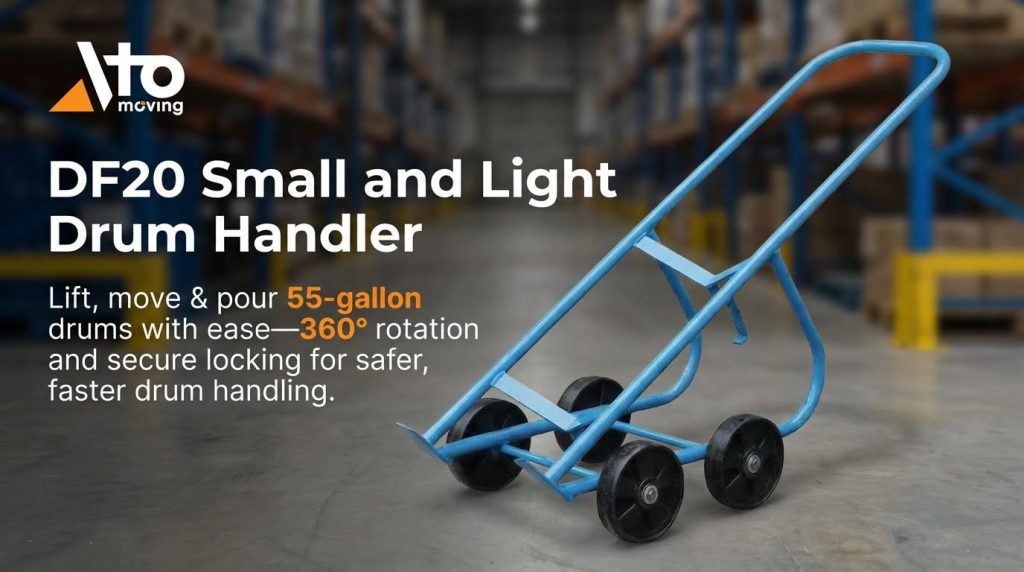
Comparing drum trucks, trolleys, carts, and dollies
When you plan how to move a full 55 gallon drum safely, the first step is to minimize manual lifting and rely on engineered devices whenever possible. A full drum can weigh 400–800 lb, so even short moves create high risk for back and crush injuries if handled by hand alone. Using purpose-built drum trucks, trolleys, carts, and dollies is recommended for drums in this weight range. Each tool has a different “sweet spot” depending on distance, floor condition, and whether you need to tilt or just transport.
- Drum trucks / drum hand trucks
These are tilt-back devices that let one person move a single drum with the drum strapped or gripped to the frame. They are best for short to medium distances on relatively smooth floors where you need good control at door thresholds and ramps. Because they keep the drum nearly vertical, they reduce spill risk and are a good default choice for routine internal moves. - Drum trolleys
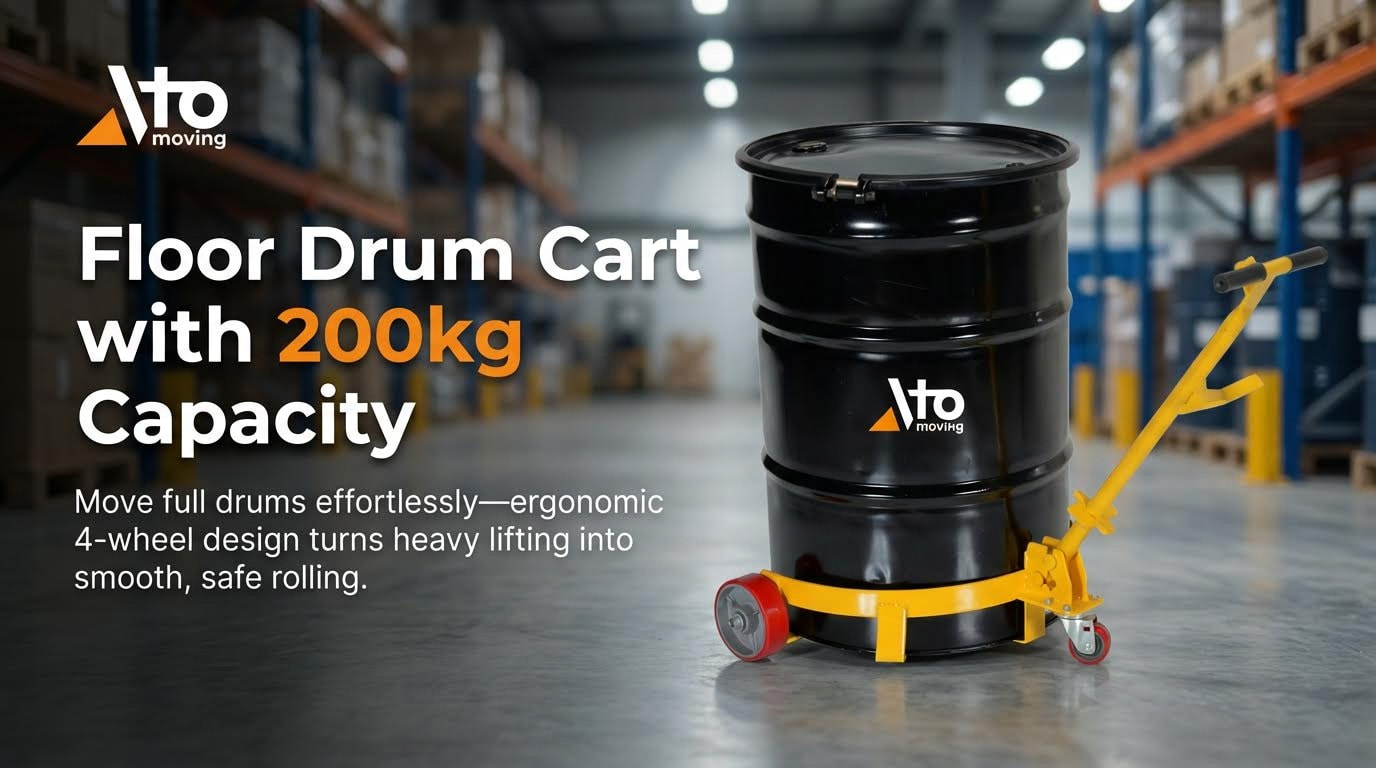
Drum trolleys usually support the drum on a cradle with larger wheels and ergonomic handles. They are designed to roll smoothly on concrete, warehouse aisles, and loading docks, reducing push–pull forces and operator strain through stable wheelbases and handle geometry. Many models accept steel, plastic, or fiber drums and may include locking or anti‑tip features for added safety. - Drum carts
Drum carts often carry one or more drums on a small platform or frame and are useful when moving several drums in one trip. They are suited to warehouse runs and staging areas where you have clear aisles and want to maximize productivity. Using carts instead of manual rolling reduces strain and helps prevent drops and spills. - Drum dollies
Drum dollies sit under the drum and allow easy spinning and short-distance repositioning. They are ideal for positioning drums at workstations or inside containment pallets but are not a good choice for rough floors, slopes, or long travel. Because the drum is free-standing on a small base, operators must avoid sudden impacts and ensure floors are level and free of debris.
Selection tips for trucks, trolleys, carts, and dollies
Match wheel type to floor conditions, check the rated capacity against your heaviest full drum, and verify compatibility with your drum materials (steel, plastic, fiber). For hazardous contents, prefer devices that keep the drum upright and allow the operator to stay out of the potential spill path.
Forklift, hoist, and below‑the‑hook drum attachments
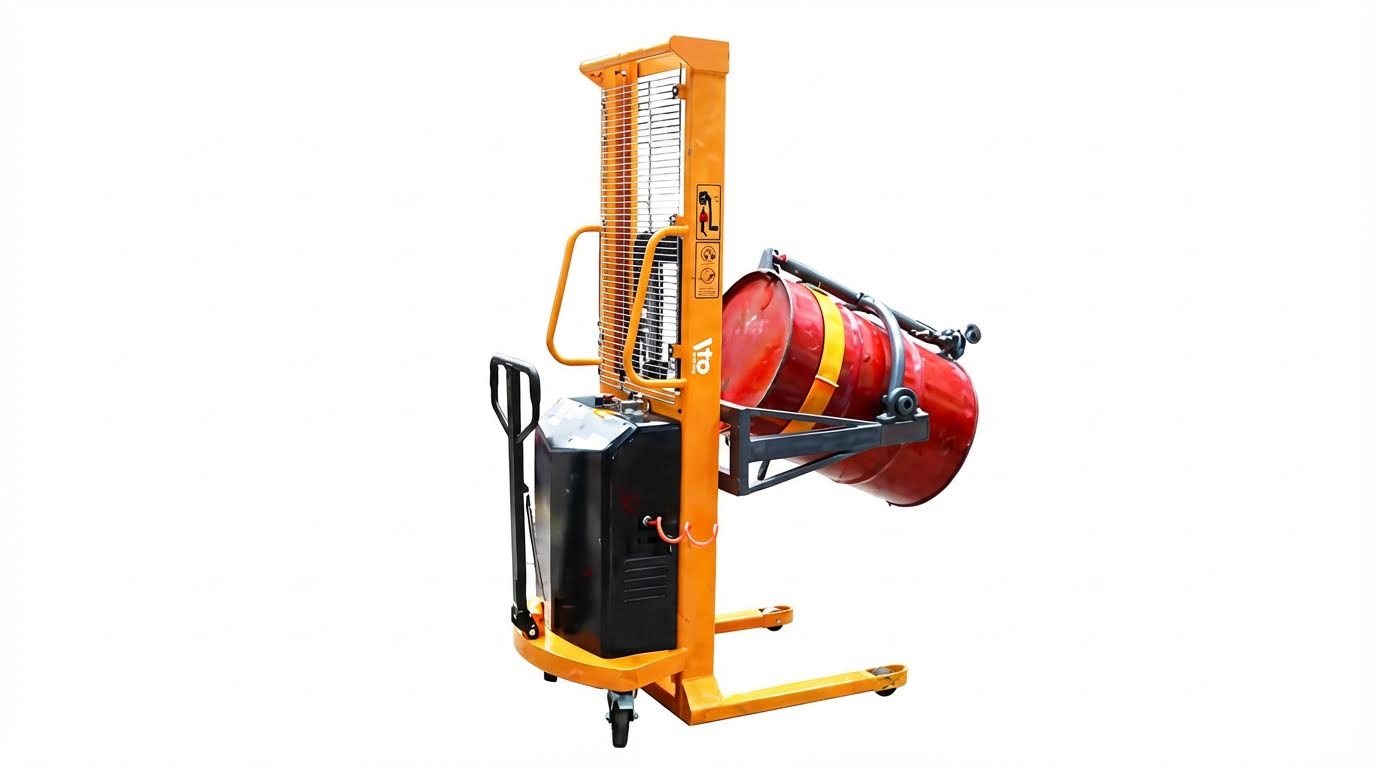
For longer travel distances, higher throughputs, or vertical lifting, you should consider powered drum handling equipment. Forklift, hoist, and below‑the‑hook attachments let you move or tilt drums without placing workers in the line of fire. Rotators and tilters can provide 360° rotation for dispensing and inspection, which is especially useful when the drum must be inverted over a vessel or hopper.
- Forklift drum attachments
Forklift drum attachments such as clamps, grabbers, or rotators allow a truck to pick up drums from the floor or pallets and transport them like any other palletized load. They are effective when you already use forklifts for bulk material handling and need to integrate drum moves into that flow. Choose attachments that positively engage the drum (chime, band, or clamp) and are rated for at least the maximum full-drum weight with a conservative margin. - Hoist and crane drum lifters
Overhead hoists are useful when you must lift drums into process equipment, mezzanines, or elevated storage. OSHA required base‑mounted drum hoists to guard exposed moving parts such as gears, chains, and sprockets to prevent entanglement and pinch injuries. Controls must be within easy reach of the operator’s station, and electric hoists need devices that disconnect power on failure and prevent automatic restart. - Below‑the‑hook drum tilters and rotators
Below‑the‑hook devices suspend from a hoist hook and grip the drum in a cradle or band for lifting and controlled rotation. Many designs include self‑locking worm drives that hold the drum in position without rollback under load so operators can pause safely at any angle. Chain binders or steel bands secure the drum without relying on friction alone, and motorized rotation options allow precise positioning while keeping workers away from the discharge zone.
Powered systems and environments
In clean or corrosive environments such as food or pharma, lifters are often built from 304 or 316 stainless steel with smooth finishes for cleanability and may be available in electric, hydro‑pneumatic, or ATEX-rated versions for hazardous areas. These solutions are well suited when you routinely move heavy, hazardous, or high-value materials and need strict contamination control.
Safety factors, guarding, and control system requirements
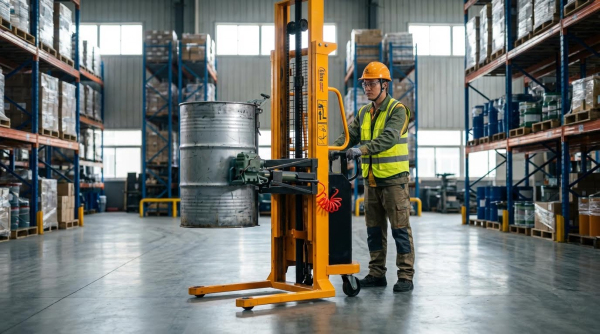
When you decide how to move a full 55 gallon drum with mechanical equipment, the design safety margin and control features matter as much as basic capacity. Drum handling attachments should not just match the drum weight; they should exceed it with an adequate safety factor to account for dynamic loads, impact, and wear. Some drum handling devices use a 3:1 safety factor based on material yield strength, which is a good benchmark for many industrial applications.
| Safety element | Engineering intent |
|---|---|
| Structural safety factor | Prevents failure under shock loads and long-term fatigue. |
| Guarding of moving parts | Protects operators from gears, chains, and rotating shafts. |
| Control layout and logic | Ensures the operator can stop motion quickly and predictably. |
| Power-loss protection | Prevents unintended restart after outages or faults. |
- Guarding and mechanical safety
OSHA required exposed gears, setscrews, chains, and sprockets on drum hoists to be guarded to eliminate entanglement and shear points. For drum trucks, trolleys, and carts, equivalent principles apply: avoid pinch points at hinges and cradles, provide stable wheelbases, and design handles to keep hands clear of the drum and floor obstacles. - Control system requirements
Base‑mounted and electric hoists must place normal operating controls within easy reach of the operator and include a device that disconnects all motors from the power line on failure, preventing automatic restart until the controller is reset to “off.” Where applicable, overspeed protection and remote stop capability are also required so that a stuck pendant or damaged cable cannot cause loss of control. - Operational checks and maintenance
All drum handling equipment should follow the manufacturer’s instructions for design limits, inspection, testing, and maintenance to keep safety systems effective over time. Before each use, operators should verify that clamps, bands, chains, and locking mechanisms fully engage the drum and that controls return to neutral reliably. Combining appropriate safety factors, proper guarding, and robust control logic is what turns a basic lifting tool into a reliable engineering control for drum handling.
Safe Procedures For Moving, Tilting, And Storing Drums
Manual upending, rolling, and short-distance moves
When deciding how to move a full 55 gallon drum manually, keep in mind that a full drum can weigh roughly 400–800 lb, so manual handling should be the last resort and only for short, controlled moves. Full drums typically weigh between 400 and 800 pounds Use purpose-built drum dolly, or carts whenever possible to maintain stability and protect the operator’s back and shoulders. If you must handle a drum on its side, keep the move slow, over smooth floors, and away from traffic, pinch points, and edges.
- Manual upending (laying drum to vertical): To raise a drum from horizontal, crouch in front with knees apart, grasp the chime on each side, and use leg muscles while keeping your back straight. Balance the drum on the lower chime first, then move your hands to the far edge of the top chime and ease it into a fully upright position instead of “snapping” it up. This technique keeps the load close to the body and uses stronger leg muscles
- Rolling a drum: Place one hand high on the chime and the other low to generate torque and control. Step sideways with feet separated for balance, and roll the drum using small, controlled movements. Reposition your hands by lifting and placing them; do not slide along the chime to avoid cuts, burns, or contact with residues. Side-stepping with a wide stance improves stability when rolling a drum
- Short-distance moves: For a few feet of travel, tilting the drum slightly onto its lower chime and “walking” it may be acceptable if the surface is flat and non-slip and the drum is sound and closed. For anything beyond a few feet, or over uneven floors, use a drum transporter to avoid sudden loss of control.
When to stop manual handling and use equipment
Switch to mechanical equipment if the drum is above your safe handling capacity, the path includes slopes, thresholds, or grates, or the drum contents are hazardous. Using dedicated drum handling equipment greatly reduces the risk of back strains and crush injuries while improving control.
Leak checks, containment, and spill response planning
Before deciding how to move a full 55 gallon drum, verify that it is structurally sound and leak-free. Inspect the body, chimes, weld seams, and bungs for wet spots, corrosion, or bulging. Replace missing or loose bungs and lids and tighten them to prevent leaks during transport. Securing bungs and lids before moving drums helps prevent spills
- Pre-move leak checks: If you see any signs of leakage, do not move the drum until you have reviewed the Safety Data Sheet (SDS) and staged appropriate absorbents, neutralizers, and tools. Operators should inspect drums for leaks and consult the SDS before cleanup
- Secondary containment: For flammable or toxic liquids, OSHA required that containers of 55 gallons or more sit within dikes or pans that hold at least 35% of the total stored volume. Dikes or pans must enclose at least 35% of the total container volume for 55-gallon drums of flammable or toxic liquids Use spill pallets, curbed areas, or portable berms sized to your drum inventory.
- Storage layout: Store 55-gallon drums in rows no more than two high and two wide to maintain stability and allow visual inspection for leaks or deterioration. Limiting rows to two drums high and two wide improves inspection access and reduces collapse risk
- Spill response readiness: Keep spill kits, overpack drums, and tools (drum wrenches, non-sparking tools if required) near drum storage and transfer points. Train operators on your site-specific spill plan, including alarm, containment, cleanup, and reporting steps for the products they handle.
Integrating PPE and SDS into drum movement
Always review the SDS before moving a new product and select PPE such as gloves, eye protection, and safety footwear that match the chemical and physical hazards. The SDS defines required PPE and spill response procedures for each chemical This planning makes drum moves safer and reduces the impact of any leak or spill.
Key Takeaways For Injury-Free Drum Handling
Safe drum handling starts with knowing the load and the liquid. Weight, center of gravity, and drum condition set your limits before you ever move the drum. The SDS, labels, and a quick leak check then define PPE, containment needs, and acceptable routes through the plant.
Engineering controls do the heavy work. Purpose-built trucks, trolleys, carts, and dollies keep drums upright and stable over short and medium distances. Forklift, hoist, and below‑the‑hook attachments extend that control to longer travel and vertical lifts. When these tools use generous safety factors, positive drum engagement, and guarded moving parts, they turn a high-risk job into a routine task.
Procedures tie the system together. Limit manual handling to short, controlled moves with proven techniques. Standardize storage heights and layouts, and keep secondary containment and spill kits sized to your actual inventory. Train operators to inspect equipment, verify engagement, and stop the job if conditions change.
The best practice is simple: treat every full drum as a high-energy, potentially hazardous load. Combine clear hazard information, fit-for-purpose Atomoving drum equipment, and disciplined procedures. This integrated approach cuts injuries, spills, and downtime while keeping production moving.
Frequently Asked Questions
How to Move a Full 55-Gallon Drum Safely?
Moving a full 55-gallon drum requires proper equipment and technique to ensure safety. Use drum lifting equipment rated for the drum’s weight, which can be up to 250 kg when filled with liquid. Position the lifter around the drum’s center of gravity, typically at the upper third. Engage the lifting mechanism fully before moving. Drum Lifting Guide.
- Use drum dollies or hand trucks designed for heavy barrels.
- Secure the drum with straps to prevent tipping during transport.
- Avoid dragging the drum directly on the floor to prevent damage.
What Are Some Manual Techniques to Reposition a Heavy Drum?
If no equipment is available, use the push/pull method carefully. Brace the drum with your foot to prevent sliding and shift your weight while pulling it a few inches at a time. Alternatively, tilt the drum slightly using one hand to pull the far edge while the other stabilizes it against a surface. Manual Drum Moving Tips.
- Always wear gloves and protective footwear.
- Work with a partner if possible to share the load.
- Move slowly and avoid sudden movements to maintain balance.