
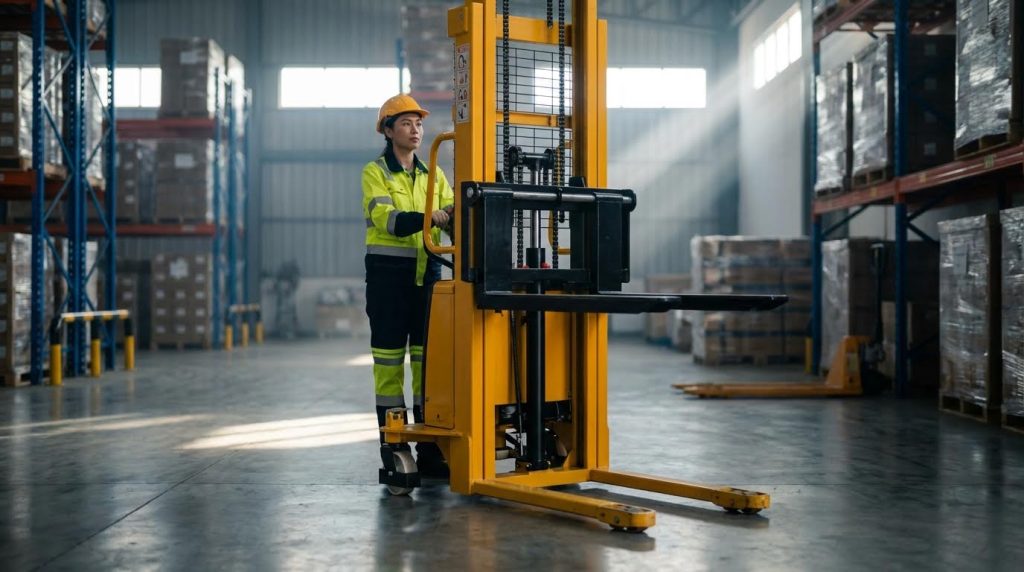
Operations that search for how to lift extra long pallet safely usually face a mix of stability, capacity, and productivity challenges. This article walks through the full engineering picture, from basic fork positioning to attachment selection and stability calculations for long loads.
You will see how load center, mast tilt, and fork insertion rules change when pallet length increases, and why rated capacity on the data plate no longer tells the whole story. The middle sections compare fork extensions, multi-prong attachments, and control strategies that keep long pallets stable while still meeting throughput targets. The final section consolidates best practices so safety, engineering, and warehouse teams can align on a clear, defensible standard for extra-long pallet lifts.
Fundamentals Of Fork Positioning For Long Pallets
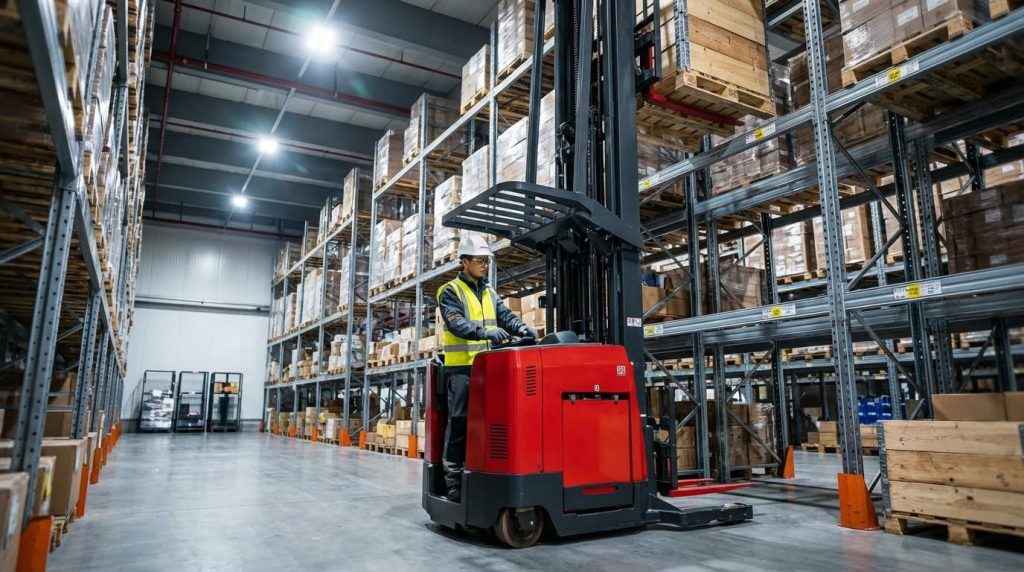
Operators asking how to lift extra long pallet safely must control fork position with more precision than for standard loads. Extra length pushes the load centre outward and shrinks the safety margin inside the stability triangle. This section explains how load centre, insertion depth, pallet design, and visual guidance work together to keep long pallets stable and within rated capacity. The focus is practical: what operators and engineers must check before every lift.
Load Center, Stability Triangle, And Rated Capacity
Extra-long pallets move the centre of gravity away from the carriage. This change directly reduces usable capacity. Most counterbalance forklifts were rated at a 600 mm load centre. When the effective load centre grows beyond this value, the truck can no longer lift the nameplate capacity.
For extra-long pallets, engineers and supervisors should:
- Read the data plate and confirm capacity at the actual load centre.
- Place the heaviest part of the load closest to the front axle.
- Keep the mast slightly tilted back during travel to shorten the load distance.
The stability triangle concept still applies. The combined centre of gravity of truck and long pallet must stay inside that triangle. Poor fork positioning, off-centre loads, or high mast tilt forward can push it outside and create tip-over risk.
Fork Insertion Depth And Pallet Engagement Rules
Correct fork entry is the core answer to how to lift extra long pallet safely. Forks should enter the pallet as far as possible. Industry guidance recommended full depth or at least 80% fork insertion. For a 1 165 mm pallet, this meant about 900 mm minimum engagement.
Shallow entry shifts the load centre forward and overloads fork tips. This pattern cracked deck boards and pierced bearers in real facilities. It also forced the mast and front axle to carry higher bending moments. Good practice is:
- Level forks before entry and align square to the pallet face.
- Insert until the heel is close to the far stringer, while avoiding contact with a second pallet behind.
- Only tilt back after full engagement and load check.
For extra-long pallets that overhang the forks, operators should still target two-thirds support of the load length as a minimum. Less support quickly increases deflection, product damage, and instability.
Aligning To Two-Way, Four-Way, And Block Pallets
Pallet entry design changes how to lift extra long pallet efficiently. Two-way pallets only accept forks from two sides. This restriction demands very accurate approach and perpendicular alignment. Four-way and block pallets give more entry options, but the operator still must respect bearer and block locations.
With extra-long loads, misalignment multiplies stress on a small number of boards. To reduce this risk, operators should:
Approach slowly with the truck square to the pallet face. Match fork height to the entry opening before moving forward. Confirm forks sit between bearers, not against them. For block pallets, avoid riding on blocks with one fork and between blocks with the other. This uneven support twists the pallet and load.
Where a site uses mixed pallet types, engineers should standardise entry sides for long pallets. Clear rules such as “long pallets only from stringer side” reduce confusion and damage.
Visual Guides And Operator Best Practices
Visual aids strongly support safe handling of extra-long pallets. Warehouses that installed fork positioning guides reported 4–7 second savings per pallet touch. That saved about 1.1–1.9 hours per truck per shift, with section costs between USD 250 and 750. These same guides also cut misalignment incidents and pallet damage.
Useful visual controls include:
- Painted floor lines that show truck stop points for long pallets.
- Marks on forks or carriage that show target insertion depth.
- Rack labels that specify required fork entry side and height for long pallets.
Operator best practice ties everything together. Approach 200–300 mm from the pallet, stop, and square the truck. Set the mast near vertical, then align fork height with the openings. Insert smoothly to full depth, centre the load between forks, tilt back slightly, then lift just clear of the floor. Regular refresher training and simple metrics, such as pallet damage rate per 1 000 lifts, help maintain discipline and support continuous improvement in long pallet handling.
Attachments For Extra-Long Pallets And Wide Loads
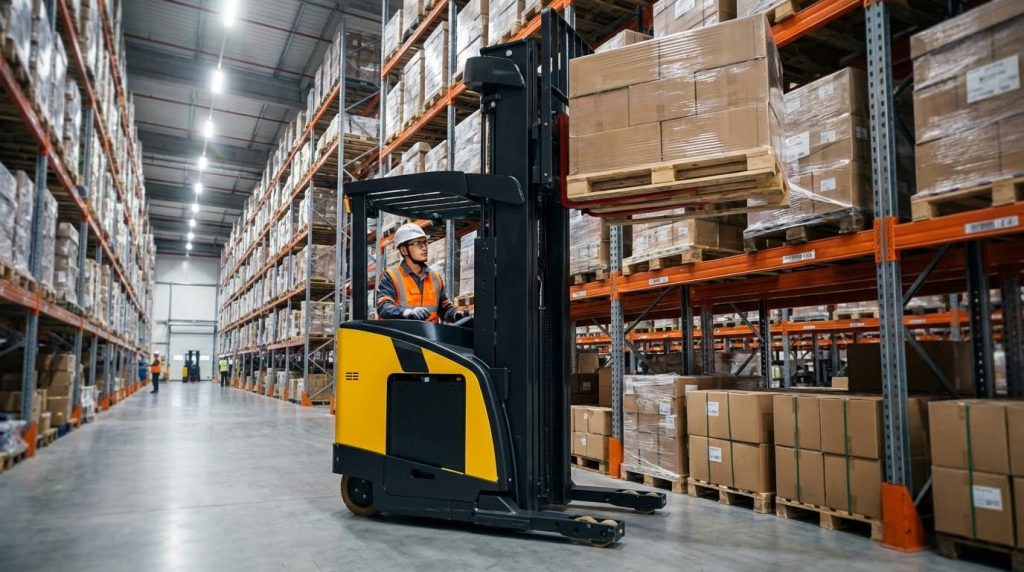
Attachments decide how to lift extra long pallet loads without losing stability or capacity margin. Engineers must match extension type, fork section, and pallet geometry to the rated data plate. Poor choices shift the load centre, cut effective capacity, and increase tip-over risk. This section explains how fork extensions and multi-prong tools support safe handling of long and wide pallets in real operations.
Fork Extensions: Sizing, Limits, And Compatibility
Fork extensions slide over the base forks and increase reach for long pallets, timber packs, or pipe bundles. To stay within common safety guidance, extension length should not exceed 150% of the original fork length. Longer extensions push the load centre forward and can reduce the usable capacity far below the truck’s nominal rating. Operators must always read the attachment or truck documentation for the de-rated capacity at the new load centre.
Good fit is critical when you plan how to lift extra long pallet loads with extensions. The inside width of the sleeve should be tight, typically no more than about 13 mm wider than the fork. A loose fit allows twist and side play, which stresses the pallet deck and stringers. Extensions should also match fork thickness so the heel sits fully and does not rock under dynamic braking.
Compatibility checks should cover three points: fork section, carriage class, and pallet style. Wide or block pallets benefit from longer bearing length under both outer stringers. Standard advice is still valid: do not lift only on the tips of extensions. Aim to support at least two-thirds of the load length, keep the heaviest portion toward the carriage, and use slight rear tilt during travel.
Adjustable And Multi-Prong Fork Attachments
Adjustable fork carriages and multi-prong tools help when pallet width or bearer spacing changes between loads. Lateral adjustment lets operators position outer forks directly under load paths instead of under thin deck boards. This reduces point loading and lowers the chance of cracked boards or punched-through decks. It also keeps the centre of gravity close to the truck centreline, which preserves lateral stability.
Four-prong and multi-prong attachments support very wide or flexible loads such as long crates, sheet packs, or large stillages. Extra contact points spread the load and reduce bending in both the pallet and the forks. For very long pallets, engineers often combine longer outer prongs with inner stabilising prongs that sit under central bearers. This layout limits sagging and protects product packaging.
When you plan how to lift extra long pallet loads with these tools, you must also consider turning space and aisle width. Multi-prong frames are usually wider and reduce clearance near racking uprights. Facilities often respond by setting lower travel speeds and wider aisle standards for trucks fitted with these attachments. Training should cover attachment-specific blind spots and new swing paths during tight turns.
Securing Extensions: Pins, Chains, And Fit Tolerances
Secure retention is essential whenever forks carry sleeves or bolt-on extensions. Heel pins, locking wedges, or safety chains stop the extension from sliding off during braking or mast tilt. Operators should never use unpinned extensions, even for short moves, because a sudden stop can unseat an unsecured sleeve. A dropped extension can damage floors, pallets, and nearby equipment.
Fit tolerances affect both safety and wear. A snug sleeve with minimal side clearance tracks in line with the base fork and keeps the load straight. Excess clearance allows chatter, which can damage the extension heel and fork tip over time. During pre-shift checks, operators should confirm that pins engage fully, chains are intact, and there is no visible cracking around the extension heel.
Good practice for how to lift extra long pallet loads includes simple field checks before use:
- Verify fork width against the stamped extension rating.
- Check that retention pins or chains seat and lock.
- Confirm the extension supports the pallet over most of its length.
Supervisors should document these checks in daily inspection sheets. This aligns with general safety rules that already required fork and mast inspection before any lift.
Application Examples Across Industrial Sectors
Extra-long pallets appear in construction, timber, steel, and manufacturing supply chains. In building materials yards, extensions help move long packs of lumber or cladding on custom pallets. Operators place the heaviest end of the pack toward the truck, then support the full pallet length with extensions. This approach keeps the load centre inside the truck’s stability triangle and limits bounce on uneven yards.
Manufacturing plants often use wide or long pallets for large machinery skids or tooling. Adjustable and multi-prong forks let teams position support under key frame members instead of under sheet metal skins. This reduces product damage and rework costs. In agriculture and forestry, long pallets of irrigation pipe or sawn timber benefit from reinforced sleeves and cross-beam style attachments that resist torsion when turning on rough ground.
Across these sectors, sites that standardised attachment use and operator routines reported lower product damage and faster pallet handling. They combined correct fork positioning, proper mast tilt, and attachment selection with metrics and refresher training. When engineers answer how to lift extra long pallet loads, they now treat attachments, operator skill, and layout design as one integrated system rather than separate topics.
Engineering Stability And Performance For Long Loads
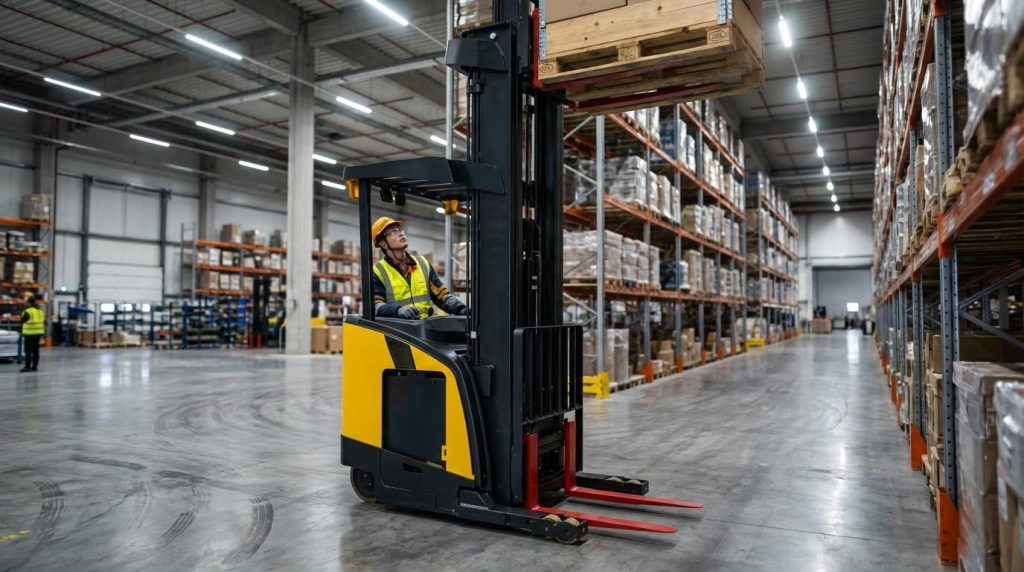
Engineering how to lift extra long pallet loads safely needs more than basic driving skill. It needs clear control of load center, mast tilt, and travel speed. This section explains how longer load centers cut effective capacity and change forklift behavior. It also links stability rules to damage control, operator training, and digital monitoring.
Calculating Effective Capacity With Longer Load Centers
Most counterbalance forklifts were rated at a 600 mm load center. Extra-long pallets push the center of gravity further out, often to 800 mm or more. This longer distance reduces the effective capacity because the overturning moment increases. Operators must read the data plate and never assume the nominal rating still applies.
For how to lift extra long pallet loads, engineers treat the forklift as a lever. The load moment equals load weight times load center distance. As the distance grows, the safe load must drop to keep the moment within the truck rating. When forks do not enter at least 80% of the pallet depth, the load center moves out again and stability reduces further.
Practical rules for long pallets include:
- Keep the heaviest part of the load closest to the carriage.
- Use full fork or extension insertion where possible.
- Derate capacity when the load center exceeds the plate value.
- Avoid lifting near maximum height with marginally stable loads.
Mast Tilt, Load Height, And Travel Speed Control
Mast tilt has a strong effect on the stability triangle. Tilting back shortens the effective load distance and improves stability. Tilting forward with an elevated long pallet pushes the center of gravity toward the front axle. That move raises the tip-over risk sharply.
When planning how to lift extra long pallet loads, set simple control rules:
- Pick up with the mast close to vertical, then tilt back slightly only after full fork engagement.
- Never travel with the mast tilted forward, especially with high or long loads.
- Keep the load low, about 100–200 mm above the floor, during travel.
- Reduce speed on turns and rough floors, because long loads amplify sway.
Long pallets increase wind and inertia effects at height. Engineers often cap travel speed and mast lift speed for these tasks. Supervisors should define separate speed limits for long-load aisles and enforce them via truck settings where possible.
Preventing Pallet Damage And Product Loss
Extra-long pallets are more prone to damage because loads often sit far from stringers or blocks. Tip loading on fork ends can crack deck boards or punch through timber. Shallow fork entry also shifts the load onto a small bearing area and raises bending stress in the pallet.
To prevent damage and product loss, operations should:
- Specify full or at least 80% fork or extension insertion depth.
- Level forks before entry and avoid striking the leading board.
- Center the load between forks and keep it tight against the backrest.
- Avoid lifting damaged or visibly sagging pallets without extra support.
Warehouses that optimized fork positioning and pallet quality saw large drops in product damage costs. Reported reductions reached well over 60% after process changes and training. These savings often came with lower overtime and fewer unplanned stoppages.
Integrating Metrics, Training, And Digital Tools
Long-load handling improves fastest when sites track performance. Key metrics include pallets per hour, damage events per 1,000 lifts, and near-miss reports. Facilities that combined these metrics with process changes recorded higher throughput and lower downtime.
Modern fleets can log travel speed, lift height, and impact events. These data streams show how operators actually handle extra-long pallets. Managers can then target coaching on harsh braking, fast cornering, or frequent forward tilt at height. Regular refresher training should cover load center basics, mast control, and step-by-step methods for how to lift extra long pallet loads.
Digital tools also support visual standards. Simple fork-position guides and on-truck displays help operators place forks at the right height and depth. Studies reported 4–7 second savings per pallet touch after adding clear visual aids. Over a shift, this time adds up to more than an hour saved per truck while also improving safety.
Summary Of Best Practices For Extra-Long Pallet Lifts
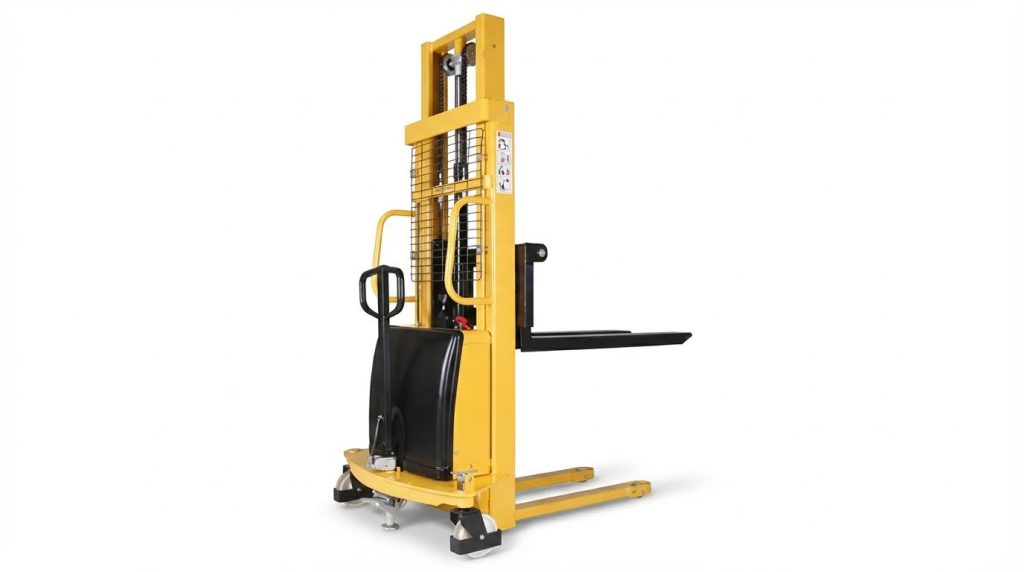
Operations searching how to lift extra long pallet should treat it as a capacity, stability, and process problem. Extra-long pallets push the load centre outward, so engineers must link fork positioning, attachment choice, and speed limits into one standard. Data plates, attachment ratings, and operator training all need to align before routine use.
From a technical view, best practice is simple but strict. Use full fork insertion where possible, and never below 80% of pallet depth. Keep the heaviest part of the load nearest the carriage and travel with a slight back tilt at low height. When using fork extensions, keep total length within 150% of the base fork and confirm the reduced effective capacity from the attachment rating.
Facilities that formalised these rules, added visual fork guides, and tracked pallet touches saw faster cycles and lower damage rates. Typical programs combined quick wins, like fork alignment standards, with medium-term steps such as pallet standardisation and dock-to-stock optimisation. Over time, digital tools, metrics, and periodic refresher training reinforced safe habits.
Future improvements will focus on smarter assistance systems rather than longer forks alone. Camera aids, load monitoring, and integrated training content will help operators handle long loads with less trial and error. The core rule will stay the same: respect the rated capacity at the new load centre and design every move around stability.
,
Frequently Asked Questions
What equipment can I use to lift an extra-long pallet?
To handle extra-long pallets, you can use specialized material handling equipment designed for oversized loads. Options include:
- Reach Trucks: Ideal for narrow aisles and high stacking, these trucks have extended forks to support longer pallets.
- Narrow-Aisle Trucks: These are designed for precise handling in tight spaces and can accommodate longer loads.
- Tugger Trains: Useful for transporting multiple or oversized pallets across warehouses efficiently.
For more information on forklift alternatives, check this forklift alternatives guide.
How can I safely move an extra-long pallet without a forklift?
Moving extra-long pallets manually requires proper technique and teamwork:
- Use a team of at least two people to distribute the weight evenly.
- Keep your back straight and lift with your legs to avoid strain.
- Avoid twisting your body while carrying the load; instead, move your feet to change direction.
- Carry the pallet close to your body to maintain balance and control.
For detailed safety tips, refer to this heavy lifting safety guide.