
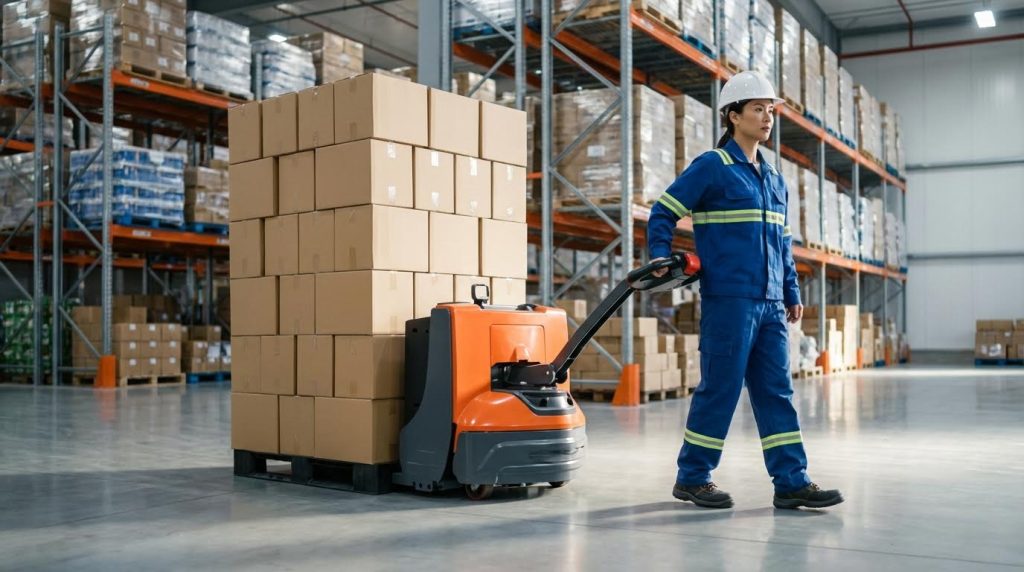
Pallet jack safety is the controlled process of lifting, moving, and lowering palletized loads without exceeding equipment limits or exposing operators to avoidable risk. This guide explains how to lift a pallet jack safely, how to control load stability, and how to move through real warehouse environments without damaging floors, racks, or people. You will learn fundamentals of manual and electric pallet jacks, step‑by‑step operating techniques, and how to integrate these trucks into aisle design, maintenance programs, and safety KPIs. The goal is simple: fewer injuries, less product damage, and higher pick rates while staying aligned with ANSI/ITSDF B56.1 and OSHA powered industrial truck requirements.
Fundamentals Of Pallet Jack Operation
Fundamentals of pallet jack operation define how to lift a pallet jack, move, and lower loads within its rated capacity while protecting operators, product, and floors through correct mechanics, load control, and compliance with safety standards.
This section explains the basic mechanics of manual vs. electric units, how to read capacity data plates so you never overload the truck, and which core ANSI/OSHA rules shape safe operation and training. Understanding these fundamentals is what separates “it moves” from safe, efficient, low‑injury warehouse performance.
💡 Field Engineer’s Note: Most pallet jack incidents start with a simple misunderstanding of capacity or stopping distance—operators assume “if it lifts, it’s safe,” which is wrong. The hydraulic system will often lift loads well beyond what the frame, wheels, and operator can safely control.
Manual Vs. Electric Pallet Jack Mechanics
Manual vs. electric pallet jack mechanics differ mainly in how force is applied—manual units use human muscle and a small hydraulic pump, while electric pallet jacks add powered drive, lift, and braking systems.
Knowing these mechanical differences is central to understanding how to lift a pallet jack safely, how much force the operator must apply, and what failure modes to watch for in daily inspections.
| Feature | Manual Pallet Jack | Electric Pallet Jack | Field Impact |
|---|---|---|---|
| Lift mechanism | Handle pumping drives a small hydraulic cylinder | Electric pump raises forks via control buttons | Manual units require more physical effort; powered units need functional controls and batteries checked before use during pre‑use inspection. |
| Travel / drive | Operator pushes or pulls load using body force | Electric traction motor drives load | Manual units are better for short distances; powered units reduce strain but can cause higher‑energy collisions if speeds are not controlled at safe speeds. |
| Typical rated capacity | ≈ 2,000–2,500 kg | Up to ≈ 5,000 kg for some models | Electric units often handle heavier loads, increasing stopping distance and floor loading; staying within the data plate rating is critical for stability. |
| Braking / stopping | Friction and operator force; some have simple mechanical brake | Electric braking via controls plus mechanical parking brake | Powered units require training on emergency stop and brake use to prevent runaways. |
| Pre‑use inspection focus | Wheels, forks, hydraulic leaks, handle function | All of the manual checks plus battery, cables, controls, horn | Defects must be reported and the unit removed from service until repaired per pre‑operational check guidance. |
| Ergonomic load on operator | High—operator provides all traction and much of the lifting motion | Lower—power assists traction and lifting | Manual units increase musculoskeletal risk if operators push/pull heavy loads or work on ramps; training in body mechanics is essential to reduce strain. |
How the hydraulic system actually lifts the load
The pallet jack’s small hydraulic cylinder multiplies the force from the operator’s handle strokes. Each pump moves oil into the cylinder, extending it a few millimeters and raising the fork linkages. That’s why correct “how to lift a pallet jack” technique emphasizes short, controlled pumps until the pallet is only 25–40 mm off the floor, rather than over‑pumping for unnecessary height recommended for stability.
Rated Capacity, Data Plates, And Load Limits
Rated capacity and data plates define the maximum safe load a pallet jack can handle at a given fork position and height, and operators must never exceed these limits when lifting or moving pallets.
Understanding the data plate is the backbone of learning how to lift a pallet jack safely, because the hydraulic system may still raise an overload even when the frame, wheels, or operator cannot safely control it.
| Concept | Typical Range / Practice | What To Check | Field Impact |
|---|---|---|---|
| Rated capacity (manual) | ≈ 2,000–2,500 kg | Compare total pallet weight to data plate rating | Overloading beyond this range increases risk of fork bending, wheel failure, and tip‑over, even if the pallet initially lifts for manual units. |
| Rated capacity (some powered units) | Up to ≈ 5,000 kg | Verify heavier loads against powered unit’s data plate | Heavier loads mean longer stopping distances and higher floor loading; route planning and ramp avoidance become critical when near max capacity. |
| Load distribution on forks | Evenly spread across both forks | Heaviest items low and centered between forks | Uneven or top‑heavy loads increase overturning risk; stable stacking keeps the center of gravity low and central for transport stability. |
| Data plate location | Stamped or labeled on frame | Model, capacity, sometimes fork dimensions | Operators should be trained to locate and read the data plate before deciding whether to lift a specific pallet, not after it is already raised. |
| Pre‑lift checks | Visual load assessment and path check | Estimate weight, height, and stability; check route | Confirming capacity and stability before you pump the handle prevents mid‑route failures or tip‑overs during load handling. |
| Pathway conditions | Clear, level, and free of debris | Look for uneven surfaces, debris, or overhead hazards | Obstructions multiply the effect of overloads—hitting a bump with an overweight pallet dramatically increases dynamic forces on forks and wheels per pathway guidance. |
💡 Field Engineer’s Note: Operators often trust the pallet instead of the data plate—“If it fit on that pallet last time, it’s fine.” Pallets vary wildly in strength. Always size the job by the jack’s rated capacity, not by the pallet or the product’s appearance.
How to quickly estimate if a load is near capacity
If you don’t have an exact weight, compare the stack to known references (e.g., a standard 1,000 kg pallet of product you move daily). If the new load is visibly larger or denser, treat it as suspect and confirm weight before lifting. When in doubt, use a higher‑capacity device or break the load down.
Key ANSI/OSHA Safety And Training Requirements

Key ANSI/OSHA pallet jack requirements focus on operator training, pre‑use inspections, safe travel practices, and clear paths, all aimed at reducing tip‑overs, collisions, and musculoskeletal injuries.
These standards shape how to lift a pallet jack in real operations—requiring pre‑operational checks, stable load handling, controlled speeds, and emergency preparedness as part of formal training and refresher programs.
- Pre‑operational inspection: Operators must inspect pallet jacks for visible damage, verifying wheels, forks, and hydraulic systems are in good condition and that handles and controls operate smoothly before use as part of pre‑use safety checks.
- Load handling and capacity control: Loads must not exceed the manufacturer’s rated capacity, typically around 2,000–2,500 kg for manual units and higher for some powered models, and must be evenly distributed and secured to prevent shifting or tip‑over during transport.
- Safe travel speed and maneuvering: Pallet jacks should be operated at controlled speeds with smooth acceleration and deceleration, especially in tight or congested areas, using horn signals and eye contact with pedestrians to prevent collisions for safe maneuvering.
- Clear pathways and housekeeping: Employers must maintain pathways free of debris, uneven surfaces, and overhead hazards, using signage, floor markings, and designated walkways to separate people and equipment as part of risk control.
- Ramp and incline practices: On inclines, the load must remain uphill of the operator, forks kept low but clear of the surface, and ramps avoided whenever possible due to freewheeling and runaway risks on slopes.
- Body mechanics and ergonomics: Operators should maintain neutral posture, bend at the knees, avoid twisting, and manage push/pull forces to reduce musculoskeletal injury risk, especially with manual pallet jacks in daily use.
- Emergency procedures and incident reporting: Training must include emergency stop use, evacuation routes, and the requirement to report incidents and near misses so root causes can be addressed and corrective actions implemented through regular drills.
- Parking and storage controls: After use, pallet jacks should be parked with forks fully lowered, handles upright, and positioned out of traffic routes to prevent tripping hazards and unauthorized use when not in operation.
- Ongoing training and monitoring: Safety is maintained through refresher training, performance monitoring, and feedback loops that reinforce correct techniques and adapt to new equipment or procedures as part of continuous improvement.
💡 Field Engineer’s Note: From a compliance standpoint, the fastest way to raise safety and productivity is to standardize a short, visual pre‑use checklist and a 10–15 minute “how to lift a pallet jack and move safely” demo for every new hire, then refresh it annually.
Integrating Pallet Jacks Into Warehouse Operations
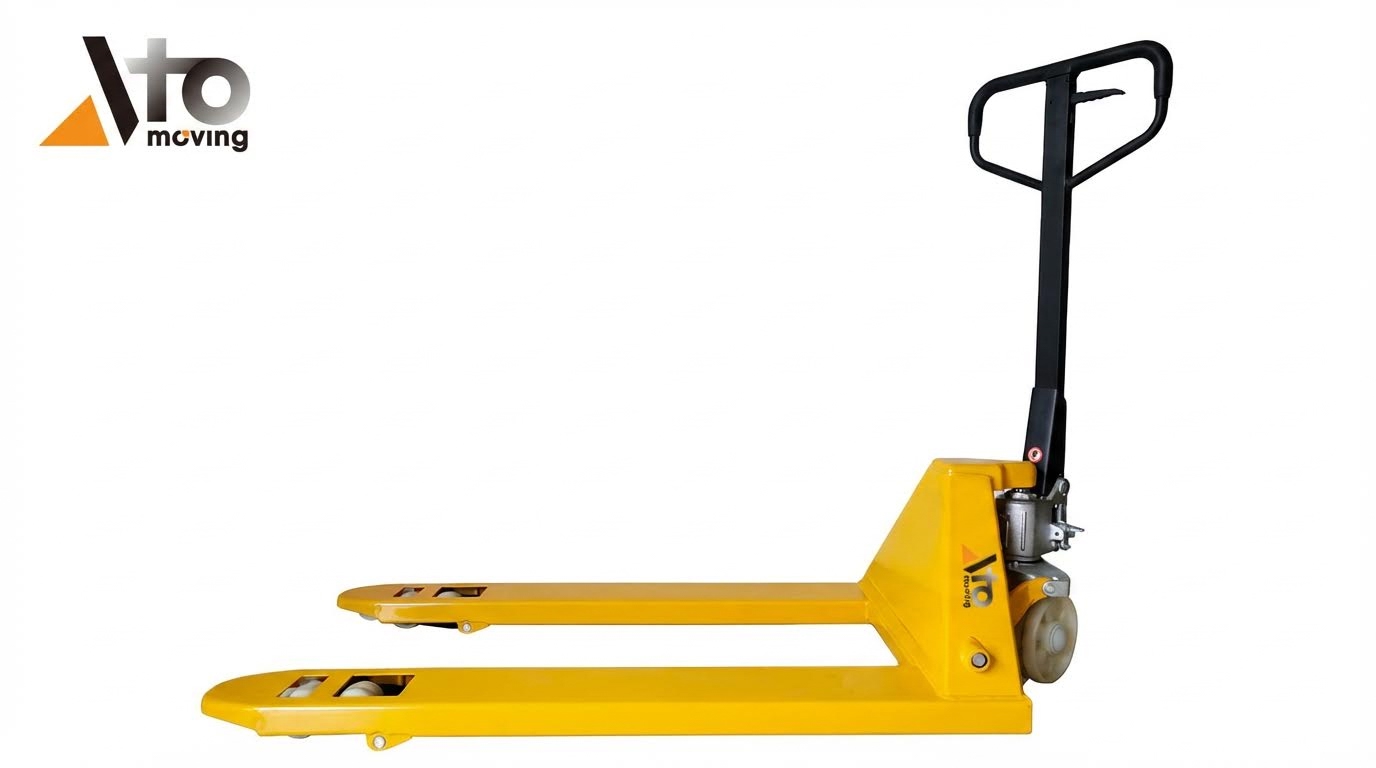
Integrating pallet jacks into warehouse operations means designing aisles, floors, maintenance, and training so every lift, move, and lower is predictable, low-risk, and fast enough to hit your throughput and safety KPIs.
When you scale from one pallet jack to a fleet, the constraint shifts from “how to lift a pallet jack safely” to “how to move hundreds of pallets per hour without incidents or bottlenecks.” Smart integration aligns equipment, layout, and people so operators can perform the same safe motions every time. This section shows how aisle design, preventive maintenance, and training programs work together to reduce injury risk, protect floors, and improve ROI on your material handling fleet.
Aisle Design, Floor Conditions, And Traffic Flows
Aisle design, floor conditions, and traffic flows determine how safely and efficiently pallet jacks can travel, steer, and stop under load, directly impacting collision risk, musculoskeletal strain, and pallet damage rates.
Good layout and traffic rules make it easier for operators to focus on how to lift a pallet jack correctly and handle loads, instead of fighting tight turns, blind corners, and bad concrete. Poor design shows up as scuffed pallets, damaged racking, and near-miss reports long before a serious incident occurs.
- Clear travel paths: Keep aisles free of debris, uneven surfaces, and overhead hazards to reduce trip, snag, and impact risks along travel routes.
- Defined pedestrian zones: Use floor markings and signage to separate walkways from jack traffic, cutting collision risk in mixed-use aisles and at crossings.
- Aisle width tuned to equipment: Set rack spacing so a loaded jack can turn without shunting, typically allowing extra clearance for operator body and pallet overhang.
- Controlled speeds: Enforce low speeds in tight or congested areas so operators can stop smoothly and avoid collisions when visibility is limited.
- Ramp and incline rules: Keep the load uphill on slopes, move slowly, and avoid ramps where possible due to freewheeling risk on inclines.
- Floor flatness and friction: Maintain smooth, non‑slip floors; patch spalls and avoid standing water that increases push forces and stopping distance.
💡 Field Engineer’s Note: If operators constantly “muscle” jacks around a corner, the layout is wrong, not the people. Widen that pinch point or change the travel pattern before you get a shoulder or back injury claim.
Why floor condition matters for jack performance
Soft asphalt, broken concrete, or steel plate transitions increase rolling resistance and shock loads into the handle. That translates into higher operator effort, more strain injuries, and accelerated wheel and bearing wear. Periodic floor surveys and small repairs often deliver more safety improvement than buying new equipment.
Preventive Maintenance And Hydraulic System Care
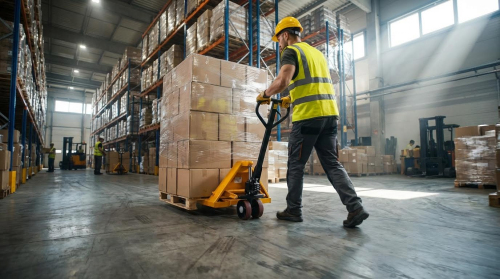
Preventive maintenance and hydraulic care keep pallet jacks lifting to rated capacity, steering straight, and lowering predictably, which directly reduces breakdowns, load drops, and unplanned downtime in live operations.
A structured maintenance program makes every “how to lift a pallet jack” training effective, because the handle, pump, and wheels actually respond as expected. Without that, operators start compensating with unsafe force or improvised techniques, especially on heavy loads.
- Routine pre-use checks: Require operators to inspect wheels, forks, and hydraulics before use and report damage or leaks immediately, keeping unsafe units out of service during daily checks.
- Functional control tests: Verify handle, lift, and lower controls operate smoothly before loading, similar to other pre‑operational inspections recommended for pallet trucks.
- Hydraulic system care: Monitor for slow lifting, creeping down, or visible leaks and schedule service before a jack can no longer hold a rated load safely.
- Wheel and bearing upkeep: Replace flat-spotted or damaged wheels to reduce push forces and prevent floor gouging, which later becomes a trip hazard.
- Planned maintenance schedules: Use structured preventive maintenance, similar to forklift programs, to minimize breakdowns and keep fleets available through scheduled service.
- Emergency repair response: Have a clear process for rapid repairs when a jack fails under load so operations can continue safely with backup units and minimal downtime.
Linking maintenance to safety KPIs
Track defects found in pre‑use checks, hydraulic failures, and wheel replacements against incident data. Spikes in component failures usually show up a few weeks before increases in near misses or minor injuries. Adjust PM intervals and inspection depth before those issues escalate.
💡 Field Engineer’s Note: When operators complain a jack is “hard to pump” or “always drifts down,” treat that as a red‑tag, not a comfort issue. A weak hydraulic circuit usually fails under the heaviest loads at the worst possible time.
Operator Training, Monitoring, And Safety KPIs
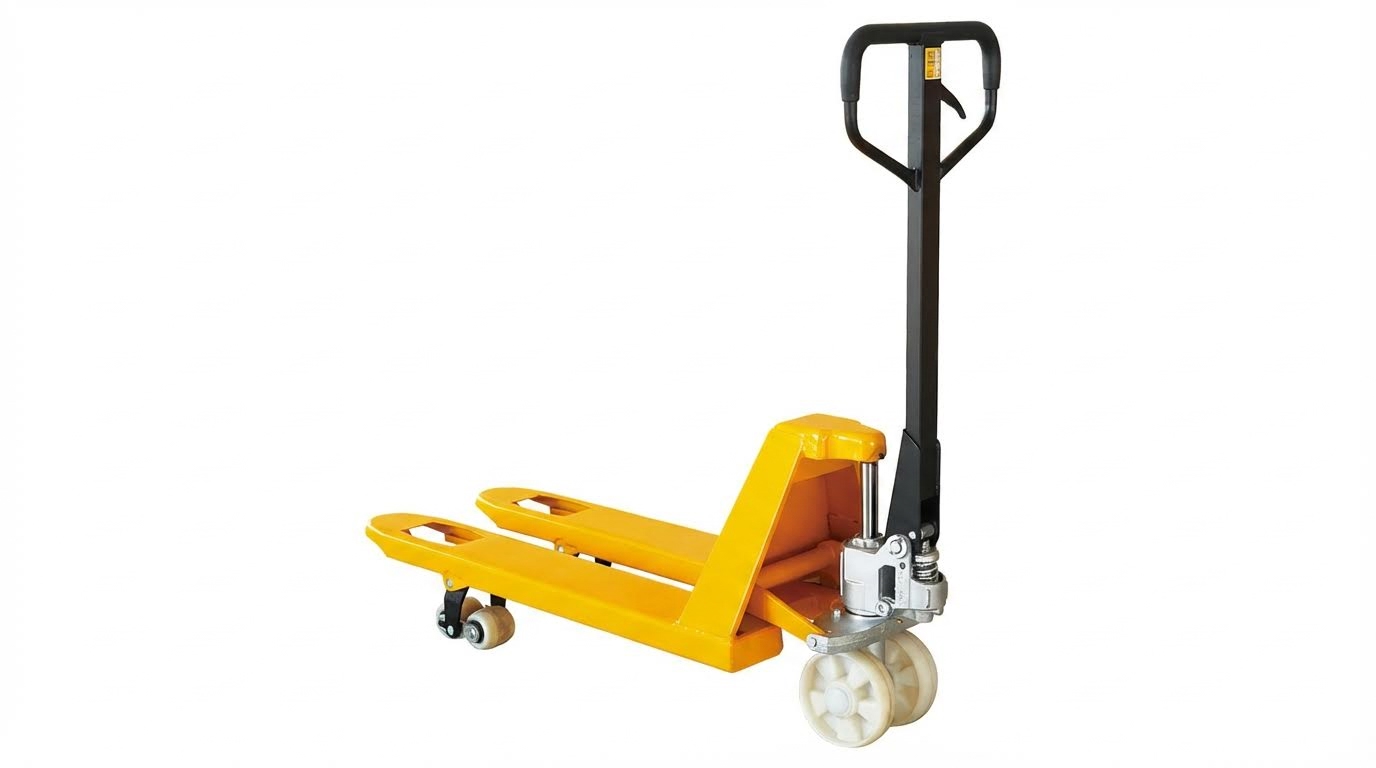
Operator training, monitoring, and safety KPIs turn pallet jack use from individual technique into a controlled system, ensuring consistent safe behavior, measurable performance, and continuous improvement over time.
Good programs go beyond showing people how to lift a pallet jack; they teach hazard recognition, emergency response, and correct body mechanics, then measure whether those behaviors stick in daily work.
- Structured initial training: Cover pre-use inspection, rated capacity, stable stacking, and correct handle operation so loads stay within typical 2,000–2,500 kg limits for manual units and remain stable.
- Safe lifting and lowering technique: Teach operators to align forks, fully insert under the pallet, and lift only enough for clearance, typically 25–40 mm off the floor to limit tipping risk.
- Body mechanics and ergonomics: Emphasize neutral posture, bending at the knees, and avoiding twisting; correct pulling or pushing technique reduces musculoskeletal injuries during handling.
- Emergency procedures: Train operators on emergency stops, evacuation routes, and incident reporting so near misses trigger corrective actions and drills.
- Refresher and continuous training: Schedule periodic refreshers and toolbox talks to reinforce safe behaviors and adapt to layout or process changes over time.
- Training ROI measurement: Evaluate training impact by comparing incident rates, productivity, and turnover before and after programs, using ROI = (Net Training Benefits / Total Training Costs) × 100 as a standard formula.
- Operational KPIs: Track metrics like jack-related injuries, near misses, damage incidents, and failed inspections to guide targeted interventions.
💡 Field Engineer’s Note: If your only jack metric is “we had no accidents,” you are flying blind. Start with simple KPIs—near misses, equipment damage, and failed pre-use checks—and you will quickly see where training and layout need work.
Examples of practical pallet jack KPIs
Useful indicators include: percentage of jacks passing pre-use inspection, number of jack-related near misses per 10,000 pallet moves, strain injuries per 100 operators, and unplanned jack repairs per month. These are simple to track and strongly correlated with both safety and throughput.
Final Thoughts On Safe, Efficient Pallet Jack Use
Safe pallet jack operation is not about one rule or one checklist. It is the result of matching rated capacity, stable geometry, and trained behavior to a well-designed warehouse and a maintained fleet. When operators respect the data plate, keep the center of gravity low and centered, and lift only for floor clearance, the risk of tip-over and loss of control drops sharply.
Good aisle design and sound floors then give those same operators room to steer, stop, and share space with pedestrians without strain. Preventive maintenance keeps hydraulics, wheels, and controls predictable, so every “lift, move, lower” cycle feels the same. Structured training and KPIs close the loop by turning field lessons into standard practice and by catching drift before it becomes an injury.
The best practice for operations teams is clear. Treat pallet jacks as engineered load-handling systems, not simple carts. Build a short, visual standard for inspection, lifting height, travel speed, and parking. Align your layout, PM program, and training around that standard, and review the data monthly. Do this well and pallet jacks become quiet, reliable throughput tools that support both safety targets and Atomoving-level productivity.
Frequently Asked Questions
How do I raise a pallet jack?
To raise a pallet jack, ensure the handle is in the correct position and pump it up and down. This activates the hydraulic system, which lifts the forks. Never overload the pallet jack, and always push rather than pull to avoid injury. For more details on safe operation, see this Pallet Jack Safety Guide.
Can one person lift a pallet?
A typical wooden pallet weighs between 75 and 80 pounds, which is generally too heavy for one person to lift safely. It’s recommended that two people lift it together to avoid injuries. Always keep your back straight and lift with your legs, not your back. For proper lifting techniques, refer to this Pallet Lifting Guide.
What is the best way to move heavy objects like pallets?
When moving heavy objects like pallets, always keep your back straight and let your legs do the work. Avoid twisting your back, carry items close to your chest, and maintain a stable posture. Using tools like pallet jacks or forklifts is ideal to reduce strain. For additional tips, check out this Heavy Lifting Tips Guide.