Knowing how to lift a pallet without a forklift has become essential in warehouses, workshops, and small facilities that lack heavy equipment. This article outlines practical alternatives such as pallet jacks, lift tables, rollers, and mobile aids, and explains how to combine them with safe manual handling practices. You will see how to match tools and methods to load, distance, and space constraints while staying compliant with ergonomic and safety guidelines. The final section summarizes how to select a safe, efficient pallet solution that fits your operation and budget.
Key Non-Forklift Options For Lifting Pallets
Understanding how to lift a pallet without a forklift starts with selecting the right mechanical aid. This section compares core non-forklift solutions that raise, position, and move pallets while controlling ergonomic risk and floor loading. It focuses on practical capacity ranges, operating envelopes, and safety practices suitable for warehouses, workshops, and construction logistics. Engineers and safety managers can use these options to design compliant, efficient pallet flows without relying on ride-on forklifts.
Manual Pallet Jacks And Hand Pallet Trucks
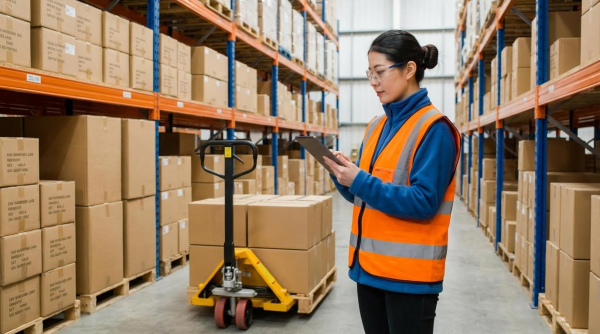
Manual pallet jacks lifted pallets using a hydraulic pump actuated by the drawbar. Typical rated capacities ranged from 2,000 kg to 2,500 kg, with heavy-duty units reaching about 3,000 kg. They worked best on smooth, level floors and short transport distances, such as loading docks, staging lanes, and small warehouses. Operators needed to fully insert forks into the pallet, center the load, and pump until 25–50 mm ground clearance.
From a safety standpoint, manual pallet jacks answered how to lift a pallet without a forklift with minimal infrastructure changes. Operators had to verify the load weight from packaging data or WMS records and compare it with the nameplate rating. Best practice required pulling the jack on level floors and pushing when descending slight slopes to maintain control. Pre-use checks included wheel condition, fork straightness, and leak-free hydraulics. Training emphasized walking speed, wide turns, and keeping feet clear of the steering wheels and pallet openings.
Electric Pallet Jacks And Walkie Stackers
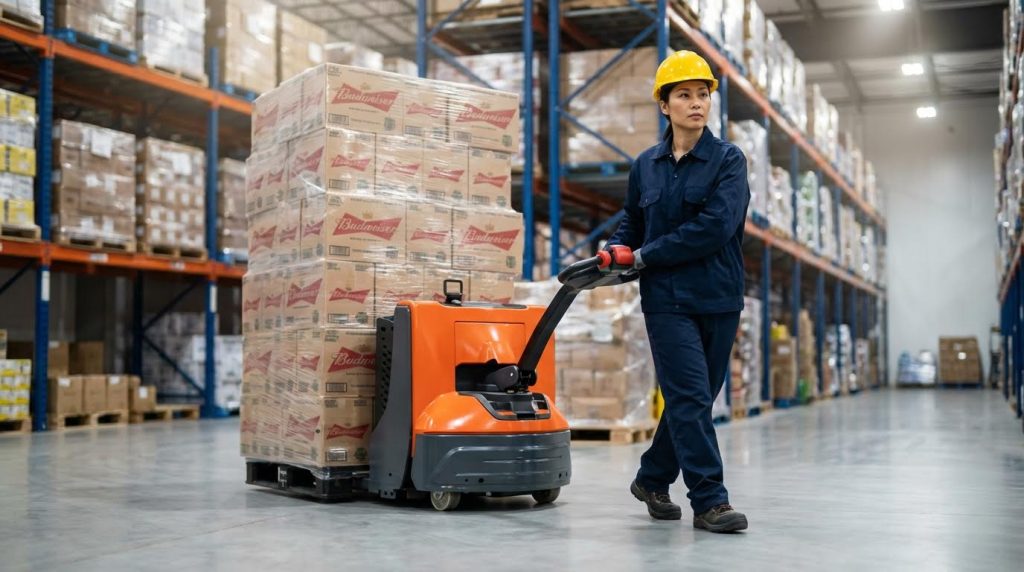
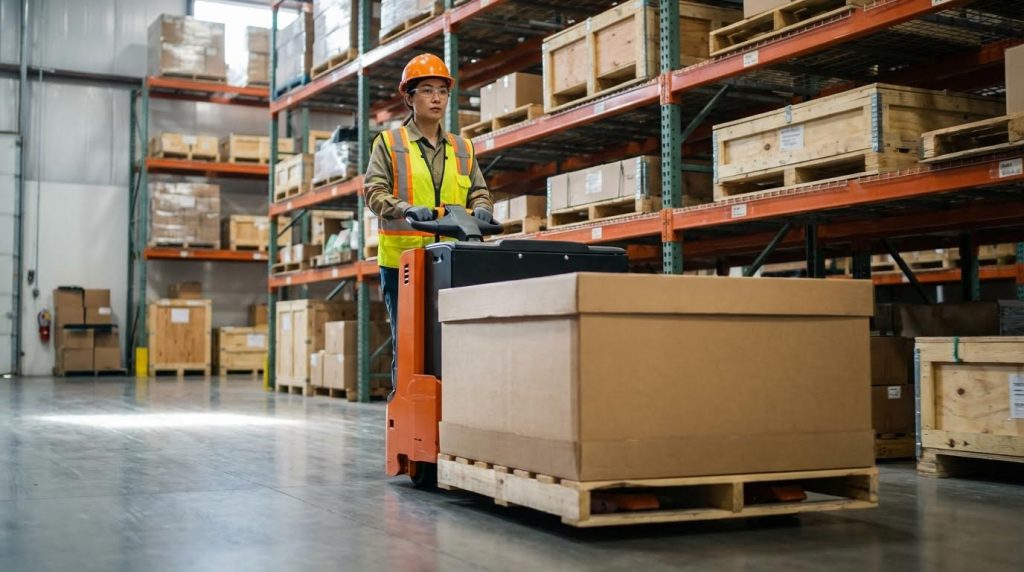
Electric pallet jacks, including walk-behind and rider types, used powered traction and lift to reduce operator effort. They typically handled loads between 2,000 kg and 3,000 kg and operated efficiently over longer internal routes than manual jacks. Electric walkie stackers extended this concept vertically, lifting pallets to racking levels of about 2 m to 5 m without a traditional forklift mast truck. Stackers existed in manual-hydraulic and fully powered variants, with the powered versions preferred for high-throughput applications.
In facilities evaluating how to lift a pallet without a forklift while maintaining vertical storage, walkie stackers provided a compact alternative. Operators had to respect both rated load and maximum lift height to avoid tip-over risks. Speed controls, horn use, and designated pedestrian–equipment separation zones reduced collision probability. Battery management plans covered charging schedules, electrolyte checks for lead–acid types, and ventilation of charging areas in line with industrial safety standards. Regular inspections of forks, chains, and emergency stop circuits were essential to maintain compliance with powered industrial truck guidelines.
Lift Tables, Scissor Lifts, And Telescoping Lifters
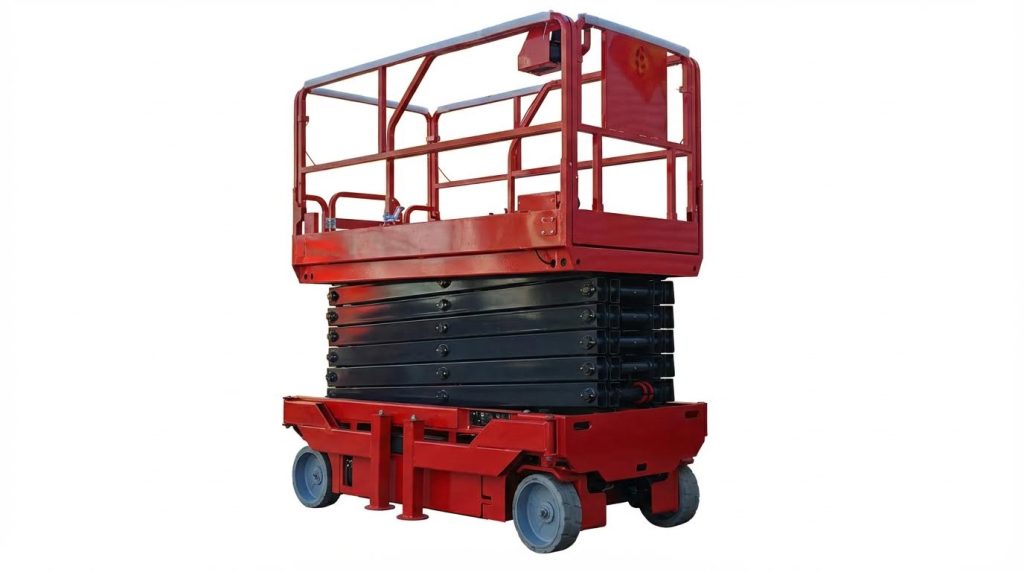
Lift tables and scissor lifts raised pallets vertically to ergonomic working heights, typically from floor level up to 1.0–1.5 m. Static or mobile platforms used hydraulic, pneumatic, or electromechanical actuators arranged in scissor linkages. These devices did not usually transport pallets over long distances; instead, they positioned loads for picking, assembly, or transfer to other equipment. Proper sizing required matching platform dimensions to pallet footprint and providing at least 10–20% capacity margin above expected maximum load.
Telescoping pallet lifters addressed how to lift a pallet without a forklift in congested or overhead-handling scenarios. The operator lowered the lifter over the pallet, then telescoping legs or feet extended under the deck boards. Lifting occurred via hoists, overhead cranes, or integrated drives, enabling vertical transfer in tight aisles or mezzanines. Safety engineering involved mechanical locks, overload valves, and anti-drop features. Operators had to confirm engagement under at least two opposite pallet stringers before applying load. Guarding around pinch points and adherence to relevant lifting accessory standards supported safe operation.
Conveyors, Gravity Rollers, And Pallet Rollers
Conveyor-based systems answered how to lift a pallet without a forklift by minimizing discrete lifting events. Powered roller or chain conveyors moved pallet loads horizontally between workstations, docks, and storage interfaces. Elevation changes used vertical lifts or inclined sections to raise pallets, reducing manual handling. Engineers sized drive motors based on maximum pallet mass, friction coefficients, and required throughput, while ensuring guarding around all moving parts.
Gravity roller conveyors relied on a slight slope and gravity for movement, offering a low-energy option for repetitive flows. Proper design limited slope angle to avoid uncontrolled acceleration and incorporated end stops or brakes. Pallet rollers and skate-wheel tracks supported staged accumulation, enabling operators to move pallets with minimal push force. Regular maintenance focused on roller alignment, bearing lubrication, and removal of debris that could cause derailment or jamming. Clear marking of pinch zones and training workers to keep hands, clothing, and tools away from rollers were critical to prevent injuries.
Mobile Pallet Moving Aids For Tight Spaces
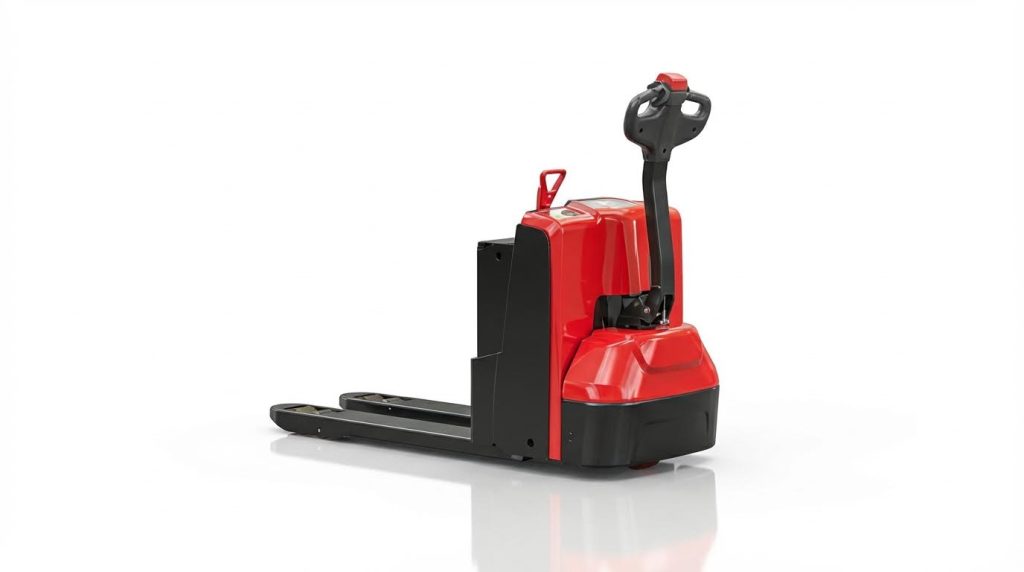
Mobile aids help answer how to lift a pallet without a forklift in congested aisles and small rooms. These solutions focus on rolling, sliding, and automated motion instead of vertical lifting. Selection depends on floor condition, pallet mass, available manpower, and acceptable cycle time. Engineers should match each device to a defined use case, from one-off maintenance moves to high-throughput intralogistics.
Pallet Skates, Heavy-Duty Dollies, And Crowbars
Pallet skates and heavy-duty dollies support the pallet on multiple wheels, allowing easy rolling across smooth concrete. Typical industrial units carried loads between 1 000 kg and 3 000 kg, so engineers had to verify manufacturer ratings. These devices worked well in tight spaces because operators only needed clearance around the pallet footprint, not mast swing space like a forklift. A roller crowbar acted as a compact lever with a wheel, letting one worker lift one pallet edge 20 mm to 40 mm to slip in a skate or dolly. Safe practice required level, clean floors, wheel chocks during loading, slow walking speed, and strict avoidance of manual lifting of the full pallet mass.
Ropes, Sheets, And Low-Cost Sliding Techniques
When budgets were minimal, teams sometimes used ropes, tarps, or heavy-duty sheets to move lighter pallets without a forklift. The method involved tilting one pallet edge slightly, inserting a low-friction sheet, then pulling with ropes or grab handles across smooth floors. This approach suited loads typically below 250 kg, short distances, and occasional moves, not repetitive production duty. Engineers had to check sheet tear strength, floor roughness, and friction coefficients to avoid sudden jerks and worker overexertion. Good practice included team pulling, clear communication, gloves with high grip, and banning this method for slopes, wet floors, or unstable stacked loads.
Hand Trucks And Cart-Based Pallet Handling
Hand trucks and platform carts offered controlled, wheeled transport for partial pallet loads or specially repacked units. Standard two-wheel hand trucks handled stacked boxes or half-pallet modules up to roughly 200 kg, improving leverage and reducing spinal load versus direct carrying. Four-wheel platform carts or low-deck trolleys accepted full pallets after initial lifting with a crowbar, jack, or small lifter. These tools excelled in tight corridors because operators could pivot around a small turning radius and push from behind with good visibility. Safe operation required correct load placement over the axle, strapping tall stacks, pushing instead of pulling where possible, and limiting gradients to maintain braking control.
AGVs, Cobots, And Automated Pallet Transport
Automated guided vehicles (AGVs) and collaborative robots (cobots) addressed how to lift a pallet without a forklift in high-density layouts with narrow aisles. Low-profile AGVs could drive under pallet platforms, lift a few centimeters using integrated lifts, and transport loads along mapped paths with laser or magnetic guidance. Cobots and small mobile robots moved partial pallet loads or individual cases from congested storage zones to main flow lines, reducing manual handling frequency. These systems reduced musculoskeletal risk and supported 24/7 operation but required higher capital expenditure, robust Wi‑Fi or industrial networks, and safety scanners compliant with relevant machinery and robot standards. Engineers needed to define traffic rules, speed limits, and pedestrian interaction zones to prevent collisions, especially at blind corners and intersections.
Safe Manual Handling And Ergonomic Practices
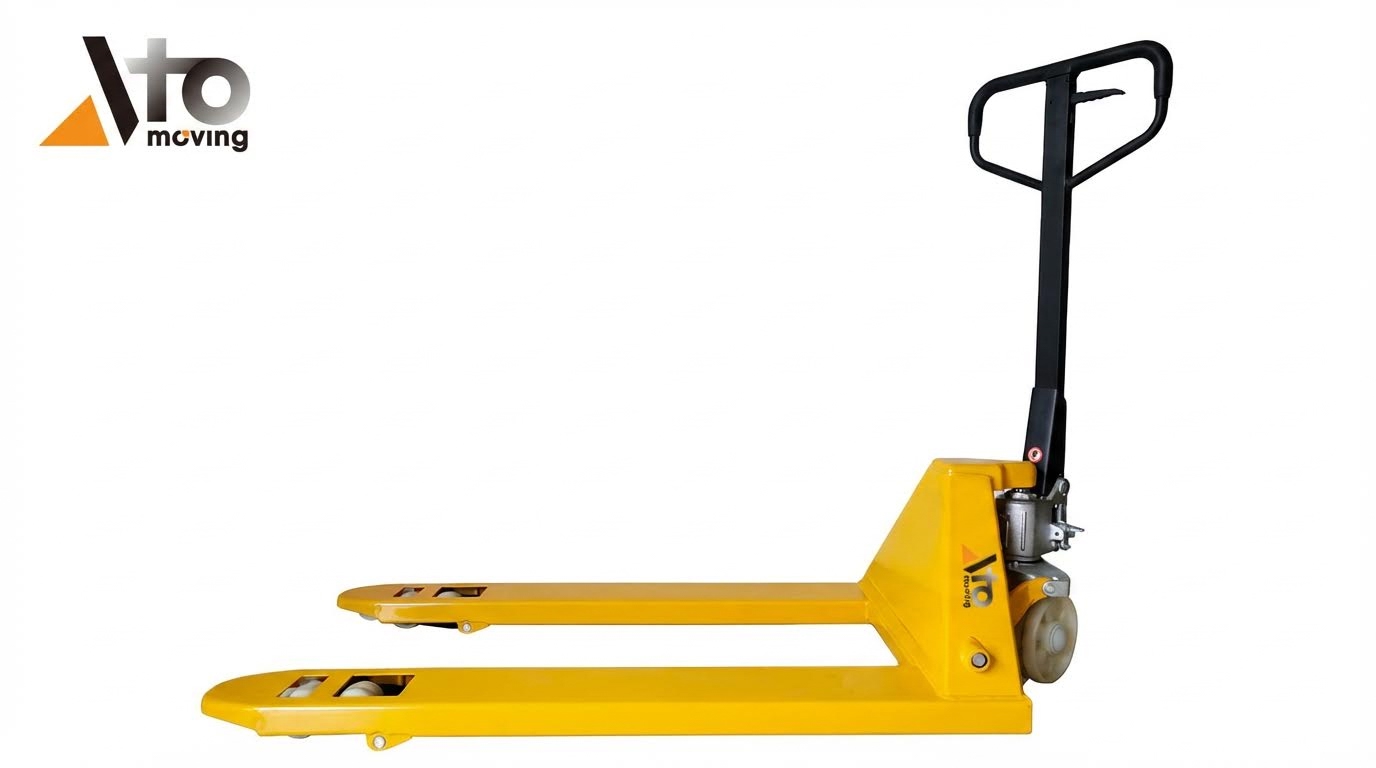
Safe manual handling practices are critical when deciding how to lift a pallet without a forklift. Poor technique increased musculoskeletal injuries, reduced productivity, and caused unplanned downtime. Integrating ergonomic principles with mechanical aids such as manual pallet jack, lift tables, and carts minimized manual strain. This section explains how to assess loads, move safely, train teams, and use digital tools to control risk.
Load Assessment, Route Planning, And PPE
Before lifting or moving any pallet without a forklift, workers should assess the load systematically. They should estimate mass, center of gravity, footprint, and stability, and confirm that manual handling limits are not exceeded; many safety programs capped single-person lifts at about 20–25 kg. If the pallet mass exceeded safe limits, workers should switch to mechanical aids such as hydraulic pallet truck, lift tables, or dollies instead of attempting a manual lift. Route planning should come next: teams should check for level floors, dry surfaces, adequate lighting, and clearance at doorways, racking, and corners. They should remove obstacles, mark slopes, and define safe passing points to avoid sudden stops that destabilize loads. For methods like dragging on sheets or using rollers, surfaces should be smooth and free of debris to limit snagging and tripping. Appropriate personal protective equipment improved safety margins. Operators should wear safety footwear with slip-resistant soles and toe protection, close-fitting work gloves for grip, and high-visibility clothing in mixed traffic areas. For repetitive pallet work, some sites adopted lumbar support belts as a supplementary measure, but they did not replace correct technique or engineering controls. Clear pre-task checks, combined with PPE and route preparation, formed the baseline for safe pallet handling without forklifts.
Proper Lifting Posture And Team Lift Protocols
When manual lifting of palletized items was unavoidable, posture and movement control determined injury risk. Workers should position feet shoulder-width apart, one foot slightly forward, and keep the spine in a neutral position. They should bend at the hips and knees, not at the waist, and keep the load close to the body to reduce lumbar torque. Lifting should use leg muscles with smooth, continuous motion, avoiding jerks or rapid accelerations. Twisting under load significantly increased disc stress, so workers should turn by moving the feet and whole body, keeping shoulders aligned with hips. Full pallets were rarely suitable for solo lifting; instead, team lifts applied when smaller sub-units or partial loads still exceeded safe individual limits. Team lifting protocols should define who leads the movement, use clear verbal cues such as “lift,” “step,” and “set down,” and ensure both workers share similar height and strength ranges. The team should synchronize movements and avoid asymmetric grips or staggered heights that created uneven loading on the spine. For horizontal moves, pushing aids such as walkie pallet truck, hand trucks, or carts generally imposed lower risk than pulling, especially over distance. Consistently applying these posture and team-lift rules helped align practical work with ergonomic best practice when handling pallets without forklifts.
Training, Task Rotation, And Regulatory Context
Structured training was essential for safe pallet handling in environments that operated without forklifts or used alternative equipment. Effective programs combined classroom content on risk factors with demonstrations of correct lifting, pushing, and pulling techniques. Supervisors should model behaviors such as lifting with the legs, keeping loads close, and using mechanical aids for heavy pallets. Practical exercises with manual and electric pallet jacks, hand trucks, and dollies helped workers recognize when a pallet was too heavy or unstable for manual methods. Task rotation reduced cumulative fatigue from repetitive pallet handling. Workplaces often alternated staff between high-exertion tasks such as loading pallets and lower-strain activities such as inventory checks or equipment operation. This approach lowered the incidence of overuse injuries and helped maintain alertness. Regulatory frameworks, such as OSHA guidelines in the United States or NR 17 in Brazil, required employers to evaluate manual handling tasks and implement controls. These standards emphasized engineering measures first, then administrative controls and PPE. Compliance meant documenting risk assessments, training records, and incident data for pallet-related tasks. Online courses that addressed powered pallet jacks and manual handling principles supported compliance and provided standardized evaluation, typically through tests and practical assessments. Embedding regulatory expectations into everyday procedures ensured that guidance on how to lift a pallet without a forklift translated into consistent, auditable practice.
Digital Twins, Monitoring, And Predictive Safety
Digital tools increasingly enhanced safety for pallet handling operations that avoided traditional forklifts. Digital twins of warehouses or production lines allowed engineers to simulate pallet routes, congestion points, and manual handling tasks before implementation. By modeling walking distances, turning radii, slopes, and transfer points between pallet jacks, conveyors, or lift tables, teams could redesign layouts to reduce high-risk manual lifts. Wearable sensors and smart PPE provided real-time monitoring of posture, repetition rates, and exertion levels. Systems could detect frequent trunk flexion, excessive push–pull forces, or long durations of static bending associated with pallet work. Safety managers then used this data to adjust staffing, introduce mechanical aids, or modify task design. Predictive analytics combined incident history, near-miss reports, and ergonomic metrics to identify patterns, such as specific zones where workers repeatedly dragged pallets on sheets or used improvised rollers. Interventions might include installing permanent gravity rollers, specifying pallet skates, or revising weight limits for manual moves. These technologies supported a proactive approach to deciding how to lift a pallet without a forklift by highlighting where manual methods were reaching unsafe thresholds. Integrating digital feedback with traditional training and ergonomic design created a closed-loop system that continuously improved pallet handling safety and efficiency.
Summary: Selecting Safe, Efficient Pallet Solutions

Understanding how to lift a pallet without a forklift required matching equipment to load, distance, and environment. Manual pallet jack, and electric pallet jacks, lift tables, conveyors, skates, and dollies offered structured options with defined capacities and clear ergonomic benefits. Sliding aids, ropes, sheets, and crowbars complemented these tools for exceptional or temporary situations, while AGVs and automated conveyors supported high-throughput operations. Throughout the workflow, training, posture, route planning, and regulatory awareness remained central to safe manual handling.
From a technical perspective, the safest baseline method for how to lift a pallet without a forklift combined a properly rated pallet jack with a clear, level route and trained operators. Lift tables or scissor platform lift positioned pallets at optimal working height, which reduced lumbar loading and bending cycles. Where rolling or sliding techniques were used, risk increased unless teams controlled friction, surface flatness, and communication. Automated options such as AGVs and cobots reduced direct human exposure to high loads but demanded robust maintenance, system integration, and traffic management.
In practice, engineers and safety managers should start by classifying pallet flows: frequency, mass, travel distance, and vertical lift requirements. Low-volume, variable tasks often justified manual pallet jacks, hand trucks, and heavy-duty dollies, supported by strict weight limits and team-lift rules. High-volume or repetitive lines favored conveyors, gravity rollers, or pallet rollers, possibly integrated with digital monitoring and predictive safety analytics. Future developments will likely expand sensor-based collision avoidance, digital twins for route and load simulation, and ergonomically optimized assist devices, but core principles will stay constant: respect weight ratings, minimize manual lifting, and design routes and tasks that protect the operator first.