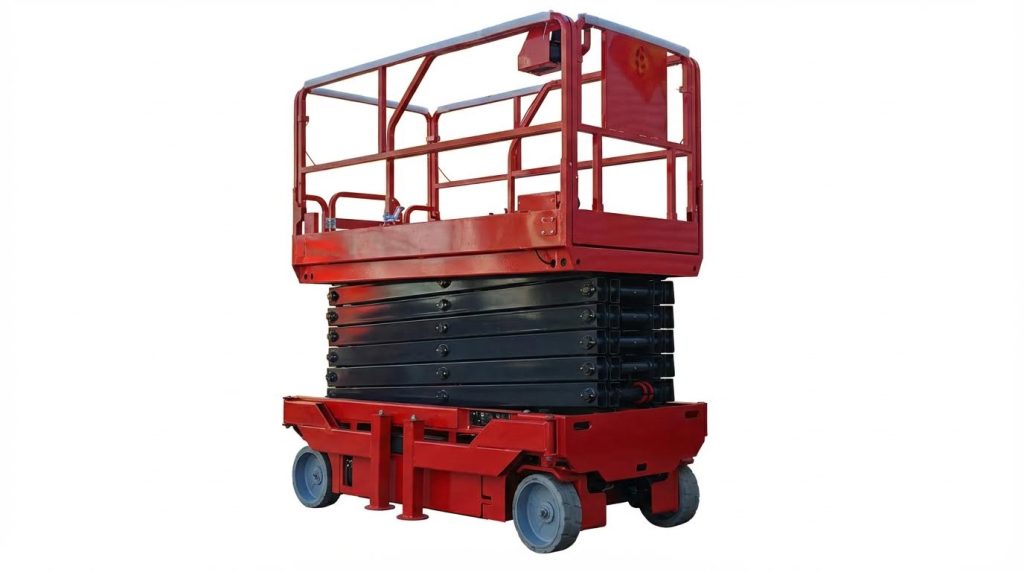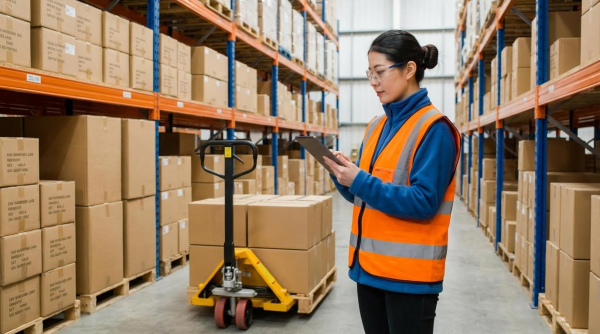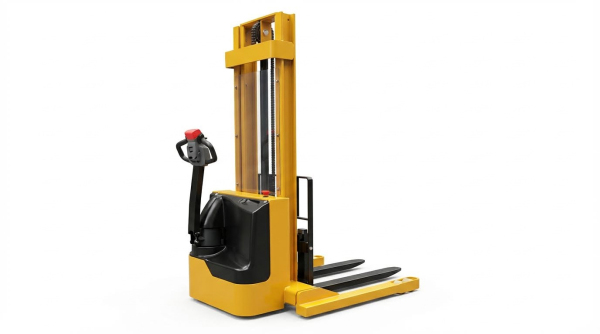
Understanding how high can a pallet lift safely required a clear view of equipment limits, load behavior, and regulations. This article outlined engineering constraints on vertical pallet handling, typical lift heights for walkie pallet truck, reach trucks, and lift stacker, and how to select equipment for target rack elevations. It also connected safety systems, digital simulations, and integration with WMS, AGVs, and scissor platform lift, and Atomoving systems to real warehouse practice. Together these sections provided a structured framework for defining safe pallet lift heights across diverse facilities and applications.
Engineering Limits On Vertical Handling Of Pallets

Engineers answering “how high can a pallet lift” must balance equipment capability, stability, and regulatory constraints. Vertical handling limits depend on load mass, center of gravity, mast and fork design, as well as floor and rack stiffness. Standards, OSHA rules, and facility policies further cap theoretical heights to maintain acceptable risk levels. Digital twins and simulation now allow validation of aggressive lift heights before deployment in high-bay warehouses.
Key Factors Governing Maximum Safe Lift Height
Maximum safe lift height depends first on rated capacity at height, not just base capacity. For example, reach and stacker trucks often derated capacity sharply above 4 m to 6 m, even when they lifted 1,000 kg to 2,000 kg at lower levels. As height increased toward 8 m and beyond, mast deflection, chassis stiffness, and floor flatness dominated stability behavior. Engineers evaluated the combined center of gravity of truck plus load relative to the stability triangle or polygon. They also considered dynamic effects from acceleration, braking, and mast tilt, which increased overturn risk at high elevation.
Load distribution on the pallet governed whether the truck could safely reach catalog lift heights. A compact, low center-of-gravity load behaved differently from a tall, top-heavy stack at the same mass. Pallet jack stackers that lifted 1,000 kg to 3,000 kg up to 6 m required strict limits on load height and overhang to keep the resultant center of gravity inside the support base. Battery condition and hydraulic performance further constrained repeatable lift height under heavy duty cycles, because voltage sag or pressure loss reduced effective capacity near the top of stroke.
OSHA, Standards, And Facility Policy Constraints
OSHA historically did not define a universal numeric answer to “how high can a pallet lift.” Instead, rules required that loads remained stable, aisles and exits stayed clear, and operators received training on safe stacking and truck operation. Consensus standards, such as ISO and ANSI/ITSDF forklift standards, governed capacity rating, stability testing, and nameplate markings for lift height and load center. These standards required that trucks only operated within the limits shown on their data plates.
Facilities usually tightened these broad rules into specific policies. Operators often had internal maximum stacking heights by zone, based on rack design, sprinkler clearances, and seismic considerations. Safety teams restricted ad hoc floor stacking so that pallet columns did not obstruct visibility or emergency routes. Maintenance and inspection policies ensured that trucks, pallets, and racks remained within design condition, since damage reduced the safe lift height below the theoretical standard values.
Load Geometry, COG, And Rack Interaction
Load geometry strongly influenced how high a pallet could lift safely, even when truck data plates allowed greater heights. A low, dense load with uniform footprint produced a center of gravity close to the pallet deck, which improved stability. In contrast, tall or offset loads shifted the center of gravity upward or forward, shrinking the safety margin against tip-over or rack impact. Engineers often modeled the combined center-of-gravity position to verify that it stayed within the truck’s stability envelope at the target rack beam level.
Rack interaction added another layer of constraint. Beam spacing, upright stiffness, and allowable deflection determined how much sway occurred when placing loads at 6 m, 8 m, or higher. Misaligned pallets or excessive overhang could strike rack bracing, creating impact loads that exceeded structural design. Facilities therefore specified compatible pallet sizes, controlled overhang, and used rack protectors to manage contact events. Clearances between pallets, beams, and building columns also governed practical maximum lift height, especially in narrow-aisle and high-bay installations.
Digital Twins And Simulation For Lift Validation
Digital twins and multibody simulation allowed engineers to move beyond simple static calculations of “how high can a pallet lift.” They created virtual models of trucks, pallets, loads, racks, and floors to simulate lifting to 6 m, 8 m, or more under realistic duty cycles. These simulations captured mast deflection, chassis roll, and dynamic oscillations during acceleration, braking, and steering at height. Engineers could then evaluate tip-over margins, rack clearances, and operator visibility without risking real equipment or product.
Simulation also supported parameter sweeps across battery state of charge, floor flatness, and load variations. This helped define conservative but efficient operational envelopes, such as limiting certain loads to a lower rack level or restricting truck travel speed above 4 m. Facilities used digital twins to validate new high-bay layouts, check that forklifts, reach trucks, and battery-powered stackers could safely access every position, and train operators on proper techniques. As a result, validated maximum lift heights aligned more closely with real-world stability and safety performance instead of relying only on catalog specifications.
Lift Heights For Forklifts, Reach Trucks, And Stackers
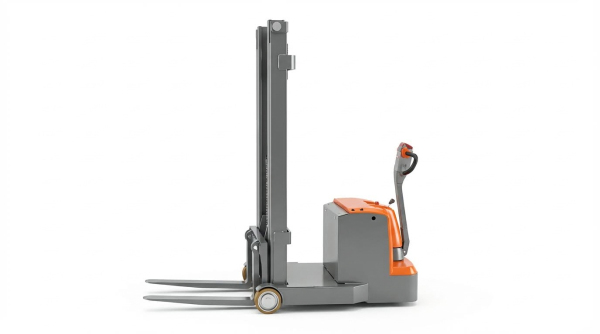
Understanding how high can a pallet lift safely requires comparing equipment classes, their kinematics, and stability envelopes. Forklifts, reach trucks, and pallet stackers cover distinct lift height bands, from low-level transport to high-bay storage above 13 m. Engineers must link catalog specifications to real derated capacities at height, aisle constraints, and duty cycles. This section details practical height ranges and the engineering limits that govern vertical handling performance.
Typical Height Ranges By Equipment Class
Counterbalance forklifts in warehouse service typically lifted pallets to 3 m–7 m. Standard mast configurations supported frequent work around 4 m–5 m, with high-mast options extending to roughly 7.5 m–8 m in racking. Conventional reach trucks expanded that range significantly. High-capacity models historically lifted 900 kg loads to about 12.8 m, with maximum elevated heights near 13.7 m. Mid-range reach trucks operated more commonly between 6.0 m and 9.5 m. Walkie reach trucks worked lower; typical maximum lift heights stayed around 4.5 m–5.0 m, matching 6–8 ft (1.8–2.4 m) aisle layouts. Pallet stackers and walkie stackers usually covered 1.6 m–3.5 m, while full-electric stackers for high storage reached 2 m–6 m, and specialized designs exceeded 7 m. Standard pallet trucks without masts only raised loads about 0.19 m–0.21 m, sufficient for transport, not stacking. When planning how high can a pallet lift in a given facility, engineers should map each equipment class to the target rack beam elevations and required residual capacity.
Stability, Capacity Derating, And Mast Deflection
As lift height increased, the truck’s stability triangle and load center became critical. Manufacturers rated trucks at a specific load center, often 500 mm, and a reference lift height. Above that height, allowable capacity derated according to test curves. For example, a reach truck rated for 2,000 kg at low level might only handle that mass up to about 8 m; at 13 m, safe capacity could drop below 1,000 kg. Mast deflection also grew with height. Elastic bending under load caused fork tip sway, which reduced placement precision and increased rack impact risk. Engineers had to consider worst-case deflection with dynamic effects such as braking or steering inputs. Stability analysis incorporated tire type, wheelbase, battery weight, and load center shifts due to pallet overhang. In practice, this meant that how high can a pallet lift safely was rarely equal to the mechanical maximum; instead, it was the height at which residual capacity, deflection, and tip-over margins all remained within acceptable limits.
Narrow-Aisle, Deep-Reach, And High-Bay Applications
Narrow-aisle and deep-reach systems pushed vertical utilization aggressively. Reach trucks operating in aisles near 2.6 m used pantograph or deep-reach mechanisms to place pallets two positions deep, often above 10 m. This configuration increased effective storage density but tightened stability margins, because the horizontal reach shifted the combined center of gravity forward. High-bay warehouses with racking above 12 m relied on carefully engineered reach trucks or specialized stacker cranes. In these environments, how high can a pallet lift depended not only on the truck but also on rack stiffness, floor flatness, and seismic design. Narrow aisles amplified the consequence of mast sway; small lateral movements could contact uprights. Designers therefore specified tighter floor tolerances and often added guidance systems, such as rails or wire guidance, to keep the truck path precise. For lower-level narrow-aisle work, walkie reach trucks served aisles around 1.8–2.4 m wide, with lift heights up to roughly 5 m, balancing maneuverability and moderate stacking heights.
Battery, Duty Cycle, And Energy-Efficient Actuation
Electric forklifts, reach trucks, and stackers depended on battery capacity and lift system efficiency to sustain vertical performance. High-lift reach trucks commonly used 24 V or 36 V traction batteries sized for multi-shift operation. Lifting a pallet to 10 m–13 m consumed significantly more energy than to 3 m, especially at high loads and fast lift speeds. Engineers evaluated how high can a pallet lift repeatedly within a duty cycle before voltage sag or thermal limits reduced performance. Energy-efficient actuation strategies mitigated this. AC drive and lift motors, regenerative lowering, and optimized hydraulic valving reduced watt-hours per pallet-metre lifted. Some stackers incorporated regenerative braking to recover energy during deceleration on long runs. Battery selection considered ampere-hour rating, peak current capability, and expected lift cycles per hour at target heights. In dense high-bay operations, fleet managers often combined opportunity charging and power management with telematics to ensure trucks maintained full lift height capability throughout the shift without compromising safety or component life.
Selecting Equipment For Target Pallet Lift Heights
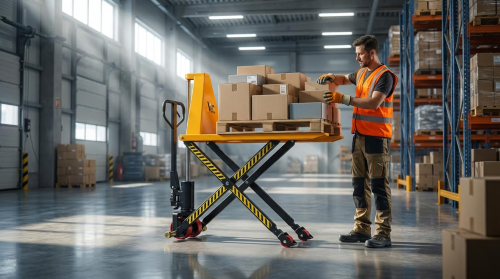
Engineers must align equipment capabilities with required pallet lift heights, load masses, and aisle geometries. The question “how high can a pallet lift” depends on equipment class, rated capacity curves, and stability limits. As lift height increases above 2 m, factors such as mast deflection, residual capacity, and visibility become critical. Proper selection reduces damage, improves throughput, and maintains compliance with safety policies.
Matching Load, Height, And Aisle Width Requirements
Answering “how high can a pallet lift” starts with the rated capacity at the target height. Typical pallet stackers lift between 1.6 m and 3.5 m, while full-electric stackers reach 2 m to 6 m, with specialized units up to 7–8 m. High-capacity reach trucks in high-bay storage lift pallets to approximately 12–13.7 m, but only at reduced residual capacity. Engineers must check manufacturer capacity tables at the intended lift height and load center, not just the nominal rating at ground level. Aisle width also constrains equipment choice: walkie pallet truck operate in aisles of about 1.8–2.4 m, whereas counterbalance trucks typically require wider aisles. Narrow-aisle or deep-reach applications may justify higher-spec reach trucks, but only if the rack design, pallet quality, and floor flatness support those heights. Always verify that the equipment’s maximum fork height exceeds the top beam elevation by a safety margin for clearance and maneuvering.
Safety Systems, Sensors, And Operator Aids
As lift height increases, safety systems directly affect how high a pallet can lift in routine operation. Load at 5–8 m or beyond amplifies any instability, so engineers should specify equipment with integrated height and tilt indicators, overload detection, and travel-speed reduction at elevated heights. Camera systems and fork-tip lasers improve fork alignment at upper rack levels, reducing rack strikes and product damage. Height pre-selection or programmable stop positions help standardize stopping points for common beam levels, improving repeatability. Proximity sensors and stability control systems can limit lift or travel when the truck detects unsafe conditions, such as excessive mast sway or out-of-tolerance load geometry. These aids do not increase the theoretical maximum height, but they make operation near that limit safer and more repeatable.
Lifecycle Cost, Maintenance, And Predictive Analytics
High-lift applications impose greater mechanical and structural stress on masts, chains, and hydraulic systems. When deciding how high a pallet can lift in daily operation, engineers should consider the maintenance burden at that height. Full-electric stackers and reach trucks that frequently operate above 4–5 m require more rigorous inspection of mast rollers, welds, and hose routing. Predictive analytics based on sensor data, lift counts, and maximum reached height can forecast wear and schedule maintenance before failures occur. Higher lift heights also increase energy consumption per cycle, since the hydraulic system must raise the load and mast assembly over a longer stroke. Selecting high-efficiency pumps, regenerative lowering functions, and appropriate battery capacity reduces lifecycle energy cost. A slightly lower maximum design height that still meets storage requirements can significantly lower long-term maintenance and replacement costs.
Integration With WMS, AGVs, And Atomoving Systems
In automated or semi-automated warehouses, the practical answer to “how high can a pallet lift” depends on system-level integration. WMS and AGV control software must know each truck’s certified maximum lift height and residual capacity at each rack level. Task assignment logic should prevent missions that require lifting beyond those limits or that combine marginal loads with top-tier locations. Integration with Atomoving systems allows coordinated routing, where high-lift tasks are assigned only to equipment designed for those heights, while lower tiers use simpler hydraulic pallet truck or stackers. Height feedback from encoders or mast sensors can feed into digital twins, enabling simulation of clearances, cycle times, and congestion at upper levels. This integration ensures that theoretical maximum lift heights translate into safe, repeatable operations with minimal human error and optimized throughput.
Summary And Practical Guidelines For Safe Lift Heights
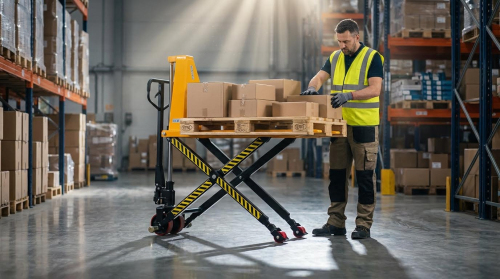
When engineers and safety managers ask “how high can a pallet lift,” the correct answer depends on equipment class, load characteristics, and regulatory expectations rather than a single universal number. High-capacity reach trucks historically lifted around 900 kg to more than 13.7 m, while walkie stackers and pallet trucks operated below roughly 6 m and 0.2 m respectively. Across this range, stability, capacity derating, and operator visibility governed the real maximum safe lift height in day-to-day use.
From a practical standpoint, define maximum working height by the lowest of four limits: the manufacturer’s rated capacity at that lift, the facility’s racking design, OSHA-compliant safe stacking practices, and the operator’s ability to place and retrieve loads without loss of control. For pallet trucks and low-lift pallet jacks, safe lift height stayed near 190–205 mm, just enough for transport. For stackers, typical safe operational envelopes ranged from about 1.6 m up to 6 m, with specialized units extending to 7–8 m under tightly controlled conditions and with strict derating. High-bay reach trucks served heights beyond this, but only when the rack, floor, and truck specification matched.
Future developments pointed toward higher usable lift heights through better mast designs, advanced stability control, and digital twins that validated “how high can a pallet lift” for a specific load and aisle before deployment. Implementing these technologies required accurate load data, validated rack models, and integration with WMS and automated systems so that unsafe height–load combinations never reached the floor. Taken together, safe maximum lift height became a managed engineering parameter, not an operator guess, balancing throughput, storage density, and a conservative safety margin at every rack level.