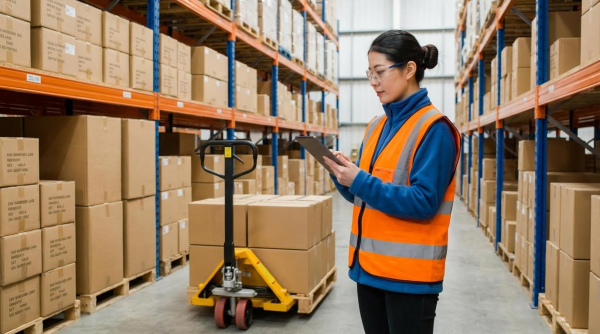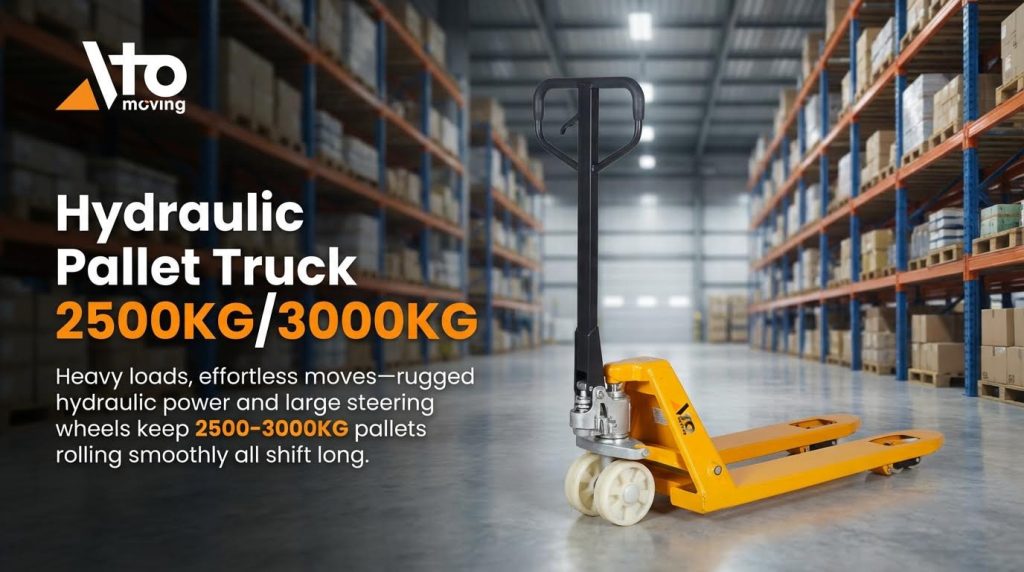
Operations teams that ask how to move a pallet without a pallet truck usually face real constraints in space, budget, or access. This article walks through engineered options that replace pallet trucks using rollers, skates, dollies, crowbars, stackers, and tilt tables, and shows how to match each method to load, floor, and throughput needs.
You will see how load characteristics, floor conditions, and cycle time targets drive the choice between temporary DIY sliding paths and more permanent gravity roller or dolly systems. The article compares safety, ergonomics, and compliance risks for each approach and links them to lifecycle cost and integration with existing workflows. The final section gives a structured method to select safe, efficient pallet alternatives when pallet trucks or forklifts are not available or not allowed.
Key Constraints When Moving Pallets Without Trucks
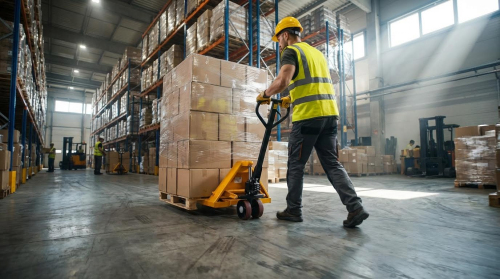
Engineers who ask how to move a pallet without a pallet truck must define limits first. Load, floor, distance, and safety constraints set the viable options. Each factor narrows which rollers, skates, dollies, or lever tools work in practice. Good upfront analysis prevents damaged floors, strained workers, and stalled material flow.
Load Characteristics and Floor Conditions
Start with the pallet and the floor. Typical pallet loads range from a few hundred kilograms up to 2,000 kg in manual handling environments. You must confirm both the pallet integrity and the support surface before choosing a method.
Key checks usually include:
- Load mass and centre of gravity location
- Pallet type and condition (stringer, block, deck gaps, broken boards)
- Footprint versus device support area
- Floor strength, flatness, and surface finish
Rollers, skates, and crowbars need hard, smooth floors. Small wheels can jam in joints or holes and create high point loads. On asphalt or damaged concrete, wide polyurethane wheels or plywood tracks spread pressure and protect the slab. Slopes also matter. Even a 2–3% gradient can let an unbraked load run away, so you must plan chocks and stops.
Distance, Throughput, and Cycle Time Needs
Moving one pallet occasionally is very different from feeding a line all shift. Distance and required throughput drive the right level of engineering. Short, rare moves can use slower methods that rely on more manual effort. Long or frequent moves need rolling resistance and handling time under tight control.
When you plan how to move a pallet without a pallet truck, consider:
| Factor | Low-Volume Moves | High-Volume Moves |
|---|---|---|
| Typical distance | <10 m per move | 10–50 m per move |
| Preferred tools | Crowbars, skates, DIY slides | Gravity rollers, dollies, carts |
| Cycle time focus | Operator effort | Throughput per hour |
Gravity rollers work well between fixed points, such as truck to dock. Dollies and platform carts suit flexible routes with tight corners. For repeated moves, you should time a full cycle and check that the method meets takt time or shipping cutoffs.
Safety, Ergonomics, and Compliance Factors
Any method that replaces a pallet truck shifts risk, not just effort. Manual pushing, pulling, and levering can overload backs, shoulders, and wrists if you do not control forces. Safety standards in most regions required that employers minimise manual handling risk and train operators.
Important controls include planned routes, clear floors, and realistic weight limits for one or two people. Team lifts for full pallets are rarely acceptable unless loads are very light. Better practice uses levers, rollers, or mechanical aids so push forces stay within ergonomic guidelines.
Before you move a pallet without a pallet truck, you should also confirm:
- Wheel locks for loading and unloading on dollies or carts
- Stops or end bars on gravity or temporary rollers
- Hand protection around pinch points and crowbars
- Procedures for slopes, edges, and dock plates
Regulators also expect regular inspection of non-truck devices. Cracked wheels, bent frames, or worn bearings can fail under peak load and cause sudden shifts.
Cost, Lifecycle, and Integration Considerations
Low-tech methods often look cheap, but whole-life cost can differ. Simple pipes and plywood cost little but demand labour and setup time each move. Heavy-duty dollies, skates, or tables cost more upfront but support faster cycles and longer service when maintained.
Engineers should compare options on:
| Aspect | Low-Cost DIY | Engineered Devices |
|---|---|---|
| Initial spend | Very low | Moderate to high |
| Setup time | High | Low |
| Repeatability | Variable | Consistent |
| Maintenance | Informal | Planned |
Integration with current layouts also matters. Gravity rollers need space and fixed supports. Dollies must fit under typical pallet sizes and turn within aisle widths. Stackers or tilt tables need clear height and stable power or hydraulic access. A structured comparison of cost per moved pallet, required labour, and safety performance helps justify the best alternative to pallet trucks.
Using Rollers, Skates, and DIY Sliding Systems
This section explains how to move a pallet without a pallet truck by using simple rolling and sliding systems. These options suit workshops, job sites, and tight warehouse areas where pallet trucks or forklifts are not available or allowed. The focus stays on safe capacity, low-cost hardware, and repeatable methods that a small team can set up quickly. Each method needs basic engineering checks for load, floor condition, and stopping distance before use.
Gravity Rollers and Temporary Roller Paths
Gravity rollers use a slight slope and low-friction rollers to move pallets from a higher point to a lower point. They work well for truck unloading, dock-to-floor transfer, or short in-plant flows. To use them safely, control speed with small slopes, end stops, and manual braking points.
When planning a temporary roller path to move a pallet without a pallet truck, check these points:
- Roller capacity must exceed pallet plus load mass with a margin.
- Roller pitch must limit pallet sag and prevent snagging.
- Side rails or guides should prevent lateral drift.
- Clear stop blocks must exist at the discharge end.
Keep the path clean and dry. Dirt and damage increase rolling resistance and shock loads on bearings.
Machinery Skates and Low-Profile Load Rollers
Machinery skates and low-profile load rollers support heavy pallets on multiple small wheels. They work best on smooth, flat concrete and for slow, controlled moves. A crowbar or small jack lifts one pallet edge so the operator can place the skates under the deck.
When deciding how to move a pallet without a pallet truck using skates, consider:
| Factor | Engineering check |
|---|---|
| Load rating | Total skate capacity ≥ 1.5 × pallet load |
| Floor quality | No steps, holes, or steep ramps |
| Steering | Use turntable or steerable front skates for corners |
| Braking | Chocks or wedges ready before stopping |
Operators should push, not pull, where possible. This improves control and reduces strain.
Pipe-and-Plywood Sliding and Rolling Methods
Pipe-and-plywood methods create a simple DIY conveyor under the pallet. Workers place steel or heavy plastic pipes under a sheet of plywood or under the pallet deck itself. The pallet then rolls over the pipes as the team recycles the rear pipes to the front.
This method suits short moves over clean, level floors when no pallet truck is available. Key design points include:
- Pipe diameter large enough to avoid crushing or bending.
- Spacing close enough to keep deck boards supported.
- Plywood thick enough to spread load if the pallet is weak.
Control speed on any slope and set a hard stop at the end of the path. Never use thin pipes on rough or cracked floors because they can buckle or jam.
Design Checks: Capacity, Stability, and Braking
Every non-truck method to move a pallet needs basic engineering checks. These checks reduce the risk of tip-over, runaway loads, and floor damage. The same logic applies to rollers, skates, and DIY pipe systems.
Use this simple checklist before moving:
- Capacity: Compare rated capacity of each device with pallet mass. Add safety margin of at least 25%.
- Stability: Keep the load center low and between wheel lines. Avoid narrow roller spacing under tall, top-heavy pallets.
- Floor interaction: Verify that point loads from wheels or pipes stay within floor limits. Avoid drains, joints, and slopes.
- Braking and control: Plan how to stop and hold the pallet at every stage. Use chocks, end stops, and helper personnel.
Train operators to move slowly, communicate clearly, and keep hands and feet away from pinch points. These simple controls make low-tech pallet movement both practical and safe when pallet trucks are not an option.
Using Dollies, Crowbars, Stackers, and Tilt Tables
This section explains how to move a pallet without a pallet truck when space, cost, or layout block pallet jacks. It focuses on dollies, crowbars, stackers, and tilt tables as practical options for controlled horizontal and vertical motion. Engineers can combine these tools to build safe workflows for short moves, tight aisles, or point-of-use handling. The goal is to keep forces low on operators while keeping pallet stability high.
Pallet Dollies and Heavy-Duty Platform Carts
Pallet dollies and platform carts support the pallet on a flat deck instead of forks. This gives better contact area and reduces point loads into deck boards. For typical warehouse pallets, engineers size dollies for at least the full pallet footprint and a safety factor on mass. Heavy-duty models in industry often handle loads of several hundred kilograms or more, but the rated capacity must always exceed the worst-case pallet weight.
When planning how to move a pallet without a pallet truck, dollies work well for short, low-speed moves on smooth floors. Operators can push instead of pull to reduce strain and improve visibility. Locking casters are important during loading and unloading so the pallet does not shift. On uneven floors, large-diameter wheels reduce rolling resistance and impact forces into the pallet and load.
For engineering checks, consider:
- Wheel capacity versus pallet mass, including dynamic factors.
- Deck stiffness to avoid sagging under concentrated loads.
- Center-of-gravity position relative to wheelbase width.
These checks reduce tip risk when turning or crossing small thresholds.
Roller Crowbars and Lever-Assisted Lifting
Roller crowbars combine a steel lever with a small wheel set near the tip. The operator inserts the toe under the pallet edge and pushes the handle down. The lever action lifts one side of the pallet a few millimetres, just enough to slide a dolly or block underneath. This method uses mechanical advantage, so one person can raise a heavy corner with limited effort.
In a workflow without pallet trucks, roller crowbars often start the move. The sequence is simple. First, lift one side with the crowbar. Second, insert a dolly or low roller under that side. Third, repeat on the opposite side. The pallet then rests fully on rolling gear instead of the floor.
Engineering teams should verify three points:
- The crowbar tip fits under the pallet without crushing boards.
- The bar and wheels are rated above expected edge load.
- The floor is level and free of debris around the lever path.
Good practice keeps body parts out of the pinch zone under the pallet and uses a second person for spotting on heavy or unstable loads.
Manual and Powered Stackers for Vertical Moves
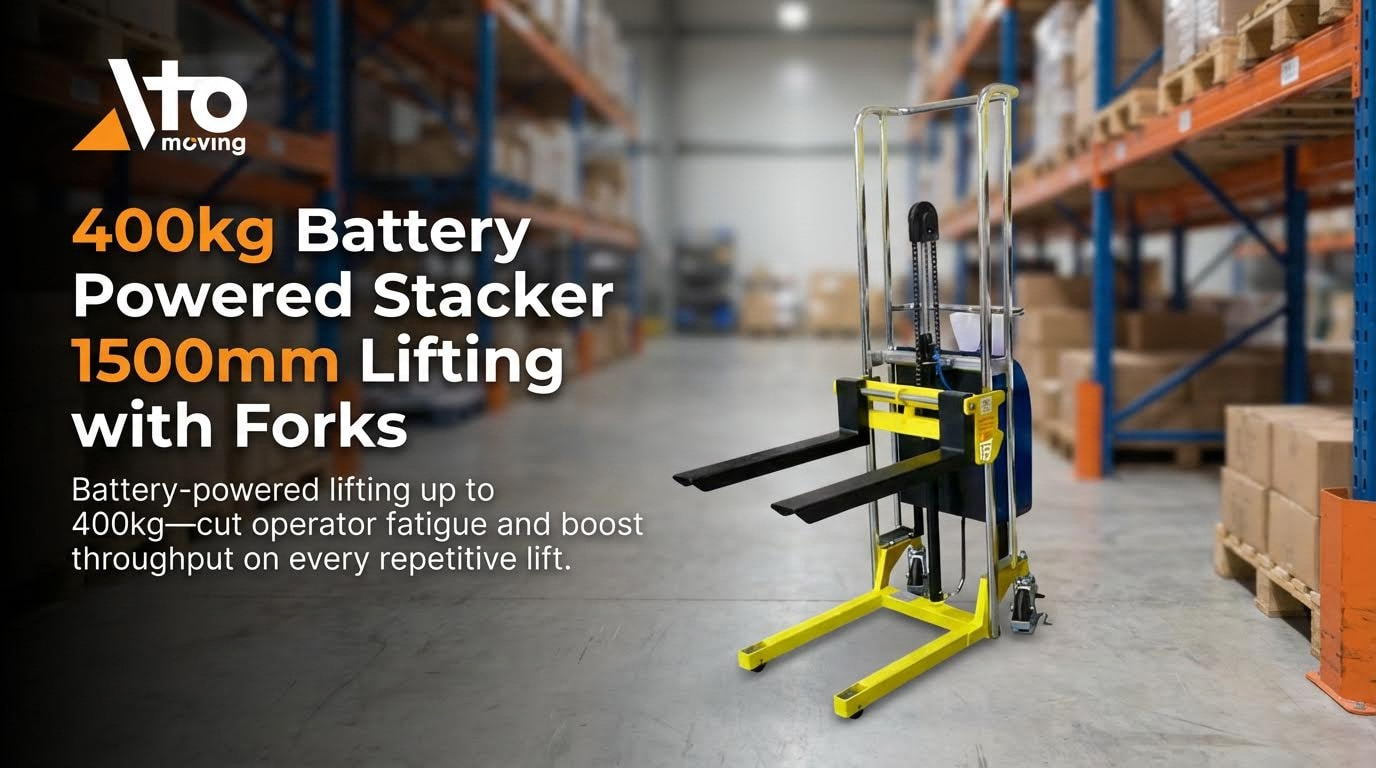
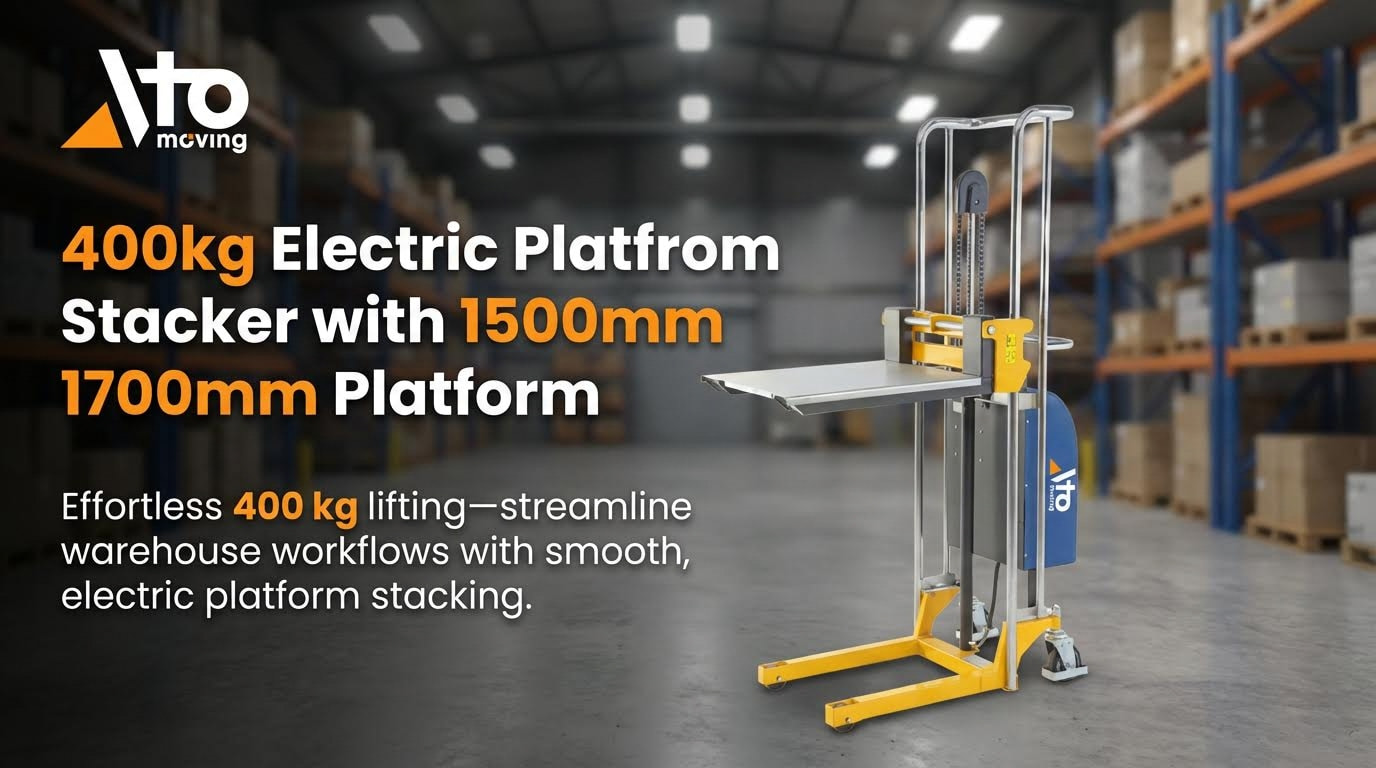
Manual and powered stackers solve the vertical part of how to move a pallet without a pallet truck or forklift. A manual stacker uses a hand pump to raise forks through a hydraulic cylinder. A powered stacker uses an electric motor for lifting and sometimes for traction. Typical units in industry lift pallets to racking or mezzanine heights, while rated capacities often match or exceed common pallet jack limits.
Stackers are best for short horizontal moves plus controlled lifting. They are not efficient for long-distance transport because travel speed is low and turning radius is larger than a dolly. Before selecting a stacker, engineers check:
| Parameter | Typical engineering check |
|---|---|
| Rated capacity | Higher than maximum pallet mass with margin |
| Lifting height | Clear of racking beam plus pallet height |
| Aisle width | Greater than stacker length plus turning clearance |
| Floor condition | Flat, with slab capacity above wheel contact pressure |
Manual units suit low-frequency tasks and lighter loads. Powered units fit higher throughput, taller lifts, or when ergonomic limits on pump strokes would be exceeded.
Tilt Tables and Lift Tables for Ergonomic Access
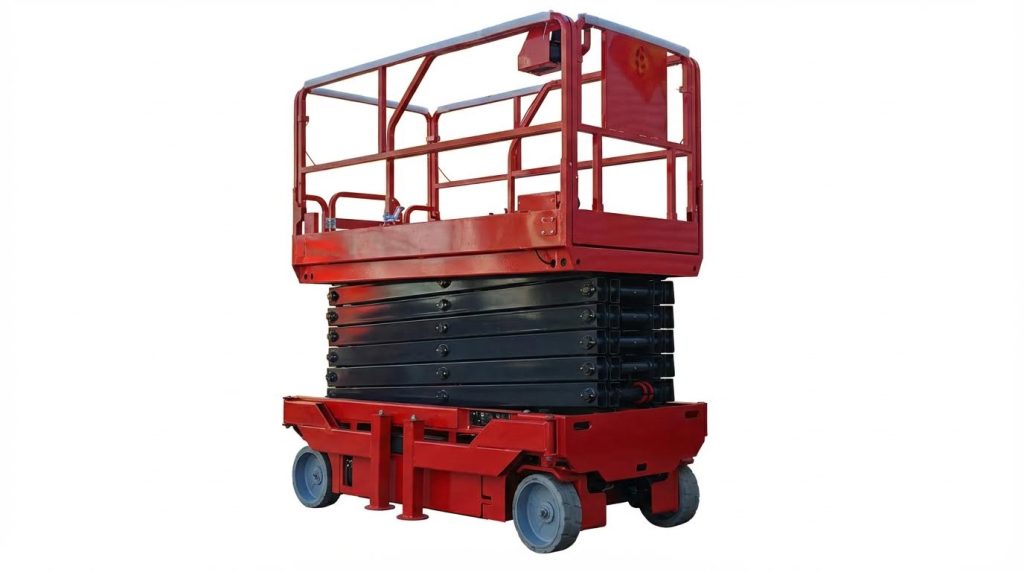
Tilt tables and lift tables do not mainly move pallets across the floor. Instead, they change pallet height and angle so operators can work safely and with less strain. A typical tilt table carries a single pallet and tilts it toward the operator. This reduces reach distance and bending during picking, packing, or assembly. Lift tables raise or lower the pallet while keeping it level.
These devices often sit in fixed workstations at docks, packing cells, or machine loading points. The pallet may arrive on a dolly, roller path, or stacker, then transfer onto the table. When planning how to move a pallet without a pallet truck, engineers can pair a low-cost dolly for travel with a lift or tilt table at each work cell. This splits the function between transport and ergonomics.
Design checks include platform size versus pallet footprint, rated capacity versus pallet plus operator-added items, and guarding of pinch points around scissor mechanisms. Controls should allow fine positioning and include emergency stop. Clear zones around the table prevent foot or wheel intrusion during motion and help maintain safe access paths.
Summary: Selecting Safe, Efficient Pallet Alternatives
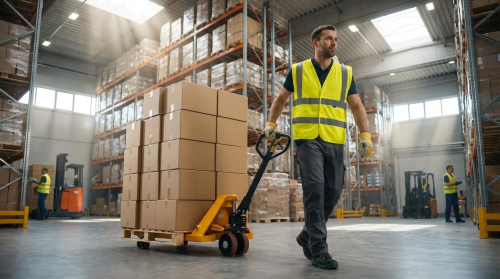
Facilities that ask how to move a pallet without a pallet truck need a structured decision process. The goal is safe movement, acceptable cycle time, and low strain on workers. The right method depends on floor quality, distance, and load mass. No single option fits every layout or duty cycle.
For short moves on smooth floors, rollers, skates, and DIY sliding paths work well. Gravity rollers and temporary conveyor runs suit repeat flows between fixed points. Machinery skates or pipe-and-plywood paths support heavy pallets where trucks cannot enter. Engineers must verify load rating, bearing stress on floors, and the need for guards or end stops.
Dollies, crowbars, stackers, and tilt tables suit flexible layouts and mixed tasks. Pallet dollies and platform carts help when routes change often. Roller crowbars and lever tools handle initial lifting where no pallet entry is possible. Stackers and tilt tables add vertical reach and ergonomic access but need strict capacity checks and operator training.
Future layouts will mix low-tech and semi-automated options. Simple rollers and dollies will still cover low-volume or constrained zones. Stackers and lift tables will bridge the gap to full automation. Engineers should review incident data, musculoskeletal risk, and throughput targets before locking in a method. A balanced approach combines conservative load limits, clear procedures, and regular inspection of all non-truck pallet systems.
,
Frequently Asked Questions
How to Move a Pallet Without a Pallet Truck?
Moving a pallet without a pallet truck can be done using alternative methods. One option is to use a manual pallet jack or an electric pallet jack, which allows you to lift and move pallets safely and efficiently. Another method involves using a heavy-duty rope. Securely fasten the rope to the pallet and pull it to the desired location. Be careful not to drag the pallet too quickly to avoid damage or injury. Pallet Moving Tips.
What Can I Use Instead of a Forklift?
If you don’t have access to a forklift, there are several alternatives you can consider. Manual pallet jacks and electric pallet jacks are effective tools for moving pallets within a facility. They are easy to operate and provide a safe way to handle palletized loads. Additionally, you can use a rope to drag the pallet, ensuring it’s securely tied before moving. These methods are widely used in warehouses and distribution centers. Forklift Alternatives Guide.