Safe Manual Pallet Stacking Heights In Modern Warehouses
Safe manual pallet stacking height defined warehouse layouts, labor demands, and risk exposure in every modern facility. This article examined engineering limits, regulatory constraints, and material-specific stack behavior for wood, plastic, and steel pallets. It then linked stack height decisions to ergonomic design, overexertion risks, and practical control measures such as manual pallet stacker and hydraulic pallet truck. Finally, it explored advanced tools, from self-leveling platforms to AI-based digital twins, and concluded with a concise, implementation-focused summary of best practices.
Engineering Limits For Manual Pallet Stack Height

Engineering limits for manual pallet stack height depended on stability, material strength, and human capability. Facilities needed to balance storage density, regulatory compliance, and injury prevention. This section examined constraints from regulations, pallet materials, geometry, and fire protection rules. It provided a framework to define safe manual stack heights rather than relying on informal practices.
Regulatory And Insurance Height Constraints
Regulatory and insurance guidance set outer boundaries for manual pallet stacking. OSHA 1910.176(b) required stacks to be blocked, interlocked, and limited in height so they did not slide or collapse, which forced engineers to justify stack heights using stability criteria and handling methods. Major insurers recommended floor-stacked idle wood pallets not exceed 1.8 meters without sprinklers and be grouped in fours with at least 2.4 meters separation between groups, because higher stacks increased fire load and collapse risk. Ergonomic guidance limited manual stacking to roughly six pallets high and discouraged down-stacking from more than nine, to reduce musculoskeletal injury exposure. Facilities therefore often adopted dual limits: a structural or fire limit in meters and a lower manual-handling limit in pallet counts.
Material-Specific Stack Heights: Wood, Plastic, Steel
Material selection strongly influenced achievable stack height. Wood pallets typically allowed stable stacks of 4.5–5.5 meters when loads were uniform and well wrapped, but degradation from moisture, broken boards, or loose fasteners reduced safe height over time, so frequent inspection and derating were necessary. Plastic pallets enabled stacks of roughly 3–4.5 meters; their lower stiffness and potential flex under heavy loads required conservative height when unit loads exceeded design ratings. Steel pallets could exceed 6 meters where building clear height, racking, and handling equipment supported it, because their high stiffness and strength minimized deflection and breakage, making them suitable for dense stacking of heavy products. Engineers still had to apply the same OSHA stability rules and ergonomic limits, even when structure allowed higher stacks.
Height-To-Base Stability Ratios And Floor Conditions
The height-to-base ratio governed tipping risk more directly than absolute height. Industry practice treated a 4:1 height-to-base ratio as a typical upper bound for free-standing stacks; for example, a pallet footprint of 1.0 meter by 1.2 meters supported a nominal free-standing height near 4 meters, assuming a rigid, well-wrapped load. Any reduction in base width, such as overhanging cartons or tapered loads, immediately reduced allowable height and demanded additional restraints. Floor conditions also played a critical role: engineers specified stacking only on level, structurally sound slabs with controlled surface defects, because ruts, slopes, and bumps amplified overturning moments when workers pushed or pulled pallet jacks. Leaning stacks indicated that geometric or floor tolerances had already been exceeded and required immediate down-stacking and restacking.
Fire Protection, Sprinkler Coverage, And Idle Pallet Rules
Fire codes and insurer rules imposed specific limits on idle pallet storage. National Fire Protection Association guidance stated that idle pallet stacks should not exceed 4.6 meters in height or cover more than 37 square meters per pile, because pallet arrays created high, fast-growing fire loads that challenged sprinkler performance. Insurers often applied stricter rules for idle wood pallets, capping unsprinklered stacks at 1.8 meters and requiring at least 2.4 meters clearance between groups to prevent horizontal fire spread. Facilities needed to keep pallet stacks below sprinkler deflectors and maintain required vertical clearance so water distribution patterns remained effective. Engineers therefore separated “in-use” palletized product, which followed material and stability limits, from “idle” pallet storage, which followed tighter fire and spacing rules, and documented both regimes in the warehouse fire safety plan.
Load Design, Ergonomics, And Injury Prevention
Load design and ergonomics directly influenced manual pallet stacker safety in warehouses. Poorly designed stacks increased collapse risk and drove high musculoskeletal injury rates. Engineering controls, such as height-adjustable equipment and stable layer patterns, reduced these risks while preserving throughput. Effective programs combined regulatory limits, ergonomic principles, and suitable handling equipment into one integrated approach.
Power Zone Lifting And Height-Adjustable Workstations
Ergonomic guidelines defined the power zone as the space above the knees and below relaxed shoulders, close to the torso. Lifting within this zone reduced spinal loading and shoulder strain compared with floor-level or overhead handling. Height-adjustable workstations, self-leveling lift tables, and variable-height picking equipment kept pallets within this optimal range as layers changed. Facilities also raised the bottom storage level or stacked extra empty pallets on handling equipment to avoid repeated bending. These interventions lowered overexertion risk and aligned with NIOSH and OSHA recommendations for manual material handling.
Safe Manual Limits: Stack, Down-Stack, And Team Lifting
Manual stacking of pallets generally should not exceed six units high to limit fall and crush hazards. Down-stacking from heights above nine pallets increased the likelihood of overreaching and awkward postures, so guidelines advised against it without mechanical assistance. Workers should request help or use equipment when handling heavy or bulky items instead of lifting alone. OSHA and national ergonomics data showed that overexertion in palletizing tasks contributed significantly to musculoskeletal disorder cases and compensation costs. Structured team lifting procedures, combined with training on leg-driven lifting and avoidance of twisting, further reduced injury incidence.
Layer Patterns, Interlocking, And Load Securing Methods
Stable layer patterns formed the foundation for safe stack heights. Operators should place the heaviest items at the bottom and progressively cover the entire pallet face before building upward. Interlocking brick-style patterns improved resistance to sliding, especially for cartons and rigid packs, but engineers needed to check that packaging strength supported this pattern. Smaller items belonged in cartons or totes rather than loose on the pallet to prevent displacement. Stretch wrap, straps, or bands should secure each completed load, with wrap tension and coverage matched to mass, center of gravity, and transport conditions. Facilities also organized pallets by material type and condition, removing damaged units with cracks or protruding nails to avoid instability.
Reducing Overexertion With Pallet Jacks And Lift Tables
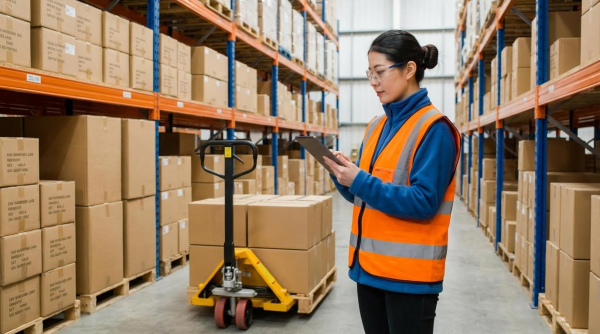
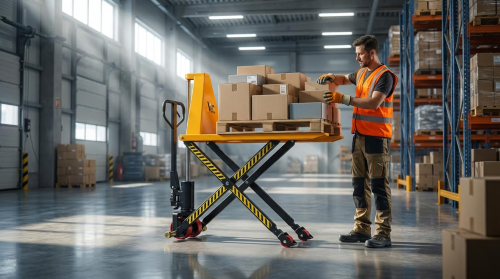
Using manual pallet jack instead of manual carrying reduced push, pull, and lift forces during stacking operations. Periodic maintenance of pallet jacks and forklifts, along with well-maintained floors without ruts or bumps, kept required handling forces within ergonomic limits. Lift tables, especially self-leveling models with rotating tops, allowed workers to keep loads near waist height and close to the body while building or breaking down pallets. Case studies showed that combining roller conveyors, lift tables, and turntables eliminated recorded back injuries over multiple years and produced substantial cost savings. Integrating these tools with task rotation, clear pallet storage zones away from high-traffic areas, and adherence to height limits created a comprehensive overexertion reduction strategy.
Advanced Tools And Digital Methods For Safer Stacking
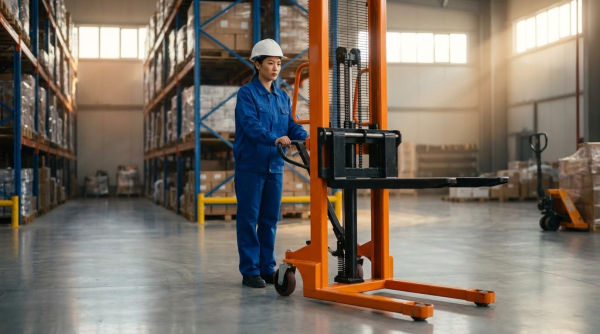
Advanced tools and digital methods increased control over manual pallet stacker stacking height and reduced ergonomic risk. Facilities used engineered devices and data-driven systems to keep loads within safe stability and handling envelopes. These technologies complemented regulatory limits, ergonomic guidelines, and traditional training rather than replacing them. When correctly integrated, they improved safety performance, productivity, and compliance tracking.
Using Self-Leveling Tables, Turntables, And Scissor Lifts
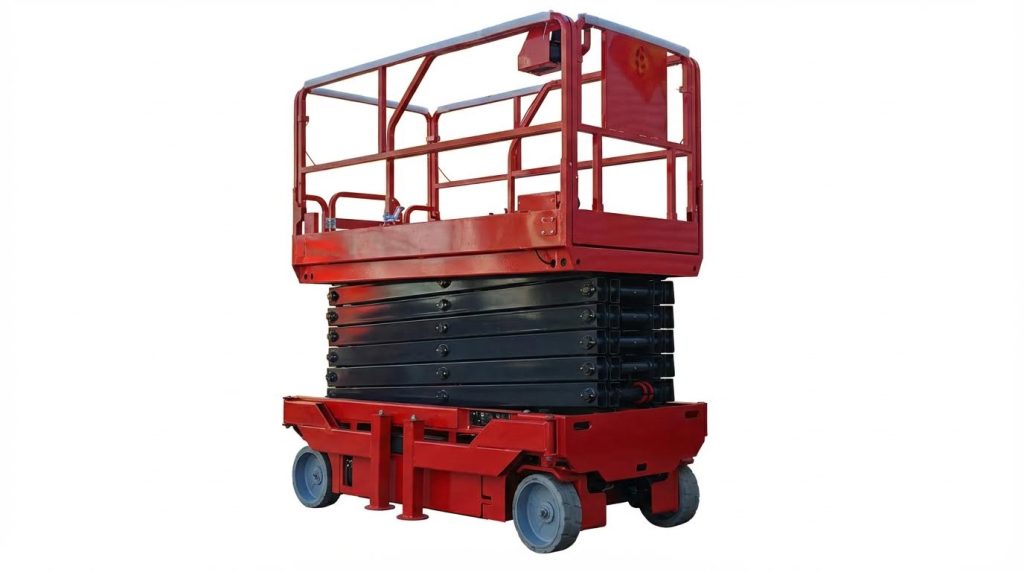
Self-leveling tables kept the top of the pallet load within the ergonomic power zone as layers were added or removed. Springs or hydraulic controls automatically raised or lowered the platform, so workers avoided deep bending or overhead lifting. Turntables allowed workers to rotate the pallet instead of twisting their torsos, which reduced spinal loading and awkward reaches. Scissor platform lift provided greater vertical travel, enabling operators to position pallets at optimal heights for stacking, down-stacking, or integration with conveyors.
NIOSH ergonomic guidelines supported the use of variable-height workstations and lift tables to minimize musculoskeletal disorders. In practice, facilities combined lift tables with roller conveyors to move pallets into and out of workstations with minimal manual pushing. Case studies showed that adding self-leveling lift tables and turntables eliminated several back injuries and generated measurable cost savings. These devices also supported consistent stack quality, because workers could more easily align layers, apply interlocking patterns, and secure loads with wrap or bands.
AI, Sensors, And Digital Twins For Stack Risk Assessment
AI and sensor systems provided continuous feedback on pallet stack stability, worker posture, and equipment usage. Vision systems and lidar measured stack height, tilt, and clearance to sprinklers, flagging conditions that violated OSHA or insurance limits. Load cells and floor-embedded sensors tracked weight distribution and compared it against target height-to-base ratios. Wearable sensors monitored lifting frequency, reach distance, and trunk flexion to identify high-risk manual pallet jack tasks.
Digital twins created virtual models of warehouse layouts, pallet flows, and stacking patterns. Engineers used these models to simulate different stack heights, pallet types, and floor conditions before changing procedures on the floor. The simulations quantified safety margins for plastic, wood, and steel pallets under various loading and handling scenarios. Combined with AI analytics, digital twins helped define safe manual stacking envelopes and guided investments in ergonomic equipment and storage reconfiguration.
Predictive Maintenance Of Jacks, Forklifts, And Floors
Predictive maintenance programs monitored pallet jacks, forklifts, and floor conditions to preserve stacking safety. Sensors on trucks tracked vibration, hydraulic pressure, and steering response, identifying issues that could destabilize loads or increase push–pull forces. Usage data and fault codes fed into algorithms that predicted when wheels, brakes, or mast components required service. OSHA-aligned maintenance routines reduced the likelihood of sudden equipment failures that might topple pallet stacks.
Facilities also used inspection data and floor sensors to detect ruts, cracks, and uneven surfaces that compromised the 4:1 height-to-base stability guideline. High-resolution floor maps supported targeted repairs in high-traffic pallet storage zones. Periodic maintenance of handling equipment and floors reduced hand–arm stress and manual exertion during pallet moves. As a result, workers handled tall stacks with more consistent stability, and managers could justify maintenance budgets with risk and downtime metrics.
Integrating Cobots And Automated Palletizing Cells
Cobots and automated palletizing cells assumed the most repetitive and force-intensive stacking tasks. Collaborative robots stacked cartons onto pallets within defined height limits while working safely near humans under speed and force restrictions. Their motion planning software maintained consistent layer patterns, interlocking schemes, and wrap application, which improved stack uniformity and stability. Automated cells handled high-throughput or heavy-load applications where manual stacking would have created substantial overexertion risk.
Engineers integrated cobots with lift tables, conveyors, and warehouse management systems to coordinate pallet flows and stack heights. Digital interfaces allowed supervisors to adjust maximum pallet height by SKU, packaging type, or downstream process. Data from the cells, including cycle counts and exception events, fed back into ergonomic and safety analyses for surrounding manual stations. When correctly deployed, cobots complemented manual work, keeping workers focused on supervision, quality checks, and exception handling rather than high-risk lifting.
Summary Of Safe Manual Pallet Stacking Height Practices
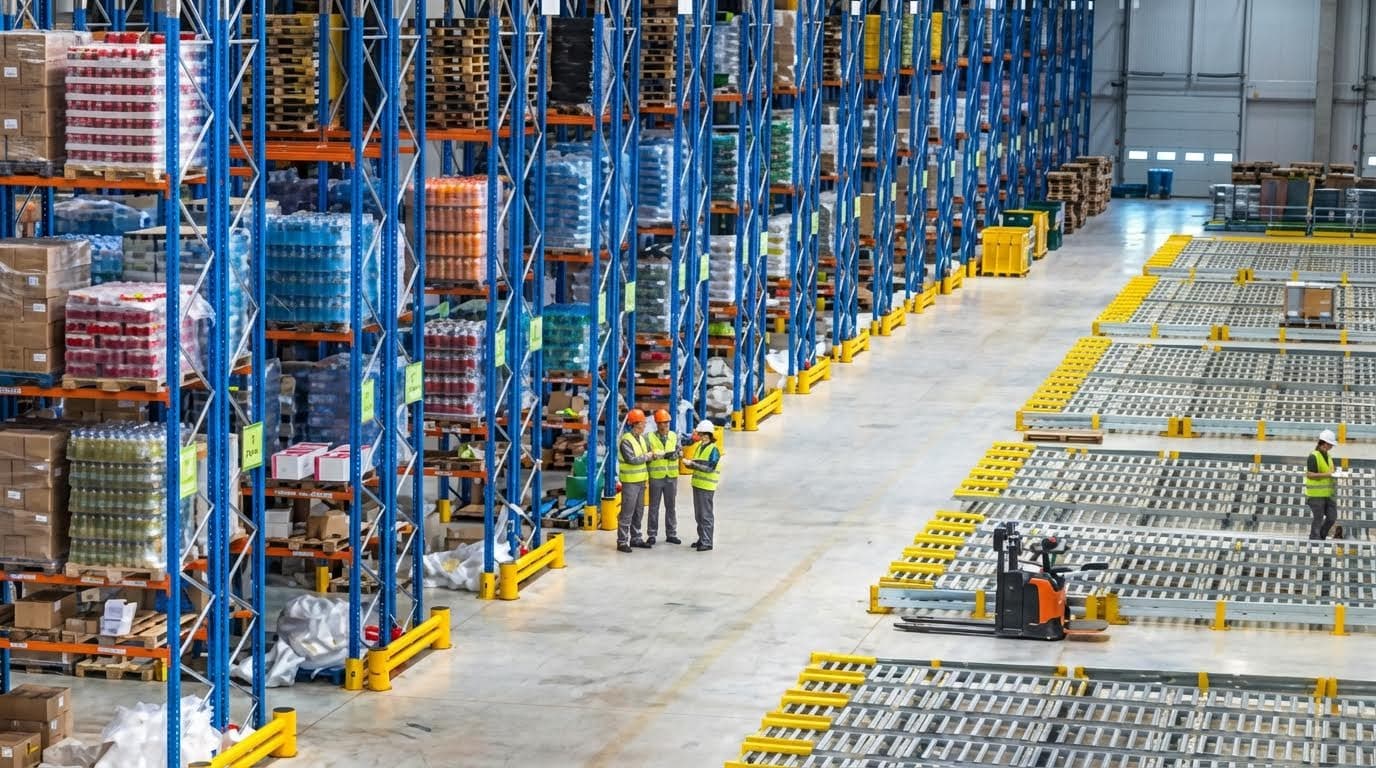
Safe manual pallet stacking in modern warehouses depended on a balance of structural limits, regulatory rules, and human capability. Engineering constraints defined maximum heights through material strength, stability ratios, and floor conditions, while standards such as OSHA 1910.176(b), NFPA pallet storage guidance, and insurer rules imposed conservative limits for unattended or idle stacks. Wood pallets typically allowed stable loads to 15–18 feet, plastic pallets to about 10–15 feet, and steel pallets beyond 20 feet when floors, racking, and handling equipment supported those loads, yet idle pallet stacks ideally stayed below 4.5 meters and within controlled areas. Fire protection strongly influenced permissible heights, with NFPA guidance capping idle pallet stacks at 15 feet and 400 square feet, and insurers often restricting unprotected wood pallet floor stacks to 1.8 meters unless automatic sprinklers and adequate separations existed.
From a human factors perspective, manual stacking heights were usually limited far below structural limits to prevent musculoskeletal disorders. Ergonomic guidelines favored building and breaking pallets within the power zone and keeping manual stacking to about six pallets high, with down-stacking not initiated above nine units. Height-adjustable lift tables, turntables, and self-leveling platforms kept work between knee and shoulder height, reducing overexertion that historically dominated warehouse injury statistics. Effective practice combined stable layer patterns, interlocking loads, and securement with stretch wrap or bands, while enforcing inspections, segregated pallet storage, and the use of pallet jacks or forklifts for heavy or awkward loads.
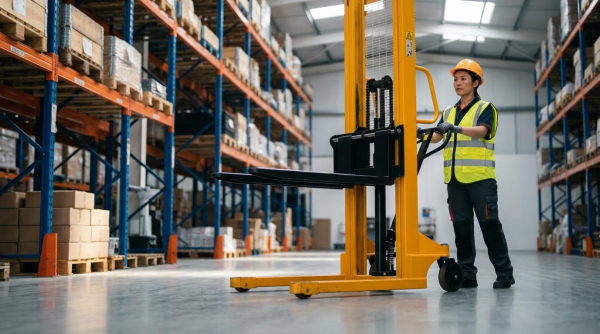
Future warehouse operations increasingly integrated sensors, digital twins, and collaborative automation to quantify stack stability, monitor equipment health, and keep workers away from the highest-risk tasks. However, even as automation expanded, core principles remained consistent: respect engineered and regulatory height limits, verify pallet and floor integrity, design loads for a 4:1 height-to-base stability ratio, and maintain ergonomic handling conditions for all manual tasks. Facilities that aligned engineering design, safety regulations, ergonomic practices, and emerging technologies achieved lower injury rates, higher productivity, and more predictable risk profiles for manual pallet stacking. For instance, tools like the lift stacker or walkie pallet truck have become essential in optimizing these processes.