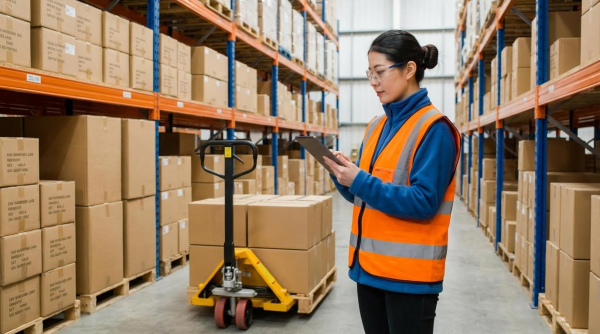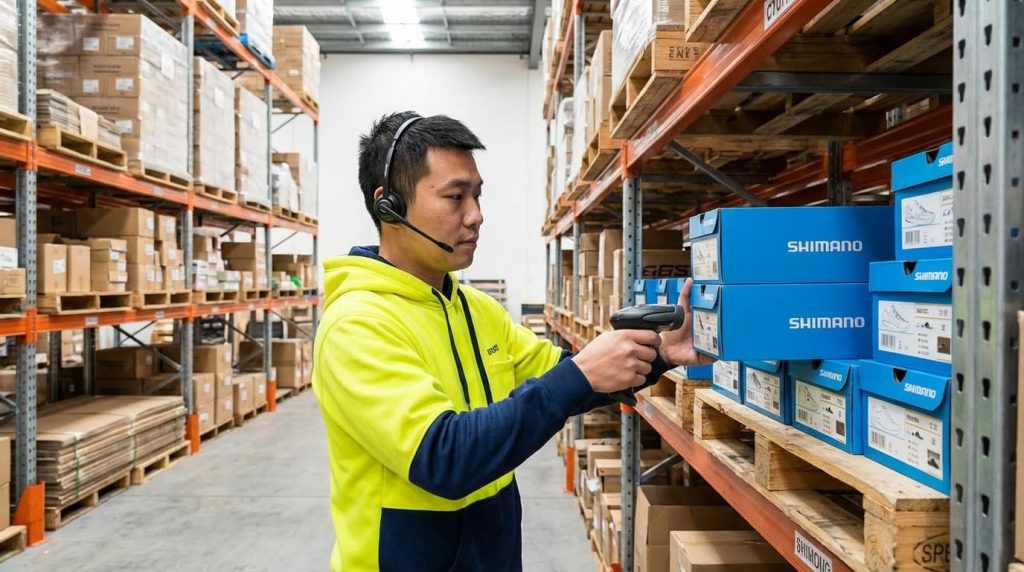
Spraakgestuurd orderverzamelen is over het algemeen niet moeilijk voor magazijnmedewerkers om te leren, omdat het de natuurlijke spraak nabootst en elke stap begeleidt. De meeste operators bereiken daardoor binnen enkele uren een bruikbare productiviteit en zijn binnen enkele dagen volledig bekwaam. Als u zich afvraagt "is spraakgestuurd orderverzamelen in een magazijn moeilijk?", dan blijkt uit gegevens dat het meestal gemakkelijker en sneller te leren is dan workflows met papier of RF-scanners, met name voor seizoensgebonden en meertalige teams.
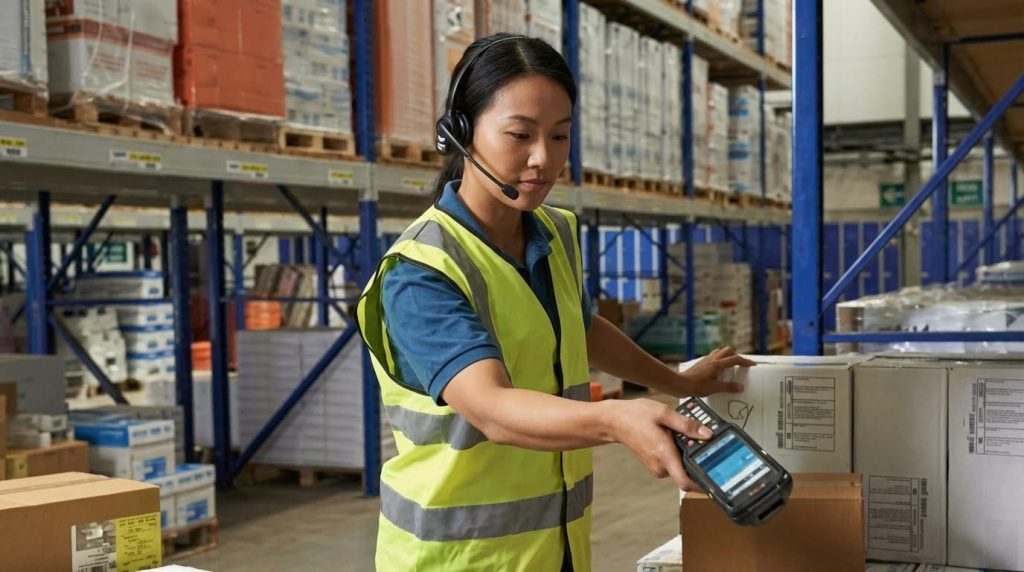
Hoe werkt spraakgestuurd plukken in de praktijk?
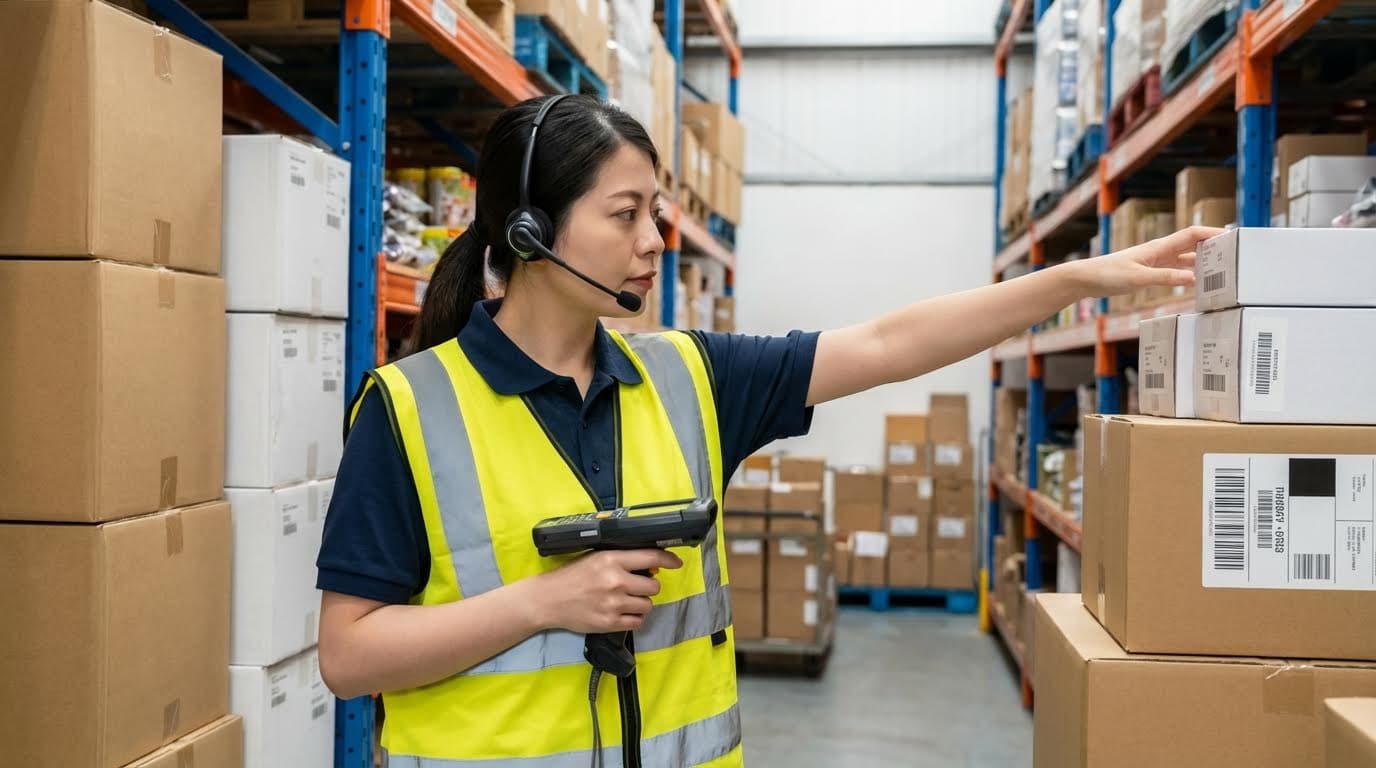
Spraakgestuurd orderverzamelen werkt als een gesproken 'laag' bovenop uw WMS, die medewerkers vertelt waar ze heen moeten en wat ze moeten verzamelen, en vervolgens in realtime bevestigingen vastlegt. Inzicht in dit proces is essentieel om te beoordelen of orderverzamelen in het magazijn moeilijk te implementeren is voor uw team.
In grote lijnen creëert het WMS taken, de spraakengine zet deze om in gesproken aanwijzingen en medewerkers reageren met korte zinnen. Het systeem valideert elke stap, werkt de voorraad direct bij en registreert wie wat waar en wanneer heeft gedaan.
| Element | Wat het doet | Typische technische specificaties | Operationele impact |
|---|---|---|---|
| Headset + microfoon | Geeft aanwijzingen en registreert de reacties van werknemers. | Geluidsdempend, geschikt voor industrieel of commercieel gebruik, vaak draadloos. | Houdt de handen vrij voor dozen, pallets en scanners in gangpaden van 1.8–2.7 m. |
| Mobiel apparaat / terminal | Start de spraakclient en maakt verbinding met het netwerk. | Een aan de riem te dragen terminal, een robuust handheld apparaat of een smartphone. | Beweegt mee met de orderverzameltruck en ondersteunt een volledige werkdag op de accu (8-10 uur). |
| Spraakengine / Middleware | Zet WMS-taken om in spraak en analyseert de antwoorden. | Spraaksynthese en -herkenning, dialooglogica | Zet complexe opdrachten om in korte, eenvoudige instructies die nieuwe medewerkers binnen enkele uren kunnen opvolgen. |
| WMS / ERP | Genereert werk en beheert inventarisgegevens. | Standaard API's, berichtenwachtrijen of databaseaanroepen | Houdt de voorraadnauwkeurigheid en de orderstatus in realtime bij. |
| draadloos netwerk | Verbindt apparaten met spraak- en WMS-servers. | WLAN met dekking in alle rackgangen. | Voorkomt audiovertragingen die werknemers frustreren en het pickproces vertragen. |
💡 Opmerking voor de veldtechnicus: Loop vóór de uitrol door de langste gangpaden met een testterminal en headset onder live verkeer. Als de prompts haperen of wegvallen in dicht opeengepakte racks, los dan eerst de WLAN-dode zones op, anders geven medewerkers het "spraaksysteem" de schuld in plaats van het netwerk.
Kerncomponenten en systeemarchitectuur
De kernarchitectuur van spraakgestuurd orderverzamelen koppelt headsets en mobiele apparaten aan een spraakengine die voor uw WMS- of ERP-systeem is geplaatst. Dit ontwerp behoudt uw bestaande systemen en voegt een gesproken gebruikersinterface toe die eenvoudig aanvoelt voor de medewerkers.
- Headset en microfoon: Industriële headsets met ruisonderdrukkende microfoons filteren het geluid van transportbanden en vrachtwagens, zodat spraaksystemen korte commando's betrouwbaar kunnen interpreteren. Hierdoor blijft de herkenningsgraad hoog, zelfs in lawaaierige laadperrons. Technische beschrijving van hardware voor spraakgestuurd picken
- Mobiel computerapparaat: Een terminal die aan de riem wordt gedragen, een robuuste handheld of een smartphone voert de client-app uit en onderhoudt de sessie met de spraakengine. Werknemers dragen slechts één compact apparaat bij zich in plaats van papieren lijsten en scanners. Hardwareopties en -omgevingen
- Spraakengine / Middleware: Deze laag ontvangt taken van het WMS, zet deze om in gesproken aanwijzingen en interpreteert de reacties van de medewerker in gestructureerde data. Het regelt het dialoogverloop, de controlecijfers en de hoeveelheidscontroles. Beschrijving van de systeemarchitectuur
- Hostsystemen (WMS / ERP / WCS): Het WMS of ERP-systeem genereert nog steeds orders en registreert voorraadbewegingen; spraakbesturing fungeert simpelweg als de gebruikersinterface. Dit minimaliseert de verstoring van bestaande plannings- en rapportageprocessen. Overzicht van integratiemogelijkheden
- Netwerk en infrastructuur: Stabiele WLAN-dekking in alle gangpaden is cruciaal om vertragingen en verbroken verbindingen te voorkomen. Een slechte dekking is de snelste manier om het picken met spraakherkenning in een magazijn voor operators als "moeilijk" te ervaren. Connectiviteits- en betrouwbaarheidsfactoren
| Architectuurlaag | Hoofdrol | Risico op falen | Operationele impact |
|---|---|---|---|
| Hoofdtelefoon | Audio in/uit | Fysieke schade, slechte pasvorm, verkeerd geluidsprofiel | Verkeerd verstane aanwijzingen, herhaalde opdrachten, vermoeidheid in lawaaierige gangpaden. |
| Mobile Device | Voert de client uit en beheert de sessie. | Batterij loopt snel leeg, besturingssysteem crasht | Storingen midden in de dienst, gedwongen heraanmeldingen, verloren vertrouwen |
| Spraakmotor | Herkent en genereert spraak | Accentbehandeling, ruisende invoer | Werknemers praten langzamer, articuleren te duidelijk en vinden het systeem "te ingewikkeld". |
| WMS / ERP | Taakgeneratie en -validatie | Latentie, interfacefouten | Trage updates van prompts, vastgelopen bestellingen, handmatige oplossingen |
| WLAN | Realtime communicatie | Dode zones, interferentie | Snelle vertragingen, afgebroken sessies in lange of hoge gangpaden. |
Hoe deze architectuur de training gemakkelijker maakt
Omdat de spraaklaag bovenop de bestaande WMS-logica is gebouwd, kunnen locatiecodes en product-ID's ongewijzigd blijven. Nieuwe medewerkers hoeven slechts een kleine set commando's te leren en te weten hoe ze op aanwijzingen moeten reageren, niet de volledige systeemstructuur. Daarom hebben veel locaties zelfstandige orderpickers in minder dan een dag opgeleid. Details over de verkorting van de trainingstijd.
Typische workflow voor voice picking op de werkvloer
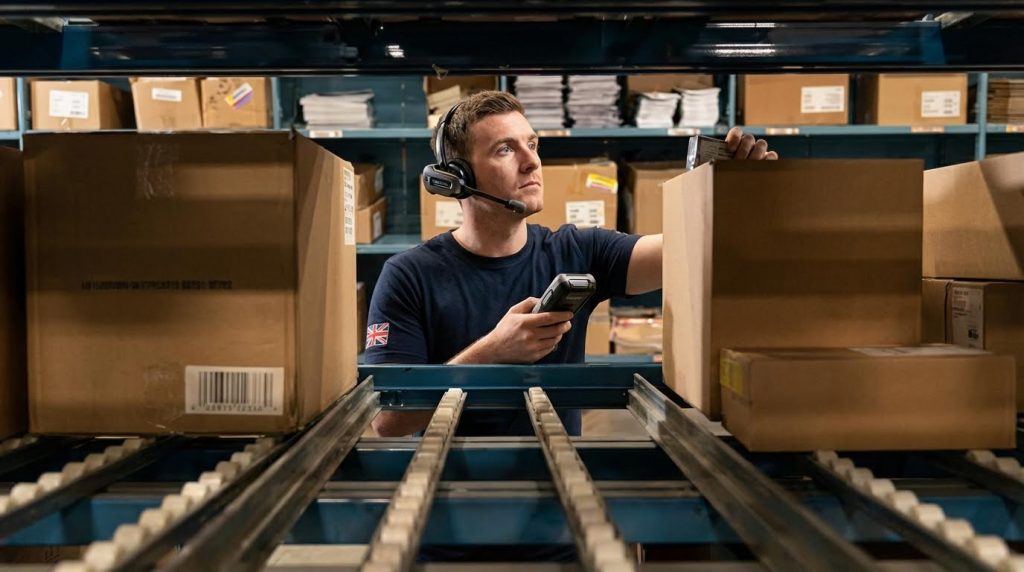
Een typische workflow voor voice picking begeleidt de operator stap voor stap: inloggen, een opdracht ontvangen, naar een opslaglocatie gaan, de locatie bevestigen, de hoeveelheid verzamelen en de order afsluiten. Dit voorspelbare patroon is de reden waarom veel medewerkers de basisprincipes in minuten leren, in plaats van dagen.
- Stap 1: Log in en ontvang je opdracht – De orderverzamelaar logt in via een kort spraakcommando of ID, waarna het systeem de taken downloadt vanuit het WMS. Er is dus geen papier of schermnavigatie nodig. Werkprocesbeschrijving
- Stap 2: Reis naar de eerste locatie – Het systeem spreekt gangpad-, vak- en niveaucodes uit terwijl de orderverzamelaar rijdt of loopt en de vrachtwagens, stellingen en voetgangers in de gaten houdt voor de veiligheid. Veiligheids- en ergonomische voordelen
- Stap 3: Bevestig de locatie – Bij het sorteervak leest de medewerker een kort controlecijfer dat op het rek is afgedrukt; het systeem valideert dit aan de hand van het WMS om foutieve sorteeracties te voorkomen. Controlecijfer en nauwkeurigheidsbespreking
- Stap 4: Selecteer en bevestig de hoeveelheid – De prompt geeft de hoeveelheid aan; de medewerker kiest een product en spreekt vervolgens de hoeveelheid uit of een eenvoudig bevestigingswoord, dat het systeem in realtime controleert. Foutreductiecijfers
- Stap 5: Ga naar de volgende regel – Direct na de bevestiging wordt de volgende locatie doorgegeven, waardoor de wachttijd tussen de picks wordt geminimaliseerd en de reis- en zoektijd met 15-20% wordt verkort in vergelijking met traditionele methoden. Tijdsvergelijkingsstudie
- Stap 6: Sluit de bestelling af en meld eventuele afwijkingen. Aan het einde van de opdracht gebruikt de medewerker eenvoudige zinnen om tekorten, schade of problemen met de automaten te melden. Het systeem registreert deze meldingen, inclusief tijd en locatie, zodat ze traceerbaar zijn. Discussie over fouttraceerbaarheid
| Workflowfase | Traditionele methode | Stemmethode | Operationele impact |
|---|---|---|---|
| Taaktoegang | Scan het scherm of de papieren lijst | Spreekopdracht | Geen tijd verspild aan lezen of scrollen op kleine schermen. |
| Reizen + zoeken | 13.49 s gemiddeld | 11.45 s gemiddeld | Ongeveer 15% snellere navigatie tussen slots |
| Kies actie | 12.35 s gemiddeld | 10.55 s gemiddeld | Minder handelingen met apparaten, meer continue beweging. |
| Foutpercentage | 0.75–0.90% typisch | 0.01–0.02% (99.98–99.99% nauwkeurigheid) | 1–2 fouten per 1,000 picks in plaats van 7–9 |
| Training voor basisgebruik | 1 dag of langer | 15-60 minuten | Seizoensmedewerkers zijn productief tijdens de eerste shift. |
Vergelijkingen van tijd, trainingsgegevens en foutenpercentage laten zien hoe dit eenvoudige patroon tot daadwerkelijke winst leidt.
Wat betekent dit voor de vraag: "Is voice picking in een magazijn lastig?"
Omdat de workflow gebruikmaakt van korte, repetitieve aanwijzingen en bevestigingen, werden de meeste werknemers binnen 15 minuten tot een paar uur productief en bereikten ze binnen een week een standaardprestatieniveau. De snelle beheersing van de taken en de trainingscase van 15 minuten suggereren dat de systeemarchitectuur en de workflow, en niet de vaardigheden van de werknemer, de belangrijkste factoren zijn die de moeilijkheidsgraad bepalen.
💡 Opmerking van de veldtechnicus: Tijdens piloten moeten de instructies zo kort en consistent mogelijk zijn (zelfde woordvolgorde, zelfde formulering). Mijn ervaring is dat het schrappen van slechts 1-2 overbodige woorden per instructie de cognitieve belasting vermindert en ervoor zorgt dat nieuwe medewerkers aan het einde van hun eerste dienst veel meer zelfvertrouwen hebben in het gebruik van hun stem.
Leercurve, prestatieverbetering en menselijke factoren
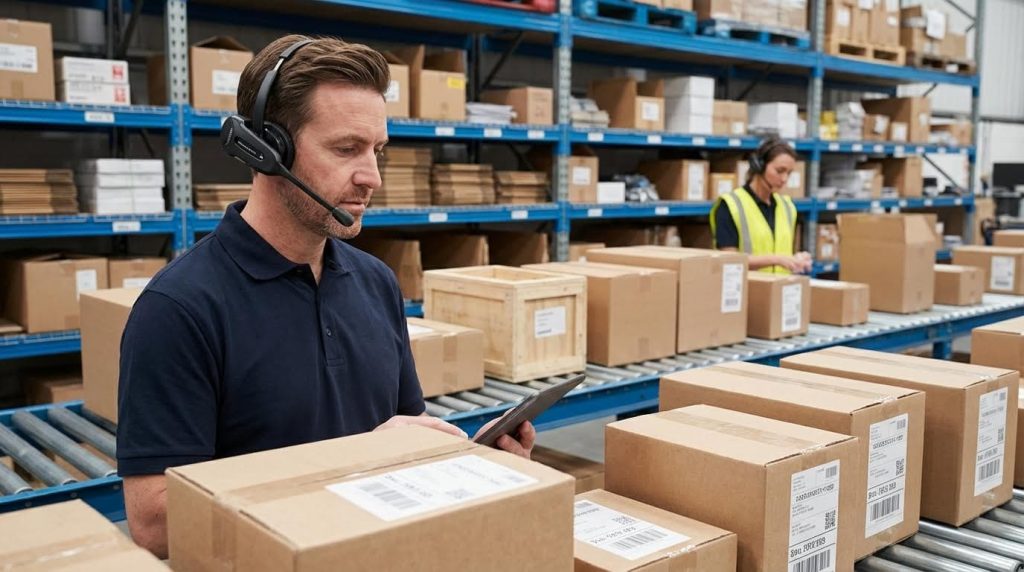
Spraakgestuurd orderverzamelen is over het algemeen gemakkelijk te leren voor magazijnmedewerkers, terwijl het aanzienlijke voordelen oplevert op het gebied van snelheid, nauwkeurigheid en veiligheid. Dit beantwoordt de vraag "is spraakgestuurd orderverzamelen in een magazijn moeilijk?" direct met data in plaats van meningen. De werkelijke beperkingen liggen in het procesontwerp, de akoestiek en de diversiteit van het personeel, niet in de vaardigheden van de medewerkers.
In dit gedeelte vertalen we laboratoriumstatistieken naar de praktijk op de werkvloer: hoe snel mensen zich inwerken, welke prestatieverbeteringen je realistisch kunt verwachten en hoe lawaai en meertalige teams de dagelijkse bruikbaarheid beïnvloeden.
💡 Opmerking van de veldtechnicus: Wanneer je beoordeelt of voice picking in een magazijn lastig is, test het dan altijd eerst in het meest uitdagende gebied: de meest lawaaierige, smalste gangpaden of de meest wisselende seizoenstemperaturen. Als voice picking daar goed werkt met echte orderpickers, zal de rest van de locatie ook makkelijk aanvoelen.
Trainingsduur, opbouwcurves en seizoensarbeid
Spraakgestuurd orderverzamelen heeft een van de kortste leercurves van alle orderverzameltechnologieën, waardoor het zo geschikt is voor seizoensgebonden magazijnen en magazijnen met een hoog personeelsverloop. De meeste nieuwe medewerkers bereiken binnen enkele uren, en niet weken, een bruikbaar productiviteitsniveau.
Uit diverse onderzoeken en praktijkverslagen blijkt dat werknemers binnen enkele minuten basisspraakcommando's kunnen leren en binnen 1-2 dagen volledig operationeel zijn, waarbij veel locaties binnen een week al standaardprestaties leveren. Gedocumenteerde implementaties melden dat spraakgestuurde training de formele trainingstijd voor kerncommando's verkortte van ongeveer een volledige dag tot ongeveer 15 minuten, en dat zelfstandig werken dezelfde of de volgende dag al mogelijk was. Andere bedrijven trainden nieuwe orderpickers in minder dan een dag om zelfstandig te werken, met volledige vaardigheid binnen één tot twee weken.
| Opleidingsaspect | Typisch resultaat van stemgestuurd plukken | Conventionele methoden | Operationele impact |
|---|---|---|---|
| Tijd om basisacties te leren. | Ongeveer 15 minuten voor de kerncommando's (onderzoeksgegevens) | Enkele uren scherm-/menutraining | Snellere inwerkperiode; uitzendkrachten kunnen al in de eerste shift een bijdrage leveren. |
| Tijd voor onafhankelijke bedrijfsvoering | Dezelfde dag tot 1-2 dagen (casestudies) | Enkele dagen tot een week | Kortere aanlooptijd tijdens seizoenspieken |
| Tijd nodig om volledige vaardigheid te bereiken | Ongeveer 1-2 weken voor stabiele hoge prestaties. (veldverslagen) | Meerdere weken | Snellere ROI op trainingsuitgaven |
| Geschiktheid van seizoensarbeid | Zeer hoog niveau – minimale kennisverwerving; volg de aanwijzingen. | Gemiddeld – meer lokalisatie en het onthouden van codes. | Ideaal voor tijdelijk personeel en uitzendbureaus. |
- Gesproken instructies, geen schermen: Werknemers volgen stapsgewijze gesproken instructies – Je hoeft geen ingewikkelde menu's of plattegronden te onthouden.
- Consistente dialooglogica: Elke taak volgt hetzelfde patroon van "starten-bevestigen-ophalen-bevestigen" – Spiergeheugen ontwikkelt zich snel, zelfs bij nieuwe medewerkers.
- Lage leesvaardigheidseisen: Minimale afhankelijkheid van lees- of schermleesvaardigheid – Helpt gemengde en meertalige teams sneller op gang te komen.
- Snel leren van correcties: Systemen reageren binnen 20-50 ms op bevestigingen. (gemeten tijden) - Directe feedback versterkt het juiste gedrag.
Hoe beoordeel je of spraak te moeilijk is voor jouw personeel?
Voer een proefsessie van 1-2 uur uit met een mix van uw langzaamste, nieuwste en sterkste orderverzamelaars. Als alle groepen aan het einde van de sessie volledige routes kunnen voltooien met alleen gesproken aanwijzingen en minimale hulp van een supervisor, is het systeem niet "te moeilijk" voor uw locatie. Als ze moeite hebben, ligt het probleem meestal bij het ontwerp van de dialoog of de trainingsaanpak, niet bij de basistechnologie.
Metrieken voor nauwkeurigheid, snelheid en traceerbaarheid van fouten
Spraakgestuurd picken is niet alleen gemakkelijk te leren; het tilt de nauwkeurigheid en snelheid ook naar een hoger niveau dan picken met papier of eenvoudige RF-scans, mits correct toegepast. De combinatie van handsfree werken en verplichte bevestigingen is wat echt het verschil maakt.
Verschillende onafhankelijke bronnen melden productiviteitswinsten van 15-35% bij standaardimplementaties, waarbij sommige studies verbeteringen tot wel 70% in specifieke omgevingen documenteren. Werkprocessen zonder handen of ogen verminderen de tijd die niet wordt besteed aan het hanteren van papier of apparaten. Gecontroleerde vergelijkingen toonden een tijdsbesparing van 15-20% aan, waarbij de reistijd plus zoektijd daalde van ongeveer 13.49 seconden naar 11.45 seconden en de picktijd van 12.35 seconden naar 10.55 seconden per regel. Deze studies lieten ook een productiviteitsstijging zien van gemiddeld ongeveer 130 naar 170 regels per uur, waarbij de best presterende bedrijven meer dan 200 regels per uur verwerkten.
Wat nauwkeurigheid betreft, bereiken spraaksystemen routinematig een nauwkeurigheid van meer dan 99.9%. Foutpercentages van 0.75-0.90% met traditionele methoden daalden met spraak naar ongeveer 0.01-0.02%, wat neerkomt op 1-2 fouten per 1,000 picks. Andere faciliteiten die met scannen al een nauwkeurigheid van 99.9% behaalden, wisten na de overstap naar spraak de resterende fouten met 25% of meer te verminderen, tot een foutpercentage van bijna 0.08%. Deze verbeteringen werden bereikt door verplichte controlecijfers, hoeveelheidsbevestigingen en realtime validatie met het hostsysteem.
| metrisch | Typische voorstem | Typisch met stem | Operationele impact |
|---|---|---|---|
| productiviteitswinst | Baseline | +15–35% komt vaak voor; in sommige onderzoeken zelfs tot 70%. (veldgegevens) (studie) | Minder orderverzamelaars nodig voor hetzelfde volume, of een hogere doorvoer per shift. |
| Regels per uur | Gemiddeld ≈ 130 regels/uur (waargenomen) | Gemiddeld ≈ 170 regels/uur; >200 voor topverzamelaars. | Ondersteunt groei zonder het personeelsbestand uit te breiden. |
| Foutpercentage | 0.75–0.90% typisch (traditioneel) | 0.01–0.02% (99.98–99.99% nauwkeurigheid) | Enorme afname van crediteringen, herverzendingen en klantklachten. |
| Reis- en zoektijd | Ongeveer 13.49 seconden per regel (papier/RF) | Ongeveer 11.45 seconden per regel | Hogere productiesnelheid per uur, minder vermoeidheid |
| Kies een tijdstip in het tijdslot. | ≈ 12.35 seconden | ≈ 10.55 seconden | Snellere doorlooptijd per bestelling |
Spraakherkenning biedt bovendien een sterke traceerbaarheid van fouten die papieren systemen simpelweg niet kunnen evenaren. Elke bevestiging wordt voorzien van een tijdstempel en gekoppeld aan een medewerker, locatie en hoeveelheid. Leidinggevenden kunnen precies zien wanneer en waar een foutieve orderverzameling heeft plaatsgevonden, welke SKU erbij betrokken was en hoe de medewerker op de aanwijzingen heeft gereageerd. Dit maakt oorzaakanalyse en coaching sneller en objectiever.
- Controleer de cijfers op de volgende locaties: De medewerker moet een code uitspreken die bij de gleuf is afgedrukt. Voorkomt dat er uit het verkeerde vak of op de verkeerde verdieping wordt gekozen.
- Hoeveelheidsbevestigingen: De medewerker geeft de gekozen hoeveelheid aan – Vermindert short picks en over picks bij lijnen met een hoge score.
- Realtime hostvalidatie: Bevestigingen worden gecontroleerd aan de hand van de WMS-regels. Stopt ongeldige hoeveelheden of locaties onmiddellijk.
- Gebeurtenisregistratie: Elke stap wordt geregistreerd met werknemers-ID, tijd en locatie. Maakt nauwkeurige fouttracering en eerlijke prestatiebeoordelingen mogelijk.
💡 Opmerking van de veldtechnicus: Wanneer je op een website de vraag ziet "is voice picking in een magazijn moeilijk?", komt dat vaak doordat ze alleen naar de headsethardware kijken. De echte waarde zit hem in het ontwerp van de dialoog en validatie; dat is wat een nauwkeurigheid van 99.9% of hoger oplevert en ervoor zorgt dat het systeem eenvoudig aanvoelt op de werkvloer.
Traceerbaarheidsgegevens gebruiken zonder het moreel te ondermijnen.
Het is aan te raden om foutenlogboeken eerst te gebruiken om problemen met opslaglocaties, labels en processen op te lossen, en pas daarna voor coaching. Deel teamstatistieken op dashboards en bewaar individuele gegevens voor één-op-één gesprekken. Werknemers accepteren tracking wanneer ze zien dat het hen ook beschermt tegen de schuld van systeem- of voorraadfouten.
Cognitieve belasting, lawaai en meertalige werknemers
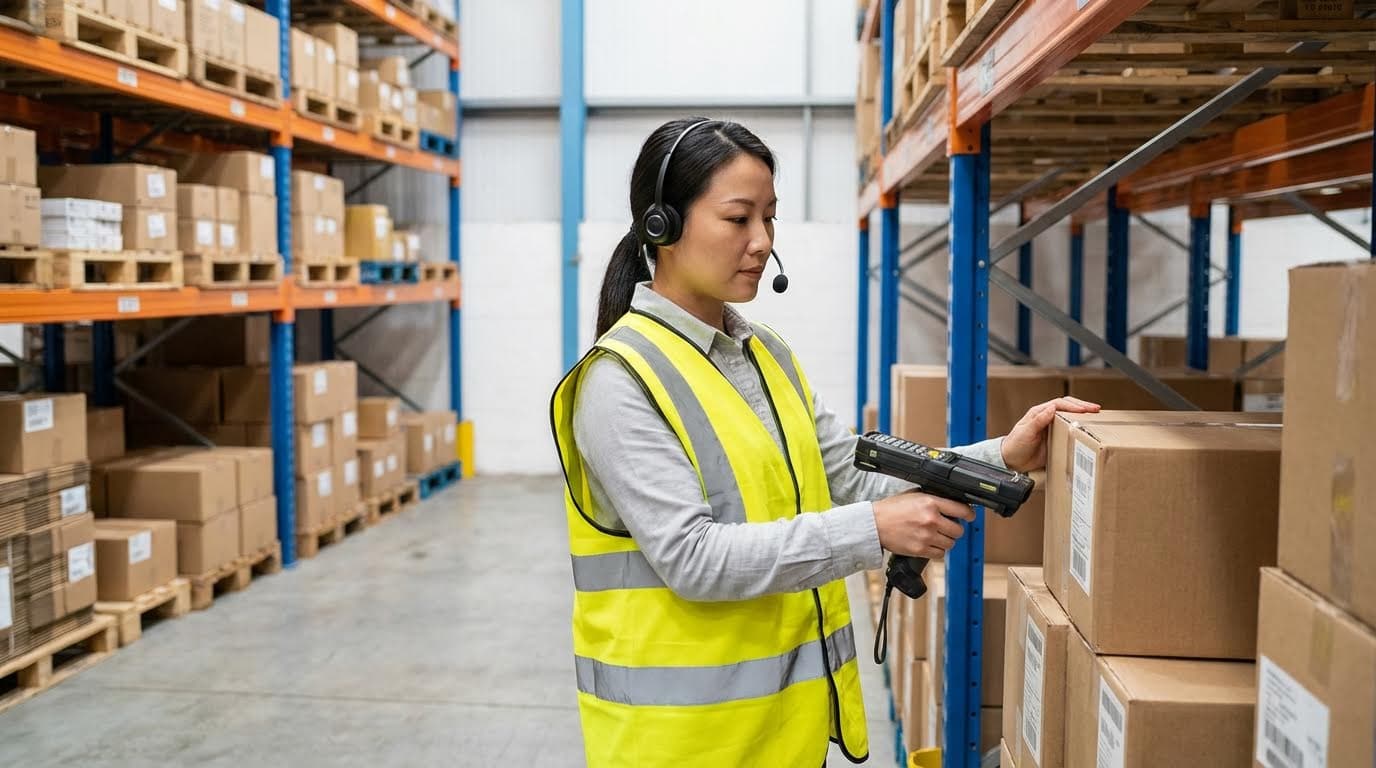
Voice picking verandert de mentale belasting: werknemers luisteren, spreken en bewegen tegelijkertijd, vaak in lawaaierige gangen. Goed uitgevoerd vermindert dit de cognitieve belasting in vergelijking met het lezen van schermen; slecht uitgevoerd kan het de vermoeidheid juist vergroten.
Moderne systemen ondersteunen veel talen en dialecten, waarbij sommige oplossingen tot wel 46 dialecten en bijna 70 talen herkennen. Deze meertalige ondersteuning is een direct antwoord op de vraag "is voice picking in een magazijn lastig in diverse teams?": werknemers kunnen vaak hun moedertaal of meest beheerste taal gebruiken, wat fouten vermindert en de training versnelt. Systemen worden steeds vaker onafhankelijk van de spreker, waardoor er geen lange inwerksessies meer nodig zijn voor elke werknemer.
Geluidsoverlast is de grootste technische uitdaging. Magazijnen met transportbanden, palletwagens en foliewikkelaars kunnen achtergrondgeluid genereren dat spraak maskeert. Studies hebben aangetoond dat slechte akoestiek de signaal-ruisverhouding bij de microfoon verlaagt, waardoor werknemers harder moeten spreken en zich meer moeten concentreren op hun uitspraak. Bij lange diensten kan dit leiden tot cognitieve vermoeidheid en de veiligheidsvoordelen tenietdoen als er geen maatregelen worden genomen door de juiste headset te kiezen en de ruisonderdrukking aan te passen.
| Menselijke factor | Stemplukkend effect | Risico bij slecht ontwerp | Beperking / Het beste voor… |
|---|---|---|---|
| Cognitieve belasting versus RF-wapens | Onder: geen schermnavigatie, eenvoudig herhaalbaar dialoogvenster | Hogere score als de opdrachten lang of complex zijn. | Houd de aanwijzingen kort; gebruik eenvoudige zinnen en een consistente flow. |
| Achtergrondgeluid | Aangeboden door ruisonderdrukkende headsets en getunede motoren. | Verkeerde herkenning, herhalingen, stembelasting | Kies industriële headsets; test ze in de luidste zones voordat u ze in gebruik neemt. (technische richtlijnen) |
| Meertalige beroepsbevolking | Werknemers kunnen gebruikmaken van ondersteunde moedertalen of accenten. | Frustratie als een taal niet wordt ondersteund of slecht is afgestemd. | Wijs elke medewerker toe aan het meest geschikte taalpakket; vermijd opdrachten in meerdere talen. |
| Fysieke belasting | Minder: handsfree, minder bukken voor het scherm, minder bewegingen van het apparaat (ergonomische bevindingen) | Nekklachten door een slecht afgestelde headset. | Test de pasvorm van de headsets; geef training in correct dragen en kabelgeleiding. |
| Mentale vermoeidheid door de dienst | Vaak minder efficiënt dan schermwerk als de opdrachten duidelijk zijn. | Hoger als werknemers constant te maken hebben met lawaai of zinnen moeten herhalen. | Beperk de duur van diensten in omgevingen met extreem veel lawaai; rouleer taken waar mogelijk. |
Waar Voice Picking past en hoe je een systeem specificeert
In dit gedeelte wordt uitgelegd waar spraakgestuurde workflows zinvol zijn, hoe u kunt bepalen of spraakgestuurd orderverzamelen in uw magazijn in uw specifieke situatie haalbaar is, en waar u op moet letten zodat het systeem aansluit op uw lay-out, processen en IT-infrastructuur.
💡 Opmerking voor de veldtechnicus: Loop voordat u headsets koopt door uw gangpaden met een spectrumanalysator en een goedkoop wifi-apparaat. Als het signaal achter racks of op tussenverdiepingen wegvalt, zullen spraaksessies ook wegvallen en zullen operators het "harde" nieuwe systeem de schuld geven in plaats van het RF-ontwerp.
Stemgebruik afstemmen op magazijnprocessen en -indelingen
Voice picking is het meest geschikt voor orderverzameling met een hoog volume en herhaalde handelingen, waarbij medewerkers lange afstanden moeten afleggen en beide handen vrij moeten hebben. Het voelt pas "moeilijk" aan als het proces zelf de technologie tegenwerkt.
Orderverzameling neemt al zo'n 55% van de operationele kosten van een magazijn in beslag, waarvan 55% van de tijd wordt besteed aan het reizen tussen verschillende locaties (volgens één onderzoek) . Spraakgestuurde systemen die reizen optimaliseren en medewerkers langs efficiënte routes leiden, verkorten de reistijd met 30-50% in sommige AI-gebaseerde ontwerpen. Dit pakt direct de grootste kostenpost aan door middel van routeplanning . Wanneer medewerkers minder stappen en eenvoudigere instructies zien, beoordelen ze het systeem doorgaans als "gemakkelijk" in plaats van "moeilijk".
Proces-/lay-outpatroon Stemplukken geschikt Waarom het werkt (of juist niet) Operationele impact Orderverzameling van grote aantallen dozen in lange gangpaden (50–120 m) Uitstekend Reizen neemt veel tijd in beslag; spraakgestuurde communicatie maakt papierwerk/scanners overbodig en optimaliseert de routes. In ontwikkelingslanden worden doorgaans productiviteitswinsten van 30-40% gerapporteerd. met behulp van stem. Stukselectie met veel kleine regels per bestelling Goed Snelle meldingen en bevestigingen verkorten de transactietijd per regel. De transactietijd per pick daalt van enkele seconden naar tientallen milliseconden. met stem. Koelopslag met lange transportafstanden en eenvoudige SKU's. Zeer goed (met de juiste hardware) Handsfree bediening is waardevol in combinatie met handschoenen; apparaten moeten bestand zijn tegen lage temperaturen. Verbeterde veiligheid en minder valpartijen wanneer werknemers drie contactpunten behouden. op apparatuur. Complexe assemblage met veel controles en documenten. Gedeeltelijk / multimodaal Dichte, voorwaardelijke instructies overladen pure audio. Het beste resultaat wordt behaald met hybride workflows: spraak voor navigatie, scans/afbeeldingen voor kwaliteitsstappen. om het aantal fouten laag te houden. Zeer variabele projecten of eenmalige bestellingen Beperkt Door voortdurend veranderende instructies en uitzonderingen neemt het nut van vaste dialoogvensters af. Overweeg scan- of beeldgebaseerde workflows voor uitgebreide visuele begeleiding. in plaats van pure stem. - Processen waarbij veel gereisd moet worden: Geef prioriteit aan zones waar het lopen tussen rekken van 30–120 m de meeste tijd in beslag neemt. Dit is waar spraak de duidelijkste ROI oplevert en het voor operators het gemakkelijkst aanvoelt.
- Repetitieve taken met weinig ambiguïteit: Gebruik spraakinstructies wanneer deze kort zijn (locatie, artikelnummer, aantal) – Houdt audio-aanwijzingen eenvoudig en vermindert de mentale belasting.
- Stabiele plaatsing en indeling: Vermijd in de beginfase voortdurend opnieuw indelen van apparaten. Werknemers vormen sneller een mentaal beeld, waardoor spraak als een hulpmiddel aanvoelt, en niet als een kruk.
- Minimale papierbehoefte: Als bestellingen handtekeningen, foto's of uitgebreide notities vereisen – Plan een multimodale workflow in plaats van alles via audio te laten verlopen.
- Veiligheidskritische gangpaden: Gebruik je stem wanneer werknemers de ruimte delen met heftrucks. Handsfree bediening met het zicht omhoog verbetert het overzicht en vermindert incidenten. in de praktijk.
Hoe verhoudt dit zich tot de vraag: "Is voice picking in een magazijn lastig?"
Werknemers noemen een systeem meestal 'moeilijk' wanneer het extra stappen vereist of conflicteert met de manier waarop het gangpad daadwerkelijk functioneert. Als je spraaktechnologie afstemt op je meest gebruikte en repetitieve processen, vermindert de technologie wrijving in plaats van deze te vergroten, waardoor de implementatie natuurlijk aanvoelt.
Hardware-, connectiviteits- en integratievereisten
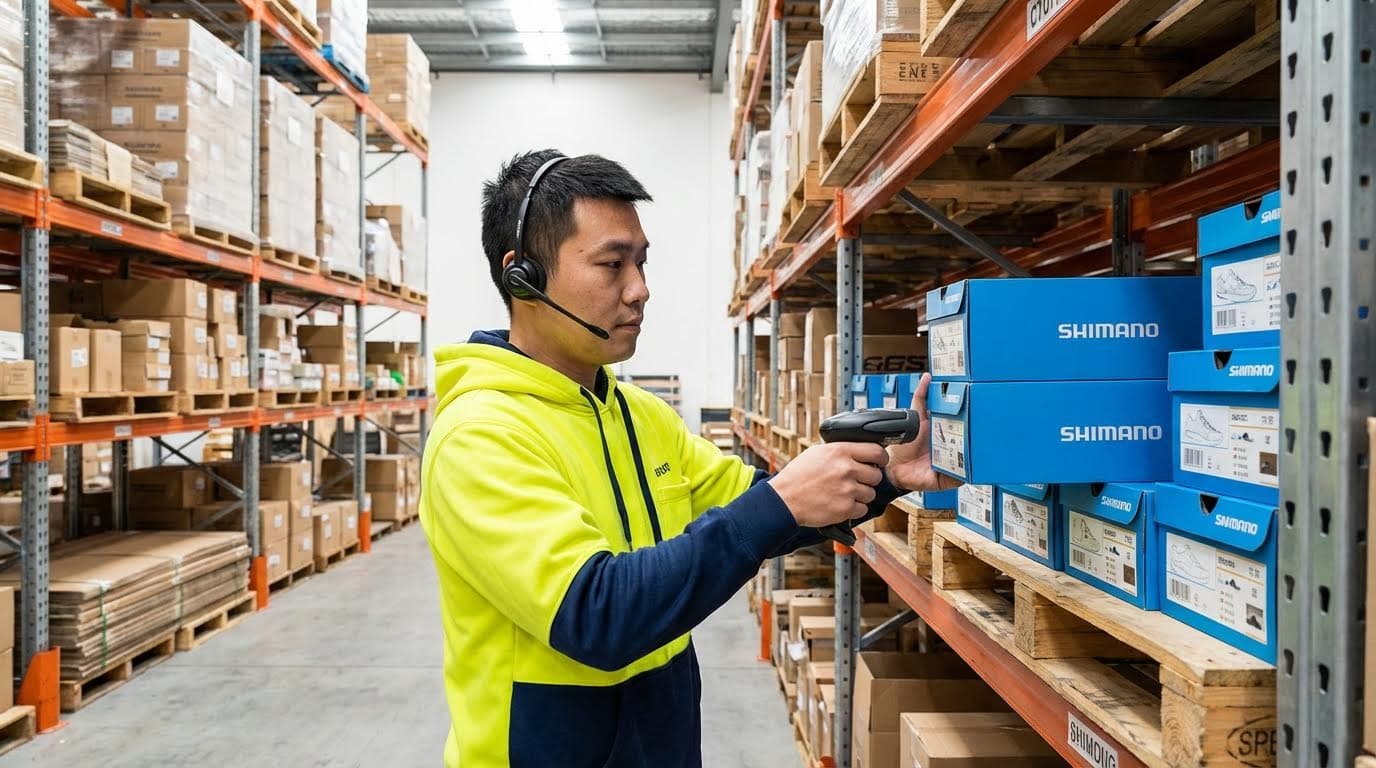
Spraakgestuurd orderverzamelen wordt door werknemers alleen als lastig ervaren wanneer de hardware oncomfortabel is, de wifi onbetrouwbaar is of de integratie achterloopt; als deze drie aspecten goed geregeld zijn, blijft de leercurve kort.
Moderne spraakgestuurde workflows maken gebruik van een headset en een mobiel apparaat, gekoppeld aan een spraakengine en een WMS (Warehouse Management System). Medewerkers bevestigen elke stap met korte gesproken antwoorden, die het systeem vervolgens omzet in realtime data voor het hostsysteem . Deze front-endlaag wisselt taken en bevestigingen uit met het WMS of ERP via API's, wachtrijen of databaseaanroepen, terwijl de spraaksoftware de dialoog en lokale validatie afhandelt bovenop bestaande platforms . Als prompts direct binnenkomen en de apparaten comfortabel zijn, kunnen de meeste operators binnen een dag zelfstandig werken en zijn ze binnen één tot twee weken volledig bekwaam. Dit weerlegt sterk het idee dat spraakgestuurd orderverzamelen in een magazijn moeilijk te leren is tijdens de opstartfase.
Ontwerpaspect Belangrijkste opties/vereisten Technische overwegingen Operationele impact headsets Industriële of commerciële apparaten met ruisonderdrukkende microfoons zijn typisch. Stem de kleding af op het geluidsniveau; kies comfortabele, verstelbare modellen voor lange diensten. Betere spraakherkenning en minder vermoeidheid maken het leren en herhalen van commando's eenvoudiger. Mobiel apparaat Een aan de riem te dragen terminal, een robuuste handheld, een smartphone of een multimodaal apparaat. clientsoftware uitvoeren. Controleer de accucapaciteit voor een volledige werkdag; houd rekening met valbestendigheid en bescherming tegen indringing van vocht en stof. Minder herstarts of wisselingen van systeem tijdens een dienst verminderen frustratie en de ervaren systeemmoeilijkheden. Milieu Koude, stoffige of vochtige zones vereisen afgesloten en soms verwarmde apparaten. voor betrouwbaarheid. Voorkom condensvorming op elektronica en microfoons; voorkom dat kabels stijf worden bij koud weer. Een stabiele audiokwaliteit zorgt voor accurate herkenning, zodat medewerkers niet hoeven te "worstelen" met het systeem. Draadloos netwerk Stabiel WLAN met dekking in dichtbevolkte serverruimtes en tussenverdiepingen. is kritisch. Onderzoek naar dode zones, hoge latentie en roamingproblemen onder volledige belasting. Voorkomt vertraagde meldingen en sessieonderbrekingen die workflows traag of verwarrend maken. Integratie Voice middleware wisselt taken/status uit met WMS, ERP of WCS via API's of wachtrijen. als front-end laag. Definieer welk systeem verantwoordelijk is voor de taaklogica, de volgorde van de taken en de validaties. Een strak ontwerp voorkomt dubbel werk en zorgt ervoor dat de communicatie met de operator kort en voorspelbaar blijft. Reactietijd Spraakgestuurde systemen kunnen binnen 20-50 ms per actie reageren. versus seconden voor handmatige invoer. Zorg ervoor dat de latentie aan de back-end en het netwerk dit voordeel niet tenietdoet. Dankzij de snelle feedback voelt de workflow intuïtief aan, waardoor trainingen binnen enkele minuten kunnen worden afgerond. - Specificeer de hardware die geschikt is voor uw meest veeleisende omgeving: Ontwerp voor de koudste, stoffigste of lawaaierigste gangpaden – Dit voorkomt dat operators in "moeilijke" gebieden concluderen dat het systeem lastig of onbetrouwbaar is.
- Overdimensioner wifi voor roaming: Test met volledige verkeersbelasting en meerdere apparaten in beweging – Stemverlies tijdens het verzamelen van producten is de snelste manier om het vertrouwen van werknemers te verliezen.
- Verduidelijk de systeemrollen: Bepaal of de WMS- of de spraakmiddleware verantwoordelijk is voor de volgorde van de berichten. Voorkomt tegenstrijdige instructies die verwarring bij het personeel veroorzaken.
- Plan voor meertalige werknemers: Gebruik systemen die veel talen en accenten ondersteunen. Moderne oplossingen herkennen tientallen talen en dialecten. in daadwerkelijke implementaties.
- Stem de training af op het systeemontwerp: Omdat werknemers vaak binnen 1-2 dagen operationeel zijn. of zelfs nog snellerRicht de training op uitzonderingen en veiligheid, niet op basiscommando's.
Integratiediepte versus uitrolrisico
Beginnen met een eenvoudige integratie (spraak als simpele interface voor bestaande WMS-taken) verlaagt het projectrisico en geeft medewerkers de kans om eerst te wennen aan de gesproken instructies. Zodra ze zich op hun gemak voelen en de vraag "is spraakgestuurd orderverzamelen in een magazijn moeilijk?" op de werkvloer is beantwoord, kunt u geavanceerde functies toevoegen, zoals AI-gebaseerde routeoptimalisatie of dynamische batchverwerking.
""
Tot slot nog enkele gedachten over gebruiksgemak en acceptatie.
Spraakgestuurd orderverzamelen is niet moeilijk te leren voor magazijnmedewerkers wanneer de engineeringteams het systeem ontwerpen op basis van de werkelijke omstandigheden op de werkvloer. De architectuur behoudt de bestaande WMS-logica en voegt een gesproken laag toe, waardoor operators alleen korte commando's en een eenvoudige, herhaalbare dialoog hoeven te leren. Handsfree werken, waarbij de ogen omhoog gericht blijven, verbetert de veiligheid in de gangpaden met heftrucks en in koelcellen, terwijl verplichte controlecijfers en hoeveelheidscontroles de nauwkeurigheid verhogen tot 99.9% en hoger.
De gegevens tonen duidelijke voordelen: snellere orderverzameling, kortere loopafstanden en minder fouten, waarbij nieuwe medewerkers vaak al tijdens hun eerste dienst productief zijn. Wanneer medewerkers problemen ondervinden, ligt de oorzaak meestal bij een zwakke wifi-verbinding, slechte headsets of te lange instructies, en niet bij de vaardigheden van de medewerker zelf. Dit betekent dat leidinggevenden binnen de engineering- en operationele afdelingen het grootste risico op implementatieproblemen in handen hebben.
De beste werkwijze is om te ontwerpen voor de meest veeleisende zone, te testen met je nieuwste en langzaamste orderverzamelaars en de aanwijzingen kort en consistent te houden. Stem spraak af op processen met veelvoorkomende, herhalende bewegingen en gebruik multimodale workflows waar documenten of duidelijke afbeeldingen belangrijk zijn. Als je deze regels volgt, zal voice picking natuurlijk aanvoelen voor je medewerkers, meetbare prestatieverbeteringen opleveren en je magazijn positioneren voor schaalbare groei met Atomoving of elke andere toekomstige automatisering die je toevoegt.
Veelgestelde Vragen / FAQ
Wat is voice picking in een magazijn?
Voice picking is een technologiegedreven proces waarbij magazijnmedewerkers headsets gebruiken om gesproken instructies te ontvangen voor het verzamelen van artikelen. Dit systeem helpt de nauwkeurigheid en efficiëntie te verbeteren door medewerkers stap voor stap door hun taken te leiden. Voordelen en nadelen van voice picking.
Is spraakgestuurd selecteren moeilijk te gebruiken?
Voice picking kan in eerste instantie een uitdaging vormen vanwege de cognitieve overbelasting, omdat werknemers zich moeten concentreren op instructies en tegelijkertijd achtergrondgeluiden moeten negeren. Met de juiste training en gebruiksvriendelijke systemen passen de meeste werknemers zich echter snel aan. De belangrijkste uitdagingen zijn het omgaan met stress in een snelle omgeving en het waarborgen van duidelijke communicatie. Uitdagingen voor orderpickers.
Is het werk van een magazijnmedewerker fysiek zwaar?
Ja, het werk als orderpicker in een magazijn is fysiek zwaar. Werknemers lopen vaak 10 tot 6 kilometer per dag over harde vloeren, tillen zware lasten en moeten herhaaldelijk hoog reiken. Deze factoren dragen bij aan de fysieke belasting, waardoor de baan na verloop van tijd uitputtend kan zijn. Uitdagingen bij het aannemen van magazijnmedewerkers.
Hoe kunnen werkgevers magazijnbanen gemakkelijker maken?
Werkgevers kunnen betere wervingsprocedures implementeren, uitgebreide trainingen aanbieden en investeren in technologieën zoals voice picking om fysieke belasting te verminderen en de efficiëntie te verbeteren. Het creëren van een ondersteunende werkomgeving kan er ook voor zorgen dat werknemers in fysiek veeleisende functies behouden blijven. Best practices voor orderpicking.