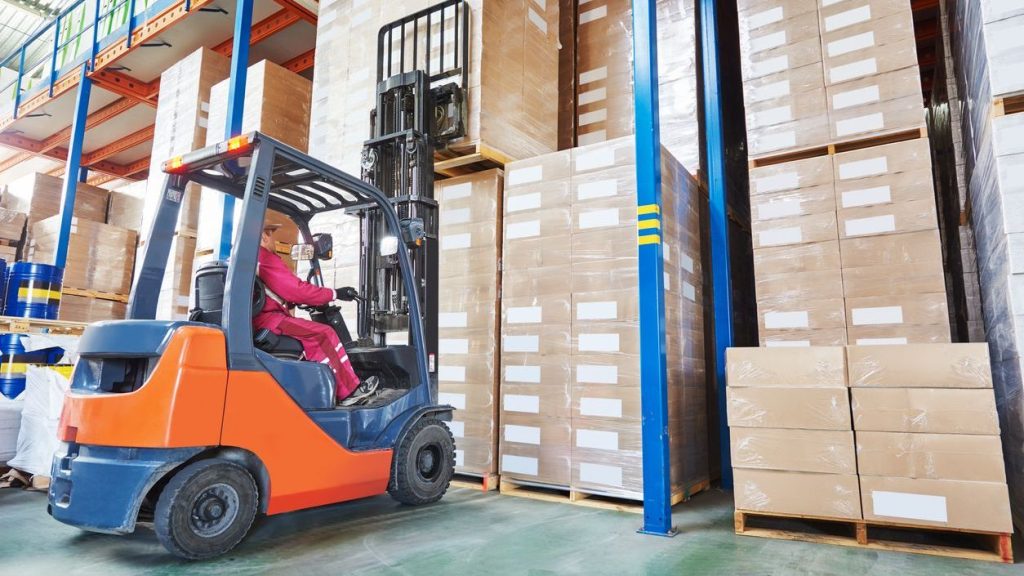
Elektryczne wózki widłowe zazwyczaj podnoszą ciężary od około 3,300 mm do ponad 11 500 mm, w zależności od konstrukcji masztu, udźwigu i zastosowania. Dlatego „jak wysoko może podnosić elektryczny wózek widłowy” to zawsze pytanie inżynierskie, a nie pojedyncza liczba. W tym przewodniku wyjaśniono etapy masztu, kluczowe terminy dotyczące wysokości, obniżanie parametrów i limity bezpieczeństwa, dzięki czemu można określić odpowiednią wysokość podnoszenia dla danego budynku, ładunku i cyklu pracy bez utraty stabilności lub przepustowości.
Dopasowanie wysokości podnoszenia do zastosowania i technologii
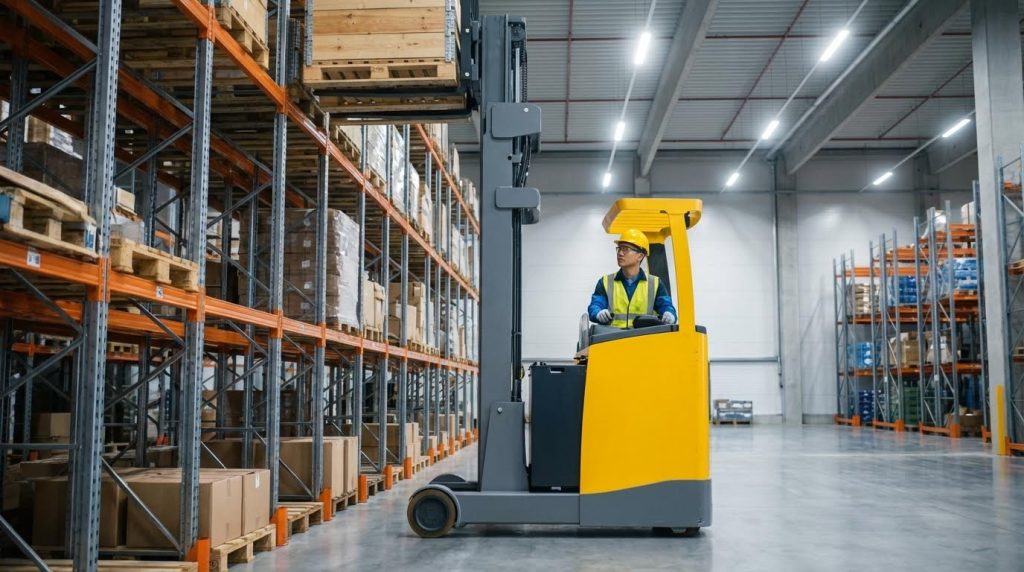
Dopasowanie wysokości podnoszenia do zastosowania oznacza, że należy zacząć od uwzględnienia ograniczeń regałów i budynku, a następnie wybrać typ masztu, akumulator i układ hydrauliczny, które pozwolą na powtarzalne podnoszenie tej wysokości bez niebezpiecznego obniżenia parametrów i przestojów. Kiedy ktoś pyta, jak wysoko może podnosić elektryczny wózek widłowy, prawidłowa odpowiedź brzmi: „tak wysoko, jak bezpiecznie udźwignie ładunek, korytarz i system zasilania”.
W tej sekcji przełożymy dane dotyczące wysokości podnoszenia na rzeczywiste przypadki zastosowań w magazynach i pokażemy, w jaki sposób akumulator, hydraulika i cykl pracy ograniczają praktyczną pracę w wysokich regałach, nawet jeśli w karcie katalogowej podano, że maszt może być podniesiony wyżej.
Klasy wysokości dla magazynowania i kompletacji zamówień
Klasy wysokości dla wózków widłowych do magazynowania i kompletacji zamówień grupuj według maksymalnej wysokości wideł, jaką mogą osiągnąć, oraz rodzaju prac, jakie obsługują. To najbardziej praktyczny sposób na odpowiedź na pytanie, jaką wysokość może podnieść wózek widłowy do kompletacji zamówień w magazynie, w zależności od konkretnego budynku i profilu SKU.
Dane techniczne pokazują, że standardowe maszty z przeciwwagą elektryczną często osiągają wysokość od 4.1 do 7.7 m, podczas gdy dedykowane wózki do kompletacji zamówień mogą osiągać wysokość wideł od 4.8 do 11.6 m, z dużym zakresem wolnego podnoszenia w przypadku ciasnych budynków. Dane techniczne masztów z przeciwwagą i wózków do kompletacji zamówień ilustrują tę rozbieżność.
| Klasa wzrostu | Typowa maksymalna wysokość wideł (MFH) | Typowy typ sprzętu | Typowy przypadek użycia | Wpływ operacyjny |
|---|---|---|---|---|
| Niski poziom | do ~3.3 m | Przeciwwaga elektryczna z niskim masztem | Obsługa na poziomie podłogi, praca na rampach, niskie regały | Nadaje się do 1–2 poziomów belek; pasuje do drzwi i kontenerów. |
| Standardowy magazyn | ~4.1–5.0 m | Przeciwwaga 2-stopniowa lub 3-stopniowa | Ogólne przechowywanie palet, regały lekkie | Obejmuje 3–4 poziomy belek z prześwitem 150–200 mm nad górną belką. |
| Zatoka środkowa | ~5.0–7.7 m | Wózek widłowy z przeciwwagą lub wózkiem widłowym Triplex | Wyższe regały, mieszane składowanie skrzynek/palet | Wymaga dokładnej kontroli obniżającej parametry oraz stabilnych podłóg na górnych poziomach. |
| Kompletacja zamówień w magazynie wysokiego składowania | ~4.8–8.0 m | maszyny do kompletacji zamówień | Kompletowanie skrzynek z regałów o średniej wysokości | Platforma operatora podnosi się; prędkość jazdy zmniejsza się w miarę podnoszenia się wideł. |
| Kompletacja zamówień w bardzo wysokim magazynie | ~8.0–11.6 m | Wózek do kompletacji zamówień o dużej wydajności | Gęsta, wysokomagazynowa obsługa zamówień e-commerce | Wymaga płaskich podłóg, specjalnie zaprojektowanych bagażników i ścisłych ograniczeń prędkości. |
Dane z jednej rodziny elektrycznych przeciwwag wskazują na maksymalną wysokość podnoszenia około 3.3 m dla podstawowego masztu, a po rozłożeniu od około 4.16 m do 7.70 m, w zależności od konfiguracji. To samo źródło podaje wysokość masztu po obniżeniu na około 2.5 m, co jest kluczowe w przypadku drzwi i przyczep.
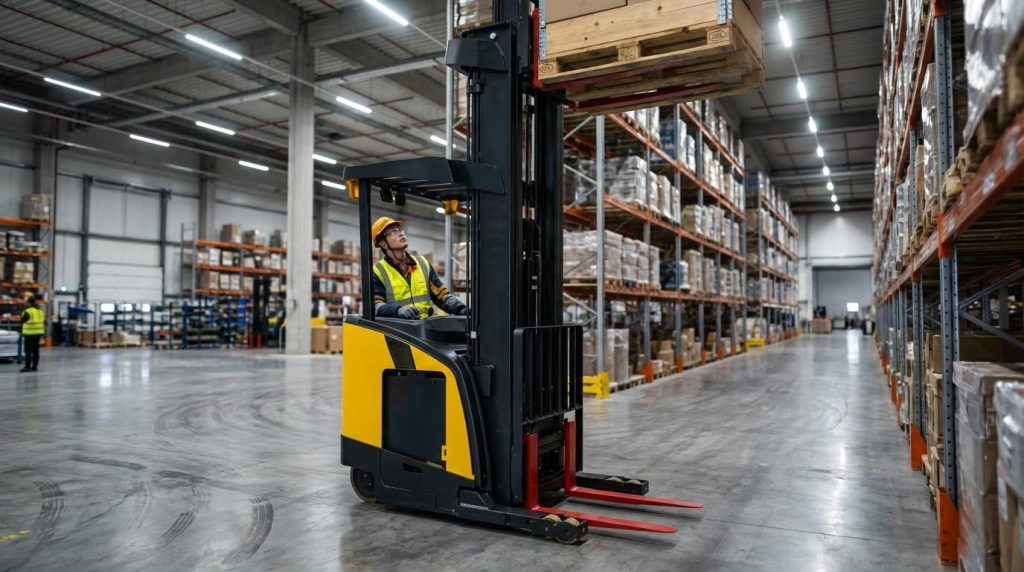
Dedykowani pracownicy kompletacji zamówień odpowiadają na pytanie, jak wysoko może podnosić się elektryczny wózek widłowy do kompletacji w pozycji pionowej: jedna z kart technicznych podaje maksymalną wysokość wideł od około 4.8 m do 11.58 m, z wolnym skokiem wideł od około 76 mm do 2.64 m, w zależności od typu masztu. Te dane pokazują, dlaczego kompletacja zamówień w wysokich regałach wymaga specjalnie zaprojektowanych wózków, a nie standardowych wózków z przeciwwagą.
- Określ wysokość górnego kosza: Dodaj 150–200 mm do najwyższej belki – to jest minimalne wymaganie MFH.
- Sprawdź OALH i OARH: Porównaj wysokość opuszczonego i podniesionego masztu do drzwi i dachu – zapobiega uderzeniom w kolektory i zraszacze.
- Oddzielna paleta a wysokość osoby: Użyj przeciwwagi/zasięgu do przenoszenia palet, półelektryczny wózek do kompletacji zamówień dla mężczyzn – pozwala uniknąć błędnej specyfikacji ciężarówki.
- Odnosi się do szerokości przejścia: Wyższe klasy potrzebują bardziej rygorystycznych ram sterowania – zapobiega uszkodzeniom regałów i masztów w wąskich przejściach.
💡 Uwaga inżyniera terenowego: Gdy regały przekraczają ~7 m, przestaję traktować „standardowe” wózki z przeciwwagą jako opcję. Płaskość podłoża, sztywność regałów i obniżenie ich wartości znamionowych stają się tak krytyczne, że dedykowane wózki wysokiego składowania lub wózki do kompletacji zamówień z masztem i systemami prowadzenia są zazwyczaj bezpieczniejsze i tańsze przez cały okres eksploatacji projektu.
Jak wybrać klasę wysokości dla nowego magazynu
Zacznij od swojego SKU i danych o budynku, a nie od katalogu. Przyporządkuj najcięższą paletę do planowanego poziomu składowania, a następnie oblicz wymaganą MFH i udźwig resztkowy na tej wysokości, korzystając z tabel dekompensacji producenta. Dopiero potem wybierz rodzinę masztów, która spełnia zarówno wymagania dotyczące geometrii, jak i udźwigu.
Akumulator, układ hydrauliczny i cykl pracy przy dużym podnoszeniu
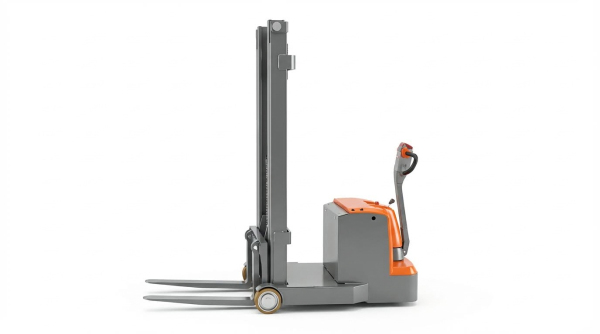
Rozmiar akumulatora, wydajność układu hydraulicznego i cykl pracy decydują o tym, czy wózek widłowy może wielokrotnie pracować z dużym obciążeniem bez zwalniania, przegrzewania się lub nadmiernego rozładowywania. Teoretycznie wiele elektrycznych wózków widłowych może podnosić ładunki na wysokość 7–12 m, ale w praktyce koszt energii związany z częstym podnoszeniem ładunków na dużą wysokość często staje się czynnikiem ograniczającym.
Duże elektryczne wózki widłowe z przeciwwagą, wyposażone w akumulatory 80 V o pojemności około 840 Ah i masie akumulatora wynoszącej około 2,178 kg, charakteryzują się prędkością podnoszenia wynoszącą około 0.33–0.46 m/s bez ładunku i 0.35–0.46 m/s z ładunkiem, a prędkością opuszczania około 0.46–0.55 m/s. Zużycie energii, zgodnie z normą EN 16796:2016, mieści się w zakresie 9.8–12.2 kWh dla tych modeli. Wartości te wskazują, że maszty i ładunki o dużej nośności zużywają znaczną moc hydrauliczną.
| Parametr | Typowy zakres wartości | Gdzie to ma zastosowanie | Wpływ operacyjny przy wysokim podnoszeniu |
|---|---|---|---|
| Napięcie baterii | 80 V | Duża przeciwwaga elektryczna | Wyższe napięcie stabilizuje prędkość podnoszenia przy ciężkich i wysokich podnoszeniu. |
| Pojemność baterii | ~840 Ah | Ciężki, klasa 4–5 t | Obsługuje długie zmiany z wieloma cyklami masztu przed ponownym ładowaniem. |
| Ciężar akumulatora | ~ 2,178 kg | Masa przeciwwagi | Poprawia stabilność, ale zwiększa obciążenie podłogi i zużycie energii. |
| Prędkość podnoszenia (z ładunkiem) | ~0.35–0.46 m/s | Podróż pionowa | Określa czas cyklu do górnych belek; wydłuża się wraz ze starzeniem się lub wyczerpywaniem się baterii. |
| Obniżanie prędkości | ~0.46–0.55 m/s | Skok powrotny | Szybki, ale musi pozostać kontrolowany, aby uniknąć szokującego obciążenia stojaków. |
| Zużycie energii | ~9.8–12.2 kWh | Zgodnie z cyklem EN 16796:2016 | Wyższe wartości przy stosowaniu wysokich masztów i częstym podnoszeniu na pełną wysokość. |
| Silnik napędowy kompletatora zamówień | ~4.7–5.2 kW | Moc podróży | Prędkość automatycznie maleje wraz ze wzrostem wysokości wideł i kąta skrętu. |
| Silnik hydrauliczny kompletatora zamówień | ~10.5 kW | Moc podnoszenia | Zapewnia operatorowi ruch pionowy i widłom w zakresie 4.8–11.6 m. |
W jednej z rodzin wózków do kompletacji zamówień szerokość komory akumulatora wynosi około 790–979 mm, a wysokość około 800 mm, co ogranicza fizyczny rozmiar akumulatora. W tym zakresie inżynierowie dobierają równowagę między pojemnością akumulatora a masą wózka i wydajnością w korytarzach.
Poza danymi katalogowymi, wskazówki inżynieryjne wskazują, że stan naładowania akumulatora silnie wpływa na udźwig i prędkość. Spadek napięcia przy wysokim natężeniu prądu powoduje spadek prędkości podnoszenia i przyspieszenia, co ogranicza przepustowość. Cykle intensywnej pracy z częstym podnoszeniem na dużych wysokościach wymagają większych akumulatorów lub doładowywania; spadek wydajności występuje również w niskich temperaturach lub wraz ze starzeniem się akumulatorów. Wskazówki inżynierskie podkreślają to jako główne ograniczenie rzeczywistej wydajności przy dużym udźwigu.
- Rozmiar akumulatora pozwala na pracę w pionie, a nie tylko na godziny: Zlicz cykle masztu do górnej belki na zmianę – wysokie podnoszenie zużywa więcej amperogodzin niż niskie wahadłowe.
- Obserwuj spadki napięcia: Powolne podnoszenie ostatnich 20–30% stanu naładowania sygnalizuje niedostateczną pojemność baterii – zaplanuj możliwość doładowania lub większe pakiety.
- Przestrzegaj logiki ograniczania prędkości: Wózki kompletujące zamówienia automatycznie zmniejszają prędkość jazdy przy większych wysokościach wideł i kątach skrętu – zapewnia to stabilność i operatorów.
- Zdrowie hydrauliczne to pojemność: Zużyte łańcuchy, nieszczelne cylindry lub zużyte pompy wydłużają czas podnoszenia – bezpośrednie cięcie kilofów na godzinę na dużych wysokościach.
- Dopasuj maszty do budżetu energetycznego: Wysokie maszty potrójne/poczwórne zwiększają obciążenie hydrauliczne – zaplanuj większe zużycie energii lub częstsze ładowanie.
💡 Uwaga inżyniera terenowego: Kiedy na budowie pytają o wysokość podnoszenia elektrycznego wózka widłowego, podaję dwie wartości: maksymalną bezpieczną wysokość podnoszenia (MFH) z tabliczki znamionowej oraz maksymalną wysokość, na jaką wózek może przejechać na wszystkie zmiany bez przebicia wyłącznika niskiego napięcia. Druga wartość jest zazwyczaj niższa i to ona zabezpiecza plan przepustowości.
Wykorzystanie telematyki do zarządzania cyklami pracy przy dużym udźwigu
Nowoczesne floty wykorzystują telematykę i cyfrowe bliźniaki do śledzenia cykli pracy masztów, wysokości podnoszenia, masy ładunku i prądu akumulatorów w czasie rzeczywistym. Inżynierowie analizują te dane, aby oszacować zużycie masztów i układów hydraulicznych oraz wykryć nieprawidłowe czasy podnoszenia lub skoki ciśnienia, które wskazują na pojawiające się problemy. Konserwacja predykcyjna oparta na tych sygnałach pozwala serwisować łańcuchy, cylindry i pompy, zanim spowolnią one prace na wysokości lub zagrożą bezpieczeństwu.
Ostatnie przemyślenia na temat określania wysokości podnoszenia wózka widłowego elektrycznego
To ograniczenia inżynieryjne, a nie nagłówki katalogowe, decydują o tym, jak wysoko elektryczny wózek widłowy może pracować każdego dnia. Geometria masztu, swobodny skok i całkowita wysokość podnoszenia muszą omijać regały, drzwi i zraszacze, a jednocześnie utrzymywać wózek w granicach stabilności. Jednocześnie rozmiar akumulatora, moc hydrauliczna i cykl pracy wyznaczają realny limit częstotliwości, z jaką można dotrzeć do górnych belek bez zwalniania lub wyłączania wyłącznika niskiego napięcia.
Zespoły operacyjne powinny traktować maksymalną wysokość wideł, udźwig resztkowy na wysokości i szerokość korytarza jako powiązane parametry. Jeśli pchasz jeden z nich, musisz sprawdzić pozostałe. Powyżej poziomów środkowych, płaskość podłogi, sztywność regałów i kontrolowana prędkość jazdy stają się kluczowymi czynnikami projektowymi, a nie tylko kwestią czasu. Specjalnie zaprojektowane wózki wysokiego składowania i wózki kompletacyjne zazwyczaj zapewniają bezpieczniejszą i tańszą pracę w wysokich regałach niż standardowe wózki z przeciwwagą.
Najlepsza praktyka jest prosta, ale rygorystyczna. Zacznij od wagi SKU, wysokości belki górnej i prześwitów budynku. Do wyboru masztów, akumulatorów i klasy pojazdu użyj wykresów dekompensacji i danych energetycznych, a nie domysłów. Następnie potwierdź swój wybór, wykonując rzeczywiste pomiary cyklu pracy lub korzystając z danych telematycznych. W razie wątpliwości skorzystaj z zasobów inżynieryjnych firmy Atomoving i zaprojektuj na marginesie. Ten margines chroni ludzi, produkt i długoterminową przepustowość.
Najczęściej zadawane pytania
Jak wysoko może podnieść elektryczny wózek widłowy?
Maksymalna wysokość podnoszenia wózka widłowego elektrycznego zależy od jego konstrukcji i konfiguracji masztu. Standardowe elektryczne wózki widłowe magazynowe z masztami poczwórnymi mogą osiągać wysokość do 6 metrów (20 stóp). Wynajem wózków widłowych magazynowych.
- Elektryczne wózki paletowe, mniejszy typ wózka widłowego, zwykle podnoszą ładunki o długości od 6 do 20 cali (od 15 cm do 50 cm).
- Specjalistyczne modele, takie jak wózki widłowe o dużym udźwigu, mogą sięgać nawet 45 stóp (13.7 metrów).
- Wózki widłowe z masztem czteromasztowym są przeznaczone do układania bardzo dużych wysokości i mogą sięgać ponad 278 cali (7 metrów).
Jakie czynniki decydują o wysokości podnoszenia wózka widłowego elektrycznego?
Wysokość podnoszenia elektrycznego wózka widłowego zależy od typu masztu, jego konstrukcji i przeznaczenia. Na przykład, maszt czterostopniowy umożliwia znacznie wyższe podnoszenie w porównaniu ze standardowym masztem dwustopniowym. Ponadto, specjalistyczny sprzęt, taki jak wózki widłowe z wysuwanym masztem, jest zaprojektowany do składowania na dużych wysokościach w wąskich korytarzach. Zawsze należy zapoznać się ze specyfikacją producenta, aby uzyskać dokładne dane. Przewodnik po masztach wózków widłowych.