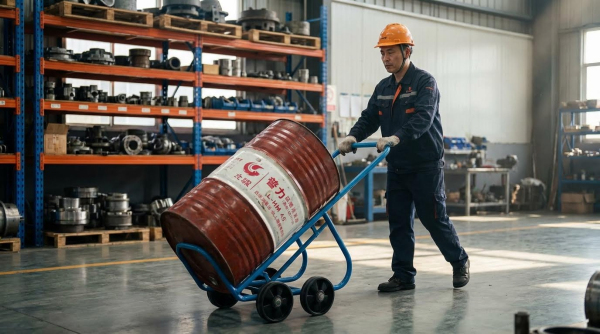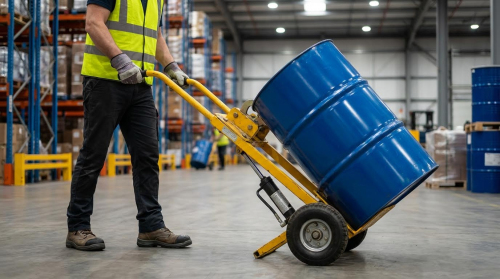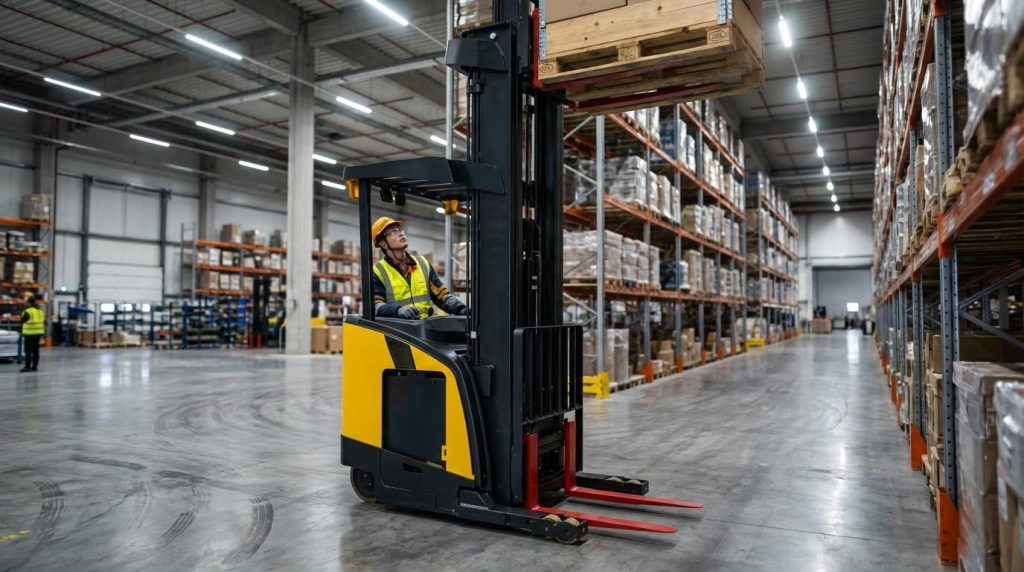
O manuseio seguro e eficiente de paletes extralongos começa com a compreensão dos centros de carga, da inserção dos garfos e do equipamento correto para a tarefa. Este guia explica como levantar cargas de paletes extralongos usando a configuração correta dos garfos, acessórios e interfaces com a esteira transportadora para respeitar a capacidade nominal e evitar tombamentos ou falhas nos paletes.
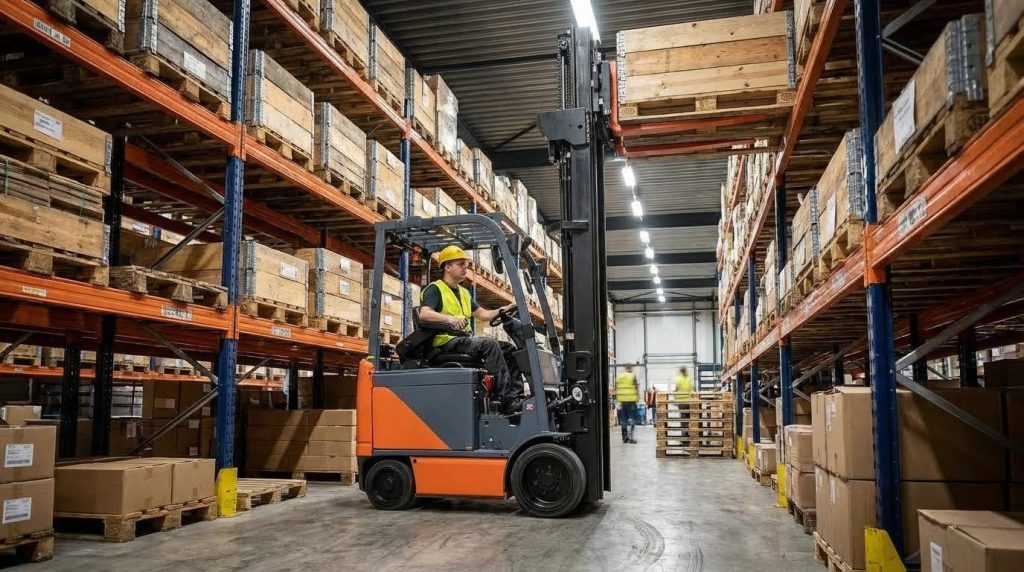
Fundamentos do levantamento de paletes extralongos
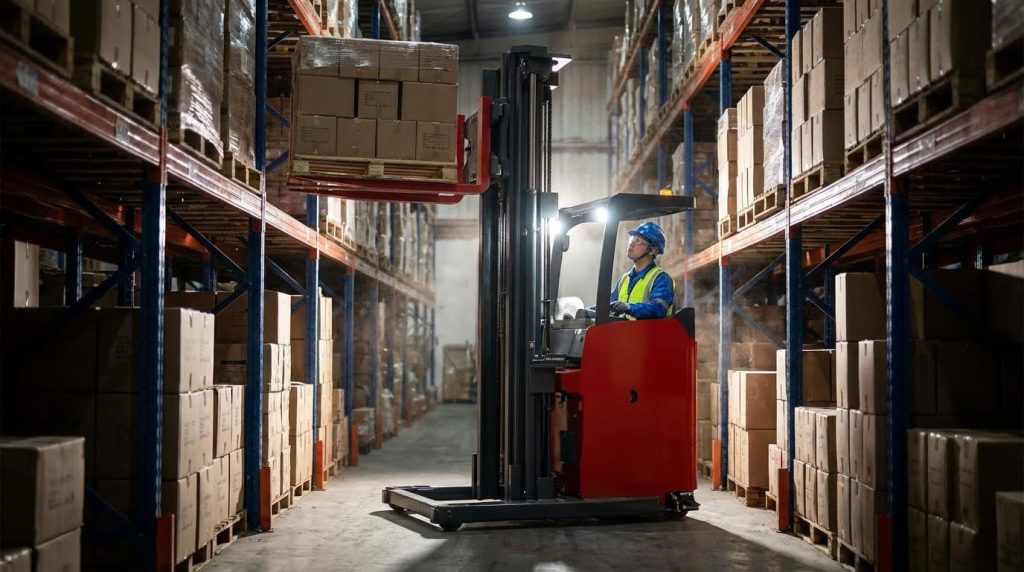
Os fundamentos para o içamento de paletes extralongos se concentram em definir quando um palete se torna "extralongo" e como isso altera o centro de carga, a capacidade do caminhão e as margens de segurança operacionais. Compreender esses princípios básicos é o primeiro passo para decidir como içar cargas de paletes extralongos com segurança e eficiência.
Definição de paletes “extralongos” e casos de uso típicos
Paletes "extralongas" são quaisquer paletes cujo comprimento força a empilhadeira a ultrapassar seu centro de carga nominal ou a geometria normal do corredor, tipicamente acima de 1,600 a 1,800 mm de comprimento. Em instalações reais, isso geralmente significa paletes que se comportam mais como cargas longas (vigas, pacotes ou fardos) do que paletes padrão de 1,000 a 1,200 mm.
Do ponto de vista da engenharia e da segurança, o que importa não é a etiqueta, mas sim como o comprimento do palete, a saliência e o engate dos garfos deslocam o centro de gravidade em relação ao mastro. Esse deslocamento afeta diretamente o risco de tombamento e as tensões estruturais tanto no palete quanto nos garfos.
| Categoria de comprimento do palete | Faixa de comprimento típica (mm) | Aplicações típicas | Impacto Operacional |
|---|---|---|---|
| Padrão | 1,000-1,200 | Armazém geral, bens de consumo de alta rotatividade (FMCG), varejo | Dentro do centro de carga nominal da maioria das empilhadeiras contrabalançadas e retráteis. |
| longo | 1,600-1,800 | Portas, móveis, caixas compridas | Frequentemente, o centro de carga padrão de 600 mm ou superior a ele requer verificação em relação à placa de capacidade. |
| Extra longo | 2,000-3,600 + | Madeira, perfis de aço, tubos de plástico, painéis pré-fabricados | Comporta-se como uma carga longa; pode necessitar de caminhões multidirecionais ou garfos montados em carregadeiras. |
Paletes extralongos são comuns em produtos para construção, metais, plásticos e móveis, onde a geometria do produto determina o comprimento do palete. Frequentemente, eles excedem o comprimento dos garfos, portanto, os operadores devem confiar nas regras de profundidade de inserção e no cálculo cuidadoso do centro de carga, em vez de apenas na intuição.
- Materiais de construção: Placas de gesso, pacotes de madeira, telhas – Altas cargas de flexão; sensível a cargas pontuais.
- Metais e plásticos: Feixes de tubos, pacotes de extrusão, barras de material – Massas elevadas e braços de alavanca longos aumentam o risco de tombamento.
- Conjuntos fabricados: Estruturas, patins, bases para máquinas – Centros de gravidade irregulares exigem manuseio conservador.
- Mobiliário e carpintaria: Portas, caixilhos, bancadas – Longo, porém relativamente leve; propenso a flexões e danos.
Como os paletes extralongos afetam o planejamento de rotas e armazenamento
Paletes extralongos muitas vezes não conseguem girar em corredores padrão de 2.5 a 3.0 m. As instalações precisam alargar os corredores, usar empilhadeiras multidirecionais ou reorientar o armazenamento (paletes armazenados longitudinalmente ao longo dos corredores). As folgas entre os vãos das estantes e a deflexão das vigas também precisam ser verificadas quando os vãos das vigas excedem 2,700 a 3,000 mm.
💡 Nota do Engenheiro de Campo: Ao introduzir paletes extralongos pela primeira vez, percorra todo o trajeto com uma trena. Verifique os pontos de inflexão, niveladores de doca, largura livre das portas e inclinações. A geometria geralmente causa problemas em uma porta ou rampa, não no meio de um corredor livre.
Conceitos básicos de centro de carga e interpretação da placa de capacidade
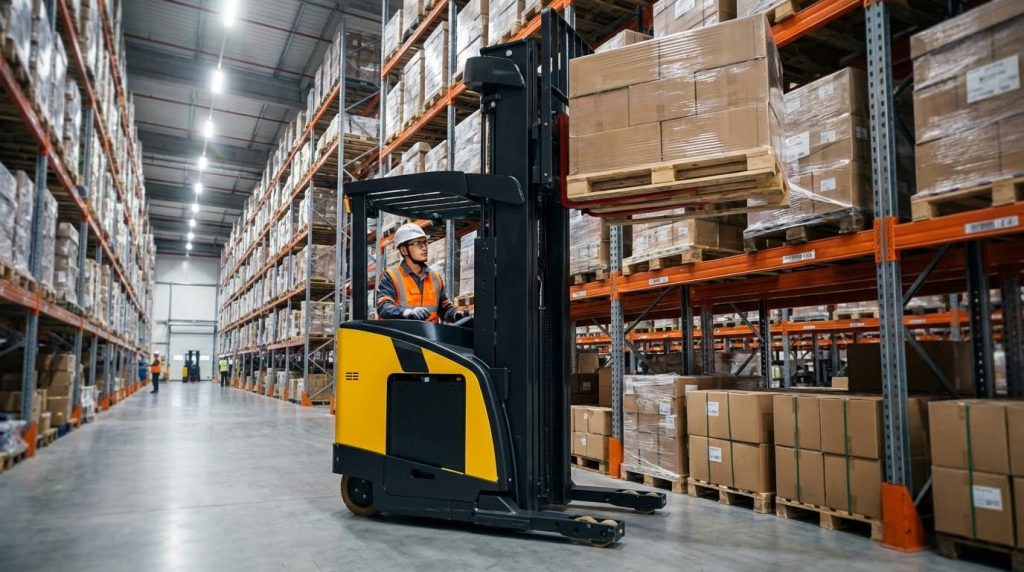
Os princípios básicos do centro de carga para paletes extralongos giram em torno do cálculo do centro de carga efetivo e da comparação com a capacidade nominal da empilhadeira antes de decidir como levantar cargas de paletes extralongos. Se o centro de carga efetivo for maior que a capacidade nominal, você deve reduzir a massa da carga, aumentar o alcance dos garfos ou trocar de equipamento.
O centro de carga é a distância horizontal entre a face dos garfos e o centro de gravidade combinado do palete com o produto. Para uma carga uniformemente distribuída, o centro teórico está na metade do comprimento do palete, L/2, medido a partir da extremidade do palete. Quando os garfos entram por uma extremidade até uma profundidade D, a distância entre a face dos garfos e o centro de carga passa a ser (L/2 − D), mais qualquer deslocamento adicional devido à saliência ou carga assimétrica. Essa relação é fundamental para o manuseio seguro de paletes longos.
| Parâmetro | Símbolo | Significado | Impacto Operacional |
|---|---|---|---|
| Comprimento da palete | L | Comprimento total do palete em mm | Acionamentos com centro nominal a L/2 da extremidade do palete |
| Profundidade de inserção do garfo | D | Distância de entrada dos garfos a partir da extremidade do palete | Um D maior puxa o centro de gravidade de volta em direção ao mastro. |
| Centro de carga efetivo | Esquerda | Distância da face do garfo ao centro de gravidade | Compare Leff com a classificação da placa de capacidade. |
| Centro de carga nominal (placa) | LCrated | Exemplo: 600 mm em muitos caminhões | O caminhão só pode levantar a massa nominal até esta distância. |
Engenheiros e supervisores devem formalizar isso em regras simples para os operadores. Por exemplo, para uma determinada família de paletes extralongos e comprimento de garfo, calcule a profundidade mínima de inserção que mantém o Leff no centro de carga nominal da empilhadeira ou abaixo dele e, em seguida, incorpore isso às instruções de trabalho padrão. As diretrizes recomendam recalcular sempre que as dimensões do palete, a saliência ou os comprimentos dos garfos mudarem.
- Leia a placa de capacidade: Verifique a capacidade nominal no centro de carga especificado, geralmente entre 500 e 600 mm. Impede a suposição de que a capacidade "nominal" do caminhão se aplica a cargas longas.
- Recalcular Leff: Use Leff = (L/2 − D) mais qualquer saliência – Quantifica a distância real da carga em relação ao mastro.
- Comparação entre Leff e LCrated: Se Leff > LCrated, reduza a taxa – Obriga a tomar uma decisão: carga mais leve, garfos mais profundos ou caminhão diferente.
- Levar em conta a assimetria: Cargas deslocadas ou desiguais movem o centro de gravidade – Suposições conservadoras reduzem eventos inesperados de tombamento.
Exemplo: Palete extralonga versus centro de carga de 600 mm
Considere um palete de 2,400 mm (L) com garfos inseridos a 1,200 mm (D). O centro nominal está a L/2 = 1,200 mm da extremidade do palete. A partir da face do garfo, Leff = (1,200 − 1,200) = 0 mm, ignorando a saliência. Na realidade, qualquer saliência ou empacotamento irregular deslocará Leff para a frente. Se o mesmo palete for engatado apenas a 1,000 mm, Leff passa a ser (1,200 − 1,000) = 200 mm. Adicione 200–300 mm de saliência do produto e você estará rapidamente na faixa de 400–500 mm, que deve ser comparada com a capacidade de carga da empilhadeira.
💡 Nota do Engenheiro de Campo: Quando você vir operadores "ajustando" o mastro para testar um palete longo, geralmente significa que ninguém traduziu a placa de capacidade em regras claras. Coloque os números principais (comprimento máximo do palete, inserção mínima do garfo, massa máxima da carga) em um adesivo grande no painel da empilhadeira e perto da área de coleta.
Posicionamento do garfo, profundidade de inserção e alinhamento.
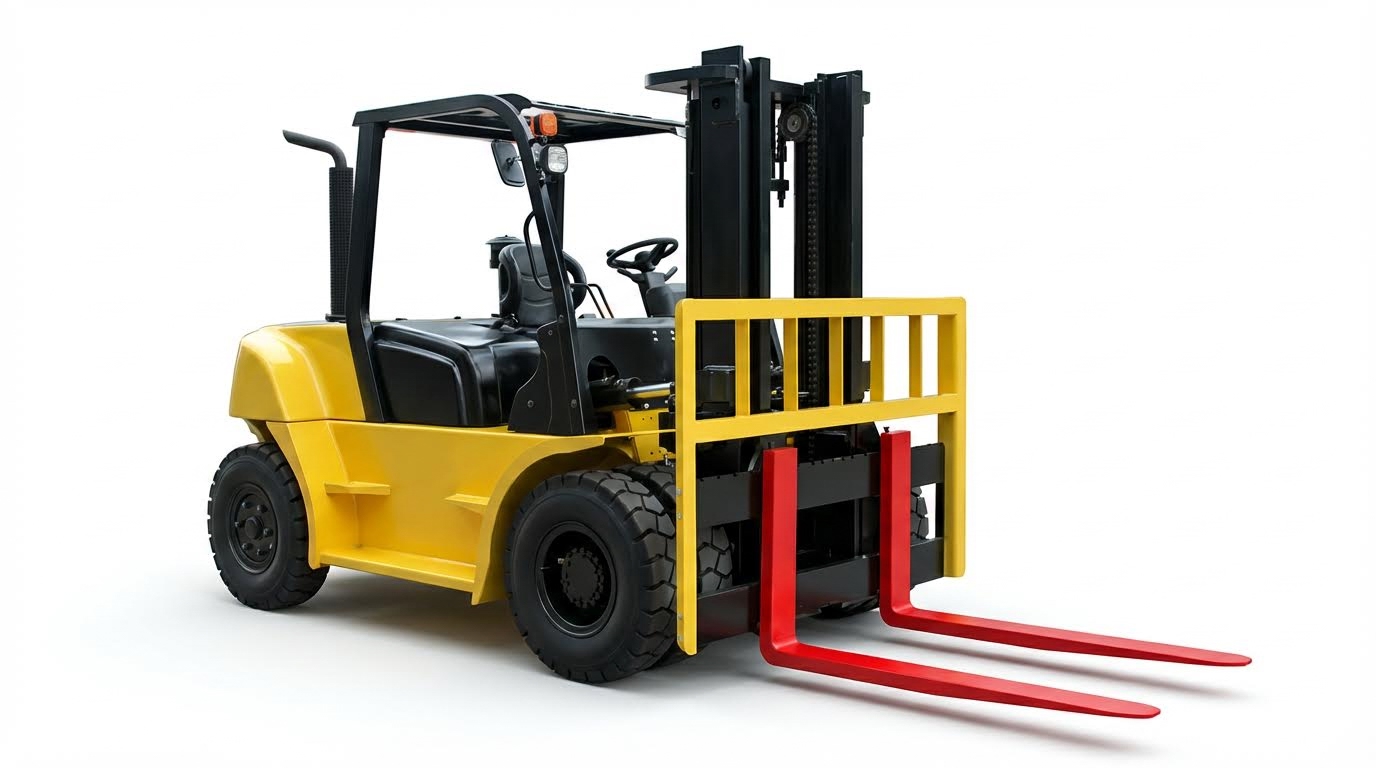
Esta seção explica como levantar cargas de paletes extralongas com segurança, ajustando a posição dos garfos, a profundidade de inserção e o alinhamento para que o centro de carga efetivo permaneça dentro da capacidade nominal do caminhão.
Cálculo do centro de carga efetivo para paletes longos
Calcular o centro de carga efetivo para paletes extralongos significa determinar a distância real entre a face do garfo e o centro de gravidade combinado, antes de compará-la com a placa de capacidade.
Para paletes extralongos, o centro de carga efetivo é a distância horizontal da face dos garfos até o centro de gravidade combinado do palete e do produto. Para uma carga uniformemente distribuída, o centro nominal fica a L/2 da extremidade do palete, onde L é o comprimento do palete. Se os garfos entrarem por D a partir da extremidade mais próxima, a distância da face dos garfos até o centro de carga passa a ser (L/2 − D), mais qualquer deslocamento devido à saliência ou assimetria. As diretrizes de manuseio de carga da OSHA descrevem esse método de cálculo . Sempre que você alterar o comprimento do palete, a saliência ou o comprimento dos garfos, deverá recalcular esse valor e compará-lo com o centro de carga nominal do caminhão, indicado na placa de capacidade.
- Defina o comprimento do palete (L): Meça o comprimento total do palete em mm – Linha de base para a geometria do centro de carga.
- Medir a inserção do garfo (D): Meça a distância que os garfos percorrem sob o palete – Controla a distância do centro de gravidade à frente da face do garfo.
- Calcule L/2 − D: Subtraia a inserção da metade do comprimento – Fornece o centro de carga efetivo básico para cargas uniformes.
- Adicionar saliências/deslocamentos de assimetria: Incluir qualquer excesso de produto ou empilhamento irregular – Captura a posição real do centro de gravidade.
- Comparar com o prato de capacidade: Verificar em relação ao centro de carga e à massa nominais – Confirma se o caminhão pode levantar legalmente e com segurança aquele palete extralongo.
Exemplo prático: alteração do comprimento do palete
Suponha que um caminhão tenha capacidade de carga de 2,000 kg com centro de carga de 600 mm. Um palete padrão de 1,200 mm, totalmente preenchido com garfos de 1,150 mm, resulta em D ≈ 1,150 mm e L/2 = 600 mm. O centro de carga efetivo é pequeno e está bem dentro da capacidade nominal. Se você trocar para um palete de 2,400 mm e inserir os garfos apenas 1,200 mm, L/2 passa a ser 1,200 mm e D também passa a ser 1,200 mm, portanto o centro nominal fica próximo à face do garfo. Qualquer saliência ou empilhamento irregular pode facilmente deslocar o centro de carga efetivo para além de 600 mm, obrigando você a reduzir a massa da carga ou a escolher equipamentos projetados para cargas longas.
💡 Nota do Engenheiro de Campo: Quando os operadores perguntam como levantar paletes extralongos "só desta vez", insisto em desenhar L/2 − D no papel. Ver que uma mudança de 200 a 300 mm no centro de gravidade pode eliminar metade da capacidade nominal geralmente impede levantamentos inseguros antes mesmo de começarem.
Aplicando a regra de inserção de garfo de 80% na prática
Aplicar na prática a regra de inserção de garfos a 80% significa posicionar os garfos a pelo menos 80% da profundidade do palete, para que o centro de carga permaneça recuado e as pontas dos garfos não fiquem sobrecarregadas.
As diretrizes da indústria afirmam que os garfos devem ser inseridos até a profundidade máxima sempre que possível, ou pelo menos até 80% da profundidade do palete. Em um palete de 1,165 mm, isso significa aproximadamente 900 a 1,165 mm de contato. A OSHA observa que a inserção insuficiente desloca o centro de carga para a frente, sobrecarrega as pontas dos garfos e aumenta o risco de tombamento . A mesma diretriz explica que a entrada superficial concentra a pressão de contato nas tábuas e longarinas dianteiras do estrado, aumentando a probabilidade de rachaduras ou perfurações.
| Profundidade do palete (mm) | Inserção mínima de 80% (mm) | Faixa típica de inserção completa (mm) | Impacto operacional |
|---|---|---|---|
| 1,000 | 800 | 950-1,000 | Adequado para garfos padrão; mantém o centro de gravidade próximo ao carro. |
| 1,165 | 900-1,000 | 1,100-1,165 | Palete comum “australiana”; abaixo de 900 mm de altura de inserção, o risco de carga na ponta e danos à plataforma aumenta drasticamente. |
| 2,400 (extra longo) | 1,920 | 2,200-2,400 | Geralmente são necessários garfos longos ou extensíveis; a inserção superficial faz com que os paletes longos pareçam instáveis e com movimento rápido. |
- Primeiro, mire na profundidade máxima: Procure sempre inserir os garfos completamente até que o calcanhar se aproxime da borda oposta do convés. Maximiza a margem de estabilidade.
- Nunca abaixo de 80%: Considere 80% da profundidade do palete como o mínimo absoluto – Impede que o centro de carga efetivo se desloque para a frente.
- Utilize as marcações da ponta do garfo: Pinte as marcas de 80% e 100% nos garfos – Permite aos operadores uma verificação visual rápida antes do içamento.
- Padronizar por família de paletes: Defina a inserção mínima para cada tipo de palete e comprimento de garfo – Elimina as dúvidas na hora de planejar.
- Verificar novamente após entrada parcial: Se obstáculos impedirem a entrada completa, recalcule o centro de carga e reduza a massa da carga. Evita tombamentos inesperados.
Estudos demonstraram que recursos visuais, como marcas de garfo pintadas e linhas no chão, ajudaram os operadores a avaliar a profundidade de inserção com mais rapidez e precisão, economizando de 4 a 7 segundos por contato com o palete e melhorando a consistência. Os ganhos relatados chegaram a 1.1 a 1.9 horas economizadas por caminhão por turno , além de reduzir os danos aos paletes.
💡 Nota do Engenheiro de Campo: Em câmaras frigoríficas e pátios empoeirados, especifico marcações fortes e de alto contraste na ponta dos garfos para o ponto de 80%. Os operadores frequentemente trabalham com viseiras embaçadas ou em condições de baixa luminosidade; se não conseguirem ver a marca claramente a 5-6 m de distância, subestimarão a profundidade da inclinação e os paletes compridos começarão a oscilar durante a frenagem.
Modos de falha: Abertura dos garfos, suporte das longarinas e paletes
A abertura e o alinhamento corretos dos garfos sob as longarinas ou blocos evitam rachaduras no piso, fissuras nas longarinas e perda repentina de carga ao manusear paletes extralongos.
Ao decidir como levantar paletes extralongos, os garfos devem ficar posicionados diretamente sob as estruturas, como longarinas ou blocos, e não em qualquer lugar sob a plataforma. As diretrizes da OSHA enfatizam que o espaçamento correto sob esses elementos minimiza a deflexão e a torção da plataforma . Em paletes com longarinas entalhadas, os garfos devem permanecer dentro das zonas entalhadas para evitar o rompimento das almas das longarinas. Os procedimentos padrão devem definir as configurações de abertura dos garfos para cada modelo de palete e, idealmente, os carros de elevação devem possuir marcas de referência para que os operadores possam ajustar a abertura de forma rápida e consistente.
| Problema de configuração do garfo | Modo de falha típico | Sintoma do mundo real | Melhor para / Estratégia de prevenção |
|---|---|---|---|
| Garfos muito próximos uns dos outros | A plataforma central está cedendo e rachando. | Palete em formato de “banana”; o produto inclina-se lateralmente. | Aumente a largura para que fique sob as longarinas ou blocos externos. |
| Garfos fora das longarinas | As tábuas do convés superior racham perto das bordas. | As tábuas se rompem ao serem levantadas; queda repentina de um dos lados. | Mova os garfos para dentro, alinhando-os com as linhas centrais das longarinas. |
| Garfos não posicionados na zona entalhada (paletes bidirecionais) | Divisão de teia de stringer | Estalos audíveis; o palete inclina ou desaba durante a inclinação. | Treine os operadores para confirmarem visualmente a posição da bifurcação na janela de entalhe. |
| Altura ou torção desiguais dos garfos | Bloco ou corredor esmagado em um lado | Carregue pedras ao frear ou fazer curvas. | Inspecione os garfos e o carro; retire de serviço os garfos tortos. |
- Ajuste a abertura para corresponder às cordas: Alinhe as lâminas do garfo sob as longarinas principais ou fileiras de blocos – As ações distribuem a carga pelas partes mais rígidas do palete.
- Respeite o design da entrada: Mantenha os garfos dentro das áreas entalhadas em paletes de uso duplo – Evita o rompimento de teias finas e fibrosas.
- Utilize posicionadores hidráulicos onde necessário: Para paletes de larguras variáveis, os posicionadores hidráulicos de garfos permitem que os operadores ajustem a abertura a partir da cabine. Mantém o suporte estrutural sem necessidade de desmontagem repetida.
- Fique atento a balanços e rangidos: Qualquer oscilação ou estalo alto durante a inclinação do mastro ou deslocamento sobre pisos irregulares – É um sinal de alerta precoce de falha no convés ou nas longarinas.
- Configurações do documento: Mark recomendou o uso de garfos para espaçamento em suportes verticais de estantes ou folhas de Procedimentos Operacionais Padrão (POP) – Transforma o posicionamento correto em um hábito repetível.
As falhas típicas que ocorrem quando os operadores ignoram a regra de inserção de 80% e a abertura correta dos garfos incluem a perfuração das tábuas superiores pelas pontas dos garfos, o rachamento das tábuas inferiores e o esmagamento de longarinas ou blocos sob carga excêntrica. Essas falhas frequentemente coincidem com cargas de balanço ou inclinação, especialmente durante a inclinação do mastro ou ao se deslocar sobre pisos irregulares. Portanto, a OSHA recomenda que os engenheiros definam as profundidades mínimas de inserção e as regras de posicionamento dos garfos nas instruções de trabalho padrão para cada combinação de palete e garfo.
💡 Nota do Engenheiro de Campo: Em paletes longos e pesados, considero qualquer estalo audível durante a coleta como uma falha na operação. Coloque a carga no chão, reposicione os garfos mais perto das longarinas e inspecione o palete. Reutilizar um palete rachado sob uma carga de 2,000 kg é como transformar um pequeno defeito em um grande acidente e potencial lesão.
Escolhendo acessórios e equipamentos para cargas longas
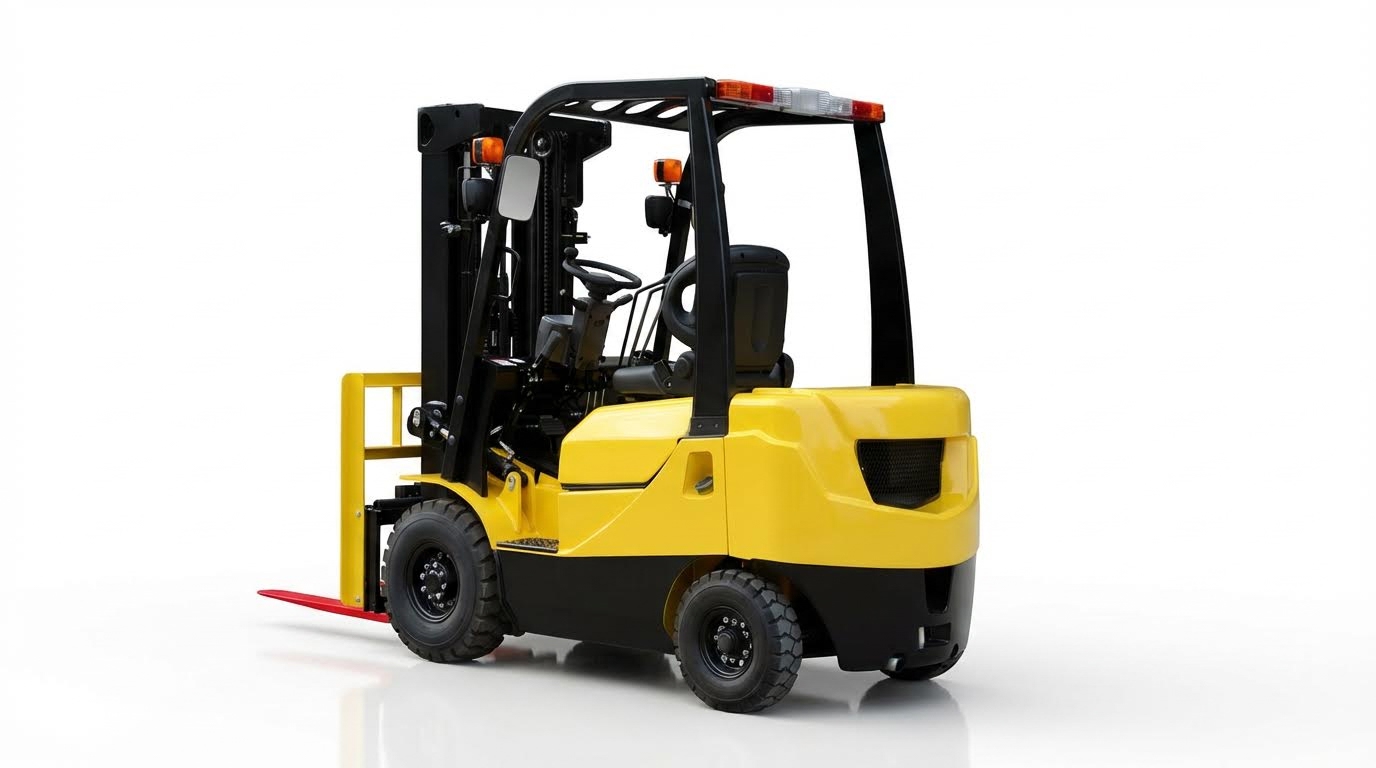
A escolha de acessórios e equipamentos para cargas longas implica em combinar garfos, caminhões e transportadores de forma que o centro de carga efetivo, a estabilidade e as folgas permaneçam dentro dos limites de segurança ao decidir como levantar cargas de paletes extralongas.
- Objetivo: Mantenha o sistema combinado caminhão-acessório-carga dentro da capacidade nominal – Impede o tombamento para a frente e falhas estruturais.
- Método: Utilize acessórios que controlem a abertura, o alcance e a direção de deslocamento dos garfos – Faz com que cargas longas se comportem de maneira previsível.
- Integração: Projetar interfaces com transportadores e AGVs – Elimina obstáculos como enroscos, quedas e danos por impacto.
💡 Nota do Engenheiro de Campo: Considere cada acessório como um aumento no “comprimento da lança”. Mesmo algumas centenas de milímetros de balanço frontal extra podem reduzir drasticamente a capacidade, portanto, sempre verifique a placa de capacidade atualizada antes de levantar paletes longos.
Posicionadores hidráulicos de garfos e garfos extensíveis
Os posicionadores hidráulicos de garfos e os garfos extensíveis ajudam a controlar o espaçamento dos garfos e a profundidade de engate, de modo que os paletes extralongos permaneçam dentro dos limites seguros do centro de carga, minimizando danos aos paletes e o tempo de manuseio.
- Papel fundamental: Ajuste o espaçamento e o comprimento dos garfos de acordo com cada palete – Reduz o aparecimento de fissuras no convés e a sobrecarga das longarinas.
- Quando necessário: Larguras de paletes variadas, embalagens assimétricas, estantes profundas ou empilhamento duplo – Permite que um único caminhão transporte vários SKUs com segurança.
| Tipo de Anexo | Função principal | Especificações/Efeitos típicos | Impacto operacional para paletes longos |
|---|---|---|---|
| Posicionador hidráulico de garfos | Ajuste a abertura dos garfos a partir da cabine. | Mantém os garfos sob as longarinas/blocos para limitar a deflexão do convés. Orientação OSHA | Trocas rápidas de largura dos garfos entre diferentes tipos de paletes; melhora a estabilidade ao escolher como levantar cargas de paletes extralongas com larguras variáveis. |
| Garfos extensíveis (telescópicos) | Aumentar o comprimento efetivo do garfo | Pode estender-se até cerca de 150% do comprimento da base do garfo; requer recálculo do centro de carga. Referência do anexo | Alcance produtos através de paletes compridos, em prateleiras profundas ou em armazéns com o dobro da profundidade, mantendo ainda a regra de inserção de 80%. |
- Posicionadores hidráulicos de garfo: Permitir o ajuste da abertura dos garfos na cabine, de forma que cada garfo fique posicionado sob uma linha estrutural, como uma longarina ou bloco, mantendo o centro de carga efetivo dentro da capacidade de carga do caminhão e reduzindo a torção na plataforma de paletes. Orientação de campo.
- Garfos extensíveis: Aumente o alcance para que os garfos se ajustem à profundidade do palete; os engenheiros devem recalcular o centro de carga efetivo (L/2 − D mais qualquer saliência) e aplicar a capacidade reduzida antes do içamento. Nota de engenharia.
- 80% de inserção com extensíveis: Mesmo com garfos telescópicos, o objetivo ainda é atingir pelo menos 80% da profundidade de contato do palete (por exemplo, cerca de 900 mm em um palete de 1,165 mm) para evitar sobrecarregar as pontas dos garfos e prevenir rachaduras na plataforma. Regra 80%.
- Capacidade e saliência: Qualquer posicionador de garfo ou mecanismo telescópico adiciona massa e desloca a carga mais para a frente, portanto, você deve verificar a capacidade do mastro e do carro e usar a placa de capacidade atualizada antes de escolher como levantar cargas de paletes extralongas com esse caminhão. Impacto na capacidade.
Como escolher entre garfos fixos e extensíveis
Utilize garfos fixos longos onde a profundidade dos paletes e o tipo de estante forem consistentes, e os caminhões sempre se aproximarem pelo mesmo lado. Escolha garfos extensíveis quando precisar alcançar o fundo de estantes profundas, passar por cima de esteiras transportadoras ou manusear paletes com profundidades variadas sem trocar de caminhão. Sempre verifique se o comprimento estendido dos garfos ainda permite pelo menos 80% de contato com o palete e mantém o centro de carga efetivo dentro do limite nominal.
Caminhões multidirecionais e garfos montados em carregadeiras
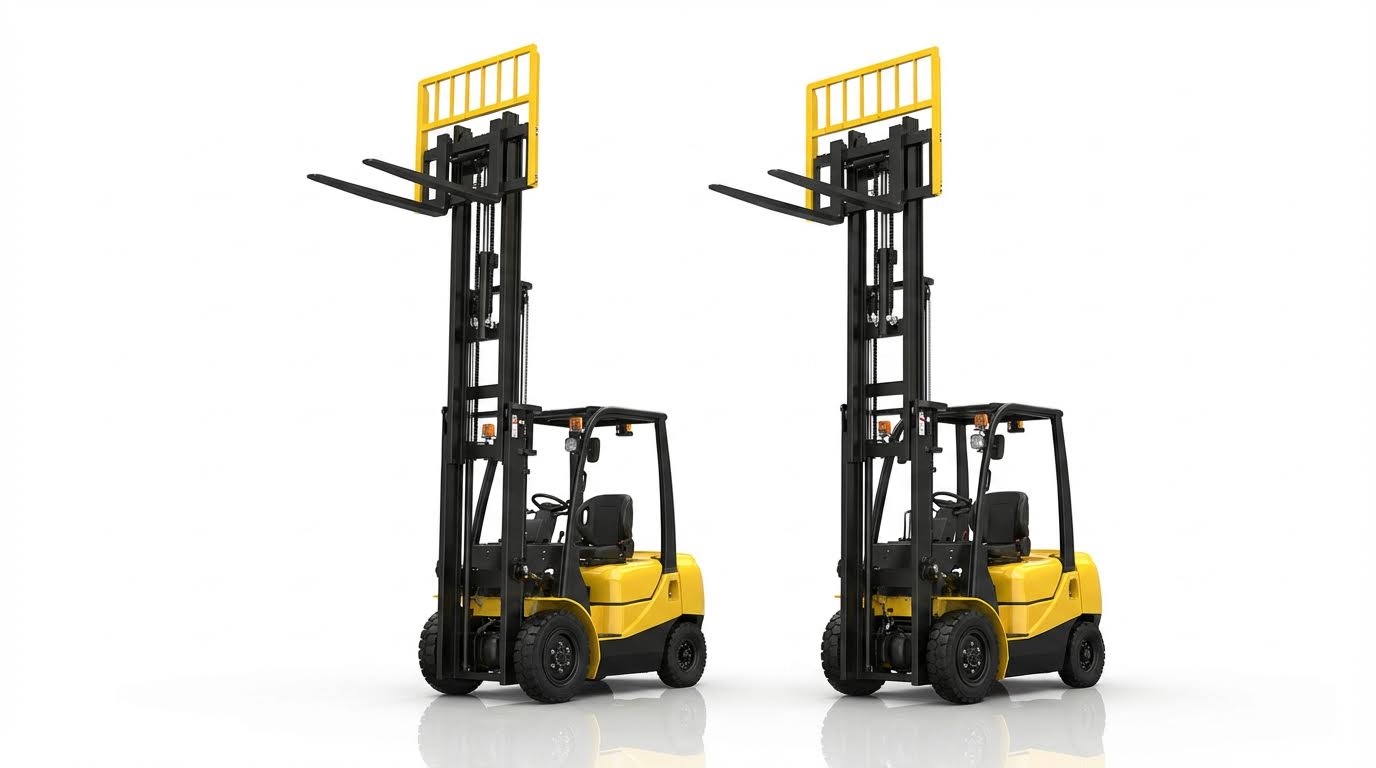
Empilhadeiras multidirecionais e garfos para paletes montados em carregadeiras permitem movimentar paletes extralongos em pátios apertados ou áreas externas acidentadas, onde as empilhadeiras contrabalançadas convencionais têm dificuldades com o raio de giro e as condições do terreno.
- Caminhões multidirecionais: Resolva problemas de largura de corredor e de manobra deslocando-se lateralmente ou diagonalmente com a carga.
- Garfos montados na carregadeira: Manusear cargas longas, pesadas ou irregulares em ambientes externos onde pás carregadeiras ou manipuladores telescópicos já estejam em uso.
| Tipo de equipamento | Capacidade típica | Melhor para… | Impacto Operacional |
|---|---|---|---|
| Empilhadeira multidirecional | Capacidades entre 1,800 e 25,000 kg; alturas de elevação superiores a 4 m. Faixa de desempenho | Paletes compridas, madeira, aço ou painéis em corredores estreitos. | Permite o deslocamento longitudinal ao longo da lateral do caminhão, reduzindo a largura do corredor em comparação com caminhões convencionais ao planejar como içar cargas de paletes extralongas em estantes. |
| Garfos para paletes montados em carregadeiras | Comprimento dos dentes entre 1,200 e 2,400 mm; largura do carro superior a 1,800 mm Guia de garfo da carregadeira | Pátios externos, feixes de tubos, vigas pré-fabricadas, paletes compridos em terreno irregular | A carroceria larga proporciona melhor estabilidade lateral; porém, é necessário consultar as tabelas de estabilidade da carregadeira para cada altura e alcance da lança. |
- Como os caminhões multidirecionais ajudam: Elas se movem longitudinalmente, lateralmente e diagonalmente, permitindo que a carga permaneça no sentido longitudinal do chassi enquanto o caminhão se desloca lateralmente, reduzindo drasticamente a largura necessária do corredor para paletes longos em comparação com empilhadeiras contrabalançadas padrão. Otimização de corredores.
- Zoneamento de segurança: Como cargas longas oscilam transversalmente durante o deslocamento lateral, as instalações devem definir zonas de exclusão de pedestres e limites de velocidade reduzidos em áreas de tráfego misto ao utilizar caminhões multidirecionais. Práticas de segurança.
- Geometria dos garfos montados na carregadeira: Os dentes forjados fixos proporcionam uma geometria previsível para cargas paletizadas, enquanto os dentes oscilantes opcionais são adequados para fardos irregulares que precisam se acomodar nivelados em terrenos irregulares. Tipos de dentes.
- Verificações de estabilidade para carregadores: Os engenheiros devem verificar a capacidade nominal da carregadeira para uso com garfos na altura e alcance pretendidos da lança, visto que paletes longos geralmente ficam mais distantes da caçamba e podem exceder rapidamente os limites de estabilidade se os operadores se esticarem demais. estabilidade da carregadeira.
Quando trocar empilhadeiras padrão por empilhadeiras multidirecionais?
Considere empilhadeiras multidirecionais quando o comprimento do seu palete ou pacote mais longo for próximo ou maior que a largura do corredor, ou quando os operadores realizarem frequentemente manobras em vários pontos. Se manobrar com cargas longas obriga regularmente a uma folga inferior a 300-400 mm nas extremidades do corredor, uma empilhadeira multidirecional geralmente oferece uma solução mais segura e eficiente.
💡 Nota do Engenheiro de Campo: Em armazéns apertados, frequentemente vejo operadores "trapaceando", levantando paletes longos mais alto para liberar espaço nas estantes durante curvas fechadas. Empilhadeiras multidirecionais eliminam essa tentação, permitindo que a carga se desloque lateralmente a uma altura baixa e estável.
Integração com transportadores, AGVs e sistemas automatizados
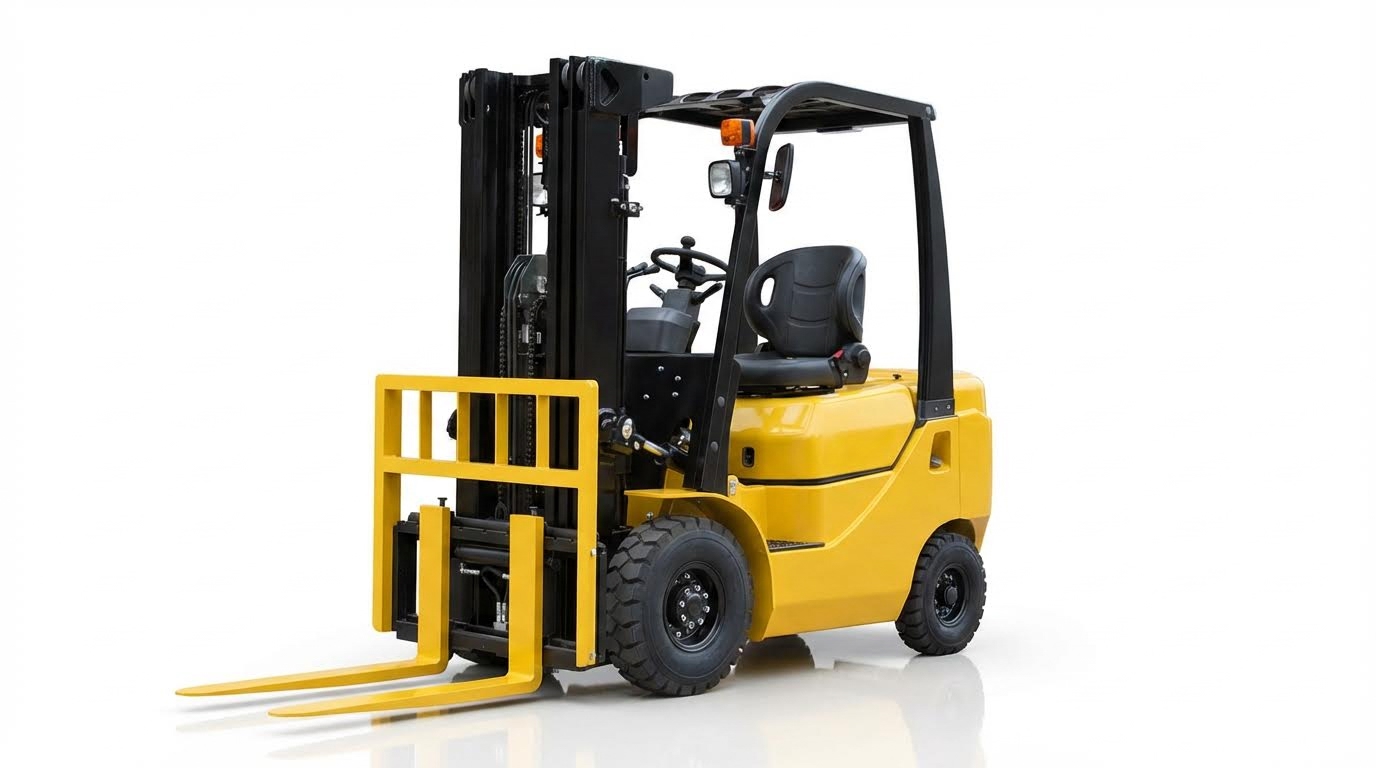
A integração de empilhadeiras e acessórios para cargas longas com esteiras transportadoras, AGVs e outros sistemas de automação exige alturas, larguras e lógica de controle compatíveis para que paletes extralongos sejam transferidos suavemente, sem enroscar, tombar ou exigir interação humana insegura.
- Geometria em primeiro lugar: Ajuste a largura, a altura e as condições de entrada da esteira transportadora à geometria do palete e do garfo.
- Segundo controle: Utilize controle de zona e sensores para manter cargas longas separadas e estáveis.
| Aspecto do projeto | Diretrizes típicas de engenharia | Impacto operacional para paletes longos |
|---|---|---|
| Largura do transportador | Largura do palete + cerca de 100–150 mm; para um palete de 1,200 mm de comprimento transportado longitudinalmente, a largura típica da esteira transportadora é de cerca de 1,350 mm. Diretriz de largura | Proporciona tolerância de rastreamento e folga lateral para que paletes extralongos não se esfreguem ou subam nas estruturas laterais. |
| Inclinação do rolo | Mantenha pelo menos três roletes sob cada travessa de palete; com espaçamento de aproximadamente 75 a 100 mm para paletes com longarinas, e até 100 a 150 mm para paletes com fundo completo. Espaçamento de suporte | Impede a curvatura excessiva dos paletes entre os roletes e reduz o risco de fissuras na plataforma em grandes vãos. |
| Altura de entrada/saída | Ajuste a altura da empilhadeira, do AGV ou da mesa elevatória com uma tolerância de aproximadamente ±10 mm; utilize placas de entrada cônicas e folgas verticais de 3 a 5 mm. Design de interface | Reduz o impacto nos pontos de transferência e evita que os paletes fiquem presos ao serem colocados no chão com paletes extralongos. |
| Comprimento da zona (pressão zero) | O comprimento da zona é ligeiramente maior que o palete mais comprido, normalmente o comprimento do palete + 200–300 mm. Dimensionamento de zonas | Mantém os paletes compridos separados para que nunca se toquem, mesmo com saliências ou embalagens flexíveis. |
- Resistência do transportador de rolos: Paletes extralongas impõem momentos fletores e cargas dinâmicas maiores, portanto, os vãos de apoio devem permanecer dentro dos limites de deflexão admissíveis da palete, normalmente abaixo de L/200, para evitar deformações ou rachaduras permanentes. Critérios de deflexão.
- Zonas de aproximação para caminhões: As vias de acesso para empilhadeiras junto às esteiras transportadoras devem oferecer uma área livre de 1,500 a 3,000 mm para que os operadores possam alinhar a empilhadeira e posicionar paletes longos sem desalinhamento. Isso é crucial para determinar a melhor forma de içar cargas de paletes extralongas para a automação com segurança. Requisito de avental.
- Acumulação de pressão zero: A divisão da esteira em zonas controladas independentemente evita o contato entre paletes; sensores param as zonas a montante antes do impacto, protegendo cargas longas, flexíveis ou com saliências contra telescopagem ou deslocamento. Controle de zona.
- Equipamentos de segurança: Cordas de parada de emergência, proteções fixas ao redor dos acionamentos e
Considerações finais para o manuseio seguro e em conformidade de cargas longas
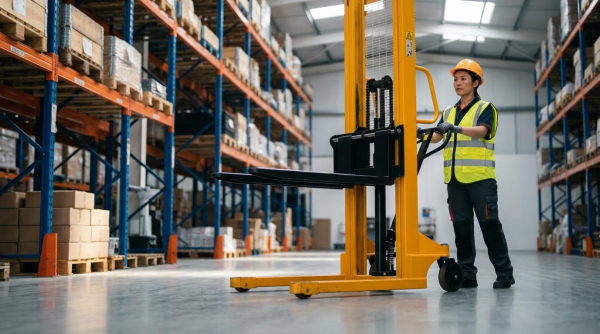
O manuseio seguro e em conformidade com as normas de paletes extralongos se resume a três pontos: respeitar os limites do centro de carga, padronizar as práticas de uso da empilhadeira e adequar o equipamento à rota e à interface. Esta seção transforma a teoria de "como levantar paletes extralongos" em regras práticas para o dia a dia.
Transforme regras de projeto em trabalho padrão.
Procedimentos operacionais padrão, tanto escritos quanto visuais, são a maneira mais rápida de tornar o manuseio seguro de cargas longas repetível em diferentes turnos e locais.
- Defina famílias de paletes: Agrupe os paletes por comprimento, largura e tipo de entrada – Permite pré-definir regras de propagação e inserção de garfos.
- Corrigir inserção mínima de garfo: Documente os valores de “profundidade ≥80%” em mm para cada tipo de palete – Elimina as suposições no caminhão.
- Lista de equipamentos aprovados: Mapeie os caminhões, implementos e rotas permitidos para cada palete – Evita sobrecarregar máquinas com desempenho insatisfatório.
- Incluir verificações do centro de carga: Adicione um exemplo simples de L/2 − D em cada SOP – Lembra aos operadores por que a entrada em águas rasas é perigosa.
- Especifique a inclinação do mastro e a altura de deslocamento: Exija cargas baixas (≈100–200 mm) e mastro ligeiramente recuado durante o deslocamento – Melhora a estabilidade para cargas longas.
Exemplos de itens de trabalho padrão a serem incluídos
Apresente fotos de inserção de garfos "OK" versus "Não OK", diagramas das aberturas de garfo permitidas para cada palete e uma tabela simples da massa máxima de carga versus o comprimento do palete para seus caminhões mais comuns.
💡 Nota do Engenheiro de Campo: Quando formalizamos os Procedimentos Operacionais Padrão (POP) para paletes longos, a maior conquista foi proibir o levantamento apenas com inclinação para movimentações curtas. A maioria dos tombamentos com paletes de 3 a 4 metros ocorria em deslocamentos de menos de 10 metros, onde os operadores achavam que a inserção completa "não valia a pena". Coloque essa regra por escrito.
Utilize recursos visuais e sensores para orientar os operadores.
Sinais visuais e percepção sensorial básica reduzem drasticamente os erros de julgamento ao decidir como levantar cargas de paletes extralongas em corredores movimentados.
- Marcações na ponta do garfo: Pinte linhas de inserção de 80% e 100% nos dentes da ferramenta. Os operadores conseguem ver num relance se estão suficientemente profundos.
- Marcas de referência de transporte: Marque as distâncias comuns entre os garfos no carro – Ajuda a alinhar os garfos sob as longarinas ou blocos de forma consistente.
- Linhas de piso e de prateleiras: Utilize linhas pintadas para pontos de parada e centros de paletes – Reduz abordagens desalinhadas em relação a racks e esteiras transportadoras.
- Sensores de carga: Em vias de alto risco, utilize sensores de carga e inclinação para emitir alarmes quando a capacidade nominal ou o limite for excedido. Adiciona uma proteção contra mudanças de paletes ou cargas.
- Detecção de proximidade: Sensores na entrada da esteira transportadora ou nas bordas da doca podem reduzir a velocidade dos caminhões automaticamente – Reduz o impacto das cargas em paletes extralongas.
Estudos relataram uma economia de 4 a 7 segundos por manuseio de palete quando os operadores utilizavam auxílios visuais, resultando em uma economia de 1.1 a 1.9 horas por caminhão por turno, além de melhorar a precisão e a segurança no posicionamento. Melhorias em tempo e precisão proporcionadas por auxílios visuais.
Alinhar treinamento, licenciamento e supervisão com os riscos de cargas longas.
O treinamento e a supervisão devem abordar explicitamente o comportamento com cargas longas; o treinamento genérico para operadores de empilhadeira não é suficiente para paletes extralongos.
- Treinamento baseado em cenários: Inclua exercícios com paletes de 3 a 4 m, cargas descentralizadas e inserção parcial – Os operadores sentem como a estabilidade muda.
- Módulos específicos para cada anexo: Treinamento em posicionadores hidráulicos, garfos extensíveis e caminhões multidirecionais – Cada um altera o centro de carga e o manuseio.
- Interfaces de esteira transportadora e AGV: Ensine a velocidade de aproximação correta, o alinhamento e as verificações de transferência de controle – Evita engarrafamentos e danos aos paletes durante as transferências.
- Ciclos de atualização: Realize pequenas atualizações após incidentes quase fatais ou com novos tipos de paletes – Mantém atualizadas as habilidades de "como levantar paletes extralongos".
- Auditorias de supervisão: Os supervisores devem verificar aleatoriamente a profundidade de inserção dos garfos, a inclinação do mastro e a altura de deslocamento. Reforça os padrões no local.
Tópicos essenciais para adicionar ao seu treinamento de longa duração.
Explique o conceito de centro de carga (L/2 − D) em esboços simples, mostre paletes quebrados reais devido à inserção superficial e oriente os operadores na leitura das placas de capacidade em centros de carga não padronizados.
💡 Nota do Engenheiro de Campo: Em câmaras frigoríficas e pátios externos, insisto em breves treinamentos de reciclagem sazonais. Pisos escorregadios e paletes longos alteram as distâncias de frenagem e o comportamento dos veículos; os operadores devem reaprender as velocidades e os ângulos de direção seguros quando as condições mudam.
Projete interfaces e rotas, não apenas o elevador.
O manuseio seguro de cargas longas depende de todo o percurso e do projeto da interface: corredores, portas, docas e esteiras transportadoras devem ser adequados à combinação de palete e caminhão.
- Verifique as folgas nos corredores e nas portas: Confirme se cargas longas podem girar e passar com uma folga lateral de pelo menos 100 a 150 mm. Evita impactos laterais e danos nas bordas do palete.
- A largura e a altura da esteira devem ser compatíveis: Os transportadores de rolos devem ter 100 a 150 mm a mais de largura do que o palete e alturas compatíveis com uma tolerância de ±10 mm. Evita enroscos e transferências de alto impacto.
- Providencie espaço no avental: Manter uma largura livre de 1,500 a 3,000 mm nas áreas de circulação de materiais em esteiras transportadoras e docas. Permite alinhar paletes compridos em esquadro.
- Zonas de controle da esteira transportadora: Utilize acumulação de pressão zero com zonas 200–300 mm mais compridas que a palete – Impede que paletes compridos façam a ligação entre zonas.
- Pontos de pressão da guarda: Instale protetores de dedos de 100 a 150 mm e botões de parada de emergência com cordão ao longo das esteiras transportadoras. Protege o pessoal envolvido na movimentação de cargas longas.
Os transportadores de rolos para paletes extralongos devem ter pelo menos três rolos sob cada guia de palete, com espaçamento entre rolos tipicamente de 75 a 100 mm para paletes com longarinas e até 100 a 150 mm para paletes com fundo completo. Consulte as orientações para dimensionamento e interface do transportador.
💡 Nota do Engenheiro de Campo: A maioria das quebras "misteriosas" de paletes que investiguei não ocorreu na estante em si, mas sim em interfaces defeituosas onde um palete comprido atravessava um vão ou batia em um degrau. Corrija as interfaces e a taxa de danos na sua estante geralmente também diminui.
Respeite sempre os limites de centro de carga e capacidade.
Para paletes extralongos, respeitar o centro de carga e os limites da placa de capacidade é imprescindível; pequenas alterações na profundidade de inserção ou na saliência podem fazer com que você ultrapasse os limites de segurança.
- Recalcular quando o comprimento mudar: Qualquer alteração no comprimento do palete (L) ou na inserção do garfo (D) exige uma nova verificação eficaz do centro de carga. Impede sobrecargas silenciosas.
- Leve em consideração a saliência e a assimetria: Considere as cargas salientes e as cargas altas e descentradas como uma distância extra da face do garfo – Eles deslocam o centro de gravidade combinado para a frente.
- Reduzir a taxa de atualização para anexos: Posicionadores hidráulicos e garfos extensíveis aumentam a saliência frontal – Utilize sempre a placa de capacidade específica para o acessório.
- Proibir exceções para "apenas uma carona rápida": Aplique as mesmas regras para desvios curtos e para percursos longos – A maioria dos incidentes ocorre em movimentos "rápidos".
- Utilize o tipo de caminhão correto: Para paletes muito compridas ou pesadas, especifique empilhadeiras multidirecionais ou garfos montados em carregadeiras com tabelas adequadas. Empilhadeiras contrabalançadas não são soluções universais.
O centro de carga efetivo para paletes extralongos é igual à distância da face dos garfos até o centro de gravidade combinado, geralmente expressa como (L/2 − D) mais qualquer deslocamento devido a saliências ou assimetrias. Se esse valor exceder a capacidade nominal da empilhadeira, os operadores devem reduzir a massa da carga, aumentar o alcance dos garfos ou selecionar equipamentos projetados para cargas longas. Consulte as diretrizes da OSHA sobre centros de carga e capacidade .
💡 Nota do Engenheiro de Campo: Recomendo considerar as placas de capacidade como limites rígidos e os cálculos de engenharia como sua margem de segurança. Se seus cálculos rápidos indicarem que você está "perto", considere que ultrapassou o limite e mude o método – garfos mais profundos, caminhão diferente ou divida a carga.
Juntando tudo: uma lista de verificação simples para paletes longos
Uma lista de verificação rápida, para ser utilizada no caminhão, ajuda os operadores a aplicar tudo isso sempre que precisarem decidir como levantar cargas de paletes extralongas.
- Passo 1: Confirme o tipo e o comprimento do palete – Escolha o procedimento operacional padrão (POP) correto e a abertura do garfo.
- Passo 2: Verificar a capacidade do caminhão e dos implementos – Garantir a capacidade nominal no centro de carga previsto.
- Passo 3: Defina a abertura dos garfos e planeje a inserção – A meta é atingir ≥80% da profundidade do palete, sob as longarinas ou blocos.
- Passo 4: Posicione-se em esquadro e insira-o na marca – Mantém o centro de gravidade dentro do triângulo estável.
- Passo 5: Levante ligeiramente, incline para trás e desloque-se lentamente com a carga baixa. Minimiza o risco de tombamento e oscilação.
- Passo 6: Coloque com cuidado e totalmente apoiado em prateleiras ou esteiras transportadoras – Evita danos por impacto e formação de pontes.
💡 Nota do Engenheiro de Campo: Ao incorporar esta lista de verificação no caminhão (cartão plastificado ou lembrete na tela) e complementá-la com marcações claras no piso e Procedimentos Operacionais Padrão (POPs), o manuseio de paletes longos deixa de ser "mágica" e se torna apenas mais um processo controlado.
Considerações finais para o manuseio seguro e em conformidade de cargas longas
O manuseio seguro de paletes longos depende de considerar a geometria, a capacidade e o projeto da rota como um sistema integrado. O comprimento do palete, a inserção dos garfos e a saliência definem o centro de carga efetivo. Essa distância determina se o layout de um caminhão, acessório ou esteira é seguro ou já ultrapassou os limites de estabilidade. Quando as equipes ignoram essa integração, o risco de tombamento e falhas de paletes aumenta rapidamente.
As operações devem incorporar as regras principais ao trabalho padrão. Defina famílias de paletes, inserção mínima dos garfos em milímetros e combinações aprovadas de empilhadeira e implemento. Utilize marcações nos garfos, referências de carro e linhas no piso para que os operadores visualizem a inserção e o espaçamento corretos, em vez de terem que adivinhar. Reforce isso com treinamento que explique o conceito de L/2 − D em desenhos simples e mostre exemplos reais de falhas.
Os engenheiros também devem projetar corredores, portas, docas e esteiras transportadoras considerando o palete mais longo, e não o palete médio. A largura correta da esteira, o espaçamento entre os roletes e o comprimento da zona evitam a formação de pontes e danos por impacto. Empilhadeiras multidirecionais ou garfos montados em carregadeiras devem ser utilizados para lidar com paletes muito longos ou pesados, onde empilhadeiras contrabalançadas padrão têm dificuldades.
A melhor prática é clara: considere a placa de capacidade como um limite rígido, recalcule o centro de carga sempre que a geometria mudar e nunca permita exceções "rápidas". Quando os equipamentos, procedimentos e treinamentos da Atomoving seguem essas regras, o manuseio de paletes longos torna-se estável, previsível e em conformidade com as normas.
Perguntas frequentes
Que equipamento posso usar para levantar um palete extralongo?
Para levantar um palete extralongo, você pode usar equipamentos especializados de movimentação de materiais projetados para cargas superdimensionadas. As opções incluem:
- Alcance caminhões: Ideais para corredores estreitos e empilhamento em grandes alturas, esses equipamentos podem manusear paletes mais longos com os ajustes adequados dos garfos.
- Empilhadeiras para pedestres: Adequado para levantar e transportar paletes compridos em armazéns com espaço limitado.
- Trens rebocadores: Útil para movimentar paletes múltiplos ou de grandes dimensões por longas distâncias dentro de uma instalação.
Para uma operação segura, certifique-se de que a capacidade de carga do equipamento corresponda ao peso do seu palete. Guia de Alternativas para Empilhadeiras.
Como posso mover um palete extralongo com segurança sem usar uma empilhadeira?
Mover manualmente um palete extralongo exige técnica adequada e trabalho em equipe. Siga estes passos:
- Usar um carrinho de 4 rodas or caminhão de mão para suportar o peso do palete e manter o equilíbrio.
- Certifique-se de que duas ou mais pessoas estejam envolvidas para distribuir o esforço de forma igualitária.
- Mantenha as costas retas e levante usando as pernas para evitar lesões.
Evite torcer as costas durante o processo e carregue o palete próximo ao corpo para maior estabilidade. Para soluções de nível profissional, considere alugar equipamentos adequados de fornecedores confiáveis como a Atomoving.