
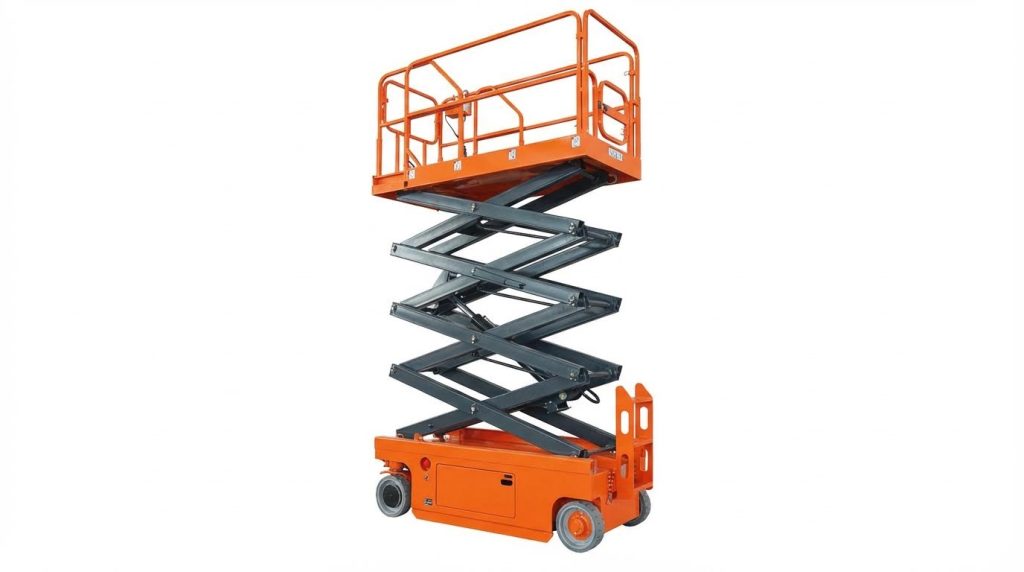
OSHA and ANSI requirements for aerial work platforms define how these machines must be designed, used, and maintained to control fall, tip-over, and electrical risks. This guide explains what is the OSHA standard for aerial platform, how ANSI A92 fits in, and what safety practices you actually need on site.
From boom lifts and scissor platform to modern MEWPs, we break down the key regulations into practical engineering controls, inspection routines, and training expectations so you can keep operators safe and stay compliant on every job.
Engineering Controls, Inspections, And Training Programs
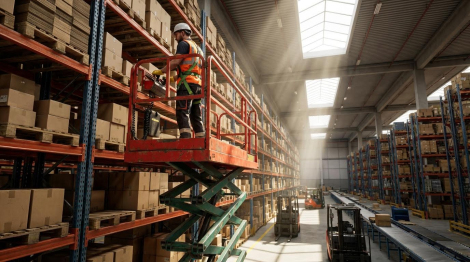
Engineering controls, systematic inspections, and structured training programs are how you turn OSHA and ANSI aerial lift rules into daily, low-risk operations instead of paperwork. They operationalize what is the OSHA standard for aerial platform into checklists, sensors, and people skills.
At this stage, compliance is less about buying a “safer” machine and more about how you inspect, configure, and operate the equipment every single shift. OSHA requires employers to maintain aerial lifts in safe condition and ensure only trained, authorized operators use them under 1910.67 and 1926.453. OSHA aerial lift guidance
| Control Area | Primary Standard(s) | Key Requirement | Operational Impact |
|---|---|---|---|
| Daily inspections | OSHA 1910.67, 1926.453 | Inspect vehicle and lift components before each shift; tag out defects | Catches leaks, cracks, and sensor failures before operators go up |
| Load / tilt sensing | ANSI A92.20 | Active load and tilt sensors, alarms, and cutouts | Prevents overload and out-of-slope tip-over incidents |
| Operator training | OSHA 1926.21, 1926.20(b); ANSI A92.22, A92.24 | Formal theory + hands-on evaluation; only trained operators | Reduces misuse, shock, and crush incidents in tight work zones |
| Supervisor / rescue plans | ANSI A92.22 | Safe Use Plan and written Rescue Plan | Ensures someone on site can manage emergencies at height |
💡 Field Engineer’s Note: If you only have budget or time to improve one area this year, fix your pre-start inspection process. Most aerial platform accidents I have investigated started with a defect everyone “noticed” but nobody formally checked or tagged out.
Daily pre-start inspections and functional tests
Daily pre-start inspections and functional tests are mandatory front-line controls that keep scissor platform compliant with OSHA and ANSI and prevent operators from taking unsafe machines into the air. They convert “what is the OSHA standard for aerial work platforms” into a repeatable, 10–15 minute routine.
OSHA requires employers to keep aerial lifts in safe operating condition and to test controls daily before use. OSHA aerial lifts eTool also specifies that defective lifts must be removed from service until repaired. Daily aerial lift checklist guidance expands this into a practical list of checks.
| Inspection Item | What To Check | Typical Metric / Condition | Operational Impact |
|---|---|---|---|
| Hydraulic, fuel, battery leaks | Look under chassis and around hoses/tanks | No visible drips, wet hoses, or puddles | Prevents hydraulic failure and fire risk at height |
| Fluid levels | Hydraulic oil, engine oil, coolant, fuel | Within manufacturer marks on dipsticks/sight glasses | Reduces mid-shift breakdowns during elevated work |
| Tyres and wheels | Tread, cuts, chunking, loose nuts | No damage; nuts fully seated; correct pressure if pneumatic | Maintains stability, especially on rough terrain |
| Guardrails and gates | Rails, toe boards, gates, latches | All components present, rigid, and self-closing | Maintains fall protection integrity |
| Placards and decals | Load charts, warnings, controls labels | Legible from normal operating position | Ensures operators know limits and emergency controls |
| Platform controls | Joysticks, switches, E-stop, deadman | No cracks, looseness, or sticking | Prevents unintended movement and runaway booms |
| Emergency stop | Function from platform and lower controls | Stops all motion immediately when pressed | Critical for entrapment and collision scenarios |
| Tilt and overload sensors | Indicator lights, alarms, cutout behavior | Alarms sound and functions cut when limits exceeded | Prevents operation in unsafe slope or overload conditions |
| Alarms and horn | Motion alarm, horn, any beacons | Audible/visible in ambient site noise | Warns ground workers and traffic of movement |
| Steering and drive | Directional control, speed response | Smooth, predictable motion with no jerks | Reduces collision risk in tight aisles |
| Brakes | Service and parking brakes | Machine holds on typical slopes (≤5–10%) | Prevents roll-away during elevation |
| Platform lift / lower | Full range of motion | Smooth travel, no surging or unusual noises | Indicates healthy hydraulics and structure |
| Work area | Drop-offs, overhead obstructions, weather | Surface firm, level; no overhead hazards | Reduces tip-over and collision from site conditions |
OSHA emphasizes that lift controls must be tested daily before use to confirm safe working condition, and only authorized personnel may operate aerial lifts. 29 CFR 1926.453
- Tag-out discipline: Defective lifts must be clearly tagged and locked out – this prevents “just one quick job” on unsafe machines.
- Shift-based timing: Inspections occur before each shift, not just once per day – this captures issues that appear mid-day or on night shifts.
- Competent person oversight: A competent person should periodically audit checklists – this keeps inspections from becoming “tick-box” exercises.
How long should a good pre-start check take?
On a typical boom or scissor lift, a disciplined operator usually needs 10–15 minutes to walk around, complete all checks, and perform functional tests. If this routinely takes under 5 minutes, they are probably skipping steps.
💡 Field Engineer’s Note: In cold storage (around 0°C or below), hydraulic oil thickens and small leaks shrink. Always cycle the boom and steering fully during pre-start. You will feel sluggish valves or weak pumps long before you see a visible leak.
Sensors, alarms, and control system safety (load/tilt)
Modern sensors, alarms, and control system cutouts are engineered safeguards that stop aerial work platforms from operating outside safe load or slope limits, directly supporting OSHA’s requirement to keep equipment stable and within rated capacity. They are how ANSI A92.20 turns risk into electronics.
ANSI A92.20 requires MEWPs to have active load-sensing devices that monitor the platform load and interrupt normal operation with alarms if overloaded. ANSI A92.20 MEWP guidance Tilt-sensing systems must alarm and disable boom/drive functions when the slope exceeds the machine’s limit.
| Safety Function | Relevant Standard | Typical Behavior | Operational Impact |
|---|---|---|---|
| Active load sensing | ANSI A92.20 | Monitors platform load; alarms and stops unsafe movements when overloaded | Prevents exceeding rated kg capacity and structural overload |
| Tilt sensor / slope cutout | ANSI A92.20 | Alarms and disables drive/boom when slope > rated limit | Reduces tip-over risk on ramps and uneven ground |
| Motion / drive alarms | ANSI A92.20, A92.22 | Audible alarm when machine moves or elevates | Warns nearby workers and pedestrians |
| Lower control override | OSHA 1926.453 | Lower controls override upper only in emergencies or with operator consent | Supports rescue while limiting unsafe interference |
| Insulated portion integrity | OSHA 1926.453; ANSI A92.2 | No modifications allowed that reduce insulating value | Maintains electrical protection near energized lines |
| Rough-terrain tyre requirements | ANSI A92.20 | Solid or foam-filled tyres; stability tested with deflated tyres | Improves stability if a tyre is damaged or soft |
| Wind-force design | ANSI A92.20 | Heavier chassis and reduced platform capacity for outdoor use | Maintains stability in higher wind conditions |
- Load sensors: These are not “advisory.” – If operators bypass or ignore them, you are operating outside ANSI design assumptions and OSHA’s safe condition requirement.
- Tilt alarms: Treat any tilt alarm as a red light, not background noise – continuing to work on a marginal slope compounds risk with every small movement.
- Alarm training: Operators must know what each alarm and indicator means – confusion in a noisy jobsite leads to alarms being ignored.
Why can’t we modify platforms or add custom attachments?
OSHA and ANSI treat unapproved structural or electrical modifications as a direct threat to load, stability, and insulation performance. Changes can invalidate the original design testing under ANSI A92.20 and A92.2 and may violate OSHA 1926.453, especially for insulated booms.
💡 Field Engineer’s Note: I have seen crews blame “oversensitive” load sensors when the platform would not lift. In every root-cause review, the problem was extra materials or an added tool rack. Design your work method around the sensor, not the other way around.
Operator, supervisor, and maintenance training standards
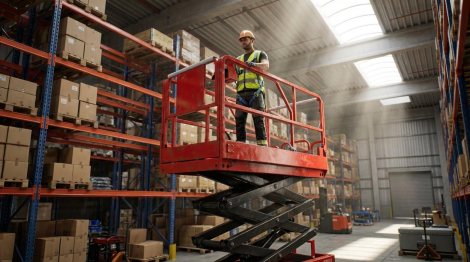
OSHA and ANSI require structured training for operators, supervisors, and maintenance personnel so that everyone who selects, uses, or services manual pallet jack understands both the machine and the standards that govern it. This is the human side of what is the OSHA standard for aerial work platforms.
OSHA construction standards 1926.20(b) and 1926.21 require employers to provide safety training and ensure only trained workers operate aerial lifts. OSHA aerial lift requirements ANSI A92.22 (Safe Use) and A92.24 (Training) then define how MEWP training must address updated group/type classifications, alarm systems, and rescue planning. ANSI A92 training overview
| Role | Key Training Content | Standards / Guidance | Best For… |
|---|---|---|---|
| Operators | Controls, pre-start checks, safe driving/elevation, fall protection, alarms, emergency lowering | OSHA 1910.67, 1926.453; ANSI A92.22, A92.24 | Anyone who physically operates MEWPs or aerial lifts |
| Supervisors | Safe Use Plans, site hazard assessment, MEWP selection, rescue plans, enforcement of rules | ANSI A92.22 | Foremen, site managers, safety leads |
| Maintenance technicians | Hydraulics, electrical systems, sensors, structural inspection, safe troubleshooting | OSHA maintenance duties; ANSI A92.20, A92.24 | Workshop and field service staff |
| Competent persons | Hazard recognition, inspection criteria, authority to correct hazards | OSHA competent person concept | Individuals overseeing daily inspections and corrective actions |
- Two-part training: ANSI A92.24 requires theory plus hands-on evaluation – paper tests alone do not qualify an operator.
- Refresher cycle: ANSI does not fix an expiry date, but many organizations use a 3-year refresher – this keeps skills aligned with new features like load/tilt sensors.
- Site-specific orientation: Even trained operators need site and model-specific briefings – controls, slopes, and power line hazards change from job to job.
- Emergency and rescue training: A92.22 calls for written Rescue Plans – crew members must know who operates lower controls and how to respond to entrapment or breakdown at height.
How training ties back to OSHA’s aerial platform standards
OSHA’s answer to “what is the OSHA standard for aerial work platforms” is spread across 1910.67, 1910.333(c
“”
Practical Implications And Final Compliance Takeaways
OSHA and ANSI aerial platform rules only work when engineering controls, inspections, and training act together as one system. Sensors and cutouts define the safe operating envelope. Daily inspections confirm that structure, hydraulics, tyres, and alarms still match that design. Training then ensures people respect those limits in real work conditions.
When any link is weak, risk rises fast. Skipped pre-start checks hide leaks, cracked welds, or failed sensors until the platform is already at height. Bypassed load or tilt devices remove the stability margin that ANSI A92.20 builds into MEWPs. Poor training turns alarms into background noise instead of clear stop signals.
Operations and engineering teams should treat aerial lifts like critical lifting equipment, not general tools. Standardize a 10–15 minute pre-start checklist for every shift. Enforce strict tag-out of defects. Prohibit unapproved structural or electrical modifications. Keep training current with actual models, site slopes, and nearby power lines.
If you need a single benchmark, ask this: would you ride this platform with your own family on board? If the answer is no, lock it out, fix the gaps, and update your procedures. That mindset keeps Atomoving aerial platforms, and every other unit on site, within OSHA and ANSI expectations.
Frequently Asked Questions
What is the OSHA standard for aerial lifts?
Aerial lifts fall under specific OSHA standards that address fall protection and safe operation. Employers can comply with OSHA’s fall protection requirements for aerial lifts in one of three ways: using a body belt with a tether anchored to the boom or basket, using a body harness with a tether, or implementing another approved fall restraint system. For more details, refer to OSHA Fall Protection Guidelines.
What fall protection is required by OSHA for an aerial lift?
OSHA requires employees working on aerial lifts to use proper fall protection systems. This includes either a body belt or body harness with a tether anchored to the boom or basket. These measures ensure the worker remains secured in the lift and minimizes the risk of falling. Learn more about these requirements in the OSHA Fall Protection Guidelines.
Does OSHA consider a scissor lift an aerial lift?
No, OSHA does not classify scissor lifts as aerial lifts. Instead, scissor lifts are considered scaffolds and must comply with scaffold safety standards. For further clarification, you can check the OSHA Scissor Lift Classification.
What are the OSHA requirements for elevated platforms?
For elevated platforms, OSHA mandates that any employee working on a surface with an unprotected edge 6 feet (1.8 meters) or more above a lower level must be protected from falling. Protection methods include guardrail systems, safety net systems, or personal fall arrest systems. Refer to the OSHA Elevated Platform Standards for comprehensive guidelines.