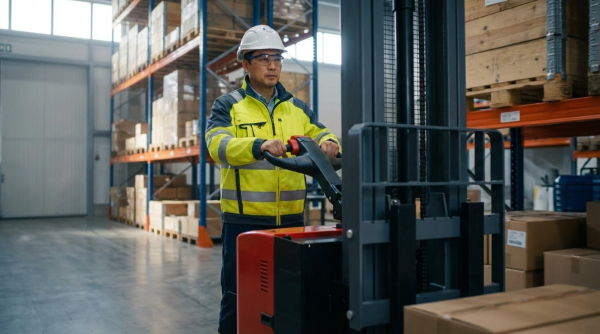
Walkie stacker capacity is the maximum load they can safely lift at a specified load center and height, but real usable capacity is often lower. This guide explains how much a walkie stacker can hold in practice, what reduces that number, and how to choose the right rating for your warehouse. You will learn how load center, lift height, floor conditions, and maintenance all interact to limit safe handling weight. If you are asking “how much can a walkie stacker hold,” this article gives you clear, engineer-tested answers in kg, mm, and meters.
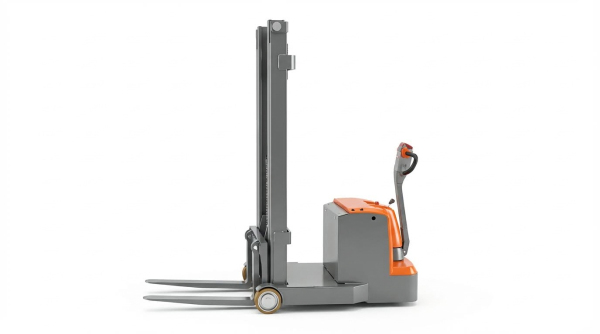
Understanding Walkie Stacker Rated Capacity
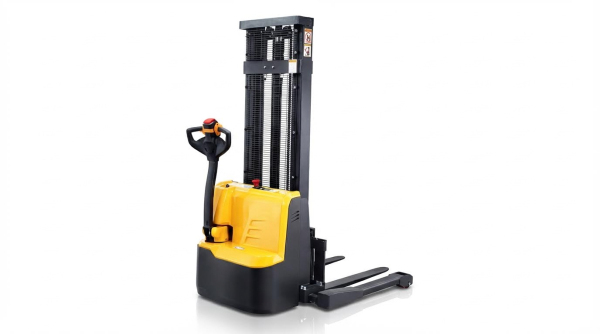
Walkie stacker rated capacity is the maximum load, in kg, that the truck can safely lift at a specified load center and lift height under ideal conditions. It answers the core question “how much can a walkie stacker hold” on paper, before real-world reductions.
Rated capacity is not a guess; engineers define it under controlled geometry and height so stability, hydraulics, and structure all stay within limits. Real loads, uneven floors, and worn components usually reduce how much you should actually pick.
Typical Capacity Ranges And Load Charts
Typical walkie stackers hold about 900–2,000 kg in rated capacity, but usable capacity depends on load center and lift height shown on the manufacturer’s load chart. To know how much can a walkie stacker hold for your pallet, you must read that chart at your actual conditions.
Manufacturers test machines at a standard load center, usually 600 mm, with a compact, uniform load and a specific mast height. The resulting numbers go into the capacity plate and detailed load chart, which you must treat as hard limits, not suggestions.
| Rated Capacity Step | Approx. Mass (kg) | Typical Load Center (mm) | Typical Lift Height Range (mm) | Operational Impact / Best For… |
|---|---|---|---|---|
| 2,000 lb class | ≈900 kg | 600 | ≈3,655–4,000 | Light pallets, short racks, small warehouses with low top beams. |
| 2,200 lb class | ≈1,000 kg | 600 | ≈3,655–4,875 | General small-goods handling where pallet weights stay below 1,000 kg. |
| 3,000 lb class | ≈1,360 kg | 600 | ≈4,000–4,900 | Mixed loads, moderate-height racking, typical distribution centers. |
| 4,000 lb class | ≈1,800 kg | 600 | ≈4,875–5,400 | Heavier product, higher racks, but needs careful derating at full height. |
| Up to 4,400 lb | ≈2,000 kg | 600 | ≈4,000–5,400 | Maximum-duty walkie stackers for dense storage and heavy pallets. |
Many walkie stackers are catalogued at discrete rating steps such as 900 kg, 1,000 kg, 1,360 kg, and 1,800–2,000 kg at a 600 mm load center based on standardized testing. Engineers treat these as absolute maxima at that geometry, not “rough guidance.”
Lift height is just as important as the kg number. Typical walkie stacker lift heights run from about 3,655 mm up to 5,400 mm, with common mast options around 4,875 mm, 4,899 mm, and 5,400 mm listed in product data. As mast height increases, the residual capacity at the top of the stroke usually drops.
| Example Mast Type | Approx. Max Lift Height (mm) | Typical Rated Capacity at 600 mm Load Center | Residual Capacity Trend at Full Height | Operational Impact |
|---|---|---|---|---|
| Short single mast | ≈1,600 | Up to ≈1,500–2,000 kg | Modest derating | Good when you only stack to low mezzanines or first beam level. |
| Standard dual mast | ≈2,500–4,000 | ≈1,000–2,000 kg | Noticeable derating at top | Common in warehouses; must check chart for top beam picks. |
| High dual / triple mast | ≈4,500–5,500 | ≈1,000–1,800 kg | Strong derating at top | Used for high racking; heavy loads may be restricted to lower levels. |
The load chart ties all this together. It shows allowable load mass versus lift height at the rated load center, and sometimes also versus different load centers. For example, a truck rated 1,500 kg at 600 mm may only allow around 1,200 kg when the load center moves out to about 762 mm due to leverage.
How to read a walkie stacker load chart
Most charts have lift height on one axis and load center or capacity on the other. To know how much can a walkie stacker hold for your job, find your required lift height, then read across to your actual load center. The intersection gives the maximum safe kg you can lift under ideal floor and maintenance conditions.
💡 Field Engineer’s Note: When surveying a site, I always ask for the heaviest pallet and the highest rack beam, then walk to the truck and physically point at the capacity chart. If the chart does not show that height and that load center clearly, I treat the truck as undersized until proven otherwise.
Rated Capacity vs Real-World Usable Capacity
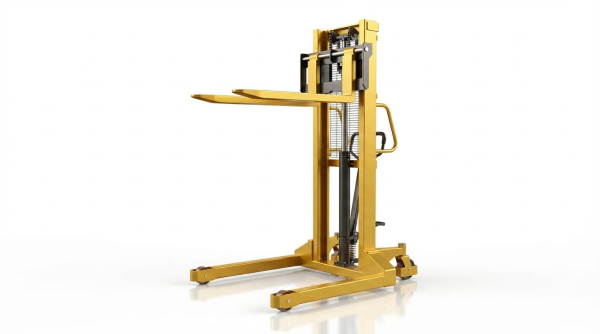
Rated capacity is the laboratory maximum, while real-world usable capacity is what you can safely lift once you factor in pallet size, load shape, floor conditions, and equipment wear. In practice, how much can a walkie stacker hold is often 10–30% less than the nameplate rating.
The nameplate assumes a compact, uniform load with its center of gravity exactly at the standard load center, usually 600–610 mm, on a flat, solid floor at a specified lift height under ideal conditions. Real warehouses rarely match that ideal, so engineers and safety managers apply derating in daily use.
| Factor | Rated Condition (Nameplate) | Real-World Deviation | Typical Effect on Usable Capacity | Operational Impact |
|---|---|---|---|---|
| Load center | ≈600–610 mm | Pallets or loads extending to ≈700–800 mm | Example: 1,500 kg rated may drop to ≈1,200 kg at ≈762 mm due to leverage. | Long or unbalanced loads must be lighter than the plate suggests. |
| Lift height | Specified “rated” height, often mid-stroke | Frequent picks near maximum mast height (e.g., 4,000–5,400 mm) | Capacity at full height can be significantly lower than at low lift because the center of gravity moves up. | Heavy pallets may be restricted to lower beams only. |
| Floor and slope | Level, firm, smooth floor | Slopes, joints, potholes, or rough concrete | Dynamic shocks and grade reduce practical safe load; e.g., a 4,000 lb (≈1,800 kg) unit may be limited to ≈1,000 kg on a 3° slope with further derating per degree due to stability. | Do not treat ramp work as “same capacity”; always assume lower safe kg on inclines. |
| Load shape and packaging | Compact, rigid, shrink-wrapped cube | Loose, tall, or offset loads with high centers of gravity | Usable capacity reduced to prevent tipping or product collapse, even if weight is within rating. | Operators often self-derate to avoid damage, effectively lowering throughput capacity. |
| Hydraulics and power | New, fully charged system | Worn pumps, low oil, discharged batteries | Truck may fail to reach full height or lift near-rated loads, functionally derating capacity even though the plate is unchanged. | Slow or incomplete lifts at high racks; operators start avoiding heavy pallets. |
| Dynamic effects | Static test, no motion | Braking, turning, and ramp transitions with load raised | Momentary effective load increases, so safe static capacity must be reduced to preserve stability margins. | Training and procedures must limit travel speed and turn radius under load. |
From an engineering standpoint, rated capacity is a structural and stability boundary, while usable capacity is a risk-managed working limit. Many safety programs effectively cap day-to-day loads to 80–90% of the rated figure to cover variations in pallet weight, packaging, and operator behavior when calculating safe capacity.
Maintenance plays a big role in keeping usable capacity close to rated capacity. Worn hydraulic components, leaks, or low oil reduce lifting speed and sometimes prevent reaching full stroke, while neglected mast chains and rollers add friction and instability that erode practical limits. Regular inspections of hydraulics, brakes, and batteries help preserve the original performance envelope.
💡 Field Engineer’s Note: If a truck “feels” weak at height, I tell supervisors to treat that as a capacity alarm, not just a comfort issue. Slow or incomplete lifting usually means hydraulic or battery problems that have already reduced your real safety margin, even if the nameplate still promises full kg.
Selecting The Right Walkie Stacker Capacity
Selecting the right walkie stacker capacity means sizing for your heaviest real load at its actual load center and lift height, then adding safety and duty-cycle margins so the truck never operates at its limit.
When teams ask “how much can a walkie stacker hold,” the correct answer is not just the nameplate number. It is the residual capacity at your pallet size, lift height, floor conditions, and usage pattern.
Calculating Safe Load Requirements
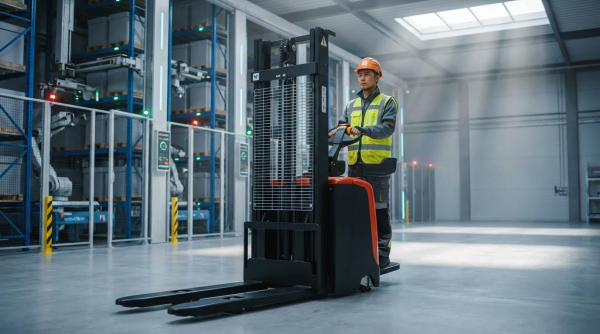
Calculating safe load requirements for a walkie stacker starts with your heaviest real pallet, then checks load center and lift height against capacity charts, and finally adds a safety margin so the truck is never run at 100%.
This is the structured way to translate “how much can a walkie stacker hold” into a safe, engineering-based capacity requirement for your specific loads and racking heights.
| Step | What You Do | Typical Value / Range | Operational Impact |
|---|---|---|---|
| 1. Define heaviest load | Include product, pallet, packaging, dunnage | Often 800–1,600 kg per pallet | Ensures the stacker can handle true worst-case, not just average loads |
| 2. Measure load center | Measure from fork face to load’s center of gravity | Common rating: 600 mm load center reference | Long, overhanging loads push the center out and reduce usable capacity |
| 3. Determine required lift height | Measure top rack beam plus clearance | Typically 3,655–5,400 mm reference | Higher masts derate capacity; you must check the chart at your height |
| 4. Read manufacturer load chart | Find capacity at your load center and lift height | Typical nameplate: 1,000–2,000 kg at 600 mm reference | Gives the real answer to “how much can a walkie stacker hold” in your use case |
| 5. Consider floor and slopes | Note any ramps, rough joints, or uneven slabs | Typical max grades: ≈5% loaded, 8% empty reference | Slopes and rough floors introduce dynamic loads and effectively reduce safe capacity |
| 6. Account for maintenance state | Check hydraulics, chains, wheels, and battery | Worn or poorly maintained units lose practical capacity reference | A tired truck may struggle near its rated load and height |
| 7. Add safety margin | Increase required capacity above calculated worst-case | Commonly +10–20% margin reference | Prevents running at 100% and covers weight variation and operator error |
- Start from the pallet, not the brochure: Weigh or estimate the heaviest full pallet, including pallet mass – this prevents undersizing when packaging or product density increases over time.
- Measure real load center: Half the load length is only valid for compact, evenly packed pallets – overhanging or uneven loads shift the center and reduce how much the walkie stacker can safely hold.
- Use the capacity chart, not just the nameplate: Check capacity at your exact lift height and load center – this avoids overloads at upper rack levels where derating is strongest.
- Include ramps and dock plates: Identify any regular slopes or dock transitions – this mitigates the extra dynamic forces that can tip a near-capacity load.
- Verify power and hydraulics: Confirm battery condition and hydraulic health – this avoids situations where the truck stalls or slows badly with heavy, high lifts.
How to measure load center on your pallet
1) Measure pallet length in the fork direction. 2) If the load is even and flush, load center ≈ half that length. 3) If the load overhangs or is top-heavy, visually estimate the true center of gravity and measure to that point. Use this value when reading the capacity chart.
💡 Field Engineer’s Note: When I audit sites, the biggest mismatch is tall loads on long pallets. A stacker rated 1,500 kg at 600 mm may drop to around 1,200 kg when the real load center is closer to 760 mm at full height. Always validate your longest pallet at top rack against the chart before buying.
Applying Safety Margins And Duty Cycle Limits
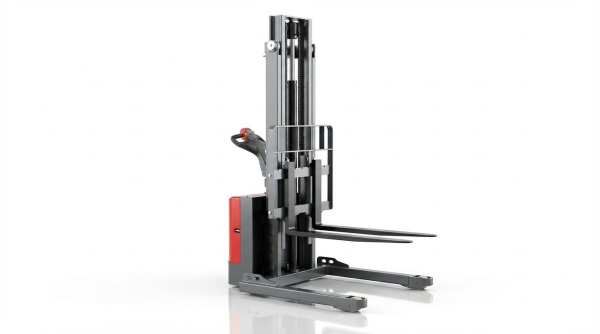
Applying safety margins and duty cycle limits means derating the theoretical capacity by about 10–20% for safety, then checking that your shift pattern and lift frequency will not overheat or over-stress the truck.
This is where you turn “how much can a walkie stacker hold” from a static number into a safe, sustainable capacity that the machine can handle hour after hour without failures.
| Factor | Typical Engineering Guideline | Example Effect On Capacity | Operational Impact |
|---|---|---|---|
| Basic safety margin | Select capacity 10–20% above worst-case load reference | 1,200 kg worst-case → choose ≈1,400–1,500 kg rating | Truck rarely runs above 80–90% of its true capability, improving stability and life |
| Inclines and slopes | Derate on slopes; example: 15% per additional degree above 3° reference | ≈1,800 kg flat → ≈1,000 kg at 3° slope equivalent | Heavier pallets may need to stay on level floors or use different equipment |
| High lift duty cycle | Limit proportion of lifts to >4,000 mm per hour reference | Frequent full-height lifts may require upsizing capacity class | Reduces motor and hydraulic overheating in busy, high-bay operations |
| Battery and power system | Lower voltage and high discharge reduce practical lift performance reference | Near end-of-shift, truck may struggle with near-rated loads | May require higher-capacity battery, opportunity charging, or derated working load |
| Maintenance condition | Hydraulic and structural wear reduce usable capacity over time reference | Truck rated 2,000 kg may be treated as 1,600–1,800 kg in practice | Good maintenance lets you safely work closer to the rated figure when needed |
- Use 80–90% as your real working limit: Plan operations so normal loads stay below about 80–90% of the capacity at the relevant load center and height – this builds in a buffer for weight variation and operator error.
- Derate for slopes and rough floors: If you regularly cross ramps or damaged slabs, assume a lower safe mass than the flat-floor rating – this mitigates dynamic shocks that can momentarily exceed rated capacity.
- Match capacity to duty cycle: High-frequency, full-height lifting generates more heat and wear – select a higher capacity class or more robust mast if many lifts exceed 4,000 mm.
- Consider battery technology: Lithium-ion systems hold voltage better over a shift than lead-acid reference – this keeps lifting performance consistent when approaching the upper end of your safe capacity.
- Review capacity annually: As product lines change and pallets get denser, re-check your worst-case loads – this avoids silent creep where today’s pallets quietly exceed what the truck was originally sized for.
Simple sizing example using safety and duty limits
1) Heaviest pallet including pallet: 1,050 kg. 2) Load center: 650 mm (slightly longer pallet). 3) Required lift height: 4,500 mm. 4) From the capacity chart, a 1,500 kg / 600 mm truck might give ≈1,200 kg at 650 mm and 4,500 mm. 5) Apply 15% safety margin → target working load ≈1,020 kg. 6) Because your worst-case is 1,050 kg and you have frequent high lifts, step up to the next capacity class so your real working loads sit around 80–85% of the chart value.
💡 Field Engineer’s Note: If you are on the fence between two capacity classes, the higher class usually wins over a 5–7 year life. It runs cooler, spends less time at its limits, and tolerates future increases in pallet weight, which answers “how much can a walkie stacker hold” with comfortable headroom instead of nervous guessing.
Final Thoughts On Walkie Stacker Load Capacity
Walkie stacker capacity is not a single fixed number. It is a balance between geometry, stability, power, and maintenance. Load center, pallet length, and lift height set the basic leverage on the mast. Floor quality, slopes, and driving style then add dynamic forces that can push the truck past its safe stability envelope.
Engineers define rated capacity under tight, ideal conditions. Operations teams must then convert that into a lower, usable capacity that fits real pallets, racks, and duty cycles. The safest sites treat the capacity chart as law, apply at least a 10–20% margin, and keep normal loads below 80–90% of the chart value at the actual load center and height.
To choose and use a walkie stacker safely, start from your heaviest pallet and highest rack, not the brochure headline. Confirm residual capacity on the chart, derate for slopes and rough floors, and maintain hydraulics and batteries so performance stays consistent. When in doubt between sizes, step up a class. That extra headroom improves safety, uptime, and long-term cost. With this disciplined approach, your Atomoving walkie stacker can work inside its true engineering limits while your operators stay protected.
Frequently Asked Questions
What is the weight capacity of a walkie stacker?
The weight capacity of a walkie stacker can vary depending on the model and manufacturer. Typically, walkie stackers are designed to handle loads ranging from 1,000 kg to 2,000 kg. For specific capacities, it’s best to refer to the equipment specifications provided by the manufacturer. Forklift Types Guide.
How high can a walkie stacker lift?
Walkie stackers are generally capable of lifting loads to heights of up to 6,100 mm. This makes them suitable for tasks that require stacking at significant heights within warehouses or distribution centers. Walkie Stacker Safety.
Does a walkie stacker count as a forklift?
Yes, a walkie stacker is considered a type of forklift. It falls under the category of powered industrial trucks and requires proper certification for operation, according to OSHA standards. OSHA Certification Guide.