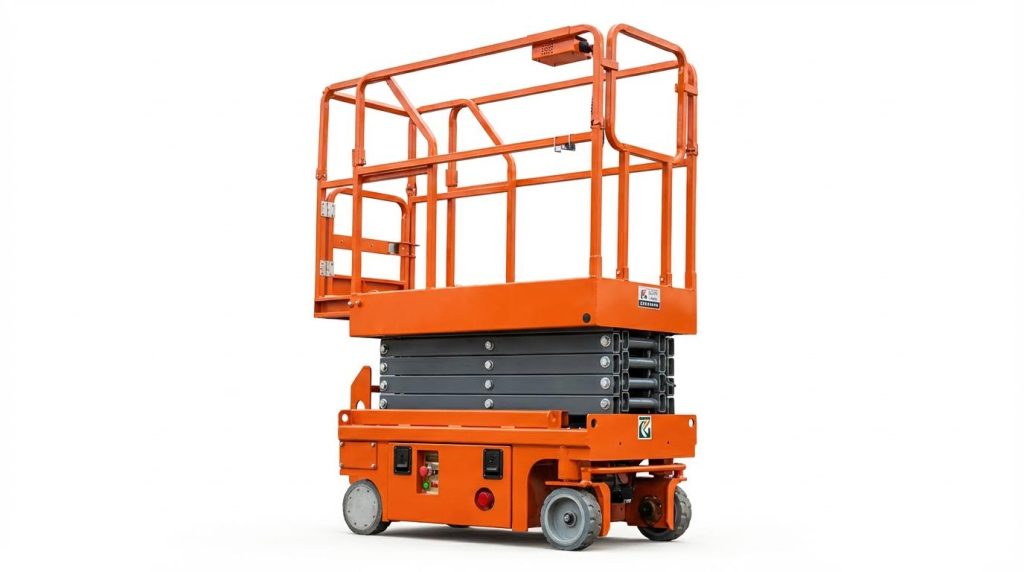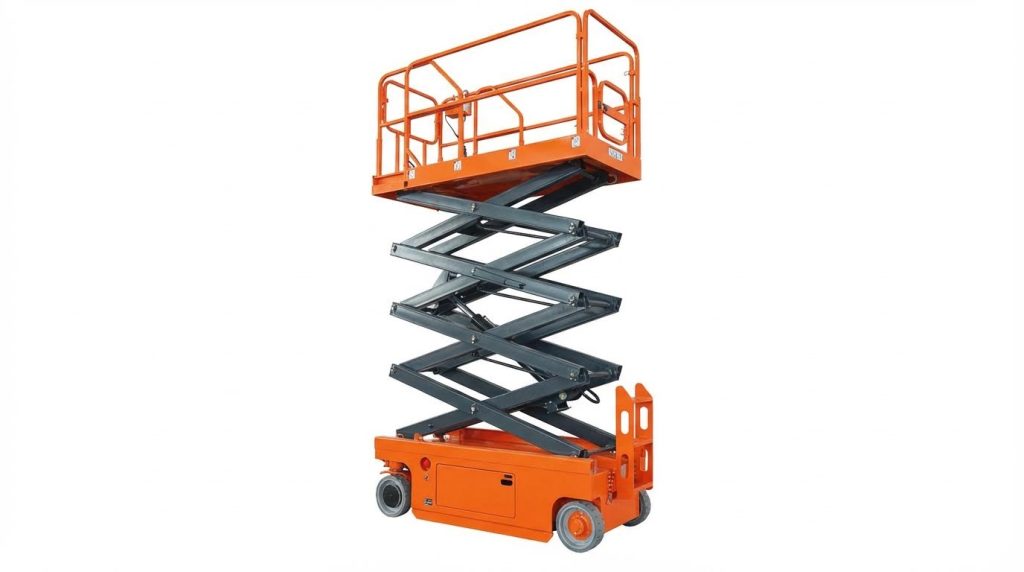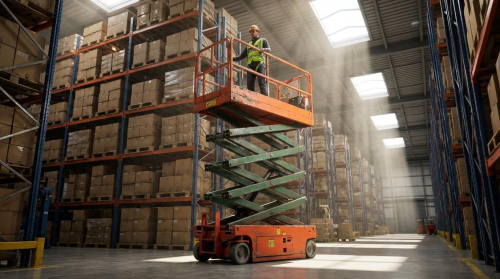
Small electric scissor lifts usually weigh between about 360 kg and 1,800 kg, depending on height, platform size, and battery system. This guide explains how much a small scissor lift weighs, what “small” really means, and how that weight translates into real floor load on your slab or mezzanine so you can choose safely for your facility.
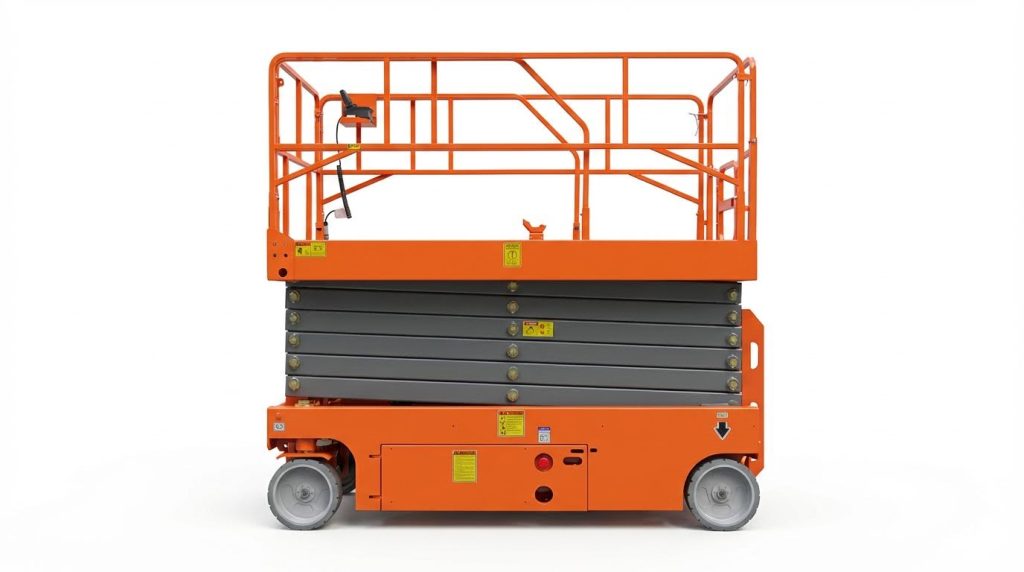
What Counts As A Small Scissor Lift And How Much It Weighs
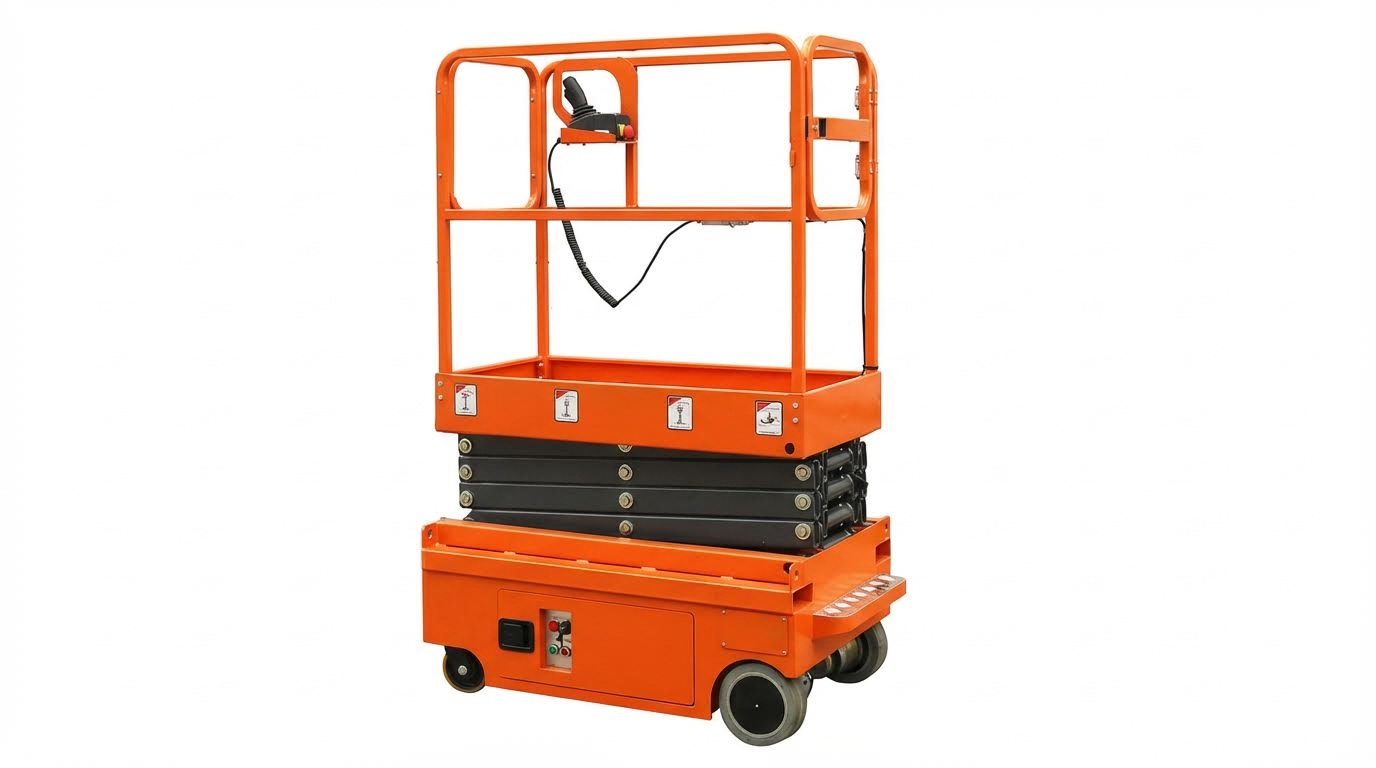
A “small” scissor lift is typically a compact, electric unit under about 1,000 kg designed for indoor or light-duty work, and most common models weigh roughly 360–1,000 kg. Understanding where your lift sits in this weight band is the first step in answering how much does a scissor platform lift weigh for your building and floor limits.
In practice, small scissor lifts fall into a few clear categories: ultra‑light push‑around units, compact self‑propelled electrics, and the heavier end of “small” that approach 1,000 kg but still fit through standard doors. Weight rises with working height, platform size, and battery system, so you always trade mass for reach and runtime.
Typical weight ranges by lift category
Small scissor lifts generally range from about 360 kg for push‑around units up to roughly 1,000 kg for compact self‑propelled models, with many low‑level electrics around 680–970 kg. These weights keep them towable and suitable for standard warehouse and commercial floors.
| Small scissor lift type | Typical working height range | Typical weight range | Typical platform capacity | Operational impact / Best for… |
|---|---|---|---|---|
| Push‑around vertical / mini scissor | Up to ~4–6 m | 360–420 kg (manufacturer data) | Up to ~300 kg (push‑around models) | Very light; easy to manually reposition on finished floors and in elevators. |
| Compact self‑propelled electric (low‑level) | Approx. 4–8 m | 810–990 kg for examples GTJZ0307LD & GTJZ0407LD (spec examples) | ~200 kg rated load (tracked small lifts) | Common “small scissor” for warehouses and retail; balances reach, capacity, and floor loading. |
| Small electric scissor (general category) | Approx. 4–12 m working height (technical review) | Often around 680–970 kg for compact examples (weight range) | 150–320 kg typical platform capacity (capacity data) | 1–2 operators plus tools; suitable for indoor maintenance and light installation work. |
| Upper end of “small” electric scissor | Up to ~6.5 m working height | Approx. 970 kg for a compact 6.5 m model (model example) | ~230 kg load capacity (capacity example) | Still “small” in footprint but heavy enough to demand proper floor load checks. |
Across these categories, the common thread is compact footprint and electric power, not just weight alone. Most people asking how much does a scissor platform weigh are really trying to confirm if a 360–1,000 kg machine will be safe on mezzanines, tiled corridors, or suspended slabs.
- Below ~500 kg: Ultra‑light units – best when you must protect delicate floors or use passenger elevators.
- 500–900 kg: Typical compact electrics – most common for warehouses, retail, and light industrial sites.
- 900–1,200 kg: Upper end of “small” – needs more careful slab and transport checks but still indoor‑friendly.
💡 Field Engineer’s Note: When a spec sheet lists weight without batteries or options, your real in‑service weight can be 5–15% higher. Always include batteries, platform extensions, and any installed accessories when you check elevator and floor load limits.
Working height, dimensions, and weight relationships
For small scissor lifts, working height, platform size, and stowed dimensions all push weight upward, so higher reach and wider decks almost always mean a heavier machine. You trade kilograms for extra meters of reach, more deck space, and longer runtime.
| Parameter | Example small lift data | Effect on weight | Operational impact |
|---|---|---|---|
| Overall dimensions (push‑around) | Approx. 1,300 mm (L) x 740 mm (W) x 1,650–1,750 mm (H) (push‑around spec) | Compact frame and smaller steel sections keep weight down near 360–420 kg. | Fits through narrow doors and in small elevators; easy manual maneuvering. |
| Overall dimensions (compact self‑propelled) | 1.20 m (L) x 0.76 m (W) x 1.68 m (H) for GTJZ0307LD; 1.34 m (L) x 0.79 m (W) x 1.71 m (H) for GTJZ0407LD (dimension data) | Longer and slightly wider chassis plus drive motors and larger batteries push weight to 810–990 kg. | Still passes standard 0.8–0.9 m doors but requires better floor capacity and ramp planning. |
| Working height (small electric class) | Typical 4–12 m working height, with one compact example at 6.5 m (height range) (model example) | Taller scissor stacks require heavier arms, pins, and base frames, increasing total mass. | More reach for HVAC, lighting, and racking work, but higher point loads on slabs. |
| Platform capacity | Typical 150–320 kg for small electric scissor lifts (capacity range) | Higher capacities need stronger, heavier steel sections and larger cylinders. | Supports 1–2 people plus tools; higher rated capacity slightly increases lift self‑weight. |
| Power system | 24 V / 1.2 kW electric lift motors and DC drive on compact scissor lifts; 12 V / 0.8 kW motors on push‑around units (power options) | Larger battery packs and drive systems add significant weight versus small 12 V hydraulic packs. | Self‑propelled units are heavier but remove manual pushing and improve productivity. |
From an engineering standpoint, the scissor geometry and steel section sizes must scale with the maximum extension height and load, which is why a 6.5 m, 230 kg‑capacity lift comes in around 970 kg, while a low‑reach push‑around can stay near 360–420 kg. The scissor mechanism also spreads load across the base frame to avoid local overstress, but the total mass still ends up on four small wheel contact patches.
How working height translates into “real” building impact
As working height and platform capacity increase, you usually move from ultra‑light push‑around units to heavier self‑propelled machines. That changes not just how much does a aerial platform weigh, but also whether your floors, elevators, and doorways are suitable. Always check stowed width against door openings and compare total lift plus load weight to your slab rating, especially on mezzanines or suspended concrete.
“”
Selecting The Right Small Scissor Lift For Your Facility
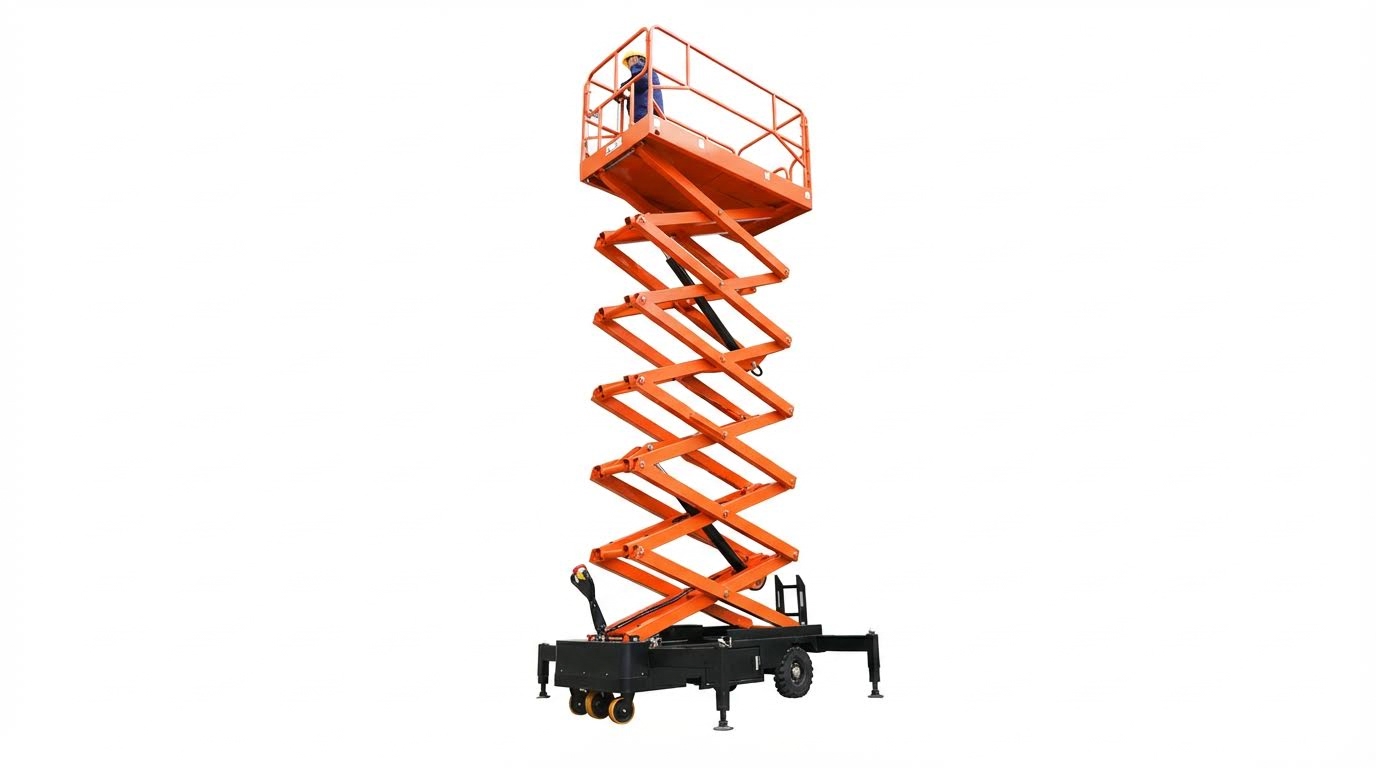
Selecting the right small scissor lift starts with weight, floor capacity, and access limits, then moves to working height and platform capacity. This section turns “how much does a small scissor lift weigh” into clear facility selection rules.
- Clarify your jobs: List typical working heights and tasks – prevents over‑specifying an oversized, overweight lift.
- Check floor and slab limits: Compare slab rating to lift + load – avoids structural damage and cracking.
- Audit access routes: Measure doors, lifts, ramps, aisles – ensures the machine can actually reach the work zone.
- Match platform capacity: Align kg rating with people + tools – keeps you inside safe working load.
- Balance weight vs. stability: Heavier often means more stable – but only if your floor and access can handle it.
💡 Field Engineer’s Note: In multi‑storey buildings, I always check the weakest link: suspended slabs, mezzanines, and freight lifts. If any of these cannot safely carry the lift’s full weight plus load, the model is rejected immediately.
Matching lift weight to building and slab capacity
Matching lift weight to building and slab capacity means checking that the lift plus its rated load stay within the floor’s kg/m² rating, with a safety margin.
| Lift Type | Typical Machine Weight | Typical Platform Capacity | Typical Working Height | Operational Impact |
|---|---|---|---|---|
| Push-around small scissor lift | 360–420 kg (manufacturer data) | Up to 300 kg (manufacturer data) | Approx. 4–6 m | Very low floor load; well suited to lighter mezzanine slabs. |
| Compact self‑propelled electric lift | 810–990 kg for examples GTJZ0307LD / GTJZ0407LD (manufacturer data) | 200 kg typical (manufacturer data), 150–320 kg common range (technical review) | 4–12 m typical working height (technical review) | Heavier point load; check warehouse slab rating of about 610 kg/m² carefully. |
| General “small” electric scissor (low-level) | ≈680–1,360 kg (1,500–3,000 lbs) (size and weight guide) | 150–320 kg typical capacity (technical review) | Up to about 12 m working height | Standard indoor workhorse; normally fine on modern warehouse slabs if loads are checked. |
Modern warehouse floors often had design ratings around 610 kg/m² (≈125 lbs/ft²). Guidance for lift selection stressed that the floor must support the combined weight of lift and load.
- Combined load: Lift weight + people + tools + materials – this total drives floor loading.
- Contact area: Smaller wheel footprints increase kg/m² – critical on suspended slabs and mezzanines.
- Dynamic effects: Travel, braking, and steering add short‑term load peaks – reason to keep a safety margin.
Quick rule of thumb: floor check workflow
Step 1: Get the lift’s maximum weight (machine + rated load) from the data plate or manual.
Step 2: Confirm the weakest floor or slab rating on the intended route (including mezzanines and ramps).
Step 3: Ensure the floor rating comfortably exceeds the worst‑case load; if in doubt, consult a structural engineer.
When facility teams ask “how much does a small scissor lift weigh,” they should immediately follow with “and can my floor safely carry that weight plus the load.” That pairing avoids cracked slabs and long‑term structural damage.
Maneuverability, access constraints, and applications
Maneuverability, access constraints, and applications determine whether a given small scissor lift can physically reach and safely work in your real building, not just on paper.
| Parameter | Typical Small / Compact Electric Lift | Operational Impact |
|---|---|---|
| Stowed width | ≈0.74–0.79 m for compact and push‑around units (manufacturer data) | Passes through standard 0.8–0.9 m internal doors if frames are clear. |
| Stowed length | ≈1.2–1.34 m for compact self‑propelled; ≈1,300 mm for push‑around (manufacturer data) | Short length helps with tight corridors and service rooms. |
| Stowed height | ≈1.65–1.75 m for push‑around; 1.68–1.71 m for compact self‑propelled (manufacturer data) | Fits under most 2.1–2.4 m ceilings and through low door headers. |
| Turning radius | ≤1.5 m for compact electric lifts; some have zero inside radius (technical review) (size and weight guide) | Can pivot in narrow aisles; ideal for dense racking or office fit‑outs. |
| Travel speed | ≈0.8–1.2 m/s for compact electric scissor lifts (technical review) | Slow, controlled movement improves safety in crowded indoor areas. |
| Noise level | Below 70 dB(A) for small electric units (technical review) | Suitable for hospitals, offices, and live retail environments. |
- Indoor maintenance (HVAC, lighting, electrical): Small electric scissors with 4–12 m working height and 150–320 kg capacity suit 1–2 technicians with tools. Technical reviews highlighted this typical use case.
- Retail and event setups: Compact, low‑noise lifts work well where public access and noise limits matter. Application guides cited painting and event setup as typical tasks.
- Warehouse aisles: Narrow widths around 0.76 m and tight turning radii keep operations inside standard pallet rack aisles without hitting uprights.
Access check checklist (doors, lifts, ramps)
Step 1: Measure the narrowest doorway width and height on the route; compare with stowed width and height from the lift spec sheet.
Step 2: Measure tightest aisle or turning zone; ensure it exceeds the machine’s turning radius plus a clearance margin of at least 200–300 mm.
Step 3: Check gradients on ramps; small electric scissors are designed for near‑level floors, so steep ramps can be a hard limit.
💡 Field Engineer’s Note: When space is tight, I prioritise the smallest footprint and turning radius that still delivers the working height and capacity. A slightly lighter push‑around lift often beats a heavier self‑propelled unit in old buildings with narrow corridors and sensitive floors.
In practice, once you know how much does a small scissor lift weigh for your short‑listed models, you should map each machine against three things: floor rating, access geometry, and real applications. The “best” lift is the one that clears all three with a safe margin, not just the one with the highest platform height.
Final Thoughts On Small Scissor Lift Weights And Floor Loads
Small scissor lift weight is not just a catalog number. It drives floor loading, access limits, and real job safety. As working height, platform size, and battery capacity increase, structure and power systems get heavier. That extra steel and energy storage improves reach, runtime, and stability, but it also raises point loads on slabs and mezzanines.
Engineers and facility teams must treat each lift as a concentrated load on four small wheel patches, not a uniform load across the floor. The safe approach is simple. First, define the work: height, tools, and people. Second, select the smallest lift that meets those needs. Third, check the worst‑case combined weight against the weakest slab, ramp, or elevator on the route, and keep a clear safety margin.
When in doubt, choose lighter push‑around units for older or uncertain structures and reserve heavier self‑propelled lifts for verified warehouse slabs. Always use in‑service weight, including batteries, options, and full platform load. If the numbers do not work, change the lift, not the assumptions. That discipline lets you use compact electric scissors, including Atomoving units, with confidence while protecting both people and buildings.
Frequently Asked Questions
How much does a small scissor lift weigh?
Small scissor lifts typically weigh between 1,600 lbs (725 kg) and 2,000 lbs (907 kg). The exact weight depends on the model and its specifications. For example, a 13-foot scissor lift may weigh around 1,950 lbs (885 kg).
What factors influence the weight of a small scissor lift?
The weight of a small scissor lift is influenced by several factors, including:
- Platform height and size
- Material used in construction (steel or aluminum)
- Load capacity and stability features
For more details, you can refer to industry resources like Mini Scissor Lift Specs.
How do I choose the right trailer for transporting a small scissor lift?
To transport a small scissor lift, consider the weight and dimensions of the equipment. Use a trailer with adequate load capacity and reinforced ramps. Ensure the trailer is compatible with the lift’s weight, which can range from 1,600 lbs (725 kg) to 2,000 lbs (907 kg).