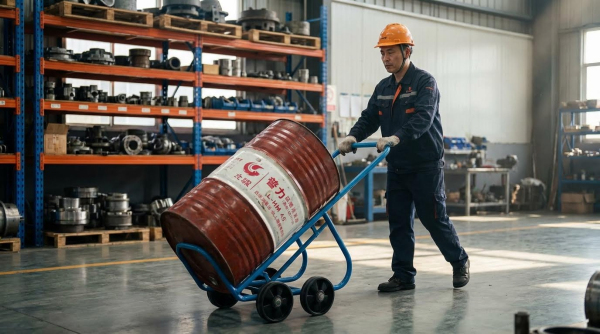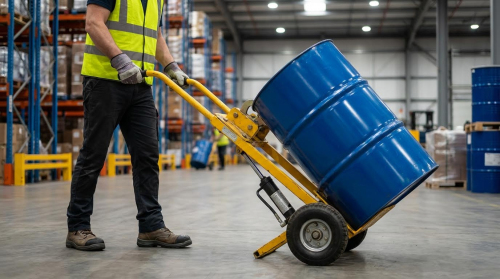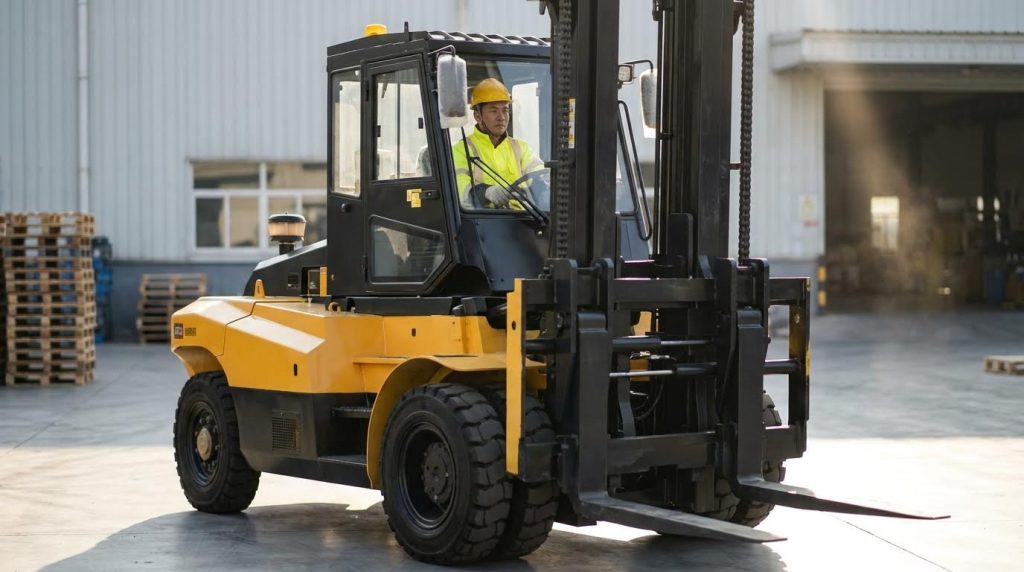
This guide explains how much diesel in full tank of forklift you can actually use, how long it will run, and how to size tanks correctly. You will see typical tank capacities by truck size and class, runtime formulas, and the engineering limits that come from safety, stability, and regulations. By the end, you can estimate shift runtime in hours from tank liters with realistic margins for real-world sites.
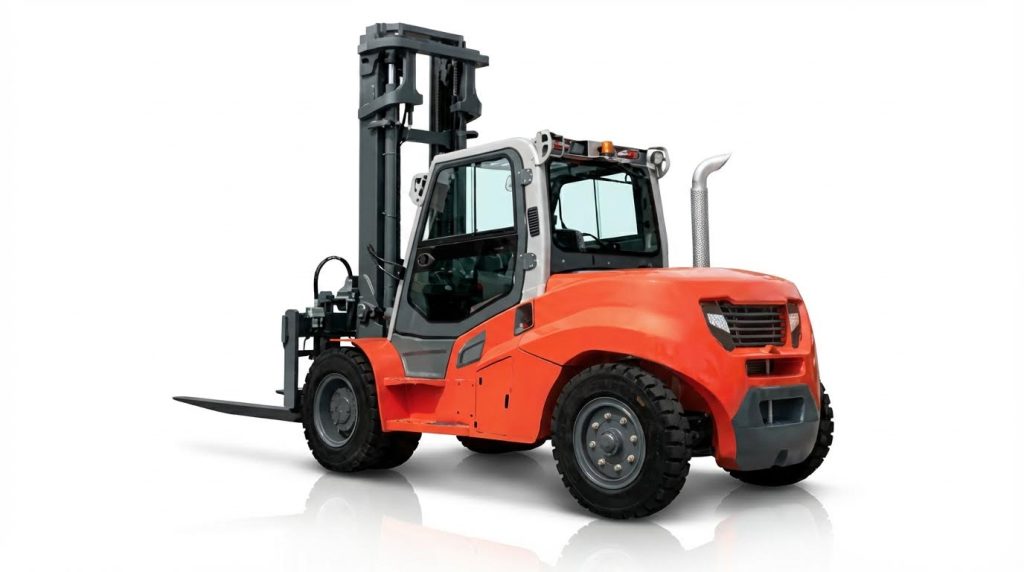
Typical Diesel Forklift Tank Sizes And Ranges
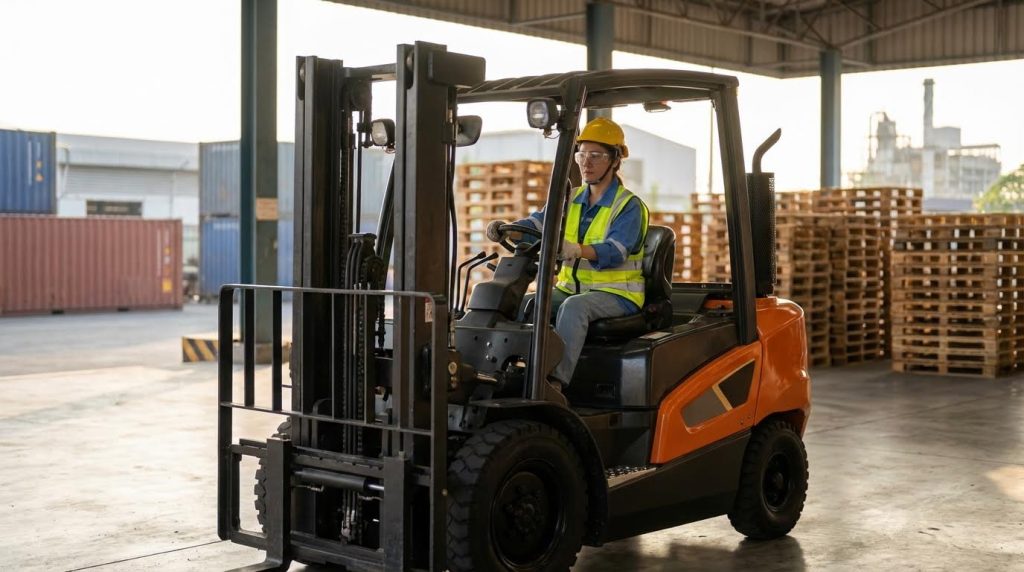
Typical diesel forklifts carry about 57–132 liters of fuel, but heavy container handlers can exceed 450 liters, so “how much diesel in full tank of forklift” depends heavily on weight class and truck class. This section converts those classes into clear mm/m/kg‑based buying logic.
Capacity by weight class and duty rating
By weight class, most diesel forklifts fall into three clear tank-size bands that roughly match engine size and duty severity. Use this to sanity-check any spec sheet when you ask how much diesel in full tank of forklift for your fleet.
| Lift Capacity Band | Typical Use / Duty | Typical Tank Size (L) | Approx. Tank Size (gal) | Operational Impact |
|---|---|---|---|---|
| 1,500–2,200 kg (3,000–5,000 lb) | Light-duty warehouse, loading docks | 57–76 L | 15–20 gal | Covers a standard 8 h shift at ~1.5–2.0 gal/h without refuel for most sites (data) |
| 2,700–6,800 kg (6,000–15,000 lb) | Medium-duty yard, manufacturing, outdoor loading | 76–114 L | 20–30 gal | Supports higher burn of ~2.0–2.5 gal/h for a full shift with margin (data) |
| ≥6,800 kg (≥15,000 lb) | Heavy-duty steel, timber, ports, intensive use | 114–132 L+ | 30–35 gal+ | Matches large engines and near-rated lifting, often still giving 1 full shift runtime (data) |
- Light-duty (up to ~2,200 kg): 57–76 L tanks – Best when trucks mainly shuttle manual pallet jack on flat, short runs.
- Medium-duty (up to ~6,800 kg): 76–114 L tanks – Suited to mixed indoor/outdoor, frequent lifting, longer cycles.
- Heavy-duty (above ~6,800 kg): 114–132 L+ tanks – Required where loads are near rated capacity for most of the shift.
How this ties to runtime
With typical consumption of 1.5–3.0 gal/h (5.7–11.4 L/h), a 57–132 L tank usually delivers most of an 8 h shift before refueling, assuming safe-fill of ~95% and a 10–15% runtime margin. Reference
💡 Field Engineer’s Note: When trucks work on ramps or rough yards all day, treat them as “one class heavier” for tank sizing. Fuel burn spikes on gradients and broken concrete, so a 76 L tank that is fine on flat floors can suddenly feel undersized outdoors.
Capacity by forklift class (IV, V, VII, VIII)
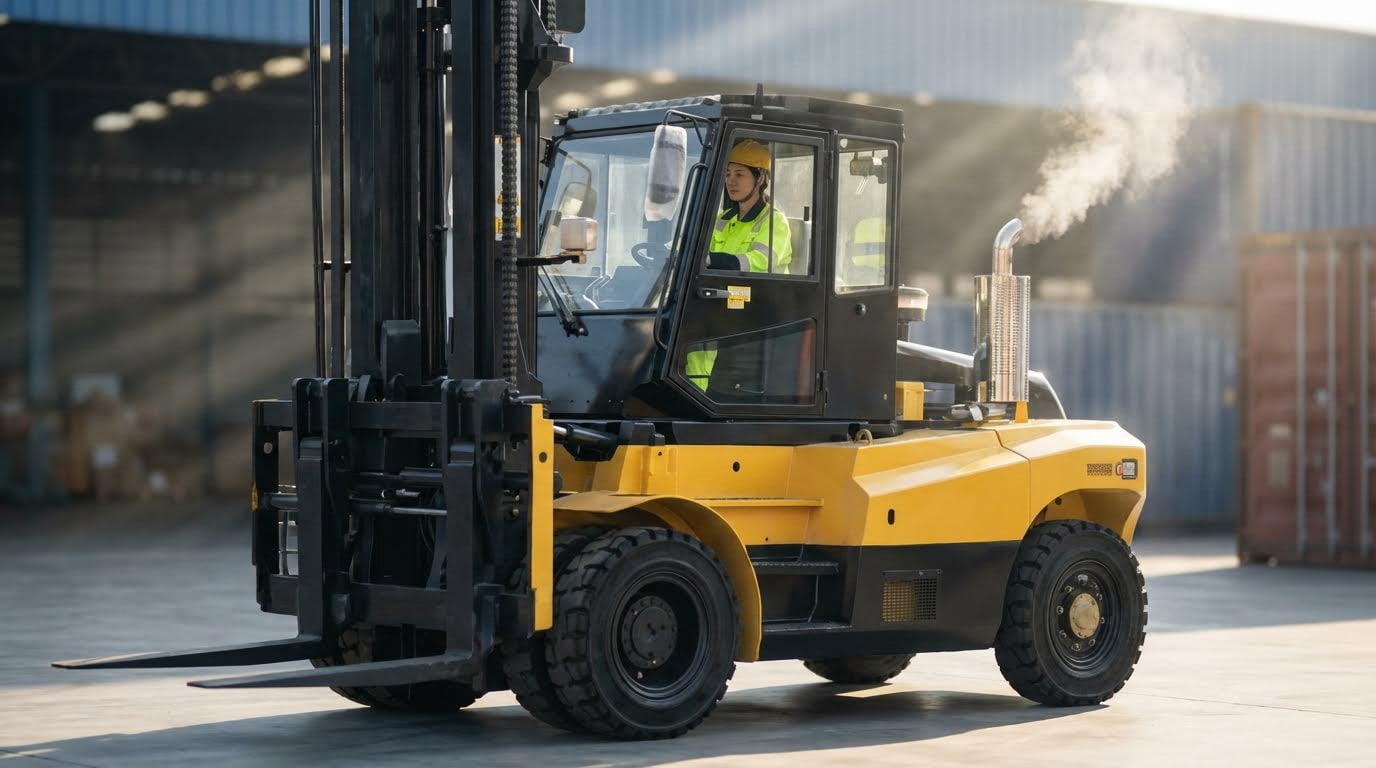
By official forklift class, tank sizes spread from about 57 L on small indoor Class IV units to 450 L on heavy Class VIII container handlers. This view helps align “how much diesel in full tank of forklift” with site type and environment.
| Forklift Class | Typical Application | Typical Tank Size (L) | Approx. Tank Size (gal) | Best For… / Operational Impact |
|---|---|---|---|---|
| Class IV (IC, cushion tire) | Indoor / smooth floors, docks, warehouses | 57–76 L | 15–20 gal | Comfortably covers an 8 h shift at light-to-medium duty with 1.5–2.0 gal/h burn (data) |
| Class V (IC, pneumatic tire) | Outdoor yards, building materials, lumber | 60–110 L | 16–30 gal | Balances higher outdoor fuel burn with full-shift runtime; good for mixed travel and lifting (data) |
| Class VII (Rough-terrain) | Construction sites, rough yards, uneven ground | 80–120 L | 21–32 gal | Supports high throttle use and long travel on rough ground without mid-shift refueling (data) |
| Class VIII (Container handlers, heavy) | Ports, intermodal yards, heavy industry | 200–450 L | 53–119 gal | Engineered for long, high-load cycles; can run extended shifts or double shifts between fills (data) |
- Class IV: 57–76 L – Best where refueling once per day is acceptable and trucks stay mostly indoors.
- Class V: 60–110 L – Good default for outdoor fleets that need full-shift autonomy but return to a central fuel point.
- Class VII: 80–120 L – Sized for high gradients, mud, and long hauls between loading points.
- Class VIII: 200–450 L – Chosen to avoid downtime in 24/7 port or steel mill operations.
Why safe-fill matters when comparing classes
Across all classes, you cannot use 100% of the stamped tank volume. Safe-fill is typically limited to about 95% of geometric volume to leave ullage for thermal expansion and slosh, in line with industry practice and standards similar to UL 142. Reference
💡 Field Engineer’s Note: When you compare two models in the same class, ignore brochure “tank size” and ask for usable liters at 95% safe-fill. That is the real answer to how much diesel in full tank of forklift you can plan your shift around.
How To Estimate Diesel Runtime From Tank Size
This section explains how to turn “how much diesel in full tank of forklift” into a clear runtime estimate you can trust for shift planning and tank sizing.
Safe‑fill volume and usable fuel
Usable fuel is always less than the geometric tank volume because safe-fill is typically limited to about 95% to allow for expansion and prevent spills.
- Safe-fill limit (~95%): Most diesel forklift tanks are not filled above about 95% of nominal volume – prevents thermal expansion from pushing fuel out of the vent and reduces spill risk. Safe-fill guidance
- Usable volume vs. “full”: When operators ask “how much diesel in full tank of forklift,” engineers work with the usable 95% volume, not the 100% geometric volume – gives realistic runtime instead of optimistic lab numbers. Capacity ranges
- Example – 70 L nominal tank: Geometric 70 L tank × 0.95 safe-fill ≈ 66.5 L usable – your runtime calculations should use 66–67 L, not the full 70 L.
- Daily shift example: A truck burning about 2.5 L/h for an 8 h shift needs roughly 18 L of usable fuel with a margin – small tanks can still cover a full day if burn rate is low. Worked example
- Regulatory background: Industry practice and rules similar to UL 142 and ISO guidance require ullage (air space) – protects against pressure build-up and slosh on ramps or uneven yards. Safe-fill and standards
💡 Field Engineer’s Note: In hot climates or when forklifts park in direct sun, I treat 90–92% as “practical full.” That extra ullage stops expansion from pushing diesel out of the vent line onto the yard, which is both a slip hazard and an environmental issue.
How to estimate usable fuel from a known tank size
If the nameplate or manual only lists geometric tank volume, multiply it by 0.95 to get a realistic usable figure. For example, 80 L nominal × 0.95 ≈ 76 L usable. If your site has strict overfill procedures or very hot ambient temperatures, you can apply 0.90 instead to be conservative.
Runtime and tank‑sizing calculation methods
Runtime is estimated by dividing usable tank volume by average fuel consumption, and tank size is selected by reversing this formula and adding safety and safe-fill factors.
| Item | Formula / Value | Operational Impact |
|---|---|---|
| Core runtime formula | Runtime (h) = Usable tank liters ÷ Consumption (L/h) | Turns tank size and burn rate into shift hours for planning. |
| Tank sizing formula | Tank liters = (Consumption L/h × Shift h × 1.1 safety) ÷ 0.95 safe-fill | Ensures tank supports target shift with margin and safe-fill. Tank sizing method |
| Typical consumption range | ≈ 5.7–11.4 L/h (1.5–3.0 gal/h) | Use 6–11 L/h as a realistic planning range depending on duty. Consumption rates |
| Typical tank capacities | ≈ 57–132 L (15–35 gal) on standard units | Most standard diesel forklifts can cover a full shift per fill. Capacity ranges |
| Example – 20 gal tank | ≈ 76 L usable; at 9.5 L/h → ≈ 8 h runtime | Shows how a “mid-size” truck covers one 8 h shift per fill. Runtime example |
- Step 1 – Confirm consumption: Use site data or the typical 1.5–3.0 gal/h (≈5.7–11.4 L/h) range – this is the biggest driver of runtime accuracy. Consumption guidance
- Step 2 – Decide target runtime: Define whether you size for 1 full 8 h shift, 1.5 shifts, or 24 h with refuel windows – prevents under-sizing and mid-shift refuels.
- Step 3 – Apply tank sizing formula: Plug shift hours and consumption into Tank liters = (L/h × h × 1.1) ÷ 0.95 – adds ≈10% runtime margin and respects 95% safe-fill. Engineering formula
- Step 4 – Check against standard sizes: Compare the result to common 57–132 L tank sizes – easier procurement and simpler integration on standard chassis. Typical capacities
Worked example – sizing a tank for an 8-hour shift
Assume a mid-size diesel forklift burns 8 L/h on your duty cycle and you want one 8 h shift per fill. First calculate total shift consumption: 8 L/h × 8 h = 64 L. Apply a 10% safety factor: 64 L × 1.1 ≈ 70.4 L. Now account for 95% safe-fill: Tank liters = 70.4 ÷ 0.95 ≈ 74.1 L. In practice you would choose a standard tank around 75–80 L nominal, giving about 71–76 L usable and a comfortable margin.
💡 Field Engineer’s Note: When I commission new fleets, I log real fuel use over a week and then re-run these formulas with the measured L/h. OEM brochure numbers are often 15–20% lower than what you see with rough yards, steep ramps, and aggressive drivers.
Real‑world factors that change fuel burn
Real-world diesel consumption can swing from the low to high end of the 1.5–3.0 gal/h range depending on load, terrain, driving style, and maintenance quality.
- Load level and lift intensity: Working near rated capacity with frequent lifting cycles drives fuel burn up towards the top of the range – plan closer to 10–11 L/h in heavy production work. Load impact
- Travel distance, ramps, and yard conditions: Long runs, rough surfaces, and steep ramps increase throttle use and rolling resistance – runtime per tank can drop by 20–30% compared with smooth indoor work. Terrain effects
- Engine size and class: Larger displacement engines on heavy Class VII/VIII machines naturally burn more fuel per hour at similar workloads – a “full tank” of 200–450 L is normal to support long duty cycles. Class-based capacities
- Operator behavior: Hard acceleration, excessive idling, and abrupt braking all increase hourly fuel use – training operators can easily recover 10–15% runtime per tank. Operational factors
- Maintenance condition: Clogged filters, injector issues, and low tire pressure all raise consumption – poorly maintained trucks can drift from 6–7 L/h to 10+ L/h without any change in workload. Maintenance impact
- Fuel type and hybridisation: Diesel holds about 36.2 MJ/L versus LPG at about 23.5 MJ/L, so LPG trucks need roughly 1.5× the tank volume for the same runtime – hybrid diesel-battery machines can downsize the diesel tank because the battery covers peaks. Energy density comparison
💡 Field Engineer’s Note: If your real runtime is always 1–2 hours shorter than the math says, look at idling time first. I have seen sites where trucks idle 30–40% of the shift at high RPM for hydraulics, which completely destroys the neat “L/h × hours” estimates.
Quick checklist before trusting a runtime estimate
Before you rely on a paper runtime number, confirm that: 1) the consumption rate reflects your heaviest duty cycle, not light demo work; 2) the tank volume is adjusted to 95% safe-fill; 3) your yard gradients and surfaces are considered; 4) operator behavior and idle time are realistic; and 5) maintenance is up to date. If two or more of these are unknown or unfavorable, apply an extra 10–15% safety margin to tank size or plan for mid-shift refueling.
Engineering Considerations When Selecting Tank Size
Engineering a diesel forklift tank is about more than “how much diesel in full tank of forklift”; you must balance runtime, layout, stability, emissions hardware, and compliance limits for safe, efficient operation.
In practice, that means sizing the tank from real fuel-burn data, then checking what the extra volume does to center of gravity, frame packaging, and regulatory obligations. The sub‑sections below walk through those trade‑offs step by step.
Matching tank volume to shift pattern and TCO
The right tank volume matches your longest realistic shift pattern with a safety margin, while minimising total cost of ownership (TCO) from downtime, fuel, and maintenance.
Start by anchoring tank size on measured or specified fuel consumption. Typical diesel forklifts burn about 1.5–3.0 gallons per hour, or roughly 5.7–11.4 L/h, depending on load, terrain, and operator behaviour. Typical diesel burn rates show mid‑size units realistically sitting around 2.0–2.5 gal/h (7.6–9.5 L/h). This is your baseline for runtime and tank‑sizing calculations.
- Define real shift length: Use longest continuous operating window (e.g. 8–10 hours) – Ensures the tank supports actual site practice, not just nominal shift length.
- Apply engineering formula: Tank liters = (consumption L/h × shift hours × 1.1 safety) ÷ 0.95 safe‑fill – Builds in 10% runtime margin and 95% fill limit for expansion.
- Check against typical ranges: Light/medium forklifts commonly carry about 57–114 L; heavy units run 114–132 L or more. Typical capacity bands help you sanity‑check your result.
- Consider safe‑fill vs geometric volume: Engineers usually cap usable volume at about 95% of tank geometry to allow thermal expansion and reduce spill risk. Safe‑fill practice is critical when you ask how much diesel in full tank of forklift you can really use.
- Balance refueling downtime vs over‑sizing: Larger tanks cut refueling stops but add cost, weight, and packaging complexity – Best TCO often comes from “one full shift plus margin,” not multi‑shift tanks.
| Scenario | Assumed burn (L/h) | Target shift (h) | Calculated tank (L) | Operational Impact |
|---|---|---|---|---|
| Light warehouse, 3–4 t truck | 6.0 | 8 | ≈56 L | Covers one 8 h shift with margin; aligns with 57–76 L tanks on small Class IV/V units. |
| Medium outdoor yard, 5–7 t truck | 8.5 | 8 | ≈80 L | Comfortably fits within 60–110 L typical Class V range; one‑shift runtime. |
| Heavy container work, >15 t | 11.0 | 10 | ≈128 L | Matches 114–132 L+ heavy‑duty tanks; may still need mid‑shift top‑ups in extreme duty. |
For fleets, TCO optimisation also looks at fuel infrastructure and labour. A slightly larger tank can remove one refuel per day, which often saves more labour cost than the incremental steel and fuel weight add.
How to apply the tank sizing formula step by step
Step 1: Measure or estimate average L/h from telematics, OEM data, or a fuel trial over several days.
Step 2: Multiply by the longest continuous operating window (e.g. 9 h including overtime).
Step 3: Multiply by 1.1 to add a 10% runtime safety factor for heavy days.
Step 4: Divide by 0.95 to convert usable volume to geometric tank size, respecting the 95% safe‑fill limit.
Step 5: Round up to a standard tank size that fits available chassis space and weight limits.
💡 Field Engineer’s Note: When sites push trucks hard on ramps and rough yards, I assume fuel burn at the top end of the 1.5–3.0 gal/h band and size tanks for 9–10 hours, even if the “official” shift is 8 hours. That avoids daily surprises when weather or workload spikes.
Layout, stability, and compliance constraints
Tank size and placement must respect forklift layout, stability, and regulatory rules, not just runtime math.
As tanks grow beyond typical 57–110 L on standard Class IV/V machines into the 200–450 L range used on heavy Class VIII container handlers, packaging and safety become dominant constraints. Class‑based capacity bands illustrate how rough‑terrain and container machines need much larger tanks to avoid mid‑shift refueling on long, high‑load cycles.
- Center of gravity (COG) and counterbalance: A larger, rear‑mounted tank can help counterweight, but dynamic COG shifts as fuel burns – Stability calculations must consider full, half, and near‑empty conditions.
- Frame and access layout: Tanks must fit within the chassis envelope while leaving access for engine, hydraulics, and daily checks – Avoid designs that force technicians to remove the tank for routine service.
- Vent routing and impact protection: Regulations and good practice require vents away from hot surfaces and ignition sources, with the tank protected from side and rear impacts. Design points emphasise secure mounting and inspection access.
- Safe‑fill and ullage requirements: Industry practice and standards similar to UL 142 keep safe‑fill at about 95% of geometric volume to allow thermal expansion and slosh. Safe‑fill limits directly cap how much diesel in full tank of forklift is usable in your runtime calculations.
- DEF/AdBlue tank integration: Modern SCR forklifts need an AdBlue/DEF tank sized at about 3–5% of diesel volume, which also needs protected mounting and access. DEF sizing must be considered in the same layout study.
| Design Aspect | Engineering Consideration | Operational Impact |
|---|---|---|
| Tank position | Rear, low‑mounted tanks support counterbalance but must not extend beyond protective structure. | Improves stability and rear visibility if integrated into counterweight shape. |
| Fill point location | Needs safe, ergonomic access at ground level or via steps, away from hot exhaust. | Reduces spill risk and refill time; encourages correct safe‑fill practice. |
| Vent and breather routing | Route away from operator cab and electrics; include rollover protection valves. | Mitigates fume exposure and fire risk during normal use and tip events. |
| Inspection and maintenance | Provide visual access to seams, mounts, and lines for leak checks and corrosion inspection. | Supports preventive maintenance and reduces unplanned downtime. |
| Regulatory thresholds | Larger on‑board volumes may trigger stricter design scrutiny; bulk tanks over ~60 gal need 110% containment. Regulatory notes highlight containment expectations. | Influences whether you store fuel mainly on the truck or in yard tanks. |
Why you cannot use 100% of the tank volume
Diesel expands as temperature rises. If you filled a tank to 100% on a cool morning, the fuel could expand, pressurise the system, and vent or spill as temperatures climb. That is why engineering practice and standards keep safe‑fill at about 95% of geometric volume and require proper venting and ullage. Runtime calculations should always use this reduced usable volume, not the nameplate tank size.
💡 Field Engineer’s Note: On rough‑terrain and container handlers with 200–450 L tanks, I always review stability charts for both full and near‑empty conditions. Long travel on slopes with a nearly empty, rear‑mounted tank can shift the effective COG forward just when operators are climbing ramps with heavy loads.

Final Thoughts On Sizing Diesel Forklift Fuel Tanks
Correct diesel tank sizing links runtime, safety, and lifecycle cost into one design decision. You size the tank from real fuel burn, not brochure values, then check that safe-fill, layout, and stability still work. The 95% safe-fill rule and a 10% runtime margin protect you from spills, heat expansion, and bad days on site.
Geometry and structure then set hard limits. Larger tanks change center of gravity, counterweight balance, and packaging around the engine and hydraulics. Vent routing, impact protection, and DEF integration must all meet regulatory expectations. You also cannot ignore terrain, ramps, and operator behavior, because they push actual L/h toward the top of the range.
For operations and engineering teams, the best practice is clear. Measure real consumption over full shifts, apply the sizing formula with 95% safe-fill, and design for one long shift plus margin, not endless runtime. Validate the result against typical capacity bands and stability charts. When in doubt, Atomoving recommends you prioritize safe-fill discipline, stable layout, and easy refueling over squeezing in extra liters that add risk without real value.
Frequently Asked Questions
How much diesel can a forklift hold in its fuel tank?
The amount of diesel a forklift can hold depends on the model and manufacturer. For example, some industrial forklifts may have a fuel tank capacity of approximately 27.7 gallons (105 liters). This allows for extended operating hours without frequent refueling. Forklift Fuel Capacity.
What factors influence the fuel tank size of a forklift?
Several factors determine the fuel tank size of a forklift, including its intended use, engine type, and expected runtime. Larger forklifts designed for heavy-duty tasks typically have bigger tanks to minimize refueling downtime. Additionally, electric forklifts do not use diesel and rely on battery power instead.