This guide explains how to change a fuel filter on a diesel forklift safely, using practical steps, clear checks, and real maintenance intervals. You will learn how to control leaks, bleed air, and verify performance so the truck returns to service reliably and without damage.
Why Fuel Filter Maintenance Matters In Diesel Forklifts
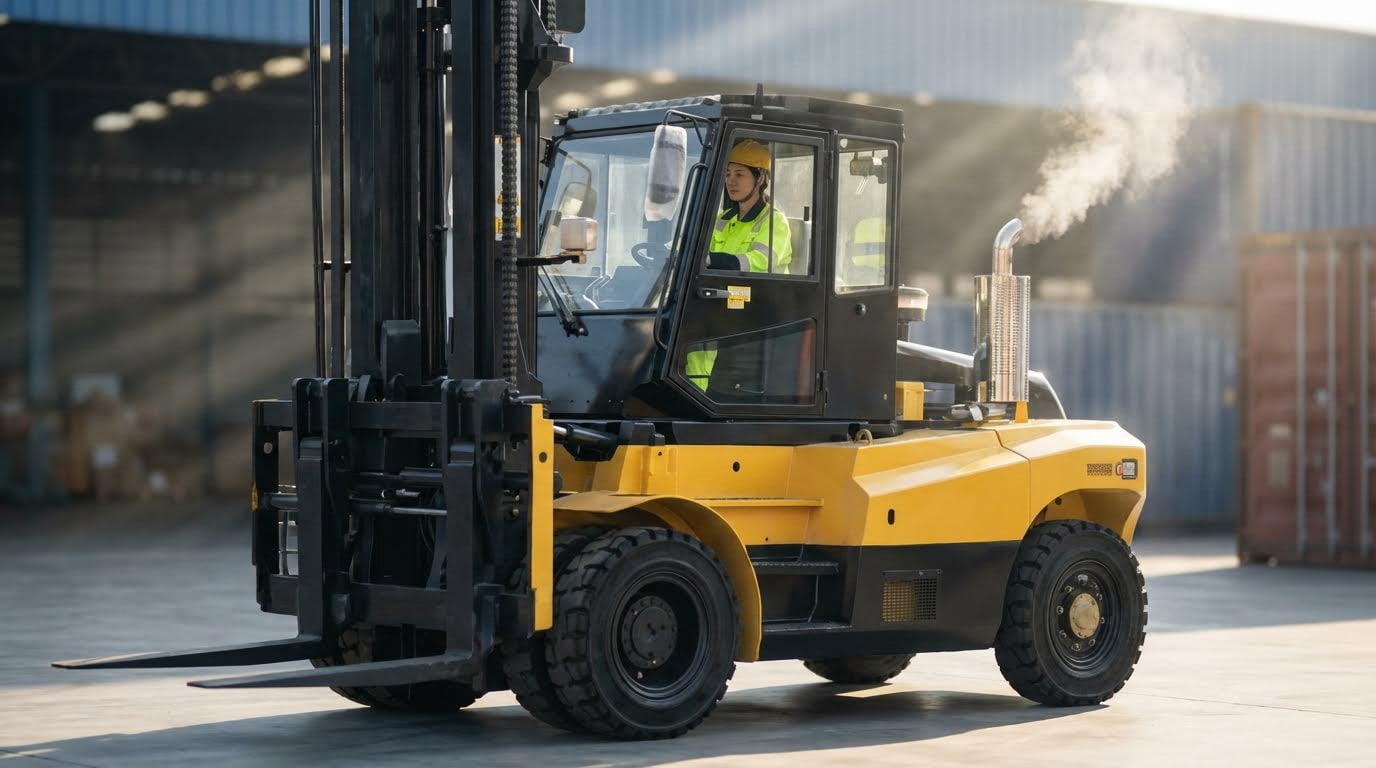
Fuel filter maintenance on a diesel forklift prevents injector damage, power loss, and unplanned breakdowns, and it is the first step in any safe plan for how to change fuel filter on diesel forklift. A blocked or water‑logged filter quickly turns into hard starting, black smoke, and expensive pump repairs, especially in dirty yards or with poor‑quality fuel.
- Protects precision injectors: Modern diesel injectors run at very high pressure – fine particles or rust quickly score nozzles and reduce spray quality.
- Prevents power loss and stalling: A clogged filter starves the engine of fuel – you see sluggish lifting, poor gradeability, and random stalling under load.
- Controls water and corrosion: Filters and sedimenters trap water from the tank – this stops corrosion in lines and injection pumps.
- Stabilizes fuel rail pressure: A clean element keeps restriction low – the pump can maintain correct pressure for clean combustion and low emissions.
- Reduces downtime and call‑outs: A 15–30 minute filter change – avoids hours of diagnosis when a truck dies in the middle of a loading bay.
| Issue | What a healthy fuel filter does | Operational impact on diesel forklifts |
|---|---|---|
| Solid contaminants (dust, rust) | Traps particles before they reach the injection pump and nozzles | Maintains full lifting power and smooth acceleration in dusty yards and warehouses |
| Water in diesel | Separates and stores water in a bowl or sedimenter for later draining | Prevents corrosion, injector seizure, and winter starting issues |
| Pressure stability | Keeps restriction within design limits | Reduces misfire, black smoke, and rough idle during tight maneuvering |
| Unexpected blockage | Provides early warning via symptoms or indicators | Lets you schedule service instead of stopping a shift mid‑job |
Typical symptoms of a clogged diesel forklift fuel filter
Common warning signs include reduced power, rough idling, hard starting, and higher fuel use. These symptoms usually appeared before total blockage and were a strong signal to plan a filter change and system inspection. Symptoms of a clogged filter
💡 Field Engineer’s Note: If a diesel forklift suddenly loses power only under heavy lift or on a ramp, I check fuel filter restriction before blaming the turbo or transmission. On fleets that run in dusty yards, filters can plug long before the “official” hour mark.
Role of the fuel filter in diesel injection systems
The fuel filter in a diesel forklift is the primary barrier between dirty tank fuel and the high‑precision injection system. It removes solids and water so the pump and injectors see clean, bubble‑free diesel at stable pressure.
- Located between tank and engine: The main filter usually sits along the frame rail, near the tank, or in the engine bay – easy to reach for routine service. Typical fuel filter location
- Often a two‑stage system: Many trucks use a primary filter/water separator near the tank and a finer secondary filter near the engine – this splits coarse and fine filtration for longer life. Multiple filter setup
- Protects high‑pressure components: The injection pump and injectors rely on very small clearances – any grit that passes the filter accelerates wear and can cause seizure.
- Works with sedimenters and indicators: Water bowls and warning lights signal when to drain or service – this keeps water out of the injection system and prevents corrosion. Sedimenter drain procedure
- Enables proper priming and bleeding: After any filter change, the housing becomes the main point for priming and air bleeding – this restores solid fuel flow for reliable starting. Air‑bleeding method
Fuel filter and diesel forklift starting problems
Air trapped in the filter housing after replacement often caused hard starting or stalling. Proper priming with the manual pump until fuel ran without bubbles restored normal operation. Priming guidance
Recommended replacement intervals and duty cycles
Most diesel forklift manufacturers recommended changing the fuel filter every 500–1,000 operating hours, with shorter intervals in dusty yards or where fuel quality was poor. Matching the interval to your duty cycle is critical to avoid mid‑shift blockages.
| Operating environment / duty cycle | Suggested fuel filter interval | Reason | Operational impact |
|---|---|---|---|
| Clean indoor warehouse, good fuel | Up to 1,000 hours | Low dust and moisture load on filter | Minimizes service stops while keeping injectors protected |
| Mixed indoor/outdoor, moderate dust | Around 750 hours | More airborne dust and tank condensation | Balances filter cost with reduced risk of power loss |
| Very dusty yard, rough outdoor use | As low as 500 hours or less | High contamination rate and vibration | Prevents sudden blockage during heavy lifting shifts |
| History of poor fuel quality | Shorten interval by 25–50% | More solids and water in delivered diesel | Protects injection pump from dirty or water‑laden fuel |
Many guides on how to change fuel filter on diesel forklift emphasized that these 500–1,000 hour figures were general recommendations, not absolutes, and that operators should watch real‑world symptoms between services. Typical hour‑based intervals
- Track hours, not calendar only: Use the truck’s hour meter to plan filter changes – this aligns service with actual engine run time.
- Adjust for refueling practices: Letting tanks run nearly empty stirs up sediment – this loads the filter faster and may justify earlier replacement. Refueling practices
- Respond quickly to symptoms: If you see power loss or rough idle, do not wait for the next interval – inspect and likely replace the filter immediately.
- Integrate with other PM tasks: Combine fuel filter changes with leak checks, exhaust color checks, and fluid inspections – this builds a robust diesel PM program. Preventive maintenance guidance
💡 Field Engineer’s Note: On mixed fleets, I set a conservative baseline (around 500 hours), then pull and cut open a few used filters at service. If media is still clean, we extend intervals; if it is dark and loaded, we shorten them. Real contamination patterns beat generic schedules every time.
Safety, Tools, And Preparation Before Filter Change
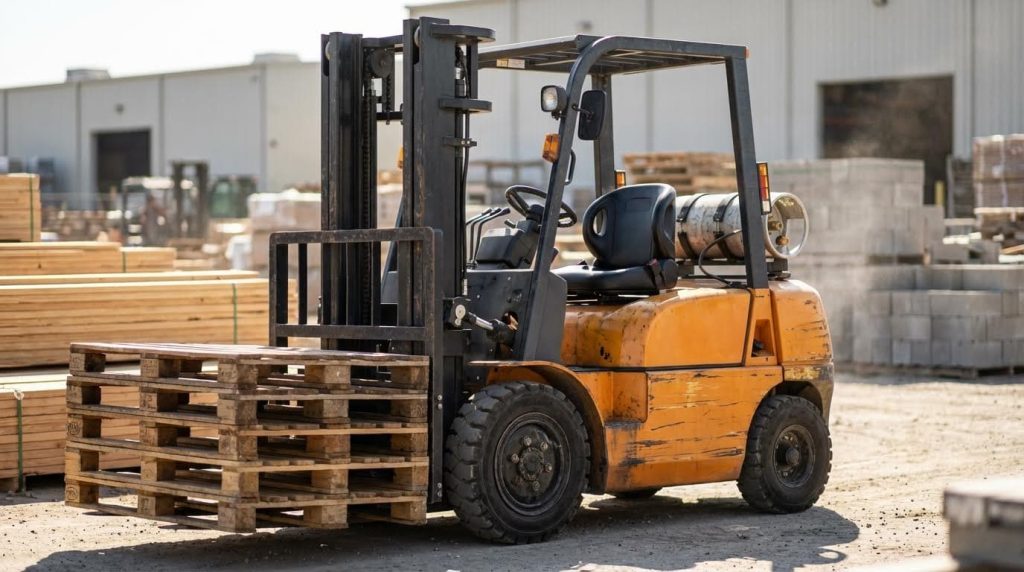
This section explains how to change fuel filter on diesel forklift safely by controlling ignition risks, using the right PPE and tools, and correctly finding filters, sedimenters, and bleed points before you touch a single fitting.
Lockout, ventilation, and fire protection measures
Safe diesel fuel filter work starts with immobilizing the forklift, eliminating ignition sources, and planning for spill and fire control before opening the fuel system.
- Park and secure truck: Park on a flat, level surface and apply the parking brake – Prevents unintended movement while you work. Source
- Engine shutdown and key removal: Switch off the engine and remove the key – Eliminates accidental start-up while fuel lines are open. Source
- Cool-down period: Allow the engine and fuel components to cool fully – Reduces burn risk and lowers vapor generation from hot diesel. Source
- Ventilation: Work in a well‑ventilated area, preferably outdoors or with forced extraction – Prevents diesel vapors from building up around the truck. Source
- No ignition sources: Ban smoking and keep open flames, heaters, and spark‑producing tools away – Mitigates fire/explosion risk from atomized fuel. Source
- Fire extinguisher ready: Keep a suitable fire extinguisher within arm’s reach – Allows rapid response if a fuel spill ignites. Source
- Spill control setup: Place drip pans and absorbent pads under the filter area – Contains leaks, keeps floors non‑slippery, and simplifies cleanup. Source
💡 Field Engineer’s Note: Even a 1–2% floor slope can let spilled diesel run several meters under adjacent trucks. Always extend your drip pans and absorbents beyond the immediate filter area to stop fuel from reaching hot exhausts or battery chargers.
Lockout level for workshop vs. field work
In a controlled workshop, use formal lockout/tagout on the ignition circuit and post a “Do Not Start” tag on the steering wheel. In the field, at minimum remove the key, chock wheels if on any gradient, and keep the mast fully lowered before beginning fuel work.
Required PPE, tools, and service documentation
Correct PPE, tools, and documentation make diesel fuel filter work faster, cleaner, and safer, while ensuring you follow the exact procedure for your forklift model.
| Item | Specification / Example | Operational Impact |
|---|---|---|
| PPE – Eye protection | Safety glasses or goggles | Prevents eye injury from pressurized fuel spray or drips. |
| PPE – Gloves | Nitrile gloves resistant to diesel | Protects skin from diesel and improves grip on oily parts. Source |
| Hand tools | Adjustable wrench / socket set | Allows correct loosening and tightening of filter fittings without rounding. |
| Fuel line release / pliers | Fuel line tool or needle‑nose pliers | Enables controlled disconnection of hoses and clips. Source |
| Fuel line clamps | Clamp or pinch‑off pliers | Stops diesel flow from tank, reducing spills when lines are open. |
| Drain pan | Low, wide pan under filter | Catches drained fuel; keeps floor dry and safe. |
| Cleaning materials | Clean rags / paper towels | Wipes fittings before re‑assembly to prevent dirt entering system. |
| Priming fuel | Small quantity of clean diesel | Used to pre‑fill filter or housing to shorten priming time. Source |
| Sealing parts | New O‑rings / thread sealant (if specified) | Ensures leak‑free joints after the new filter is installed. |
| Small funnel | Suitable for diesel fuel | Allows spill‑free filling of filter or sedimenter bowls. |
| Service manual | Operator’s or workshop manual | Gives model‑specific torque values, locations, and priming steps. Source |
- Have the new filter ready: Confirm part number, micron rating, and orientation arrows – Prevents mid‑job surprises and incorrect installation.
- Confirm replacement interval: Plan changes around 500–1,000 operating hours, adjusted for dirty fuel or dusty sites – Balances uptime with injector protection. Source
💡 Field Engineer’s Note: Keep a “fuel system kit” in the workshop: common filters, O‑rings, clamps, and a dedicated 5 L of clean diesel. This turns an unexpected clogged‑filter callout into a 30‑minute stop instead of half a day of hunting parts.
Why documentation matters for how to change fuel filter on diesel forklift
Different diesel forklifts route fuel lines, sedimenters, and bleed screws differently. The service manual shows exact locations, torque values, and any electronic priming or sensor reset steps, which prevents trial‑and‑error on a critical fuel system.
Locating filters, sedimenters, and bleed points
Knowing exactly where the fuel filter, water sedimenter, and bleed points sit on your truck prevents wasted time and avoids damaging fittings while you learn how to change fuel filter on diesel forklift in real conditions.
- Main fuel filter location: Typically between fuel tank and engine, along frame rail, near the tank, or in the engine bay – Makes it accessible for routine service. Source
- Filter appearance: Usually a cylindrical or tubular body with two fuel line connections – Easy visual ID when tracing lines from the tank. Source
- Primary vs. secondary filters: Some trucks use a primary filter near the tank and a finer secondary filter near the engine – Primary catches bulk dirt; secondary protects injectors. Source
- Water sedimenter: Often a clear or metal bowl low in the fuel line, with a drain plug – Collects water; must be drained when the indicator lights. Source
- Sedimenter drain plug: Loosen several turns and use the priming pump to push water out – Prevents water reaching high‑pressure components. Source
- Manual priming pump: Commonly mounted near the filter housing – Used later to fill the system and bleed air after filter change. Source
- Bleed screws / plugs: Typically on the injection pump or filter head – Provides a controlled point to expel air during priming. Source
How to trace the fuel path before opening anything
Start at the fuel tank outlet and follow the hose forward. Note each component in order: sedimenter, primary filter, lift pump, secondary filter, injection pump. Sketch or photograph this path. This helps you locate every bleed point and ensures you refit hoses to the correct ports after changing the filter.
💡 Field Engineer’s Note: On older trucks, labels and arrows on filter heads often fade. Before loosening fittings, clean the area and use a paint marker to show “IN” and “OUT” based on the existing hose routing. This avoids reversed flow, which can completely block fuel supply after you install a brand‑new filter.
Step-By-Step Diesel Forklift Fuel Filter Replacement
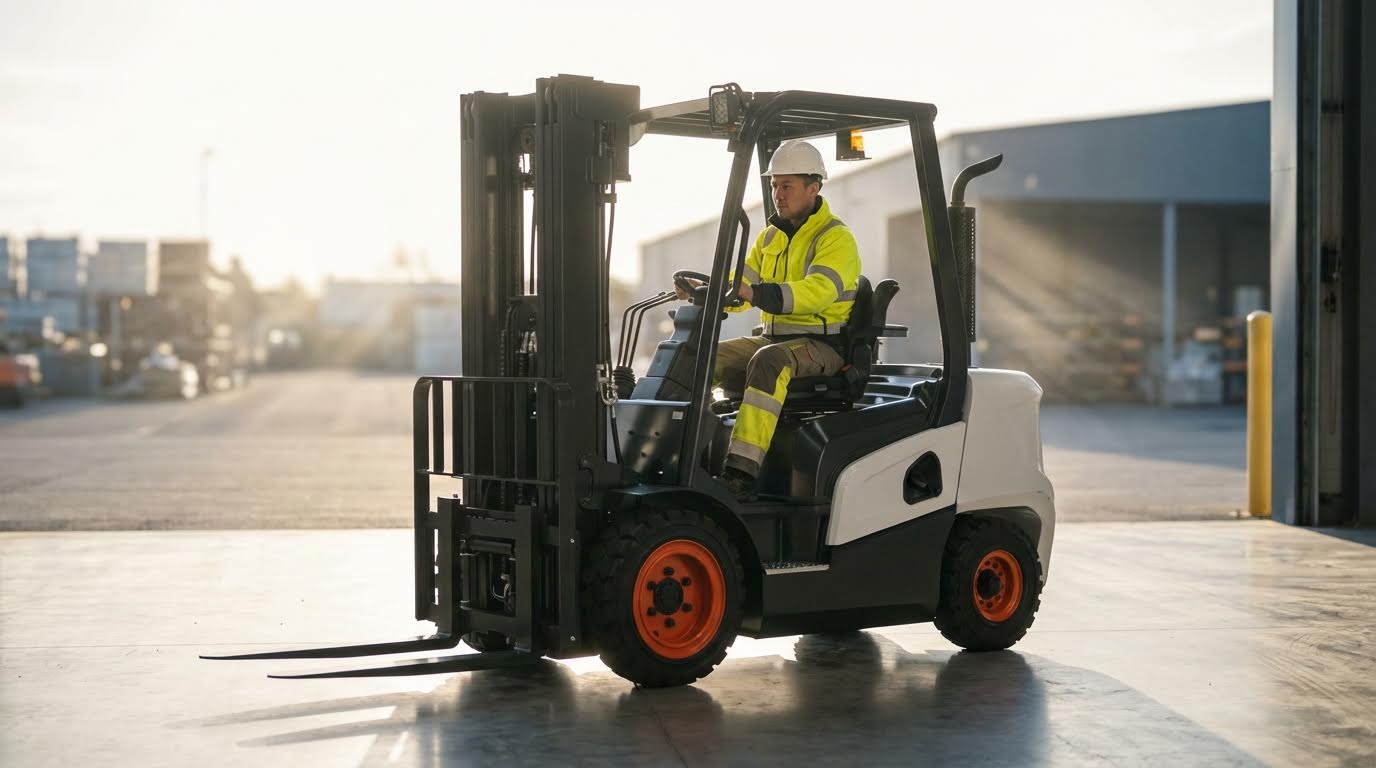
This section gives a practical, field-tested procedure for how to change fuel filter on diesel forklift safely, with minimal air ingress, leaks, or unplanned downtime.
- Goal: Replace the diesel fuel filter without introducing air or leaks – protects injectors and maintains engine power.
- Applies To: Most counterbalance diesel forklifts with inline or cartridge fuel filters – check your service manual for model specifics.
Scope and prerequisites
These steps assume you have already parked on level ground, applied the parking brake, shut down the engine, removed the key, allowed components to cool, and prepared PPE and tools as outlined in the safety and preparation section. Many manufacturers recommend changing filters every 500–1,000 operating hours, with shorter intervals in dusty sites or with poor fuel quality. Typical maintenance schedules and safety setup are described here.
💡 Field Engineer’s Note: Always plan the job so the tank is at least half full. A near-empty tank increases the risk of drawing air and sediment when you prime after the change, which can cause hard starting and injector wear.
Depressurizing and isolating the fuel system
This step safely removes fuel pressure and isolates the tank so you can loosen lines without sudden spray or uncontrolled flow.
- Step 1: Confirm shutdown and cool-down – prevents burns and ignition from hot components.
- Step 2: Close any fuel shutoff valve near the tank or filter – stops gravity-fed fuel from running when lines are opened.
- Step 3: Place a drain pan (at least 5–10 L) under the filter – captures diesel and avoids slippery floors.
- Step 4: Relieve system pressure using the manual primer pump, if equipped – reduces residual pressure in lines and housing.
- Step 5: If no primer pump exists, slightly loosen the filter’s top banjo bolt or bleed screw – lets trapped pressure escape in a controlled way.
- Step 6: Fit fuel line clamps or pinch-off pliers on the inlet hose from the tank – minimizes fuel loss and air ingress when you disconnect.
- Do not fully remove fittings at once: Always crack them slowly – gives you time to react if fuel is still under pressure.
- Keep ignition sources away: No grinding, welding, or smoking nearby – diesel mist can still ignite under the right conditions.
How to recognize residual pressure
When you crack a fitting, a short hiss or a brief squirt of fuel indicates pressure. Pause, allow pressure to bleed down into the pan, then continue loosening. If fuel continues to spray, re-tighten and re-check that the engine is fully off and any electric lift pumps are disabled.
Removing the old filter and inspecting fuel lines
This step removes the contaminated element and checks hoses and fittings so you do not reinstall a new filter into a damaged circuit.
- Step 7: Mark or photograph hose positions and flow direction arrows – avoids reversed connections on reassembly.
- Step 8: Loosen and disconnect outlet and inlet fuel lines, keeping ends pointed into the drain pan – controls residual fuel and keeps fittings clean.
- Step 9: Unscrew or unclip the filter from its bracket or housing – removes the old element without twisting hoses.
- Step 10: Pour diesel from the old filter into the pan and inspect for rust, water, or sludge – indicates tank contamination or water ingress.
- Step 11: Inspect rubber hoses for cracks, swelling, or hard spots – prevents future leaks or air suction under vibration.
- Step 12: Check metal lines and banjo fittings for corrosion or chafing – avoids pinhole leaks and fuel weeping under pressure.
- Clean surrounding area: Wipe the filter head and bracket with clean rags – prevents dirt from entering during installation.
- Replace suspect hoses: Any hose with surface cracks or soft spots should be replaced – cheaper than dealing with a breakdown later.
Handling contaminated fuel safely
If the drained fuel shows water layers or heavy sludge, do not pour it back into any tank. Store it in a marked waste container for proper disposal according to your site’s environmental procedure. Consider scheduling tank cleaning and more frequent filter changes until contamination is controlled. Frequent clogging and poor fuel quality are common in harsh sites.
Installing the new filter and torque best practices
This step fits the new filter in the correct orientation, with proper sealing and tightness to avoid leaks or air suction.
- Step 13: Verify part number and micron rating against the service manual – ensures correct filtration and flow for your injection system.
- Step 14: Lightly oil new O-rings or gaskets with clean diesel or engine oil – reduces risk of tearing and aids sealing.
- Step 15: If using a spin-on filter, pre-fill it with clean diesel to about 70–90% – reduces priming time and air in the system.
- Step 16: Install the filter in the same orientation as removed, following any “IN/OUT” or arrow markings – maintains correct flow path.
- Step 17: Tighten the filter or housing by hand until the gasket contacts, then follow manufacturer instructions (e.g., additional ¾ turn or specified torque) – prevents both leaks and thread damage.
- Step 18: Reconnect inlet and outlet lines, ensuring crush washers or seals are renewed if required – restores a leak-free circuit.
- Never double-gasket: Confirm the old gasket is not stuck to the head – two gaskets almost always cause leaks.
- Use torque specs where available: Many housings specify a tightening torque – prevents cracking alloy heads or stripping threads.
Typical tightening guidance
Where no torque value is given, most spin-on fuel filters are tightened by hand until the gasket contacts the base, then turned an additional ½–¾ turn. Cartridge housings usually specify a torque for the cap; always follow the service manual. Over-tightening can distort the seal and cause slow weeping that only shows up under load. Many OEM procedures highlight correct torque application.
Priming, air bleeding, and initial engine restart checks
This step removes trapped air so the high-pressure pump receives a solid fuel column, preventing hard starting and misfire.
- Step 19: Open any bleed screw on the filter head or injection pump as specified – gives air a controlled escape path.
- Step 20: Operate the manual primer pump repeatedly until fuel flows bubble-free from the bleed point – purges most trapped air from low-pressure lines.
- Step 21: Close the bleed screw while continuing light pump pressure – helps seat threads and seals without drawing air back in.
- Step 22: If no manual pump exists, cycle the ignition to run any electric lift pump (without starting) several times – lets the pump self-prime the circuit.
- Step 23: Once primed, remove line clamps and reopen any shutoff valve from the tank – restores normal fuel flow path.
- Step 24: Start the engine and let it idle at low speed for 2–3 minutes – moves residual air through the return line.
- Expect brief rough running: Slight misfire or uneven idle in the first minute is normal – as remaining micro-bubbles clear.
- Watch the exhaust: Excessive white smoke or stalling suggests remaining air or low supply pressure – re-bleed if necessary.
Air bleeding on systems with sedimenter
On systems with a water sedimenter, you may need to drain water and then bleed air separately. For example, some procedures require loosening a drain plug 4–5 turns, operating the priming pump until water is expelled, then tightening and re-priming until only diesel appears. Air bleeding at the injection pump bleed plug continues until no bubbles are visible in the fuel stream. Typical OEM sedimenter and bleed instructions are outlined here.
Leak checks, performance verification, and test drive
This step confirms that the system is sealed and that the forklift delivers stable power before you return it to full-duty work.
- Step 25: With the engine idling, visually inspect all joints around the filter, hoses, and sedimenter – detects wetness or drips early.
- Step 26: Gently wipe connections with a clean rag and re-check for fresh diesel – helps spot slow weeping leaks.
- Step 27: Verify hoses are routed away from sharp edges and moving parts – prevents chafing under vibration.
- Step 28: If equipped, check low-pressure fuel gauge or diagnostic values – confirms normal supply pressure after the change.
- Step 29: Perform a short test drive under light load (5–10 minutes) – checks for smooth acceleration, stable idle, and normal power.
- Step 30: After the test, re-inspect the filter area again – heat and vibration can reveal leaks that were not visible cold.
- Watch for warning signs: Hesitation, loss of power, or new warning lights after the change mean you should re-check priming and connections – air or restriction may still be present.
- Record the service: Log operating hours and date of filter replacement – supports 500–1,000 hour replacement planning and warranty compliance.
Linking this procedure to long-term reliability
Following a structured process for how to change fuel filter on diesel forklift, combined with regular inspection for leaks and proper refueling practices, significantly improves injector life and reduces unscheduled downtime. Industry guidance emphasizes that a low-cost filter, replaced on schedule, protects high-value engines and pumps.

Final Considerations For Reliable Diesel Fuel Systems
Safe, reliable diesel forklift operation depends on how you manage contamination, pressure control, and air in the fuel circuit. A clean, correctly installed filter protects the injection pump and nozzles from dirt and water. Good geometry in hose routing and secure clamping then keeps the system stable under vibration and load. Careful depressurizing and isolation stop spray and spills, which protects people and reduces fire risk. Correct torque on housings and fittings prevents air leaks that can cause hard starting and power loss.
Priming and bleeding restore a solid fuel column so the engine starts cleanly and delivers full lift performance. Final leak checks and a short test drive confirm that the truck is ready to return to service without hidden faults. For operations teams, the best practice is clear. Tie fuel filter changes to the hour meter, shorten intervals for dusty yards or poor fuel, and always follow the model’s manual. For engineering and maintenance leaders, standardize this step‑by‑step method, keep a basic fuel system kit on hand, and train technicians to read symptoms early. This approach keeps Atomoving diesel forklifts productive, protects high‑value components, and cuts avoidable downtime.
Frequently Asked Questions
How do you change the fuel filter on a diesel forklift?
Changing the fuel filter on a diesel forklift is a straightforward process if you follow the correct steps. First, ensure the forklift is turned off and cool to avoid any accidents. Locate the fuel filter, which is usually near the engine or fuel tank. Use a wrench to carefully remove the housing cap and take out the old filter.
- Drain any remaining fuel from the filter housing into a suitable container.
- Install the new fuel filter by aligning it properly and tightening the housing cap securely but not overly tight.
- Prime the fuel system according to the manufacturer’s instructions to remove air bubbles.
- Finally, start the forklift and check for leaks around the filter housing.
Always refer to the equipment’s manual for model-specific guidance. Proper maintenance ensures better performance and longevity of your forklift. For more detailed instructions, see Forklift Maintenance Tips.
What safety precautions should be taken when changing the fuel filter on a diesel forklift?
When changing the fuel filter on a diesel forklift, safety should be your top priority. Always make sure the forklift is turned off and has cooled down before starting. Wear protective gloves and eyewear to protect yourself from fuel spills and debris.
- Work in a well-ventilated area to avoid inhaling fuel vapors.
- Use appropriate tools to prevent slips and injuries.
- Dispose of the old filter and any fuel residue according to local environmental regulations.
These precautions help maintain a safe working environment and prevent accidents during maintenance tasks. For additional safety guidelines, visit Safety Guidelines.