If you are asking “do you need a license for a scissor lift,” the answer is that you need documented training and employer authorization, not a DMV-style driver’s license. This guide explains how OSHA and ANSI rules translate into real-world training, permits, and employer responsibilities so your scissor platform lift work stays safe, legal, and efficient on any jobsite.
Licenses, OSHA Rules, and How Scissor Lifts Are Classified
In most US workplaces, the answer to “do you need a license for a scissor platform” is yes: you need employer-issued authorization based on OSHA-compliant training, not a DMV-style government license. That requirement flows directly from how OSHA classifies and regulates scissor lifts.
This section explains how “license,” “certification,” and “authorization” fit together, why OSHA treats scissor lifts as mobile scaffolds, and which OSHA and ANSI standards actually apply on site.
License vs. certification vs. “authorization”
From a compliance standpoint, you do not need a state driving license, but you do need documented training and employer authorization to operate a scissor platform lift at work.
OSHA focuses on whether the employer trained you, evaluated your skills, and kept records, not on a plastic card from a school. Understanding the language helps you answer “do you need a license for a scissor lift” correctly in policies and toolbox talks.
- “License” (everyday language): Usually means a wallet card from a training provider – proves you attended a course, but by itself does not satisfy OSHA if the employer never authorizes you.
- OSHA “training” requirement: Operators must be trained on hazards, controls, inspections, and emergency procedures for scissor lifts. This is the technical backbone of any so‑called license. Source: training scope and emergency procedures
- “Certification” (training record): A document or card confirming you successfully completed training and evaluation, typically valid for about three years. Gives safety managers proof you were competent at a point in time. Source: 3‑year validity and renewal
- Employer “authorization” to operate: OSHA expects only “authorized” personnel to use powered access equipment. This is the employer’s formal sign‑off that you may use that machine on that site, based on current certification. Source: “only authorized personnel”
- Renewal / recertification cycle: Many programs use a 3‑year cycle with refresher training and a skills check. Keeps operators aligned with current standards and site rules. Source: certification renewal process
- Employer recordkeeping: Employers must maintain accurate training and certification records, including dates and expirations. These files are what OSHA and insurers ask for after an incident. Source: employer responsibilities and fines
💡 Field Engineer’s Note: On real jobsites, I treat the “license” card as a quick visual check, but I always verify the employer’s internal authorization list. A card from five years ago with no refresher training will not protect you in an OSHA investigation after a fall or tip‑over.
How this affects hiring and site access
Contractors often accept a third‑party “license” card as evidence of prior training, then run a short site‑specific induction and formally authorize the worker in their own system. This closes the gap between generic classroom content and the actual machines, wind limits, and traffic patterns on that project.
Why OSHA calls scissor lifts mobile scaffolds
OSHA classifies most scissor lifts as mobile scaffolds, not aerial lifts, so scaffold rules – not boom‑lift rules – drive the core training and fall protection requirements.
This classification is why your fall protection setup, inspection checklist, and written procedures for a scissor lift look different from those for an articulating boom. It also explains why some people get confused when they search “do you need a license for a scissor lift” and find both scaffold and aerial‑lift guidance.
- Classification as mobile scaffolding: OSHA treats scissor lifts as a type of scaffold rather than as vehicle‑mounted aerial lifts. This pushes you under scaffold standards for design, guardrails, and training. Source: mobile scaffolding classification
- Applicable scaffold standards: OSHA references scaffold rules such as 1915.71 (scaffolds or staging), 1926.451 (general scaffold requirements), and 1926.454 (scaffold training). These sections frame how you design training and inspections. Source: OSHA scaffold sections for scissor lifts
- Guardrail‑first fall protection: Guardrails are mandatory on scissor lifts, and if they meet OSHA criteria, a harness is not required by default. This simplifies everyday operation and reduces entanglement risks. Source: guardrail and harness rules
- Guardrail engineering requirements: Guardrails must meet OSHA height and strength criteria, including taking at least about 0.89 kN of horizontal load without failure. That strength keeps operators inside the platform during bumps or minor impacts. Source: guardrail load requirement
- Platform behavior and stability: As mobile scaffolds, scissor lifts rely on vertical pantograph mechanisms and a rectangular footprint. Workers must stay within the guarded platform; devices like ladders or planks on the deck are prohibited because they raise the center of gravity and cut stability margins. Source: no ladders or planks on platforms
💡 Field Engineer’s Note: I routinely see operators copy boom‑lift habits onto scissor lifts, like tying‑off to random guardrail posts or moving at height on poor floors. Remember: as mobile scaffolds, scissor lifts depend heavily on level, firm support and intact guardrails. Treat any floor slope beyond a few degrees or any modified rail as a red flag.
When does aerial‑lift guidance still matter?
Many mixed fleets include both scissor lifts and true aerial lifts (articulating or telescopic booms). Aerial lifts must follow ANSI A92.2 design rules and OSHA 1926.453 operation rules, including body belts or harnesses with lanyards, strict load limits, and controls at both platform and base. Source: aerial lift requirements Supervisors must be clear which rules apply to which machine type in their pre‑task plans.
Key OSHA and ANSI standards that apply
Safe, compliant scissor lift operation sits on a mix of OSHA scaffold rules, training provisions, and ANSI design standards that OSHA often treats as the benchmark for “recognized hazards.”
If you are writing a policy or answering “do you need a license for a scissor lift” in a safety manual, these are the clauses you actually reference.
| Standard / Clause | What It Covers | Operational Impact |
|---|---|---|
| OSHA 29 CFR 1915.71 | Scaffolds or staging requirements for shipyard and similar work. | Aligns scissor lifts with scaffold‑type rules for support, access, and fall protection in certain industries. |
| OSHA 29 CFR 1926.451 | General scaffold requirements (design, loading, guardrails, footing). | Defines guardrail criteria, load limits, and surface conditions you must check before elevation. |
| OSHA 29 CFR 1926.454 | Scaffold training requirements for workers and supervisors. | Sets expectation for formal training on hazards, inspections, and safe use before authorization. |
| OSHA General Duty Clause | Workplaces must be free from recognized serious hazards. | Lets OSHA enforce industry‑standard practices, including ANSI provisions, even when not named explicitly. |
| ANSI A92 family (scissor lifts) | Design, testing, labeling, and safety factors for mobile elevating work platforms. | Manufacturers use these to set rated load, wind limits, and guardrail performance; operators must respect the plate data. |
| OSHA fall protection rules (scaffolds) | Use of guardrails and, where guardrails are inadequate, personal fall protection. | Explains when guardrails alone are acceptable and when harnesses become mandatory. |
ANSI standards are technically voluntary, but OSHA often incorporates them by reference or enforces them under the General Duty Clause when they reflect “recognized” safe practice. Source: ANSI integration and General Duty Clause
- Design and load ratings: ANSI‑driven testing sets platform load limits and safety factors. Operators must never exceed the rated capacity, including people, tools, and materials, to avoid structural failure or tip‑over. Source: platform load limits and structural integrity
- Wind and slope limits: Outdoor operation is typically restricted to wind speeds below about 12.5 m/s and on surfaces within roughly 3° of level. These numbers come from stability testing and must flow into your operating rules and training. Source: wind and slope guidance
- Training content: OSHA scaffold training rules and best‑practice guides require coverage of hazard recognition, fall protection, stability, and emergency lowering. This content is what a credible “license” course must include. Source: operator training requirements
- Pre‑use inspections: Daily and shift‑change inspections of controls, emergency stops, guardrails, tires, brakes, and hydraulic systems are required. These checks are where many OSHA citations originate after incidents. Source: pre‑use inspection protocol
💡 Field Engineer’s Note: When I audit lift programs, I do not start with the law books; I start with the machine’s data plate and the operator’s manual. Those documents embed the ANSI assumptions and become your practical rulebook. If your internal “license” allows operation outside those limits, OSHA can still cite you under the General Duty Clause even if you followed your own policy.
Quick checklist for compliance documentation
For each scissor lift on site, keep: the operator’s manual and load/wind data; a log of daily inspections
Technical Requirements for Safe and Compliant Operation
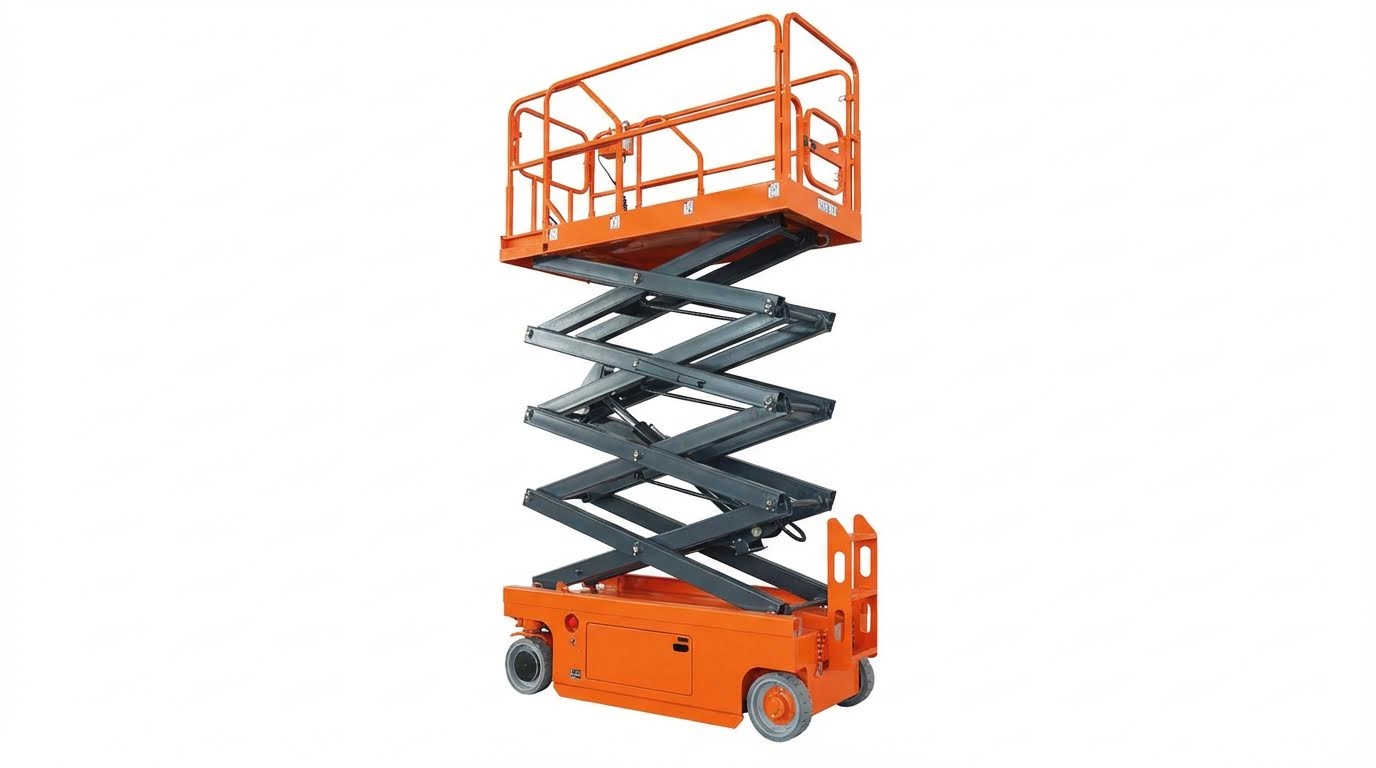
Safe, compliant scissor lift operation depends on trained operators, disciplined inspections, and strict control of loads, wind, and ground conditions—not just on asking “do you need a license for a scissor lift.”
This section turns OSHA and ANSI rules into practical engineering limits you can actually apply on site, from recertification cycles to wind speed cut‑offs and stability envelopes.
Operator training scope and recertification cycles
Operator training for scissor lifts must cover hazard recognition, control use, environmental limits, and emergency procedures, with formal recertification typically on a three‑year cycle.
When people ask do you need a license for a scissor lift, what they really need is documented training and employer authorization that match OSHA scaffold rules and ANSI guidance, not a state driver’s license style card.
- Hazard recognition: Falls, tip‑overs, crush and electrical contact – Reduces the “surprise factors” that cause most serious incidents.
- Fall protection: Guardrail use and when a harness is required – Keeps workers inside the protected envelope.
- Stability limits: Load charts, wind ratings, and slope tolerances – Prevents structural overload and overturning.
- Control mastery: Ground and platform controls, emergency stop – Ensures the operator can react instantly to unsafe motion.
- Emergency procedures: Emergency lowering, fire, and medical response – Minimizes consequences when something does go wrong.
- Environment limits: Maximum wind and required distance from power lines – Aligns day‑to‑day work with the machine’s design envelope.
OSHA requires that scissor lift training address scaffold hazards and safe use under standards such as 29 CFR 1926.451 and 1926.454, including inspections, maintenance, and safe work practices covering scissor lift operation. Training must also teach operators to recognize and avoid site hazards such as uneven surfaces, overhead lines, and adverse weather as highlighted in certification guidance.
Typical certification validity is three years, after which a refresher and skills evaluation are required to keep the operator current with standards and equipment changes according to training providers. Refresher training is also triggered by incidents, near misses, or when new models or controls are introduced per OSHA‑aligned training notes.
| Training Topic | What Must Be Covered | Typical Recurrence | Operational Impact |
|---|---|---|---|
| Core operator training | Controls, inspection, safe use, fall protection | Initial + every 3 years | Forms the basis for employer “authorization to operate.” |
| Emergency procedures | Emergency lowering, fire, medical events | Initial + refreshers | Reduces response time when platform is stuck aloft. |
| Environmental limits | Wind speed, slope, overhead hazards | Initial + toolbox talks | Prevents operation outside design stability envelope. |
| Change‑specific refresher | New model, incident, near miss | As needed | Closes knowledge gaps after changes or failures. |
💡 Field Engineer’s Note: In cold storage or winter work, add a short module on slow hydraulic response and icy slabs. Operators trained only in warm, dry conditions often underestimate how much stopping distance and boom lag increase below 0°C.
How this ties back to “do you need a license for a scissor lift?”
Regulators rarely require a government “license” for scissor lifts. Instead, OSHA expects employers to deliver and document task‑specific training, then formally authorize operators who have demonstrated competence.
Pre-use inspections, maintenance, and digital monitoring
Safe scissor lift operation requires documented pre‑use inspections every shift plus structured maintenance, increasingly supported by telematics and digital monitoring.
OSHA‑aligned guidance specifies daily checks of hydraulic systems, controls, tires, and safety decals before operation, and whenever a new operator takes over per operating instructions. Additional notes emphasize functional checks of emergency stop devices, guardrails, brakes, and tires as part of pre‑use inspections in OSHA 3842 lecture material.
- Daily inspection: Visual and functional checks before first use and at shift changes – Catches leaks, control faults, and damage before elevation.
- Control testing: Test all lift and drive controls each day – Prevents discovering a failure at height.
- Guardrail and gate check: Confirm rails, gates, and toeboards are intact – Maintains the primary fall protection system.
- Hydraulic system check: Look for leaks, damaged hoses, and abnormal noises – Reduces risk of sudden descent or loss of motion.
- Label and decal legibility: Verify capacity, warnings, and controls labels – Ensures critical limits remain visible to operators.
Preventive maintenance programs extend beyond daily checks to periodic structural, hydraulic, and electrical inspections, including welds, pivot pins, bushings, and cylinders for deformation or corrosion as outlined in safety notes. Digital tools such as telematics can log utilization hours, fault codes, and overload events, enabling data‑driven scheduling of inspections and maintenance before failures occur according to modern monitoring practices.
| Task Type | Typical Frequency | Main Checks | Operational Impact |
|---|---|---|---|
| Pre‑use inspection | Daily / per shift | Controls, brakes, tires, guardrails, leaks, decals | Decides if the lift is safe to enter service that day. |
| Functional control test | Daily | Lift, lower, drive, emergency stop | Confirms no hidden control or valve faults. |
| Preventive maintenance | Per manufacturer hours/calendar | Structural welds, pins, hydraulics, electrics | Extends life and maintains original safety factors. |
| Digital monitoring review | Weekly / monthly | Hours, fault codes, overload events | Targets problem units before a breakdown or incident. |
💡 Field Engineer’s Note: On busy sites, the fastest way to improve inspection quality is a simple “no checklist, no key” rule. Tie machine keys to completed digital or paper inspections so supervisors can enforce it in seconds.
Minimum practical content for a daily checklist
At a minimum, the checklist should capture: date, unit ID, hour meter, inspector name, pass/fail for controls, hydraulics, structure, tires, guardrails, decals, and a comments field for defects and lock‑out actions.
Load limits, wind ratings, and stability engineering
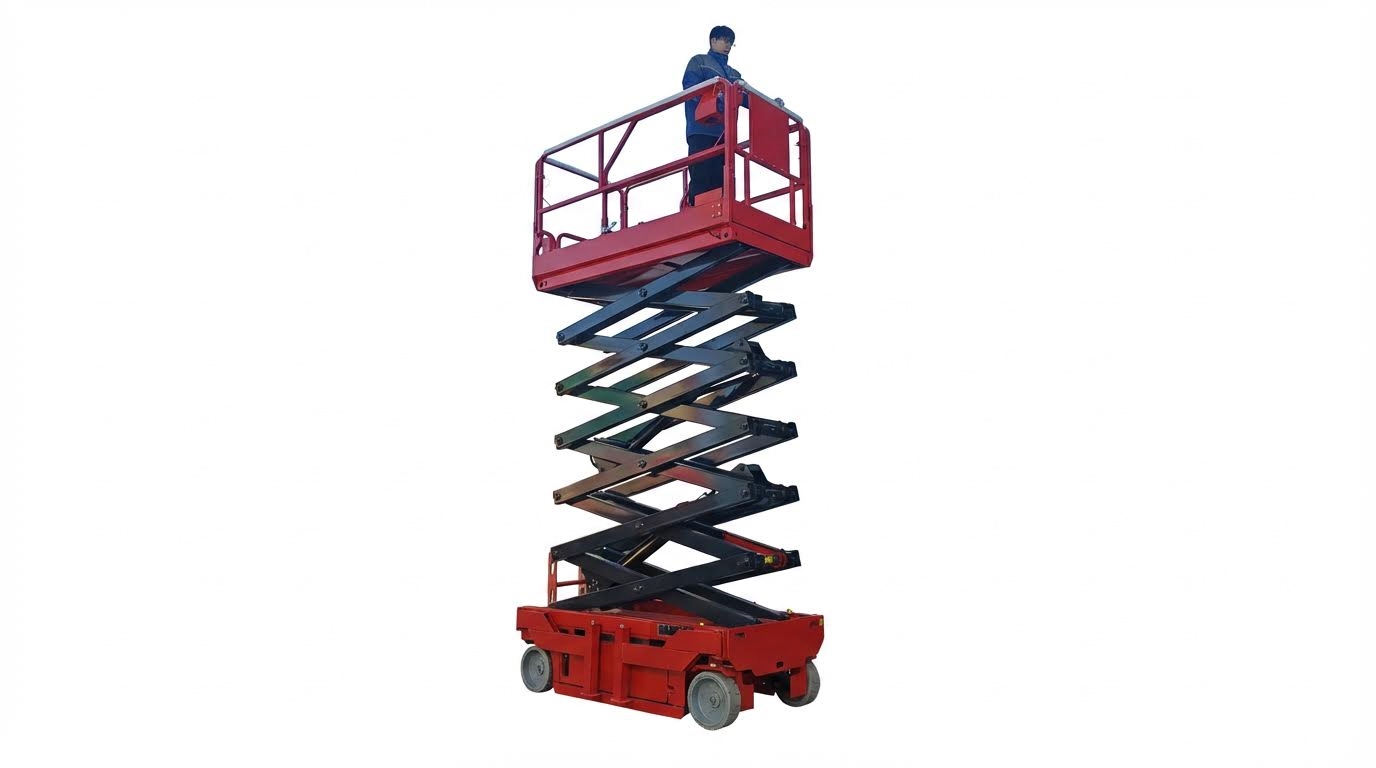
Scissor lifts stay upright only when platform load, wind speed, and ground slope stay inside the engineered stability envelope defined by OSHA and ANSI‑aligned design standards.
OSHA‑based training materials stress that operators must never exceed the maximum rated load, which includes people, tools, and materials combined per certification guidance. Structural design and testing establish platform load capacities with safety factors, and overloading can cause local yielding, fatigue cracking, or even global collapse of the scissor structure as explained in engineering‑focused notes.
For wind, outdoor scissor lift operation is typically restricted to wind speeds below about 12.5 m/s (28 mph), with procedures often using anemometers or weather monitoring to enforce this limit according to OSHA 3842 notes. Stability also depends on level support; many procedures cap operation to about 3° of slope to avoid exceeding the overturning moment capacity in line with training guidance.
| Parameter | Typical Engineering Limit / Practice | Reference Type | Operational Impact |
|---|---|---|---|
| Platform rated load | Per manufacturer plate (people + tools + materials) | OSHA/ANSI‑aligned rating | Overload risks structural damage or collapse. |
| Wind speed limit | ≈ 12.5 m/s (28 mph) outdoor | Training notes / procedures | Above this, tip‑over risk increases sharply. |
| Ground slope limit | ≈ 3° from level | Training notes / procedures | Beyond this, the center of gravity moves toward the edge. |
| Clearance to power lines | ≥ 3.0 m from energized lines | OSHA‑aligned guidance | Reduces arc and contact risk during elevation. |
| Guardrail strength | Withstand ≥ 0.89 kN horizontal load | OSHA/ANSI criteria | Prevents failure if a worker impacts the rail. |
Guardrails form the primary fall protection system on scissor lifts and must meet OSHA criteria for minimum top‑rail height and the ability to withstand at least a 0.89 kN horizontal load without failure, with ANSI standards defining testing and labeling requirements according to OSHA 3842 notes. External devices like ladders or planks are prohibited on the platform because they raise the center of gravity and reduce stability margins, undermining the original design assumptions per the same source.
Positioning practices also support stability and electrical safety: operators should maintain at least 3.0 m clearance from energized power lines and use cones or barricades to reduce collision risk from nearby traffic according to OSHA training materials. These limits are as critical to compliance as any question about whether a formal license is required.
💡 Field Engineer’s Note: On narrow slabs, operators often try to “cheat” slope limits by parking one wheel in a gutter or on a ramp. A quick inclinometer reading at full height usually shocks them—what looks “almost level” at ground can be dangerously out of spec aloft.
Quick field method to check loading and wind
Use a simple rule: add up people and tools by estimate (e.g., 90 kg per person plus tool weight) and compare to the capacity plate. For wind, treat flapping clothing or dust blowing steadily off the ground as a cue to verify speed with an anemometer before elevating outdoors.
Employer Duties, Site Assessments, and Risk Controls
Employers do not just answer “do you need a license for a scissor lift”; they must control who operates lifts, how sites are prepared, and which engineered safeguards keep people inside the platform and away from power lines, traffic, and unstable ground.
Employer responsibilities and documentation
Employers are legally responsible for training, authorizing, and documenting every scissor lift operator, plus maintaining inspection and maintenance records that prove the lift stayed within its design envelope and OSHA/ANSI rules.
- Defined authorization: Only trained and authorized personnel may operate powered access equipment – this answers “do you need a license for a scissor lift” as an employer-controlled authorization, not a DMV-style license.
- OSHA-compliant training: Employers must provide training on hazards, controls, and emergency procedures for scissor lifts classified as mobile scaffolds under scaffold training rules – this mitigates falls, tip-overs, and contact with power lines.
- Certification validity tracking: Typical scissor lift certifications remain valid for about three years and then require refresher training and skills checks to stay compliant – this keeps operators aligned with current standards and site rules.
- Recordkeeping for regulators: Employers must keep training dates, topics, and expiration dates, plus inspection and maintenance logs to demonstrate compliance – this protects the business during OSHA audits or after incidents.
- Pre-use inspection enforcement: Employers must require and document daily/shift inspections that check controls, hydraulics, tires, and decals before operation – this catches leaks, cracked welds, and failed emergency stops before someone goes up.
- Maintenance and structural checks: Employers must schedule preventive maintenance that covers welds, pivot pins, bushings, and hydraulic components to preserve rated capacity – this prevents hidden fatigue or corrosion from turning into platform collapse.
- Fall protection policy: Employers must ensure guardrails meet OSHA strength and height criteria and define when harnesses are required for scissor lifts – this reduces fall risk without unnecessary gear that slows work.
- Discipline and access control: Employers must enforce rules against untrained use, riding on rails, or adding ladders/planks on the platform that change the center of gravity – this protects both workers and the company from preventable incidents.
- Financial accountability: Non-compliance with training and documentation rules can trigger fines over USD 10,000 per violation from enforcement agencies – this turns weak paperwork into a direct cost center.
| Employer Duty | What Must Be Documented | Operational Impact |
|---|---|---|
| Operator authorization | Names, training dates, equipment types | Proves only trained people answer “do you need a license for a scissor lift” with valid authorization. |
| Training content | Hazards, controls, emergency procedures, standards covered | Shows operators were taught how to avoid falls, tip-overs, and electrical contact. |
| Pre-use inspections | Daily/shift checklists with sign-off | Provides traceability when investigating leaks, control failures, or platform damage. |
| Preventive maintenance | Work orders, parts replaced, structural checks | Supports continued use at rated capacity without hidden degradation. |
| Incident and near-miss reports | Event description, root cause, corrective actions | Feeds back into training and site rules to prevent repeat events. |
💡 Field Engineer’s Note: Treat scissor lifts like any critical lifting device: if an operator, inspection, or maintenance entry is not in writing, assume it never happened. On real jobsites, missing signatures are what regulators and insurers look for first.
How employer “authorization” differs from a government license
For scissor lifts, OSHA expects employers to train and authorize operators; there is no government-issued “scissor lift license” like a car license. Your internal authorization plus training records are what inspectors treat as the “license.”
Jobsite hazard assessment and operating envelopes
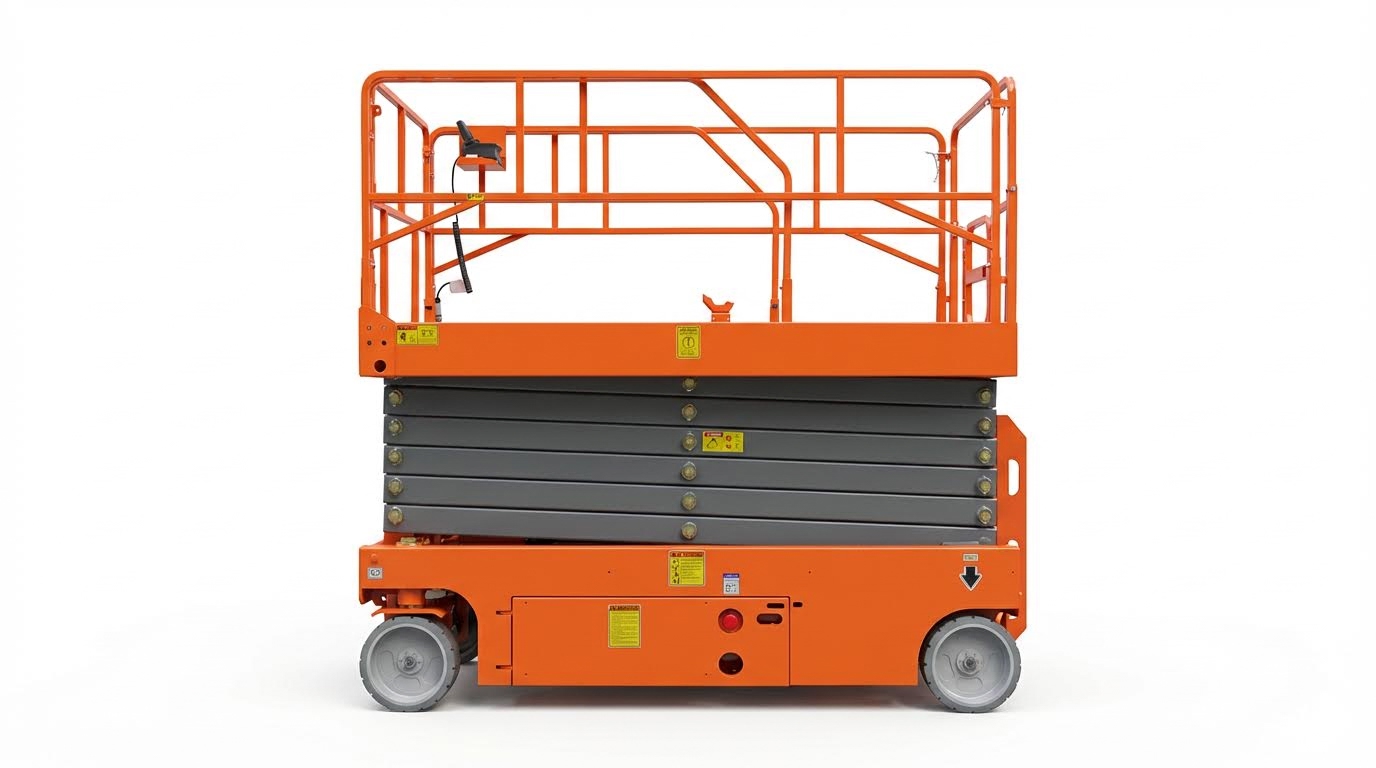
Employers must perform and document jobsite hazard assessments that define where and how a scissor lift can operate safely, including ground conditions, wind limits, power line clearances, and traffic controls.
- Ground and slope assessment: Before use, the site must be checked for level, compacted surfaces within the lift’s slope limit (typically around 3°) to maintain stability – this stops wheel sinkage and side-tip events.
- Wind and weather limits: Employers must define a maximum wind speed for outdoor use, often around 12.5 m/s (28 mph) as a cut-off – this prevents overturning from gusts acting on the platform as a sail.
- Electrical clearance envelope: Hazard assessments must ensure at least 3.0 m clearance from energized power lines for typical low-voltage lines – this reduces arc and contact risks when the platform elevates.
- Traffic and collision control: Employers must plan exclusion zones with cones, barricades, or spotters where vehicles or forklifts operate near the lift to avoid impact – this protects the lift from being struck at the base.
- Overhead obstruction review: Site assessments must flag beams, ductwork, and ceilings that could create crush zones above or beside the platform during elevation – this prevents head and chest crushing incidents.
- Load and task matching: Employers must confirm the combined mass of people, tools, and materials stays within the platform rating established by testing with safety factors – this keeps stresses below the level that causes yielding or fatigue cracks.
- Prohibited height extensions: Hazard controls must explicitly ban ladders, planks, or makeshift platforms on the lift deck because they raise the center of gravity – this preserves the design stability margin.
- Emergency response planning: Assessments must include how to access the base controls and emergency lowering system, and how to respond to fire or medical events at height before work starts – this cuts rescue time when something goes wrong.
| Hazard Category | Key Parameter | Typical Limit / Control | Operational Impact |
|---|---|---|---|
| Ground stability | Surface slope | Within about 3° and on firm, compacted ground per common practice | Determines which zones are approved for elevation. |
| Wind loading | Wind speed at platform height | Do not operate above ~12.5 m/s (28 mph) outdoors for many models | May restrict work windows on exposed roofs or open yards. |
| Electrical contact | Clearance to live lines | Maintain at least 3.0 m separation for typical lines as a minimum | Defines “no-go” buffer zones on site drawings. |
| Platform loading | Total mass (people + tools + materials) | Stay at or below the manufacturer’s rated capacity with safety factors | Limits how many workers and how much material can ride up. |
| Traffic interaction | Moving vehicles nearby | Use cones, barricades, or spotters in mixed-traffic areas to segregate | Reduces collision risk at the base of the lift. |
💡 Field Engineer’s Note: When planning operating envelopes, I always sketch the “no-go” boxes on the floor with paint or tape: wind-exposed edges, soft ground, and power-line corridors. It turns an abstract risk assessment into a visual rule that operators actually follow.
How to turn a hazard assessment into a simple field checklist
Start with a one-page checklist covering ground condition, slope, wind, overhead obstructions, power lines, traffic, and load. Require supervisors to sign it before the first elevation each shift. This keeps the assessment practical instead of a forgotten binder document.</p “” 
Final Thoughts on Scissor Lift Licensing and Compliance
Scissor lift safety does not hinge on a government license. It depends on how well employers and operators respect the engineered limits of the machine and the rules that support them. Training, inspections, and site controls all aim at one thing: keeping the platform stable and workers inside the guardrails.
When teams follow OSHA and ANSI guidance, they treat the capacity plate, wind rating, and slope limits as hard boundaries. They keep guardrails intact, stay clear of power lines, and lock out units with leaks or damage. Daily inspections and planned maintenance then protect the original safety factors built into the structure.
Employer authorization closes the loop. Safety managers verify training, document recertification, and define where each lift may operate. Jobsite assessments turn abstract limits into clear operating envelopes on real ground.
The best practice is simple but strict: train to scaffold standards, enforce pre‑use checks, respect every plate limit, and document each step. If you combine that discipline with well‑designed equipment from suppliers like Atomoving, your scissor lift program will stay both compliant and reliable, even under heavy use.
Frequently Asked Questions
Do You Need a License or Certification to Operate a Scissor Lift?
Operating a scissor lift does not typically require a government-issued license, but proper training and certification are mandatory. According to OSHA standards, workers must be trained to safely operate scissor lifts, recognize hazards, and follow safety protocols. OSHA Scissor Lift Guide.
- Training must cover safe operation and hazard awareness.
- Certification ensures compliance with workplace safety regulations.
What Are the Employer’s Responsibilities for Scissor Lift Training?
Employers are responsible for providing adequate training to employees who will operate scissor lifts. This training is crucial to comply with OSHA requirements and avoid penalties. Without proper training, companies risk fines and increased accident rates. Certification Requirements.
- Employers must ensure all operators are trained and certified.
- Failure to train can result in legal consequences and unsafe conditions.