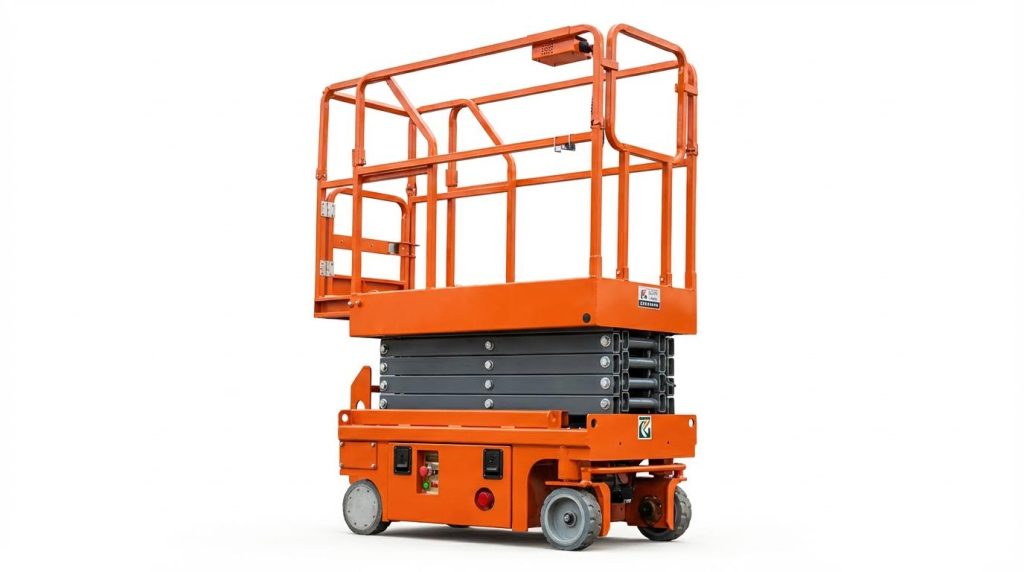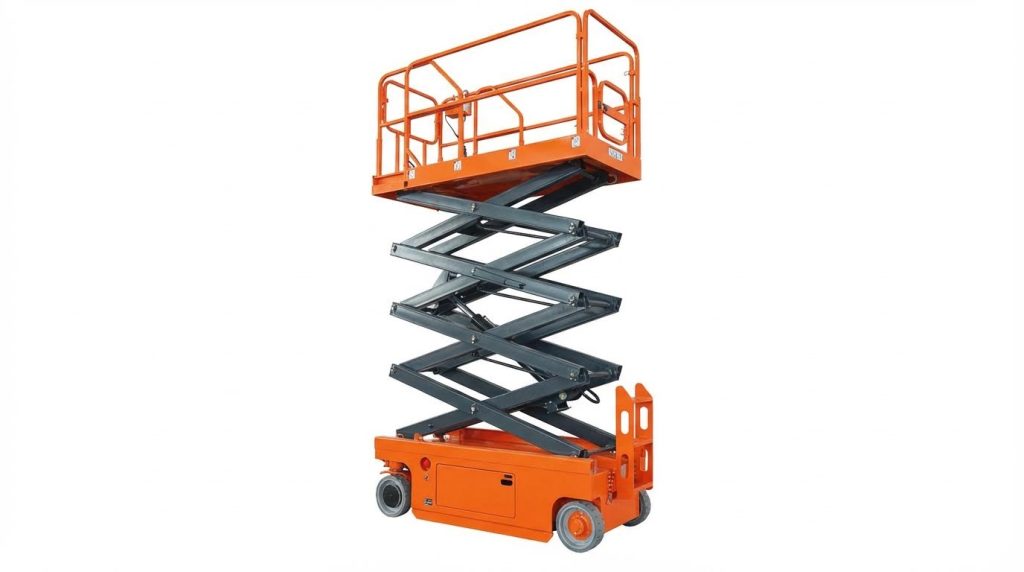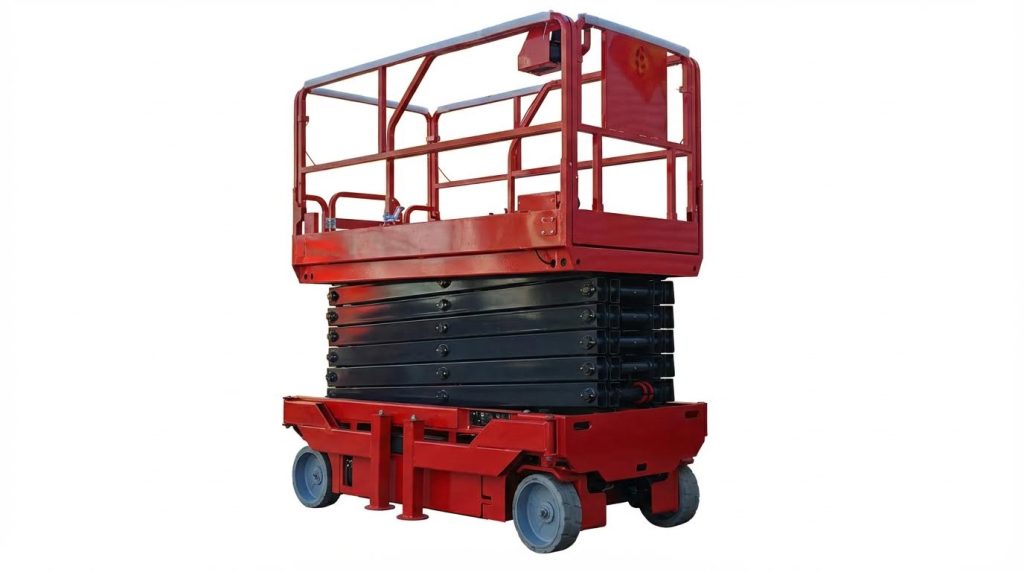
Small scissor lift weight directly controls where you can safely use it, how it loads your floor, and what reinforcement you might need. This guide explains how much a small scissor lift weighs, typical classes and sizes, and how engineers translate those weights into real floor load checks so you avoid slab cracking, instability, or costly damage.
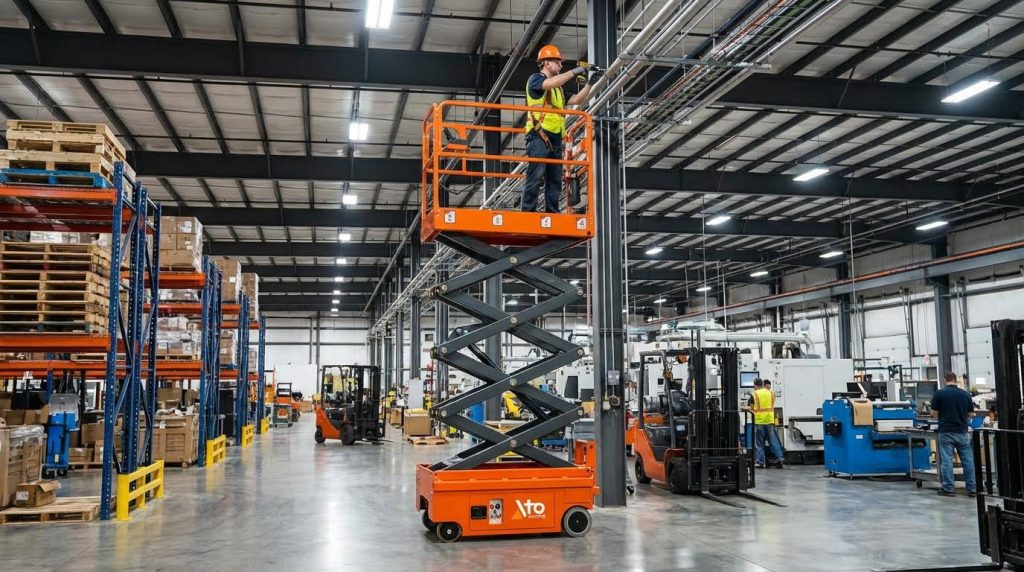
Defining Small Scissor Lifts And Typical Weights
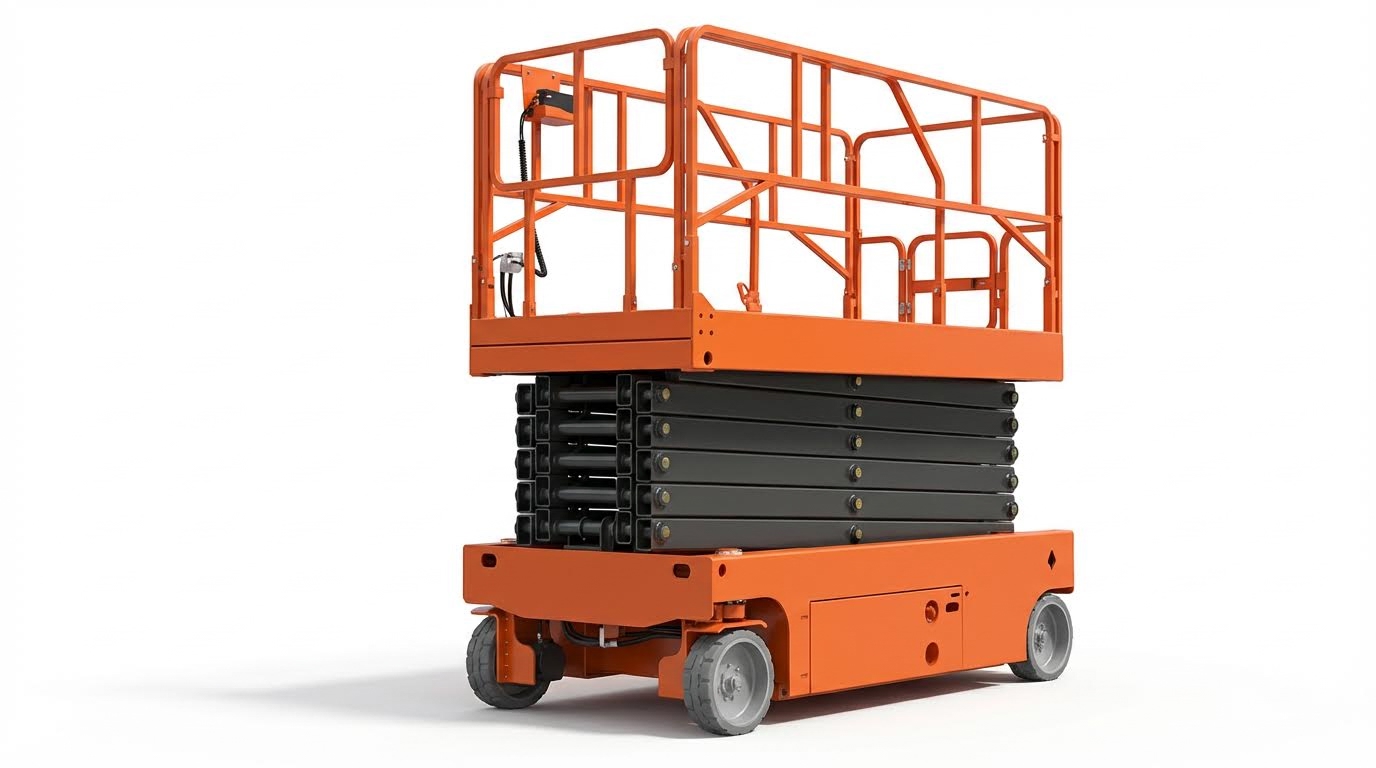
Small scissor lifts are compact, low-height aerial platforms that typically weigh between about 350 kg and 1,600 kg, with some compact self‑propelled units reaching around 3,000 kg depending on height and capacity. Understanding these weight ranges is the starting point for any floor load check and answers the core question: how much does a small scissor lift weigh in real projects.
In this section we break small scissor lifts into practical classes, then link platform height and rated capacity to typical machine weight. This gives facility engineers and contractors quick reference numbers before they call a structural engineer.
Common Classes: Push-Around, Micro, Compact
Small scissor lifts fall into three practical classes—push‑around, micro, and compact—each with distinct weight, footprint, and use cases. The table below focuses on real-world models and typical ranges so you can quickly see where your lift fits.
| Lift Class / Example | Typical Working Height | Rated Capacity | Approx. Machine Weight | Key Dimensions | Best For / Operational Impact |
|---|---|---|---|---|---|
| Push-around tiny (SJY0.3‑3) | 3.0 m platform, ~5.0 m working height | 300 kg | 360 kg | Platform 1,170 × 600 mm | Very light; easy manual positioning on strong office/industrial slabs. |
| Push-around tiny (SJY0.3‑3.9) | 3.9 m platform, ~5.9 m working height | 300 kg | 420 kg | Platform 1,170 × 600 mm | Still “lightweight”; suited to maintenance in tight interior spaces. |
| Micro tracked (GTJZ0307LD) | 3.5 m platform, 5.5 m working height | 200 kg | 810 kg | 1.20 × 0.76 m plan, 1.68 m high | Low ground pressure tracks; good on more delicate slabs or finishes. |
| Micro tracked (GTJZ0407LD) | 4.5 m platform, 6.5 m working height | 200 kg | 990 kg | 1.34 × 0.79 m plan, 1.71 m high | Heavier micro; still compact enough for corridors and small rooms. |
| Compact slab scissor (general) | ~3–9 m platform, 5–11 m working | 225–450 kg (500–1,000 lbs) capacity | 680–1,800 kg (1,500–4,000 lbs) typical | Width often < 0.76 m (30 in) for doorways | Standard “small scissor lift” in many facilities; key for most floor load checks. |
| Mini / micro scissor (general) | ~3–6 m platform, 5–8 m working | Up to ~225 kg (500 lbs) payload | Typically 400–1,000+ kg (range inferred from examples) | Very small deck area; reduced footprint | Best where aisle width and turning space are the main constraints. |
From an engineering standpoint, “small” usually means working heights under about 11 m and machine weights below roughly 2,000–3,000 kg. Anything heavier starts to look like a full‑size construction lift rather than an interior maintenance machine.
- Push-around lifts: Manually positioned, no drive motors – lowest machine weights and simplest floor loading.
- Micro / mini lifts: Very compact deck and footprint – fit narrow aisles and tight rooms while keeping weight moderate.
- Compact self-propelled lifts: Onboard drive and larger batteries – heavier but more productive over larger floor areas.
💡 Field Engineer’s Note: When a client asks “how much does a small scissor lift weigh,” I always clarify whether they mean a 350–450 kg push‑around unit or a 1,500+ kg compact self‑propelled lift; the floor impact is completely different even though both are called “small.”
How this compares to full-size construction scissor lifts
Full‑size rough‑terrain and construction scissor lifts commonly weigh 2,300–5,400 kg (5,000–12,000+ lbs) with working heights of 9–18+ m depending on model. These are usually unsuitable for typical office or light‑duty mezzanine slabs without a detailed structural review.
Typical Weight Ranges By Height And Capacity
The weight of a small scissor lift rises with platform height and rated capacity because taller, stronger structures need more steel and a heavier base. The following table links typical heights and capacities to approximate machine weights to give a quick engineering feel for “how much does a small scissor lift weigh” in each band.
| Lift Type / Use Case | Platform Height Range | Typical Rated Capacity | Typical Machine Weight Range | Operational Impact / Floor Load Relevance |
|---|---|---|---|---|
| Manual table / work-positioner | Up to ~1.0 m | 100–750 kg loads | 40–137 kg typical | Negligible effect on structural slabs; usually governed by local floor finish damage risk. |
| Push-around small scissor | 3.0–3.9 m platform height | Up to 300 kg | 360–420 kg | Light enough for many office and light‑industrial slabs; still check wheel loads near slab edges or trenches. |
| Micro tracked small scissor | 3.5–4.5 m platform, 5.5–6.5 m working heights | 200 kg | 810–990 kg | Track system spreads load; good choice where concentrated wheel loads might overstress thin toppings. |
| Compact slab scissor – low height | ~3 m platform example | 225–450 kg (500–1,000 lbs) | ~560 kg (example value) | Entry point for self‑propelled indoor lifts; may be acceptable on many 125–150 mm industrial slabs after check. |
| Compact slab scissor – mid height | 6–8 m platform | 225–450 kg (500–1,000 lbs) | 900–1,560 kg typical | Most common “small scissor lift” in warehouses; wheel loads start to govern slab design and checks. |
| Ultra‑compact / narrow aisle units | Similar to compact, often 6–10 m | Roughly 230–450 kg | ~2,100–3,000 kg range | High mass on a very small footprint; critical to check concentrated wheel loads on suspended slabs. |
| Stationary small goods scissor lift | Typically 1–4 m stroke | 300–3,000 kg rated capacity | 780–2,200 kg | Anchored to structure; loads are transferred more directly into supporting beams and foundations. |
The key pattern is simple: more height and more capacity mean more steel in the scissor arms, pins, and base frame. That extra steel, plus larger cylinders and batteries, is why a 6–8 m compact scissor can weigh two to three times more than a 3 m model from the same family even when footprint is similar.
- Low-height compact lifts (~3 m): Around 560 kg – often acceptable on robust slabs with basic checks.
- Mid-height compact lifts (6–8 m): 900–1,560 kg – need explicit slab and wheel load verification.
- Narrow-aisle / ultra-compact: 2,100–3,000 kg – treat like heavy equipment, especially on mezzanines.
Why capacity increases machine weight
Raising rated capacity from 300 kg to 3,000 kg in stationary goods lifts increases machine weight from about 780 kg to 2,200 kg because extra steel is required in the scissor arms, base, and platform to resist higher bending and buckling loads along with larger pins and cylinders.
Engineering Drivers Of Lift Weight And Floor Loading
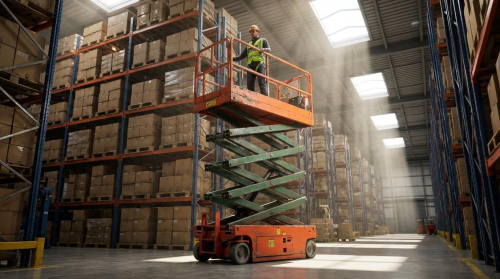
The main engineering drivers of small scissor lift weight and floor loading are structural steel design, safety systems, hydraulics, batteries, and how these masses concentrate into wheel loads on the slab. Understanding these drivers lets you predict how much does a small scissor lift weigh for your project and whether an existing floor can safely support it.
Across models, small self-propelled and compact slab scissor lifts typically weigh from about 560–1,560 kg as platform height and capacity increase, while ultra-compact tracked or push-around units can be as light as 360–990 kg. These same kilograms end up as highly concentrated wheel loads on floor slabs, so the way the machine is built matters just as much as the nameplate weight.
Structural Design, Materials, And Safety Features
Structural geometry, steel grade, and safety hardware are the first reasons why a “small” scissor lift can still be heavy and demanding on floors. As platform height and rated capacity go up, designers add more steel section, larger pins, and a heavier base to control deflection and prevent buckling.
- Scissor arms and base frame: Thicker plates and deeper sections resist bending and buckling – keeps the lift stable at maximum height.
- High-strength steel: Stronger grades allow thinner members in theory – reduces weight for a given capacity, but only to a point.
- Pinned joints and cross-bracing: Larger pins and extra bracing improve stiffness – limits sway and vibration for operators.
- Platform structure: Boxed perimeter beams, floor plate, and stiffeners carry point loads – spreads worker and tool loads safely.
Data from small goods and table lifts shows this clearly: increasing capacity from 300 kg to 3,000 kg can push structure weight from about 780 kg up to 2,200 kg because of added steel in columns, arms, and bases. This trend holds across small lift types.
Safety features also add real, if incremental, mass. Guardrails, mid-rails, toe-boards, mechanical stops, lock valves, and flow-control manifolds all bolt to the structure and increase both total weight and the centre-of-gravity height. Each safety device is small alone but significant in aggregate.
- Guardrail system: Tubular rails, posts, and toe-boards – prevents falls but adds a stiff “cage” mass on top.
- Hydraulic safety blocks and valves: Counterbalance and flow-control valves, blocks, and hoses – prevent uncontrolled descent, add localized weight on chassis.
- Controls and wiring: Control boxes, harnesses, limit switches, sensors – enable safe operation and interlocks.
| Design Aspect | Effect On Weight | Effect On Floor Loads | Operational Impact |
|---|---|---|---|
| Taller scissor stack | Heavier arms, pins, base | Higher total and wheel loads | 6–8 m working height instead of 3 m |
| Higher capacity rating | More steel in frame and platform | Increased static and dynamic reactions | Handles heavier tools and materials safely |
| More safety hardware | Incremental kg on platform and chassis | Slightly higher reactions, higher CoG | Meets OSHA / ANSI fall and motion safeguards |
| High-strength steel | Potentially lower section weight | Lower total mass for same duty | Can improve maneuverability and reduce floor demand |
💡 Field Engineer’s Note: When you ask how much does a small scissor lift weigh, remember that “lightweight” models still carry dense steel bases; even a 560 kg compact unit can punch hard into thin mezzanine slabs if wheel spacing is tight.
Why thin, high-strength steel is not always lighter
In theory, higher strength allows thinner sections. In practice, designers hit limits from local buckling, weld distortion, fatigue life, and manufacturing tolerances. That is why small lifts rarely see dramatic weight drops just from stronger steel.
Hydraulics, Batteries, And Powertrain Mass
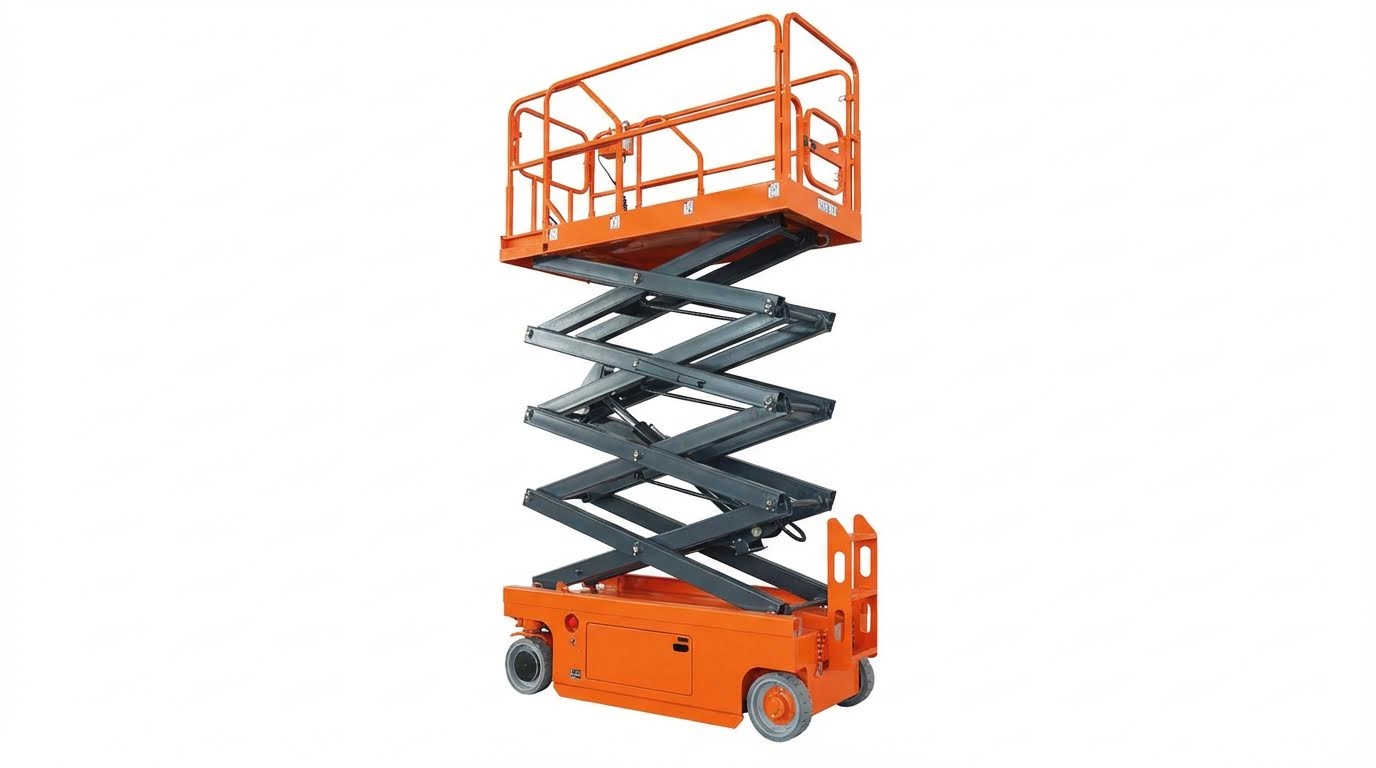
Hydraulic cylinders, power packs, traction motors, and especially batteries are the next major contributors to how much a small scissor lift weighs and how it loads a floor. These systems concentrate heavy components low in the chassis but still drive up wheel reactions.
- Hydraulic cylinders: Thick-walled barrels, rods, and pins – carry lifting force but add concentrated mass.
- Power pack: Pump, electric motor, reservoir, and manifold – high power density, modest but non-trivial weight.
- Hydraulic fluid: Several tens of litres of oil – adds mass and shifts slightly as the lift cycles.
- Batteries: Often the single heaviest subsystem on small self-propelled units – dominates chassis weight and runtime.
Hydraulic systems are common on small scissor lifts because they deliver 85–90% efficiency and high force in compact cylinders, keeping motor sizes moderate even though cylinders, manifolds, and hoses add kilograms. This trade-off is typical across lift families.
Battery and drive choices then shift total weight and floor demand:
- Larger amp-hour batteries: Heavier packs for longer runtime – increases total and wheel loads but reduces charging downtime.
- AC vs DC drive: AC allows smaller motors but needs inverters and cooling – can trim some weight but not eliminate battery mass.
- Tracked vs wheeled chassis: Tracks add rollers and structure – increase machine weight but often reduce contact pressure.
| Example Small Lift Type | Key Powertrain Specs | Approx. Weight | Operational Impact |
|---|---|---|---|
| Push-around scissor (3.0 m platform) | 12 V / 0.8 kW hydraulic power | 360 kg total weight (SJY0.3‑3 Tiny) | Light enough for many mezzanines and tiled slabs |
| Push-around scissor (3.9 m platform) | 12 V / 0.8 kW hydraulic power | 420 kg total weight (SJY0.3‑3.9 Tiny) | Higher reach, +60 kg more into each wheel |
| Tracked mini scissor (3.5 m platform) | 24 V / 1.2 kW hydraulic power | 810 kg total weight (GTJZ0307LD) | Heavier, but tracks reduce local floor pressure |
| Tracked mini scissor (4.5 m platform) | 24 V / 1.2 kW hydraulic power | 990 kg total weight (GTJZ0407LD) | More reach and mass; still compact for indoor use |
These examples show that even within “small” lifts, total weight can more than double as height and powertrain scale up. From a floor designer’s standpoint, the answer to how much does a small scissor lift weigh is not one number but a band driven by platform height, duty cycle, and battery size.
💡 Field Engineer’s Note: In facilities with marginal floor capacity, I often specify push-around units with smaller batteries and shorter duty cycles; trading runtime for 100–200 kg less machine weight can make the difference between acceptable and overstressed slabs.
Runtime vs floor loading – what to ask the supplier
Ask for battery amp-hour rating, total machine mass, and wheelbase. A “long runtime” battery option can add tens of kilograms per wheel. If your slab is sensitive, request the lightest battery that still meets your shift pattern.
Wheel Loads, Contact Pressure, And Slab Design
Wheel loads and contact pressure, not just total lift weight, ultimately govern whether a floor slab can safely carry a small scissor lift. Floors “see” four (or more) concentrated reactions rather than one uniform load.
For example, a compact scissor lift weighing about 1,560 kg (3,440 lb) on four wheels will place roughly one-quarter of its static weight on each wheel, or about 390 kg per wheel, before any dynamic effects. Uneven floors, braking, and turning can increase individual wheel reactions further.
- Small wheel diameters (100–150 mm): Very small contact patches – produce high local bearing stresses in slab or topping.
- Static vs dynamic loads: Moving, braking, and turning increase peak reactions – can crack marginal slabs even if static checks pass.
- Composite deck vs plain concrete: Steel deck ribs change how loads spread – requires specific verification using deck manuals.
| Parameter | Typical Small Lift Value | Floor Design Relevance | Best For… |
|---|---|---|---|
| Total machine weight | 360–1,560 kg (push-around to compact self-propelled) | Sets baseline for wheel loads | Quick screen against slab capacity |
| Number of wheels | 4 (common), more on tracked units | More wheels reduce load per point | Lower point loads on sensitive slabs |
| Wheel diameter | 100–150 mm | Smaller diameter = higher contact pressure | Short, smooth indoor runs |
| Wheel spacing | Short wheelbase on micro / mini lifts | Loads concentrate into smaller slab area | Tight aisles, but higher local stresses |
Engineers treat each wheel as a concentrated load when checking slabs and composite decks. Resources such as the Steel Deck Institute’s Floor Deck Design Manual are used to verify that factored wheel loads remain below the deck’s nominal capacity and that deflection and crack widths meet code limits for serviceability. Frequent lift traffic may justify thicker slabs or added reinforcement.
- Design checks: Compare wheel loads to slab and deck capacity – prevents punching, cracking, or rib failure.
- Retrofits: Steel plates, toppings, or added beams – spread or divert loads when existing capacity is marginal.
- Traffic patterns: Repeated passes in the same lane – accelerate fatigue and crack propagation if not detailed for.
💡 Field Engineer’s Note: On composite metal deck floors, I often see wheel loads that are fine for concrete strength but too high for thin deck ribs; a 1,200–1,500 kg compact lift can demand local plating or traffic lanes aligned with beams.
How to relate “how much does a small scissor lift weigh” to slab design
Start with total machine weight and divide by number of wheels for a first-pass wheel load. Then, ask the supplier for wheel contact dimensions and check this point load against your slab or deck design data. If data is missing, consider a conservative retrofit (plates or toppings) or limit lift size.
Selecting Small Lifts For Existing Floors
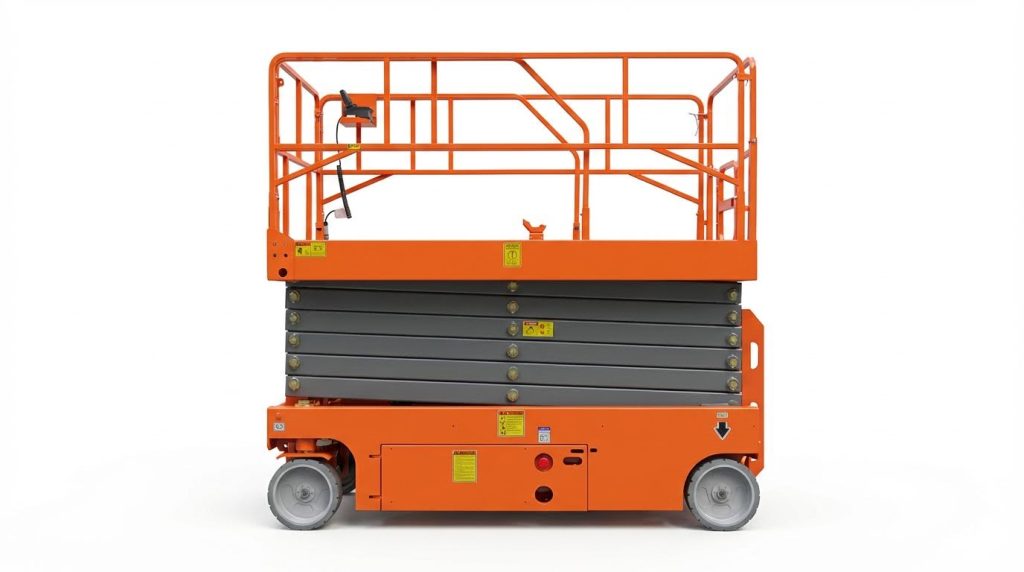
Selecting small scissor lifts for existing floors means matching “how much does a small scissor lift weigh” and its wheel loads to what the slab can safely carry, then adding protection or retrofit measures if capacity is marginal.
For most facilities, the key is to translate catalog weight and capacity into wheel loads and contact pressure, then compare those to the original floor design and code limits before the lift ever rolls inside.
Matching Lift Weight To Building Floor Capacity
Matching lift weight to building floor capacity starts by converting “how much does a small scissor lift weigh” into wheel loads and checking those against the slab’s design live load and concentrated load limits.
Small scissor lifts span a broad weight range. Push-around units can weigh 360–420 kg, with platform heights of 3.0–3.9 m and 300 kg capacity (push-around small scissor lift models). Compact self-propelled and slab-type lifts can weigh 1,500–4,000 lbs (about 680–1,815 kg) with 10–30 ft working heights and 500–1,000 lb (225–450 kg) capacities (compact scissor lifts). Stationary or heavier-duty designs can reach 780–2,200 kg (stationary goods lifts), but those usually do not travel across slabs.
| Lift Type / Example | Typical Weight | Rated Capacity | Typical Use | Floor Impact |
|---|---|---|---|---|
| Push-around tiny (3.0 m) | 360 kg (model SJY0.3-3) | 300 kg | Indoor maintenance, low heights | Low wheel loads; often acceptable on standard office/light industrial slabs. |
| Push-around tiny (3.9 m) | 420 kg (model SJY0.3-3.9) | 300 kg | Indoor maintenance, slightly higher reach | Still relatively low concentrated loads, but check thin mezzanines. |
| Small tracked lift (3.5 m platform) | 810 kg (GTJZ0307LD) | 200 kg | Rougher floors, tighter access | Track contact spreads load; better for weaker slabs than same-weight wheeled units. |
| Small tracked lift (4.5 m platform) | 990 kg (GTJZ0407LD) | 200 kg | Higher reach in compact footprint | Heavier than 800 kg class; wheel/track pressures must be checked on older slabs. |
| Compact slab lift (self-propelled) | ≈680–1,815 kg (1,500–4,000 lbs) | ≈225–450 kg | Indoor construction, fit-out | Higher wheel loads; critical on mezzanines and composite deck floors. |
This table answers “how much does a small scissor lift weigh” with a range from about 360 kg push-arounds to roughly 1,800 kg compact electrics. The heavier the machine, the more attention you must pay to local wheel loads and not just average live load.
- Define the governing area: Identify where the lift will travel and work – different bays or mezzanines may have different slab thickness and reinforcement.
- Obtain floor design data: Retrieve original drawings or calculations – you need slab thickness, concrete strength, reinforcement, and design live load.
- Determine total operating weight: Add lift self-weight plus maximum rated load – this is the worst-case for wheel reactions.
- Estimate wheel reactions: Use manufacturer data where available, or conservatively assume one wheel may see 30–35% of total weight – dynamic effects and uneven floors increase one-wheel loads (wheel load behavior).
- Compare with slab capacity: Check both global live load and local punching/bearing – a slab that carries pallets may still crack under high point loads.
💡 Field Engineer’s Note: On older composite deck mezzanines, compact 1,500–2,000 kg lifts often overstressed ribs near openings long before reaching the nominal live load; spreading loads with steel plates or switching to a tracked or lighter push-around unit prevented cracking and costly repairs.
How “how much does a small scissor lift weigh” ties to live load ratings
Typical office or light commercial floors might be designed for uniform live loads around 2–5 kN/m², while industrial slabs can be much higher. A 1,800 kg compact lift plus 300 kg payload over a footprint of roughly 1.8 m × 0.8 m can locally exceed those values, especially when one wheel carries a disproportionate share. That is why wheel loads and contact areas matter more than the catalog total weight alone.
Verifying Wheel Loads, Codes, And Retrofit Options
Verifying wheel loads, codes, and retrofit options means checking concentrated reactions from the lift against code-based slab capacities, then adding plates, toppings, or supports if the margin is too small.
Floors feel the lift through its wheels or tracks, not through the nameplate weight. A compact lift of about 3,440 lbs (≈1,560 kg) may put roughly one-quarter of its weight on a single wheel under static conditions, with even higher reactions under dynamic movement or on uneven floors (wheel load example). Wheel diameters around 100–150 mm generate small contact patches and high local stresses, which can govern slab design and crack control.
| Check Item | What To Verify | Why It Matters | Typical Outcome / Action |
|---|---|---|---|
| Wheel or track loads | Max static and dynamic wheel reactions from manufacturer or engineering estimate | Slabs behave differently under point loads than uniform loads (deck behavior) | May need to limit lift routing, add plates, or choose lighter equipment. |
| Slab/deck type | Plain concrete vs composite steel deck; thickness, rib geometry | Composite deck ribs can be more sensitive to wheel placement (deck manuals) | Use deck manuals to confirm wheel load limits; adjust wheel paths to sit over beams. |
| Code and manual criteria | Factored load vs resistance, crack width, deflection limits | Codes limit both strength and serviceability to protect finishes and long-term performance (code checks) | Lift use may be restricted or allowed only with monitoring and maintenance. |
| Traffic frequency | One-time use vs daily traffic | Repeated wheel passes can cause fatigue and crack growth (frequent traffic) | High traffic may require thicker toppings or additional reinforcement. |
| Retrofit feasibility | Access to underside, ability to add plates or toppings | Retrofits spread loads or add stiffness where needed (retrofit options) | Common solutions: steel plates, bonded topping, added beams/joists, or reduced lift size. |
- Use design manuals: For composite slabs, consult resources like floor deck design manuals to verify allowable wheel loads – this aligns lift use with how the slab was originally engineered.
- Plan wheel paths: Route the lift so wheels track over beams or girders where possible – this shortens span lengths and reduces bending.
- Apply surface plates: Use steel plates under wheels or along travel paths – plates enlarge the contact area and cut bearing pressure.
- Consider toppings or beams: If margins are small, add a bonded concrete topping or new beams/joists below – this increases capacity without rebuilding the entire floor.
- Load testing: For uncertain structures, carry out monitored load tests at no-load and full-load – crack width and deflection monitoring gives real performance data before routine lift use (load test guidance).
When to downgrade to a lighter or different lift
If checks show that wheel loads from a 1,500–1,800 kg compact lift are close to or exceed slab limits, the most economical fix is often to select a lighter push-around unit in the 360–420 kg range or a small tracked lift around 810–990 kg. Tracks or larger tires reduce contact pressure, and lighter frames cut wheel reactions, making it easier to comply with code limits and avoid structural retrofits while still reaching required working heights.
Final Considerations For Safe Small Lift Use
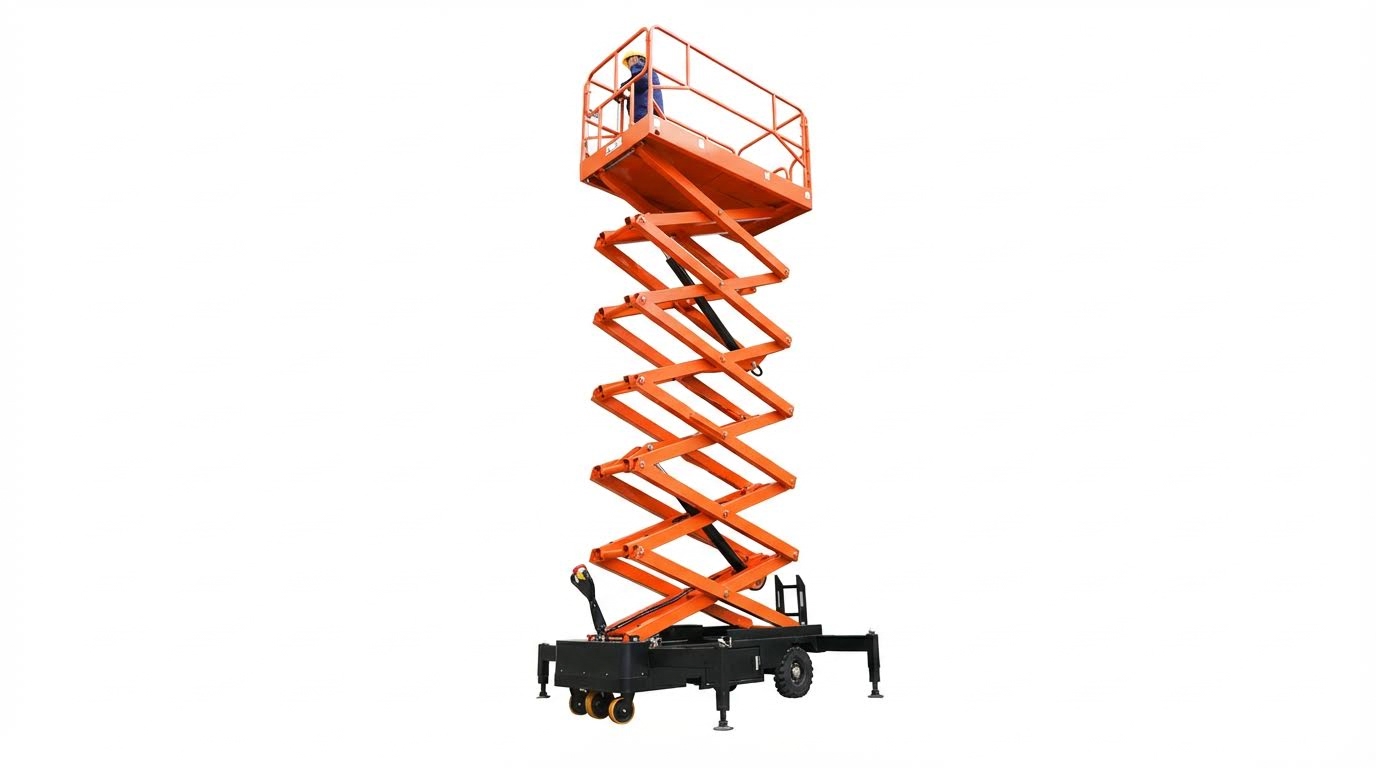
Safe small scissor lift use depends on respecting weight, wheel loads, and floor capacity, then backing that up with disciplined inspection, training, and operating procedures every single shift.
By the time you ask “how much does a small scissor lift weigh,” you should also be asking where that mass goes into the floor, how it moves, and who is trained to control it. This final section ties weight and floor loading back into daily safety practice.
- Understand the real weight on site: Confirm the actual machine mass from the data plate and manual – do not rely on catalog averages when planning floor loads.
- Add people and tools to your load model: Include 150–200 kg for personnel and tools on the platform – this affects stability and wheel reactions.
- Stay within rated capacity: Never exceed the manufacturer’s platform load rating – overloading raises the center of gravity and can overstress the structure.
- Respect height vs. weight: Remember that higher lifts are heavier and more demanding on floors – a 6–8 m compact lift can weigh 900–1,560 kg, far above a 3 m unit according to engineering guidance – so never swap “just any” lift into a job.
- Use the smallest suitable lift: Choose the lowest working height and capacity that still does the task – this minimizes total mass and wheel loads on marginal slabs.
Because operators and planners often only think in total machine weight, it helps to keep some typical ranges in mind and relate them directly to floor loading concerns.
| Lift Type | Typical Weight | Typical Use Case | Floor Load Implication |
|---|---|---|---|
| Push-around tiny scissor lift (3–3.9 m) | 360–420 kg for models with 3–3.9 m platform height | Indoor maintenance, very tight spaces | Low overall load but still high local pressure at small wheels; often acceptable on light slabs with checks. |
| Small tracked scissor lift (3.5–4.5 m) | 810–990 kg for 3.5–4.5 m tracked units | Uneven or sensitive surfaces | Tracks spread load better than small wheels but still act as concentrated strips; check slab and toppings. |
| Compact slab / micro scissor lift | ≈680–1,800 kg (1,500–4,000 lbs) for compact models | Indoor fit-out, facility maintenance | Often critical for composite deck slabs; individual wheel loads can govern design and require engineering review. |
| Full-size construction scissor lift | ≈2,270–5,440+ kg (5,000–12,000+ lbs) for full-size units | Outdoor construction, heavy trades | Usually unsuitable for light mezzanines or office slabs without structural verification and possible retrofit. |
💡 Field Engineer’s Note: On marginal floors, the highest risk is often at door thresholds, slab joints, and around floor openings. Wheel loads can spike where support is discontinuous, so treat these zones as critical checkpoints before moving any lift across them.
Operational Safety Checklist Before Every Lift Use
Daily discipline around inspections and environment checks turns your weight and floor calculations into real-world safety.
- Pre-use inspection: Check hydraulics, tires or tracks, guardrails, controls, and emergency lowering – this prevents mechanical failures that can overload one wheel or cause sudden drops as recommended in safety guidance.
- Work area survey: Remove debris, check for holes, soft spots, or ramps, and confirm overhead clearance – uneven support can double wheel reactions on one corner.
- Wind and weather: Avoid high winds and slippery surfaces – lateral loads and reduced friction can compromise stability even within rated weight.
- Guardrails and fall protection: Ensure gates are closed and fall protection is used where required – this mitigates the consequence of any unexpected movement.
- Travel speed control: Move slowly, especially over joints and transitions – dynamic impacts increase effective wheel loads beyond static calculations.
Training, Documentation, And Compliance
Even the best-chosen lift becomes unsafe if operators do not understand load limits, stability, and local floor constraints.
- Use only trained operators: Restrict controls to certified personnel whose training covers load charts, stability, and emergency response – this aligns with typical OSHA/ANSI expectations described in safety resources.
- Refresh training after changes: Re-train when people change roles, when new lift types arrive, or after incidents – this keeps weight and floor-load awareness current.
- Maintain inspection and training records: Keep logbooks for daily checks, annual inspections, and operator certificates – this proves due diligence and helps spot patterns like repeated floor cracking in the same zone.
- Follow manufacturer maintenance intervals: Schedule professional inspections at least annually or as specified – maintains braking, steering, and hydraulic integrity so wheel loads remain predictable per maintenance guidance.
How to connect “how much does a small scissor lift weigh” to floor safety
When you ask “how much does a small scissor lift weigh,” treat the answer as the starting point, not the end. Convert the catalog weight to per-wheel loads, add people and tools, then compare those concentrated loads to the known or estimated capacity of your slab or deck. If there is any doubt, downsize the lift, add temporary load-spreading plates, or bring in a structural engineer before you roll the machine onto the floor.
Final Considerations For Safe Small Lift Use
Small scissor lift safety comes from treating weight, geometry, and floor capacity as one system. Structural steel, hydraulics, batteries, and safety hardware all add mass, which then concentrates into wheel loads that your slab must resist without cracking or punching. Taller, higher-capacity lifts need heavier bases and larger cylinders, so a modest height increase can double machine weight and wheel reactions.
Floor slabs, especially mezzanines and composite decks, do not see a uniform load. They see four or more intense point loads from small wheels or narrow tracks. Engineers must convert catalog weight plus payload into per-wheel reactions, then check those against design data and code limits. Where margins are tight, steel plates, toppings, or added beams can spread or divert loads. In other cases, the best solution is to step down to a lighter, shorter, or tracked unit from Atomoving.
The practical rule is simple. Choose the smallest lift that meets the task, confirm real wheel loads on the actual floor, and enforce disciplined inspection and operator training. When structural checks, equipment choice, and daily procedures align, small scissor lifts deliver safe, productive access without hidden damage to your building.
Frequently Asked Questions
How much does a small scissor lift weigh?
Small scissor lifts typically weigh between 1,600 lbs (725 kg) and 2,000 lbs (907 kg), depending on the model and specifications. For example, a mini scissor lift with a platform height of 10 feet can weigh approximately 1,950 lbs (885 kg). Scissor Lift Specs.
What factors influence the weight of a small scissor lift?
The weight of a small scissor lift is influenced by several factors, including its platform height, lifting capacity, and construction materials. Generally, lifts designed for higher platforms or heavier loads will weigh more due to reinforced components. Always check the manufacturer’s specifications for precise details.
- Platform height
- Lifting capacity
- Construction materials