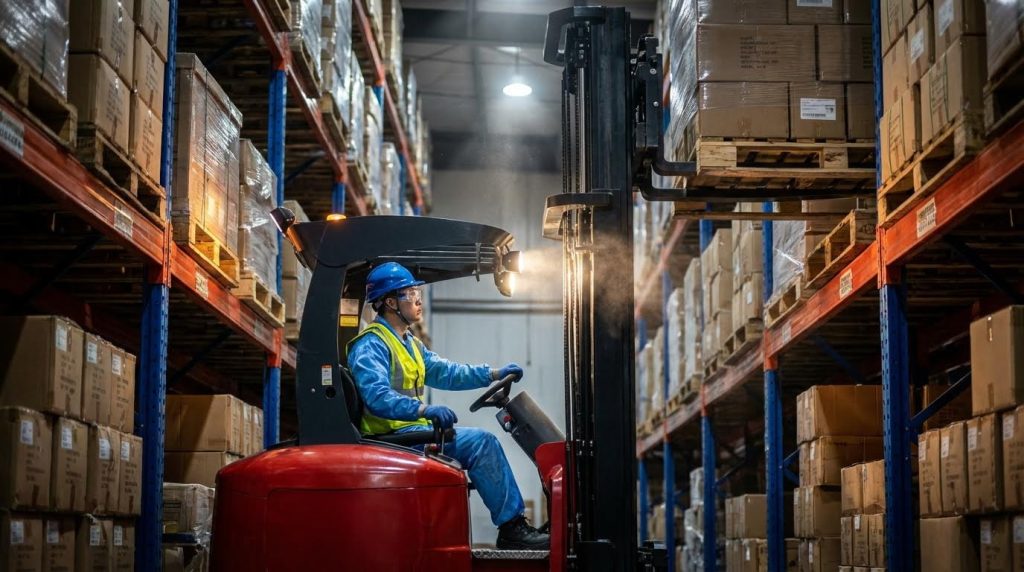
If you are searching for how to move a dead electric forklift, you need methods that protect people, equipment, and your floor. This guide explains safe, code-conscious options from manual pushing to towing and temporary power. You will learn how dead batteries affect brakes and steering, when brake release and tow bars are appropriate, and how to plan a controlled move that avoids costly damage and regulatory issues.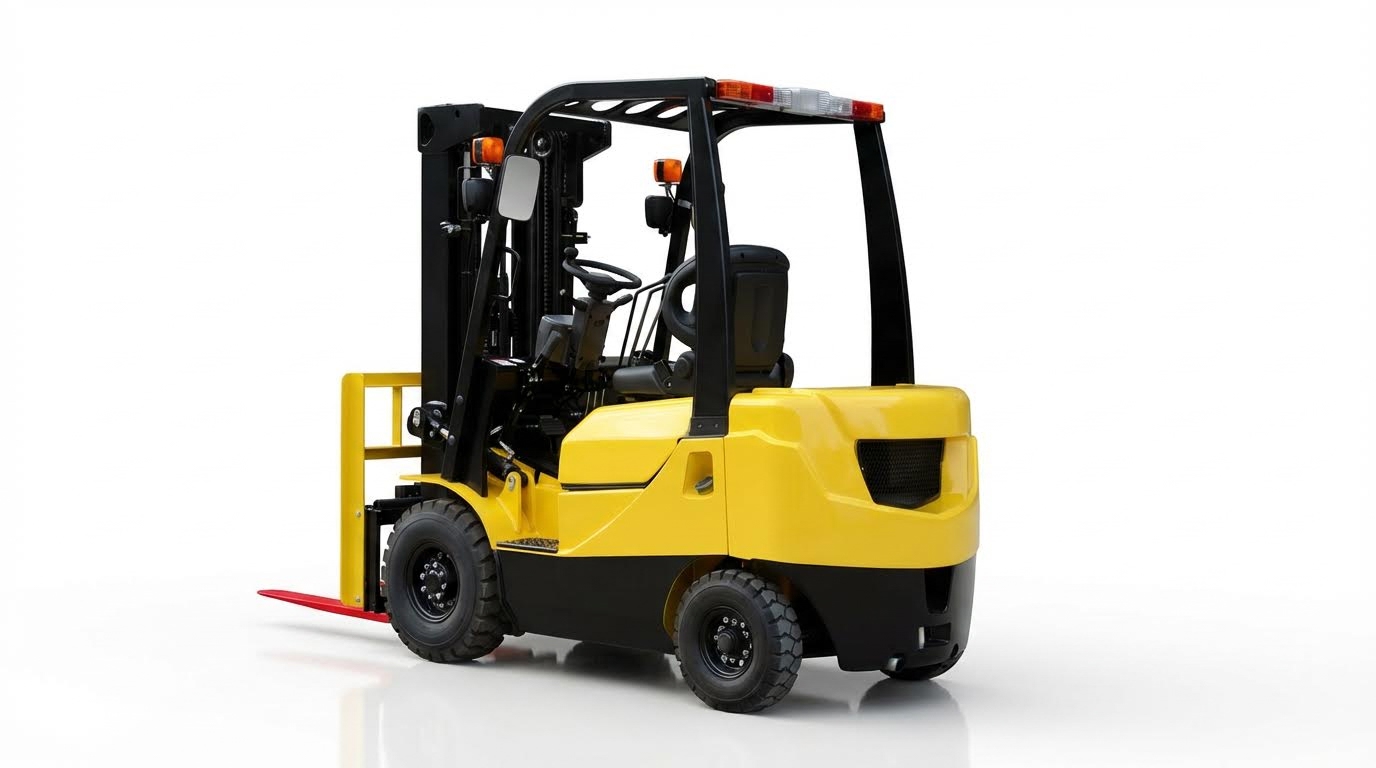
Core Principles Of Moving A Dead Electric Forklift
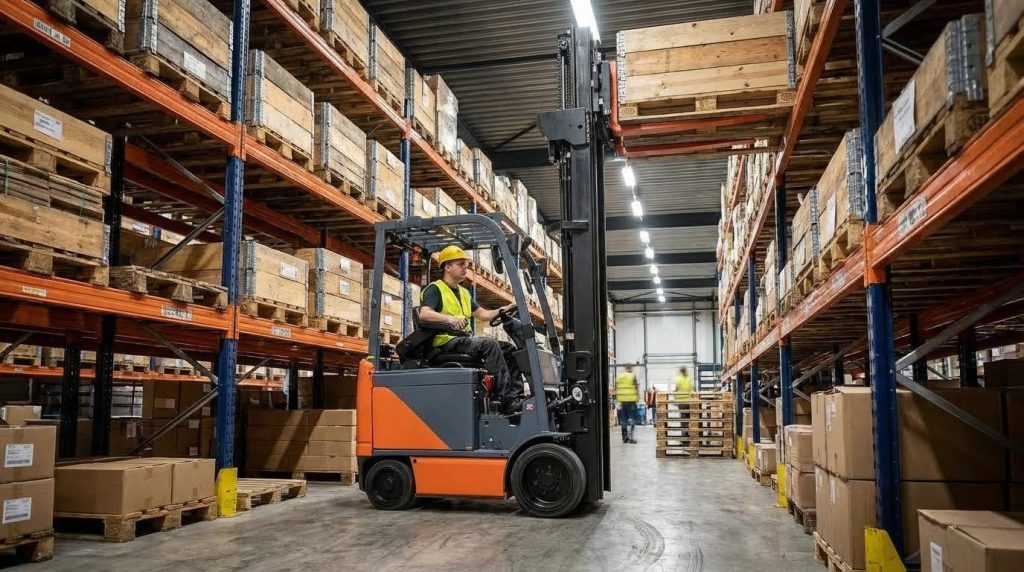
The core principles of how to move a dead electric forklift are understanding how dead batteries affect drive and brakes, how regenerative and parking brakes interact, and when manual pushing is mechanically and safely feasible.
How Dead Batteries Affect Drive And Brakes
When a battery dies, traction power disappears, steering effort increases sharply, and the regenerative brake system stops working while the mechanical parking brake usually stays engaged.
On most electric forklifts, the traction motors and electronic controllers rely entirely on battery voltage. Once voltage drops too low, the truck cannot drive, and power steering assist is lost, so you need about three times the normal steering force to turn the wheels. At the same time, the regenerative braking that normally slows the truck when you release the accelerator is inactive, but the mechanical parking brake or spring-applied brake remains applied, creating strong rolling resistance and making the truck feel “glued” to the floor. This design prevents uncontrolled rolling but also means you cannot simply push the truck unless you deliberately release the brake using the correct procedure. Trying to drag the truck with the parking brake still engaged overheats driveline components and can damage transmission clutches, with repair costs that can exceed the value of a year of maintenance savings. Published guidance also warns that dragging a forklift with brakes applied can overheat transmission parts and lead to expensive failures.
- Loss of drive: Battery voltage collapse disables traction controllers – the truck will not move under its own power.
- Loss of regen braking: Electronics shut down, so regen torque goes to zero – you now rely only on mechanical brakes.
- Parking brake still on: Spring-applied or mechanical brake stays engaged – this intentionally prevents roll-away but resists towing or pushing.
- Heavier steering: No power assist in steering circuit – operators underestimate the effort needed to change direction.
💡 Field Engineer’s Note: Treat any dead electric forklift as if the brakes are fully on until you have positively identified and tested the correct brake release; assuming “it will roll if we just pull harder” is how transmissions and wheel ends get destroyed in one move.
Understanding Regenerative And Parking Brakes
Regenerative braking and mechanical parking brakes work together in normal use, but only the mechanical brake protects you once the battery is dead.
In normal operation, releasing the accelerator triggers regenerative braking: the drive motor becomes a generator, converting kinetic energy into electrical energy and feeding it back into the battery. This slows the truck smoothly and reduces wear on friction brakes. When the battery is flat or the electrical system shuts down, this regenerative function is completely inactive, so there is no “engine braking” effect at all. What remains is the mechanical brake system, usually a spring-applied, electrically released parking brake or a cable-operated brake. When power is lost, these brakes default to the applied position as a fail-safe, which is why a dead truck is so hard to move by hand. Guidance on moving dead electric forklifts notes that regenerative brakes stop working with no power, while the mechanical brake usually stays engaged, intentionally resisting movement.
| Brake Type | Power Requirement | Typical Function | Behavior With Dead Battery | Operational Impact |
|---|---|---|---|---|
| Regenerative (electric motor) | Needs controller + battery voltage | Slows truck and recharges battery during deceleration | Inactive; provides no braking torque | No “engine braking”; truck can free-roll if mechanical brakes are released on a slope. |
| Service brake (hydraulic / friction) | Mechanical foot force, may have assist | Primary stopping system during normal driving | Still works if hydraulics are intact, but pedal may feel heavier | Relies on operator input; must be tested before any powered relocation. |
| Parking brake (spring-applied or mechanical) | Usually released electrically or by cable | Holds truck when parked, prevents roll-away | Defaults to “applied” when power is lost | Must be positively released before towing or pushing to avoid component damage. |
- Regenerative brake: Needs live electronics to function – do not count on it when planning a move with a dead truck.
- Parking brake design: Spring-applied, power-released on many electrics – no power means the brake clamps on by design.
- Manual release points: Some models have levers near the operator compartment – these are the correct tools to free the truck for short, controlled moves.
💡 Field Engineer’s Note: Before you touch any manual release, block the wheels front and rear with chocks; once you defeat a spring-applied brake on even a 3,000 kg truck, a 2–3% floor slope is enough to start it rolling.
When Manual Pushing Is Technically Feasible
Manual pushing is only technically feasible for smaller electric forklifts on smooth, level floors, over very short distances, and only after you have safely released the parking brake.
From a physics and safety standpoint, you should only consider manual pushing when the truck mass is modest, the route is flat and clear, and the distance is short. Published guidance indicates that smaller forklifts under about 5,000 lbs (≈2,270 kg) can sometimes be pushed manually if the parking brake is properly released, the surface is smooth and level, and several people push in a coordinated way. Recommendations for how to move a dead electric forklift note that at least three people should push, on level ground, with the parking brake manually released, and that this is suitable only for very short distances. Any slope, tight turns, or obstacles quickly turn manual pushing into an uncontrolled risk.
| Condition | Recommended Threshold / Setup | Reason | Best For… |
|---|---|---|---|
| Forklift weight | ≤2,300 kg (≈5,000 lbs) | Above this, rolling resistance and steering effort become excessive for manual crews. | Small warehouse electrics needing relocation a few meters. |
| Floor gradient | 0% (strictly level); avoid >1–2% | Even slight slopes can accelerate a free-rolling truck beyond what people can restrain. | Flat indoor concrete floors only. |
| Surface condition | Smooth, clean concrete; no debris | Debris and joints multiply push force and can cause sudden stops. | Short straight routes between nearby bays. |
| Distance | “Very short” – typically ≤5–10 m | Longer pushes fatigue the crew and reduce control. | Clearing a doorway, moving off a charger bay. |
| Crew size | ≥3 trained people | Spreads force and maintains control and communication. | Coordinated, slow repositioning. |
- Brake release first: Use the designed manual parking brake release – pushing against an applied brake risks damage and sudden lurching when it finally frees.
- Route preparation: Clear obstacles, confirm level, and set a fixed stop point – you need a defined “end of travel” you can hold safely.
- Communication: Assign one person as leader and one at the steering position – this prevents conflicting push directions and sudden side loads.
- Limits: Do not use manual pushing to navigate tight aisles or ramps – tow bars, skates, or powered solutions are safer and more controllable.
How to quickly assess if pushing is realistic
Check the data plate for truck weight and capacity. If the truck is a typical 1,500–2,000 kg capacity electric, its unladen mass will often be in the 2,000–3,000 kg range, which already pushes the upper bound of safe manual handling. Confirm the floor is truly level by checking for drains or visible slope. If you cannot hold the truck in place by leaning your body weight against it with the brake released, manual pushing is not appropriate.
💡 Field Engineer’s Note: In practice, if you need more than three people to get a dead electric forklift moving on level concrete, that truck should be treated as “tow or lift only” – forcing it with manpower usually ends in foot injuries, crushed hands, or bent steering linkages.
Technical Methods: Brake Release, Towing, And Power Options
This section explains how to move a dead electric forklift safely by releasing brakes, using towing equipment, or restoring limited power, so you avoid damage, runaways, and electrical faults.
If you want to know how to move a dead electric forklift correctly, you must first choose the right technical method for the situation, then control braking, speed, and route at every moment.
- Core Goal: Restore rolling control – So the truck moves only when and where you decide.
- Main Options: Brake release, towing, or temporary power – Each suits different weight, distance, and floor conditions.
- Non‑Negotiables: Flat route, clear area, forks down, mast back – Reduces tip‑over and crush risk.
💡 Field Engineer’s Note: Decide your method before touching the truck: “roll only” (tow / skates) or “drive under power.” Mixing both mid‑job is when most near‑misses and component damage happen.
Identifying And Releasing Mechanical Parking Brakes
Releasing the mechanical parking brake safely is usually the first technical step before any attempt to move a dead electric forklift by pushing, towing, or skates.
On most electric forklifts, regenerative braking stops working when the battery is dead, but the mechanical parking brake stays locked and resists motion. You must locate and operate the correct manual release, or you will drag locked wheels and overheat components. The exact hardware varies, but the process is broadly similar.
- Know Your Brake Type: Regenerative + mechanical park brake – Explains why the truck will not roll when power is lost.
- Find The Release: Look near the steer axle, drive axle, or under the floorboard – Most models provide a lever or screw‑type release.
- Confirm Neutral: Gear selector in neutral, key off, wheels chocked – Prevents unexpected motion as the brake frees.
- Check Wheel Status: After release, verify all braked wheels turn by hand – Avoids dragging a partially engaged brake.
Dead electric forklifts combine regenerative and mechanical parking systems; when power fails, regen is inactive but the mechanical brake remains engaged, preventing rolling unless you use the manual release mechanism. Understanding this interaction is critical before any move. Some models place the release lever close to the operator compartment or near the drive motor, specifically to allow controlled relocation when the truck is disabled.
- Step 1: Secure the truck – Chock wheels and ensure level ground to prevent an immediate roll once the brake releases.
- Step 2: Lower forks and tilt mast back – Lowers the centre of gravity and removes potential snag points.
- Step 3: Locate the manual park‑brake release – Prevents you from forcing linkages or damaging cables.
- Step 4: Apply steady force to the release device – Avoids bending rods or over‑torquing release screws.
- Step 5: Test wheel rotation slowly – Confirms full release and identifies any dragging brake before towing or pushing.
When Manual Pushing After Brake Release Makes Sense
Manual pushing is usually only realistic on smaller electric forklifts under about 2,300 kg (5,000 lbs), on smooth, level concrete, and for very short distances. With the parking brake released, at least three people should push slowly while maintaining constant communication and staying clear of pinch points. This method is not suitable for slopes or tight turns.
💡 Field Engineer’s Note: If you must wind a release screw more than a few turns or use a long cheater bar, stop. You may be fighting against internal damage or corrosion, and forcing it can snap a brake rod or crack the backing plate.
Towing With Tow Bars And Alternative Moving Equipment
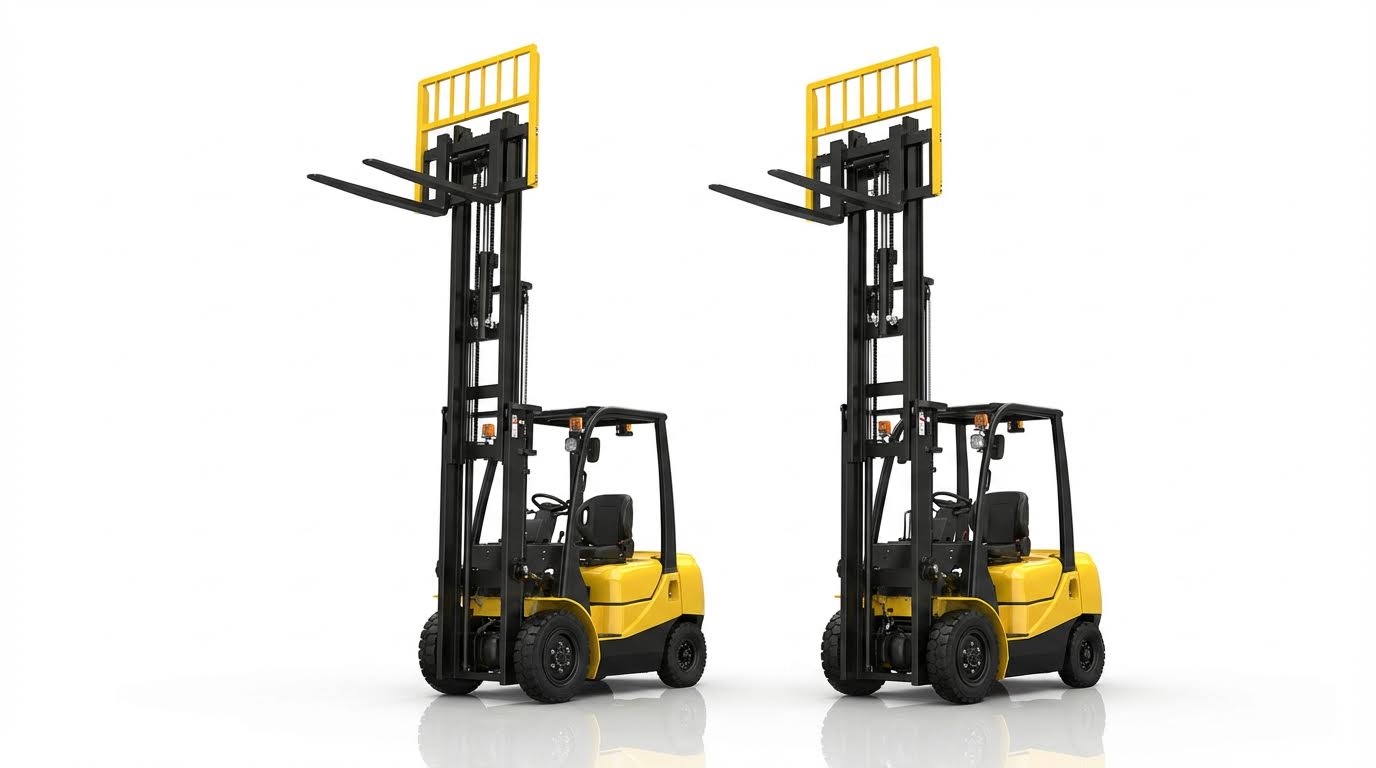
Towing with a rigid tow bar or using skates and dollies is often the safest way to move a dead electric forklift when you cannot or do not want to re‑energize the truck.
Once the mechanical brake is released and the route is confirmed flat and clear, a rigid tow bar gives controlled, low‑speed movement using another powered vehicle. Where towing is not practical, you can instead lift or roll the forklift on specialized moving equipment such as hydraulic skates, air casters, or wheel skates.
| Method | Typical Capacity | Best Use Case | Operational Impact |
|---|---|---|---|
| Rigid Tow Bar | Match or exceed truck mass (e.g. 2,000–6,000 kg) | Short relocations on flat floors using another forklift | Positive control, no slack; keeps the dead truck tracking behind the tug vehicle |
| Moving Dollies | Up to and above 9,000 kg (20,000 lbs) | Shifting heavy units across open, smooth floors | Spreads load, reduces floor point‑loading and push force |
| Air Casters | Large multi‑tonne trucks on very smooth concrete | Precision moves where near‑frictionless motion is needed | Allows “floating” the forklift sideways in tight spaces |
| Hydraulic Skates | Several thousand kg per skate set | Tight, congested areas and machine‑room style moves | Fine steering control under the load with jacking capability |
| Wheel Skates | Up to about 6,000 kg | When you must keep the forklift on its own wheels | Enables 360° rotation with low manual force |
A rigid tow bar should connect only to designated towing points on the dead forklift and on the towing vehicle, and the bar must be rated for at least the forklift’s full weight to maintain structural safety. The towing speed should not exceed about 1–1.5 m/s (2–3 mph), and all connections must be checked before movement with a spotter watching the path. For very heavy forklifts or when you need to position the truck with millimetre‑level accuracy, specialized tools such as moving dollies, air casters, or hydraulic skates are recommended, provided the floor is suitable.
- Before Towing: Confirm brakes are fully released and steering is functional – Prevents dragging locked wheels or jack‑knifing.
- During Towing: Keep speed walking‑pace and avoid sudden starts – Reduces shock loads on tow points and mast.
- With Skates/Casters: Measure floor flatness and joint condition – Prevents skate derailment or caster binding under load.
- Personnel Control: Assign a spotter at the dead truck – Gives real‑time feedback on wheel and load behaviour.
Alternative Low‑Friction Systems
Where a tow vehicle cannot access the area, alternative systems like track systems and pneumatic lift bags can be used. Track systems can reduce rolling friction by about 70%, allowing four workers to push approximately 4,000 kg with manageable effort, while pneumatic lift bags can raise the chassis to place skates or service tyres. These methods are useful when the forklift must be sideloaded or rotated in place.
💡 Field Engineer’s Note: Never tow a dead forklift with the parking brake still engaged “just for a few metres.” I have seen burnt clutches and overheated brake drums in under one minute of dragging, leading to four‑figure repair bills.
Jump-Starting, APUs, And Electrical Protection
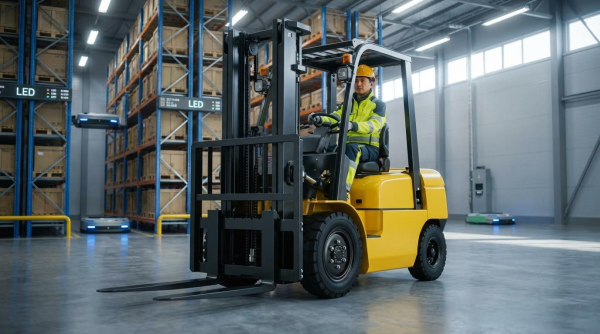
Restoring limited electrical power with a jump‑start or auxiliary power unit lets the forklift move under its own drive, but it introduces electrical and fire risks if done incorrectly.
This option is best when you must climb a small gradient, manoeuvre in very tight aisles, or use the truck’s own hydraulics to clear an obstruction. The key is to match voltage, control current, and protect sensitive electronics while keeping people clear of the battery compartment.
| Power Option | Typical Spec | Run Time / Effect | Best For… |
|---|---|---|---|
| Jump‑Start With Booster | Match truck voltage (e.g. 24 V or 48 V) | 10–15 minutes of low‑speed mobility with lithium booster | Short repositioning moves on level floors |
| Lead‑Acid Top‑Up Charge | Charge to at least ~20% state of charge | Enough to power drive and hydraulics briefly | When mains charger access is nearby |
| Lithium APU | Approx. 48 V, 30 Ah (≈1.4 kWh) | Roughly 20–30 minutes of low‑speed operation | Slopes, confined areas, or repeated shunts |
| Hydraulic Hand‑Pump Override | Mechanical actuation of hydraulic circuits | Limited to lifting/tilting only | Raising/lowering forks when drive remains disabled |
When jump‑starting, a portable booster or second battery must match the truck’s system voltage, typically 24 V or 48 V, and the positive terminals are connected first, followed by the negative leads to the chassis to minimise sparking near the battery. Lithium‑ion boosters can provide around 10–15 minutes of mobility, while lead‑acid batteries should be charged to at least about 20% before movement, and booster cables need adequate copper cross‑section. Auxiliary power units (APUs) using lithium packs can bypass a failed main battery entirely, with a 48 V 30 Ah pack delivering about 1.4 kWh, enough for 20–30 minutes of low‑speed travel, provided cables are clearly voltage‑labelled to avoid mis‑connection.
- Connection Discipline: Positive‑to‑positive first, then negative to chassis – Reduces ignition risk from hydrogen gas around battery vents.
- Cable Sizing: Use heavy‑gauge copper booster leads – Prevents overheating and voltage drop under drive current.
- APU Labelling: Mark voltage and polarity at both ends – Protects controllers and contactors from reverse polarity damage.
- Hydraulic Overrides: Use only on systems designed for manual actuation – Avoids forcing fluid through closed valves or damaging seals.
Key Electrical Risk Factors When Powering A Dead Truck
When you power up a forklift with a dead or unknown‑condition battery, you face risks of uncontrolled rolling, brake malfunction, and electrical damage. Steering assist may be lost, requiring several times the usual steering effort, and sudden brake re‑engagement can stress or even rupture hydraulic lines if the truck is already moving. Dragging a forklift with an engaged parking brake can overheat drivetrain components and lead to expensive repairs. Always survey the route for gradients over about 5% before you energise the system.
💡 Field Engineer’s Note: Treat any temporary power source as “get‑out‑of‑trouble only.” Plan the shortest path, keep the mast low, and shut down as soon as the forklift is clear—never continue normal operations on a jump‑started or APU‑fed truck.
Planning, Risk Control, And Compliance In The Move
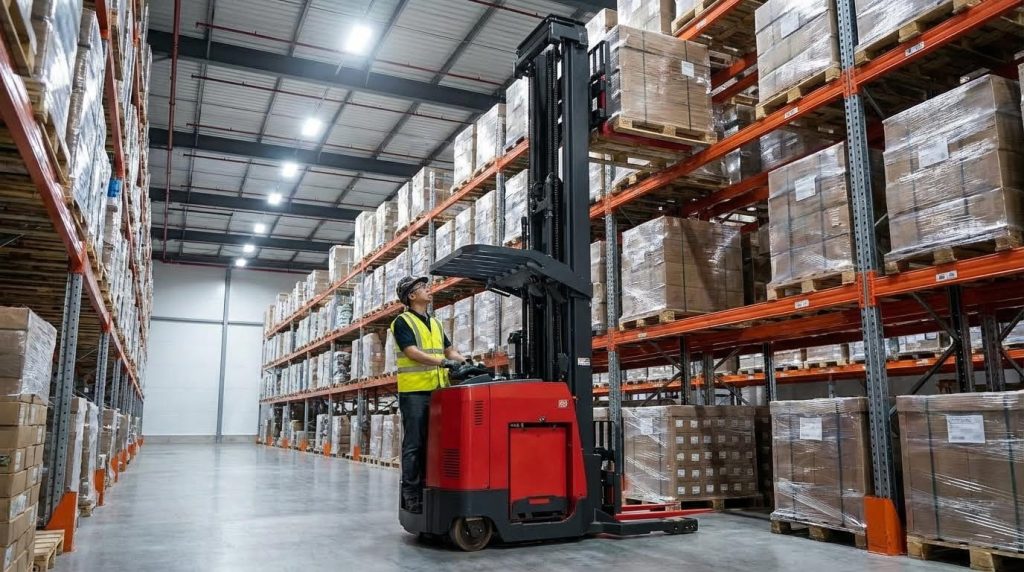
Planning how to move a dead semi electric order picker safely starts with route design, brake condition, and legal compliance so you control roll-away risk, protect people, and avoid expensive mechanical and regulatory failures.
If you are searching for how to move a dead electric forklift, this is the stage where most incidents either get prevented or guaranteed. Good planning and risk control turn a difficult relocation into a slow, predictable, low-stress move.
Route Planning, Gradients, And Load Management
Route planning for a dead electric forklift focuses on keeping gradients minimal, surfaces predictable, and the load low and stable so the truck cannot accelerate or tip unexpectedly during the move.
Because the truck has limited or no powered braking, the route becomes your primary safety system. Every slope, doorway, and tight turn must be evaluated before you release any brake or attach a tow bar.
| Planning Factor | Typical Safe/Target Value | Operational Impact When Moving A Dead Forklift |
|---|---|---|
| Maximum gradient on route | ≤5% recommended for dead trucks (survey gradients) | Limits runaway speed; allows manual or low-power braking to hold the truck. |
| Travel distance with manual push | “Very short” only; a few meters for ≤2,300 kg units (small trucks) | Prevents operator fatigue and loss of control on level floors. |
| Speed when towing | ≈1–1.5 m/s (2–3 mph) (tow bar guidance) | Keeps kinetic energy low so you can stop within a few meters if something goes wrong. |
| Load position on forks | Centered and as close as possible to the mast (OSHA guidance) | Improves stability and reduces forward tipping risk when braking or turning. |
| Fork height while traveling | Lowest safe position (OSHA guidance) | Lowers center of gravity and reduces impact if the truck meets an obstacle. |
- Clear the path: Remove pallets, hoses, and debris – Prevents sudden wheel blockage and sideways tipping.
- Control gradients: Measure or visually confirm slopes and avoid >5% – Stops a 3,000 kg truck from becoming uncontrollable.
- Define stopping zones: Mark flat “safe islands” every 5–10 m – Gives you planned places to re-check brakes and connections.
- Assign spotters: Place spotters at blind corners and doors – Protects pedestrians and communicates hazards to the towing operator.
- Lock out crossings: Block pedestrian aisles and vehicle crossings – Prevents conflicts with other traffic while steering effort is high.
How to quickly assess a gradient without instruments
Park a known-good forklift on the suspected slope, apply the parking brake, and see if it holds firmly. If the truck creeps, treat that gradient as unsafe for a dead forklift with limited braking.
Load management is just as critical when the truck is “dead.” OSHA requires that loads be stable, within rated capacity, and as low as possible during travel. These rules still apply even if you are only relocating the truck itself.
- Remove unnecessary loads: Whenever possible, move the forklift without any pallet – Reduces gross weight and stopping distance.
- Stabilize unavoidable loads: Use straps, film, or cages – Prevents load shift that can flip a marginally stable truck.
- Respect capacity: Never exceed the truck’s plate rating – Dead battery does not increase structural capacity.
💡 Field Engineer’s Note: When steering assist is gone, lateral tyre scrub on tight turns can spike, especially on epoxy floors. Plan wide turning radii and avoid painted lines or wet spots, which dramatically reduce lateral grip when you are already pushing or towing at the limit of control.
Brake Inspection, Failure Modes, And Maintenance
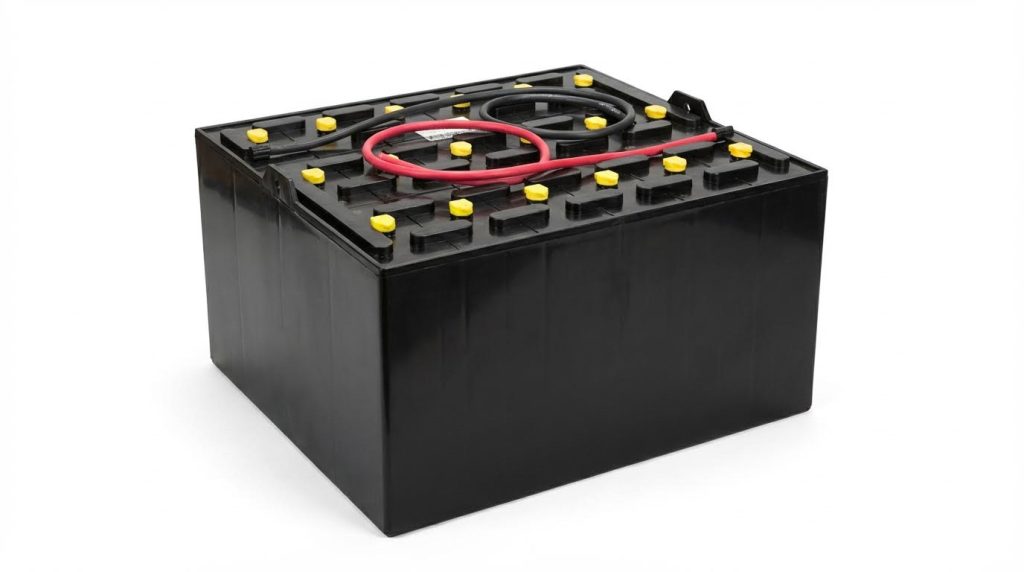
Brake inspection before moving a dead electric forklift verifies that service and parking brakes can still generate enough friction and hydraulic pressure to hold and stop the truck under tow or auxiliary power.
Electric trucks rely on mechanical and hydraulic brakes once the battery is flat. If those systems are already degraded, towing or jump-starting simply hides a serious failure until you try to stop on a slope or near pedestrians.
- Functional brake test: Test the service brake at 5–10 km/h and confirm strong deceleration within 300–500 ms (response time) – Ensures the system can still bite when powered.
- Parking brake on slope: Verify that the brake holds the loaded truck on a mild gradient – Confirms cable tension and lining condition.
- Visual leak check: Inspect around master cylinder, wheel cylinders, and pipes for wet spots – Identifies hydraulic failures that lengthen stopping distance.
- Pedal travel and feel: Excessive or “spongy” travel suggests air or fluid loss – Signals the need for bleeding or repair before towing.
- Wheel temperature after short use: Hot wheels indicate dragging brakes – Dragging plus towing a dead truck can overheat and damage components.
The underlying brake hardware deserves attention if you want to avoid a failure during or right after the move. Key components include friction elements, hydraulics, mechanical linkages, and electronics.
| Brake Subsystem | Main Checks | Operational Impact When Moving A Dead Truck |
|---|---|---|
| Friction parts (pads, shoes, drums, discs) | Wear, cracks, oil stains (inspection) | Contaminated or thin linings drastically reduce braking torque. |
| Hydraulic system | Fluid level, leaks, air, hose condition (maintenance) | Air or low fluid causes long pedal travel and delayed braking. |
| Mechanical linkages | Free travel, corrosion, return springs (mechanical parts) | Sticking parts can cause brake drag or failure to engage. |
| Electronic controls | Signal continuity, connectors, sensors (electronic system) | Faults can disable ABS or regenerative support when power returns. |
Common faults that show up exactly when you try to move a dead electric forklift include insufficient braking efficiency, deviation, abnormal noise, and brake drag. These often trace back to worn pads, air in lines, uneven clearances, or blocked return ports.
- Stopping distance check: A healthy system can stop a loaded 5,000 kg truck from 10 km/h within about 2.4 m (performance) – Longer distances indicate risk if you restore power for the move.
- Pad and lining thickness: Replace drum linings at 3 mm and disc pads at 2 mm (wear limits) – Prevents metal-to-metal contact during a hard stop.
- Fluid condition: Replace brake fluid every 2 years or 2,000 hours (service interval) – Old, water-laden fluid boils sooner under emergency braking.
Safe brake work before or after moving the truck
Always chock wheels, engage the parking brake, and wear PPE before opening any brake circuit. Release residual hydraulic pressure by shutting off power and pressing the pedal more than 20 times, and collect used fluid in dedicated containers to prevent contamination and spills. These precautions are standard brake maintenance practice.
💡 Field Engineer’s Note: When a truck has been dragged with the parking brake unknowingly engaged, assume heat damage: check for blued drums, cooked seals, and warped discs. The truck may still “move,” but its real stopping capacity can be less than half of design until you rebuild those components.
Regulatory Requirements And Operator Training
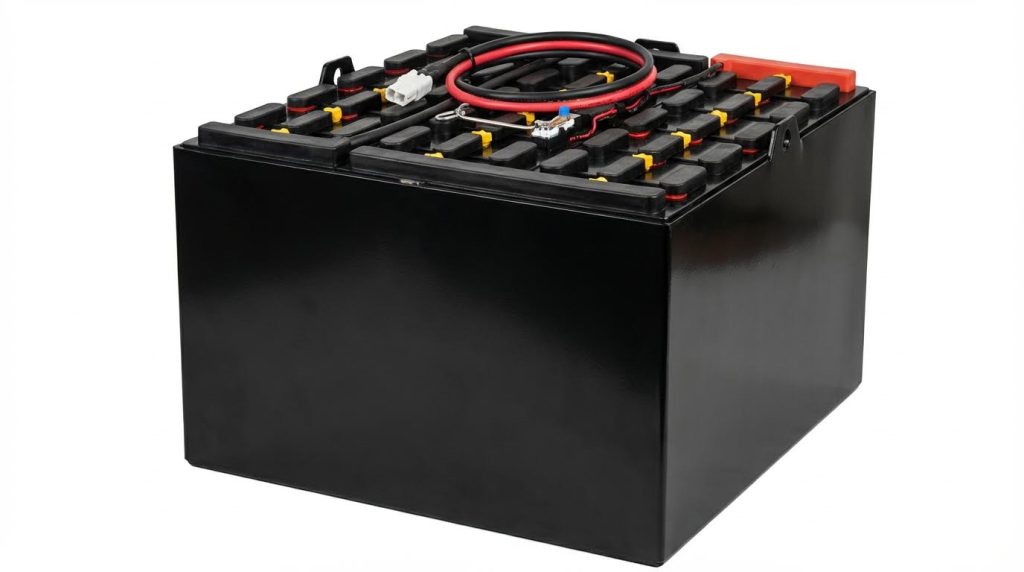
Regulatory requirements and training define who is allowed to move a dead electric forklift, under what conditions, and with which equipment, so that every relocation still complies with powered industrial truck safety rules.
Even when the truck is dead, it is still a powered industrial truck in the eyes of safety regulators. That means OSHA and relevant standards on brakes, modifications, unattended trucks, and training still apply to your temporary moving plan.
- Braking capability requirement: Powered industrial trucks must have operable braking systems or equivalent mechanisms for safe braking (OSHA 1917.43) – Dragging a truck with inoperative brakes over grades is non-compliant and unsafe.
- Brake performance standards: ISO 6292 and EN 1726-1 require mean deceleration of about 2.5–3.0 m/s² for loaded trucks (standards) – Use these as benchmarks when you test brakes after restoring power.
- Parts equivalence: Any replacement parts that affect safety must match original strength and performance (OSHA 1917.43) – Improvised brake or tow components risk both failure and citations.
- Modification control: You may not modify capacity or safe operation without manufacturer or qualified engineer approvalFinal Considerations For Safe Forklift Relocation
 The safest way to move a dead electric forklift is to treat it as a controlled recovery job, not a quick push, and to plan around brakes, gradients, and backup power options.At this stage, you should combine everything you know about how to move a dead electric forklift into one clear decision: move it with temporary power, tow it under control, or use external moving gear instead of forcing it to roll with partially active brakes and steering.
- Confirm the true condition: Verify battery voltage, brake status, and steering effort – Prevents surprises like sudden brake grab or free-rolling.
- Choose the lowest-risk method: Prefer tow bars, APUs, or skates over long manual pushes – Reduces strain injuries and loss-of-control events.
- Respect gradients: Treat anything above 5% as a serious hazard – Dead trucks can accelerate quickly with no powered braking.
- Protect the drivetrain and brakes: Never drag with brakes engaged – Avoids overheated clutches and repair bills that can exceed several thousand dollars.
- Lock in a standard procedure: Turn today’s solution into a written SOP and training – Makes the next dead-battery incident faster and safer to handle.
Quick checklist before you move a dead electric forklift again - Area safe? Clear pedestrians, set exclusion zone, confirm level or controlled gradient.
- Truck safe? Forks down, mast tilted back slightly, load removed or fully secured.
- Brakes understood? Know if parking brake is mechanically released or still holding.
- Method selected? Manual push (short, flat), tow bar, APU, or skates/rollers.
- People briefed? One lead, one spotter, clear hand signals or radios.
💡 Field Engineer’s Note: After any difficult move, document what worked, what failed, and any near-misses. That short debrief often prevents the next incident when a dead truck blocks a ramp, a dock door, or a narrow 2.5 m aisle at the worst possible time.
When you standardize how to move a dead electric forklift, you turn a high-risk, improvised task into a controlled, repeatable process that protects people, equipment, and uptime every time a battery fails. Final Considerations For Safe Forklift RelocationMoving a dead electric forklift safely depends on one core idea: you must stay in control of braking and direction at every moment. Dead batteries remove traction power and regenerative braking, so the mechanical brakes, floor gradient, and chosen method now carry all the risk. If you ignore these limits, you trade a short delay for damage, roll‑away incidents, and regulatory trouble.Engineering decisions link directly to safety here. Correctly releasing the parking brake prevents dragging and overheating. Conservative gradients and low towing speeds keep kinetic energy low enough to stop. Proper jump‑start or APU setups protect controllers from over‑current and reverse polarity. Structured brake checks confirm that any powered move still meets stopping expectations.Operations and maintenance teams should build a standard response: assess truck weight, slope, and brake condition; select the lowest‑risk method (tow bar, skates, or temporary power); control the route with chocks, spotters, and exclusion zones; and document each move. Treat every dead forklift as a planned recovery, not a one‑off push. When you follow these principles consistently, you protect people, avoid four‑figure repair bills, and keep your Atomoving fleet available instead of sidelined by preventable damage.Frequently Asked QuestionsHow to Move a Dead Electric Forklift?Moving a dead electric forklift can be done safely with the right approach. One of the safest methods is to tow it using another forklift or tow tractor. Ensure the towing equipment has enough braking capacity, weight, and power to handle both machines over the required distance and grade. Forklift Safety Guide.
- Perform a risk assessment to ensure the route is flat and clear of debris.
- Follow the equipment manufacturer’s instructions found in the service manual.
What Are the Options for Moving an Electric Forklift With a Dead Battery?There are several options to move an electric forklift with a dead battery:- Use a larger forklift to tow the disabled one.
- Hook the forklift up to some car batteries as a temporary power source.
- Replace the dead battery with a fully charged one if possible. Battery Replacement Tips.