A cherry picker order selector is only productive when it is stable, well-controlled, and inspected every shift. This guide explains how to operate, manage risk, and maintain these machines so you move more warehouse order picker pallets per hour without compromising safety.
You will learn how load rating, ground conditions, platform height, and fall protection interact in real warehouses, and how to build a daily inspection routine that keeps your equipment compliant and your operators protected.
Core Functions And Safety Principles Of Order Selectors
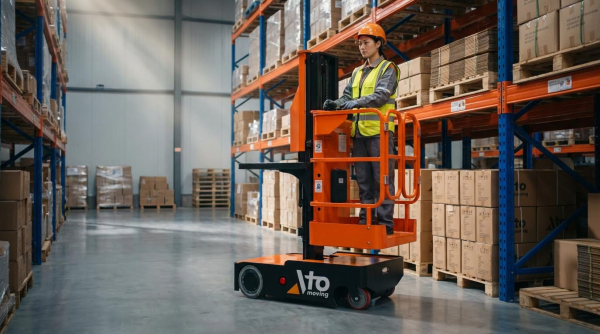
Core functions and safety principles for a cherry picker order selector focus on controlled vertical picking, strict load control, and keeping the center of gravity inside the stability triangle to prevent tip-over. These principles drive every safe-operating rule in a warehouse.
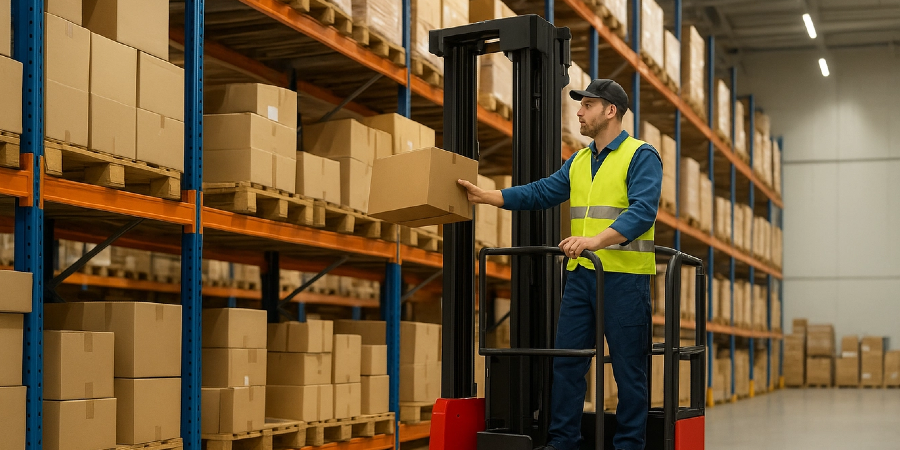
A cherry picker order selector is not just “a lift”; it is a mobile, elevated work platform designed so the operator rides up with the load to pick cartons or pieces from racking. Because the operator is elevated, every design and operating rule is built around stability, fall protection, and predictable handling.
What Defines A Cherry Picker Order Selector
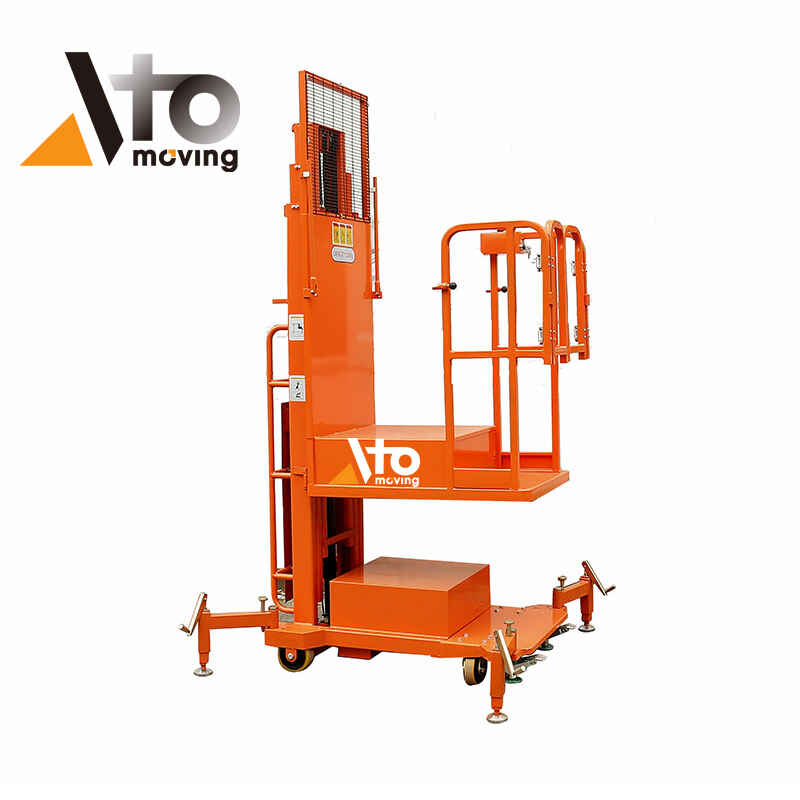
A cherry picker order selector is defined as a self-propelled, rider‑up, vertical lifting truck that lets the operator pick stock directly from racking while elevated. It combines a powered chassis, a vertical mast, and a guarded work platform sized for a single operator plus picked product.
Unlike a forklift that lifts pallets from the floor, a cherry picker order selector places the person at picking height, so platform design, fall protection, and speed limits become critical engineering controls. Typical use is in narrow aisles, picking cartons from 3.0–12.0 m high racking in high-density warehouses.
- Self‑Propelled Chassis: Electric drive with steer and drive wheels – Allows precise movement in 1.6–2.0 m aisles common in racked warehouses.
- Vertical Mast Or Scissor Structure: Guides the platform straight up and down – Maintains alignment with racking and keeps lateral sway low.
- Guarded Work Platform: Deck typically ≥500 mm wide with full guardrails and toe boards – Creates a defined safe zone for the operator at height and reduces fall and dropped-object risks.
- On‑Board Controls: Travel, lift, and lower controls mounted on the platform – Let the operator position both truck and platform without returning to ground level.
- Integrated Fall Protection: Harness anchor points and interlocked gates or chains – Prevent free falls over about 1.2 m and ensure gates are closed before travel as required by modern standards.
The primary function of a cherry picker order selector is to move an operator safely to pick faces and then transport that small, mixed load at low speed. Because the operator stands on the platform, even minor impacts or wheel drops can turn into serious incidents, so the machine’s safety systems and operating rules compensate for this exposure.
| Core Function | Engineering Feature | Typical Safety Control | Operational Impact |
|---|---|---|---|
| Vertical picking | Mast / lifting mechanism | Travel prohibited above ≈3.9–3.86 m unless guided | Forces slow, controlled work in high bays, reducing rack impact risk |
| Horizontal travel | Electric drive system | Speed limited to ≈1.1–1.12 m/s above ≈0.9 m platform height | Prevents lateral instability and loss of balance when elevated |
| Operator protection | Guardrails, gates, harness anchor | Full-body harness and self-closing gates required | Mitigates falls when reaching or if the truck stops abruptly |
| Load handling | Deck and load rating plate | Total weight (person + tools + load) must stay ≤ rated capacity | Prevents structural failure and keeps center of gravity within stability triangle |
💡 Field Engineer’s Note: When specifying a warehouse order picker, always match platform size and guardrail layout to your carton sizes and pick heights. Too-small decks or low rails push operators to overreach, which defeats the engineered safety margin and increases fall and musculoskeletal risk.
Stability Triangle, Load Rating, And Center Of Gravity
Stability for a cherry picker order selector is governed by the stability triangle (or polygon), the rated load capacity, and where the combined center of gravity sits as you lift and move. If the center of gravity shifts outside this triangle due to overload, off‑center loads, or poor ground, the truck can tip.
The manufacturer defines a maximum rated capacity on the nameplate that includes the operator, tools, and product. Operators must calculate this combined weight before each lift and keep loads low and centered on the deck to prevent overturning moments and side tilt.
- Rated Capacity Is Total Weight: Person + tools + cartons or pallets – Exceeding this can cause structural failure or tip-over because the design assumes a maximum combined mass.
- Stability Triangle / Polygon: Geometric area between the truck’s support points – The center of gravity must stay inside this area, even when braking or turning.
- Center Of Gravity Shift: Lifting height, load position, and truck motion all move the center of gravity – High, off‑center loads plus sudden steering are the classic tip‑over combination.
- Ground Condition Effects: Potholes, dock plates, or soft fill can drop one wheel suddenly – This “instant slope” can push the center of gravity outside the triangle and cause a side tip.
| Stability Factor | Key Rule Or Typical Value | Engineering Reason | Operational Impact |
|---|---|---|---|
| Load rating | Do not exceed nameplate capacity (person + tools + load) | Capacity assumes a defined center-of-gravity envelope | Requires adding up all weights before each lift |
| Load position | Keep load low and centered on the deck | Reduces overturning moment and side-tilt risk | Discourages stacking tall, top-heavy picks on one side |
| Travel at height | Speed limited to ≈1.1–1.12 m/s above ≈0.9 m; travel above ≈3.9 m only with guidance | High center of gravity amplifies lateral acceleration during turns | Forces slow, straight travel when elevated in aisles |
| Ground quality | Floor must be firm, level, and free of potholes and ramps | Uneven support changes the effective stability triangle | Requires inspection of aisles, dock plates, and covers before use |
Multiple sources stress that travel at extreme height is either prohibited or heavily controlled. Travel should be prohibited when the platform is above roughly 3.86–3.9 m unless the truck is rail‑guided or has an electronic guidance system that prevents side impact with racking and uncontrolled steering at height to maintain stability.
Operators must also understand that sudden wheel drops into trenches, manholes, or uncompacted backfill can instantly tilt the truck. This is why pre‑use checks require confirming the floor is firm, level, and free from hidden hazards before elevating a cherry picker order selector.
How to apply the stability triangle in daily checks
Before each shift, the operator should: verify the capacity plate is legible; estimate total weight of person, tools, and expected pick volume; plan to keep heavy items centered on the platform; and visually inspect the travel path for slopes, potholes, dock plates, and covers. If any condition could move the center of gravity toward the triangle edge—such as steep ramps or broken concrete—the truck should not be elevated in that area until the hazard is controlled.
💡 Field Engineer’s Note: In real warehouses, most tip-overs with cherry picker order selectors start with “just a little” overload or a wheel hitting a dock plate lip at height. Build a rule that if the platform is above about 1.0 m, you only travel on known, inspected, flat paths and never push capacity “because it’s only a short move.” That discipline keeps the center of gravity where the designer intended—safely inside the stability triangle.
Safe Operating Techniques And Engineering Risk Controls
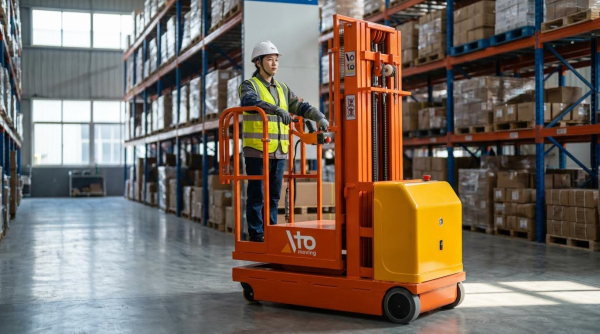
Safe operation of a warehouse order picker depends on strict control of platform height, travel speed, ground conditions, traffic, and fall protection systems. This section turns those rules into clear, engineering-based actions you can enforce on site.
💡 Field Engineer’s Note: Most “mystery” near-tip incidents I investigated came from small rule breaks stacking up—slightly rough floor, slightly high speed, slightly elevated platform. Each factor looked minor alone, but together they pushed the center of gravity outside the stability zone.
Platform Height, Speed Limits, And Travel Rules
Platform height and travel speed on a semi electric order picker must be locked together by clear rules so the center of gravity always stays inside the stability triangle during motion.
Key limits from industry guidance and safety practice include maximum speed above certain heights and a full travel ban at extreme elevation unless guidance systems control steering. These are not “nice to have” rules; they are tip-over prevention engineering controls.
| Operating Condition | Typical Limit / Requirement | Engineering Reason | Operational Impact |
|---|---|---|---|
| Normal travel in aisles (platform low) | Platform just clear of floor and below axle level before turning or crossing intersections Source | Keeps center of gravity low and well inside stability triangle during acceleration, braking, and steering. | Operator must lower before moving between aisles; slightly slower but dramatically safer. |
| Travel with platform >0.9–1.0 m | Limit horizontal speed to ≈1.1 m/s (≈4 km/h) or less Source Source | Reduces lateral acceleration and sway, keeping dynamic overturning moment below stability limit. | Slow, controlled creep when elevated; suitable only for fine positioning in picking aisles. |
| Platform above ≈0.9 m (36 in) | Maximum horizontal travel speed ≈1.12 m/s (2.5 mph) Source | Caps kinetic energy and side load if the truck turns or stops suddenly at height. | Site rules should match or be stricter than this limit in all racked storage areas. |
| Extreme height travel | No travel above ≈3.86–3.9 m unless rail- or electronically guided Source Source | Prevents lateral instability and rack impact when center of gravity is very high and wheelbase is unchanged. | High-bay work must be done in guided aisles; free-steer travel only when lowered. |
| Cornering and turning | Take corners very slowly at any elevated height; lower before sharp turns Source | Limits lateral acceleration and rear-end swing that can push the center of gravity outside the support polygon. | Train operators to “stop, lower, then turn” as a standard habit. |
- Rule: Keep platform low when travelling: Always lower to just above floor level for any cross-aisle travel – this maximizes stability margin.
- Rule: Respect speed limiters: Never override or “bump” speed controls – limiters are calibrated to the truck’s stability envelope.
- Rule: No high-speed turns at height: Approach corners, intersections, and transfer areas in creep speed – this prevents side-tipping and load shift.
- Rule: Travel ban at very high lift: Use guidance systems or fully lower before moving between aisles – this avoids “pendulum” effects at mast top.
- Rule: Stand inside the guardrails: Keep both feet on the platform floor, facing travel direction Source – this maintains a stable body stance against any sudden motion.
How to set site-specific speed rules
Set maximum speeds by risk assessment: consider aisle width, rack height, pedestrian density, and floor condition. Many sites use two limits: one for “platform low” travel between zones and a stricter one for “platform raised” within picking aisles.
Ground Conditions, Aisle Design, And Traffic Control
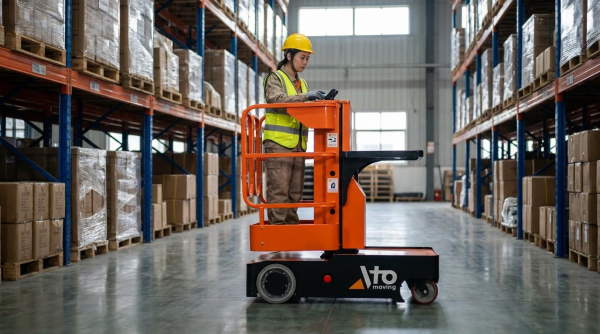
Ground conditions, aisle layout, and traffic rules around a order picking machines must be engineered to prevent sudden wheel drop, side lean, and pedestrian conflict.
Even a perfectly maintained truck becomes unstable on poor floors or in badly designed aisles. You control risk by specifying floor flatness, keeping aisles free of hazards, and separating people from equipment wherever possible.
| Design / Condition | Requirement / Good Practice | Engineering Reason | Best For… |
|---|---|---|---|
| Floor condition | Firm, level, free of potholes, ramps, loose plates, or soft backfill Source Source | Avoids sudden wheel drop or lean that shifts center of gravity outside stability polygon. | High-bay racking areas where platforms often exceed 6–8 m. |
| Hidden hazards | Identify trenches, manholes, covers, dock plates, and uncompacted fill before use Source | Prevents local collapse or rocking under wheel loads of 2,000–5,000 kg. | New builds, mezzanines, and areas with recent trenching or repairs. |
| Aisle width | Match aisle width to truck turning radius and rack height (narrow aisles need guidance) Source | Prevents rack strikes and allows controlled turning without oversteer or rear swing into pedestrians. | Designing new racked storage for guided order pickers. |
| Traffic separation | Marked pedestrian walkways, one-way truck systems, speed-restricted zones near docks Source Source | Reduces crossing conflicts and blind-spot encounters between trucks and pedestrians. | Busy staging areas, cross-docks, and packing zones. |
| Warning devices | Use horns, flashing beacons, and floor projection lights in shared aisles Source | Compensates for line-of-sight blockage from racks and stacked pallets. | Intersections, doorways, and ends of long aisles. |
- Rule: Assume pedestrians never see you: Use horn and lights at every intersection – this offsets blind spots around racking and loads.
- Rule: Enforce one-way aisles where possible: Remove head-on meeting risk – this simplifies decisions for operators under time pressure.
- Rule: Keep aisles clear: Ban pallet staging or rubbish in picker aisles – obstacles force last-second swerves and hard braking.
- Rule: Verify floor integrity after repairs: Check compaction and cover plates before re-opening to traffic – prevents localized collapse under wheel loads.
- Rule: Use guidance in very narrow aisles: Rail or wire guidance at high racks – this locks lateral position and prevents rack strikes.
💡 Field Engineer’s Note: On polished or painted concrete, micro-slopes under 2% still caused drift when platforms were high. I recommend treating any slope in picking aisles as a risk factor and limiting height or speed there.
Checking floor suitability for order selectors
Review structural drawings for slab thickness and load rating. Compare wheel loads from the aerial platform to slab design. Where data is missing, have a structural engineer confirm suitability before allowing high-bay work.
Fall Protection, Guardrails, And Emergency Systems
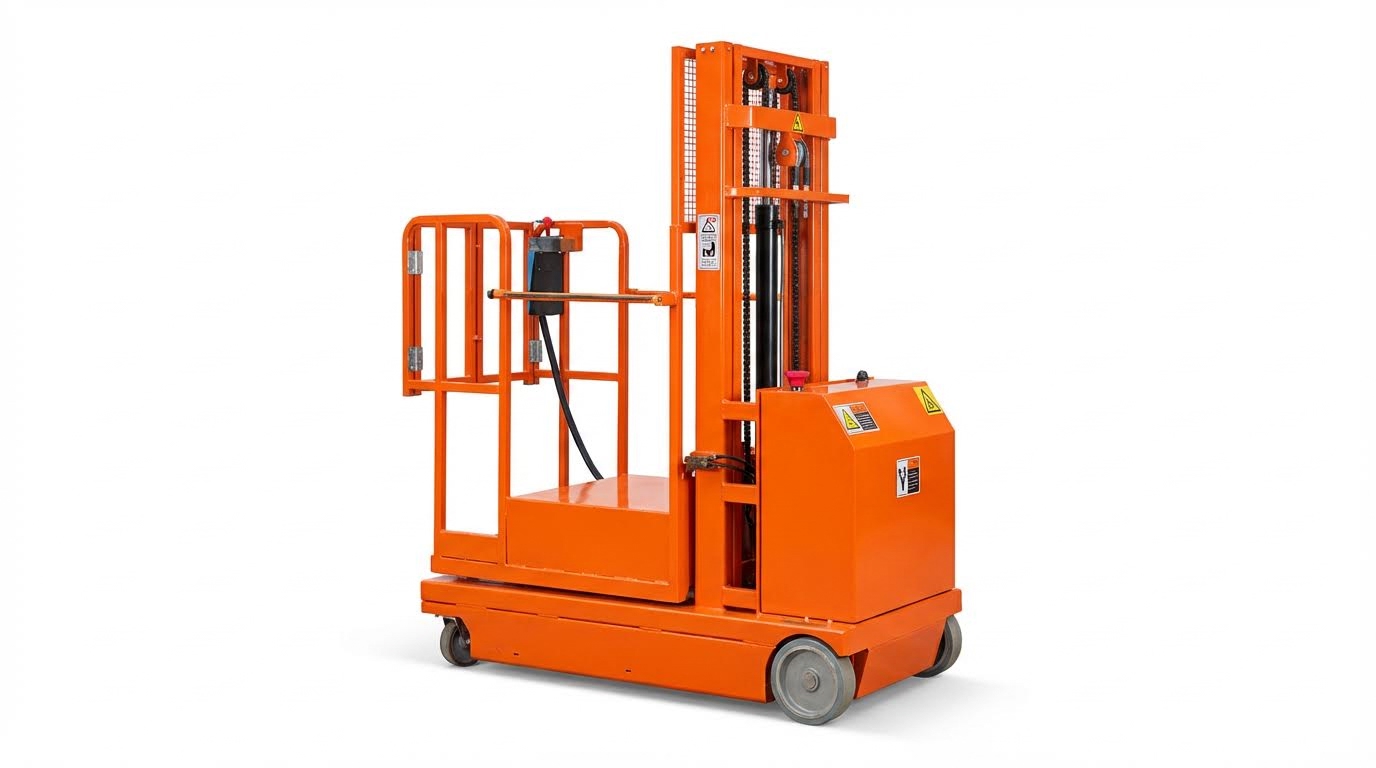
Fall protection on a scissor platform relies on three layers: guardrails, personal fall arrest, and emergency systems that stop or limit unsafe movement.
You must treat these not as accessories but as primary safety components that require daily inspection, correct use, and clear emergency procedures.
| Control Type | Key Requirement | Engineering Function | Operational Impact | ||||||||||||||||||||||||||||||||||||||||||||||||||||||||||||||||||||||||||||||||||
|---|---|---|---|---|---|---|---|---|---|---|---|---|---|---|---|---|---|---|---|---|---|---|---|---|---|---|---|---|---|---|---|---|---|---|---|---|---|---|---|---|---|---|---|---|---|---|---|---|---|---|---|---|---|---|---|---|---|---|---|---|---|---|---|---|---|---|---|---|---|---|---|---|---|---|---|---|---|---|---|---|---|---|---|---|---|
| Platform dimensions | Work platform ≥500 mm wide with guardrails on all open sides, including top rail, midrail, toe board Source | Prevents step-through and reduces risk of objects being kicked off the deck. | Ensures safe working space for picking, even in narrow aisles. | ||||||||||||||||||||||||||||||||||||||||||||||||||||||||||||||||||||||||||||||||||
| Gates and chains | Entrance gates/ chains must self-close and latch before travel Source | Maintains continuous guardrail protection around operator during lift and travel. | Trains operators to “close before move” as a mandatory step. | ||||||||||||||||||||||||||||||||||||||||||||||||||||||||||||||||||||||||||||||||||
| Harness and lanyard | Full-body harness clipped to approved anchor; lanyard set to prevent >≈1.2 m free fall or contact with lower level Source Source Source | Limits arresting forces on the body and prevents impact with lower levels or obstacles. | Mandatory whenever platform is raised; requires training and regular equipment inspection. | ||||||||||||||||||||||||||||||||||||||||||||||||||||||||||||||||||||||||||||||||||
| Guardrail condition | Guardrails intact, no cracks, deformation, or missing sections Source | Ensures they can resist body impact loads if an operator stumbles. | Any damage = immediate lockout until repaired. | ||||||||||||||||||||||||||||||||||||||||||||||||||||||||||||||||||||||||||||||||||
| Emergency stop | Prominent E-stop that cuts all powered movement; tested daily Daily Inspection Routines And Maintenance Essentials Daily inspections on a cherry picker order selector prevent sudden failures at height, catching hydraulic leaks, cracked welds, and electrical faults before they become life‑threatening incidents. For order selectors, “pre‑shift checks” are not paperwork; they are engineered risk controls that protect mast stability, braking distance, and fall protection integrity every single shift.
Mechanical, Hydraulic, And Structural ChecksMechanical, hydraulic, and structural checks focus on anything that carries load or moves, so the cherry picker order selector does not crack, leak, or collapse while elevated. Use a fixed walk‑around pattern so no zone is missed, then finish with functional tests from the platform before releasing the truck to service.
Daily checklists from industry guidance specify looking for leaks, damaged forks, cracked welds, loose fasteners, and tyre or wheel defects before use. If any defect affects braking, steering, lifting, or fall‑protection anchor points, the truck must be removed from service until cleared by a competent technician. Industry guidance on daily checks also emphasised mast alignment and general structural condition as part of this pre‑use inspection. Hydraulic‑focused guidance added that hoses, fittings, and cylinders should be inspected for leaks, cracks, or damage, and hydraulic fluid levels must be checked against sight gauges, with any milky, dark, or contaminated fluid reported for service to prevent uncontrolled movements and failures. Hydraulic system checks were presented as a daily task, not just a workshop item.
Suggested walk‑around patternStart at the front left corner and move clockwise: general structure, mast, forks or load arms, front wheels, chassis, rear wheels, counterweight area, hydraulic components, then platform, guardrails, and anchor points. Finish with a slow function test of lift, lower, and tilt (if fitted) before entering aisles. Electrical, Battery, And Control System TestsElectrical, battery, and control system tests confirm the cherry picker order selector will respond correctly when you steer, brake, or hit emergency stop at height. Most failures that scare operators—sudden stops, alarms, or dead controls—come from poor electrical maintenance, not from “mystery faults.”
Daily mechanical and electrical inspection checklists from warehouse safety guidance required operators to inspect for leaks, damaged forks, cracked welds, loose fasteners, tyre or wheel defects, and to check battery charge status, connector condition, cable insulation, and emergency stop function before use. Any defect affecting braking, steering, lifting, or fall protection anchor points meant the truck had to be removed from service until a technician cleared it. Pre‑operation checklist guidance reinforced the same lock‑out requirement for critical systems. Further electrical maintenance advice specified that operators should confirm batteries are charged, cables and connectors are undamaged, and all lights, alarms, and display indicators operate correctly, with battery terminals kept clean and corrosion‑free to maintain a solid electrical connection. These checks helped ensure reliable operation and safety for elevated work. Electrical system maintenance guidance also highlighted the importance of testing emergency stop and emergency lowering systems so operators are not stranded at height during power loss.
Lock‑out / tag‑out trigger examplesImmediately remove the cherry picker order selector from service if you find: inoperative emergency stop, failed deadman pedal, no brakes or park brake, visible structural crack in mast or platform, major hydraulic leak, or any fault code indicating unsafe lift or drive function. Park, isolate power, and tag the machine until a competent technician signs it off.
Final Thoughts On Safe, Efficient Order Picker UseSafe cherry picker order selector use comes from matching engineering limits with disciplined daily practice. Geometry, load rating, and the stability triangle define how far you can push height, speed, and load before tip-over risk rises sharply. When operators keep the platform low during travel, hold speed within limits at height, and stay inside rated capacity, the center of gravity remains inside the safe zone. Ground quality, aisle design, and traffic control then extend that safety margin across the whole warehouse. Flat, well‑designed aisles and clear pedestrian routes prevent sudden wheel drop and collision forces that no onboard system can fully absorb. Fall protection, guardrails, and emergency systems give a last barrier when things go wrong, but they only work if inspected and used correctly every shift. Daily mechanical, hydraulic, structural, electrical, and control checks turn these design assumptions into real‑world reliability. Operations and engineering teams should lock in one standard: if a condition threatens stability, braking, steering, or fall protection, the truck is tagged out, not “nursed through.” Follow that rule, choose correctly specified Atomoving equipment, and enforce clear site procedures, and you gain both higher picking rates and a stable, predictable safety record. Frequently Asked QuestionsWhat is an Order Picker Machine?An order picker machine is a type of forklift designed for narrow aisle operations in warehouses. It belongs to Class II – Electric Motor Narrow Aisle Trucks. These machines are used to lift operators to warehouse racks to retrieve items efficiently. Order Picker Guide. What Skills Do You Need to Be an Order Selector?To be an order selector, you need the ability to lift heavy items, a solid work ethic, and excellent communication skills. While knowing how to operate a forklift or pallet jack is helpful, most positions provide on-the-job training. Order Selector Career Info. What Are the Duties of a Warehouse Order Picker?A warehouse order picker’s duties include walking long distances, often 6 to 10 miles per day, lifting heavy loads, and making high-reach moves. This physically demanding job requires working on hard concrete floors and handling various products. Warehouse Hiring Challenges. Is Being a Warehouse Picker Hard?Yes, being a warehouse picker is physically demanding. Workers walk long distances daily, lift heavy loads, and perform repetitive high-reach movements. The constant physical strain can be exhausting and challenging for long-term employment. Warehouse Hiring Challenges. |