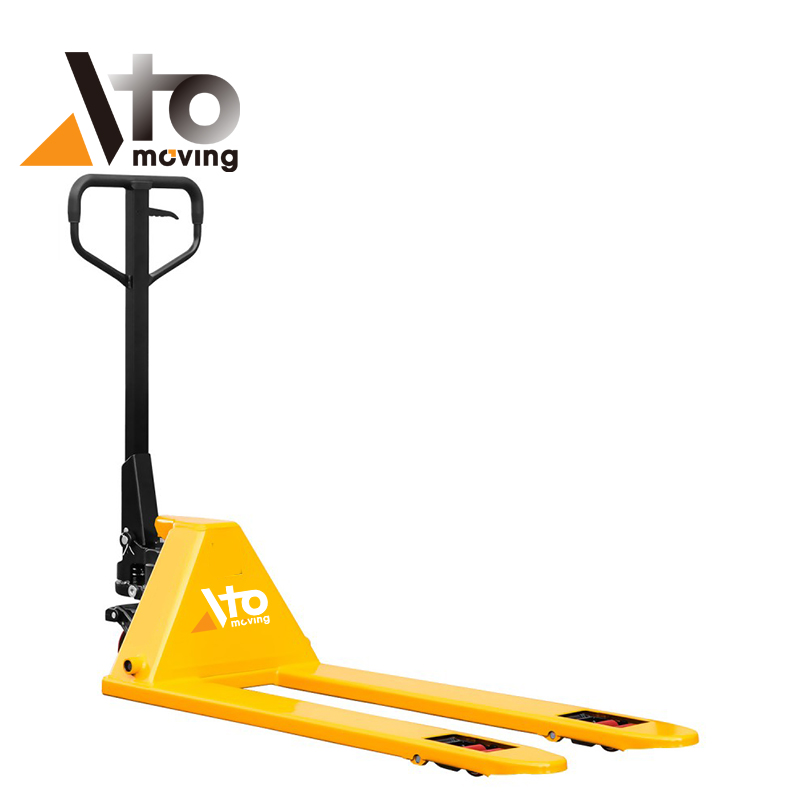
Full truckload pallet capacity is the practical answer to how many pallets in a full truck load you can move without breaking weight laws or damaging freight. This guide compares standard GMA and Euro pallets, explains real-world trailer counts, and shows how loading patterns and regulations change the true FTL number. You will see how dimensions in millimetres, pallet type, and stacking rules translate into safe, efficient pallet counts for common trailer sizes in different regions. For instance, using a manual pallet jack or a hydraulic pallet truck can help optimize the loading process. Additionally, equipment like a drum dolly or a forklift drum grabber double grips ensures proper handling of materials.
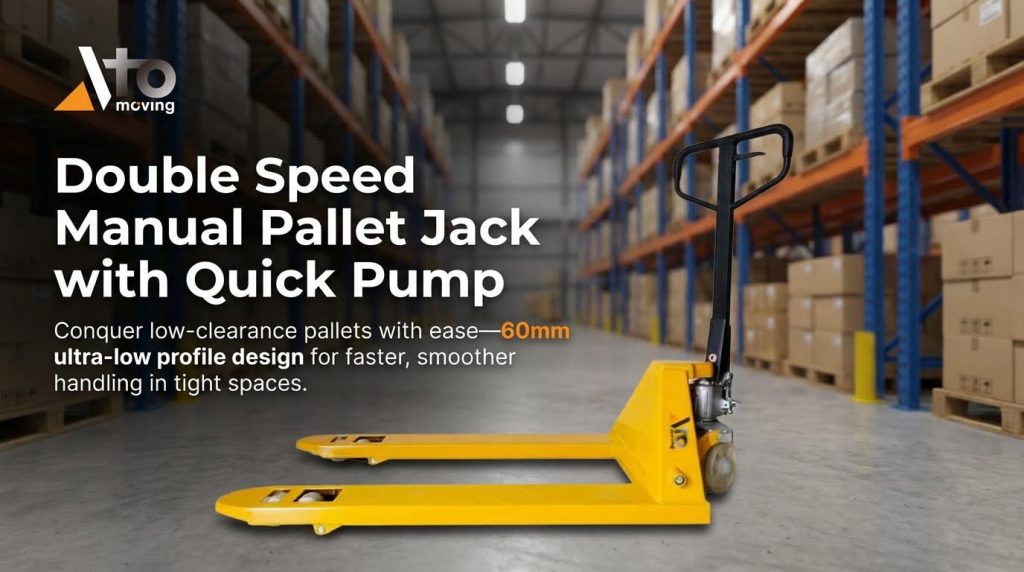
Defining Full Truckload Capacity By Pallet Type
Full truckload pallet capacity is defined by pallet footprint, trailer internal dimensions, and loading pattern, so “how many pallets in a full truck load” changes with pallet type and orientation. This section sets the baseline numbers for GMA and Euro pallets.
Standard GMA And Euro Pallet Dimensions
Standard GMA (US) and Euro pallets have different footprints, so they fill the trailer floor in very different ways and drive very different full truckload pallet counts.
The key starting point is simple geometry: pallet length × pallet width versus trailer internal length × width. Once you know the basic footprints, you can predict realistic FTL ranges instead of guessing “how many pallets in a full truck load” for each lane.
| Pallet Type | Nominal Size (mm) | Nominal Size (in) | Footprint Area (m²) | Typical Use Region | Operational Impact |
|---|---|---|---|---|---|
| GMA / North American Standard | 1219 × 1016 | 48 × 40 | ≈1.24 | North America | Optimized for 2-wide loading in 2.44–2.48 m wide trailers; defines most “26-pallet” FTL norms. Source |
| EUR‑1 / Euro Pallet | 1200 × 800 | ≈47.2 × 31.5 | 0.96 | Europe and many global lanes | Narrower width allows 2 or 3 pallets across, enabling higher pallet counts per truck. Source |
- GMA 48 × 40: 1219 mm × 1016 mm – Drives the classic 26–30 pallets per 53 ft trailer rule of thumb.
- Euro 1200 × 800: 1200 mm × 800 mm – Smaller footprint lets you load more pallets per full truckload in many trailer types.
- Why it matters: A 20–25% footprint difference – translates directly into 20–25% difference in how many pallets a truck can legally and safely carry.
How pallet footprint converts into pallet count
To estimate capacity, divide usable trailer floor area by pallet footprint, then adjust down by 10–20% for gaps, dunnage, and door constraints. This is why real FTL counts are always lower than the pure geometric maximum.
💡 Field Engineer’s Note: Always check actual pallet overhang. A “48 × 40” load that bulges to 1225–1230 mm can kill pinwheel or sideways patterns and cost you 2–4 pallets per load, especially in reefers with narrower internal width.
Typical FTL Pallet Counts By Trailer Size
Typical full truckload pallet counts by trailer size show that a “full truck” is usually 24–30 GMA pallets or 33–39 Euro pallets, depending on trailer length and loading pattern.
Below is how many pallets in a full truck load you can usually plan for, assuming standard pallet heights, legal weights, and good condition pallets.
| Equipment Type | Pallet Type | Loading Pattern | Typical Pallet Count (Single Layer) | Operational Impact / Notes |
|---|---|---|---|---|
| 53 ft (≈16.15 m) dry van | GMA 1219 × 1016 mm | Straight | 26 | Industry baseline “full truck” for US lanes; fast to load and unload. Source |
| 53 ft dry van | GMA 1219 × 1016 mm | Pinwheel | 28 | Alternating orientation adds roughly +2 pallets; requires tighter handling. Source |
| 53 ft dry van | GMA 1219 × 1016 mm | Sideways / tight | Up to 30 | Maximum floor fill if door width allows; often limited by clearance and handling risk. Source |
| 48 ft (≈14.6 m) trailer | GMA 1219 × 1016 mm | Straight | 24 | Common “full” for shorter US trailers; simple dock operations. Source |
| 48 ft trailer | GMA 1219 × 1016 mm | Pinwheel | 26 | Optimized pattern; good compromise between capacity and speed. Source |
| 26 ft (≈7.9 m) box truck | GMA 1219 × 1016 mm | Straight | 12 (sometimes 13–14) | Local deliveries; limited by wheel wells and door; 12 is the reliable planning number. Source |
| 53 ft trailer | Euro 1200 × 800 mm | Optimized | 36–39 | Theoretical max ≈39; real-world loads usually 36–39 Euro pallets per FTL. Source |
| 48 ft trailer | Euro 1200 × 800 mm | Optimized | ≈36 | Door, strapping, and airflow gaps usually keep you slightly below geometric maximum. Source |
| 26 ft box truck | Euro 1200 × 800 mm | Optimized | Up to 18 (theoretical) | Often reduced by door width; plan lower unless you have proven clearances. Source |
- Rule-of-thumb for GMA: 24–26 pallets in 48 ft, 26–30 pallets in 53 ft – is what most shippers mean by “full truckload.”
- Rule-of-thumb for Euro: 33–39 pallets in long trailers – is common on European-spec equipment and global intermodal lanes.
- Containers vs trucks: 20 ft containers hold about 10 US or 11 Euro pallets; 40 ft hold about 20 US or 23–24 Euro pallets. Source
Why your “full truck” may be fewer pallets than the table
Legal gross weights around 36,000–40,000 kg can cap you at 60–80% of the theoretical pallet count for dense freight, even when you still see free floor space. Source
💡 Field Engineer’s Note: When a planner asks “how many pallets in a full truck load?” I always answer with a range and then ask for average pallet weight and height. On heavy commodities, axle weights, not floor space, usually decide the real FTL pallet count.
Load Patterns, Weight Limits, And Stacking Rules
This section explains why “how many pallets in a full truck load” is never a single number: load pattern, axle weights, and stacking height usually cap you before floor space does.
For any FTL move, you first choose a pallet pattern, then check axle and gross weight, then confirm safe stacking height. Only after all three pass do you have a realistic pallet count per truck.
💡 Field Engineer’s Note: When a shipper says a 53 ft trailer “always takes 26 pallets,” ask for pallet height and kg per pallet. In practice, dense freight often hits legal weight at 18–22 pallets, while light freight is limited by height and stability, not floor space.
Straight, Pinwheel, And Sideways Pallet Loading
Load pattern is the first lever that changes how many pallets in a full truck load you can fit without breaking doors, walls, or your driver’s patience.
Different orientations change both pallet count and how forces travel into the trailer floor and sidewalls during braking and cornering. The tables below summarize typical capacities and real-world trade-offs.
| Trailer Type | Pallet Type | Load Pattern | Typical Floor Pallet Count | Operational Impact |
|---|---|---|---|---|
| 53 ft dry van | GMA 1219 × 1016 mm (48 × 40 in) | Straight | 26 pallets | Fast loading; simple pattern; standard FTL answer to “how many pallets in a full truck load” for light–medium freight in practice. |
| 53 ft dry van | GMA 1219 × 1016 mm | Pinwheel / turned | 28 pallets (up to 26 in some sources) | 2 extra pallets vs straight; slightly slower to load; better side clearance utilization for long vans. |
| 53 ft dry van | GMA 1219 × 1016 mm | Sideways | Up to 30 pallets | Maximum count but door width and wall clearance often limit use; higher risk of damage if tolerances are tight in real fleets. |
| 48 ft dry van | GMA 1219 × 1016 mm | Straight | 24 pallets | Typical answer to “how many pallets in a full truck load” on 48 ft lanes; simple to plan and load for GMA pallets. |
| 48 ft dry van | GMA 1219 × 1016 mm | Pinwheel | 26 pallets | +2 pallets vs straight; may require tighter forklift work and better-trained operators. |
| 26 ft box truck | GMA 1219 × 1016 mm | Straight | 12 pallets | Baseline LTL/FTL crossover capacity; occasional 13–14 if tolerances and product allow under ideal conditions. |
| 53 ft dry van | Euro 1200 × 800 mm | Optimized pattern | 36–39 pallets | High cube utilization; pattern must allow for strapping, airflow, and inspections in long vans. |
- Straight loading: All pallets oriented the same way – Best when you prioritize speed, simple instructions, and repeatable loading.
- Pinwheel loading: Alternating orientation to interlock footprints – Gains 2 pallets in 48–53 ft equipment with minimal complexity.
- Sideways loading: Pallets turned 90° to increase rows – Maximizes floor count but is sensitive to door width and overhang.
When to avoid aggressive pinwheel/sideways patterns
Avoid tight pinwheel or sideways patterns when pallets are not uniform, when there is frequent overhang, or when freight is fragile at the corners. In these cases, geometric maximums are meaningless because real-world damage costs outweigh the benefit of 1–4 extra pallets.
Axle Weights, Bridge Laws, And Load Distribution
Weight laws, not geometry, usually decide how many pallets in a full truck load you can legally move on public roads.
Most highways cap gross vehicle weight around 36,000–40,000 kg, so dense products often hit legal mass at 60–80% of the theoretical pallet count in real FTL operations.
| Factor | Typical Limit / Condition | Operational Impact on Pallet Count |
|---|---|---|
| Gross Vehicle Weight | ≈ 36,000–40,000 kg highway limit | Heavy freight may reach legal weight at 60–80% of geometric pallet capacity, leaving unused floor space. |
| Axle group limits | Steer, drive, and trailer axle groups each have max loads | Improper distribution can overload one axle set even when total weight is legal, forcing pallet removal or rework. |
| Bridge laws | Regulate weight vs. axle spacing | Concentrated weight near the nose or tail can violate spacing rules, especially with very dense products. |
| Load distribution | Even spread along trailer length | Requires placing heaviest pallets over axles, sometimes limiting stacking at the nose or rear. |
| Product density | kg per pallet vs. legal weight | Low-density freight is volume-limited; high-density freight is weight-limited, often below 26 pallets in a 53 ft van. |
- Heavier than expected freight: Re-calc kg per pallet – You may need only 18–22 pallets in a 53 ft trailer to stay legal when product density is high.
- Mixed weights: Place heaviest pallets over the drive and trailer axles – Reduces risk of overloading a single axle group.
- Reefer trailers: Account for heavier equipment and insulation – Available payload mass is lower than in a dry van of similar size.
How digital planners help with axle compliance
Modern load planning tools simulate axle weights for each pallet position and test thousands of patterns to stay within group and bridge limits. They output diagrams, pallet counts, and cube utilization, with reported pallet count gains of 15%+ when moving from manual to AI-driven layouts in field deployments.
💡 Field Engineer’s Note: Any time your per-pallet weight exceeds about 1,000–1,200 kg, assume you are weight-limited, not space-limited. Plan on filling 60–80% of the theoretical pallet count, then adjust based on live axle scale readings at the yard.
Single Vs Double Stacking And Height Constraints
Stacking strategy and internal height decide whether floor area or vertical clearance limits how many pallets in a full truck load you can safely run.
Single stacking keeps center of gravity low but wastes headroom on light freight, while double stacking almost doubles pallet count if pallet strength, product packaging, and trailer height allow it.
| Scenario | Typical Floor Count | Single-Stack Pallets | Double-Stack Pallets (Theoretical) | Operational Impact |
|---|---|---|---|---|
| 26 ft box truck, GMA pallets | 12–14 pallets on floor | 12–14 pallets | 24–28 pallets | Double stacking can nearly double capacity if product and pallet are rated and stable enough in short trucks. |
| 53 ft dry van, GMA pallets | 26 pallets on floor (straight) | 26 pallets | Up to 52 pallets | Requires low pallet height so two layers plus deck thickness fit under ~2,600–2,800 mm internal height. |
| 53 ft dry van, tall freight | 26 pallets on floor | 26 pallets | Not possible | If freight exceeds ≈1,200 mm per pallet, double stacking is blocked by roof height according to trailer specs. |
- Check pallet height: Measure load height including pallet – Two stacked loads plus any dunnage must clear the internal trailer height with a safety margin.
- Verify pallet and product rating: Confirm top-load and compression ratings – Prevents crushed product and pallet failure in transit.
- Control center of gravity: Keep heavier, denser pallets on the floor – Reduces rollover risk and trailer sway, especially in high winds or emergency maneuvers.
- Use slip sheets/tiers: Add sheets between layers – Improves friction and prevents inter-layer shifting under braking.
Why cube utilization rarely hits 100%
Even with double stacking, most FTL loads reach only 80–90% cube utilization because of mixed pallet sizes, overhang, dunnage, and required gaps for airflow or inspection in real networks. Legal weight limits and stacking rules usually cut the theoretical maximum pallet count down to a safe and compliant number.
💡 Field Engineer’s Note: As a rule of thumb, if your single-stack pallet height is already above 1,400–1,500 mm, focus on stabilizing one layer instead of chasing double stacking. The extra pallets you might squeeze in are rarely worth the risk of a high, top-heavy load shifting under hard braking.
FTL Planning For Different Markets And Equipment
FTL planning for different markets and equipment means matching regional pallet standards and trailer sizes so you actually achieve how many pallets in a full truck load you planned on paper. Getting this wrong wastes 10–25% of your cube and often breaks weight rules.
North American, European, And Asian Pallet Standards
North American, European, and Asian pallet standards define the footprint that controls how many pallets in a full truck load you can legally and safely run in each region. You plan truckloads around these footprints first, then around weight.
The table below ties common regional pallet sizes to typical FTL and container capacities so you can benchmark loads across markets.
| Region / Context | Typical Pallet Size (mm) | Common Equipment | Typical Single-Stack Pallets Per Load | Operational Impact / Best For… |
|---|---|---|---|---|
| North America (GMA) | 1219 × 1016 mm (48 × 40 in) standard size reference | 53 ft dry van | 26 pallets straight; 28 pinwheel; up to 30 sideways on floor capacity data | Baseline answer to “how many pallets in a full truck load” for US dry vans. |
| North America (GMA) | 1219 × 1016 mm | 48 ft dry van | 24 straight; ~26 pinwheel on floor capacity data | Useful for regional lanes and older fleets still running 48 ft trailers. |
| North America (GMA) | 1219 × 1016 mm | 26 ft box truck | About 12 pallets; 13–14 in ideal conditions capacity data | City deliveries and shuttle runs from DCs to local customers. |
| Europe (EUR‑1 / Euro) | 1200 × 800 mm Euro size reference | Standard EU trailer (approx. 13.6 m) | Up to 33 Euro pallets single layer in metric trailers capacity data | European answer to “full truckload” for FMCG and retail networks. |
| Global Containers – Europe focus | 1200 × 800 mm | 20 ft container | About 11 Euro pallets single stack container data | Used for export lanes where Euro pallets stay inside the destination DC. |
| Global Containers – Europe focus | 1200 × 800 mm | 40 ft container | About 23–24 Euro pallets single stack container data | Standard FCL planning basis for Euro‑palletized exports. |
| Global Containers – US focus | 1219 × 1016 mm | 20 ft container | About 10 US pallets single stack container data | Typical for US-origin export loads using GMA pallets. |
| Global Containers – US focus | 1219 × 1016 mm | 40 ft container | About 20 US pallets single stack container data | Key planning number for ocean FCL between North America and overseas markets. |
| Asia (Industrial) | 1200 × 1000 mm (Industrial pallet) Asian pallet sizes | Regional trucks / containers | Varies by body size; footprint similar to US GMA | Good compromise size for mixed export/import flows. |
| Asia (Asia Standard) | 1100 × 1100 mm (Asia standard pallet) Asian pallet sizes | Regional trucks / containers | Truck and container counts depend on internal width; often less efficient in EU trailers | Common in East and Southeast Asia; may need re‑palletization for EU/US. |
Across regions, the question “how many pallets in a full truck load” only makes sense when you specify pallet type, trailer or container, and whether you are planning single or double stack.
- Match pallet to lane: Use 1200 × 800 mm Euro pallets for intra‑EU lanes – avoids wasted width in metric trailers.
- Plan for re‑palletization: When shipping GMA pallets into Euro networks, budget time and cost to re‑stack – prevents bottlenecks at inbound DCs.
- Watch weight vs cube: Dense cargo in North America may hit legal mass at only 18–22 pallets even though 26–30 fit on the floor – avoids overweight violations.
- Align with customers’ racks: Some EU and Asian warehouses only rack Euro or 1100 × 1100 mm pallets – wrong pallet size kills unloading efficiency.
💡 Field Engineer’s Note: When you mix Euro and GMA pallets in the same FTL, design the pattern so one standard dominates each row. Random mixing creates ugly voids along the walls and usually costs you 1–2 pallet positions per truck.
How to quickly estimate pallets per truck across regions
As a rule of thumb, start with the known regional “full truck” benchmark (26–30 GMA pallets in a 53 ft dry van, 33 Euro pallets in a EU trailer). Then adjust down for: 1) heavier‑than‑average product, 2) mixed pallet sizes, and 3) required gaps for airflow or inspection.
Using Cube Utilization And Digital Load Planners

Using cube utilization and digital load planners lets you turn “how many pallets in a full truck load” from a guess into a data‑driven number for each lane, product mix, and trailer type.
Cube utilization compares used volume to total internal trailer or container volume. Well‑planned pallet loads typically reach about 80–90% cube efficiency in the real world efficiency range, because you must respect weight limits, airflow, and securement rules.
| Planning Concept / Tool | What It Does | Typical Performance / Limits | Operational Impact |
|---|---|---|---|
| Cube Utilization (%) | Compares loaded volume to trailer or container internal volume. | Well‑planned FTL pallet loads reach about 80–90% in practice utilization data | Shows whether you are leaving “air” in the trailer that a better pattern could use. |
| Weight vs Space Check | Compares total pallet mass to legal vehicle limits. | Highway gross vehicle limits often sit near 36,000–40,000 kg weight limit data | Dense cargo may hit legal weight at only 60–80% of theoretical pallet count. |
| Pattern Optimizers | Software that tests thousands of pallet orientations and sequences. | AI‑based tools can boost pallet count by over 15% vs manual layouts AI optimization data | Turns a 26‑pallet rule‑of‑thumb load into 28–30 pallets without breaking rules. |
| 2D / 3D Load Diagrams | Visual maps of pallet positions, heights, and gaps. | Generated automatically by modern load‑planning tools tool description | Reduces loading errors and speeds up dock operations. |
| Product‑Specific Rules | Constraints like “no double stack,” “keep upright,” or “don’t mix SKUs on pallet.” | Embedded into digital planners as parameters. | Ensures optimization respects quality and safety, not just pallet count. |
- Standardize input data: Capture pallet L × W × H in mm and weight in kg for every SKU – garbage in equals garbage out in any planner.
- Model real trailers: Use actual internal length, width, and height, not brochure numbers – insulation and scuff boards eat space.
- Include legal weights: Set gross and axle‑group limits so the optimizer can reject overweight patterns – prevents roadside surprises.
- Compare scenarios: Run “single‑stack only” vs “double‑stack allowed” – quantifies the benefit of stronger pallets or packaging.
💡 Field Engineer’s Note: When cube utilization jumps above ~90% in a model, I always double‑check maneuver room at the dock. A pattern that looks perfect on screen can force drivers to shoehorn the last pallet in, which increases damage and loading time.
Practical way to answer “how many pallets in a full truck load” with software
Define the trailer (internal mm and max kg), import your pallet dimensions and weights, add rules (stackable, orientation, keep‑upright), then let the planner generate patterns. Use the first pattern that: 1) stays below legal weight, 2) respects product rules, and 3) gives you at least 80% cube utilization. That is your operational FTL pallet count for that lane and product mix.
Final Thoughts On Optimizing Pallets Per Truckload
Full truckload pallet capacity is never a single fixed number. It is the result of pallet footprint, trailer geometry, load pattern, legal weights, and stacking limits working together. When planners treat 26 GMA or 33 Euro pallets as a hard rule, they either leave paid capacity unused or risk overweight and damage.
The best practice is to start with regional pallet standards and trailer internals, then layer in real product data. You measure pallet length, width, height, and weight. You choose a loading pattern that your docks and drivers can repeat. You then check axle loads and stacking strength before you call any load “full.”
Digital load planners and simple tools from Atomoving, such as pallet jacks and drum handling gear, help teams apply these rules on every shift. They turn geometry and regulations into clear patterns and safe handling steps. Operations leaders should standardize this approach by lane and product family, document the approved pallet ranges, and train loaders to follow them. Done well, this method cuts transport cost per unit, protects freight, and keeps every truck both legal and stable on the road.
Frequently Asked Questions
How many pallets are in a full truck load?
A full truckload typically ranges from 24 to 30 pallets, depending on the equipment type. For example, a standard 53-foot dry van trailer holds 26 pallets single-stacked or up to 52 pallets double-stacked. Truck Pallet Capacity Guide.
What is considered a full truck load?
A full truckload can also be defined by weight, accommodating up to 44,000 pounds. The exact number of pallets depends on their size and arrangement inside the trailer. Full Truckload Definition.
How many pallets fit on a 24 ft truck?
A 24-foot box truck can fit 12 pallets single-stacked or 24 pallets double-stacked. This calculation assumes standard pallet dimensions of 48 inches in length. Pallet Shipping Dimensions.