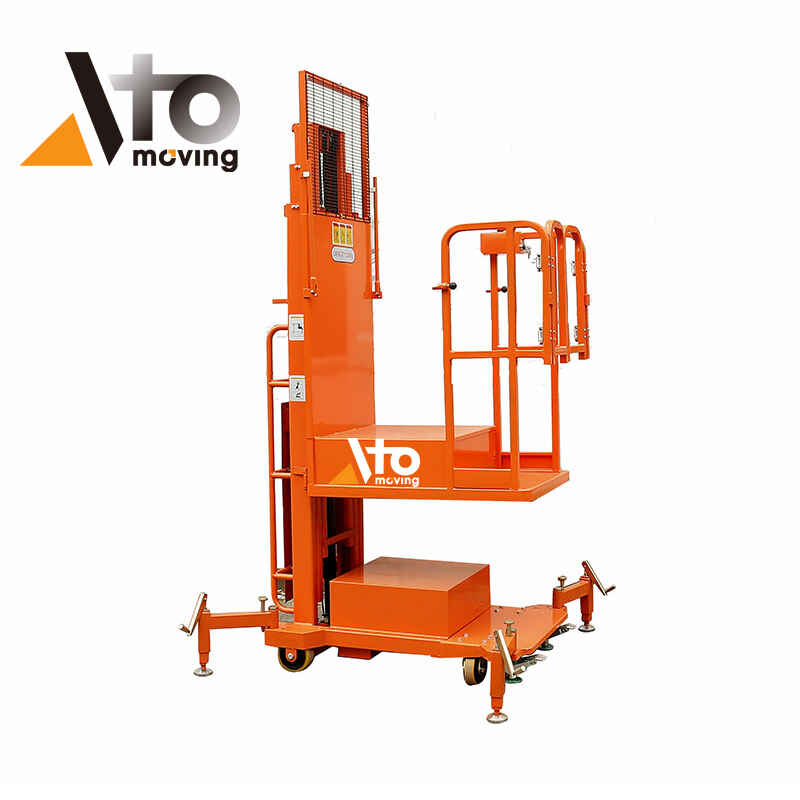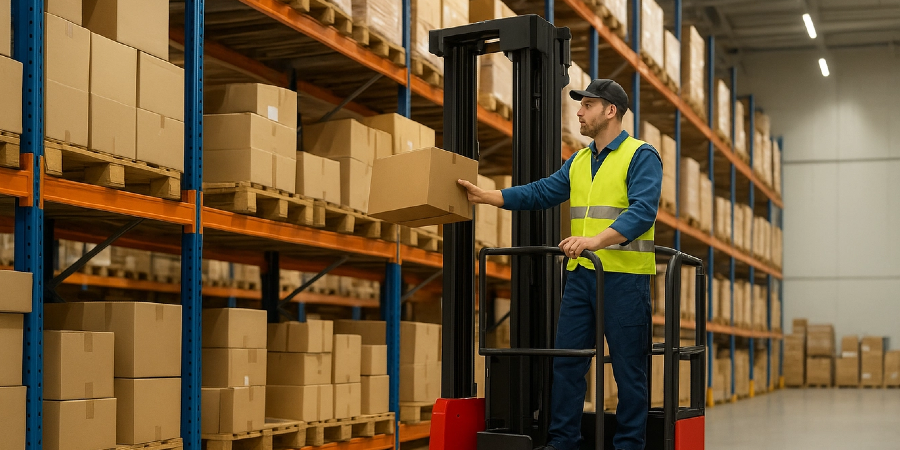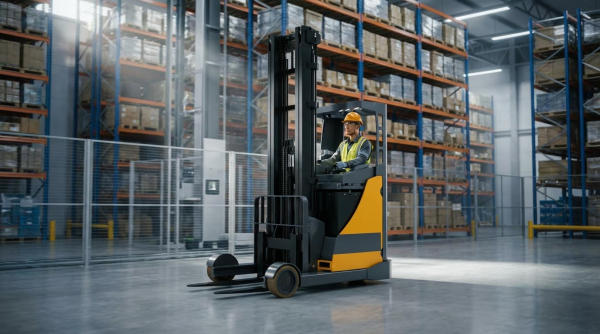
Warehouse order picker machines enabled efficient, palletless item handling by raising operators directly to rack locations. These Class II electric motor narrow aisle lift trucks supported high-throughput picking while operating in constrained aisles. Their safe and reliable use depended on appropriate machine selection, engineered design, and robust integration with warehouse management systems. Subsequent sections examined core machine types and functions, key design and control architectures, and the safety, compliance, and maintenance practices required to manage risk and lifecycle cost for plant stakeholders.
Core Functions And Types Of Order Picker Machines
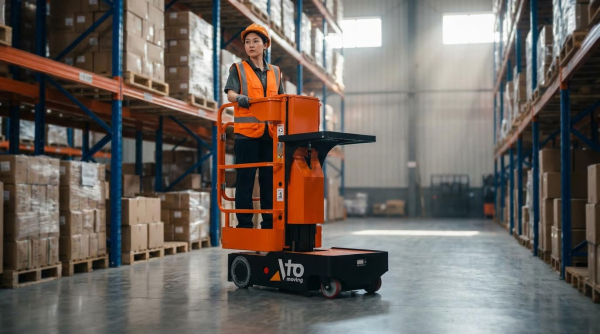
Order picker machines enabled efficient piece-level picking in high-bay storage without relying on palletized unit loads. They raised the operator platform into the rack structure so workers could access individual cartons or items directly at storage locations. This function reduced travel and rehandling compared with ground-level picking plus separate lifting equipment. Different machine types, lift heights, and capacity envelopes allowed engineers to match equipment to aisle width, storage density, and throughput targets.
How Order Pickers Differ From Standard Forklifts
Order pickers differed fundamentally from standard counterbalance or reach forklifts in how they handled loads. A conventional forklift lifted the palletized load while the operator remained at ground level, focusing on unit-load movement. An order picker, by contrast, elevated the operator platform, controls, and often a small load deck to rack height for item-level selection. This design prioritized vertical access and operator ergonomics for picking, not bulk transport. OSHA classified order pickers as Class II electric motor narrow aisle trucks, which reflected their intended use in tight aisles with racking on both sides. Their steering geometry, visibility, and speed profiles supported precise maneuvering rather than high-speed travel.
Common Configurations And Lift Height Ranges
Order pickers typically used a stand-on operator platform integrated with a vertical mast and compact chassis. Common configurations included low-level units operating up to roughly 2.5 m platform height for first and second rack levels, and mid- to high-level machines reaching 6–12 m for multi-level racking. Narrow-aisle designs matched aisle widths typically between 1.5 m and 2.0 m, depending on load and chassis length. Some models used rail or wire guidance to stabilize travel in very narrow aisles and reduce steering corrections. Engineers selected mast stages and lift heights based on maximum rack beam level plus a clearance allowance for safe picking and maneuvering. Higher lift ranges required more robust mast sections, stronger chains, and stiffer chassis structures to control deflection and sway.
Capacity Ratings And Stability Considerations
Order picker capacity ratings usually ranged from a few hundred kilograms up to approximately 1 350 kg (about 3 000 lb). The rated capacity always included the operator, tools, and the picked load on the platform or load deck. Capacity decreased as lift height and load center distance increased, so manufacturers specified derated capacities for upper mast positions. Stability depended on the combined center of gravity of the truck, operator, and load staying within the stability polygon formed by the wheelbase. Narrow-aisle designs used low-mounted batteries as counterweights to lower the center of gravity and resist tipping. Engineers had to account for dynamic effects such as braking, turning at height, and mast sway when defining speed limits and acceleration profiles.
Typical Warehouse Use Cases And Layout Impacts
Order pickers suited operations that required high-frequency piece picking, such as e-commerce fulfillment, spare parts distribution, and mixed-SKU carton picking. They worked effectively with selective pallet racking, carton flow racks, and multi-level pick modules where operators accessed many SKUs per aisle. Because the machines operated in narrow aisles, warehouse layouts could increase storage density compared with counterbalance forklift designs. However, the need for vertical access clearances, defined traffic lanes, and pedestrian segregation influenced rack spacing and cross-aisle placement. Integration with warehouse management systems and guided picking workflows, such as bin-by-bin routes or queue-based order assignment, further shaped aisle zoning and pick path design. Properly matched equipment and layout minimized travel distances and congestion while maintaining safe separation between order pickers, forklifts, and pedestrians.
Engineering Design, Controls, And Integration
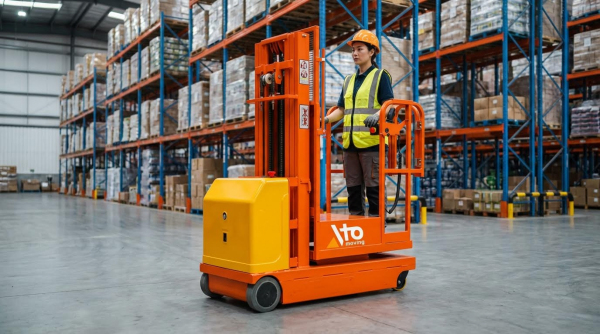
Engineering design of warehouse order pickers balanced vertical reach, maneuverability, and operator safety within narrow aisles. Designers optimized structures, powertrains, and controls to support precise piece picking while carrying an elevated operator. Modern machines integrated tightly with warehouse management systems (WMS), pick queues, and guided workflows to reduce travel distance and error rates. This section examined the physical design, drive and hydraulic systems, control architecture, and digital integration that enabled safe and efficient operation.
Mast, Platform, And Chassis Design Fundamentals
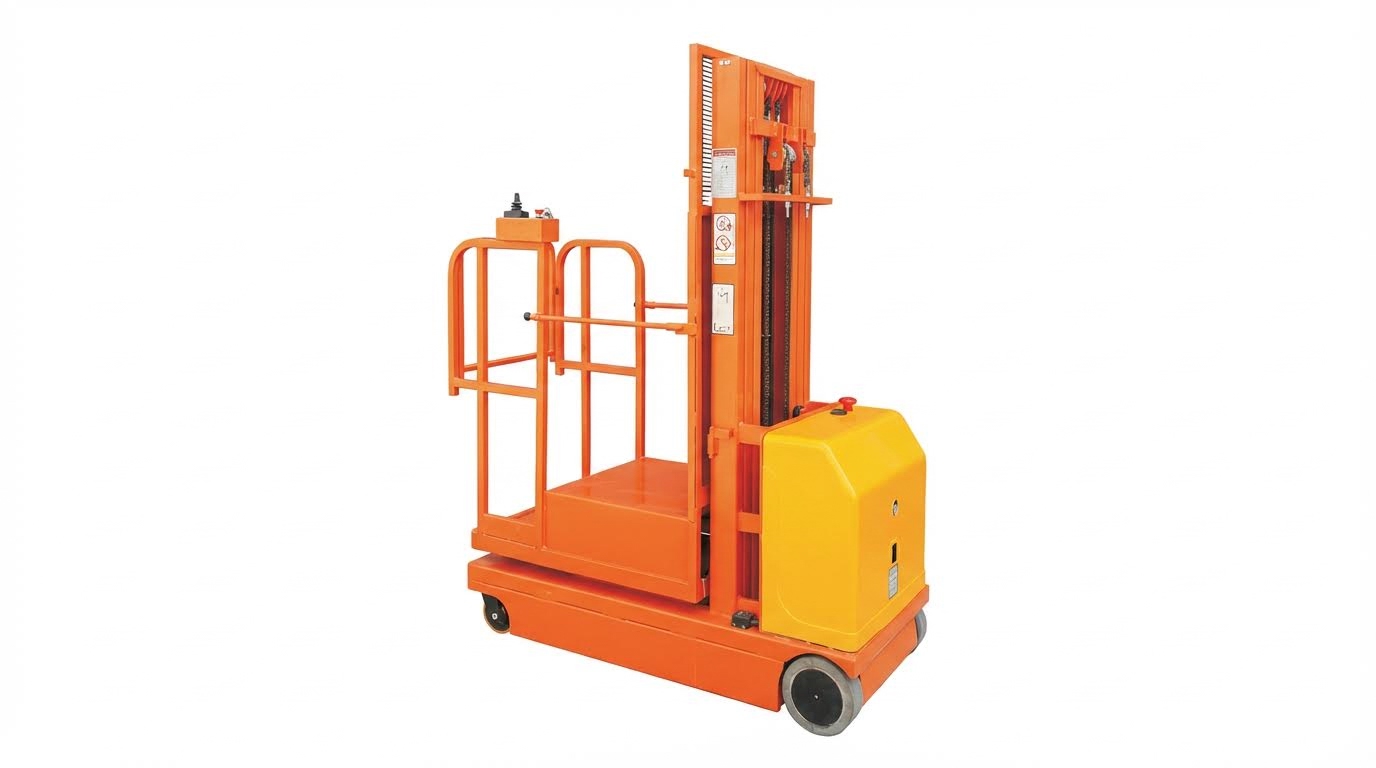
The mast provided vertical guidance and load support for the operator platform, typically using nested cold-formed steel channels with roller carriages. Engineers sized mast sections and welds using Euler buckling checks and fatigue criteria under dynamic loading, including acceleration, braking, and mast sway. Platform design prioritized a rigid floor, guarded edges, and integrated anchor points for fall protection harnesses, while keeping mass low to reduce overturning moments at height. The chassis used a compact wheelbase and narrow overall width for aisle operation, with a low center of gravity and counterweight distribution tuned to meet rated capacity across the full lift height.
Designers validated stability using the combined mass of truck, operator, and load, referencing the capacity plate and applicable standards for narrow aisle lift trucks. Load deflection and mast tilt under maximum rated load influenced rack clearances and required safety factors against rack impact. Guard rails, gates, and interlocked access points on the platform reduced the risk of egress while elevated. The chassis also incorporated reinforced impact zones around corners and fork tips to limit structural damage during minor collisions in dense storage layouts.
Electric Drive, Hydraulics, And Energy Management
Order pickers used electric drive motors for traction and electric-hydraulic power units for lifting, typically powered by lead-acid or lithium-ion batteries. Engineers selected motor power and gear ratios to provide adequate tractive effort on level floors and ramps, while limiting maximum speed for safety in narrow aisles. Hydraulic systems used gear or vane pumps, proportional valves, and flow control to deliver smooth mast raising and lowering, minimizing platform bounce that could destabilize an operator at height. Designers sized cylinders and hoses for peak pressure during emergency stops and overload scenarios, with safety valves to prevent uncontrolled descent.
Energy management strategies focused on maximizing runtime per charge and protecting battery life. Regenerative braking on traction and sometimes on lowering functions recovered energy during deceleration and descent, feeding it back to the battery. Control logic limited high-current events, such as simultaneous full-speed travel and maximum lift, to reduce thermal stress on motors and conductors. Battery management systems monitored state of charge, temperature, and charge cycles, enforcing cutbacks when voltage dropped below defined thresholds to prevent deep discharge. Maintenance procedures specified minimum recharge levels, typically above 20% state of charge, and cleanliness of terminals to minimize resistive losses and overheating.
Control Systems, Sensors, And Safety Interlocks
Control architectures combined drive-by-wire traction control, proportional hydraulic control, and supervisory safety logic. Operators used tillers, steering wheels, or joystick assemblies with integrated travel direction, speed, and lift controls, designed for two-handed operation during motion. Encoders and position sensors monitored mast height, steering angle, and wheel speed, enabling speed reduction or travel inhibition when the platform rose above specified levels. Programmable controllers enforced acceleration ramps and deceleration profiles that limited dynamic load transfer and platform sway.
Safety interlocks prevented hazardous states, such as travel with open platform gates or operation without an engaged deadman switch. Emergency stop buttons cut power to traction and hydraulic circuits while maintaining braking capability. Presence-detection devices, including foot pedals or floor switches, ensured the operator remained correctly positioned before allowing lift or travel. Additional sensors monitored overload conditions, hydraulic pressure, and tilt, triggering alarms or shutdowns when parameters exceeded safe limits. These layered protections aligned with powered industrial truck safety expectations and supported OSHA-compliant training content on safe operation and fault response.
WMS Integration, Queues, And Route Optimization
Modern order pickers often interfaced with WMS or warehouse execution systems through handheld terminals or vehicle-mounted devices. Systems like Extensiv Warehouse Manager guided operators bin by bin, generating pick paths based on bin naming or configured custom routes to minimize travel distance. The terminal presented the next bin, item description, and required quantity, and supported barcode scanning of bin and part numbers to confirm correct picks and reduce errors. Optional features, such as treating each part scan as one unit for non-serial, non-lot items, simplified high-volume piece picking while maintaining inventory accuracy.
Platforms such as Orderadmin implemented queue-based picking, where orders entered system queues configured
Safety, Compliance, And Maintenance Strategies
Safety, compliance, and maintenance strategies governed how facilities selected, operated, and sustained order picker fleets. Because regulators treated order pickers as powered industrial trucks, companies had to align technical design, operator behavior, and maintenance with OSHA and local regulations. A structured program combined formal training, engineered safeguards, standardized inspections, and scheduled maintenance intervals. This integrated approach reduced incident rates, stabilized lifecycle costs, and supported higher warehouse throughput.
OSHA Class II Requirements And Operator Training
Order pickers fell under OSHA Class II electric motor narrow aisle lift trucks, so Powered Industrial Truck (PIT) rules applied. Employers had to provide formal instruction, practical training, and evaluation before operators used equipment in the workplace. Training covered equipment characteristics, rated capacity, center-of-gravity effects, and narrow-aisle maneuvering. It also addressed emergency procedures, such as loss of hydraulic power, control failure, or platform entrapment.
OSHA required refresher training when incidents occurred, near-misses were recorded, or facility conditions changed. Evaluations typically included observed driving in aisles, platform positioning at height, and adherence to speed limits and traffic rules. Instructors emphasized pre-use inspections and lockout of defective units until qualified technicians repaired them. Recordkeeping of training dates, evaluation results, and truck assignments helped demonstrate compliance during audits.
Facilities with guided WMS workflows, such as queue-based or bin-by-bin picking, integrated these procedures into training. Operators learned to follow terminal prompts, scan order IDs and bin locations, and confirm quantities without bypassing safety steps. This linkage between digital workflows and PIT requirements reduced operator discretion in unsafe maneuvers and improved traceability of picking activity.
Fall Protection, PPE, And Job Hazard Analysis
Because order pickers elevated operators with the platform, fall protection was critical. Operators working at height wore full-body harnesses anchored to approved tie-off points on the truck. Training addressed correct harness fit, inspection of webbing and hardware, and proper connection to lanyards or self-retracting lifelines. Exiting the platform while elevated was prohibited except under controlled rescue or maintenance procedures.
Personal protective equipment (PPE) typically included hard hats, high-visibility vests, safety glasses, cut-resistant or grip-enhancing gloves, and slip-resistant safety footwear. PPE selection followed a documented risk assessment that considered falling objects, foot crush hazards, and contact with sharp packaging. Supervisors enforced PPE use through routine observations and corrective coaching. Consistent PPE compliance reduced injury severity when incidents did occur.
A job hazard analysis (JHA) systematically identified risks in order picking tasks. Teams mapped each step: approaching racks, raising the platform, handling cartons, scanning items, and navigating congested aisles. They then evaluated hazards such as overhead obstructions, uneven floors, mixed traffic with forklifts, and blind intersections. Resulting controls included speed limits, one-way aisle designations, marked pedestrian lanes, and minimum clearance requirements at rack cross-beams.
JHAs also addressed process-specific risks introduced by WMS-guided picking or queue-based systems. For example, workers might focus on handheld terminals instead of their surroundings. Controls included requiring operators to stop before interacting with screens and designing prompts that minimized on-the-move data entry. Periodic JHA reviews ensured controls remained effective as layouts, volumes, or equipment changed.
Daily Inspection Checklists And Failure Modes
Daily inspections acted as the first defense against mechanical failure and unsafe operation. Operators checked forks, carriage, and platform for cracks, deformation, or loose fasteners. They inspected the mast, rollers, and chains for visible wear, misalignment, and adequate lubrication. Hydraulic hoses and cylinders were examined for leaks, abrasions, or bulging sections indicating internal damage. Tires and load wheels had to be free from embedded debris, flat spots, or excessive wear that could destabilize the truck.
Electrical and control checks included testing lights, horn, backup alarm, emergency stop, deadman switch, and service brakes. Operators verified that travel and lift controls responded smoothly without delay or surging. Battery condition was assessed by checking charge level, cable integrity, and terminals for corrosion. Any abnormal noises from motors, pumps, or gear trains triggered immediate reporting. Defective units were tagged out and removed from service until technicians completed repairs.
Common failure modes included hydraulic leaks, worn lift chains, degraded braking performance, and sensor or interlock malfunctions. Ignoring early signs, such as minor oil spots or intermittent alarms, often led to unplanned downtime and higher repair costs. Structured checklists ensured consistency across shifts and operators. Facilities stored completed checklists or digital logs to
Summary And Key Takeaways For Plant Stakeholders
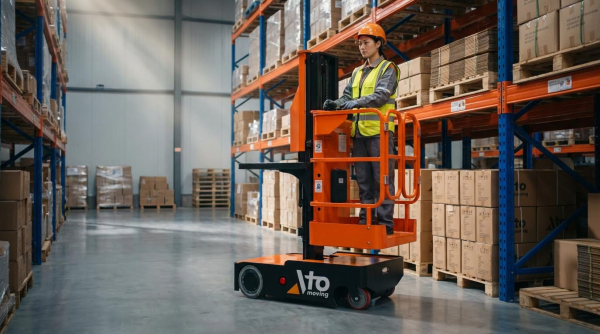
Order picker machines had become central to high-throughput warehouses, enabling piece picking at height without pallets. They differed from counterbalance forklifts by elevating the operator instead of only the load, which changed both design priorities and risk profiles. Capacities typically ranged up to about 1 360 kg, but safe limits always depended on the specific model, lift height, and center-of-gravity position. Plant stakeholders needed to treat the operator, tools, and load as a single combined mass when assessing stability and compliance.
From an engineering standpoint, robust mast, platform, and chassis designs worked together with electric drive and hydraulic systems to deliver narrow-aisle maneuverability and vertical reach. Control systems with sensors and interlocks supported speed limiting, lift-height restrictions, and fall-protection enforcement. Integration with WMS platforms and queue-based picking workflows allowed guided bin-to-bin routes, reduced travel distance, and improved labor productivity. However, these gains depended on accurate master data, well-configured pick paths, and disciplined scanning practices.
Safety and regulatory compliance revolved around OSHA Class II powered industrial truck rules, structured operator training, and documented job hazard analyses. Facilities needed clear traffic segregation, mandatory PPE, and fall-arrest systems for elevated work. Daily operator inspections, combined with monthly and six‑monthly professional maintenance, reduced unplanned downtime and extended asset life. Visual and functional checks of forks, mast, hydraulics, brakes, and emergency systems were essential to keep equipment in serviceable condition.
Looking ahead, increased sensorization, better diagnostics, and deeper WMS integration were likely to push order pickers toward more semi-automated, data-driven operation. Plants planning investments should compare lifecycle cost, not just purchase price, including training, maintenance infrastructure, and potential productivity gains from optimized routing. A balanced strategy combined sound mechanical design selection, rigorous safety culture, and digital workflow integration. Stakeholders who aligned these elements could achieve higher throughput, lower incident rates, and more predictable operating costs over the machine’s service life.