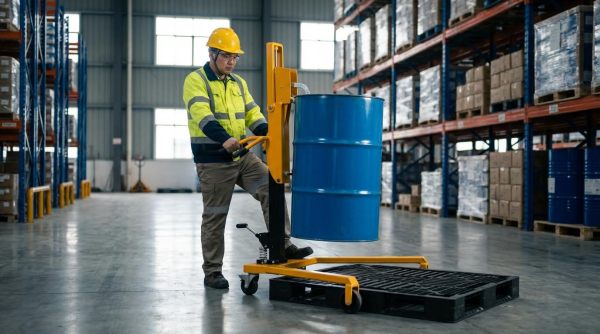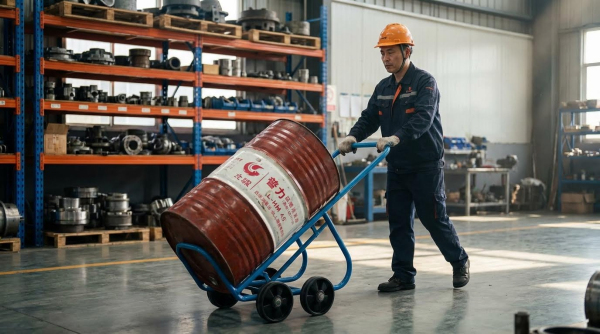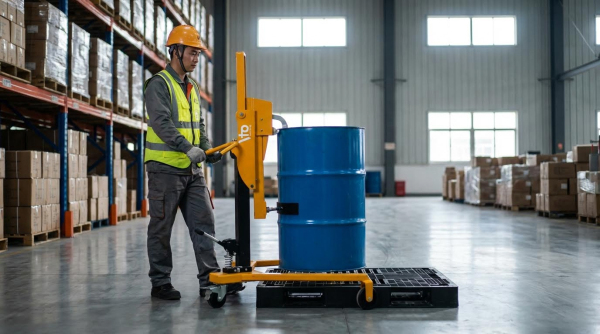
Safe, efficient drum palletizing depends on matching drum geometry to pallet size, then controlling stability with patterns and restraints. This article explains how to palletize 55 gallon drums on standard pallets, from 2×2 layouts to single-drum strategies and stacked loads. It also details dunnage, friction aids, strapping, and wrapping options, including how to integrate robotic and automated securing systems. The goal is to give engineers and EHS professionals clear, standards-aligned guidelines for designing reliable drum palletizing solutions across manual, forklift drum grabber, and drum lifting equipment operations.
Key Design Constraints For Drum Palletizing
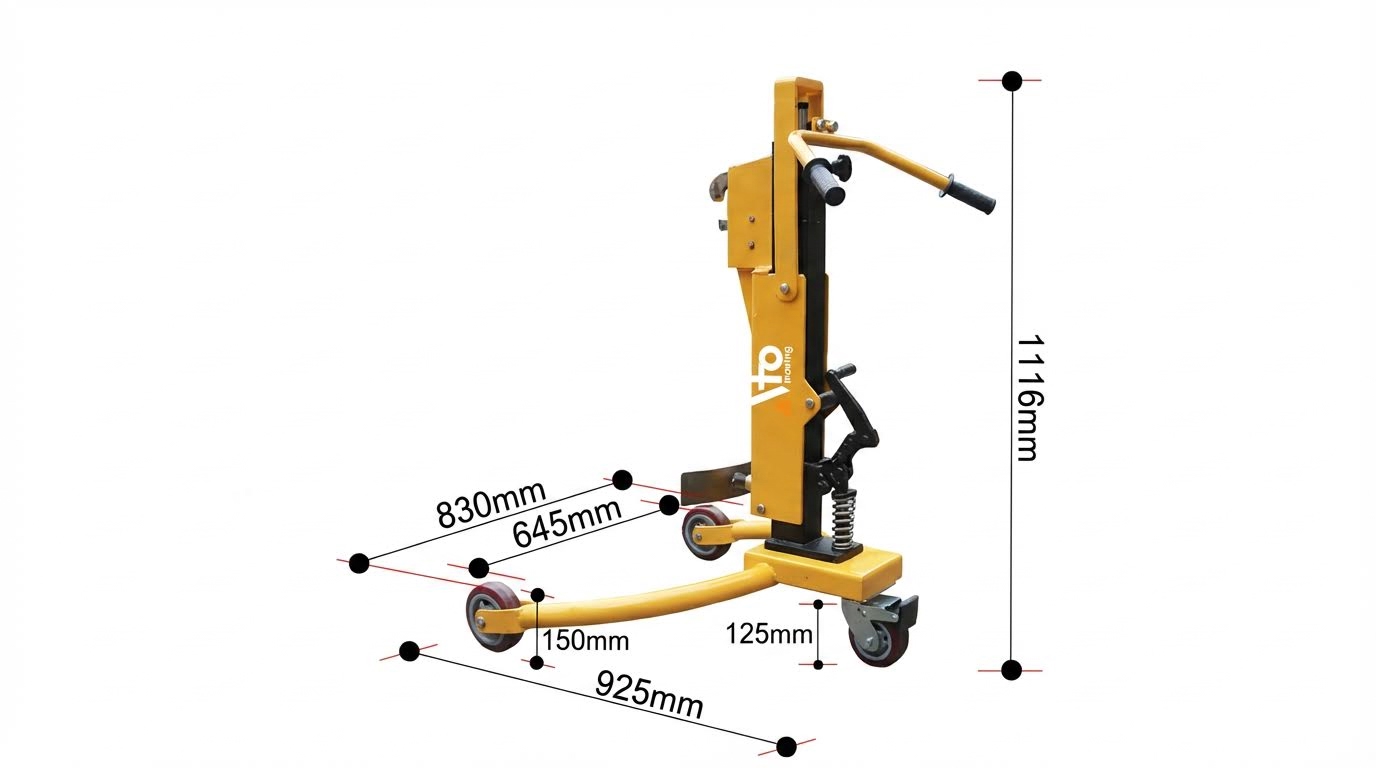
Engineers who study how to palletize 55 gallon drums must balance geometry, safety, and handling constraints. Drum and pallet dimensions, regulatory requirements, and the chosen handling method all drive the feasible pallet patterns and securing methods. These constraints affect load stability, center of gravity control, and compatibility with manual, forklift, and robotic workflows. Understanding them early in design prevents rework, product damage, and non-compliance downstream.
Drum And Pallet Geometry, Weights, And Clearances
A standard 55-gallon drum typically had a diameter near 572 millimeters and a height near 851 millimeters. Empty mass ranged from about 8 kilograms for fiber drums to over 20 kilograms for heavy-gauge steel drums. Filled mass often reached 200–250 kilograms depending on product density, which set the baseline for pallet load calculations. A North American 48×40 inch pallet (1219×1016 millimeters) provided about 1.92 square meters of deck area, while an ISO 1200×1000 millimeter pallet provided a slightly different footprint that still supported 2×2 drum layouts.
When defining how to palletize 55 gallon drums, engineers typically modeled a 2×2 pattern on 48×40 pallets with tight but safe clearances. Drum outer diameters and pallet perimeter tolerances had to leave several millimeters of edge clearance to avoid overhang that reduced forklift safety. The combined load height (pallet plus drum plus dunnage) determined whether racks, containers, or trailers could accept the unit. Layouts also considered fork entry openings, deck board orientation, and any sump or spill-containment pallets that changed effective geometry.
Regulatory, Safety, And Ergonomic Requirements
Drum palletizing for chemicals or hazardous goods had to comply with transport and environmental regulations. Designers aligned their methods with requirements comparable to UN dangerous goods codes, SPCC rules, and container storage regulations similar to 40 CFR 264.175 for spill containment. Secondary containment pallets or basins under 55-gallon drums helped capture leaks and had to provide rated sump capacity and chemical resistance. Where dust caps or cover sheets protected contents from contamination, engineers selected FDA-compliant polymers and temperature-resistant materials that matched fill and storage conditions.
Safety and ergonomics governed how operators interacted with drums before and after palletizing. Procedures for how to palletize 55 gallon drums typically required PPE such as gloves, safety footwear, and eye protection. Manual tilting or rolling of drums remained restricted due to musculoskeletal risk and crush hazards, so use of barrel lifter, hoists, or manipulators was preferred. Pallet designs also had to support safe stacking heights, acceptable center-of-gravity locations, and robust securing to prevent tipping during transport, loading, or seismic events.
Manual, Forklift, And Robotic Handling Interfaces
The chosen handling method strongly influenced the palletizing constraints for 55-gallon drums. For manual or semi-manual handling, engineers favored low stack heights, clear access for drum dollies, and wide aisles that allowed controlled rolling or tipping with dedicated drum handling tools. Pallet patterns had to leave enough clearance for operators to place friction mats, chocks, or blocking dunnage between drums without pinch points. Edge distances and deck openings also needed to prevent toes and fingers from entering hazard zones.
Forklift handling introduced additional geometric and stability constraints. Pallets had to be compatible with standard fork spacing, entry height, and mast tilt limits while keeping the combined drum load within rated capacity. Guidance on how to palletize 55 gallon drums for forklift transport emphasized symmetric weight distribution and avoidance of overhang that could catch on racking or trailer walls. For robotic palletizers and depalletizers, engineers specified precise drum positions, orientation tolerances around ±2 millimeters, and label-facing rules for downstream scanning. End-of-arm tooling, such as grippers or clamps, required consistent clearances between drums and sufficient vertical gaps for cover sheet or dust-cap placement within automated lines.
Stable Pallet Patterns For 55-Gallon Drums
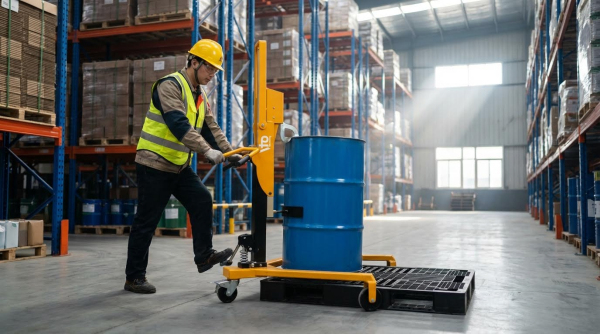
Stable pallet patterns determine how to palletize 55 gallon drums without exceeding pallet capacity or creating tipping risks. Engineers evaluate pallet geometry, drum diameter, and handling method before defining any pattern. The goal is a repeatable footprint that supports safe transport, automated wrapping, and efficient warehouse flow.
2×2 Layouts On 48×40 And ISO Pallets
A 55-gallon drum typically had a diameter near 572 mm and a height near 851 mm. A standard 48×40 inch pallet provided 1,219×1,016 mm of deck area, while an ISO pallet provided 1,200×1,000 mm. In both cases, a 2×2 pattern with four drums used almost the full plan area and delivered a compact, stable unit. Drums sat with their circular footprints tangent or near-tangent, and engineers often offset them a few millimeters from pallet edges to protect chimes from forklift barrel grabber contact. When defining how to palletize 55 gallon drums for export, users often preferred ISO pallets because the slightly different footprint improved fit inside certain containers and automated stretch wrappers.
Single-Drum And Two-Drum Pallet Strategies
Single-drum pallets served low-volume, high-value, or segregated hazardous products. A single 55-gallon drum sat centered on the pallet to keep the load symmetric and simplify tie-down calculations. Two-drum pallets used a 1×2 layout with the drum centers aligned along the pallet length, usually on 48×40 or 1,200×1,000 mm pallets. This pattern suited applications where operators needed partial picks or where weight limits on mezzanines or racks restricted four-drum loads. When engineers evaluated how to palletize 55 gallon drums in small batches, they often selected one- or two-drum pallets to match batch sizes, avoid partial layers, and reduce in-plant shuttling complexity.
Stack Heights, Center Of Gravity, And Tipping Risk
Stack height governed both center-of-gravity elevation and compatibility with stretch wrappers, doors, and trailers. A typical 55-gallon drum height near 0.85 m meant that a two-high stack on a pallet could reach roughly 1.7–1.8 m including pallet and dunnage. Higher stacks increased the combined center of gravity, which raised tipping risk under braking, cornering, or impact. Engineers therefore checked that the projected center of gravity stayed well inside the pallet footprint and within internal transport criteria. When defining how to palletize 55 gallon drums for road or sea transport, users often limited stacks to one layer for high-density or hazardous liquids, or required enhanced restraints such as steel or composite strapping, high-tension film, and blocking elements before approving two-high stacking.
Dunnage And Load Securing Methods
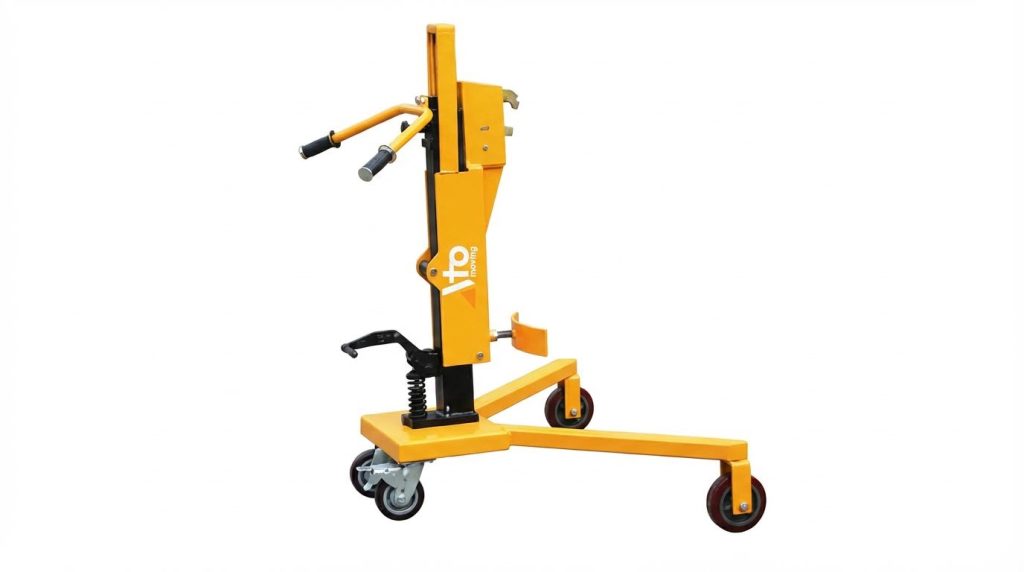
Safe drum palletizing depends on how effectively the load interfaces with the pallet and restraint system. For engineers optimizing how to palletize 55 gallon drums, dunnage and securing methods must work as a system, not as independent add-ons. Selection should consider drum material, surface friction, transport mode, and whether handling is manual, forklift-based, or robotic. The goal is to prevent sliding, rotation, and tipping while preserving drum integrity and regulatory compliance.
Friction Mats, Cradles, And Blocking Dunnage
Friction mats increase the static friction coefficient between drum and pallet deck, reducing sliding during acceleration, braking, and cornering. For steel or plastic 55-gallon drums on timber or plastic pallets, high-friction elastomer mats or coated sheets under each drum typically cut required strapping tension and improve pattern stability. Shaped cradles or V-blocks support the drum curvature, limit rolling, and help maintain a fixed center-of-gravity position, which is critical when drums carry liquids with sloshing behavior. Blocking dunnage, such as timbers, chocks, or engineered plastic blocks, fills gaps at pallet edges and between drums so that lateral loads transfer into the pallet structure instead of into the drum sidewalls. When designing how to palletize 55 gallon drums in 2×2 patterns, engineers should size dunnage so that it does not interfere with fork entry, manual pallet jack clearances, or robotic grippers.
Strapping, Clips, And Hazardous-Goods Restraints
Strapping provides primary mechanical restraint that clamps drums to the pallet and to each other. Steel, polyester, or composite straps should be sized based on drum mass, transport acceleration assumptions, and regulatory codes for dangerous goods, such as ADR, IMDG, or 49 CFR. Purpose-designed drum clips or pallet interface clips lock strap paths to the drum chime or rim, converting strap tension into radial holding forces without deforming the drum shell. Hazardous-goods applications benefit from certified restraint systems that document load ratings and test protocols, including vibration and impact testing. When defining how to palletize 55 gallon drums for global shipping, engineers should validate strap layouts with worst-case scenarios, such as stacked pallets, mixed-mode transport, and emergency braking on road vehicles.
Stretch Wrapping, Cover Sheets, And Dust Caps
Stretch wrapping stabilizes the drum array as a single unit and provides secondary containment against minor leaks or weeping closures. Film selection and wrap pattern must account for drum height, chime geometry, and the need to maintain access to labels and hazardous markings. Top cover sheets, placed before wrapping, protect closures and bung areas from dust and moisture while also improving film sliding behavior for stacked pallets. Dedicated dust caps for 55-gallon drums shield the open top or closure zone from contaminants and help contain evaporants and airborne particulates between process steps. For food, pharmaceutical, or fine chemical service, materials for cover sheets and dust caps should comply with relevant FDA or EU food-contact regulations and withstand expected storage temperatures without loss of mechanical integrity.
Integrating Robotic And Automated Load Securing
Robotic palletizing and automated securing systems improve consistency and throughput for drum handling. End-of-arm tools can position 55-gallon drums with millimetric repeatability, which reduces clearance variations and allows tighter dunnage and strap layouts. Integrated cells can place friction mats, blocking elements, and cover sheets automatically before or after drum placement, minimizing manual exposure to heavy or hazardous loads. Automated stretch wrappers and strapping machines downstream of palletizers apply repeatable tension, wrap patterns, and corner protection, enabling validated load recipes for different drum types and fill levels. When defining how to palletize 55 gallon drums in automated lines, engineers should ensure that pallet conveyors, accumulation zones, and quality checks verify drum count, weight distribution, and restraint application before release to storage or shipping.
Summary Of Best Practices And Selection Guidelines
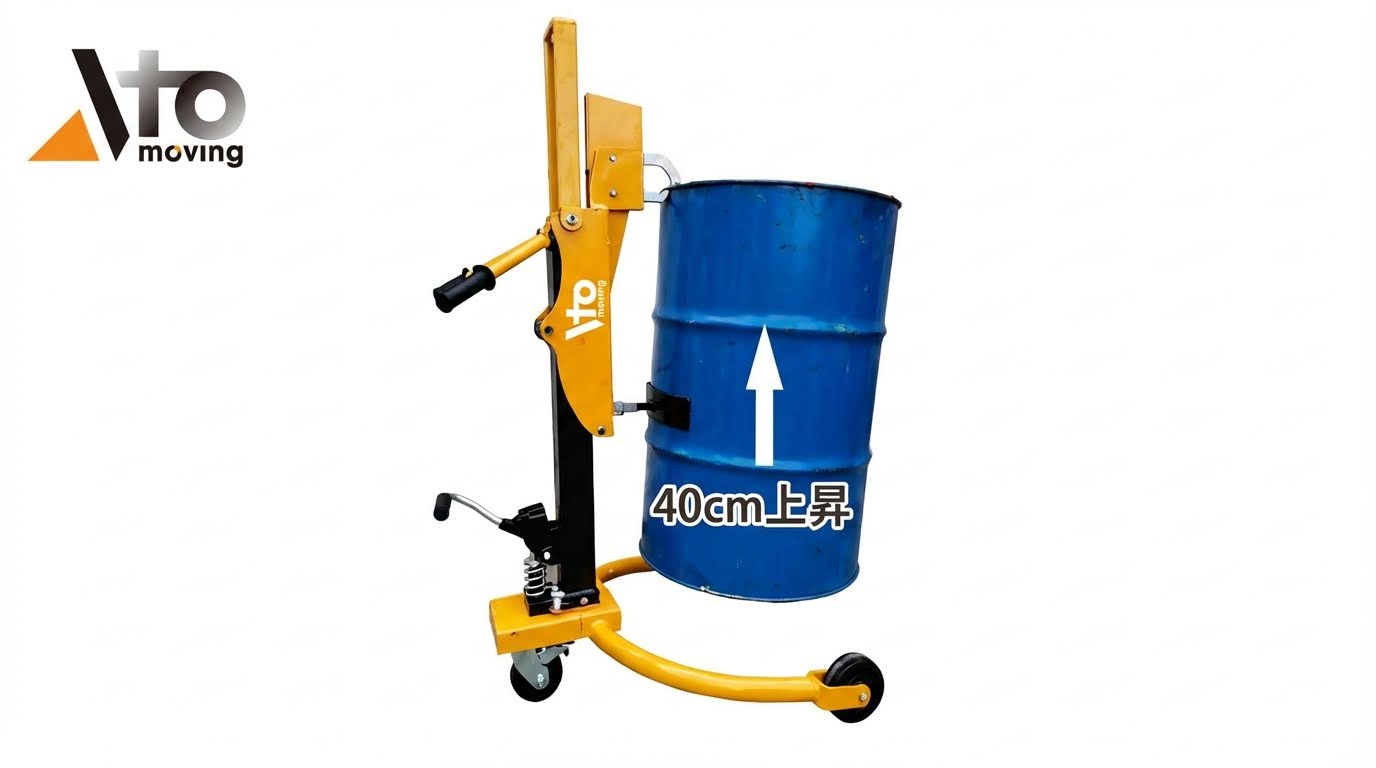
When engineers evaluate how to palletize 55 gallon drums, they should link geometry, regulations, and handling method into one coherent design. Drum diameter near 572 millimetres and height near 851 millimetres limits pattern options on 1 219 x 1 016 millimetre and 1 000 x 1 200 millimetre pallets. Stable 2×2 patterns, appropriate dunnage, and validated securing methods reduce tipping risk and meet hazardous goods rules. Automated palletizing and wrapping systems then lock in repeatability, throughput, and traceable safety performance.
Best practice starts with a formal constraint review. Verify drum material, fill weight, and closure type, then match these to pallet rating, deck style, and fork entry geometry. Confirm that the static and dynamic pallet load ratings exceed the combined drum mass with a margin that aligns with internal standards and applicable transport codes. Include spill containment and SPCC or equivalent environmental rules when drums contain hazardous liquids, and specify compatible secondary containment pallets or basins where required.
For typical 55 gallon drums, select a 4‑drum 2×2 layout on 48 x 40 inch or ISO pallets whenever floor space and handling allow. Use single‑drum or two‑drum pallets only when driven by segregation, low volume lanes, or ergonomic limits. Control stack height by calculating centre of gravity location and checking against forklift barrel grabber, racking, and trailer clearances, while respecting any regulatory limits on tiers for hazardous goods. Avoid mixed-height stacks and overhanging drums, which increase overturning moments under braking or impact.
In dunnage and securing design, combine friction mats or cradles with mechanical restraint. High-friction interlayers under the chime reduce sliding, while blocking or chocking prevents rolling on trailers with high vibration. Use tensioned strapping or certified hazardous-goods restraint systems that match drum mass and transport acceleration values, and validate patterns with test data or standards-based calculations. Stretch wrapping and cover sheets then provide unitization, dust protection, and label retention; dust caps protect closures and reduce contamination or evaporative loss where process requirements justify the extra step.
Where volumes justify it, integrate robotic palletizers and automated wrappers or strappers. Robots can maintain label orientation, precise drum spacing, and repeatable load geometry, while automated securing equipment applies consistent wrap patterns and strap tension. This combination improves throughput, reduces manual handling injuries, and delivers consistent pallet quality across shifts. Looking forward, more sites will couple these systems with in-line inspection, force monitoring, and data logging, enabling continuous improvement of pallet patterns and securing recipes based on real-world performance, not only design assumptions.