Knowing how to pick a warehouse automation solution required a structured engineering and business approach. This article walked through defining operational needs, mapping material flows, and translating pain points into clear automation scope and ROI targets. It then compared core technologies and software stacks, aligned them with layout and throughput constraints, and addressed integration and phased deployment. Finally, it engineered for safety, reliability, and total cost of ownership before closing with a practical, field-tested selection checklist for warehouse decision-makers.
Define Operational Needs And Automation Scope

When engineers search how to pick a warehouse automation solution, this first step defines the entire project trajectory. A structured analysis of flows, inventory, demand, and business goals prevents misaligned investments and stranded assets. This section explains how to translate operations into quantitative requirements and choose the right degree of automation for your facility.
Map Current Material Flows And Pain Points
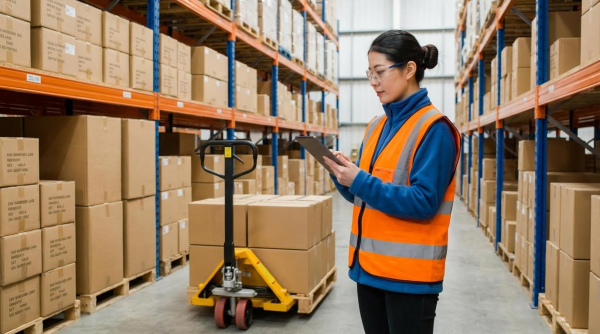
Start with a detailed process map from receiving to shipping. Document every transfer point, storage location, and decision node. Capture travel distances, queue points, and manual touches for each flow. Focus on high-volume and high-variability processes, because these drive automation complexity. Quantify current performance using throughput, pick accuracy, order cycle time, dock-to-stock time, and utilization of labor and storage. Identify structural pain points such as congestion at pick aisles, long walking distances, bottlenecks at packing, or poor space utilization. Use time-and-motion studies and data from WMS or ERP logs rather than anecdotal feedback. A clear material flow diagram becomes the baseline for layout redesign and for evaluating candidate technologies later.
Classify Inventory, Order Profiles, And Demand Peaks
Classify SKUs by physical characteristics, handling constraints, and velocity. Separate pallets, cases, totes, and each-picks, and record weight, dimensions, and stacking or orientation limits. Apply ABC or even ABC-XYZ analysis using historical order lines to understand demand variability and concentration. Identify which SKUs generate the majority of picks and which consume the majority of cube. Analyze order profiles by line count, units per line, and mix of fast versus slow movers. Characterize demand peaks by day, week, and season, including promotion-driven spikes. These classifications determine whether solutions such as goods-to-person systems, shuttle-based AS/RS, or manual pallet jack with mechanized transport are technically feasible and economically justified. They also define required throughput rates and buffer capacities during peak periods.
Set Quantitative Goals And ROI Expectations
Convert strategic objectives into measurable targets before evaluating technologies. Typical quantitative goals include percentage reduction in labor hours per order, improvement in order accuracy, increase in storage density in m², and reduction in order cycle time. Establish baseline values from recent operational data, then define realistic target ranges based on benchmarks from comparable facilities. Build a total cost of ownership model that includes equipment, software, civil works, integration, training, and energy over a 7–10 year horizon. Compare this with expected benefits from labor savings, space deferral, reduced errors, and higher throughput. Define acceptance criteria such as payback period, internal rate of return, and net present value. These financial guardrails prevent over-engineering and help rank automation options objectively during vendor proposals and design iterations.
Decide Automation Level: Manual, Semi, Or Full
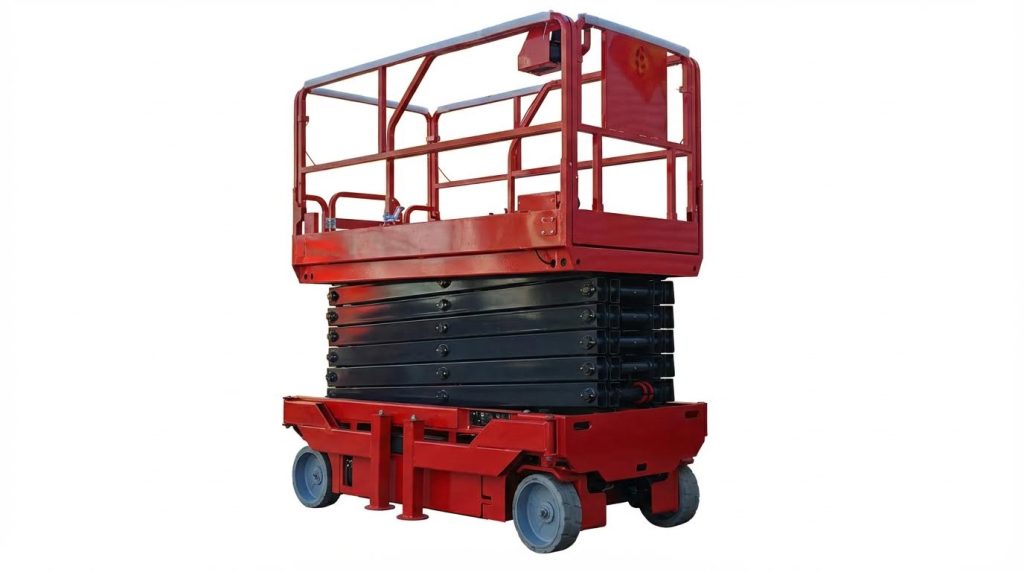
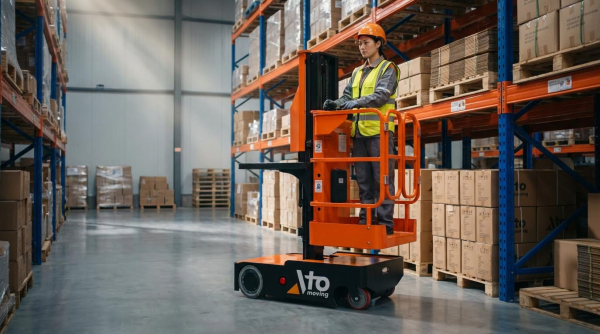
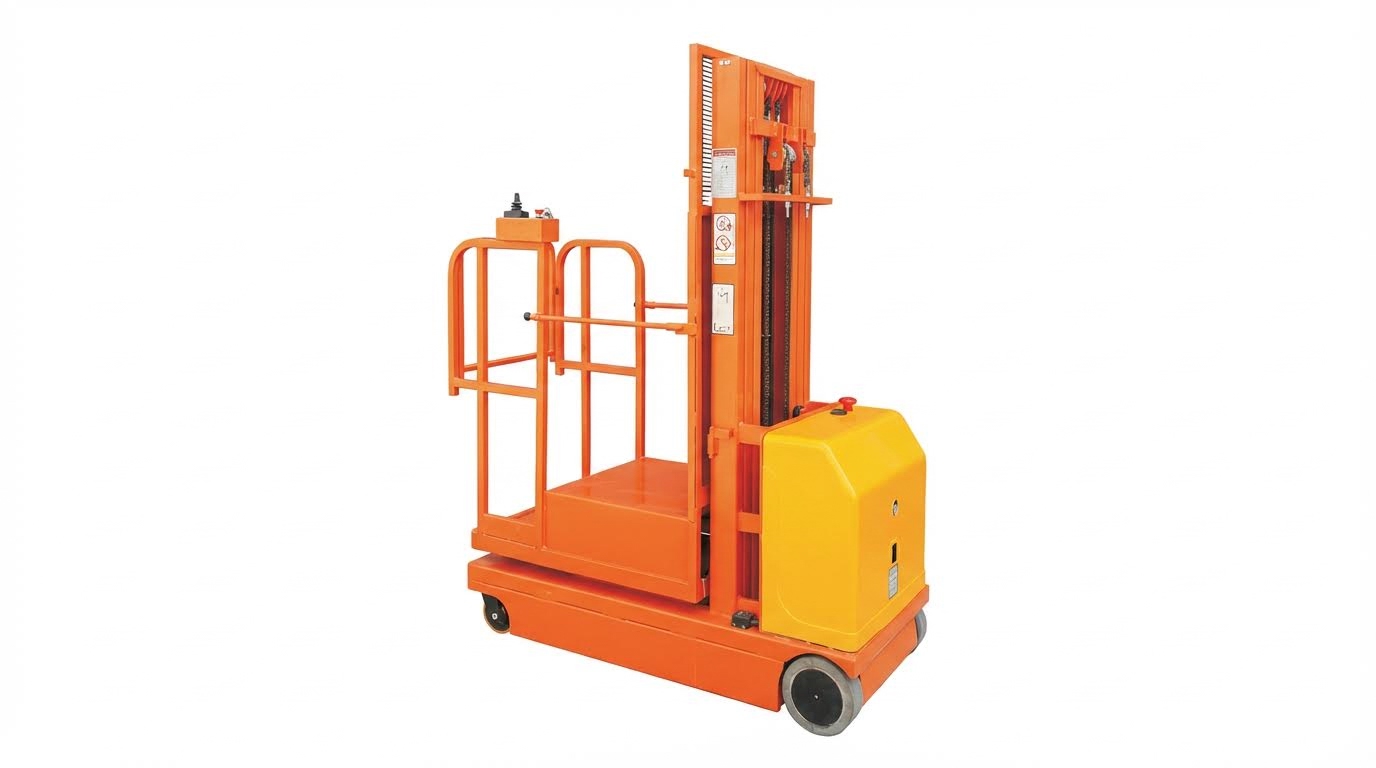
Use the operational analysis and ROI model to select an appropriate automation level, not just a specific technology. Manual solutions with optimized processes and simple mechanization suit low-volume or volatile operations with uncertain horizons. Semi-automated concepts, such as semi electric order picker supported by conveyors, sorters, or mobile robots, often provide the best balance between flexibility, investment, and risk. Fully automated systems, including dense AS/RS and high-speed sortation, fit stable, high-throughput environments with well-defined SKU characteristics and long planning horizons. Consider resilience factors such as ease of scaling, ability to handle product changes, and dependency on specialized skills. Also evaluate operational risk: a highly automated single point of failure can stop the entire facility. The chosen automation level should align with your organization’s risk appetite, workforce strategy, and digital maturity, while still meeting the quantitative goals defined earlier. For instance, integrating tools like scissor platform lift can enhance efficiency in semi-automated workflows.
Match Technologies To Layout And Throughput

When you study how to pick a warehouse automation solution, you must match technology to the physical building and required throughput. This step connects earlier strategic goals with practical engineering constraints. It ensures that AS/RS, mobile robots, conveyors, and software layers operate reliably within your layout, IT stack, and growth plan.
Assess Building Constraints And Infrastructure Readiness
Start with a detailed site survey of the existing facility. Measure clear height, column spacing, dock positions, and fire‑safety zones because these parameters limit AS/RS and mezzanine options. Check aisle widths, floor flatness, and load-bearing capacity to verify suitability for high-bay storage, narrow-aisle equipment, or dense shuttle systems. Document current racking geometry, pick-module locations, and staging areas to understand how material flows today versus the target design. Assess power availability, network coverage, and industrial Wi‑Fi quality, since high robot density and vision systems require low-latency communication. Include IT infrastructure in the readiness check by reviewing server capacity, cybersecurity policies, and data retention rules, which affect how fast new automation can exchange data with core systems.
Compare AS/RS, AMRs/AGVs, Conveyors, And Cobots
Relate each technology family to your space profile and throughput targets. AS/RS solutions such as unit-load cranes, shuttles, or vertical lift modules fit high-density storage and high line-count orders, especially when vertical space exceeds roughly 10 m. AMRs and AGVs suit variable path transport between receiving, storage, and packing, and work well in brownfield sites where fixed conveyors would require heavy reconstruction. Conveyor and sortation systems deliver high sustained throughput on stable, repeatable flows, but they need straight runs, structural supports, and defined merge/divert points. Cobots and robotic arms add value at picking, packing, and kitting stations where ergonomics or accuracy limit human speed. When you evaluate how to pick a warehouse automation mix, compare cycle times, payload ranges, SKU compatibility, and required buffer zones for each option, then map them to specific flow segments instead of the whole building at once.
Evaluate WMS, WES, And ERP Integration Requirements
Any automation choice must align with your digital control architecture. Clarify the current role of the WMS, including inventory ownership, wave or waveless allocation, and cartonization logic. Decide whether you need a Warehouse Execution System to orchestrate real-time work release, routing, and exception handling between AS/RS, AMRs, conveyors, and cobots. Review integration patterns with the ERP for order creation, inventory valuation, and financial posting so you avoid duplicate master data. Favor systems with open APIs, message queues, or standard protocols, which reduce middleware complexity and integration risk. During selection, request interface specifications, latency benchmarks, and stress-test results to confirm that software can support your peak order volume without throttling the physical automation.
Plan Phased Pilots, Scaling, And Lifecycle Support
Plan automation deployment as a series of controlled experiments rather than a single cutover. Define a pilot scope around one process, for example warehouse order picker or pallet transport, with clear baseline KPIs and target improvements. Use the pilot to validate real throughput, error rates, and human–robot interaction in your actual layout, then refine slotting rules, traffic management, and exception workflows. Build a scaling roadmap that specifies trigger points for adding more robots, shuttle aisles, or conveyor segments as volume grows. Include lifecycle support in the plan by negotiating service levels, spare-part strategies, and remote diagnostics capabilities. This phased approach reduces disruption, de-risks capital expenditure, and creates a repeatable template for how to pick a warehouse automation configuration for additional sites or future expansions.
Engineer For Safety, Reliability, And Total Cost
When you study how to pick a warehouse automation system, engineering for safety, reliability, and total cost becomes a core design discipline rather than a late-stage check. Decisions in this phase lock in lifecycle risk, uptime, and financial performance. A structured approach covers safety compliance, human–robot interaction, total cost of ownership, predictive maintenance, and energy performance.
Design For Safety Compliance And Human–Robot Interaction
Safety engineering starts with a formal risk assessment of each automated flow, from goods receipt to dispatch. Map robot paths, transfer points, and manual workstations, then classify hazards such as collision, crushing, falling loads, and ergonomic strain. Apply relevant standards like ISO 3691-4 for driverless trucks, ISO 10218 and ISO/TS 15066 for industrial and collaborative robots, and local occupational safety regulations. Use engineered safeguards including speed-and-separation monitoring, light curtains, safety scanners, interlocked gates, and clearly marked pedestrian aisles.
For human–robot interaction, define collaboration zones where people and automation share space under limited speed and force conditions. Configure AMRs, AGVs, and cobots with safe stopping distances, dynamic path planning, and obstacle detection tuned to your aisle widths and traffic densities. Standardize visual communication with floor markings, stack lights, and andon displays to show robot status and right-of-way rules. Train operators and maintenance staff on lockout–tagout, emergency stop procedures, and safe manual recovery of stalled loads.
Design ergonomics into workstations fed by goods-to-person systems to reduce musculoskeletal risk and picking errors. Maintain reach envelopes within accepted guidelines, minimize lift heights, and use gravity or powered conveyors to avoid manual carrying of heavy cartons. Verify that every safety function has a defined performance level or safety integrity level, and validate it during commissioning with documented tests. This approach makes safety an enabler of higher throughput instead of a constraint.
Analyze Total Cost Of Ownership And Financing Models
When deciding how to pick a warehouse automation solution, evaluate total cost of ownership (TCO) over a realistic horizon, typically 7–15 years. Include capital expenditure for equipment, racking modifications, mezzanines, and control systems, plus installation and commissioning costs. Add integration work for WMS, WES, and ERP, including middleware, testing, and data migration. Estimate operating expenses such as maintenance labor, spare parts, software licenses or subscriptions, connectivity, and incremental energy use.
Quantify benefits using baseline KPIs: labor hours per order, picking accuracy, dock-to-stock time, and space utilization. Model scenarios for demand peaks, labor rate growth, and volume changes to test payback sensitivity. Compare financing models: traditional capex purchases, leasing, and robotics-as-a-service contracts with per-unit or per-transaction pricing. Service-based models can reduce upfront cash outlay and transfer some technology obsolescence risk to the provider, but they require careful review of uptime guarantees and exit clauses.
Use discounted cash flow analysis to compute net present value and internal rate of return for each configuration. Include decommissioning or repurposing costs at end of life, especially for fixed infrastructure like high-bay AS/RS. Align TCO assumptions with your accounting treatment and tax rules, and verify that the chosen model fits corporate balance-sheet strategy. This financial engineering step ensures that technical choices support long-term economic resilience.
Apply Predictive Maintenance, KPIs, And Analytics
Predictive maintenance strategies directly influence how to pick a warehouse automation architecture that will sustain high availability. Specify sensors and data access from the outset: vibration, temperature, current draw, and cycle counters on motors, gearboxes, lifts, and conveyors. Require open access to equipment telemetry through standard protocols so that condition-based monitoring tools can ingest and analyze it. Use historical failure data and manufacturer recommendations to build degradation models and remaining useful life estimates.
Define maintenance KPIs aligned with operations: mean time between failures, mean time to repair, planned maintenance ratio, and automation availability. Track operational KPIs such as order cycle time, lines picked per labor hour, and error rates at each automation node. Implement dashboards that correlate downtime events with queue lengths, missed cut-off times, and overtime hours to reveal bottlenecks. Use these insights to refine spare-parts stocking policies and maintenance windows.
Analytics should also support continuous improvement of routing algorithms and task allocation between humans and machines. For example, analyze AMR traffic density and wait times to optimize path networks and charging schedules. Review cobot pick errors by SKU to adjust vision parameters or gripper selection. Establish a closed feedback loop where engineering, maintenance, and operations jointly review data weekly, then implement and verify corrective actions. This data-driven culture stabilizes performance as volumes and product mixes evolve.
Incorporate Energy Efficiency And Sustainability
Energy and sustainability criteria are integral when you evaluate how to pick a warehouse automation system that will remain competitive under tightening regulations. Start with a facility-level energy model that separates HVAC, lighting, and automation loads. For storage systems, compare shuttle, crane-based AS/RS, and manual racking not only on throughput, but also on kilowatt-hours per handled unit. Specify high-efficiency motors, variable-frequency drives, and regenerative braking where feasible, especially on vertical lifts and decelerating conveyors.
For mobile robotics, assess battery chemistry, charging strategies, and fleet management. Opportunity charging and intelligent scheduling can flatten demand peaks and reduce required charger count. Evaluate the embodied carbon of structural steel, racking, and automation components if corporate sustainability reporting requires lifecycle assessments. Integrate daylighting, LED lighting with occupancy sensors, and zoning to reduce non-process energy consumption in low-traffic areas.
Consider how automation can indirectly improve sustainability by reducing damage rates, returns, and emergency shipments. Higher inventory accuracy can lower safety stocks, which reduces space requirements and associated energy use. Ensure compliance with environmental regulations on noise, emissions from backup generators, and disposal of batteries and electronic waste. Document these design choices so that sustainability metrics can be reported alongside financial and operational KPIs, supporting future certifications and stakeholder transparency.
Summary And Practical Selection Checklist
When engineers ask how to pick a warehouse automation system, the most reliable answers follow a structured process. This article outlined how to translate operational needs into technical requirements, match technologies to layout and throughput, and engineer for safety, reliability, and total cost. The following summary and checklist consolidate those steps into a practical decision tool for brownfield and greenfield facilities.
From a technical perspective, the selection process started with mapping material flows, classifying inventory and order profiles, and quantifying targets such as throughput, error rates, and labor reduction. It then compared options such as AS/RS, AMRs, AGVs, conveyors, and cobots against building constraints, WMS/WES/ERP integration requirements, and phased deployment strategies. Finally, it emphasized safety-by-design, total cost of ownership, predictive maintenance, KPIs, and energy efficiency as core engineering criteria rather than afterthoughts.
In practice, a robust checklist for how to pick a warehouse order picker system should include at least the following items. First, define use cases and pain points in measurable terms: target lines per hour, picks per person-hour, accuracy, and lead time. Second, validate that the building envelope, floor, power, and network can support candidate technologies without excessive retrofits. Third, confirm software integration paths, data models, and API strategies with WMS, WES, and ERP, including test plans and rollback procedures.
Fourth, build a life-cycle cost model that includes capex, software licenses, spares, energy, staffing, and obsolescence risk, and compare it to realistic labor and productivity benefits. Fifth, require safety risk assessments, human–robot interaction concepts, and regulatory compliance evidence before final vendor selection. Sixth, plan pilots with clear KPIs, change-management and training plans, and a scaling roadmap tied to demand scenarios.
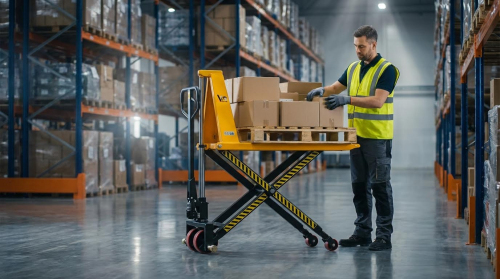
Looking ahead, increasing use of AI, machine learning, and advanced analytics will keep shifting the optimal balance between fixed and mobile automation and between on-premise and cloud control architectures. Engineers should therefore favor modular, interoperable solutions, robust data foundations, and vendor contracts that allow technology refresh. Facilities that treat warehouse automation as an evolving socio-technical system, rather than a one-time equipment purchase, will achieve better resilience, lower risk, and stronger long-term ROI. For instance, integrating tools like scissor platform lift or walkie pallet truck can enhance operational flexibility and efficiency.