Handling 55-gallon drums safely requires a structured approach that combines hazard recognition, engineered equipment, and disciplined operating procedures. This article explains how to move 55 gallon drums in compliance with core safety standards, from manual handling limits and leak checks through to transport and storage stability.
You will see how to select and apply drum dollies, drum trucks, pallet jacks, and palletizers for short and medium distance moves, as well as engineered forklift and skid-steer drum attachments for higher-throughput operations and integrated pouring. The final section consolidates these concepts into practical implementation guidance that mechanical engineers, EHS professionals, and operations managers can adapt to their own facilities.
Core Safety Standards For 55-Gallon Drum Handling
Safe standards for how to move 55 gallon drums depended on accurate hazard assessment, correct equipment selection, and disciplined procedures. Facilities reduced injuries and spills when they treated every drum move as a controlled lifting and transport task, not casual material handling. The following subsections outlined the essential controls that engineers, EHS managers, and operators applied before, during, and after drum movement.
Hazard Identification, Labeling, And SDS Review
Before deciding how to move 55 gallon drums, operators identified the chemical, physical, and mechanical hazards. They read every drum label and verified hazard pictograms, UN numbers, and transport classifications. If a drum was unlabeled or illegible, procedures required treating it as hazardous until characterization and relabeling occurred. Supervisors ensured workers accessed and reviewed the Safety Data Sheet for the specific product, focusing on sections covering handling, storage, personal protection, and spill response. SDS data guided segregation requirements, ignition control, ventilation needs, and whether movement required closed handling systems. Engineers integrated this information into standard operating procedures, checklists, and equipment selection matrices.
PPE, Ergonomics, And Manual Handling Limits
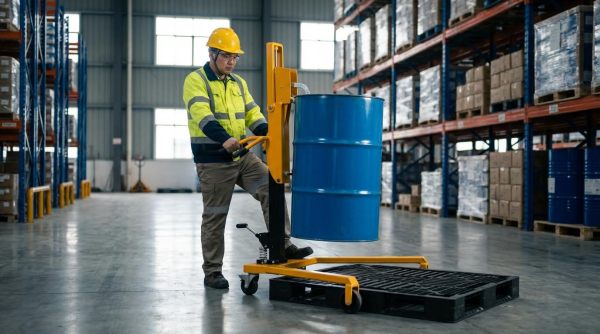
Personal protective equipment selection followed a task-based risk assessment. For most 55-gallon drum moves, minimum PPE included chemical-resistant gloves compatible with the product, safety goggles or a face shield, and safety footwear with toe protection. For corrosive, toxic, or flammable contents, facilities added chemical suits, respiratory protection, or antistatic clothing according to the SDS. Ergonomic controls limited manual handling because full drums typically weighed 180 to 360 kilograms. Policies prohibited solo lifting and discouraged free-rolling drums on their chimes due to impact and pinch hazards. Instead, workers used mechanical aids such as dollies, drum trucks, and manual pallet jack to keep forces within accepted manual handling guidelines. Training emphasized neutral spine posture, push rather than pull where possible, and clear communication between team members.
Pre-Move Inspection, Weight Estimation, And Leak Checks
Pre-move inspections formed the first step in any procedure for how to move 55 gallon drums safely. Operators visually checked the drum body, chimes, and welds for dents, corrosion, bulging, or deformation that could compromise structural integrity. They confirmed that bungs, lids, and rings were present, tight, and correctly oriented, replacing or tightening components before movement. Personnel estimated drum weight from product density and fill level to verify compatibility with dollies, trucks, hydraulic pallet truck, or attachments, maintaining safety factors against rated capacities. Leak checks included examining bungs and seams for staining, wetness, or crystallization, and smelling cautiously at a distance without direct inhalation. If leaks appeared, workers placed the drum in an overpack or containment pallet and followed spill response protocols instead of proceeding with a standard move. Documented checklists ensured these steps occurred consistently.
Transport And Storage Stability Requirements
Transport stability standards focused on preventing drum tip-over, rolling, or impact during short in-plant moves and vehicle transport. Engineers specified equipment with adequate wheelbase, low center of gravity, and positive drum restraint, such as clamps or straps, to keep drums upright on dollies and trucks. During movement with walkie pallet truck or forklifts, operators kept loads low, speeds controlled, and turning radii wide to minimize lateral acceleration. For road transport, drums were blocked and braced, then secured with straps or load bars to prevent shifting under braking or cornering. Storage layouts limited stack heights, often to one or two drums, depending on drum construction, pallet condition, and regulatory guidance. Aisle spacing allowed inspection access and emergency egress. Secondary containment captured potential leaks, and segregation rules separated incompatible materials. These stability measures, combined with earlier hazard and inspection steps, created a complete framework for safely moving and storing 55-gallon drums in industrial environments.
Selecting Dollies, Drum Trucks, And Pallet Jacks
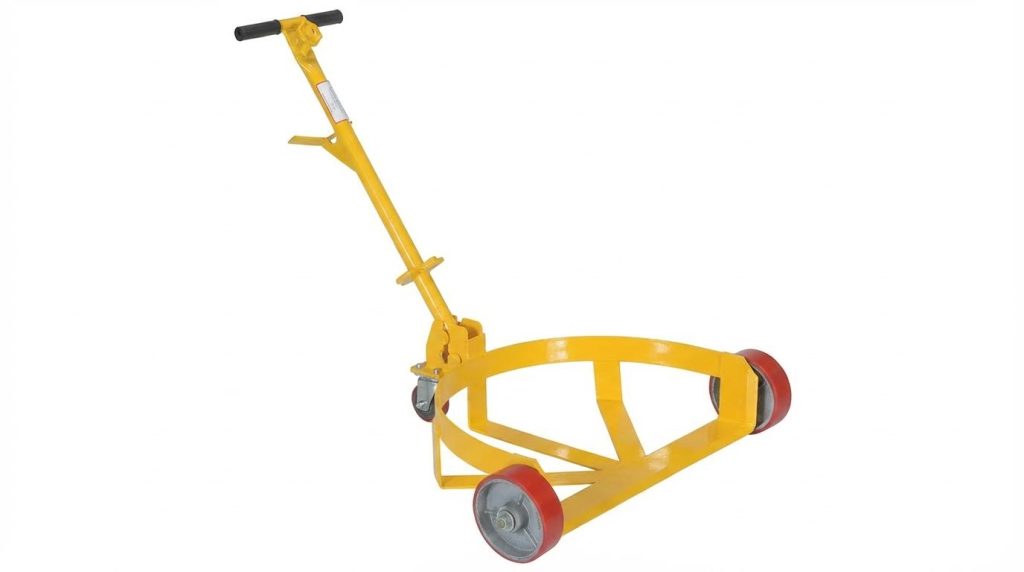
Engineers who plan how to move 55 gallon drums safely must match handling equipment to drum weight, material, and travel distance. A full 55-gallon drum weighed between 400 kilograms and 800 kilograms, so manual rolling posed clear ergonomic and spill risks. Purpose-built dollies, drum trucks, and pallet jack solutions reduced injury rates, prevented punctures, and improved control on mixed floor conditions. Proper selection also supported compliance with hazardous materials regulations and minimized lifecycle handling costs.
Drum Dollies And Carts For Short-Distance Moves
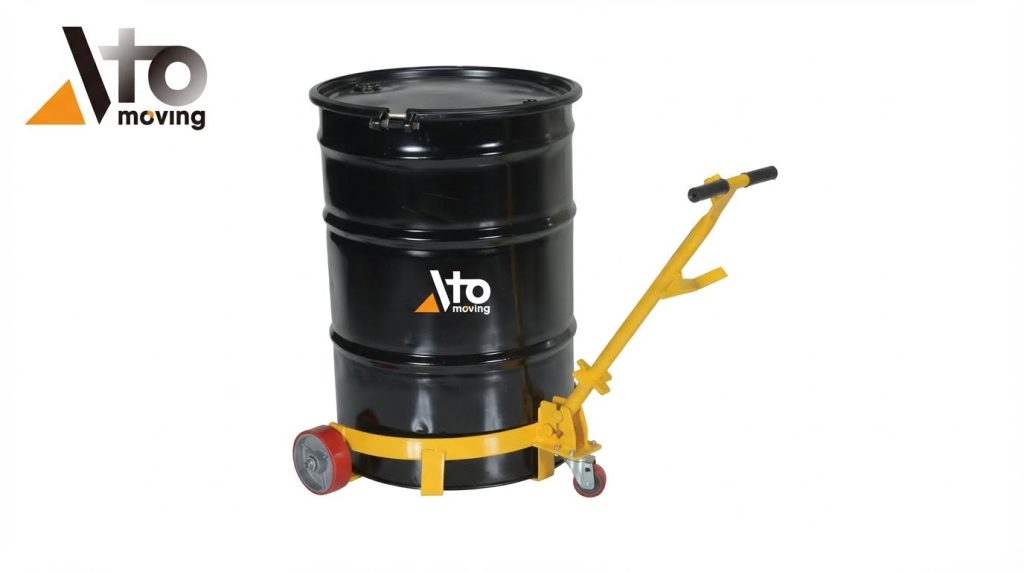
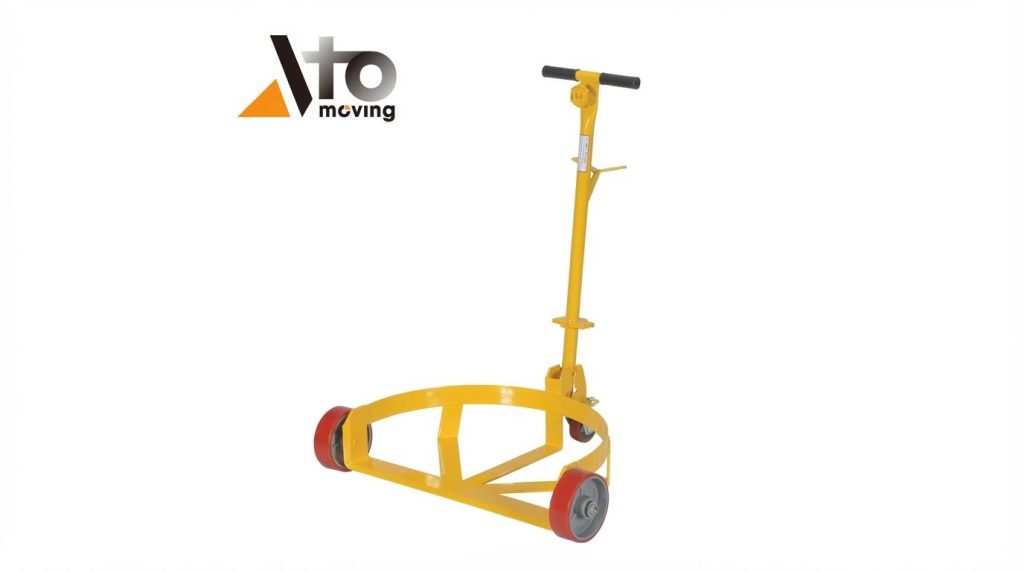
Drum dollies and carts worked best for short, level moves where operators needed high maneuverability. Four-wheel drum dollies with continuous ring frames supported the drum base uniformly, reducing point loads on thin-gauge steel or plastic drums. Engineers specified casters with adequate dynamic load rating for 400–800 kilogram drums, considering floor roughness and push-force limits from ergonomics standards. Dollies with detachable or integrated handles allowed operators to keep hands clear of pinch points while maintaining control during starts, stops, and tight turns.
For corrosive or flammable contents, facilities often selected dollies with chemical-resistant wheels and, where required, spark-resistant components. Low-deck-height designs lowered the drum center of gravity, which reduced tip risk during acceleration or when crossing thresholds. Drum carts with cradle-style frames allowed operators to tilt and roll the drum onto the cart instead of dead-lifting, which aligned with manual handling limits. When planning how to move 55 gallon drums between process steps less than 20 meters apart, engineers typically favored dollies or compact carts over powered solutions.
Two-Wheel And Four-Wheel Drum Trucks: Use Cases
Two-wheel drum trucks suited applications where operators tipped drums from vertical to a balanced, semi-tilted position for transport. These trucks used curved backplates and chime hooks to capture the drum securely, transferring most of the 400–800 kilogram load to the wheels once tilted. They worked well on relatively smooth floors and in aisles where pivoting the drum on two wheels improved maneuverability. However, they required careful ergonomic assessment because the initial tipping moment could exceed safe push–pull forces for smaller operators.
Four-wheel drum trucks added stability and reduced operator effort by supporting the drum on both primary wheels and auxiliary casters. This configuration proved advantageous for plastic drums, which lacked rigid chimes and were harder to grip securely. With the drum fully supported, operators mainly steered instead of bearing significant weight, which lowered musculoskeletal risk. When defining how to move 55 gallon drums over longer internal routes or slightly uneven floors, four-wheel trucks offered a better safety margin than two-wheel designs.
Pallet Jacks, Palletizers, And Drum Stacking Limits
Pallet jacks played a key role once drums sat on pallets for warehouse storage or vehicle loading. Standard pallet jacks handled the combined mass of pallets plus up to four full drums, provided the rated capacity exceeded the calculated load with a safety factor. Engineers avoided bare fork contact with drums because forks could puncture shells and trigger hazardous spills. Instead, they specified drum pallets, containment decks, or purpose-built cradles that distributed loads and restrained horizontal movement.
Drum palletizers bridged the gap between floor-level handling and pallet-level storage by lifting individual drums between heights of roughly 150 millimeters and 660 millimeters. Units with geared tilt mechanisms allowed controlled pouring while the drum remained captured, which integrated safely with filling or decanting operations. For static storage, guidance limited stacks to two drums high and two drums wide to maintain inspection access and stability. Any plan for how to move 55 gallon drums with pallet jacks or palletizers had to include drum restraint, center-of-gravity checks, and clear stacking rules in the operating procedure.
Ergonomic And Lifecycle Cost Considerations
Ergonomic performance strongly influenced equipment selection because manual rolling or lifting of 55-gallon drums frequently caused back and hand injuries. Engineers evaluated push and pull forces, hand heights, and required postures against recognized ergonomics guidelines, then chose devices that kept forces within recommended limits. Solutions that allowed operators to stay upright, keep drums captured, and avoid sudden load shifts reduced both acute and cumulative trauma risks. Training on correct body mechanics and clear “no manual rolling” rules complemented the hardware choices.
Lifecycle cost analysis extended beyond purchase price to include downtime, injury costs, and spill remediation. Robust dollies, drum trucks, and pallet-compatible systems reduced damage to containers, which lowered product loss and cleanup expenses, especially for hazardous materials. Standardizing on a limited set of drum handling devices simplified maintenance, spare parts, and operator training across the facility. When organizations documented how to move 55 gallon drums in their procedures, they typically justified higher-spec ergonomic equipment through reduced incident rates and lower total cost of ownership over several years.
Engineering Forklift And Skid-Steer Drum Solutions
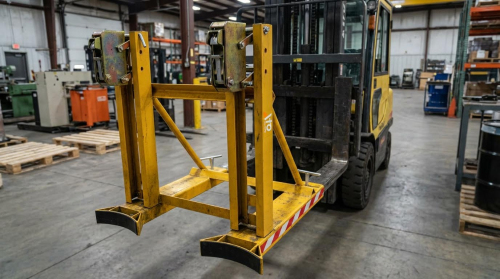
Forklift and skid-steer drum solutions answered the question of how to move 55 gallon drums over longer distances, at height, and within process lines without manual handling. Engineers selected between mechanical and powered attachments based on load, drum material, hazardous rating, and required motion such as lift, tilt, or rotation. Correct specification reduced the risk of punctures, leaks, and dropped drums, which had caused injuries and uncontrolled releases. This section explained how to engineer these systems so they stayed within capacity limits, matched drum geometry, and integrated with modern sensing and digital tools.
Mechanical And Powered Forklift Drum Attachments
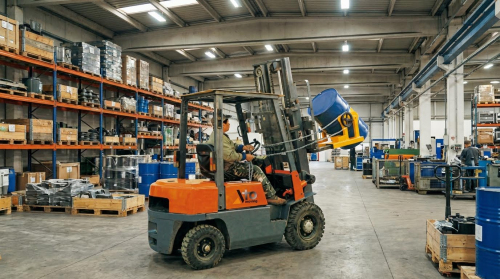
Mechanical forklift drum attachments relied on gravity and mechanical linkages rather than external power. Typical units gripped the drum by a beak or jaws engaging the chime, with rated capacities around 800 to 1500 kilograms for steel designs. Mechanical units suited straightforward horizontal transport of 55-gallon drums when operators did not need powered tilting or high-frequency cycling. Powered forklift drum attachments added hydraulic or electro-hydraulic actuation for lift, clamp, tilt, and rotation up to 360 degrees. These powered units handled loads up to approximately 2000 to 2500 pounds while keeping the driver seated, which reduced exposure to leaks and traffic hazards. Engineers avoided bare forks because forks could puncture steel or plastic drums and cause hazardous spills, so they specified fork pockets and T-screw locks that mechanically secured the attachment to the truck.
Load Capacity, Drum Types, And Geometry Constraints
A full 55-gallon drum weighed between 400 and 800 pounds, so engineers sized attachments with at least a 25 to 50 percent safety margin above maximum filled weight. They verified that the forklift or skid-steer rated capacity at the relevant load center exceeded the attachment rating plus drum mass. Standard drum handlers were optimized for 210 liter steel drums with diameters from roughly 572 to 610 millimeters; optional jaws or strap kits extended compatibility to plastic or fiber drums and smaller 30-gallon units. Geometry constraints included minimum fork spacing, often about 635 millimeters, and maximum allowable drum diameter, which directly affected clamping reliability. For plastic drums with smooth walls and lower stiffness, engineers preferred strap or fully enclosing jaws to prevent slip during tilt or rotation. They also considered center-of-gravity shift during pouring, ensuring the truck’s residual capacity curve still provided adequate stability.
Control, Tilt, And Pour Functions For Process Integration
When designing how to move 55 gallon drums into process vessels, powered tilt and rotation functions became critical. Attachments with forward tilt up to about 120 degrees or continuous 360-degree rotation allowed precise positioning over hoppers, reactors, or mixing tanks. Control schemes used hydraulic valves, pull chains, or battery-powered actuators to meter flow and avoid surging, which reduced splashing and overfilling. Engineers selected jaw pressure ranges that held the drum securely without deforming thin-wall plastic drums during tilt. They also checked that maximum pour height matched receiving equipment, using models that lifted and dispensed at heights up to roughly 1.8 to 2.4 meters where required. Integration plans addressed line-of-sight, lighting, and communication so operators could control rotation while maintaining visibility of fill levels and surrounding traffic.
Integrating AI, Sensors, And Digital Twins For Drums
Modern drum handling systems increasingly incorporated sensors and analytics to reduce incidents and optimize flows. Load cells on drum attachments verified actual drum mass before lifting, flagging overloaded 55-gallon drums that exceeded design limits or indicated process deviations. Inertial sensors and angle encoders monitored tilt and rotation, enforcing safe envelopes and slowing motion near spill-sensitive positions. Vision systems and AI models classified drum types, read labels, and checked for deformation or leaks, helping operators decide whether to move a drum or quarantine it. Digital twins of warehouses or process plants simulated drum traffic, stacking layouts, and forklift routes to minimize congestion and collision risk. Engineers fed real handling data back into these models, refining rules for speed limits, preferred paths, and staging zones, which improved both safety performance and throughput over time.
Summary And Practical Implementation Guidance

Safe, efficient strategies for how to move 55 gallon drums relied on aligning equipment choice, operator training, and engineering controls with the actual drum mass, contents, and process layout. Full 55-gallon drums typically weighed 180 kilograms to 360 kilograms, so manual rolling or upending posed high musculoskeletal and crush risks and often violated internal ergonomic limits. Facilities reduced injury rates and spill incidents when they standardized on purpose-built dollies, drum trucks, pallet jacks with suitable pallets, and engineered forklift or skid-steer attachments instead of bare forks or improvised methods. Stacking policies that limited rows to two drums high and two drums wide also improved access for inspection and reduced instability.
From an industry perspective, the most robust programs treated drum handling as a defined material-handling system, not an ad hoc task. Engineers mapped drum flows from receiving to storage, processing, and shipping, then specified equipment: low-friction dollies for short flat moves, two-wheel or four-wheel drum trucks for ramp transitions, palletizers for vertical transfer, and rated forklift or skid-steer attachments for high-level lift, tilt, and pour. They verified attachment capacities against worst-case drum weights, drum diameters, and center-of-gravity shifts during tilting, while maintaining compliance with occupational safety regulations and hazardous-material transport rules. Emerging use of sensors, interlocks, and digital twins allowed monitoring of load, tilt angle, and impact events, supporting predictive maintenance and safer automation.
For practical implementation, sites should begin with a hazard and task inventory: drum types, fill states, contents, and travel paths. They should then set clear rules: no bare-fork handling, no free rolling, mandatory PPE, and pre-move checks for labels, SDS, leaks, and secure closures. Standard operating procedures should specify which device to use for each scenario, including maximum drum counts per move and speed limits on slopes or rough surfaces. Periodic inspections of drum handling devices, plus incident and near-miss reviews, help refine equipment selection and justify lifecycle investments. This balanced approach supported current operations and created a scalable framework for future upgrades, including partial automation or AI-assisted routing, without compromising core safety principles.