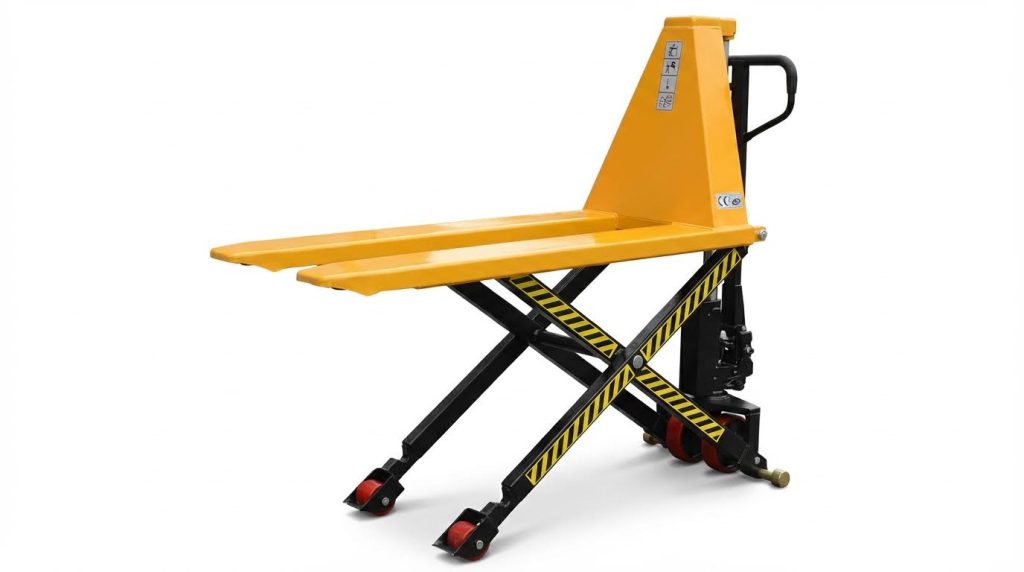
When traveling with a high lift walkie, safe operation depends on strict control of mast height, visibility, and load stability. This article reviews core ANSI/ITSDF and OSHA travel rules, compares high-lift walkies with rider forklifts, and explains how mast position affects stability and grade navigation. It also covers visibility management, pedestrian interaction, and practical traffic management measures for compact industrial layouts. Finally, it summarizes engineering and administrative controls that help mechanical engineers and safety managers design safer high-lift walkie travel environments.
Core Safety Standards For High-Lift Walkie Travel
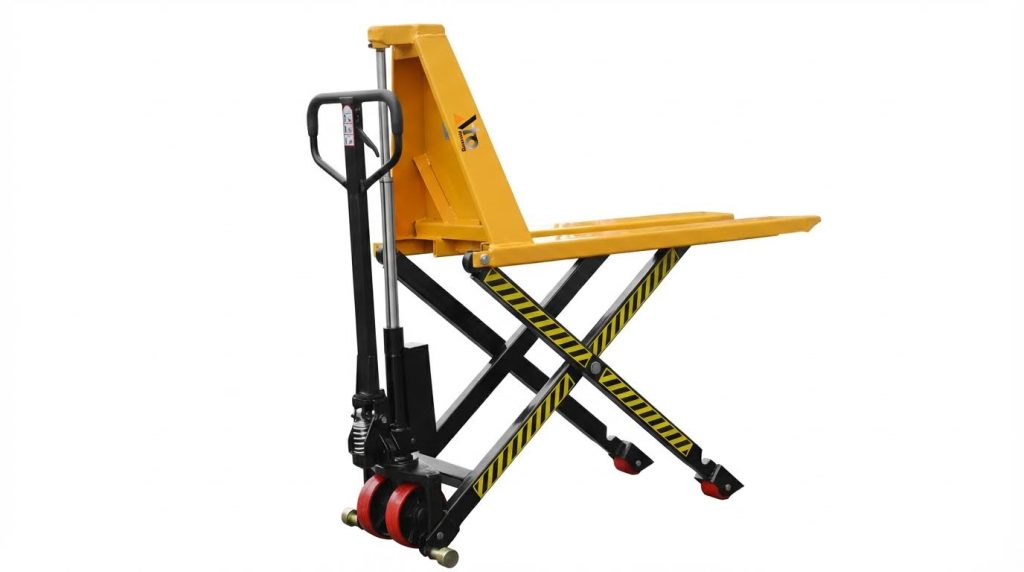
When traveling with a high lift walkie, core safety standards define how the truck, operator, and workplace must interact. These standards align high‑lift walkie design and use with powered industrial truck rules, indoor traffic management, and load‑handling limits. Understanding the regulatory framework and its practical meaning in aisles, docks, and ramps reduces tipover, collision, and struck‑by risks. The following subsections translate ANSI/ITSDF and OSHA style requirements into concrete travel practices for high‑lift walkies.
Relevant ANSI/ITSDF And OSHA Requirements
ANSI/ITSDF B56.1 defined safety requirements for powered industrial trucks, including high‑lift walkies on compacted, improved surfaces. It covered design, stability, controls, and operating rules such as keeping the load low during travel and maintaining a clear view. B56.10 extended similar concepts to manually propelled high‑lift trucks controlled by a walking operator on level, improved floors. Together, these standards required that when traveling with a high lift walkie, the operator maintain control, operate at a safe speed, and avoid traveling with elevated loads. OSHA style rules for powered industrial trucks required pre‑use inspections, functional brakes, steering, and lift systems before travel. They also required operators to travel with the load upgrade on ramps, avoid turning on grades, and never exceed the rated capacity at the specified load center. Employers had duties to maintain equipment in good condition, provide traffic rules, and ensure lighting and visibility aids supported safe travel. Written programs, signage, and floor markings helped keep pedestrians clear of powered industrial truck routes.
Defining Safe Travel Conditions Indoors
Safe indoor travel with a high‑lift walkie depended on floor, lighting, and traffic conditions. Standards expected compacted, improved, and level surfaces free from potholes, loose debris, or sudden changes in elevation that could destabilize a loaded mast. Adequate general lighting, or truck‑mounted headlights where lighting fell below recommended levels, allowed operators to maintain a clear view in the direction of travel. When traveling with a walkie pallet truck, the operator should verify the route is clear, use the horn at blind corners, and reduce speed in congested areas. Wet or oily floors required slower speeds and longer stopping distances to prevent sliding and lateral tipover. Travel with the mast and load in a low, slightly back‑tilted position increased stability and reduced the risk of striking overhead structures. Indoor traffic management plans typically defined one‑way aisles, crossing points, and speed limits that matched the braking capability of the truck on that specific surface.
High-Lift Walkies Vs. Rider Forklifts: Key Differences
High‑lift walkies and rider forklifts followed the same fundamental stability principles, but their travel risks differed. A high‑lift walkie placed the operator on foot, directly adjacent to the chassis, so struck‑by and crush hazards at the drive and load ends became critical. When traveling with a high lift pallet truck, the operator had to maintain a safe position relative to the truck, avoiding pinch points between the power unit and racks, walls, or pallets. Walkies usually operated at lower maximum speeds than rider trucks, but they often worked in narrower aisles with tighter clearances. This increased the importance of precise speed control, short stopping distances, and smooth directional changes. Rider forklifts provided overhead guards and seatbelts, so tipover procedures focused on staying inside the compartment. In contrast, walkie safety emphasized preventing tipover in the first place through low‑mast travel, correct load centers, and strict grade rules. Because walkie operators walked with the truck, facility traffic plans needed clearer pedestrian separation, high‑visibility apparel, and line‑of‑sight rules tailored to walking operators rather than seated drivers.
Mast Height, Stability, And Grade Navigation
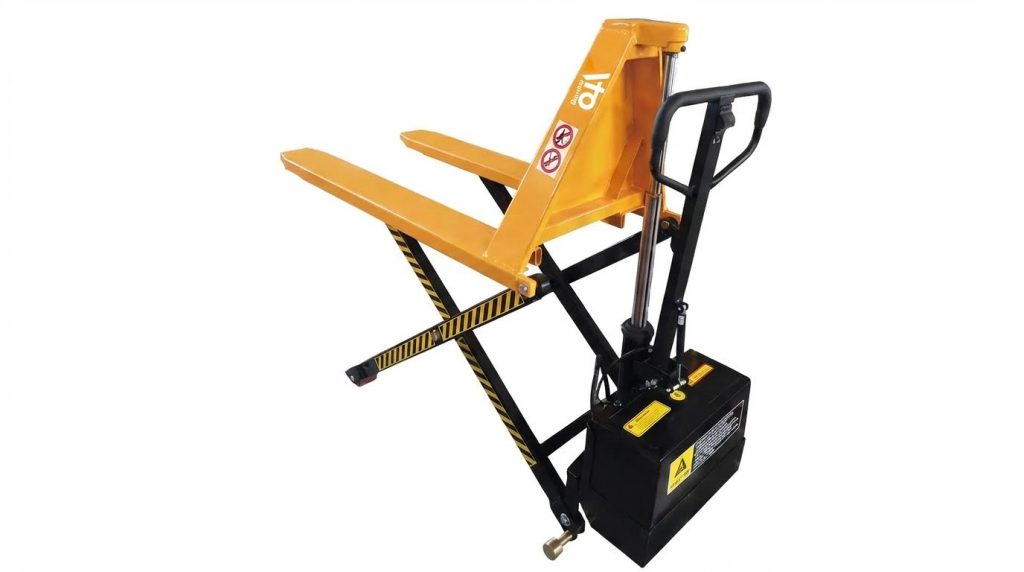
When traveling with a high lift walkie, mast height, load position, and surface conditions directly control stability. Operators must treat mast elevation, grade, and speed as linked variables, adjusting them continuously to keep the truck within its stability envelope. ANSI/ITSDF B56.1 defined design and operating limits, while OSHA travel rules required low load height, controlled speed, and correct direction of travel on ramps. This section explains how to apply those engineering and regulatory principles to everyday walkie pallet truck operation.
Traveling With The Mast And Load In Low Position
When traveling with a high lift walkie, the mast and load must stay in the lowest practical position. Standards and OSHA guidance prohibited traveling with elevated loads because mast extension raised the combined center of gravity and reduced the truck’s stability margin. Operators should lift only enough to provide 50–100 mm ground clearance, accounting for floor irregularities and dock plates. The mast should remain slightly tilted back when possible to keep the load against the backrest and reduce the load distance. Operators must avoid forward tilt while traveling because it shifts the center of gravity outward and increases tipover and lost-load risk. Before moving, they should verify overhead clearance, then lower to travel height before entering aisles, crossings, or ramps.
Center Of Gravity, Load Center, And Tipover Risk
High-lift walkies used a three-point stability triangle similar to rider forklifts, but with a walking operator instead of a seated driver. When traveling with a high lift walkie, the combined center of gravity of truck and load must remain inside that triangle under static and dynamic conditions. Rated capacity on the data plate assumed a specific load center, typically 500 mm, with a uniformly distributed, properly secured load. If the actual load center increased due to long pallets, uneven stacking, or forward tilt, the effective capacity decreased and tipover risk increased. Off-center or top-heavy loads shifted the center of gravity laterally and raised the probability of side tipover during turns or on uneven surfaces. Engineers and safety managers should emphasize that operators must keep loads centered on the forks, fully engaged, and as low as possible, and must slow before turning to limit dynamic lateral forces.
Ramps, Grades, And Direction Of Travel Rules
When traveling with a high lift walkie on ramps or grades, direction of travel rules became critical for stability. Industry practice and OSHA guidance required loaded trucks to travel with the load upgrade: drive forward up the ramp with the load uphill, and reverse down the ramp with the load still uphill. This orientation kept the center of gravity toward the truck body and reduced the risk of the walkie or load rolling away. Unloaded units should travel forks downgrade to maintain steering control and braking effectiveness. Turning on a grade was prohibited because lateral components of gravity combined with turning forces could drive the center of gravity outside the stability triangle. Operators must stop on level ground before changing direction or turning, and must avoid sudden acceleration or braking on slopes to prevent loss of traction or jackknifing at the steer wheels.
Speed Control In Tight Aisles And Wet Floors
When traveling with a high lift walkie in tight aisles or on wet floors, speed control becomes an engineering control as much as an operator behavior. The truck must operate at a speed that allows a complete stop within the visible, clear travel path, considering stopping distance, surface friction, and load mass. In narrow aisles, operators should use the lowest travel speed setting and initiate turns early, keeping the load low to limit rear-end swing and avoid striking racking or pedestrians emerging from cross-aisles. On wet or contaminated floors, reduced friction increased stopping distance and decreased lateral stability, so operators must slow further and avoid sharp steering inputs. OSHA guidance required speed reduction at intersections and on slippery surfaces, and operators should sound the horn at blind corners or doorways. Safety programs should define site-specific speed limits, integrate them into traffic management plans, and verify that manual pallet jack controllers, braking systems, and tires are maintained so actual deceleration performance matches those assumptions.
Visibility Management And Pedestrian Interaction
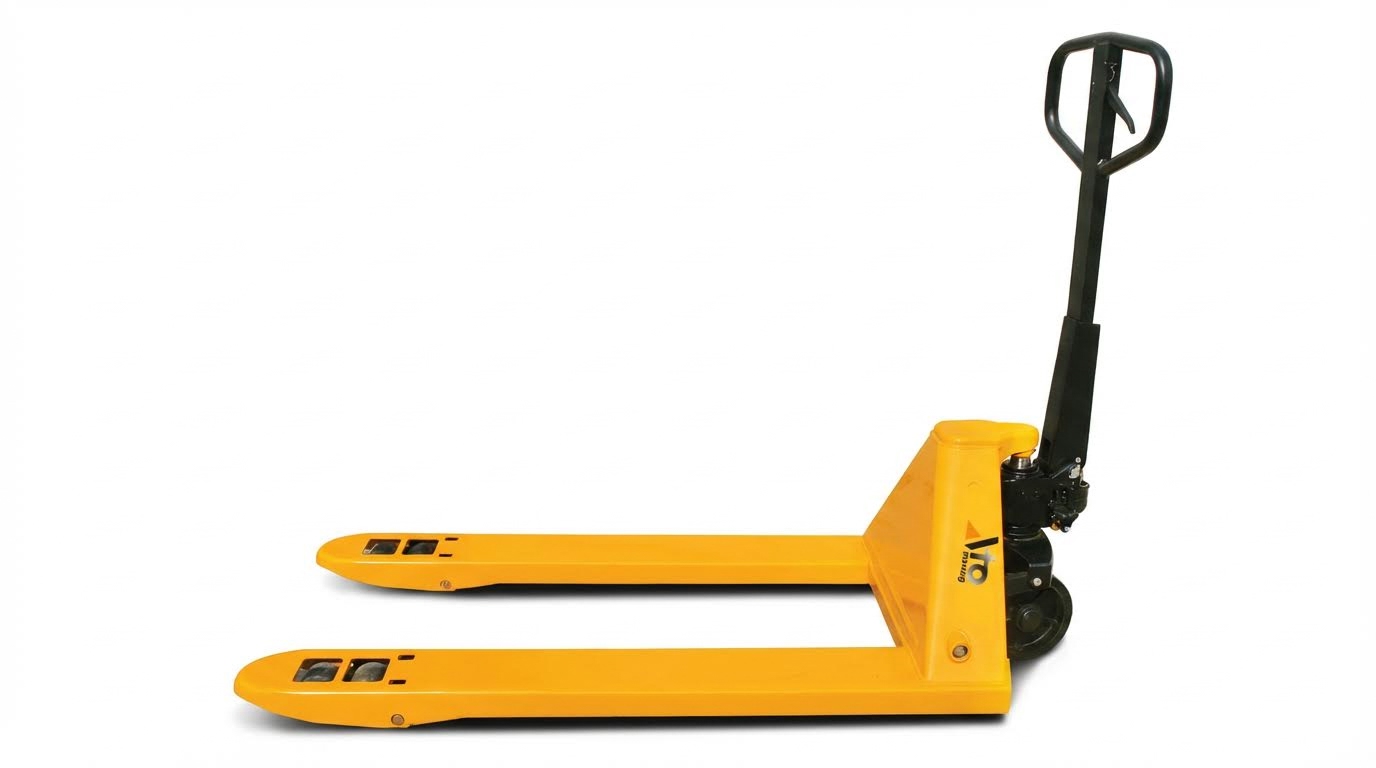
Visibility management was a critical control when traveling with a high lift walkie. Poor sightlines, tight aisles, and elevated loads increased collision and tipover risk. Engineering controls, workplace traffic design, and disciplined operator behavior worked together to keep pedestrians and equipment separated and visible. Effective programs combined compliant equipment, clear rules, and consistent training.
Maintaining A Clear View In Direction Of Travel
Operators needed a clear, unobstructed view in the direction of travel at all times. When traveling with a high lift walkie and the load blocked forward vision, the operator had to travel in reverse, keeping the load downgrade on ramps as required. Standards such as ANSI/ITSDF B56.1 and OSHA guidance required operators to maintain proper lookout and adjust speed to match conditions and sight distance. Before moving, operators checked that the path was clear, verified no pedestrians were in blind zones, and used a spotter when visibility remained restricted. Traveling with the load low, mast tilted slightly back, and forks just clear of the floor reduced both visibility obstruction and tipover risk.
Visibility Aids, Lighting, And Blind Spot Control
Engineering controls significantly improved visibility when traveling with a high lift walkie. Employers installed adequate general lighting and added truck-mounted headlights where ambient light fell below recommended levels. Visibility aids included convex mirrors at intersections, rear-view mirrors, cameras, and warning beacons or reversing alarms to alert pedestrians in blind areas. Standards and good practice required employers to keep windows, lenses, and reflective markings clean and undamaged, and to maintain all visibility aids in working order. Site-specific blind spots, such as around racking ends or dock doors, were identified in risk assessments, then mitigated using mirrors, barriers, and revised routes. These measures reduced reliance on operator judgment alone and provided consistent visual cues.
Traffic Management Plans And Pedestrian Separation
A written traffic management plan formed the backbone of safe interaction between high lift walkies and pedestrians. The plan mapped fixed travel routes, designated one-way aisles where possible, and separated powered industrial truck lanes from walking paths using guardrails, curbs, or painted lines. Regulations such as industrial establishment rules required safeguards like barriers, warning signs, and marked “warning tracks” near dock edges. When traveling with a high lift walkie through shared spaces, rules typically required reduced speed, horn use at cross aisles, and yielding to pedestrians and emergency vehicles. Administrative controls also addressed high-risk zones such as loading docks, rail crossings, and elevator approaches, specifying approach angles, stopping distances, and no-passing areas. Consultation with joint health and safety committees helped ensure the plan reflected real traffic patterns and near-miss history.
Operator Training And Daily Pre-Use Inspections
Competent operators were essential for safe travel with a high lift walkie. Training programs aligned with ANSI/ITSDF requirements and OSHA-powered industrial truck rules, covering visibility limits, blind spots, and correct travel direction on grades. Operators learned to adjust speed for wet floors, tight turns, and congested areas, and to use horns and warning devices proactively. Daily pre-use inspections verified that brakes, steering, lift controls, lights, horns, and any cameras or alarms functioned correctly before entering traffic areas. Employers had a duty to maintain equipment in good condition and to provide instruction and supervision on traffic rules, safe load handling, and pedestrian awareness. Refresher training after incidents or observed unsafe behavior reinforced expectations and kept visibility and interaction risks under control over the long term.
Summary: Engineering Controls For Safer Walkie Travel
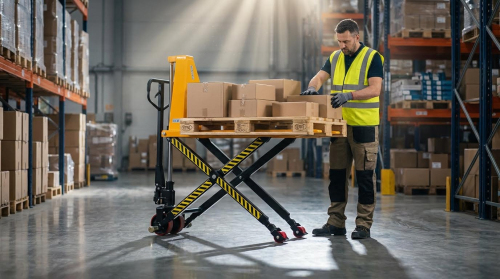
When traveling with a high lift walkie, engineering controls provided the most reliable baseline for risk reduction. Mast, chassis, and control-system design worked together with ANSI/ITSDF B56.1 safety requirements and OSHA powered industrial truck rules to define safe operating envelopes. Effective controls translated these regulatory expectations into practical limits on mast height, speed, grade, and visibility so operators could maintain stability and load control in real facilities.
Key findings showed that the safest configuration during travel kept the load low, the mast slightly tilted back, and the center of gravity well inside the wheelbase. Grade-handling logic required clear rules: loaded travel upgrade on ascents, load upgrade in reverse on descents, and no turning on grades. Integrated speed limiting in tight aisles, plus traction management on wet or low-friction floors, reduced tipover and sliding risks. Visibility engineering, including mast layout, lighting, mirrors, and optional cameras, supported the requirement to maintain a clear view in the direction of travel or to reverse when the load blocked forward vision.
From an industry perspective, high-lift walkie design increasingly embedded these controls into the truck rather than relying only on operator judgment. Trends included smarter controllers that adjusted acceleration, deceleration, and maximum speed based on steering angle, mast height, or detected grade. Facilities complemented these truck-level controls with traffic management plans, physical pedestrian separation, and standardized travel paths, especially at intersections and dock edges.
Practical implementation required alignment between engineering, safety, and operations. Specifying high-lift walkies with appropriate capacity, mast height, visibility aids, and programmable performance profiles ensured that trucks matched the building geometry and load mix. Daily pre-use inspections verified that brakes, lift controls, warning devices, and visibility systems operated correctly before travel. A balanced approach combined robust engineering controls, disciplined maintenance, and targeted operator training so that, when traveling with a walkie pallet truck, the equipment itself helped enforce safe mast height, visibility, and load-control practices rather than leaving those critical decisions entirely to human memory under pressure.