Moving full 55 gallon water drums or chemical drums required a structured approach to safety, ergonomics, and equipment selection. This article outlined key safety and compliance rules, manual and semi-manual drum handling options, and advanced drum handling systems for modern plants. It also compared manual carts and trolleys with hydraulic lifters, mobile carriers, and integrated forklift or AGV solutions for different duty cycles and risk profiles. The final section summarized how to select the easiest and safest drum handling method so operators could efficiently and reliably handle full drums in industrial environments.
Key Safety And Compliance Rules For Drum Movement
Safe, efficient ways to move full water and chemical drums start with strict safety and compliance controls. Plants that want to know how to easily move 55 gallon water drums must first address hazard identification, PPE, ergonomics, and compliant storage layouts. This section explains how to inspect drums, protect workers, and design storage so operators can move and monitor drums with minimal risk and effort.
Hazard Identification And Drum Inspection Steps
Before moving any drum, identify its contents and associated hazards. Treat unlabeled 55 gallon water drums or chemical drums as hazardous until you confirm the material and update labels. Read labels and Safety Data Sheets to check for corrosive, toxic, or flammable properties and any special handling requirements. Visually inspect the drum for leaks, corrosion, bulging, dents near seams, or missing bungs and lids.
Replace and tighten missing closures before movement to avoid sudden spills. Estimate drum mass; typical 55 gallon water drums weigh 180–360 kg when full, which exceeds safe manual handling limits. Use appropriate drum carts, hand trucks, or hydraulic lifters instead of rolling by hand whenever possible. If you must roll a drum, balance it on the bottom chime, roll on the chime, keep hands uncrossed, and control motion on level floors only.
For buried or partially covered drums in remediation areas, remove overburden cautiously to avoid puncture. Use ground-penetrating detection systems to locate and estimate depth before excavation. Minimize the number of drum moves; plan a direct route from storage to point-of-use with spill kits and salvage drums staged along the path. Keep fire-extinguishing equipment and compatible absorbents available wherever leaks or ruptures could occur.
PPE, Ergonomics, And Injury Prevention Basics
Personal protective equipment must match the drum contents and task. At a minimum, operators should wear safety shoes with toe protection, cut-resistant gloves, and eye protection when handling full 55 gallon water drums or chemicals. For corrosive or toxic contents, add chemical-resistant gloves, aprons, and face shields as indicated by the SDS. Train workers to don and doff PPE correctly and to check for damage before each shift.
Ergonomic practices reduce musculoskeletal injuries during drum handling. Prohibit solo manual lifting of full drums; instead, use mechanical aids designed for 210 liter drums, such as drum carts, trolleys, or hydraulic lifter–tilters with suitable capacity. When tilting or upending partially filled drums, instruct workers to bend at the knees, keep the spine neutral, and use leg muscles rather than the back. Provide barrel lifter bars or dedicated upending tools to avoid awkward gripping and twisting.
Choose equipment with ergonomic handles, low initial pickup heights, and stable four-wheel bases to reduce push–pull forces. Specify wheels or casters with low rolling resistance, such as polyurethane, to make it easier to move 55 gallon water drums over concrete floors. Set internal guidelines for maximum push and pull forces, and verify that typical drum routes stay within those limits. Reinforce safe techniques through refresher training and near-miss reviews.
Storage Layout: Stacking Limits And Access For Inspection
Storage layout strongly influences how easily and safely operators move drums. Limit floor stacking to a maximum of two drums high and two drums wide to keep stacks stable and accessible for inspection. Higher stacks increase the risk of collapse due to variable drum strength, pallet condition, and impact from material handling equipment. Wider blocks hide inner drums and force extra movements just to inspect for leaks.
Arrange rows with clear aisles that allow drum carts, trolleys, or mobile carriers to approach each drum without sharp turns. Maintain enough clearance for operators to rotate and lower drums safely using mechanical aids. Designate separate zones for water, compatible chemicals, and incompatible materials to reduce reaction risks in the event of leaks. Provide spill containment, such as sumps or curbed areas, sized for the largest single drum plus a safety margin.
Implement a scheduled inspection program for all stored drums. Inspect visible surfaces for corrosion, staining, or dampness under the chimes that could indicate slow leaks. Ensure labels remain legible from the aisle so workers can quickly verify contents before deciding how to easily move 55 gallon water drums or chemical drums. Keep salvage drums, absorbents, and overpack containers in or near storage areas so crews can isolate damaged drums before moving them further.
Manual And Semi-Manual Drum Handling Options
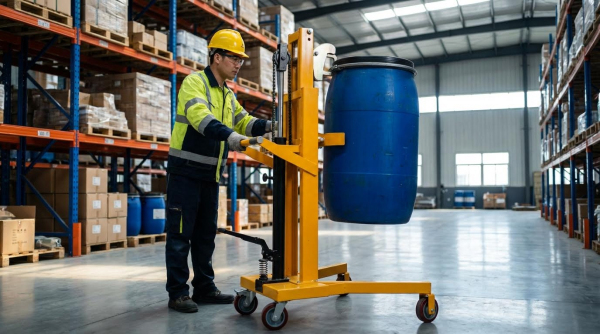
Manual and semi-manual equipment offers practical ways for how to easily move 55 gallon water drums without overloading workers. These tools convert dangerous lifting, pushing, and rolling tasks into controlled mechanical motions. Correct selection depends on drum weight, floor conditions, handling frequency, and whether you only transport drums or also lift, tilt, and pour. The following subsections compare common options and key engineering choices for safe, efficient movement of full water and chemical drums.
Drum Carts, Hand Trucks, And Trolleys Overview
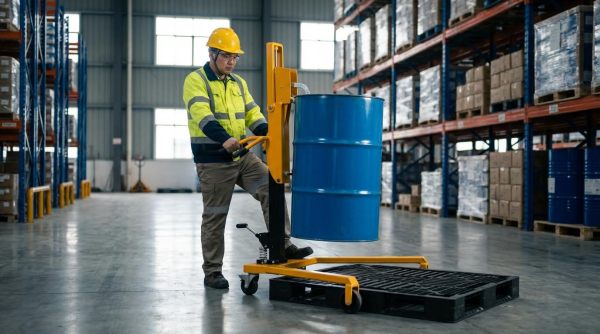
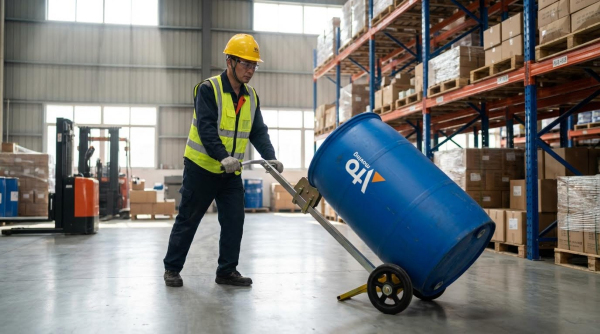
Drum carts, hand trucks, and trolleys provided the simplest answer to how to easily move 55 gallon water drums across short distances. A drum cart typically supported a single 210 liter drum with a cradling frame, two fixed load wheels, and one or two swivel casters for steering. Hand trucks used a tilted frame with a curved back and toe plate that engaged the drum chime, allowing an operator to tip the drum and roll it with reduced effective weight. Drum trolleys for industrial use often included adjustable clamps or cradles, ergonomic push handles, and four-wheel layouts that improved stability when moving 400–800 pound (180–360 kg) drums. Engineers selected these devices where the primary requirement was horizontal transport on reasonably smooth floors, without frequent lifting to racks or pouring into process vessels.
Hydraulic Drum Lifters, Tilters, And Lifters-Cum-Tilters
Hydraulic drum lifters and tilters extended capability beyond simple transport by adding vertical lift and controlled rotation. Foot-operated hydraulic pumps raised rimmed drums to heights around 1000–1600 mm, enabling pallet loading, line feeding, or discharge into hoppers. Standalone tilters provided a modest fixed angle that eased scooping or gravity flow, while lifter-cum-tilter units offered 180° or even 360° rotation for full draining of water or chemicals. Typical rated capacities ranged from 200 kg for light-duty units up to 350 kg or more for heavy-duty models, with frames built from powder-coated mild steel or stainless steel for corrosive or hygienic environments. For plants searching how to easily move 55 gallon water drums and also decant them safely, these hybrid lifter-tilter designs reduced manual handling, spill risk, and operator exposure.
Clamp Types, Wheel Selection, And Stability Considerations
Clamp and wheel design strongly influenced stability and operator effort when moving full drums. Mechanical adjustable clamps with positive safety latches gripped the drum rim or body and prevented slip during lifting, tilting, or sudden stops. For water drums that might be plastic or steel, engineers specified clamp geometries and padding compatible with both materials to avoid deformation or slippage. Wheel sets usually combined large diameter polyurethane load wheels for low rolling resistance with smaller swivel casters for maneuverability; four-wheel layouts reduced tipping risk compared with two-wheel hand trucks. Stability analysis considered drum center of gravity, lift height, wheelbase, and turning radius; higher lifts required wider bases, lower mast deflection, and effective parking brakes. Correct clamp design and wheel selection allowed operators to move 55 gallon water drums smoothly over joints and slopes while maintaining control and avoiding side tipping.
Capacity, Lift Height, And Duty Cycle Sizing Criteria
Proper sizing started with realistic mass estimates for full drums, including liquid density and any solids or liners. Since typical 55 gallon water drums weighed roughly 200 kg, engineers usually applied at least a 25% safety margin and selected equipment rated at 250–300 kg to cover variability and future changes. Required lift height depended on target interfaces: pallet top, spill containment pallets, mixers, or mezzanine infeed points, with clearances added for drum diameter and clamp geometry. Duty cycle analysis looked at moves per shift, travel distance, and vertical strokes per hour; high-frequency applications justified more robust hydraulic components, better bearings, and possibly semi-powered travel to limit fatigue. When plants optimized capacity, lift height, and duty cycle together, they achieved an efficient solution for how to easily move 55 gallon water drums while extending equipment life and maintaining compliance with ergonomic and safety guidelines.
Advanced Drum Handling Systems For Modern Plants
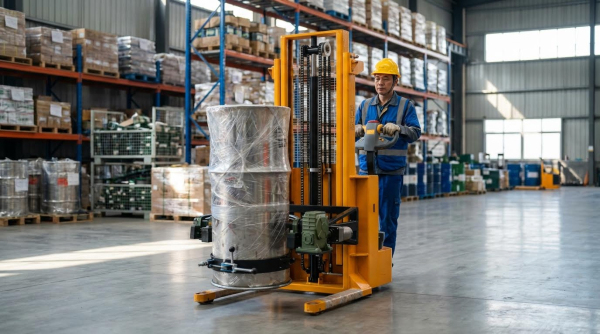
Advanced drum handling systems showed plant engineers how to easily move 55 gallon water drums while maintaining strict safety and Environmental, Health, and Safety (EHS) compliance. These systems combined mechanical stability, controlled motion, and digital oversight to handle high-throughput water and chemical drum operations. They supported precise lifting, rotation, and stacking, while limiting manual effort and exposure to hazardous contents. Modern plants used these technologies to standardize drum movement, reduce ergonomic risk, and improve traceability across utilities, chemicals, and wastewater areas.
Mobile Drum Carriers, Rotators, And Stackers
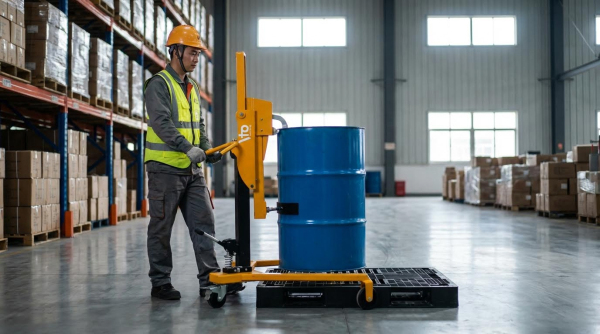
Mobile drum carriers allowed a single operator to lift, transport, and position full 55 gallon drums without rolling them on the floor. Typical designs used four-wheel bases with polyurethane roller-bearing wheels and swivel casters, which reduced push forces and enabled tight turning in congested aisles. Integrated mechanical clamps or rim-gripping jaws secured plastic or mild steel drums so the carrier supported the full weight, often up to 350 kg per drum. Rotator modules provided 180° to 360° controlled rotation, which enabled safe decanting, end-over-end agitation, or horizontal positioning for draining. Drum stackers extended this concept vertically, offering lift heights up to roughly 1.6 m so operators could place drums on racks or double-stack them while keeping the drum locked in vertical alignment. For facilities focused on how to easily move 55 gallon water drums, these mobile systems minimized manual handling, improved spill control, and standardized handling paths between receiving, storage, and process points.
Integrating Forklifts, AGVs, And Cobots With Drum Tools
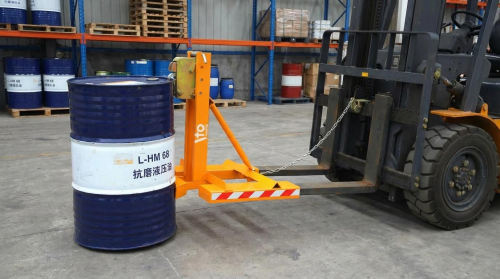
Modern plants integrated drum attachments with forklifts, automated guided vehicles (AGVs), and collaborative robots (cobots) to automate repetitive drum flows. Forklift-mounted drum clamps or rotators converted a standard truck into a dedicated forklift drum grabber capable of lifting multiple 210 L drums per trip, while maintaining positive mechanical engagement during travel and braking. AGV platforms used low-profile drum frames or customized cradles, enabling unattended transfers between filling lines, quality labs, and buffer storage zones under warehouse management system control. Cobots equipped with end-effectors that actuated drum clamps or valve handles supported semi-automated tasks such as opening, tilting, or partial dosing, while human operators handled supervision and exception management. This integration reduced manual push–pull forces, improved consistency of travel routes, and supported geofenced speed limits and collision-avoidance logic around stacked drums and pedestrian walkways.
Digital Monitoring, Predictive Maintenance, And EHS Tracking
Advanced drum handling systems increasingly incorporated sensors and connectivity to monitor usage, loading, and condition. Load cells on carriers or stackers verified that operators did not exceed rated capacities for 55 gallon water drums or heavier chemical drums, while angle sensors ensured tilt limits during rotation to prevent uncontrolled surges. Embedded hour meters and cycle counters fed predictive maintenance programs, which scheduled inspection of hydraulic seals, casters, clamps, and structural welds before functional degradation caused downtime or safety incidents. Plants linked drum movement events to EHS systems, logging drum IDs, locations, and transfer timestamps to support spill investigations and regulatory reporting. In high-risk zones, proximity sensors and interlocks prevented motion if guards were open or if operators lacked required personal protective equipment, improving compliance with internal standards and national occupational safety regulations.
Hygienic, Cleanroom, And Sustainable Design Considerations
Facilities that processed potable water, pharmaceuticals, or high-purity chemicals specified hygienic drum handling designs to control contamination. Equipment used stainless steel, typically grades comparable to SS304, with smooth welds, minimal crevices, and drainable frames that tolerated frequent washdowns and validated cleaning protocols. For cleanroom applications, designers avoided lubricants that generated particles, selected low-shedding wheels, and ensured compatibility with disinfectants and vaporized hydrogen peroxide. Sustainability requirements influenced wheel materials, coating systems, and component lifetimes, with a focus on corrosion resistance to extend service life in wet or chemical-laden environments. Plants also evaluated energy consumption of powered lifters, favoring efficient hydraulic or electric drives and planning refurbishment rather than full replacement to reduce lifecycle environmental impact while still enabling operators to easily and safely move 55 gallon water drums through the facility.
Summary: Selecting The Easiest, Safest Drum Handling Method
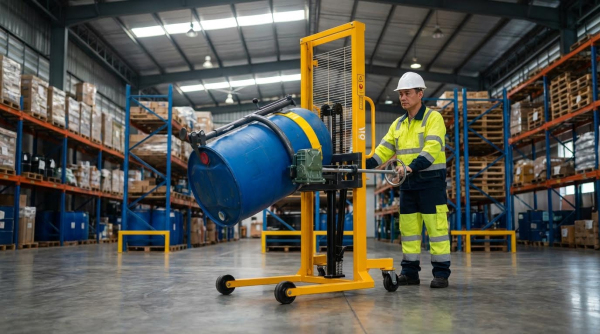
Choosing how to easily move 55 gallon water drums or chemical drums requires balancing ergonomics, risk, and throughput. Full 210 liter drums typically weighed 180–360 kg, so manual rolling alone rarely met current EHS expectations. For low volumes and short moves on good floors, drum carts or trolleys with polyurethane wheels gave the simplest upgrade over pure manual handling. They reduced push forces, stabilized the drum with cradles or clamps, and kept operators outside the crush zone.
Where operators had to lift, tilt, drain, or stack drums, hydraulic drum stacker and lifter‑cum‑tilters offered a safer path. Typical units handled up to about 350 kg, lifted roughly 1.0–1.6 m, and allowed controlled 180–360° rotation for decanting. Plants handling corrosive or high‑purity media adopted stainless or cleanroom‑ready versions to meet hygiene and contamination control requirements. In higher volume facilities, mobile carriers, forklift drum grabber double grips, or integrated forklift and AGV solutions reduced manual touches and supported predictive maintenance and digital EHS tracking.
Across all options, correct sizing by capacity, lift height, duty cycle, and floor conditions remained critical. Undersized equipment increased failure and spill risk, while oversized systems raised cost and reduced maneuverability in tight aisles. Facilities needed clear rules for hazard identification, PPE, stacking limits, and inspection access, with procedures aligned to local occupational safety regulations and chemical handling standards. Over time, the industry moved toward equipment that combined mechanical advantage, better wheel technology, and digital monitoring, giving operators easier, safer ways to move full 55 gallon water drums while maintaining compliance and productivity. For instance, drum dolly solutions became increasingly popular for their ergonomic design and ease of use.