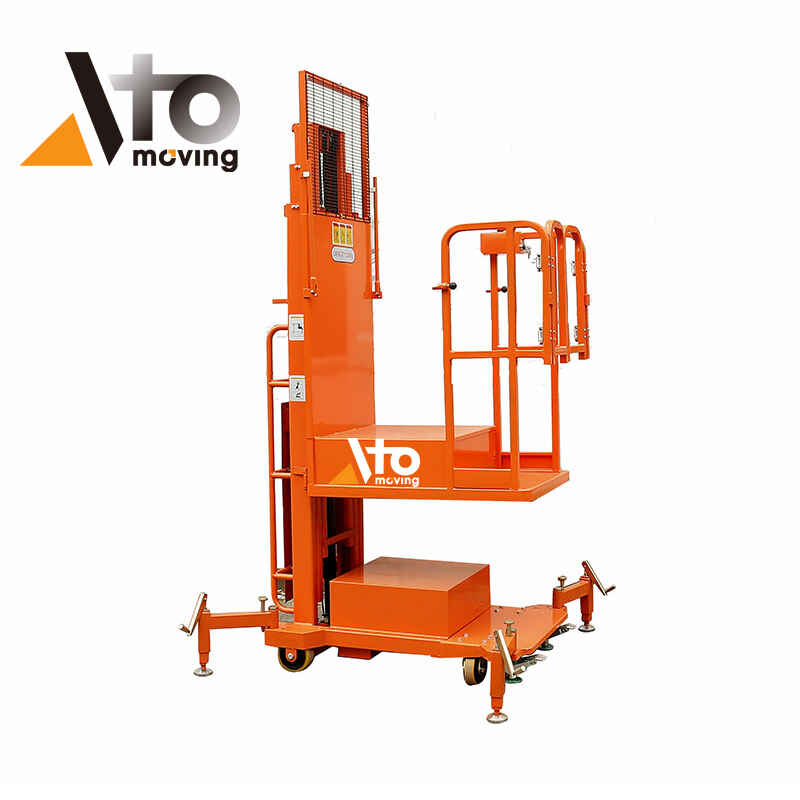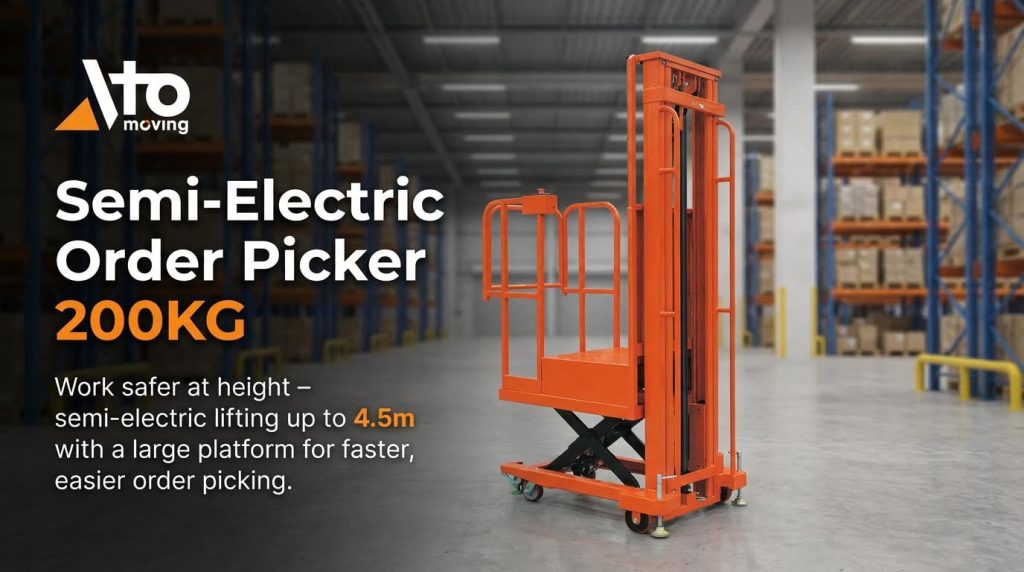
Warehouse teams that search for how to drive a warehouse cherry picker want clear, practical rules that reduce risk. This article explains how core safety standards, engineering controls, and operating procedures work together to keep elevated picking tasks stable and compliant.
You will see how OSHA and international rules classify order pickers and shape training, traffic plans, and fall protection strategies across the full machine life cycle. The next sections break down daily inspections, load and stability limits, aisle guidance systems, and digital safety tools that control both collision and fall risks.
Later, the article focuses on safe driving, lifting, and picking methods, including platform positioning, speed control at height, and mixed-traffic protocols with pedestrians and other lift trucks. The final section turns these points into a concise implementation roadmap so engineering, operations, and safety leaders can align on one consistent standard for order picker lift use.
Core Safety Standards And Regulatory Context
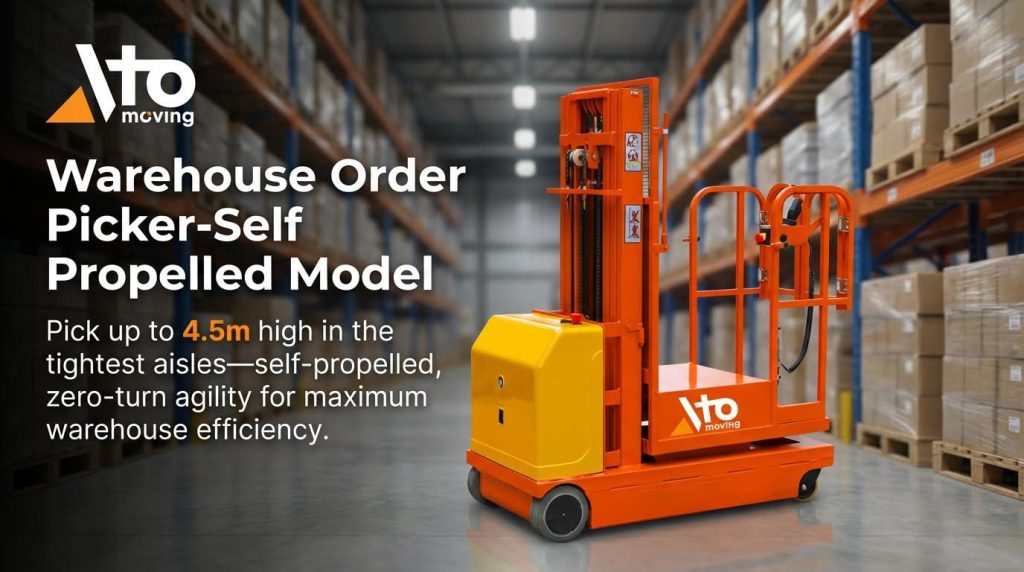
Core safety rules for warehouse order picker defined how to drive a warehouse cherry picker without avoidable risk. Standards covered truck design, operator training, traffic control, and fall protection at height. Engineers and safety managers used these rules to set site procedures and choose control measures. The goal was simple: prevent falls, collisions, and tipovers while keeping productivity high.
OSHA And International Regulatory Classifications
OSHA classified warehouse order picker as Class II electric motor narrow aisle trucks under its Powered Industrial Truck standard. This classification linked cherry picker driving rules to specific limits on speed, travel at height, warning lights, and platform design. For example, when the platform exceeded about 0.9 m, regulations capped horizontal speed at roughly 1.1 m/s. Travel with platforms above about 3.9 m was banned except for rail-guided or electronically guided trucks or units moved by a constant-pressure inching control.
Regulators also required a warning light on the non-elevating part of the truck between roughly 1.2 m and 1.8 m. The light had to activate automatically when the platform reached about 1.8 m and the truck moved. Internationally, PUWER and LOLER in the UK and similar EU rules demanded safe design, inspection, and lifting operations. These rules formed the legal baseline that shaped site procedures for how to drive a warehouse cherry picker safely in narrow aisles and mixed traffic.
Training, Certification, And Refresher Requirements
OSHA required formal training and evaluation before any operator drove an order picking machines. Courses combined theory and practical driving for low-, medium-, and high-level trucks. Typical programs covered load limits, stability, fall protection, emergency lowering, and ramp use. In the UK and Europe, training aligned with HSE L117 and similar guidance and produced certificates usually valid for about three years.
Refresher training was needed after incidents, near misses, equipment changes, or long gaps in use. Good programs taught how to drive a warehouse cherry picker in real warehouse layouts, not only on open floors. Topics included tight-aisle steering, horn use at blind spots, and platform positioning for picking. Instructors also checked physical ability to work at height and to use harness systems correctly. Written tests and practical exams confirmed operators could apply rules, not just repeat them.
Job Hazard Analysis And Traffic Management Plans
A job hazard analysis (JHA) broke down each order picking task into steps and hazards. Typical risks included crowded aisles, mixed traffic, overhead beams, pallet overhang, slippery floors, and narrow cross-aisles. Engineers and safety staff then selected controls for each step. For example, they might limit picking zones, change rack layouts, or set one-way travel paths.
Traffic management plans turned that analysis into clear driving rules. Common elements included:
- Marked lanes for order pickers, forklifts, and pedestrians
- Right-of-way rules at intersections and dock areas
- Speed limits by zone, such as lower speeds near docks
- Horn use at blind corners and doorways
Plans also addressed how to drive a warehouse cherry picker when leaving aisles. Operators had to lower to safe travel height, check mirrors, and sound the horn before exiting. Barriers, signs, or flaggers supported control in high-risk crossings. Regular reviews of near-miss data helped refine lane layouts and rules over time.
Hierarchy Of Controls For Fall And Collision Risks
Effective sites used the hierarchy of controls instead of relying only on operator behavior. For fall risks, engineers first tried to remove exposure by redesigning storage so staff picked from ground level where possible. Next, they used passive safeguards such as fixed guardrails, full-height platform gates, and interlocks that prevented travel if gates stayed open. Where guardrails could not fit, they specified personal fall arrest or restraint systems with lanyards short enough to prevent long free falls.
Collision risks followed the same logic. Designers removed conflict points by separating pedestrian and truck routes and by using one-way aisles. They then added guidance systems such as floor-embedded rails or electronic aisle guidance to keep trucks centered between racks. Speed limiters, height limit switches, and automatic braking at aisle ends provided engineering controls. Administrative rules, training on how to drive a warehouse cherry picker in mixed traffic, and PPE came last in the hierarchy. This structure reduced dependence on perfect human performance and improved repeatable safety.
Pre-Operation Checks And Engineering Controls
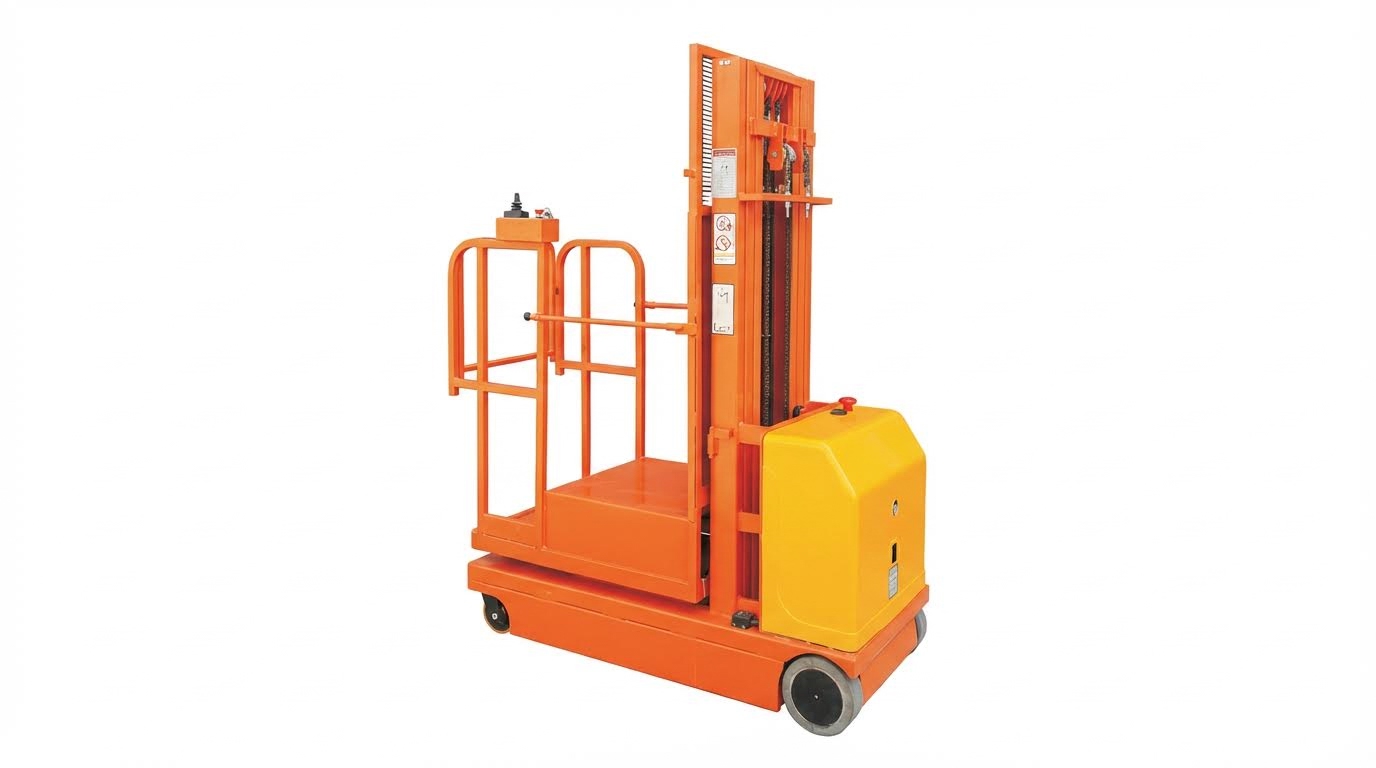
Pre-operation checks and engineered safeguards set the baseline for how to drive a warehouse order picker safely. This stage verifies that mechanical, electrical, and control systems work as designed before any lift or travel. Strong engineering controls then limit human error and keep the machine stable in narrow aisles and at height. Together they turn a trained operator into a predictable, low-risk system.
Daily Mechanical And Electrical Inspection Checklist
Daily checks start before key-on and follow a fixed routine. Operators walk around the truck and look for leaks, damaged forks, cracked welds, loose fasteners, and tire or wheel defects. They confirm that the mast, chains, and platform attachment points show no visible distortion or corrosion. Electrical checks include battery charge status, connector condition, cable insulation, and emergency stop function.
Control tests follow with the machine in a safe area. The operator verifies:
- Steering response and free play within normal range
- Service and parking brakes stop the truck smoothly
- Lift, lower, and tilt (if fitted) move without jerks or delay
- Limit switches stop travel when the platform reaches restricted height
Warning devices such as horn, flashing or rotating beacon, and any travel alarms must operate correctly. If any defect affects braking, steering, lifting, or fall protection anchor points, the truck stays out of service until a competent technician clears it. This discipline is central to any safe plan for how to drive a semi electric order picker in real operations.
Fall Protection Systems And Guardrail Requirements
Fall protection starts with the platform itself. A safe work platform is typically at least 500 mm wide and uses guardrails on all open sides. Top rails, midrails, and toe boards create a physical barrier that prevents step-through and objects falling from height. The gate or chain at the entrance must close and latch before travel.
Personal fall protection adds a second layer. Operators wear a full-body harness and connect to an approved anchor point on the platform. The lanyard length must allow picking tasks but prevent a free fall greater than about 1.2 m or contact with lower levels. The lanyard path must avoid trip hazards and sharp edges.
If guardrails cannot fit due to tight clearances, regulations required an engineered alternative. Options included fall restraint or positioning systems that keep the operator away from edges. All harnesses, lanyards, and connectors needed pre-use checks by the operator and periodic inspections by a competent person, often at six‑month intervals. These controls directly influence how to drive a warehouse cherry picker at height without exposing operators to uncontrolled falls.
Load Ratings, Stability Principles, And Safe Travel Height
Understanding load ratings is critical before moving or lifting. The nameplate lists maximum capacity, usually in kilograms, and may specify different limits for platform, tray, and auxiliary decks. Operators must add the weight of the person, tools, and picked items and stay within the lowest rated value. Overloading reduces stability margin and can cause mast or chassis failure.
Stability depends on the combined center of gravity staying inside the truck’s stability triangle or polygon. High platforms, offset loads, or sudden turns shift this center and increase tipover risk. For that reason, travel at full height is generally banned except on rail-guided or electronically guided trucks with special design features.
Safe travel height is a key rule for how to drive a warehouse cherry picker. Guidance defined safe travel height as clear of the floor but below axle height. Operators lower the platform to this height before turning, crossing intersections, or exiting aisles. Some rules also limited horizontal speed to about 1.1 m/s when platforms exceeded roughly 0.9 m height, and prohibited travel above about 3.9 m unless guidance systems controlled the truck. Limit switches and speed control circuits enforced these rules and must never be bypassed.
Aisle Guidance, Sensors, And Digital Safety Systems
Engineering controls in aisles reduce collision and tipover risks. Narrow-aisle warehouses often used guide rails, floor wires, or electronic guidance systems to keep the truck centered between racks. These systems limited lateral movement and helped prevent contact with uprights, pallets, or stored loads. They also allowed controlled travel at moderate height where free-ranging trucks would be unsafe.
Sensors added another protection layer. Typical devices included:
- Height switches that cut drive above a set platform level
- Proximity sensors that slow or stop travel near obstacles
- Load sensors that derate capacity or block lift when overloaded
- Speed limiters linked to steering angle or platform height
Modern trucks used digital displays and data logging. These systems showed fault codes, battery status, and sometimes live load or height information. Fleet managers could review impact events, travel at height, and bypass attempts. Integrated warning lights and audible alarms activated automatically when the platform rose above about 1.8 m and the truck moved. When planning how to drive a order picking machines safely, these engineered systems should define the limits, while operator training ensures those limits are respected every shift.
Safe Driving, Lifting, And Picking Procedures
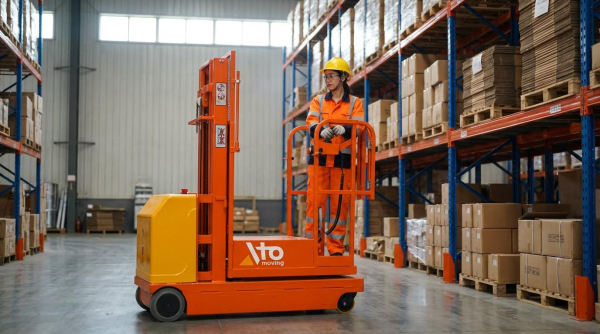
This section explains how to drive a warehouse order picker safely during real picking work. It links platform use, travel speed, and traffic rules into one clear operating method. The goal is stable lifting, controlled driving, and zero contact with people, racks, or structures.
Mounting, Dismounting, And Platform Positioning
Safe use starts before you move the truck. Always mount and dismount using three points of contact and fixed handholds, not the steering wheel. Step down facing the truck and never jump, even from low-level order pickers.
Once on the platform, close gates or chains and check the guardrails. Clip your harness lanyard to the approved anchor if the truck design requires tie-off at height. Keep feet inside the platform footprint and avoid climbing on railings or pallets.
Position the platform only when the truck is fully stopped and the mast is stable. Align the platform square to the rack face so the load stays within the manufacturer’s rated envelope. Raise smoothly to the pick level and avoid micro-movements at full height unless the truck is designed for inching travel.
Speed Limits, Turning, Ramps, And Reversing At Height
Understanding how to drive a semi electric order picker safely means strict speed control. At low platform height, drive only at the speed set by site rules and the truck limiter. When the platform exceeds about 0.9 m to 1.0 m, most regulations required very low travel speed, typically near 1.1 m/s or less.
Do not drive with the platform elevated above the limit set by the manufacturer or standard, often around 3.8 m unless guided by rails or electronic systems. Lower the platform to safe travel height, usually just clear of the floor and below axle level, before turning or exiting an aisle. Take corners slowly to avoid lateral instability and rear-end swing.
On ramps, treat the order picker like any narrow-aisle truck. Keep the load upgrade when loaded and avoid turning on slopes. Reverse only when you have a clear view or a spotter, and use the horn at blind crossings. Never override or bypass travel limit switches that prevent driving at unsafe heights.
Pedestrian Interaction And Mixed-Traffic Protocols
Order picking machines often worked in aisles shared with pedestrians and other trucks. Clear traffic rules kept people safe. Sites used marked walkways, one-way systems, and speed-restricted zones near docks and staging areas.
When you drive a warehouse cherry picker, you must assume pedestrians do not see you. Keep both hands on the controls and scan ahead, to the sides, and above. Use horns, flashing lights, and, where fitted, blue or red floor projection lights to warn others of your path.
In mixed-traffic areas, yield to pedestrians and emergency vehicles. Stop if a person enters your operating envelope or steps between the truck and the rack. Only restart when eye contact and clear separation exist. Supervisors should support this with rules such as no walking under raised platforms and no entry into active picking aisles without permission.
Emergency Stops, Fail-Safes, And Tipover Response
Modern order pickers used several engineered fail-safes. These included emergency stop buttons, deadman pedals, interlocked gates, and limit switches that cut travel at height. Operators needed to know the exact location and function of each device before work.
Use the emergency stop if you lose control, see an imminent collision, or notice unsafe behaviour near the truck. This action removed power and stopped motion, but you should reset and restart only after a quick safety check. If control systems failed, emergency lowering valves allowed the platform to descend in a controlled way under supervision.
In a tipover, best practice was to stay with the truck, brace feet, and hold the controls or steering column. Jumping increased the chance of fatal crush injuries. After any near-miss, impact, or tilt alarm, the truck had to be taken out of service and inspected by a qualified technician before reuse.
Summary Of Best Practices And Implementation Steps
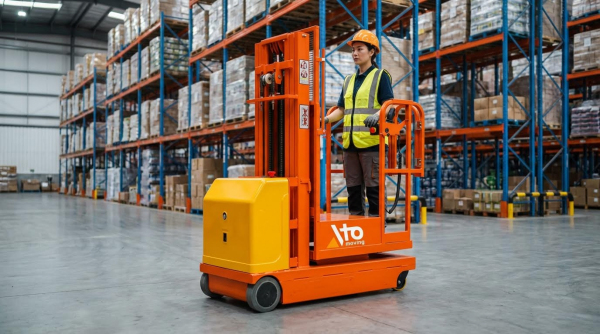
This section brings together practical rules on how to drive a warehouse cherry picker safely. It links training, engineering controls, and day-to-day driving habits into one simple playbook. Supervisors can use it as a checklist when writing site procedures or coaching new operators.
First, lock in the basics before anyone drives. Operators must complete formal training on warehouse order picker trucks and pass both theory and practical tests. Issue written authorizations, set refresher intervals, and keep training records. Align site rules with OSHA powered industrial truck standards and any local regulations.
Next, standardize pre-use checks and setup steps:
- Apply a daily inspection checklist for brakes, steering, lift, electrics, and emergency stop.
- Verify guardrails, gates, and anchor points before use.
- Confirm load capacity for platform, tray, and any attachments.
- Check floor condition, lighting, and aisle clearance along the planned route.
Then define clear rules for how to drive a warehouse cherry picker under all conditions. Require safe travel height when moving, lower the platform before turning or exiting aisles, and ban travel at high elevation except where guidance systems allow it. Set site-specific speed limits that stay within regulatory caps, especially when the platform exceeds roughly 1 metre or 36 inches.
Scissor platform lift and pedestrian control complete the system. Make harness use and proper tie-off mandatory at height, and combine this with guardrails wherever possible. Mark one-way aisles, crossing points, and exclusion zones for pedestrians. Use warning lights and horns to signal movement in blind spots and mixed-traffic areas.
For implementation, roll out changes in phases. Start with a job hazard analysis, then update traffic plans, signage, and procedures. Train operators and supervisors together so rules stay consistent. Finally, audit incidents, near misses, and inspection results, and adjust controls as fleet technology, digital guidance, and sensor systems evolve.