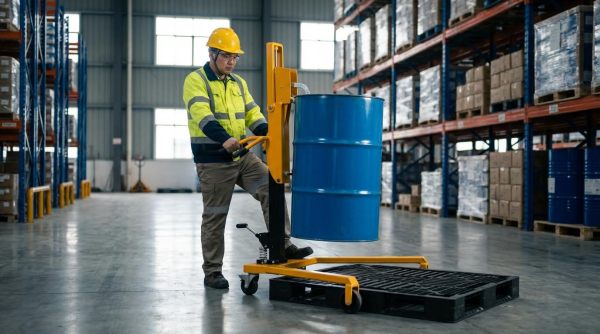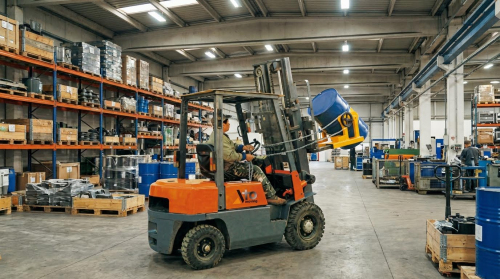
Warehouses that ask how many drums on a pallet need clear, engineering-based rules rather than rough guesses. This article explains standard pallet loading patterns for drums and barrels, from basic constraints to detailed layouts and automation impacts.
You will see how typical drum sizes, pallet ratings, and code limits define safe pallet patterns and stack heights. Later sections compare one-layer and multi-layer layouts, show how floor and rack limits control density, and link stability rules to OSHA, NFPA, and sprinkler clearances.
The article also reviews how forklift drum grabber, rack, and cobot limits shape pattern choice, and how digital twins and AI tools test options before changes go live. The final section condenses these findings into best-practice drum pallet patterns that balance capacity, safety, and compliance for modern warehousing.
Key Constraints For Palletizing Drums And Barrels
Engineers who ask how many drums on a pallet must treat it as a constraint problem. Capacity, stability, and code limits all interact. This section defines the main limits that control safe drum pallet patterns in warehouses, racks, and trailers.
Typical Drum Sizes, Weights, And Footprints
Drum geometry largely decides how many drums fit on a pallet. Standard 55-gallon steel drums typically had a diameter near 585–600 millimetres and a height near 880–900 millimetres. Filled mass often ranged from 180 kilograms to more than 300 kilograms, depending on product density.
Smaller containers such as 20–30 litre pails or 20–200 litre drums used tighter footprints. Typical patterns used circular footprints on square or rectangular pallets, which left voids at corners. As a result, a 1 200 millimetre by 1 200 millimetre pallet usually carried three or four 55-gallon drums per layer, while small pails reached much higher counts.
Engineers evaluated footprint efficiency using plan views. They checked drum circle packing, clearance to pallet edges, and centre-of-gravity location. This analysis answered the core search question how many drums on a pallet for each size class.
Pallet Types, Ratings, And Load Capacities
Pallet type and rating set the hard upper limit for drum count per pallet. Typical safe working loads were:
- Standard wood pallets: about 700–900 kilograms dynamic load
- Engineered wood pallets: about 1 100–1 350 kilograms
- Plastic pallets: about 450–700 kilograms
- Metal pallets: about 1 100–1 500 kilograms
One filled 55-gallon drum often weighed 200–300 kilograms. Two drums already used most of a standard wood pallet rating. That is why common practice kept 55-gallon drums to one layer per pallet, with three or four drums depending on pallet size and product density.
Engineers also checked deck board thickness, stringer section, and support spacing. They confirmed that concentrated drum chime loads did not crush boards. Uniform pallet sizes within a stack reduced differential settlement and tilt. When planners asked how many drums on a pallet, they compared drum mass against pallet rating with at least a 20–25% safety margin.
Regulatory And Code Limits For Drum Stacking
Regulations did not specify one fixed answer to how many drums on a pallet. Instead, they set performance rules for stability, access, and fire safety. OSHA rules required secure stacking, straight and level piles, and clear aisles for equipment movement. Drums had to be blocked, interlocked, or banded to prevent sliding or collapse.
Guidance documents for 55-gallon drums recommended rows no more than two drums high and two drums wide. Higher stacks made leak inspection difficult and increased collapse risk. Fire codes and NFPA guidance also limited total stack height to protect sprinkler performance. Facilities kept at least 450 millimetres clearance below sprinklers and avoided stacks that shielded spray patterns.
Operators inspected pallets for cracks, loose boards, or protruding nails before loading drums. They removed damaged pallets from service. Facilities used visual height markers and written procedures to keep palletized drum stacks within approved limits.
Assessing Floor, Rack, And Trailer Load Limits
Answering how many drums on a pallet also required structural checks beyond the pallet itself. Warehouse slabs had rated uniform loads and sometimes posted point load limits. Engineers compared palletized drum loads against slab punching shear and flexural capacity. They considered worst cases such as stacked pallets or dense drive-in rack layouts.
Rack beams carried concentrated pallet loads. Typical design limits used deflection criteria such as span divided by 200. Engineers verified beam capacity, upright buckling, and anchor pull-out under seismic and impact loads. They placed the heaviest drum pallets in the lowest rack levels to reduce frame demand.
Trailer and container loading added another layer of limits. Published examples showed four 55-gallon drums per layer and eight per pallet in some 53-foot trailer layouts. However, container stuffing guides for export often recommended only one drum layer per pallet to control centre-of-gravity height. Planners checked trailer gross weight, axle limits, and floor ratings before deciding final drum count per pallet and pallets per vehicle.
Standard Pallet Layouts For Steel Drums And Pails
Layout design for steel drums and pails starts with a clear answer to the question how many drums on a pallet. The answer depends on drum volume, pallet size, and load rating. Engineers must also consider transport mode, aisle geometry, and regulatory limits on stack height. This section focuses on practical pallet patterns that balance density, stability, and code compliance.
One-Layer Pallet Patterns For 55-Gallon Drums
For 55-gallon steel drums, best practice kept pallets to a single drum layer. Typical patterns used three or four drums per pallet, depending on pallet footprint and overhang rules. A standard 1 219 mm by 1 016 mm pallet often carried three drums without overhang, while a larger 1 143 mm by 1 270 mm pallet supported four drums in a square pattern. One layer per pallet simplified load paths and reduced the risk of drum wall buckling under vertical load.
When planners asked how many drums on a pallet, they had to check both pallet rating and trailer or rack limits. A common transport rule used four drums per layer and two layers per pallet for some 55-gallon applications, which gave eight drums per skid. This approach required strong pallets and verified floor or deck capacity, because total mass could exceed 1 000 kg per pallet. Facilities still limited free-standing rows to two drums high and two drums wide for inspection access and spill control.
Multi-Layer Pallet Patterns For Small Drums And Pails
Small drums and steel pails allowed multi-layer patterns because unit mass and height were lower. Five-gallon steel pails typically stacked up to three layers high on a pallet. A frequent answer to how many drums on a pallet in this size range was 9 to 12 pails per layer, depending on drum diameter and carton use. Twelve loose pails often fit on a standard pallet with no overhang, arranged in a 3 by 4 grid.
When pails sat in cartons, that same 12-piece pattern could create about 64 mm of overhang on a standard pallet. Engineers then weighed the trade-off between density and edge damage risk. Multi-layer stacks required careful weight distribution, with heavy pails on the bottom layer and consistent column alignment above. Strapping and stretch wrap helped lock layers together and maintain column strength during transport vibration.
Container And Trailer Loading Densities By Size
Container loading density depended on both pallet pattern and whether drums shipped palletized or floor-loaded. For 55-gallon drums, a 20-foot container typically held about 32 drums in a single layer or 48 to 64 drums in two layers, subject to product density and weight limits. A 40-foot container held roughly 44 drums in one layer or 64 to 88 in two layers. These ranges assumed standard drum diameters and clearances for handling.
For small pails, counts were much higher. A 20-foot container could carry about 216 to 480 five-gallon pails, depending on whether pallets used nine or 12 pails per layer and how many pallet layers were allowed under height limits. A 40-foot container could reach 648 to 864 pails with two pallet layers. Trailer guidelines for palletized loads showed, for example, about eight 55-gallon drums per skid and around 208 drums per 53-foot trailer when space was fully optimized.
Managing Overhang, Clearances, And Aisle Widths
Overhang control was critical for safe pallet patterns for both drums and pails. Even when calculations answered how many drums on a pallet, planners still had to check edge distances and contact areas. Overhang increased the bending moment on deck boards and reduced impact resistance at pallet corners. It also created snag points for stretch wrap and higher risk of side impact from forklift barrel grabber.
Clearances around pallets affected both fire code compliance and handling efficiency. Key checks included:
- Maintaining at least 457 mm below sprinklers where required by local codes.
- Keeping aisles wide enough for forklifts to turn without side-loading drum stacks.
- Allowing space for drum inspection, leak checks, and emergency access.
Warehouse layout had to align pallet footprint, rack beam spacing, and aisle width. Mismatches forced operators to reduce drum count per pallet or accept higher damage rates. A consistent pallet standard and clear floor markings helped operators position drum pallets without encroaching on required clearances.
Stability, Safety, And Automation Considerations
This section links stability rules with the practical question how many drums on a pallet. Engineers must align pallet patterns, rack design, and automation limits so that every palletized drum load stays stable from filler to trailer. The focus here is on pattern choice, code compliance, equipment interfaces, and digital planning tools.
Block Vs. Brick Patterns And Load Securing
Block and brick patterns answer the same question in different ways: how many drums on a pallet without losing stability. For 55-gallon drums, block patterns usually place three or four drums per layer, tight to the pallet edges. Brick patterns offset rows to interlock drums and reduce straight shear planes.
Engineers compare both patterns using three checks:
- Contact area between drums and pallet deck
- Center-of-gravity location relative to pallet center
- Clearance to pallet edges and fork pockets
Block patterns work well when drums are uniform and wrapping is strong. Brick patterns help where transport shock is higher or pallets double-stack in trailers. Load securing then closes the stability gap. Typical controls include:
- Two to four plastic straps per pallet through drum chimes
- Stretch wrap to bind drums and prevent creep
- Top frames or corner posts where vertical stacking is allowed
If a layout needs four drums per pallet for density, engineers often specify brick patterns plus full-height stretch wrap. If loads ship as single pallets with no stacking, a simple block pattern with banding can be enough.
OSHA, NFPA, And Sprinkler Clearance Compliance
Regulations do not state directly how many drums on a pallet. They instead control stack geometry, clearances, and access. OSHA guidance for 55-gallon drums recommended rows no more than two drums high and two drums wide. This limit kept inspection easy and reduced collapse risk.
NFPA guidance for idle pallets recommended a 4.6 metre maximum stack height. For loaded pallets, the safe height depended on ceiling height, sprinkler layout, and local fire codes. A common rule kept at least 450 millimetres below sprinklers as a minimum clearance.
From an engineering view, the number of drums per pallet must support these rules:
- Drum rows stay visible for leak and damage checks
- Stack height plus pallet plus load pattern stay below sprinkler limits
- Aisles remain clear as required by OSHA 1910.176(a)
Where four-drum pallets push height limits, facilities often reduce pallet stack tiers rather than reduce drums per pallet. This keeps transport density while staying inside fire and access rules.
Rack Interface, Forklift, And Cobot Handling Limits
Rack design and handling equipment finally decide how many drums on a pallet in daily work. A pallet with four 55-gallon drums can be stable on the floor but unsafe on a high beam level if beam deflection or sway is high. Engineers check pallet load versus rack rating, including dynamic impact from forklifts.
Key interface limits include:
| Aspect | Design concern |
|---|---|
| Pallet overhang | Drums must sit fully on deck boards or support bars. |
| Beam deflection | Deflection usually stays below span/200 for stability. |
| Fork pocket access | Forks must enter without hitting drums or banding. |
| Trailer height | Stacked pallets must clear roof bows and dock doors. |
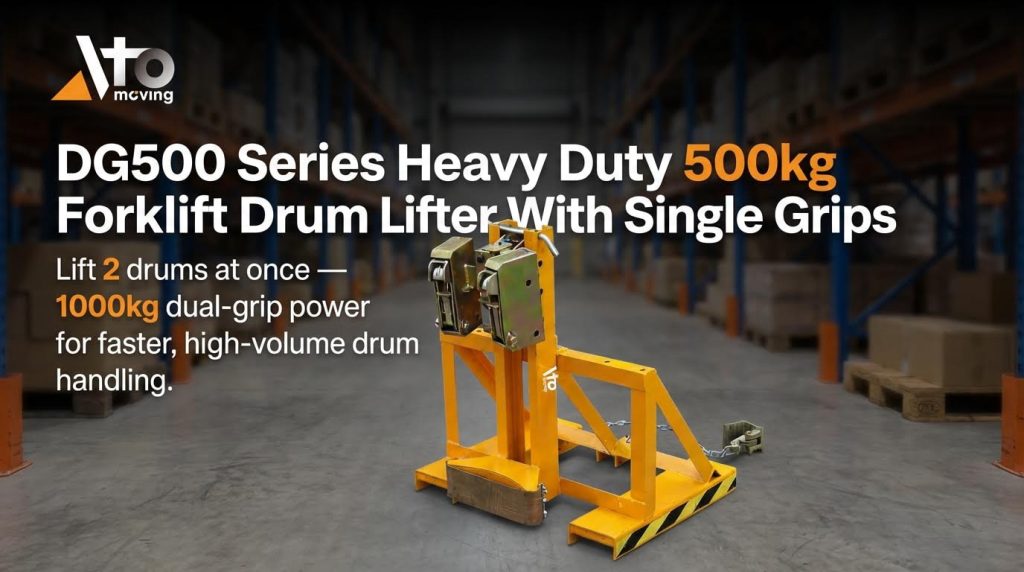
Cobots and AGVs add new limits. They often use fixed fork spacing and lower allowable acceleration. This favors repeatable patterns, such as three-drum triangular layouts on standard pallets. Where automation handles mixed SKUs, engineers sometimes cap loads at three drums per pallet for better gripping and sensing reliability.
Digital Twins, AI Tools, And Atomoving Integration
Digital twins and AI tools help answer how many drums on a pallet for each lane, rack level, and trailer type. Engineers build 3D models of pallets, drums, racks, and vehicles. They then simulate forces from braking, cornering, and lifting. These models test different drum counts, block or brick patterns, and wrap schemes before any real loading.
Typical digital workflows include:
- Import pallet and drum geometry from CAD libraries
- Run stability checks for tilt, vibration, and impact
- Optimize drum count per pallet under code height limits
- Export patterns as loading instructions for operators and robots
AI tools can scan historic damage and near-miss data. They then flag layouts where four-drum pallets on high beams show higher incident rates than three-drum pallets. Integration with Atomoving systems lets these optimized patterns feed straight into automated palletizers and transfer carts. The result is a closed loop where digital models, safety data, and automated handling all agree on the safest drum count per pallet for each use case.
Summary Of Best Practices For Drum Pallet Patterns

Operations teams often ask how many drums on a pallet they can place without losing safety or density. Best practice started from drum geometry, pallet rating, and the rule that 55-gallon drums sit only one layer high per pallet. Facilities then tuned container and trailer plans to those limits instead of forcing extra tiers.
For 55-gallon steel drums, use three or four drums per pallet depending on pallet size and overhang tolerance. A larger pallet around 1 140 mm by 1 270 mm typically carried four drums without overhang. Standard pallets often carried three drums to keep the footprint inside deck boards and simplify strapping. Loads stayed to one drum layer per pallet; extra height came from stacking whole pallets, not loose drums.
For small drums and pails, higher on-pallet tiers were acceptable but still controlled. Typical practice limited five-gallon steel pails to three layers per pallet. Engineers checked that total stack height stayed inside trailer or container internal height and local code for clearance below sprinklers. They also confirmed pallet rating, racking beam capacity, and floor load against total mass per position.
Across all sizes, safe answers to how many drums on a pallet followed a fixed sequence. First, confirm the container footprint fits the pallet with no unsafe overhang. Second, keep heavy units low and align rows in block or brick patterns for stability. Third, secure each pallet with wrap or banding and keep rows no more than two drums wide and two drums high for inspection access. Finally, validate aisle width, sprinkler clearance, and trailer or container weight limits before increasing count or tier height.
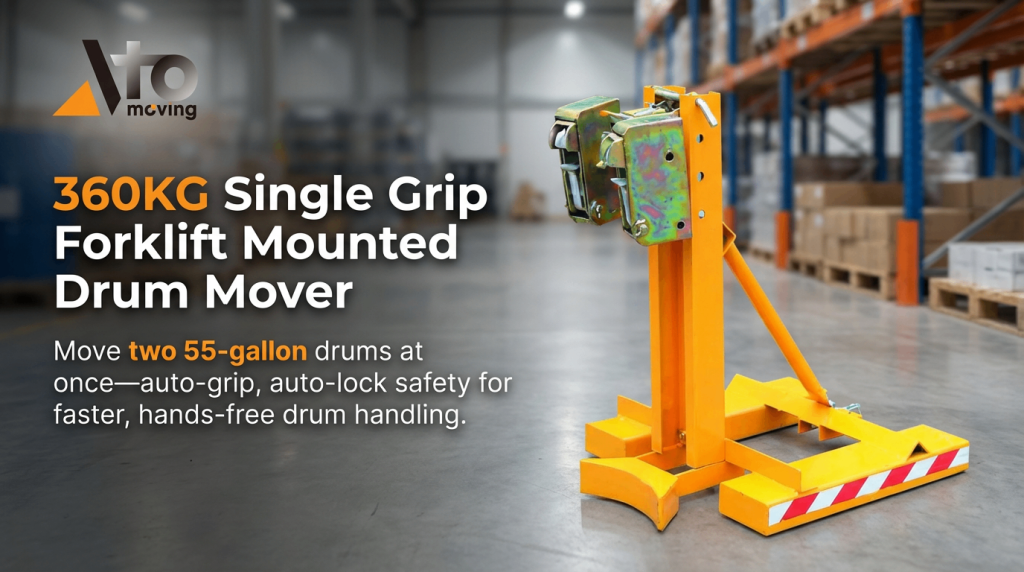
Future layouts increasingly used digital twins and AI tools to test pallet patterns before changes on the floor. These tools helped compare three-drum and four-drum layouts, simulate trailer loading plans, and check rack and slab loads. However, engineers still treated conservative drum counts per pallet, one-layer rules for large drums, and strict OSHA and NFPA clearances as non-negotiable design anchors. Tools like drum palletizer, forklift drum grabber, and drum dolly became essential for optimizing these processes.