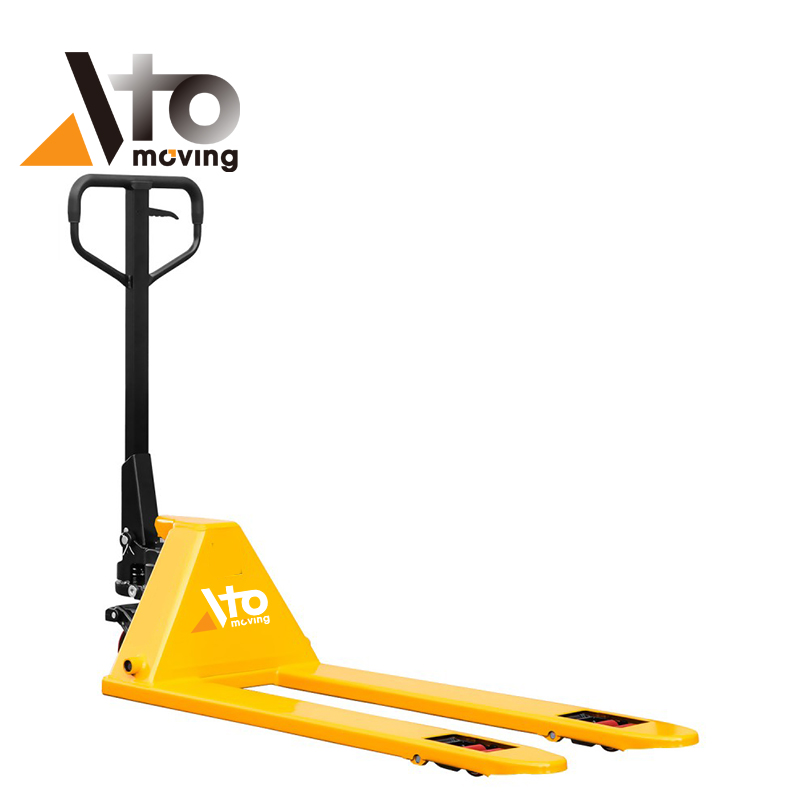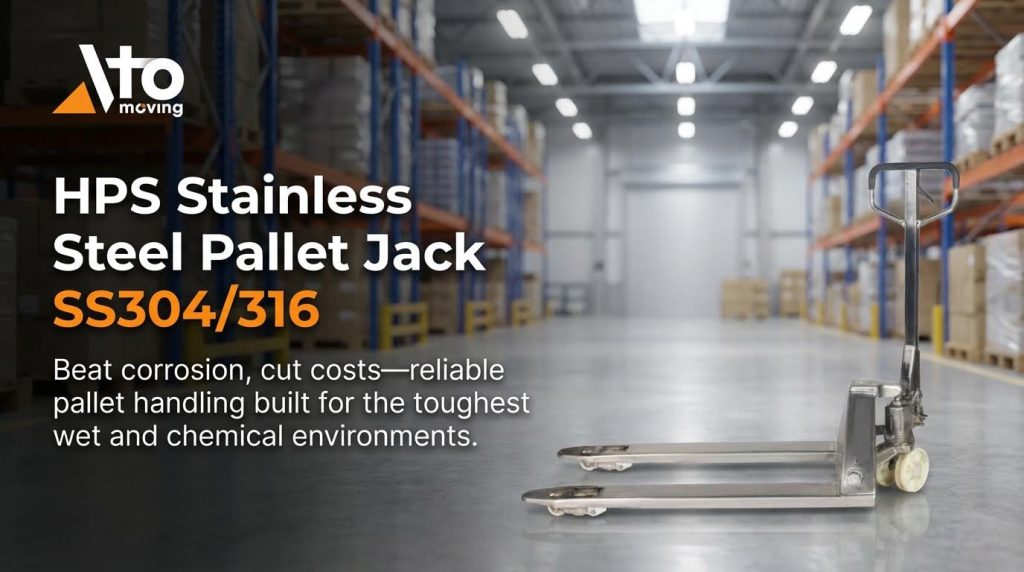
Understanding how a pallet jack lifts starts with its basic mechanics. This article walks through the full load path from the forks and wheels, through the steering linkages, to the manual and electric drive architectures.
You will see how the hydraulic circuit converts a short pump stroke into reliable fork lift, and how handle kinematics generate pressure in a compact single-acting cylinder. Later sections connect these fundamentals to performance, safety, and new technologies such as energy-efficient electric drives, sensors, and digital twins.
The final summary section links design choices to operation, maintenance, and lifecycle cost, so engineers and operators can specify, use, and upgrade hydraulic pallet truck with confidence.
Core Components And Load Path In Pallet Jacks
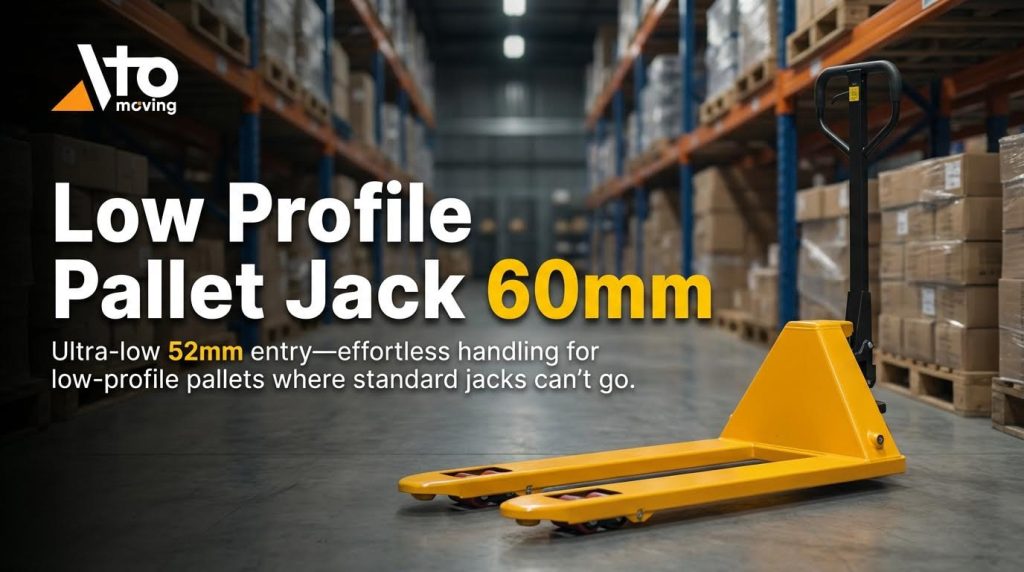
Understanding how a pallet jack lifts starts with its load path. The load path runs from the pallet deck, through the forks, into the hydraulic unit, and finally into the steering axle and floor. Each component must carry force safely while keeping the truck easy to steer in tight aisles. This section explains how fork geometry, wheel layout, and overall architecture shape lifting performance and stability.
Fork Geometry, Load Centers, And Stability
The forks decide how a pallet jack lifts and supports the load. Standard forks sit low and slide into the pallet openings with only a small ground clearance. The load typically acts at a load center near the fork midpoint, measured from the fork heel at the hydraulic unit.
Engineers size the frame and axles for that rated load center. If the actual center shifts forward, bending moments rise and stability drops. Short forks suit small pallets and tighter turns but raise contact pressure on each wheel. Long forks spread the same load over more deck boards but need more aisle length for turning.
Stability depends on the triangle formed by the two load wheels and the steering axle. A low lift height keeps the center of gravity close to the floor, which limits tipping risk compared with forklifts. Consistent fork height along the length avoids twisting the pallet deck and helps the hydraulic system lift evenly on both forks.
Steering Linkages, Wheels, And Maneuverability
The steering handle connects to the steer wheels through a simple linkage or direct tiller head. When the operator swings the handle, the steer axle pivots and redirects the truck. The design must balance low steering effort with precise control near racking and dock edges.
Most pallet jacks use two larger steer wheels at the rear and small tandem or single load wheels under each fork tip. The load wheels carry most of the vertical force when the pallet is raised. The steer wheels carry a mix of vertical and horizontal forces from pushing, pulling, and braking.
Wheel material affects how a pallet jack lifts and rolls. Hard polyurethane wheels roll easily on smooth concrete but transmit more shock. Softer compounds improve grip and noise but increase rolling resistance. A low-friction bearing set keeps handle forces manageable so a single operator can move a full-rated load without excess strain.
Manual Vs. Electric Pallet Jack Architectures
Manual and electric designs share the same basic load path but use different power sources. In both cases, the forks and hydraulic cylinder carry the vertical load, while the chassis and axles transfer forces into the floor. The key change is how the system generates lifting and traction effort.
A manual pallet jack uses a simple pump piston linked to the handle. The operator’s strokes send fluid into a single-acting cylinder, which raises the fork frame a few centimetres. Travel is human powered, so chassis weight stays low to keep push and pull forces acceptable.
An electric pallet jack keeps the same fork geometry but adds traction and lift motors, a battery, and power electronics. The electric pump replaces repeated handle strokes and delivers faster, more consistent lift, especially near the top of stroke. The drive motor pushes or pulls the load, so frame sections, axles, and wheels must handle higher continuous tractive forces.
Electric units often include powered braking and control logic that limit speed with raised loads. This architecture reduces operator fatigue and supports longer duty cycles but increases system complexity and maintenance needs compared with manual trucks.
Hydraulic Circuit: From Pump Stroke To Fork Lift
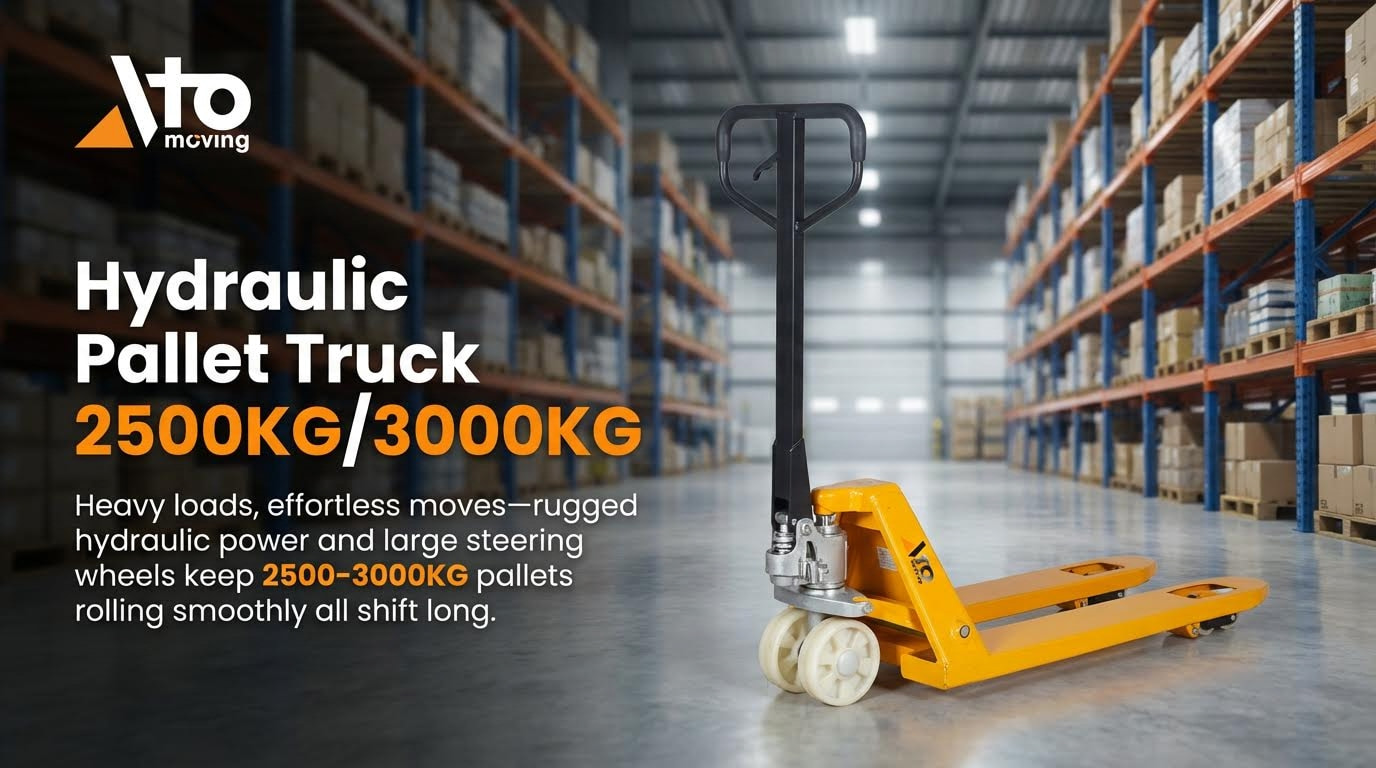
This section explains how a pallet jack lifts using a compact hydraulic circuit. The focus is the energy path from handle motion to fork elevation. Designers and technicians can use these concepts to size components, diagnose faults, and plan repairs.
Single-Acting Cylinder, Valves, And Fluid Path
A pallet jack uses a single-acting hydraulic cylinder. Fluid pressure extends the piston and gravity returns it during lowering. The circuit is simple but robust for warehouse duty.
The basic fluid path in a manual jack is:
- Oil reservoir integrated in the pump housing.
- Hand pump that displaces oil on each handle stroke.
- Check valves that enforce one-way flow to the cylinder.
- Lowering valve that connects the cylinder back to the reservoir.
During lift, the inlet check valve opens to draw oil from the reservoir into the pump chamber. The outlet check valve then opens on the pressure stroke and sends oil into the cylinder bore. Pressure acts on the piston area and raises the ram, which links to the fork mechanism. When the operator lowers the load, the control valve meters flow from the cylinder to the tank so the forks descend at a controlled speed.
Handle Kinematics And Pressure Generation
The handle works as a hand lever that multiplies operator force. A typical layout combines a long handle, a bell crank, and a short pump plunger. This geometry converts large handle travel into small plunger strokes with higher force.
The pressure in the circuit follows the basic rule:
Pressure = Force on plunger ÷ Plunger area.
A narrow plunger area raises pressure for a given input force. That pressure then acts on the much larger cylinder piston area. The ratio between piston area and plunger area creates the mechanical advantage that explains how a hydraulic pallet truck lifts loads near its rated capacity. The trade-off is stroke count. Higher force multiplication needs more handle strokes to reach full fork height.
Common Hydraulic Failure Modes And Diagnostics
Hydraulic faults usually show up as slow lift, no lift, or drift-down under load. Each symptom links to a small set of likely causes. Systematic checks reduce downtime.
Typical failure modes include:
- Internal leakage across piston seals causing loss of height under load.
- Stuck or worn check valves preventing pressure build-up.
- Contaminated or degraded oil increasing wear and valve sticking.
- Bent or corroded cylinder rods damaging seals.
Technicians start with visual checks for external leaks at fittings and the pump block. They then verify oil level and fluid condition. A jack that lifts with no load but not with rated load often has bypassing seals or faulty outlet check valves. A jack that will not lift at all may have air in the circuit, a blocked inlet, or a misadjusted control valve. Regular inspection intervals help catch hose damage, rod corrosion, and seal weep before full failure.
Bleeding, Seal Replacement, And Field Repairs
Air in the hydraulic circuit reduces effective stiffness and slows lifting. Bleeding restores solid oil columns. The usual field method is simple. With no load, the operator opens the lowering control slightly and pumps the handle through full stroke repeatedly. This cycles oil and helps purge air back to the reservoir.
Some designs include a bleed screw. In that case, a technician loosens the screw, cycles the pump until a steady oil stream appears, then closes it. If the jack still fails to hold or lift, seal replacement is often next. Typical service steps are:
- Remove the hydraulic unit from the frame.
- Drain and filter or replace the oil.
- Disassemble the cylinder and pump sections.
- Install new rod, piston, and valve seals from a kit.
Field repairs must keep all parts clean to avoid new contamination. After rebuild, technicians test lift under an unloaded cycle, then under a known test weight below the rated capacity. Correct bleeding and seal fit are essential for reliable lifting and safe operation over the jack lifecycle.
Performance, Safety, And Emerging Technologies

This section links how a pallet jack lifts to real-world performance, safety, and upgrade decisions. Engineers and fleet managers can use these points to match pallet jack design to duty cycle, risk level, and digital integration plans.
Capacity Ratings, Duty Cycles, And Efficiency
Capacity rating defines how a pallet jack lifts without overstressing the structure or hydraulics. Typical manual units handle about 2 000–2 500 kilograms, while electric models often match or exceed this range. The rating assumes a standard load center near the fork heel, not at the tips. Exceeding this distance increases bending moments and reduces effective capacity.
Duty cycle matters more in electric pallet jacks. High-frequency lift and travel cycles heat motors, controllers, and hydraulic oil. Designers size motors, pump displacement, and battery capacity to keep temperatures and voltage drop within safe limits. For light-duty use, simpler gear pump systems work well. For intense shifts, higher-efficiency pumps and controllers reduce losses and extend runtime.
Engineers assess efficiency along the full energy path:
- Mechanical: wheel rolling resistance, bearing quality, fork friction.
- Hydraulic: pump and cylinder efficiency, valve pressure losses.
- Electrical (for powered units): motor, controller, and battery round-trip efficiency.
Modern electric pallet jacks often use high-efficiency motors and optimized pump control. These upgrades reduce input energy per lift and support longer battery life.
Braking, Overload Protection, And Ergonomics
Braking design controls kinetic energy once a pallet jack lifts and moves a heavy load. Manual units usually rely on friction in the drive wheels and a parking brake linked to the handle. Electric pallet jacks often add electromagnetic or regenerative braking. These systems slow the truck when the operator releases the travel control or moves to neutral.
Overload protection ensures the hydraulic system cannot raise a load far above its rating. Common methods include pressure relief valves in the hydraulic circuit and mechanical overload bypass in the pump. When pressure exceeds a set limit, fluid bypasses the cylinder. The forks stop rising even if the operator keeps pumping or holding the lift button. This protects the frame, steer axle, and cylinder from overload damage.
Ergonomics ties directly to injury risk and productivity. Key factors include:
- Handle shape, height, and grip comfort.
- Required drawbar force to start and maintain motion.
- Number of handle strokes needed to lift a typical pallet.
- Visibility around the load and clearance at the operator’s feet.
Well-designed controls reduce wrist deviation and shoulder load. This matters during long shifts where operators repeat the same lift and travel pattern.
Electric Drive, Energy Efficiency, And Maintenance
Electric pallet jacks change how a walkie pallet truck lifts by replacing manual pumping with a motor-driven hydraulic pump. A compact electric motor spins a gear or vane pump. The pump sends oil into the lift cylinder until the forks reach the target height or a pressure limit. Separate traction motors drive the wheels for travel.
Energy efficiency depends on matching pump flow to demand. Fixed-speed pumps waste energy if they run at full flow while the operator pauses. Modern designs reduce this loss by using better motor control strategies and low-leak valves. Smooth acceleration and deceleration also cut current peaks and extend battery life.
Maintenance work shifts from pure mechanics to electro-hydraulic care. Typical tasks include:
- Checking hydraulic oil level and cleanliness.
- Inspecting hoses, seals, and fittings for leaks.
- Testing brake and lift cut-out functions.
- Maintaining batteries: correct charging, cable inspection, and terminal cleaning.
Electric pallet jacks reduce operator effort but need disciplined battery and electronics maintenance. Poor charging habits quickly shorten battery life and raise total cost of ownership.
Sensors, Predictive Analytics, And Digital Twins
Recent pallet jack designs increasingly add sensors to monitor how a hydraulic pallet truck lifts and moves loads. Typical sensing points include hydraulic pressure, lift height, travel speed, steering angle, and shock events. These signals feed onboard controllers or wireless modules. Fleet systems then log duty cycles, overload events, and impact locations.
Predictive analytics uses this data to estimate remaining life of key components. Examples include:
- Hydraulic cylinder seal life based on pressure peaks and cycles.
- Wheel and bearing wear from distance and floor conditions.
- Battery health from charge patterns and temperature history.
Digital twin concepts go further. Engineers build a virtual model of the pallet jack structure, hydraulics, and drive system. They then feed real sensor data into this model. The twin estimates stress levels and fatigue damage in near real time. This approach helps plan component replacements before failure and supports design improvements in new models.
For operators and safety teams, connected pallet jacks provide traceable records of overload attempts and unsafe driving. This data supports targeted training and better traffic layouts. In high-throughput sites, these tools improve uptime and extend equipment life while keeping lift operations within safe limits.
Summary: Key Design, Operation, And Lifecycle Points
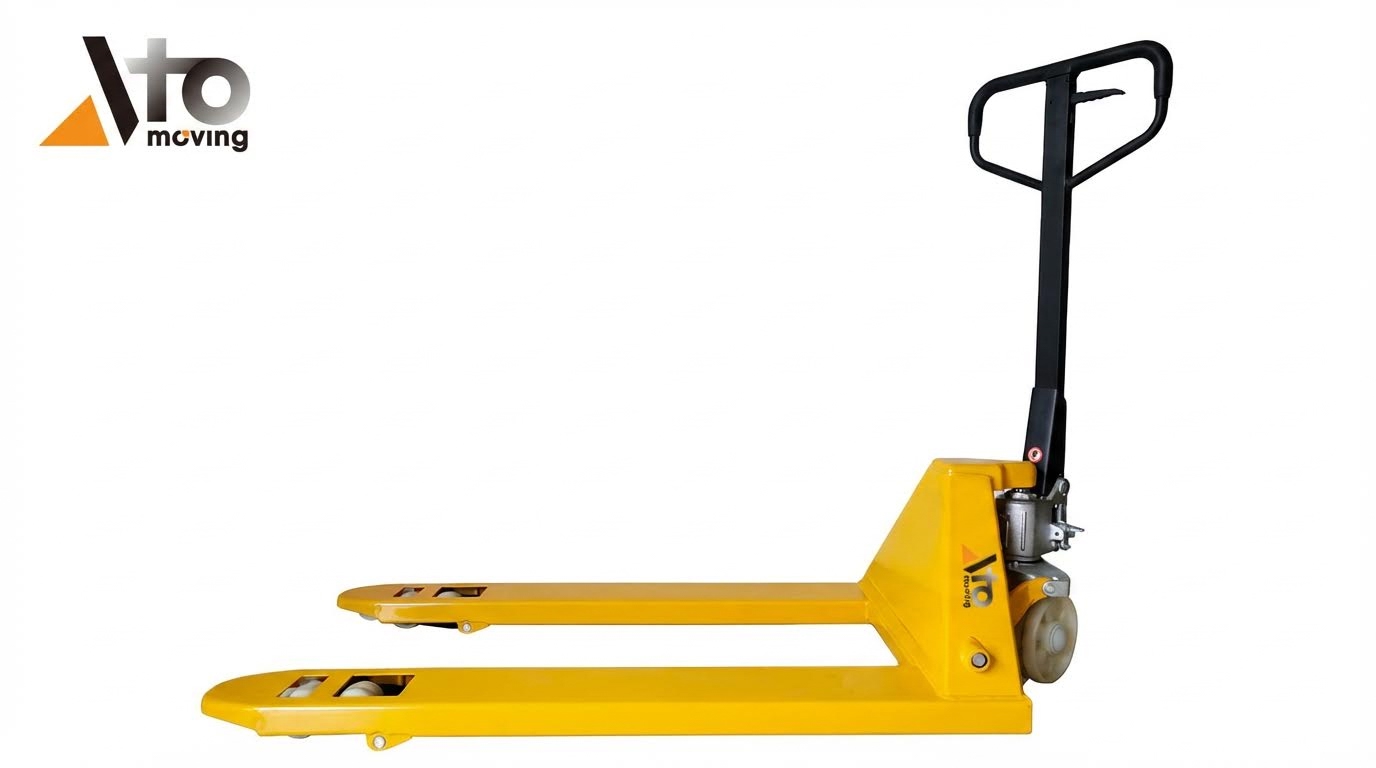
Engineers who study how a pallet jack lifts must link structure, hydraulics, and controls into one picture. The load travels from pallet deck boards into forks, then through the chassis into wheels and the floor. Fork geometry and load center choices set stability margins and turning behavior in tight aisles. Manual and electric architectures add different power paths but use the same basic hydraulic lift principle.
The hydraulic circuit converts short handle strokes into high pressure in a single-acting cylinder. A few bars at the handle can create pressures high enough to raise several tonnes a few centimetres. Check valves, relief valves, and porting keep the lift controlled and safe. Common issues like internal leakage, air ingress, or worn seals reduce lift height, slow response, or prevent holding load.
From a lifecycle view, the most effective plans standardize inspection of forks, wheels, and hydraulic function. Teams check for bent forks, cracked welds, flat-spotted wheels, and fluid leaks before each shift. Periodic bleeding, fluid changes, and seal replacement restore lift performance and extend service life. Electric units add batteries, contactors, and drive motors to the maintenance scope.
Future pallet jacks will still rely on the same basic hydraulic lift, but controls will evolve. Designers already used sensors and simple analytics to watch usage, overload events, and maintenance needs. Digital models of kinematics and hydraulics help optimize how a pallet jack lifts while keeping costs low. The best designs balance higher capability with simple, field-repairable components and clear operating limits.