Facilities that ask how high can a pallet jack lift need clear ranges for manual, electric, and reach-type equipment. This article maps typical lift heights from low-lift pallet jacks up to high-bay reach trucks, then links those heights to stability, mast design, and power limits.
You will see how engineering factors like center of gravity, fork geometry, wheel materials, and duty cycle cap safe lift height in real operations. The guide then explains how to match lift height to racking, clearances, and capacity, before closing with practical selection rules that maintenance, safety, and engineering teams can share.
Key Lift Height Ranges By Pallet Jack Type
Engineers who ask how high can a pallet jack lift must separate low-lift transport trucks from true stacking equipment. Lift height ranges depend strongly on chassis layout, mast design, and stability limits. This section compares manual pallet jacks, high-lift trucks, electric pallet jacks, walkie stackers, and reach trucks so planners can map realistic working heights to racking systems.
Typical Lift Heights For Manual Pallet Jacks
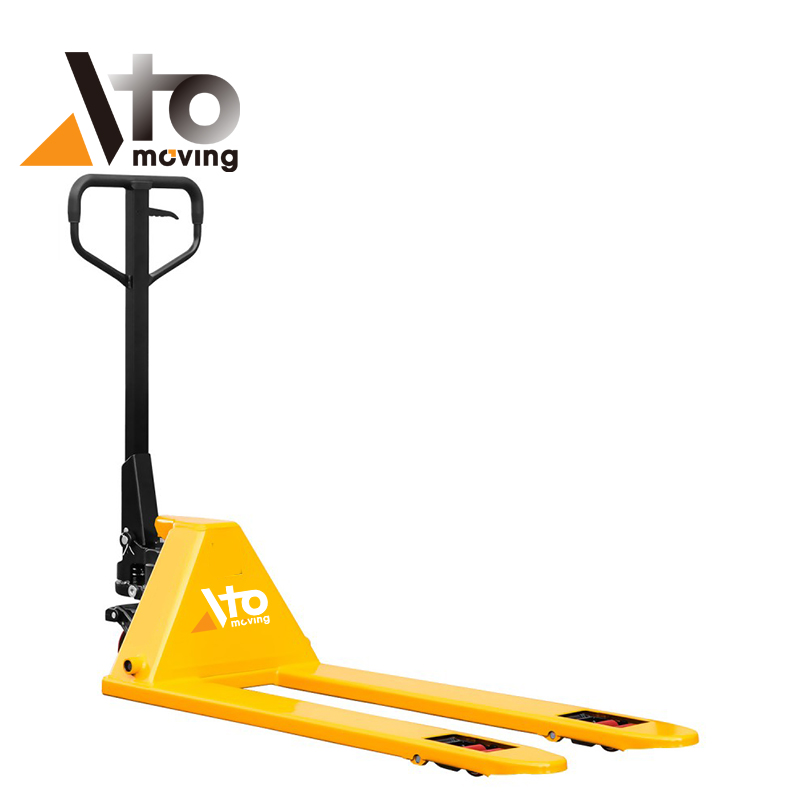
A standard manual pallet jack is a ground-level transport tool, not a stacking device. Typical lowered fork height is about 80–90 mm. Typical raised fork height stays around 200 mm. That small stroke only clears pallet bottom boards and dock plates. In practice, this means a manual jack lifts just high enough for rolling, truck loading, and short transfers. It cannot place pallets into racking or onto high platforms. High-lift manual pallet trucks extend this range and can reach about 800 mm. These models support ergonomic work positioning but still do not reach common first-beam rack levels.
High-Lift Trucks Vs. Manual Stackers
High-lift pallet trucks and manual pallet stackers both answer the question how high can a pallet jack lift for low-bay work. High-lift trucks usually reach up to about 800 mm. They suit feeding workstations, conveyors, and packing benches. Manual pallet stackers use a vertical mast and can reach much higher. Typical models offer maximum lift heights around 1 600 mm. Some designs extend towards 3 000 mm. Load capacity often ranges between 500 kg and 5 000 kg. Manual stackers therefore handle true stacking into low racking. When choosing between them, engineers balance three points:
- Required platform or beam height
- Required capacity at that height
- Operator effort and cycle frequency
For frequent lifts above waist height, manual stackers reduce strain compared with high-lift trucks.
Electric Pallet Jacks And Walkie Stackers
Electric pallet jacks answer how high can a pallet jack lift for high-throughput horizontal moves. Most powered pallet jacks keep lift height low, similar to manual units, around 200–250 mm. They focus on transport, not stacking. Electric high-lift pallet jacks extend to about 800 mm and support ergonomic picking or feeding tasks. Electric walkie stackers add a mast and deliver real stacking heights. Typical walkie stackers lift between 2 000 mm and 4 500 mm. Capacities usually fall between about 1 000 kg and 2 000 kg. Counterbalanced stackers in this group often reach 1 500–4 500 mm. For safe operation, engineers add about 250 mm clearance above the highest shelf to define the required lift height.
Reach Trucks And High-Bay Storage Heights
Reach trucks sit at the top of the answer to how high can a pallet jack lift in warehouse settings. These machines use telescopic masts and pantograph or moving-mast carriages. Typical industrial reach trucks lift from 6 000 mm into the high-bay range. Advanced models reach up to about 12 000 mm in very narrow aisle systems. Rated capacities near 2 500 kg are common at lower heights. Capacity reduces as lift height increases due to stability and mast deflection limits. Compared with walkie stackers, reach trucks offer:
| Aspect | Walkie stacker | Reach truck |
|---|---|---|
| Typical lift range | 2 000–4 500 mm | 6 000–12 000 mm |
| Primary use | Low to mid-bay racks | High-bay storage |
| Operator position | Walking | Standing or seated |
Facility designers use reach trucks when racking heights exceed about 5 000 mm and floor space is tight.
Engineering Factors That Limit Lift Height
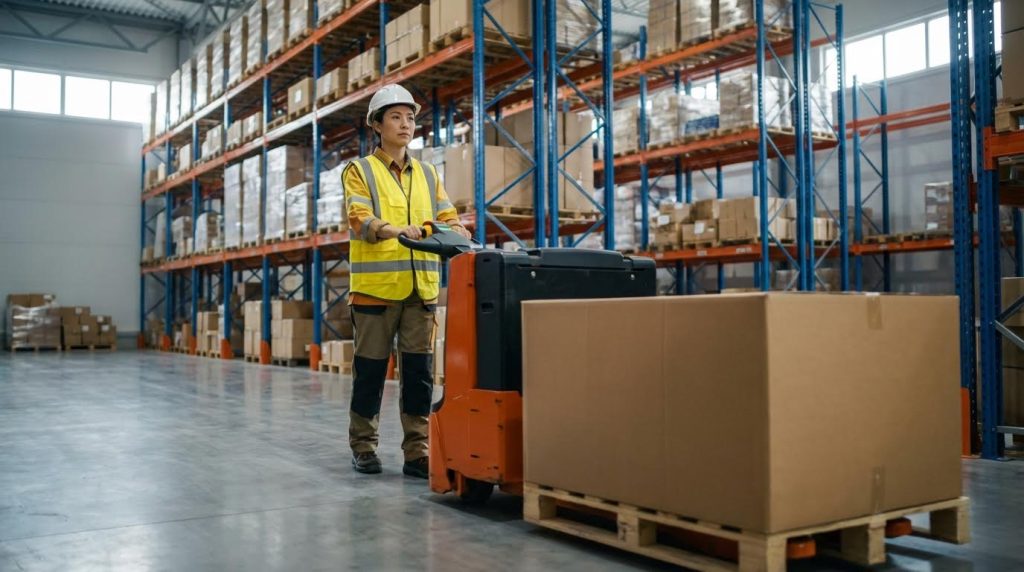
Engineers who ask how high can a pallet jack lift must first understand the limits that physics sets. Lift height is not only a function of mast length. It also depends on stability, fork stiffness, wheel interaction with the floor, and power and duty cycle. Each factor constrains safe height before the truck reaches a tipping or structural limit. The sections below explain these constraints in practical engineering terms.
Stability, Center Of Gravity, And Tipping Risk
Lift height always increases the risk of tipping. As the forks rise, the combined center of gravity of truck and load moves upward and usually forward. The stability triangle of the chassis becomes smaller in relation to this center of gravity.
Engineers check three basic points:
- Horizontal position of the combined center of gravity
- Vertical height of the center of gravity at maximum lift
- Dynamic effects from braking, turning, and uneven floors
Manual pallet jacks with lift around 200 mm to 250 mm keep the center of gravity low and inside the wheelbase. High-lift pallet trucks that reach about 800 mm already need wider legs and outriggers to stay stable. Manual and electric stackers that lift 1 600 mm to 4 500 mm use masts, counterweights, or straddle legs to keep the center of gravity inside a defined stability polygon. OSHA rules required that stacked loads stay stable and secure, so designers also add safety factors for operator error and uneven loading.
Fork Geometry, Mast Design, And Deflection
Fork and mast stiffness set another limit on how high a pallet jack can lift. As lift height increases, elastic deflection under load increases. Excess deflection reduces clearance between pallets and racking beams and can cause binding or load slip.
Key design points include:
- Fork thickness and section shape, which control vertical bending
- Mast rail size and overlap, which control side sway
- Clearances in mast rollers and chains
Standard pallet jacks with 85 mm to 200 mm lift use short, stiff forks and no mast, so deflection is small. High-lift trucks at 800 mm already show more fork tip drop, so engineers limit capacity at the top of stroke. Manual stackers at about 1 600 mm and electric stackers up to 4 500 mm rely on multi-stage masts. At these heights, designers check deflection under rated load and apply limits so forks still enter pallets cleanly. Reach trucks that work near 12 000 mm use deeper mast sections, reach mechanisms, and strict derating of capacity with height.
Wheel Materials, Floor Conditions, And Terrain
Wheel and floor interaction also restrict how high a pallet jack can lift safely. Higher loads on small contact patches increase floor pressure and rolling resistance. If the floor is rough or sloped, the risk of uncontrolled movement rises as the load gets higher.
Polyurethane and nylon wheels became common on indoor pallet trucks and stackers. They offer low rolling resistance, good load capacity, and protect concrete floors. Yet they work best on smooth, level surfaces. On cracked or uneven floors, local point loads increase and can damage wheels or cause shocks that destabilize tall loads.
Manual pallet stackers were usually rated for smooth indoor concrete. All-terrain pallet trucks use larger pneumatic or semi-pneumatic wheels and lower lift heights, often near 300 mm, to keep stability on rough ground. Engineers also check floor flatness and levelness when they set maximum working height. Poor floors can force lower safe lift even if the mast could reach higher.
Power Source, Duty Cycle, And Thermal Limits
Power and duty cycle do not only affect how fast a pallet jack lifts. They also limit how often it can reach full height without overheating or losing voltage. Manual units rely on operator input, so duty cycle is self-limiting. Electric units need careful thermal design.
- Motor heating during repeated full-height lifts
- Battery voltage drop at high current draw
- Hydraulic oil temperature during long duty cycles
Electric high-lift pallet jacks that raise loads to about 800 mm use compact pumps and motors. These parts are sized for short, frequent cycles. Electric stackers and walkie stackers that reach 2 000 mm to 4 500 mm use larger motors, often around 2 kilowatts, and batteries such as 24 volt units with higher ampere-hour ratings. Engineers rate these machines for a defined duty cycle so components stay within thermal limits across a shift. If users exceed that pattern with constant full-height lifting, lift speed drops and component life shortens. This is another indirect limit on how high and how often a pallet jack can lift in real operations.
Selecting The Right Lift Height For Your Facility

Lift height choice starts with a clear answer to one question. How high can a pallet jack lift in your layout without risking damage or downtime. Engineers must link lift height to racking, load type, and travel path. Correct selection reduces cycle time, protects structures, and keeps operators safe.
Matching Lift Height To Racking And Clearance
Start from the top beam level, then work backward to pallet jack lift height. For pallet stackers, add at least 250 mm above shelf level for fork entry and pallet withdrawal. This margin comes from common safety practice in warehouse design. It gives space for pallet deflection and operator steering error.
Typical ranges help frame decisions. Manual pallet stackers usually reach 1600 mm to about 3000 mm. Electric walkie stackers often cover 2000 mm to 4500 mm. Reach trucks can extend up to roughly 12000 mm in high-bay storage. Standard pallet jacks that only raise 85 mm to 200 mm suit floor-level moves, not racking.
When planning how high a pallet jack can lift in a given aisle, also check overhead items. Measure sprinkler mains, lighting, and mezzanines. Keep a fixed vertical safety buffer between the highest pallet position and these elements. Mark maximum lift positions on uprights to guide operators.
Capacity, Load Size, And Safety Margins
Lift height and capacity interact. Rated capacity often drops as lift height grows, especially on stackers and reach trucks. Taller masts shift the load center and raise tipping risk. Engineers must read the load chart, not only the nameplate capacity.
Typical capacity bands are:
- manual pallet stackers: about 500 kg to 5000 kg
- electric stackers: about 800 kg to 2000 kg
- high-lift pallet trucks: often near 1000 kg to 1500 kg at 800 mm
Large or tall loads worsen the effect of height. A light but tall crate can behave like a heavier compact pallet because the center of gravity moves up. Use conservative limits. In multi-shift work, staying below roughly 80% of rated capacity reduces hydraulic and structural fatigue.
Answering how high can a pallet jack lift safely means checking three items together. Rated lift height, derated capacity at that height, and actual load geometry. If one factor is marginal, lower the allowed stacking level or change equipment type.
Digital Tools, Twins, And Lifecycle Costing
Digital tools make lift height selection more precise. Simple 2D layout software can test aisle widths, turning radii, and racking heights. More advanced sites use digital twins to simulate real traffic, queue times, and lift cycles per hour.
These models answer how high a pallet jack can lift before it slows the system. They show where extra lift height adds value and where it just increases cost. For example, raising top beam levels by 500 mm might add one extra pallet position per bay. A digital twin can compare that gain with longer lift times and higher energy use.
Lifecycle costing should include:
- purchase price difference between manual, electric, and reach equipment
- energy or charging cost per shift at higher lifts
- maintenance on masts, chains, and hydraulics at full extension
- training and licensing needs for powered units
In many warehouses, a mix works best. Low-lift pallet jacks handle dock work. Stackers or reach trucks handle higher levels where their cost per lifted metre is justified.
Safety, Training, And Compliance Considerations
Safety rules strongly shape the real answer to how high a pallet jack can lift in daily use. OSHA guidance required stacked loads to stay stable and secure. Operators should not mix pallet sizes in one stack or stand pallets on edge. Those practices increase collapse risk as height grows.
Key controls include:
- never exceed the manufacturer’s rated capacity at any height
- ensure forks fully enter the pallet before lifting
- keep speeds low when moving with elevated loads
- inspect wheels, forks, and hydraulics before shifts
Training is essential for both manual and electric units. Operators must understand how center of gravity shifts with lift height. They also need to know the site’s maximum allowed stacking tier and any restricted aisles. PPE such as safety footwear and eye protection reduces injury severity if a load shifts.
Documented procedures should link equipment type to allowed rack levels. For example, only reach trucks may serve the top two tiers. Manual high-lift trucks may only work at ground-level staging. Clear rules keep theoretical maximum lift heights from turning into unsafe practices.
Summary And Practical Selection Guidelines
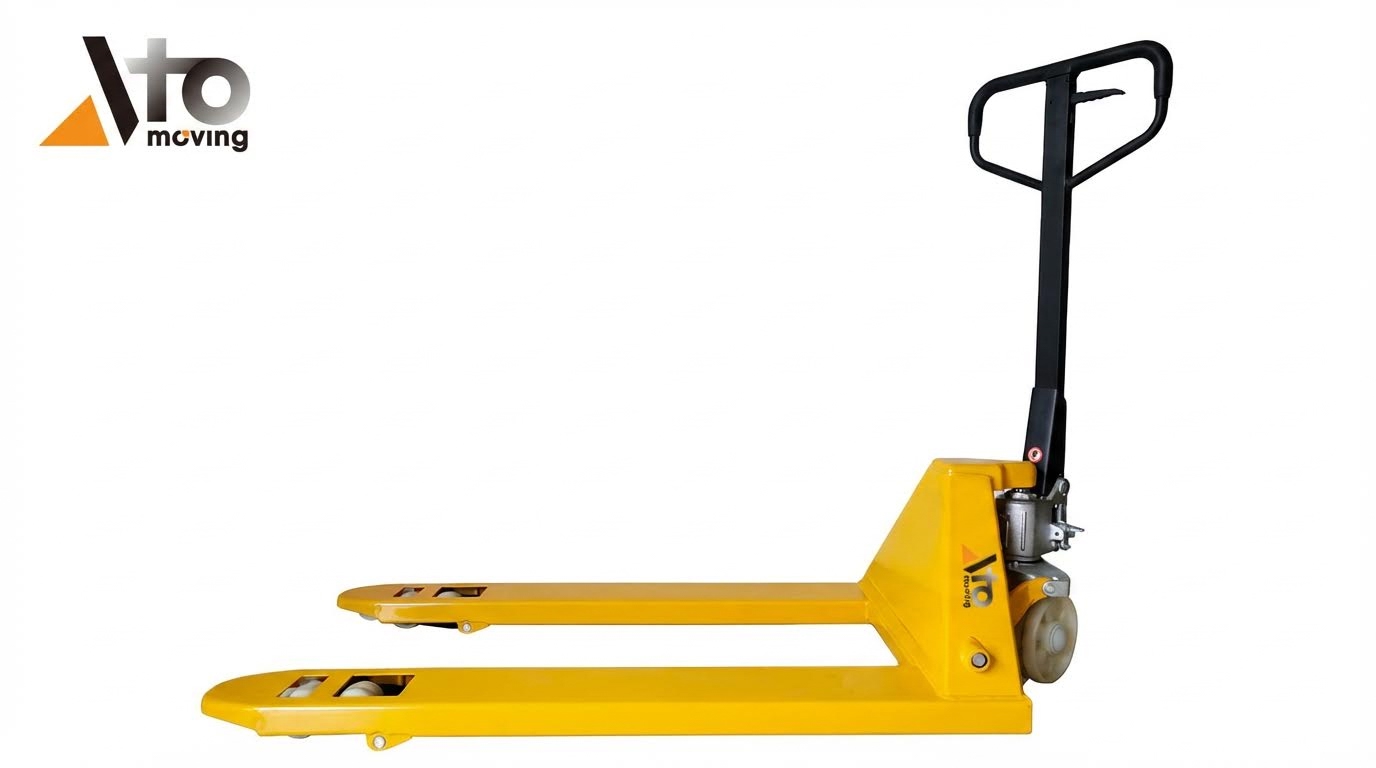
The core question in most projects is simple: how high can a pallet jack lift while staying safe and efficient. The answer depends on truck type, load, and building limits. Manual pallet jacks usually lift only 85–200 mm, enough for transport. High-lift manual trucks reach about 800 mm, while manual stackers reach roughly 1 600–3 000 mm. Electric stackers and walkie pallet truck reach 2 000–4 500 mm, and reach trucks can approach 12 000 mm in high-bay storage.
When engineers decide how high can a pallet jack lift in a given facility, they should link lift height to shelf level plus clearance. A common rule is shelf height plus at least 250 mm for fork entry and safe handling. Higher lift height always reduces residual capacity, so designers must check the capacity chart at the target height, not just the nominal rating. Polyurethane or nylon wheels work best on smooth concrete and limit outdoor use.
Practical selection works in three steps. First, define maximum required handling height by the top racking beam. Second, confirm floor flatness, aisle width, and turning space. Third, choose manual equipment for low lift and short distances, and electric stackers or reach trucks for repeated lifts above head height. Future upgrades will likely add more sensors, digital twins, and access control, but basic rules will stay constant: stable loads, respected capacities, trained operators, and documented inspections.