Facilities that ask how should a lift operator travel with a full pallet need clear, repeatable rules. This article explains the core engineering principles of pallet load stability, including load center, capacity ratings, and the stability triangle. It then links those concepts to real travel practices on forklifts and pallet trucks, based on OSHA 1910.178 and industry guidance.
You will see how fork position, mast tilt, travel height, and route conditions affect tipover risk and falling loads. The article then covers ramps, docks, trailers, and tight aisles, plus typical operator errors and how to prevent them. The final section summarizes safe travel practices and outlines practical next steps for training, procedures, and equipment selection, including where manual pallet jack and walkie pallet truck solutions fit into a controlled material-handling system.
Core Principles Of Pallet Load Stability
Pallet load stability decides how safely a lift operator can travel with a full pallet. Poor pallets, loose wrapping, or wrong load centers turn routine travel into a tipover risk. This section explains the engineering basics that link pallet condition, center of gravity, and forklift capacity to real travel rules on the floor. It gives operators and supervisors a clear framework to decide how a lift should move with a loaded pallet and still comply with OSHA 1910.178.
Understanding Load Center And Capacity Ratings
Forklift capacity ratings always assume a specific load center. Typical counterbalance trucks used a 600 millimetre load center, measured from the fork face to the load’s center of gravity. If the load center moves forward because the pallet is longer, the load is stacked high, or the weight shifts, the effective capacity drops fast.
Operators should read the data plate before moving a full pallet. It states rated capacity, rated load center, and sometimes derated capacities for attachments. When asking how should a lift operator travel with a full pallet, the first check is simple. Confirm the actual load weight and its load center stay within that plate rating. If the pallet is oversized or off-center, the truck might be overloaded even when the scale weight looks acceptable.
Pallet Condition, Packaging, And Load Securing
Even a correctly rated load can fail if the pallet or packaging is weak. Broken deck boards, loose stringers, or missing blocks allow fork tips to punch through or twist the pallet. That movement shifts the center of gravity during travel and can cause sudden loss of stability.
Before moving a full pallet, operators should:
- Reject pallets with broken boards, pulled nails, or crushed blocks.
- Check that shrink wrap, straps, or banding hold the unit load tight.
- Refuse loose cartons stacked in columns without restraint.
- Place the heaviest layers at the bottom of the stack.
A stable unit load lets the operator keep the mast slightly back and travel with the forks low without product shifting. This reduces steering corrections and braking shocks, both of which can move an unsecured load toward the fork tips.
Center Of Gravity, Stability Triangle, And Tipover Risk
Every loaded forklift has a combined center of gravity. The truck frame and the pallet load form one system. This point must stay inside the “stability triangle” formed by the two front wheels and the center of the rear axle. When it moves outside, the truck tips.
Several actions move this point toward the triangle edge:
- Raising the load, which lifts the center of gravity.
- Tilting the mast forward, which shifts it toward the fork tips.
- Braking hard or turning fast, which creates lateral and longitudinal forces.
To travel safely with a full pallet, operators keep the forks low, usually 100 to 150 millimetres above the floor. They tilt the mast slightly back so the load rests against the backrest. They avoid sharp turns, sudden stops, and side slopes. These habits keep the combined center of gravity deep inside the stability triangle, even when the pallet approaches rated capacity.
Regulatory Requirements For Load Handling (OSHA 1910.178)
OSHA 1910.178 set clear rules for powered industrial trucks. For load handling, it required that loads be arranged safely and secured before travel. The standard required operators to center loads as nearly as possible and place the heaviest part nearest the front wheels. It also prohibited overloading beyond the truck’s rated capacity.
OSHA guidance and appendices explained how should a lift operator travel with a full pallet in practice. Required practices included:
- Travel with the load low, never at full lift height.
- Keep the mast tilted back, not forward, during travel.
- Do not raise or lower loads while the truck is moving.
- Use extra care near rated capacity or with off-center loads.
The regulation also addressed conditions such as dockboards, trailers, and high tiering. It required checks for floor strength and overhead clearance before moving with a raised pallet. Together, these rules convert basic physics into enforceable expectations for daily forklift travel.
Traveling Safely With Loaded Pallets On Forklifts
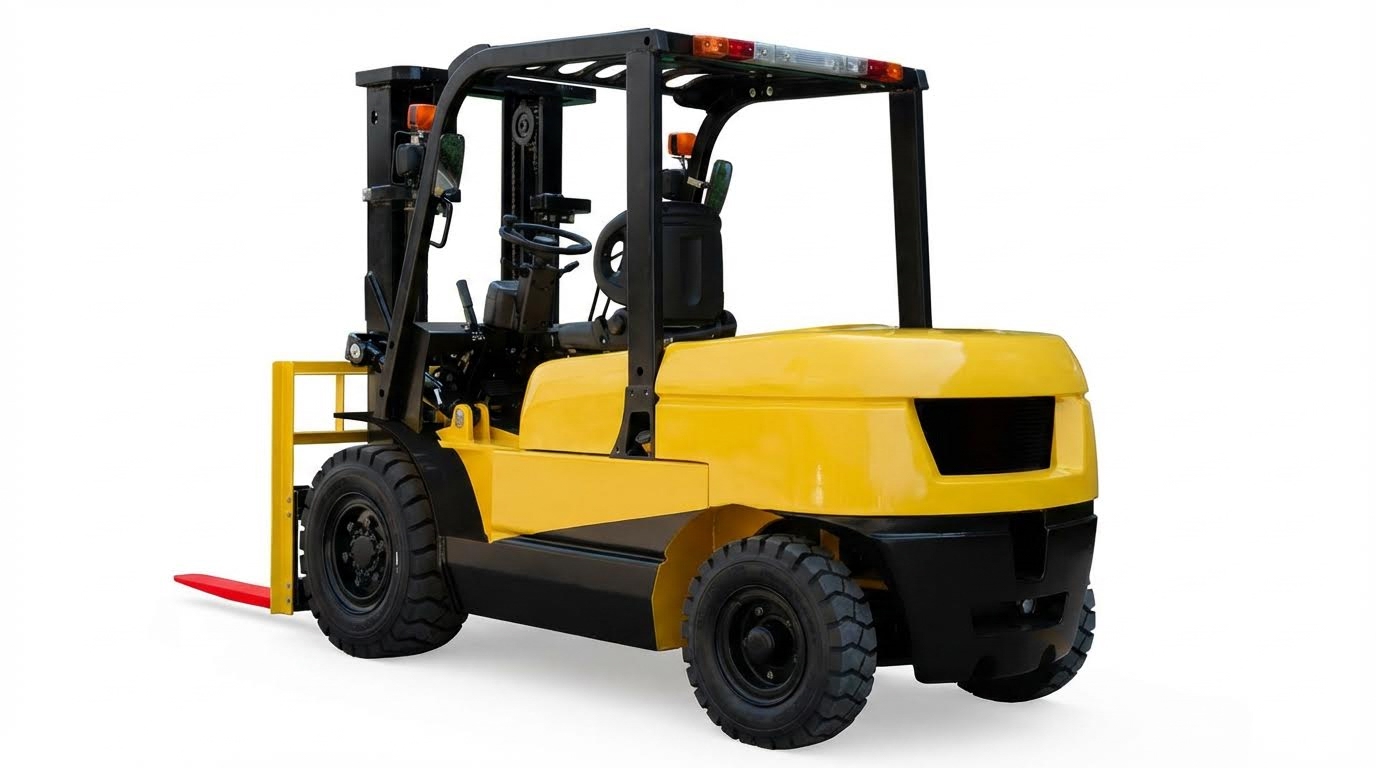
When people ask how should a lift operator travel with a full pallet, the answer links directly to load stability, center of gravity, and OSHA 1910.178 rules. Safe travel starts before the truck moves and continues until the pallet is set down and forks are clear. This section explains how fork position, mast tilt, travel height, approach, and surface conditions affect tipover risk. It also covers how to handle oversized and off-center pallets without exceeding rated capacity.
Correct Fork Position, Mast Tilt, And Travel Height
A lift operator should travel with a full pallet low, stable, and close to the carriage. Keep the forks just above the floor, typically 10 to 15 centimetres, to maintain a low combined center of gravity. This height clears small floor defects yet limits forward tipping leverage. Always center the pallet between the forks and spread the forks as wide as the pallet allows.
Before moving, tilt the mast slightly back so the load rests against the backrest extension. This reduces the load distance from the front axle and improves stability inside the stability triangle. Never travel with the mast tilted forward because that shifts the center of gravity outward and increases tipover risk. When visibility is blocked, drive in reverse rather than raising the pallet higher.
Key travel rules for a full pallet include:
- Do not exceed the rated capacity at the specified load center.
- Keep the heaviest part of the load toward the carriage.
- Avoid sharp turns or sudden stops with an elevated load.
- Adjust speed to surface conditions and aisle congestion.
Approaching, Lifting, And Lowering Palletized Loads
Safe travel begins with the approach. Drive straight toward the pallet and stop about 20 to 30 centimetres in front of it. Level the forks at entry height and ensure the truck is square to the load. Insert the forks fully, at least two thirds of the pallet length, but avoid punching through to the opposite side when pallets are tightly stacked.
Once the forks are fully engaged, center the load between the forks and adjust fork spacing if needed. Tilt the mast back slightly to bring the pallet against the backrest. Then lift only high enough to clear the lower tier or floor, checking overhead clearance before raising. Return hydraulic controls to neutral before traveling.
When lowering, stop the truck first. Return the mast to vertical, then lower the pallet to about 15 to 20 centimetres above the floor. Move slowly to position, stop again, then lower fully with the mast vertical so the load sets flat. Withdraw the forks straight out at low height to avoid dragging or dislodging the pallet.
Operating On Ramps, Docks, Trailers, And Uneven Floors
Ramps and loading docks add extra instability for a full pallet. On slopes, keep the load upgrade at all times. Drive forward up the ramp with the load in front, and reverse down the ramp with the load still facing upgrade. Never turn on a ramp because lateral forces can push the center of gravity outside the stability triangle.
At docks and trailers, confirm truck brakes are set and wheel chocks are in place before entry. Check dockboards or bridge plates for rated capacity and secure them against movement. Drive straight across dockboards without side loading. Inside trailers, inspect the floor for damage and verify headroom for mast and backrest. Use headlights and sound the horn when crossing the threshold.
On uneven or damaged floors, reduce speed and keep the pallet as low as possible. Avoid potholes, gaps, or sudden level changes. If vibration is high, stop and recheck load securing such as wrapping or banding. Unstable surfaces make off-center or high loads much more likely to shift or fall.
Managing Oversized, Off-Center, And High-Tier Loads
Oversized and off-center pallets change the effective load center and reduce usable capacity. Always compare the actual load center distance with the rating on the data plate. If the center of gravity sits farther out than the rated value, treat the capacity as reduced and adjust the load weight accordingly. Keep the heaviest side of the pallet toward the carriage and use the backrest to restrain it.
For off-center loads that cannot be corrected, lower travel speed and avoid rough surfaces and tight turns. Keep the mast only slightly tilted back to avoid excessive height at the front edge. If stability still looks doubtful, split the load or use alternative methods rather than forcing the move.
For high tier stacking, place heavier pallets on lower levels and lighter ones on top. As mast height increases, reduce the allowed load weight to keep the combined center of gravity within the stability triangle. Lift slowly, check overhead obstructions, and use minimal forward tilt when placing the pallet. After depositing, retract, lower the forks to travel height, and only then reposition the truck. This disciplined sequence directly answers how should a lift operator travel with a full pallet while keeping both truck and load stable.
Best Practices For Manual And Powered Pallet Trucks

This section explains how a lift operator should travel with a full pallet when using manual and powered pallet trucks. It focuses on inspection, load placement, travel technique, and typical operator errors. The goal is stable loads, predictable handling, and compliance with safety rules in warehouses, docks, and trailers.
Pre-Use Inspection, Capacity, And Component Checks
Operators should confirm that the truck can safely move a full pallet before travel. A quick, structured inspection reduces failure risk.
- Check the data plate and confirm load capacity is higher than pallet weight.
- Inspect forks for cracks, bent tips, or worn heel sections.
- Check wheels and rollers for flat spots, broken edges, or debris jams.
- On powered units, test brakes, steering, horn, and emergency stop.
Hydraulic systems on manual trucks should lift smoothly without jerks or visible leaks. Electric models should show normal battery charge and respond correctly to travel and lift commands. Any defect that affects steering, braking, or lifting means the truck must be removed from service until repaired.
Load Placement, Fork Engagement, And Travel Technique
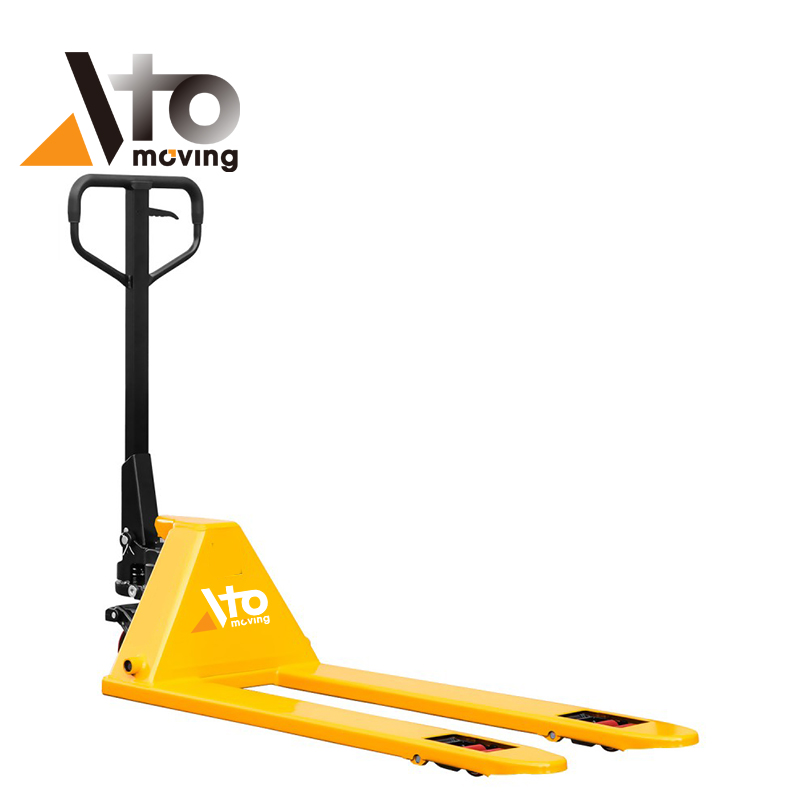
Stable load placement is the core answer to “how should a lift operator travel with a full pallet” on pallet trucks. The pallet must sit square on the forks with even support.
| Aspect | Good practice |
|---|---|
| Fork insertion | Insert forks fully, at least 80% of pallet length |
| Load centering | Center weight between forks; avoid side overhang |
| Height while traveling | Keep forks about 2–5 cm above floor |
| Load securing | Use stretch wrap or straps for unstable goods |
The operator should verify pallet boards and stringers are not broken or loose. Damaged pallets increase tipping and product loss. With a full pallet, the operator should travel at walking speed, avoid sudden stops, and plan turns early. For manual trucks, pushing gives better control and reduces strain; pulling is only acceptable in very tight spaces where pushing is not possible.
Ramps, Slopes, And Confined Aisle Navigation
Ramps and tight aisles change how a lift operator should travel with a full pallet. Gravity and limited escape paths increase risk.
On manual pallet trucks, operators should always go down slopes with the truck leading and the operator uphill. This position keeps the load from rolling over the operator. On powered pallet trucks, the operator must follow the manufacturer’s slope rules, which usually limit gradient and specify travel direction.
Turning on ramps is unsafe because side forces can overload wheels and shift the center of gravity. Operators should travel straight up or down and only turn on level ground. In confined aisles, they should reduce speed, keep forks low, and use short steering corrections instead of sharp swings. Clear sight lines are critical; if the full pallet blocks view, operators should travel in reverse when safe and use a spotter in blind zones.
Common Operator Errors And How To Prevent Them
Common errors often answer the question “how should a lift operator travel with a full pallet” by showing what not to do. Typical mistakes include overloading, poor weight distribution, and unsafe riding.
- Overloading the truck, which lengthens stopping distance and strains hydraulics.
- Carrying pallets with broken boards or loose products that shift under vibration.
- Pulling heavy loads downhill, which can drag the operator.
- Riding on the pallet or on a manual truck, which the design does not support.
Facilities can prevent these errors with simple controls. Post capacity limits at workstations and include weight checks in job instructions. Train operators to refuse unsafe pallets and to rewrap or band loose loads. Reinforce rules that manual trucks are for walking use only and that powered walkies carry loads, not people. Regular supervision and near-miss reviews help keep these practices consistent on every shift.
Summary Of Safe Travel Practices And Next Steps
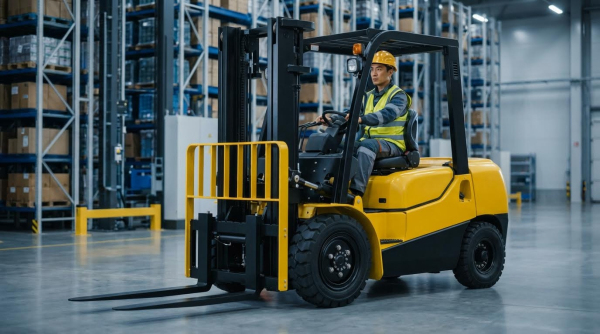
Lift planners and supervisors often ask how should a lift operator travel with a full pallet. The answer links load stability, equipment limits, and OSHA 1910.178 rules. Safe travel depends on low load height, correct mast tilt, and controlled speed. Poor practice quickly turns a stable truck into a tipover risk.
With a full pallet, operators should travel with forks low, typically 10–20 centimetres above the floor. The mast should tilt slightly back so the pallet rests on the backrest. The load must stay centred between the forks, with the heaviest part closest to the carriage. Operators should avoid sharp turns, sudden braking, and side slopes while loaded.
Facilities that standardised these rules reduced product damage and near-miss events. Key habits include:
- Approach square, insert forks fully, then lift and tilt back before travel.
- Keep travel speed low and horn use high at crossings and trailer doors.
- Refuse damaged pallets or unsecured loads until corrected.
Next steps for safety teams are clear. Embed these travel rules into site-specific training and refresher checks. Align forklift data plates, pallet standards, and route design so operators never need to improvise. Use near-miss reports, telematics data, and periodic ride‑along audits to close gaps and guide future equipment choices, including where Atomoving solutions fit into the handling strategy.