Material handling teams asking what is the lifting capacity of the pallet jack need more than a single number. They need to understand how rated capacity, load center, and dynamic effects interact with pallet design and real warehouse conditions across the full operating envelope described in this guide.
This article explains core concepts of hydraulic pallet truck load ratings, then links them to standards and safety engineering requirements such as EN ISO 3691-5. It shows how to read capacity labels, apply derating, and match pallet jacks to pallet types, load geometry, and duty cycles. The final section turns these engineering principles into clear, field-ready rules for safe capacity use so operations, maintenance, and safety teams can work from the same data-driven standard.
Core Concepts Of Pallet Jack Load Ratings
Engineers who ask what is the lifting capacity of the pallet jack need a clear view of how ratings, load centers, and dynamic effects interact. Capacity is never a single number in isolation. It depends on fork geometry, pallet design, and how the operator moves the load. This section explains how to read capacity labels, separate static from dynamic limits, and understand the real risks of overloading in daily warehouse work.
Rated Capacity, Load Center, And Dynamic Loads
Rated capacity answers the question what is the lifting capacity of the pallet jack under defined test conditions. Manufacturers state this value in kilograms for a specific load center and fork length. Typical manual pallet jacks are rated between 1,600 kg and 3,500 kg. Electric pallet trucks can reach 5,000 kg with a 600 mm load center. The load center is the horizontal distance from the fork heel to the load’s center of gravity. If the center of gravity moves forward, the effective moment on the forks rises and usable capacity falls. Dynamic loads appear when the truck starts, stops, or turns. These motions increase forces above the static weight due to inertia. As a rule of thumb, engineers often keep a 10–20% margin below rated capacity to allow for dynamic effects and real-world load shifts.
| Truck type | Rated capacity | Typical load center |
|---|---|---|
| Manual pallet jack | 2,500–3,000 kg | 500–600 mm |
| Stand-on electric pallet truck | 2,000–5,000 kg | 600 mm |
| Heavy-duty manual jack | 3,500 kg | 500 mm |
Reading Capacity Labels And Nameplates Correctly
Every pallet jack must carry a durable capacity label or nameplate. This plate usually states:
- Rated capacity in kilograms or tonnes
- Reference load center distance in millimetres
- Model or series designation
- Serial number and year of manufacture
When users ask what is the lifting capacity of the pallet jack, they must read both the weight and the load center. A truck marked “2,500 kg @ 600 mm” does not guarantee 2,500 kg at a 800 mm load center. If forks longer than standard are fitted, the original nameplate may no longer be valid. Engineers should verify that any attachments, special forks, or integrated scales have updated capacity information. If the plate is missing, damaged, or unreadable, the truck should be removed from service until the rating is confirmed and a replacement plate is installed.
Static Vs. Dynamic Capacity Of Pallets And Jacks
Static capacity describes how much weight a pallet or jack structure can support while stationary. Dynamic capacity refers to the safe load while the unit moves, turns, or brakes. For pallets, static capacity on a flat floor can be significantly higher than dynamic capacity during transport. For pallet jacks, the published rating is effectively a dynamic rating for normal travel on level ground with a stable load. Engineers should still distinguish three cases:
- Static support on level floor
- Travel on level floor
- Operation on slopes or uneven surfaces
On slopes, effective forces increase due to gravity components along the ramp and higher braking loads. Rough floors create impact loads on wheels and forks. These effects reduce the practical safe load below the nominal rating. When combining a pallet and a jack, the limiting factor is the lower of the two dynamic capacities, not the higher one.
Consequences Of Overloading In Real Operations
Overloading goes beyond simple equipment damage. It changes the entire risk profile of a warehouse. Main consequences include:
- Fork and chassis deformation, which reduces ground clearance and increases scraping
- Hydraulic overload, leading to seal failure and sudden loss of lift
- Wheel and bearing failure, especially on polyurethane rollers under point loads
- Longer stopping distances and poor control on slopes
From a structural view, loads above about 100–110% of rating can push stresses beyond yield in critical sections. Repeated minor overloads also cause fatigue cracks, especially around fork heels and pivot points. In operations, unstable heavy loads increase the chance of tip-over, crushed feet, and product loss. A simple rule is to size pallet jacks so typical loads use only 60–80% of rated capacity. This margin improves safety, extends service life, and keeps handling forces within ergonomic limits for operators.
Standards, Compliance, And Safety Engineering
This section explains how standards define what is the lifting capacity of the pallet jack in real use. It links rated capacity, labeling rules, and safety design so engineers can answer capacity questions with evidence, not guesswork.
EN 1757-2, EN ISO 3691-5, And Related Truck Standards
EN 1757-2:2001 applied to pedestrian pallet trucks with lift heights up to 300 millimetres and rated capacities up to 2,000 kilograms. It defined how to test and declare the lifting capacity of the pallet jack under controlled conditions. EN ISO 3691-5:2009 replaced it and broadened safety requirements and verification methods for pedestrian-propelled trucks. These standards assume the rated load is evenly spread on the forks and the load centre stays on the truck centreline.
Engineers use these documents to answer capacity questions such as “what is the lifting capacity of the pallet jack in this duty cycle?”. They check:
- Rated capacity and test load factors.
- Permitted load centre distances.
- Structural and functional test procedures.
Other standards, such as visibility and industrial truck series standards, complement them for specific truck types and operating risks.
Labeling, Marking, And Instruction Manual Requirements
Capacity labels turn standard test data into clear information for operators. The nameplate normally shows rated capacity in kilograms, load centre distance in millimetres, and sometimes a simple load diagram. This tells the user what is the lifting capacity of the pallet jack for a standard, centred load.
Standards require that markings:
- Are durable and readable at the operator position.
- Use SI units and unambiguous symbols.
- Identify model, serial number, and year of manufacture.
The instruction handbook must repeat this data and add limits for uneven loads, ramps, and special environments. It also explains that off-centre loads or extended forks reduce usable capacity even if the label value is not exceeded. Clear “information for use” reduces the gap between tested capacity and real-world safe capacity.
Design Measures For Crushing, Shearing, And Impact Hazards
Standards do not stop at rated load values. They also require design measures that keep the rated capacity safe in daily use. Crushing and shearing hazards appear near steering linkages, tillers, and fork tips when the truck moves or lifts.
- Guarded or recessed moving parts around the operator zone.
- Limited gaps where feet or hands could be trapped.
- Rounded edges and controlled fork tip geometry to reduce impact severity.
Hydraulic systems must withstand test pressures above working levels without burst or sudden drop. Structural parts such as forks, frames, and axles use high-strength steels sized for dynamic loads and impact factors. This ensures that when a truck operates at its rated lifting capacity, it still keeps enough safety margin against deformation and fracture.
Parking Brakes, Immobilization, And Stability On Slopes
Standards treat immobilization as a separate hazard because pallet trucks can roll even when not lifting. Parking brakes and wheel chocks keep the truck still during loading, unloading, and parking. For hand pallet jacks, this can be a mechanical parking brake or a controlled lowering valve that avoids sudden motion.
On slopes and ramps, the effective safe capacity is lower than the nameplate value. The load shifts and increases the overturning moment around the wheels. Standards therefore require tests on gradients and specify performance for service and parking brakes.
Engineers should apply simple rules in risk assessments:
- Keep travel on slopes as short and shallow as possible.
- Use lower practical loads than the rated lifting capacity when gradients or rough floors exist.
- Orient loads so the heaviest side faces uphill to improve stability.
These measures link the labeled capacity to real stability, so the answer to “what is the lifting capacity of the pallet jack here?” always includes floor slope and stopping ability, not just a number on the plate.
Applying Load Ratings In Equipment Selection And Use
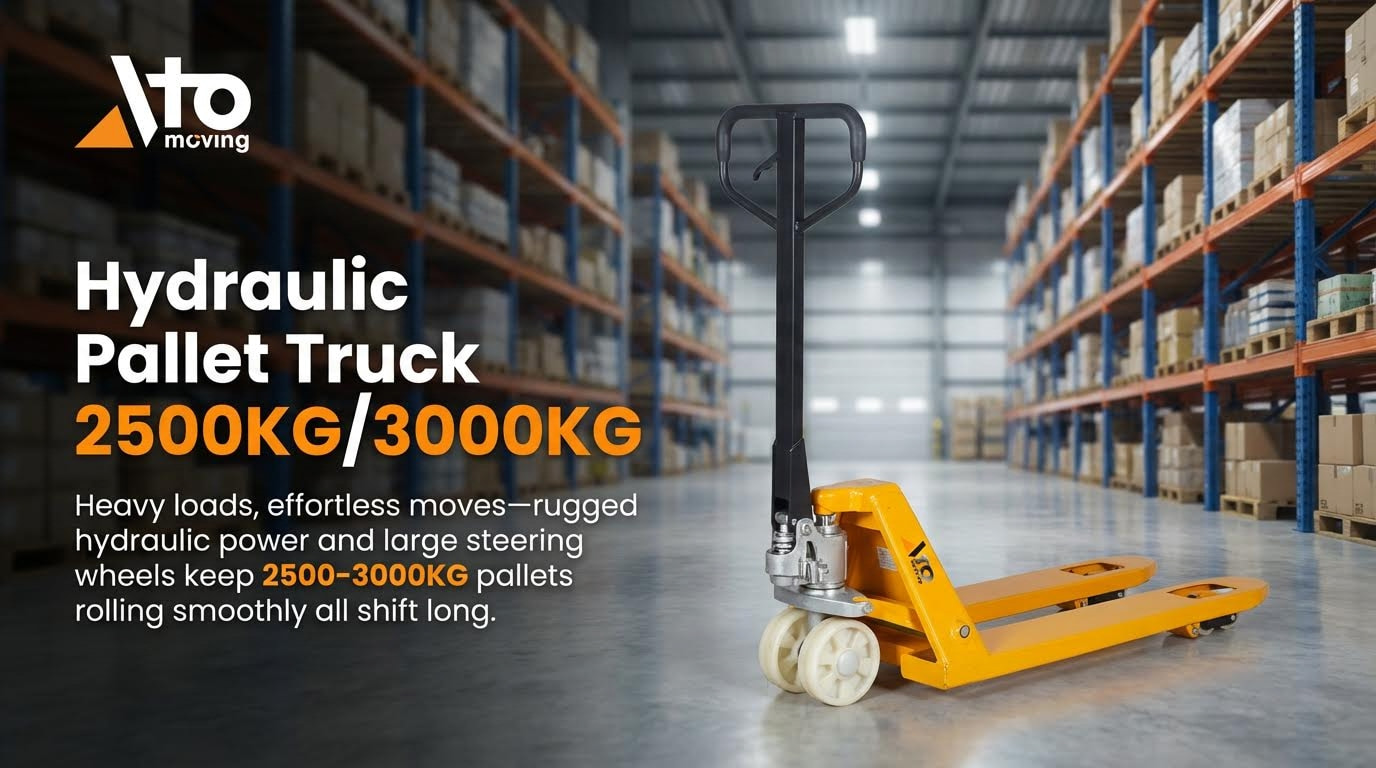
Engineering teams often ask what is the lifting capacity of the manual pallet jack for a given task. The answer depends on pallet type, load geometry, environment, and duty cycle. This section explains how to apply rated capacity data in real operations. It links model numbers, load centers, and derating rules to lifecycle cost and reliability decisions.
Matching Pallet Jacks To Pallet Types And Load Geometry
The lifting capacity of the pallet jack is only valid when the pallet and load geometry match the design assumptions. Standard manual jacks rated around 2,500–3,000 kilograms suit common 1,150 millimetre fork length and EUR/ISO pallets. Wider or longer pallets shift the centre of gravity and can reduce effective capacity. Point loads from machinery feet or steel coils also stress forks more than uniform carton loads.
When matching jack to pallet, check three items:
- Fork length versus pallet entry depth
- Fork width versus pallet opening and stringer spacing
- Wheel type versus floor condition and noise limits
Dynamic loads during turning and braking increase fork and axle stresses. For heavy or tall, unstable loads, select a higher capacity class than the theoretical mass requires. This keeps stresses within the elastic range and reduces frame fatigue.
Interpreting Model Numbers, Load Centers, And Options
Model numbers often encode what is the lifting capacity of the pallet jack. For example, P1.6 and P2.2 indicate 1,600 and 2,200 kilogram dynamic capacity. Electric CBD series trucks use 2,000–5,000 kilogram ratings at a 600 millimetre load centre. The load centre is the horizontal distance from the fork heel to the load’s centre of gravity. If the actual centre exceeds the rated value, effective capacity falls.
Engineers should read data plates and manuals together. Key items include:
| Item | Typical value |
|---|---|
| Rated capacity | 2,000–5,000 kg |
| Load centre | 500–600 mm |
| Lift height | 85–200 mm |
| Truck weight | 50–750 kg |
Suffix letters describe options such as heat‑resistant wheels, corrosion‑resistant coatings, or reinforced forks. These features do not increase rated capacity. They only improve performance in specific environments.
Capacity Derating For Multi-Shift And Harsh Environments
Rated capacity assumes normal duty and moderate conditions. Multi‑shift work, high temperatures, chemicals, or rough floors require capacity derating. For example, guidance for P1.6 and P2.2 series advised staying below about 80 percent of rated capacity in multi‑shift use. This margin reduces hydraulic fatigue and axle wear. Overloading by 10 percent or more increased risk of seal failure and frame distortion.
For harsh environments, engineers should consider:
- Lower working capacity target versus nameplate rating
- Higher hardness axles and wheels for impact loads
- Heat‑resistant or corrosion‑resistant options for hot or wet areas
Derating is especially important for tall or offset loads. Longer load centres create higher bending moments at the fork heel. A conservative rule is to choose the next higher capacity class when average loads exceed 70–80 percent of a model’s rating for most of the shift.
Inspection, Predictive Maintenance, And Lifecycle Costs
The practical lifting capacity of the hydraulic pallet truck declines if maintenance is poor. Wear in forks, wheels, and hydraulics reduces safety margin long before visible failure. Regular checks of wheel wear, fork deflection, and hydraulic leakage keep actual performance close to rated values. Some sites used biweekly roller inspections and saw downtime drop significantly.
Maintenance planning should link to duty profile:
- Light use: monthly visual checks and annual oil change
- Medium use: weekly wheel and fork checks
- Heavy or multi‑shift: scheduled lubrication every few hundred load cycles
Predictive approaches track repair history, seal replacements, and wheel changes per thousand loads. Higher‑capacity or better‑specified jacks may cost more upfront but often cut lifecycle cost when loads run near the upper range. Correct sizing, combined with disciplined inspection, keeps the real‑world lifting capacity aligned with the rating throughout the truck’s service life.
Summary And Key Takeaways For Safe Capacity Use
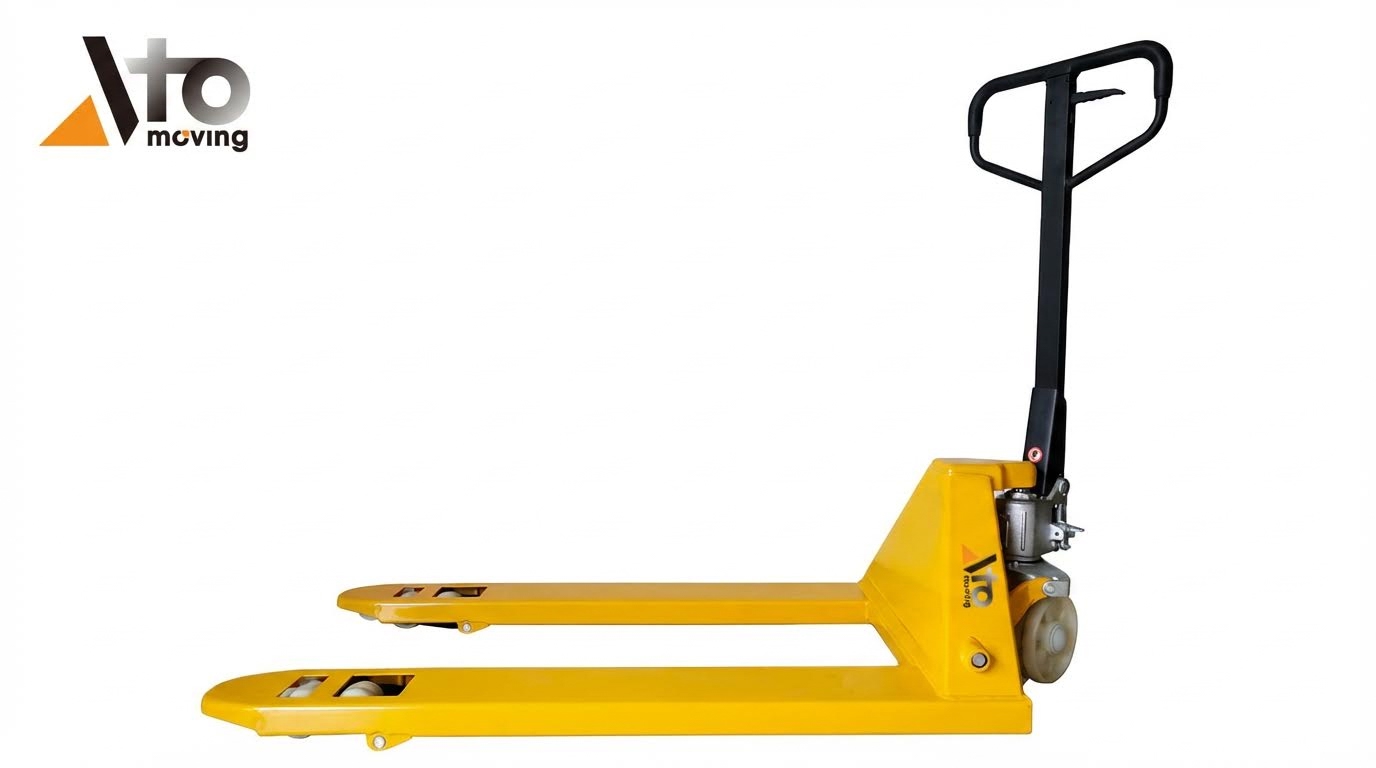
Engineers and safety managers often ask a direct question: what is the lifting capacity of the pallet jack for this job. The answer is always the lowest value among the truck rating, pallet rating, and floor or racking limits. This section closes the guide with practical rules to apply in daily work.
The rated lifting capacity on the nameplate defines the maximum safe load at the specified load center. Typical manual pallet jacks lift about 2,000–3,500 kilograms, while powered models span a wider range. Static pallet ratings are usually higher than dynamic ratings, so transport loads must follow the lower dynamic value. Overloading by even 10% can accelerate hydraulic seal wear, deform forks, and damage pallets.
From a compliance view, EN ISO 3691-5 and related standards require clear capacity labels, correct load centers, and conservative design factors. Safe practice keeps real loads below the printed rating, especially in multi-shift, hot, or corrosive environments. Operators should confirm three points before each move: actual load mass, load geometry against the stated load center, and route conditions such as slopes or uneven floors.
Future pallet jacks will likely combine higher-strength steels, better ergonomics, and smarter capacity indication. However, the core rule will not change. Always treat the published lifting capacity as a hard limit, not a target to exceed. When in doubt, choose a higher-capacity hydraulic pallet truck, improve load distribution, or split the load into multiple moves.