Facilities that ask how high does a pallet jack lift need clear limits for safe, repeatable operations. This article explains standard pallet jack lift heights across low-lift, high-lift, and scissor platform lift designs, and links those heights to stability and capacity.
You will see how typical lowered and raised fork heights define which pallets you can handle and which aisles you can use. The middle sections explain how hydraulics, frame stiffness, wheel layout, and load moments cap practical lift height. The final part shows how to select the right lift range for your warehouse, match it to pallets and clearances, and apply best practices so your team uses every hydraulic pallet truck within a safe height envelope.
Defining Standard Pallet Jack Lift Heights
Engineers who ask how high does a pallet jack lift need clear reference points. Standard, low-lift, high-lift, and scissor designs all use different height envelopes and capacities. This section defines typical lowered and raised fork heights, then links those values to current standards and stability limits. It builds the base for later sections on hydraulic design, frame strength, and safe selection for each facility.
Typical Lowered And Raised Fork Heights
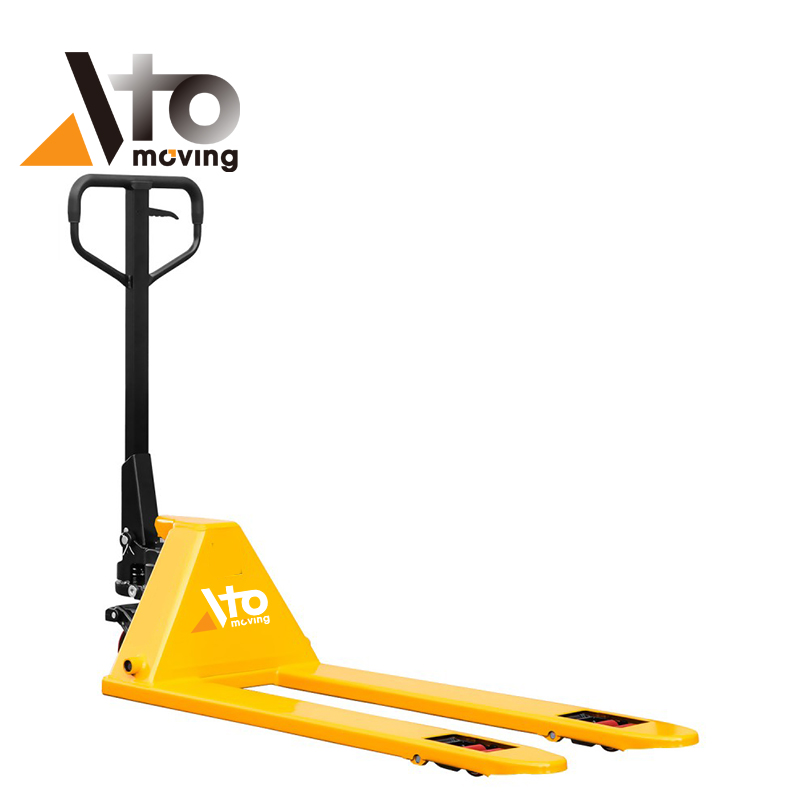
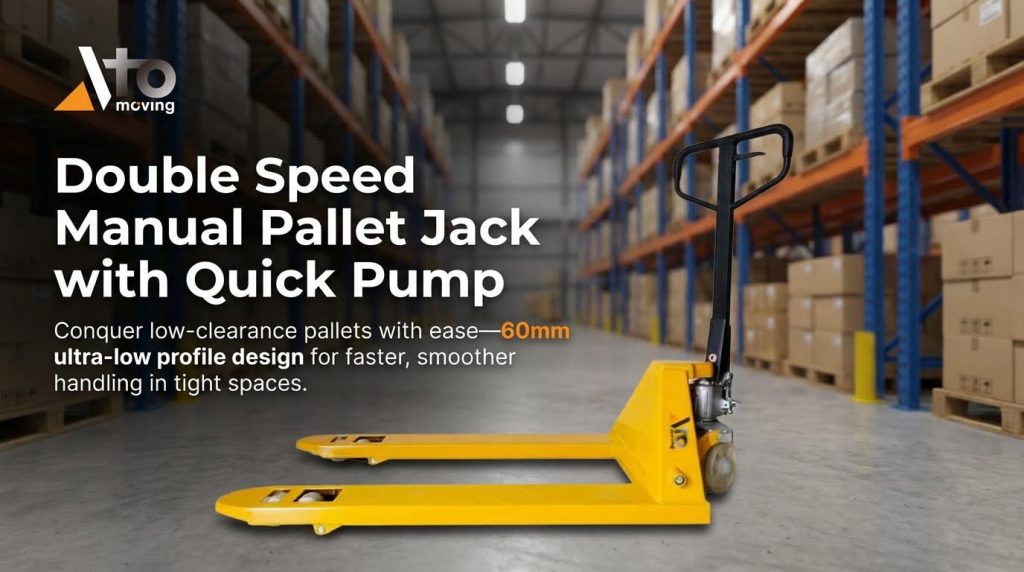
Search data shows wide interest in how high does a pallet jack lift in real use. Standard low-lift pallet jacks usually work in a narrow height band. Typical lowered fork height is about 75 mm, with common low-profile designs down to 35–52 mm for thin pallets. Raised fork height for standard low-lift units often falls around 170–200 mm, enough to clear floor defects and dock plates. Ultra low-profile models may raise only to about 170 mm, while some standard catalog data quotes 6–8 inches, or roughly 150–200 mm. Engineers should always check the exact lowered and raised heights against pallet entry openings and ramp transitions.
Low-Lift Vs High-Lift And Scissor Pallet Trucks
Low-lift pallet jacks answer the basic question how high does a pallet jack lift for transport. They lift only enough to move loads across flat floors. Raised height stays below 300 mm, so they do not replace stacking trucks. High-lift and scissor pallet trucks work in a different range. They can reach about 700–1,000 mm, which suits feeding workstations and forming ergonomic work heights. This extra height usually comes with lower rated capacity compared with low-lift trucks. A simple comparison helps clarify roles.
| Type | Typical lowered height | Typical max lift height | Typical main use |
|---|---|---|---|
| Standard low-lift | 70–85 mm | 170–200 mm | Horizontal transport only |
| Low-profile | 35–60 mm | 165–220 mm | Low-clearance pallets |
| High-lift / scissor | 80–90 mm | 700–1,000 mm | Work positioning |
Facilities should avoid using high-lift units as mobile stackers unless the design and risk assessment allow it.
Standards Limits: EN 1757-2 And ISO 3691-5
Standards give a formal answer to how high does a pallet jack lift in a compliant design. The older EN 1757-2 applied to pedestrian pallet trucks with lift heights up to 300 mm and capacities up to 2,000 kg. It was replaced by EN ISO 3691-5, which aligned with ISO 3691-5. ISO 3691-5 defined low-lift pallet trucks as units with lift height up to 300 mm and rated capacities up to about 2,300 kg. The same standard allowed scissor-lift pallet trucks up to 1,000 mm lift or 1,000 kg capacity. These limits reflect stability, structural strength, and braking performance criteria. Designers and buyers should verify that documentation and markings show conformity to the current ISO 3691-5 based requirements.
Load Center, Stability Triangle, And Tip Risk
Lift height is only safe when the load center stays within the stability triangle. On a pallet truck, this triangle sits between the steer wheels and the line between the two load rollers. When forks rise, the center of gravity of the truck plus load also rises. A higher center of gravity reduces the margin before the combined center moves outside the support polygon. Long or top-heavy loads shift the effective load center forward or upward. That increases overturn and tip risk, especially during braking, turning, or on uneven floors.
- Keep the load centered over both forks.
- Stay within the rated capacity at the specified load center distance.
- Avoid side pulls and sharp turns at raised height.
- Use the minimum lift height that clears the floor safely.
These practices keep the real-world answer to how high does a low profile pallet jack lift within a safe envelope, not just a catalog value.
Engineering Factors That Limit Lift Height
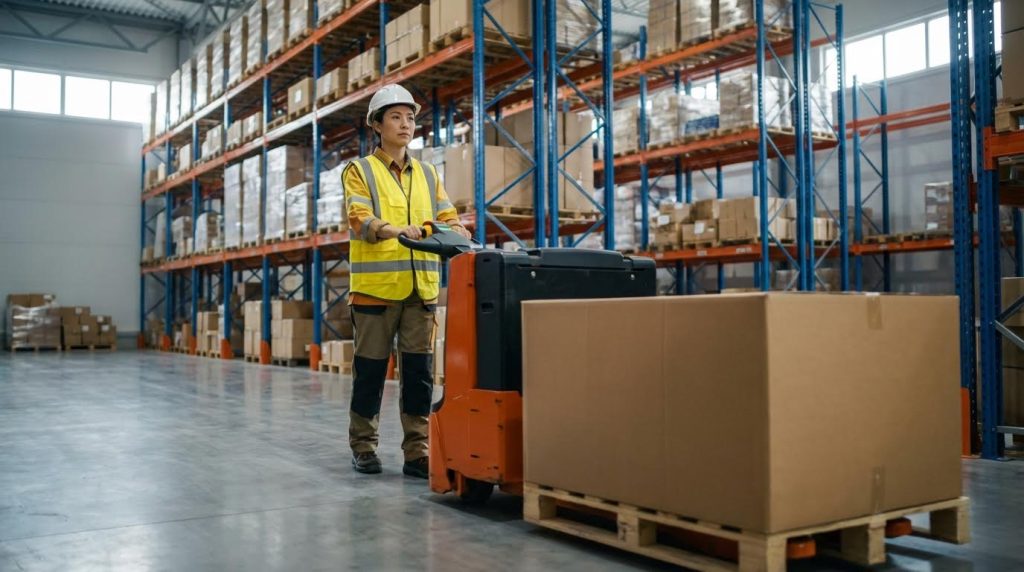
Engineers who ask how high does a pallet jack lift must also ask why it cannot lift higher. Lift height limits come from hydraulics, structure, wheels, and load geometry working together. Each factor sets a boundary for safe and repeatable use. Pushing any factor too far reduces stability, shortens life, or breaks standards like EN ISO 3691-5.
Hydraulic System Design And Pressure Limits
The hydraulic circuit fixes a hard ceiling on how high a pallet jack can lift. Pump displacement, cylinder bore, and stroke define the theoretical maximum height. System pressure defines how much load it can raise at that height. Typical low-lift trucks stay within 300 mm because higher strokes need larger cylinders or higher pressure.
Designers usually keep working pressure well below seal and hose ratings. This protects against burst risk and fluid injection hazards. Slow-release valves and small-bore lines limit lowering speed to keep loads stable. For higher lift heights, like scissor trucks up to 1,000 mm, engineers increase cylinder stroke and add safety devices, not just pressure.
When you compare how high does a pallet jack lift across models, the hydraulic design explains the gap. Low-lift units use compact, low-stroke cylinders. High-lift and scissor designs accept more cost and complexity to gain extra height.
Frame Stiffness, Deflection, And Fatigue Life
Frame stiffness is the next key limit on pallet jack lift height. As forks go higher, bending moments in the chassis and handle mount increase. If the frame deflects too much, the load tilts and shifts the center of gravity. That tilt reduces the safe answer to how high does a pallet jack lift under real conditions.
Engineers check three things when they set maximum height:
- Elastic deflection at full load and height
- Local stress at welds and cutouts
- Fatigue life over expected duty cycles
Higher frames need thicker steel, deeper sections, or gussets to hold stiffness. Standards like ISO 3691-5 require structural tests under rated load. If measured deflection or permanent set exceeds limits, designers must reduce rated height or capacity. This is why high-lift pallet trucks usually carry lower rated loads than low-lift units.
Wheel Geometry, Load Rollers, And Floor Contact
Wheel layout strongly shapes how high a pallet jack can lift while staying stable. Low-lift trucks use small load rollers under the fork tips and larger steer wheels at the handle. As the forks rise, the geometry between these contact points changes. Past a certain height, the support polygon shrinks and stability drops.
Key design choices include:
- Roller diameter and spacing under the forks
- Steer wheel size, offset, and swivel angle
- Vertical travel of rollers relative to steer wheels
Low-lift pallet jacks that raise about 200 mm keep a low center of gravity and a long wheelbase. High-lift and scissor designs often add side stabilizers or outriggers at higher heights. These extra contacts widen the support base when the load comes up. Without them, the question how high does a pallet jack lift must be answered with a much lower safe number.
Wheel material also matters. Polyurethane wheels grip smooth floors well and reduce slip. Nylon wheels roll easier under heavy loads but can slide more on polished surfaces. Less grip means designers must be more conservative with lift height on sloped or low-friction floors.
Load Distribution, Moment Arms, And Capacity
Load geometry finally ties lift height to safe capacity. Rated capacity assumes a specific load center along the forks. As the load rises, the moment arm from the support points to the center of gravity grows. That moment tries to rotate the truck and lift one set of wheels.
Engineers model the system as a lever. They compare overturning moment from the load to restoring moment from the truck weight and wheel spacing. The safe answer to how high does a pallet jack lift is where restoring moment still dominates with margin. If operators use longer pallets or off-center loads, the effective moment arm increases further.
To manage this, standards define capacity for uniformly distributed loads that do not exceed fork length. High-lift pallet jacks often reduce rated capacity compared with low-lift models of similar size. This trade-off keeps the stability triangle intact at greater heights. In practice, facilities should treat catalog lift height as an upper limit and apply extra derating for tall, top-heavy, or uneven loads.
Selecting The Right Lift Height For Your Facility
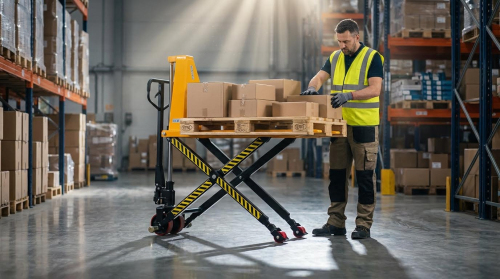
Facility engineers who ask how high does a pallet jack lift should link that question to pallets, racking, and workflows. Standard pallet jacks usually lift about 150 millimetres to 200 millimetres, while high-lift and scissor platform lift trucks can reach about 800 millimetres to 1,000 millimetres. The right choice depends on pallet design, clearance needs, and the duty cycle of each route. This section explains how to match fork travel to your layout, ergonomics, and long-term cost.
Matching Fork Height To Pallet And Clearance
Start with the pallets you handle every day. Typical wooden pallets need only about 100 millimetres fork rise to clear the deck and floor. Standard pallet jacks often answer how high does a pallet jack lift with a range close to 6 to 8 inches, which suits most dock and floor moves.
Use a simple check when defining lift height:
- Measure pallet entry height and deck thickness.
- Add at least 25 millimetres safety clearance under the lowest point.
- Confirm the maximum raised fork height stays below rack beams and dock edges.
Low-profile jacks with lowered heights near 35 millimetres to 52 millimetres help with thin or damaged pallets. Raised heights around 165 millimetres to 220 millimetres still give enough ground clearance without raising the load centre too far. This balance keeps stability while avoiding fork strikes on conveyors, lift-gates, or in-truck floors.
Manual Vs Electric: Ergonomics And Duty Cycle
Manual pallet jacks work well for short, low-frequency runs. Operators pump the handle to reach full lift, which stays practical when cycles per hour are low and loads stay moderate. When duty cycles rise, manual pumping increases fatigue and slows takt times.
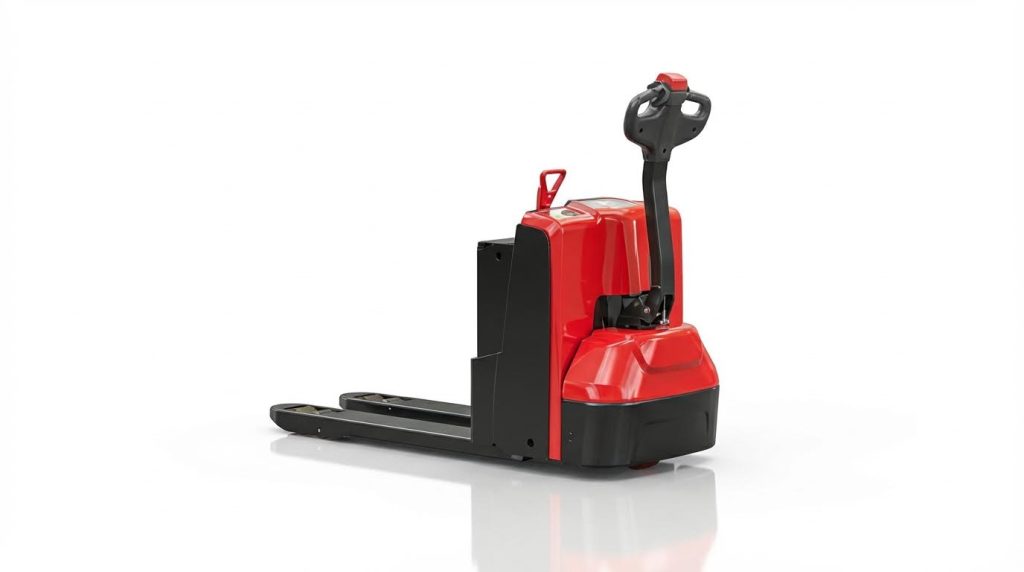
Electric pallet jacks answer how high does a pallet jack lift with similar fork heights but far better ergonomics. Push-button lifts reduce peak hand force, which supports compliance with ergonomic guidelines. For long routes or frequent picks, electric travel and lift often cut cycle time and injury risk. Manual models still suit tight spaces and low budgets, while electric units justify higher cost where utilisation is high and labour is expensive.
Safety Practices For Lifting And Moving Loads
Safe height choice links directly to stability. The higher the forks, the higher the load centre and overturn risk. Operators should lift only high enough to clear the floor, then travel with forks as low as possible.
Key practices include:
- Keep heavy loads centred on the forks and within rated capacity.
- Avoid side pulls and sharp turns at full lift height.
- Travel slowly on marginal floors, dock plates, and inside trucks.
Standards like EN ISO 3691-5 limited low-lift pallet trucks to about 300 millimetres lift, which reduced tip risk in pedestrian areas. Scissor and high-lift trucks can reach about 1,000 millimetres, so stabilisers and blocked travel at full height are important. Training should cover incline rules, pedestrian separation, and parking with forks fully lowered.
Lifecycle Costs, Maintenance, And New Tech
Lift height affects lifecycle cost. Higher-lift designs use more complex linkages and longer-stroke hydraulics, which raise parts count and maintenance time. Seals, hoses, and pivot points see higher loads at maximum stroke, so inspection intervals should be shorter for high-lift or scissor units.
When comparing options, consider:
| Aspect | Standard low-lift | High-lift / scissor |
|---|---|---|
| Typical max height | ≈200 mm | Up to 1,000 mm |
| Main use | Transport | Work positioning |
| Maintenance load | Lower | Higher |
| Ergonomic gain | Basic | High for operators |
Newer pallet jacks combine adjustable lift heights with improved hydraulic valves for smoother lowering. Some facilities pair standard low-lift units for travel with high-lift scissor trucks at fixed workstations. This split strategy keeps capital cost controlled while still improving ergonomics where workers spend most of their time.
Summary: Safe Height Choices For Pallet Jacks
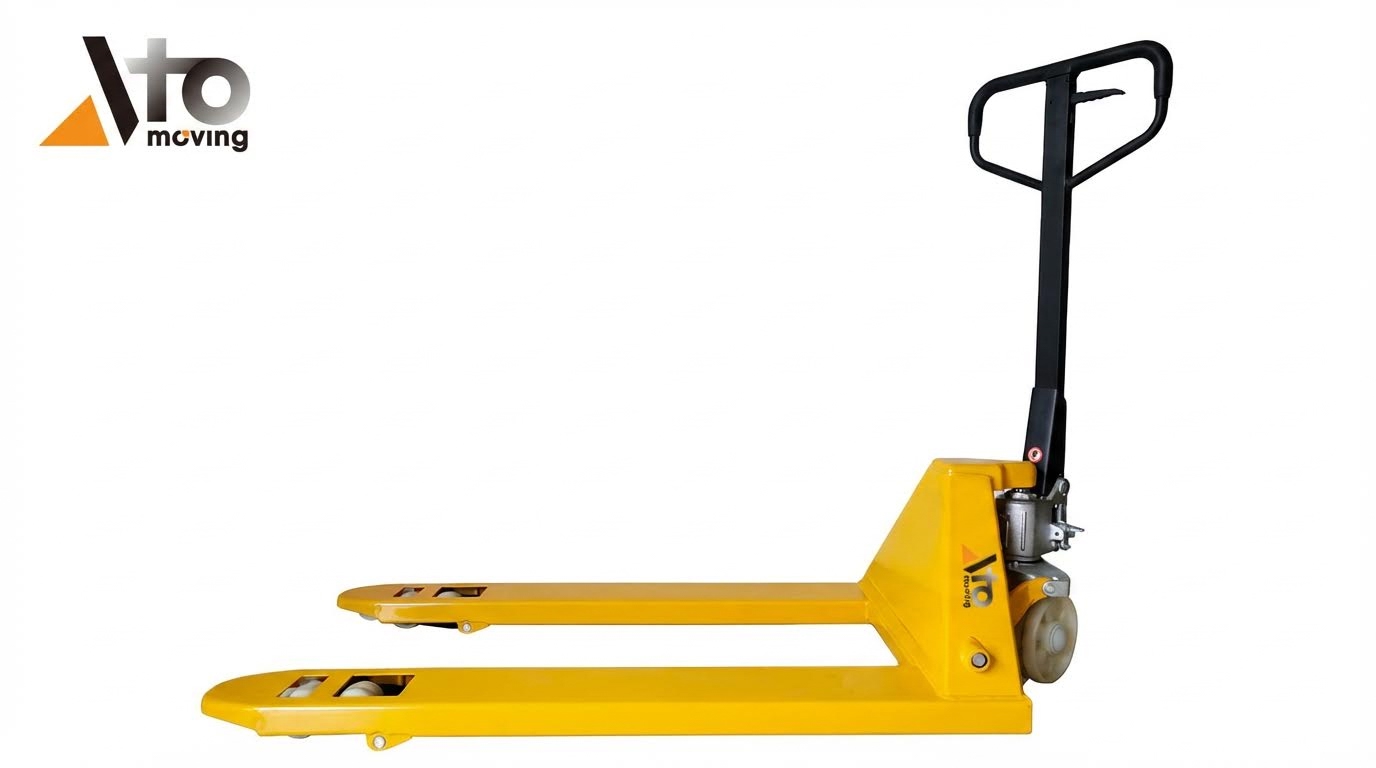
Facilities that ask how high does a pallet jack lift need a clear, practical range. Standard low-lift pallet jacks usually raise forks about 150 millimetres to 200 millimetres. High-lift and scissor designs can reach about 800 millimetres to 1,000 millimetres. ISO 3691-5 set 300 millimetres as the upper limit for low-lift trucks and 1,000 millimetres for scissor types.
From an engineering view, safe lift height comes from three limits. The hydraulic system must hold pressure without leaks or burst risk. The frame must stay stiff enough to control deflection and fatigue. The stability triangle and load centre must keep the combined centre of gravity inside the support base.
For daily work, match lowered fork height to pallet entry clearance. Standard pallets work with typical low-lift trucks. Very low deck or custom pallets may need low-profile models with lowered heights near 50 millimetres. When operators also use the pallet as a work table, high-lift or scissor units give better ergonomics but at lower rated capacity.
Future designs will likely add smarter valves, better seals, and sensors that monitor overload and height. Yet the core rule will not change. Choose only as much lift height as the task needs, keep within rated capacity, and train operators to keep loads low while travelling. That approach gives the best balance of safety, speed, and lifecycle cost.