Industrial teams that search for how to handle drums safely face a mix of mechanical, chemical, and ergonomic risks. This article covers the full lifecycle of drum handling, from initial hazard recognition and regulatory duties to safe lifting, transport, stacking, and closed-loop dispensing controls.
You will see how injury mechanisms, OSHA and WHMIS rules, and SDS-driven risk assessment shape choices for PPE, manual techniques, and powered equipment. Later sections explain engineering methods for stable drum stacks, pallet and dunnage design, and automated or digital-twin-enabled systems that reduce spills and operator exposure. The final summary links these elements into a practical best-practice framework that EHS, operations, and engineering teams can apply in real facilities.
Core Hazards And Regulatory Requirements
This section explains how to handle drums safely from a risk and compliance view. It focuses on injury mechanisms, regulatory rules, correct labeling, and personal protection. The goal is to link real accident patterns with OSHA and WHMIS duties and with practical controls that work on the shop floor.
Typical Drum-Handling Injury Mechanisms
Most drum injuries came from basic manual tasks. Typical events included fingers crushed under rolling chimes, toes hit by dropped drums, and back strains from poor lifts. Chemical burns and inhalation exposure also occurred when workers handled leaking or unsealed drums. These patterns show that force, pinch points, and unknown contents drive the main risk profile for how to handle drums in industry.
Key mechanical and chemical mechanisms include:
- Overexertion when tilting or up‑ending 200 litre drums without aids.
- Loss of balance when a drum passes its tipping point and over-rotates.
- Hand contact with sharp pallet edges or protruding nails during rolling or stacking.
- Skin and eye exposure when residues spray or drip during movement.
Facilities reduced these events when they enforced no‑manhandling rules, used drum trucks and lifters, and set clear manual handling limits.
OSHA And WHMIS Requirements For Drums
OSHA rules treated drums as tiered stored materials and as chemical containers. General Industry Standard 1910.176 required stacked containers to be blocked, interlocked, and limited in height to prevent collapse. Construction Standard 1926.250 added similar duties for stacking, clear aisles, and floor load limits. These rules applied directly to drum storage rows, dock staging, and in-plant transfer areas.
For hazardous products, OSHA’s Hazard Communication Standard and WHMIS in Canada required that drums carry proper labels and that workers receive training. WHMIS required supplier and workplace labels plus access to Safety Data Sheets. Together, these frameworks meant that a site could not treat how to handle drums as only a materials task. It was also a legal duty to control exposure, maintain access to emergency equipment, and keep egress routes free of stored drums.
Hazard Identification, Labeling, And SDS Review
Safe drum handling started with knowing what was inside each container. Workers had to read labels before moving any drum and treat unmarked drums as hazardous until proven otherwise. Labels needed to show hazard classes such as flammable, corrosive, toxic, or oxidizer. Clear labeling helped planners decide on separation distances, compatible storage groups, and the right handling tools.
A structured approach worked well:
- Verify that bungs and lids were present and tight.
- Check for leaks, bulging, or corrosion on seams and chimes.
- Estimate weight from the SDS and fill level before choosing manual or powered handling.
- Review the SDS sections on handling, storage, PPE, and spill response.
Sites that built this SDS review into work permits saw fewer incidents during lifting, transfer, and spill cleanup. It also improved response when a drum failed during movement because the team already knew the hazards and first-aid needs.
PPE Selection For Chemical And Mechanical Risks
Personal protective equipment supported, but did not replace, engineering and procedural controls. For mechanical hazards, safety shoes with toe protection, grip gloves, and in some cases shin guards reduced crush and impact injuries. Eye protection was vital when tilting or up‑ending drums, because residual liquids could splash from bungs or seams. When workers planned how to handle drums in tight spaces, face shields gave extra protection from sudden movement.
Chemical risks required PPE that matched the product. SDS guidance typically drove selection of:
- Chemical resistant gloves with tested breakthrough times.
- Goggles or face shields for corrosive or irritant liquids.
- Aprons or suits where splashing or hose transfer was possible.
- Respiratory protection if vapours or mists could exceed limits.
Supervisors needed to check that PPE did not create new handling risks, such as slippery glove surfaces that reduced grip on chimes. Fit testing, training, and regular PPE inspection were essential parts of a complete drum safety program.
Safe Lifting And Moving: Manual And Powered Methods
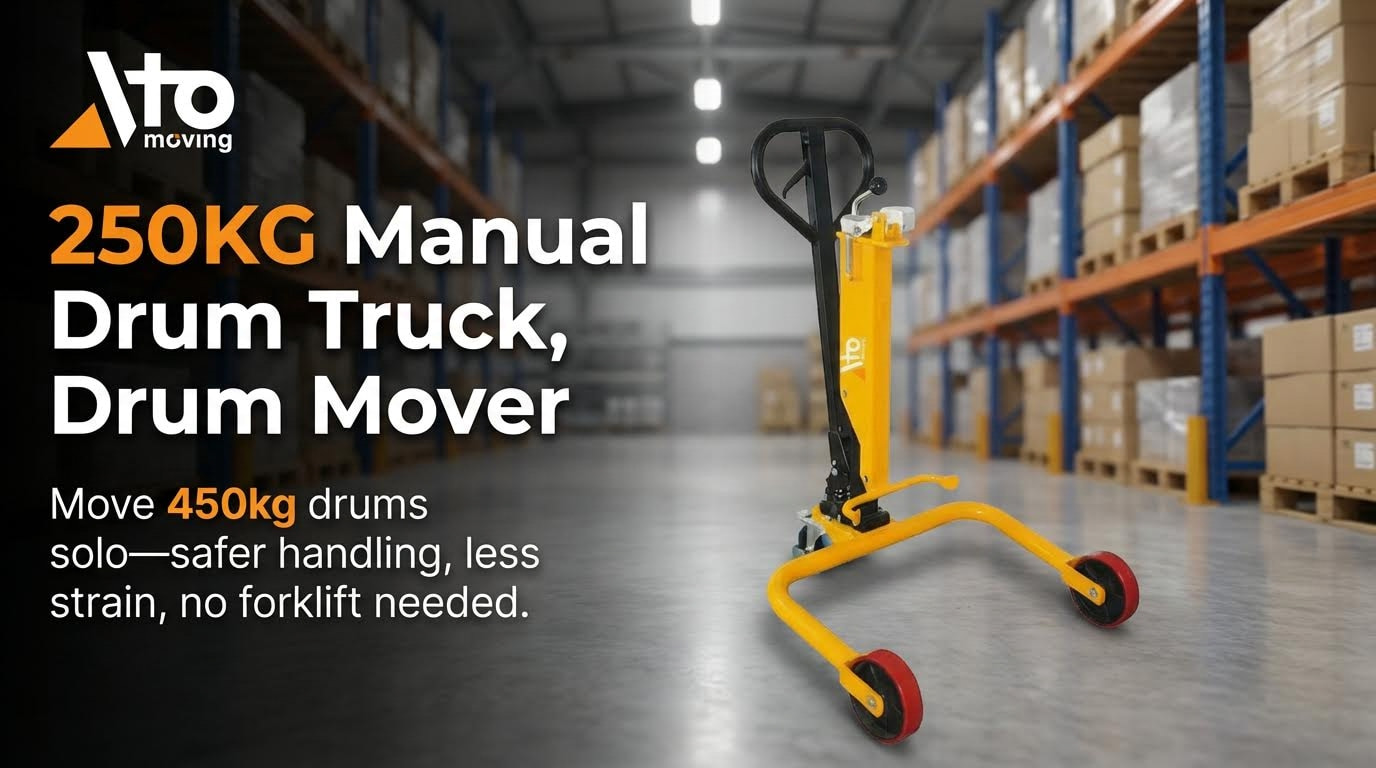
Safe lifting and moving sit at the core of any program that explains how to handle drums. This section links ergonomic manual methods with powered tools, load restraint, and digital inspection. The goal is to move full and empty drums without back injuries, impact accidents, or chemical exposure.
Ergonomic Techniques For Manual Drum Handling
Manual handling should only cover short moves and light drums. Full 200 litre drums can reach 180–360 kilograms, which exceeds safe solo lifting limits. Workers should treat every unmarked drum as full until confirmed otherwise. They should also assume hazardous contents until labels and safety data sheets are checked.
Key ergonomic steps for tilting and walking a drum on its chime include:
- Stand close to the drum with one foot forward and knees bent.
- Keep the back straight and drive mainly with leg muscles.
- Rock the drum to feel liquid movement before committing to a tilt.
- Stop at the balance point and use the rear leg as counterweight.
Two-person lifts should copy the same pattern with both operators squatting at each side. Operators should never manually lift drums from stacks or truck beds. They should use levers, tilting stands, or lifting equipment instead. Safety shoes, gloves, and eye protection reduce crush and splash risks during these tasks.
Selecting Drum Trucks, Lifters, And Forklift Attachments
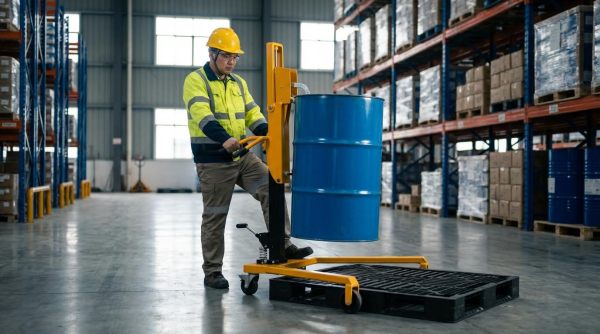
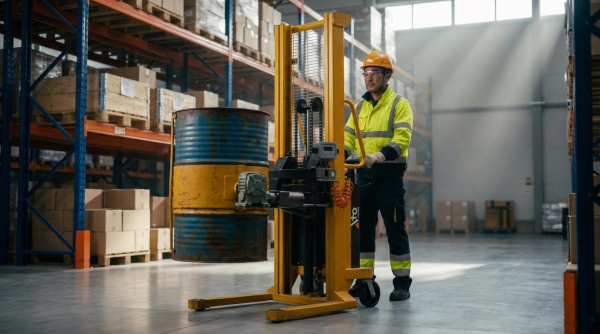
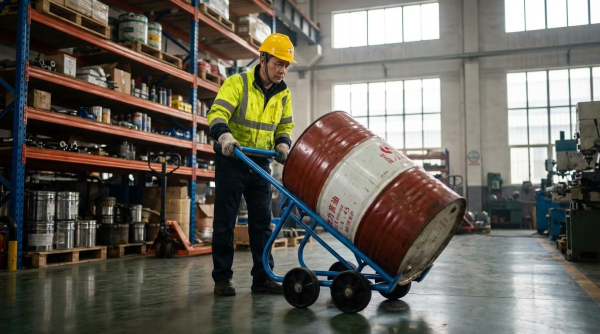
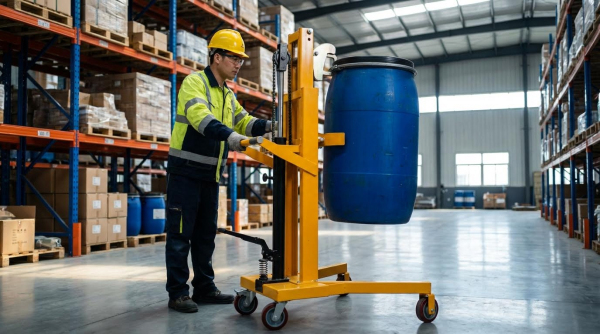
When planning how to handle drums across a site, engineers should match equipment to load, distance, and frequency. Manual drum trucks suit short horizontal moves on smooth floors. Hydraulic lifters and stackers handle vertical lifts and controlled lowering. Forklift attachments handle long transfers and loading operations.
Selection should consider several engineering factors:
| Factor | Typical requirement |
|---|---|
| Rated capacity | Exceeds maximum drum mass with safety margin |
| Drum type | Steel, plastic, fibre; open or closed head |
| Grip method | Rim, chime, band, or clamping jaws |
| Lift range | From floor pickup to target height, including pallets |
| Environment | Corrosive, flammable, cleanroom, outdoor yard |
Forklift drum clamps reduce reliance on manual rolling and pushing. They also keep drums inside the truck footprint. Engineers should specify attachments that positively lock around the drum. They should avoid friction-only devices where sudden braking can eject the load. All devices must have clear instructions and inspection points.
Securing Drums On Forklifts, AGVs, And Conveyors
Unsecured drums on powered equipment create high kinetic energy hazards. Sudden braking or collision avoidance can throw drums from forks or conveyors. This can crush nearby workers and rupture containers. It can also trigger chemical spills and fire risks.
For forklifts, safe practice includes:
- Centering drums over the forks or attachment.
- Keeping the carriage tilted back and the load low during travel.
- Using purpose-built drum clamps or cradles, not loose pallets alone.
- Avoiding overloading or adding counterweight at the rear of the truck.
On AGVs and conveyors, designers should integrate side guides, end stops, and anti-rollback devices. Guard rails should prevent drums rolling off during acceleration or transfer. Speed profiles should limit shock loads at start and stop. Pallets must be sound, level, and free of protruding nails that could puncture drums. Control systems should interlock motion with guarding, emergency stops, and spill detection where hazardous liquids move.
AI-Assisted Inspection And Predictive Maintenance
AI tools now support safer answers to how to handle drums in busy plants. Vision systems can scan routes, pallets, and drums for defects during normal traffic. They can flag dented, corroded, or leaking drums before manual handling starts. They can also detect missing bungs or loose lids.
On the equipment side, predictive maintenance models track usage hours, lift counts, and overload events. They can predict failure risks on drum clamps, hydraulic systems, and conveyor drives. This reduces sudden breakdowns while a drum is suspended or in motion. Data from sensors on forklifts and AGVs also helps tune acceleration limits and braking profiles.
Practical applications include:
- Camera analytics that verify labels and hazard symbols are present.
- Algorithms that compare current drum posture to safe transport envelopes.
- Condition monitoring on wheels, bearings, and hydraulic seals.
Plants should still keep simple visual checklists for operators. AI systems work best when they reinforce, not replace, basic inspections and conservative handling rules. Together they create a closed loop between risk detection, maintenance planning, and safe drum movement.
Stacking, Storage Stability, And Drum Dispensing
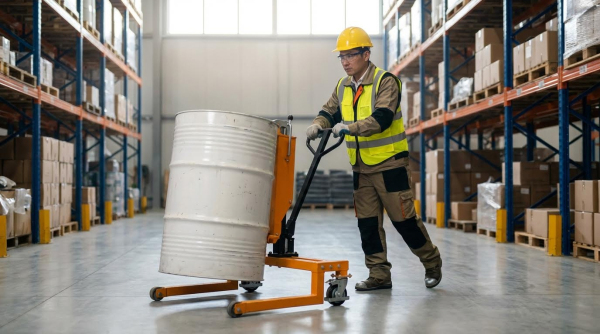
This section explains how to handle drums safely once they reach storage or process areas. It focuses on engineered stacking methods, stable pallets and dunnage, and controlled dispensing systems. The goal is to reduce collapse, leaks, and worker exposure while improving throughput and compliance.
Engineering Controls For Stable Drum Stacks
Engineered controls for drum stacks start with layout and load paths. Drums, barrels, and kegs should sit in symmetric patterns so loads transfer vertically into the floor or racking. Irregular gaps or overhang create eccentric loads that increase the risk of sliding or collapse.
Standards such as OSHA 1910.176 and 1926.250 required stacks to be blocked, interlocked, and limited in height. In practice, safe drum stacks use a conservative height based on:
- Drum type and wall thickness.
- Contents density and fill level.
- Floor or rack load rating in kilograms per square metre.
- Seismic and forklift impact risks.
Bottom tiers need positive restraint. When drums stand on end, chocks on both sides stop movement in either direction. When drums lie on their sides, blocking prevents rolling and spreading of the stack. Aisle design also affects stability. Clear aisles and marked stack limits reduce impacts from trucks and manual handling.
For engineers asking how to handle drums in dense warehouses, a structured stack plan is essential. It should define maximum tiers, pallet patterns, chocking methods, and inspection points. Regular visual checks then confirm that stacks remain plumb, blocked, and free of damage or leaks.
Pallet, Dunnage, And Chocking Design Criteria
Pallet and dunnage design directly control bearing stress and puncture risk. Pallets must be sound, level, and free of protruding nails or sharp edges. Damaged or warped pallets can concentrate loads into small contact points and puncture thin drum walls.
| Aspect | Engineering Consideration |
|---|---|
| Pallet capacity | Rated for total drum mass with safety factor |
| Deck surface | Flat, closed or closely spaced boards for uniform support |
| Dunnage material | Planks, plywood, or pallets with adequate stiffness |
| Tier interface | Continuous contact surface, no point loading on chimes |
| Chocking | Blocks or wedges sized to resist horizontal forces |
Between drum tiers, dunnage creates a flat interface and spreads loads. Plywood sheets or pallets between rows reduce local stress at drum chimes and improve friction between layers. The stiffness of dunnage should limit deflection so upper drums remain vertical.
Chocks and blocks must resist sliding from vibration, braking, or minor impacts. For powered industrial trucks, the load should sit centered on the forks and close to the mast to limit overturn moments. Overloading or offset loads increase both truck and stack instability. Clear markings for maximum stack height and pallet condition criteria help operators decide how to handle drums before stacking them.
Closed-System And Automated Drum Dispensing
Closed-system drum dispensing reduces worker exposure and environmental releases. In these systems, a dip tube and connector form a sealed path from drum to process line. This approach limits vapour release and splash, which is critical for corrosive or flammable chemicals.
When planning how to handle drums during dispensing, engineers compare open pouring, semi-closed, and fully closed systems. Closed systems typically offer:
- Lower risk of inhalation and skin contact.
- Less spill cleanup and waste generation.
- More consistent dosing and flow control.
Automated dispensing equipment can meter liquids by weight or volume with high repeatability. Typical industrial systems used weigh scales and control valves to achieve gram-level accuracy, depending on viscosity. They often integrate with conveyors that manage can denesting, filling, lidding, and palletizing.
For viscous products, valve design and flow path shape reduce shear and splashing. Bringing the container close to the nozzle or valve shortens free-fall distance and limits frothing. Routine inspection and preventive maintenance of pumps, seals, and hoses are vital. Worn components can cause leaks that defeat the benefit of closed systems.
Integrating Drum Handling With Digital Twins
Digital twins of drum handling systems mirror physical assets in software. They link real-time data from conveyors, stack areas, and dispensing lines to a virtual model. This model helps engineers test different layouts and operating rules before changing the physical plant.
When deciding how to handle drums across a site, a digital twin can simulate:
- Stack height and aisle width effects on traffic and risk.
- Forklift or AGV routes and congestion points.
- Throughput limits at dispensing or decanting stations.
Sensors on forklifts, stack locations, and dispensing skids feed data into the model. Examples include load weight, vibration levels, valve cycles, and temperature. Analytics can then flag unstable stacks, overloaded floors, or abnormal valve behaviour early.
Integration with maintenance systems supports predictive strategies. The twin can track duty cycles on clamps, pumps, and valves and suggest service before failure. Over time, these insights guide better pallet standards, chocking designs, and automation choices. The result is a more reliable and traceable approach to drum handling from receipt to final dispense.
Summary Of Best Practices And Future Directions
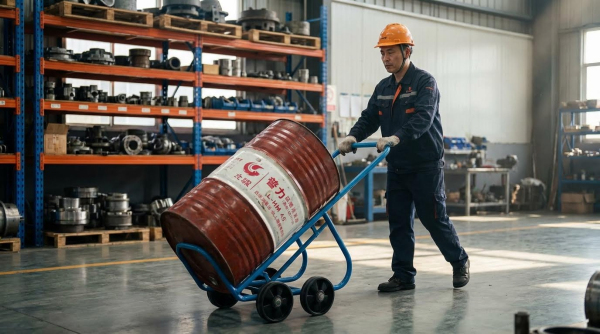
Safe drum handling depended on a clear answer to one core question: how to handle drums without injury or loss. The most effective sites combined engineering controls, operator training, and strict housekeeping. They treated lifting, moving, stacking, and dispensing as one integrated system, not separate tasks.
Best practice started with planning. Facilities identified drum contents, checked labels and Safety Data Sheets, and selected PPE for both chemical and impact risks. They used purpose-built equipment for lifting and moving and avoided manual handling of full drums wherever possible. Stacks followed OSHA rules for blocking, chocking, and height limits, and pallets were inspected before use. Operators followed simple ergonomic rules when any manual tilt or roll was still required.
Future trends pointed toward more automation and data. Closed dispensing systems reduced vapor exposure and spills. Sensors, AI inspection, and predictive maintenance tools helped detect worn attachments, damaged pallets, and leaking drums before failure. Digital twins of warehouses and process lines allowed engineers to simulate new layouts, traffic patterns, and stack heights before any physical change.
Implementing these advances still required disciplined basics. Sites needed clear procedures, periodic audits, and refresh training. Technology helped answer how to handle drums more safely and efficiently, but it did not replace conservative loads, stable stacks, and well-maintained handling gear.
Please provide the `{reference}` array so I can parse and process the data to generate the FAQ section.