Operations teams asking what is the machine that lifts pallets usually face a mix of safety, space, and cost questions. This article maps the core families of pallet-lifting equipment, from simple pallet jacks to advanced vertical pallet lifts and VRC systems.
You will see how load capacity, lift height, aisle width, and duty cycle define the best fit for each application. The guide then compares manual, electric, and automated options using lifecycle cost, throughput, and integration with WMS, AS/RS, and palletizers.
Later sections explain how emerging tools such as AI-based maintenance and digital twins change fleet sizing and uptime planning. The article closes with a concise, practical checklist so engineers and warehouse managers can select the right pallet-lifting machines with confidence.
Core Types Of Pallet-Lifting Equipment
Engineers who ask what is the machine that lifts pallets need a clear map of the main equipment classes. This section groups pallet jacks, pallet stackers, forklifts, rider stackers, and vertical pallet lifts by how they move, how high they lift, and where they fit best. It helps match equipment to load, lift height, aisle width, and automation level in real plants and warehouses.
Pallet Jacks: Low-Lift Horizontal Transport
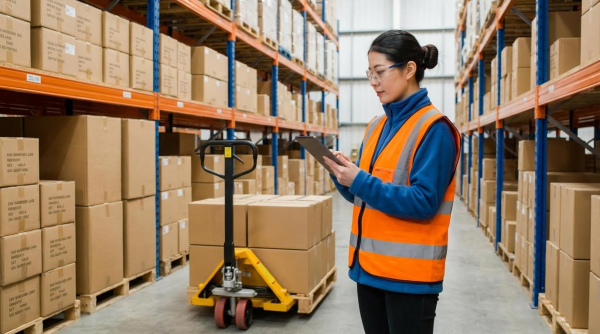
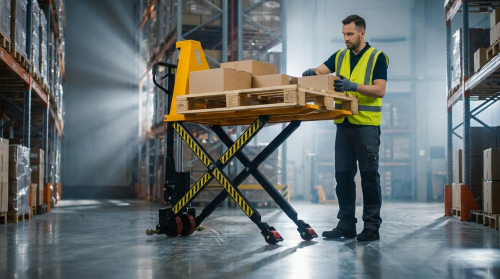
Pallet jacks are the simplest answer to the question “what is the machine that lifts pallets for short moves”. They raise a pallet only about 100–200 mm, just enough to clear the floor and roll. Manual models use a hand pump and linkage to pressurize a small hydraulic cylinder. Electric versions add drive and lift motors, which cut operator effort and speed up moves.
Typical engineering choices focus on capacity, maneuverability, and duty cycle:
- Common load capacity: about 1,000–2,500 kg for manual jacks.
- Lift height: usually under 0.2 m, optimized for truck loading and shop-floor moves.
- Best use: short horizontal transport, tight aisles, truck tail lifts, and retail backrooms.
Manual jacks suit low-throughput operations and power-restricted zones. Electric pallet jacks fit multi-shift docks and cold-chain work where reduced strain and higher throughput matter.
Pallet Stackers: Medium-Lift Storage Solutions
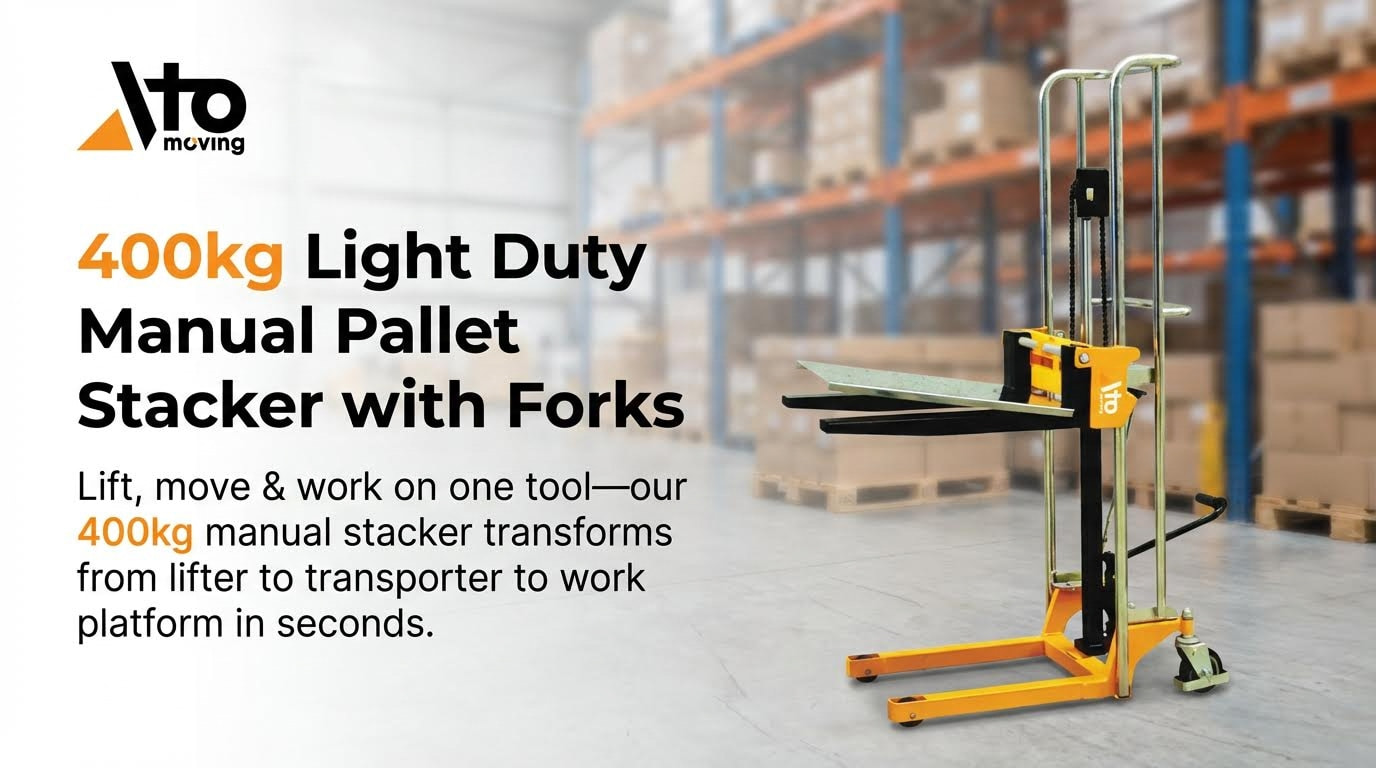
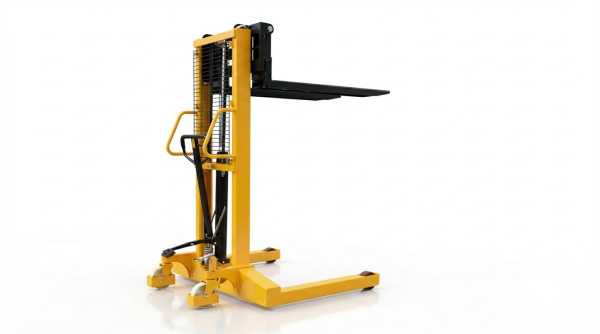
Pallet stackers answer “what is the machine that lifts pallets into racking without a full forklift”. They combine a compact chassis with a mast so they can lift pallets to 1.6–3.0 m and higher. Manual stackers use foot or hand pumps, while electric stackers use powered lift and often powered travel.
| Type | Capacity | Lift height | Typical aisle |
|---|---|---|---|
| Manual stacker | 500–1,500 kg | up to 3.0 m | ≈1.8 m |
| Electric walk-behind | ≈1,000–2,000 kg | up to ≈6 m | ≈2.2 m |
Manual stackers work well for up to about 60 pallets per day and single-shift use. Electric stackers suit medium-height racking, higher throughput, and cooler stores where repeated manual pumping would cause fatigue. They bridge the gap between simple pallet jacks and full counterbalance forklifts.
Forklift Trucks And Rider Stackers
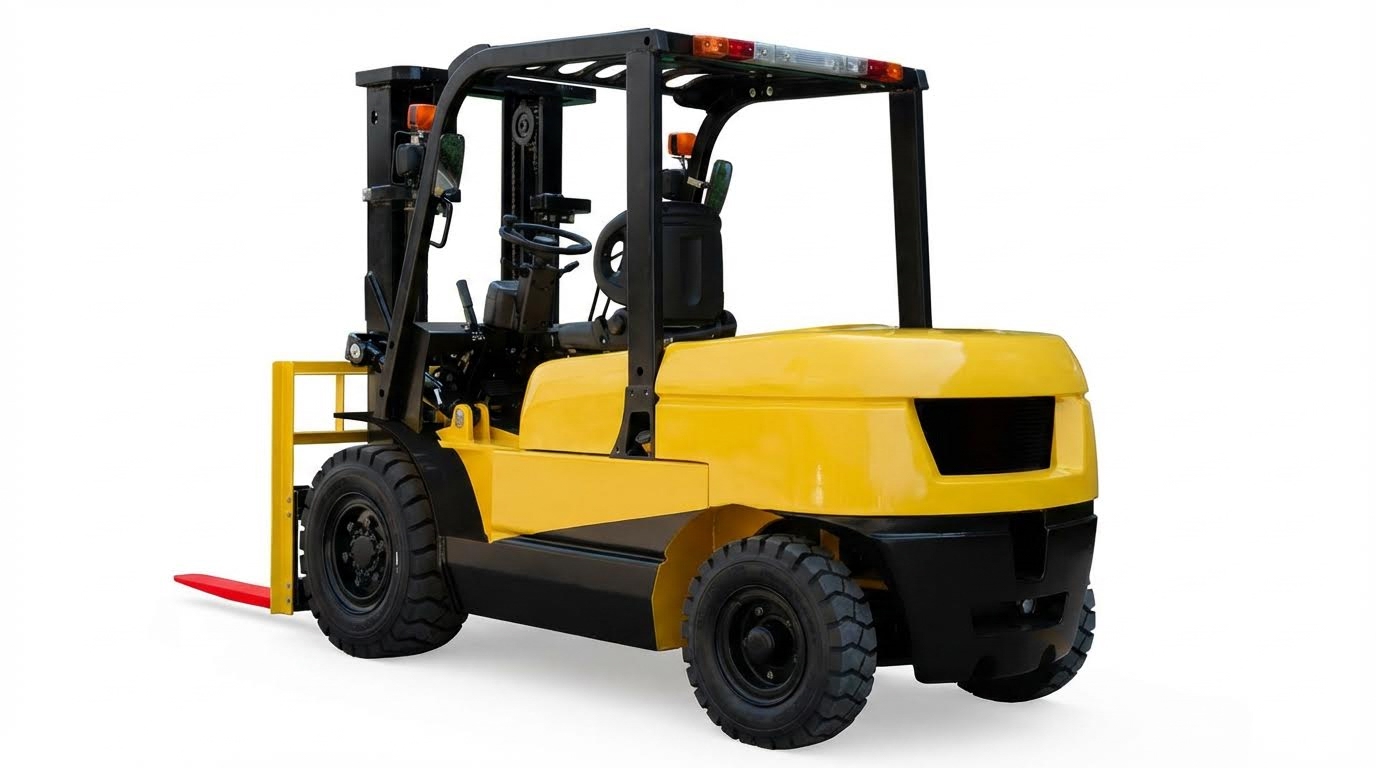
Forklift trucks are the most common answer when people search “what is the machine that lifts pallets in warehouses and yards”. They use a counterweight and mast so they can lift heavy pallets to several meters while the operator rides on board. Rider stackers share the same idea but keep a smaller chassis and are optimized for indoor aisles.
Engineers usually compare them on four factors:
- Capacity: typically from about 1,500 kg into the heavy range above 5,000 kg.
- Lift height: from truck-bed level to upper rack beams in high-bay storage.
- Power source: internal combustion for outdoor and mixed use, electric for indoor and cold storage.
- Aisle need: rider stackers work in narrower aisles than many counterbalance trucks.
Forklifts handle dock work, block stacking, and yard loading. Rider stackers fit dense racking where stand-on or sit-on operation boosts travel speed but aisles must stay narrow.
Vertical Pallet Lifts And VRC Systems
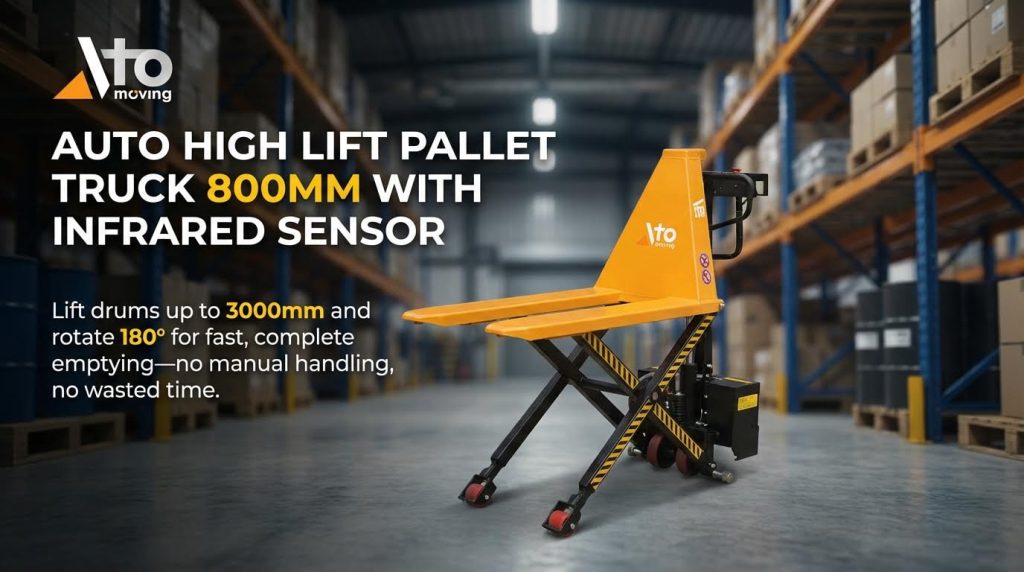
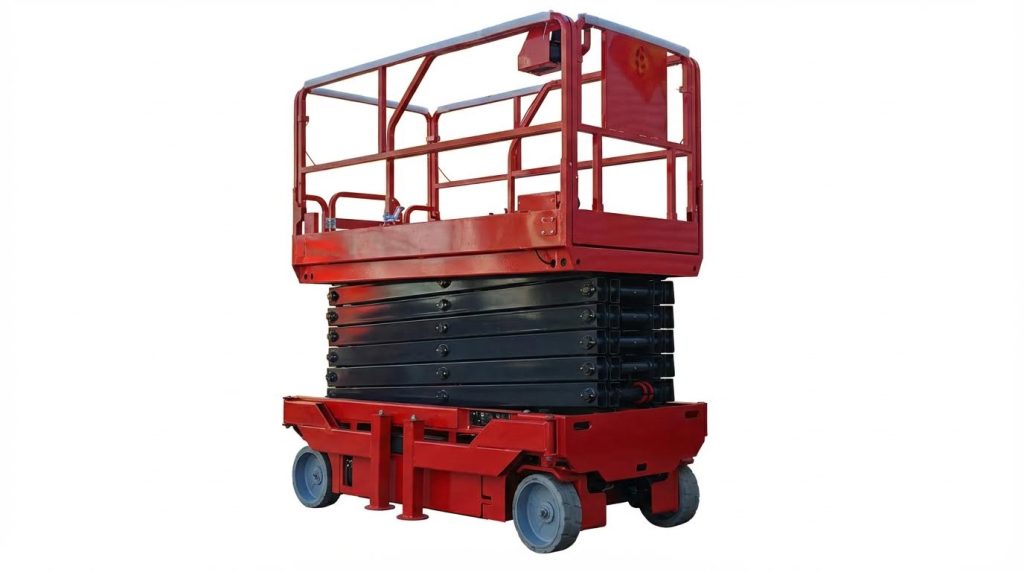
Vertical pallet lifts, also called vertical reciprocating conveyors (VRCs), are the answer when the question becomes “what is the machine that lifts pallets between floors safely”. They move pallets vertically in a guided carriage, not on an inclined plane. They usually integrate with conveyors, pallet jacks, or forklifts at each level.
Designers select between hydraulic and mechanical drives based on cycle rate and travel height. Hydraulic VRCs often serve up to moderate heights and duty cycles. Mechanical VRCs can reach higher levels and very high cycle rates while keeping speed more constant. Both types follow lift safety codes such as ASME B20.1 for industrial conveyors and material lifts.
VRCs remove pallet traffic from passenger lifts and stairs, which improves safety and flow. They are common in mezzanine-fed picking systems, multi-level production, and automated zones that link to WMS or AS/RS equipment.
Performance, Capacity, And Application Ranges
When engineers ask what is the machine that lifts pallets, they rarely mean one device. They compare pallet jacks, stackers, forklifts, and vertical pallet lifts across capacity, height, duty cycle, and environment. This section explains how those factors define safe working ranges and the best fit for each warehouse profile.
Load Capacity, Lift Height, And Duty Cycles
Load, height, and cycles define the technical window for each pallet-lifting machine. Manual pallet jacks usually handle roughly 1,000–2,500 kilograms and lift only about 200 millimetres. They suit truck loading and short moves, not racking. Manual pallet stackers typically offer 500–1,500 kilograms with lift heights up to 3.0 metres, but they rely on operator effort, so duty cycles must stay low.
Electric stackers and rider stackers bridge the gap to forklifts. Typical electric stacker capacities fall between 1,000 and 2,000 kilograms with lift heights up to about 6 metres in common models. They support higher cycle counts and multi-shift work when paired with proper battery management. Vertical pallet lifts and VRCs focus on vertical travel rather than capacity alone. Hydraulic units often support up to about 1,500 kilograms at moderate cycle rates, while mechanical VRCs can reach higher travel speeds and near-unlimited cycles when sized correctly.
| Equipment type | Typical capacity | Typical lift height | Duty profile |
|---|---|---|---|
| Manual pallet jack | 1,000–2,500 kg | Up to ~0.2 m | Low cycles, single shift |
| Manual pallet stacker | 500–1,500 kg | Up to ~3.0 m | Low–medium cycles |
| Electric stacker / rider | 1,000–2,000 kg | Up to ~6 m | Medium–high cycles |
| Forklift truck | 1,500–5,000 kg | Up to ~7–10 m | High cycles, multi-shift |
| Vertical pallet lift (VRC) | ≈500–3,000 kg | One or more floors | From low to continuous |
Engineers should always derate catalog values for off-centre loads, attachments, and high lift heights. Higher masts reduce residual capacity because of stability limits. For heavy loads near the upper rating, duty cycles must respect motor heating, pump sizing, and structural fatigue.
Aisle Width, Throughput, And Space Utilization
Aisle width and flow rate strongly influence what is the machine that lifts pallets in a given layout. Manual pallet jacks work in very tight spaces. They can turn in aisles around 1.8 metres wide and support dense floor storage. Throughput stays modest because travel speed and lift speed depend on the operator. Electric pallet trucks and walk-behind stackers usually need about 2.0–2.2 metre aisles. They move faster and reduce fatigue, so they fit dock work and cross-docking with higher pallet counts.
Rider stackers and counterbalance forklifts need more clearance. Typical standard-aisle forklifts require 3.0–3.5 metre aisles depending on mast and load length. They deliver much higher hourly throughput, especially for rack storage above 3 metres. Very narrow aisle systems use specialized trucks or stacker cranes that follow rails or guidance. These systems work in aisles close to pallet width plus clearance and feed AS/RS or high-bay storage.
Vertical pallet lifts and VRCs change the problem from horizontal to vertical flow. They transfer pallets between levels and free ground space for racking or process equipment. Engineers often compare two options: more forklifts and ramps, or a VRC that centralizes vertical movement. VRCs improve space use when mezzanines or multi-level picking zones exist and when vertical travel is frequent and repeatable.
Environmental Conditions And Sanitary Design
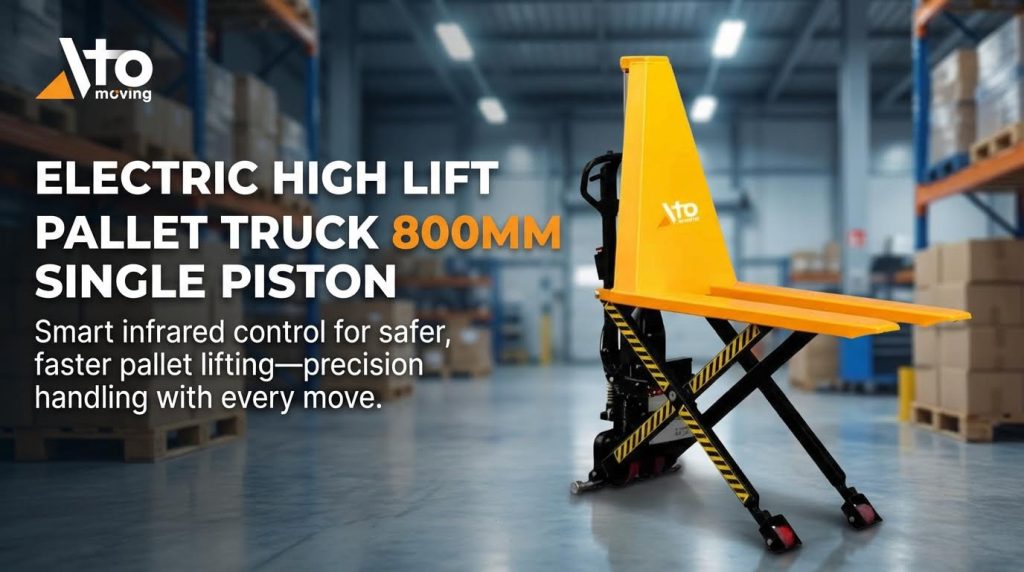
Operating conditions narrow the choice of what is the machine that lifts pallets safely. Temperature is a key factor. Manual pallet jacks and stackers with suitable hydraulic oil can work down to about −25 degrees Celsius, but lift speed drops. Electric trucks and stackers rely on batteries and electronics, so cold stores often need insulated or heated battery packs and low-temperature hydraulic fluids. At around −15 degrees Celsius, standard electric units may need upgrades to maintain performance and battery life.
Moist or corrosive settings push engineers toward stainless steel or galvanized designs. In food, beverage, and pharmaceutical sites, smooth welds and closed sections prevent product build-up and allow wash-down. Stainless steel pallet trucks and stackers handle aggressive cleaners and meet hygienic expectations when paired with food-grade lubricants. For dusty or explosive atmospheres, sealed bearings, anti-static wheels, and possibly explosion-protected electrics are important.
Vertical pallet lifts in outdoor or semi-outdoor use need weather protection. Designers must consider wind, rain, and temperature swings for guards, sensors, and drive systems. Enclosures, roof covers, and drainage keep platforms and controls reliable. Engineers should align equipment choice with site cleaning methods. High-pressure wash-down demands higher ingress protection ratings and corrosion-resistant materials across forks, masts, and chains.
Safety Standards, Ergonomics, And Compliance
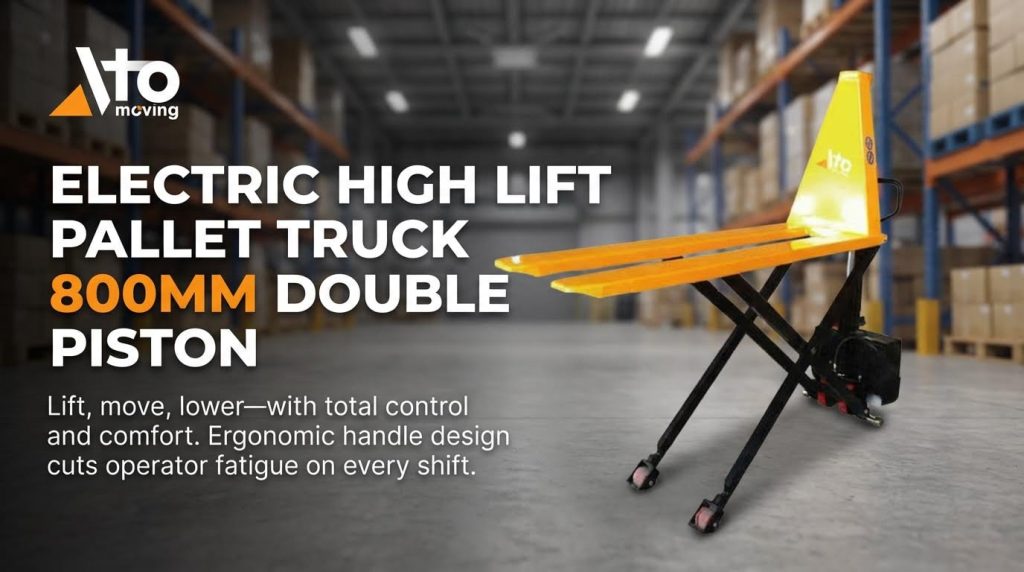
Safety and ergonomics complete the performance picture for machines that lift pallets. Vertical pallet lifts and VRCs fall under conveyor and material lift standards such as ASME B20.1. They require interlocked gates, guarded pinch points, and rated safety factors on cables, chains, and platforms. Forklifts, electric stackers, and pallet jacks must meet regional machinery and truck standards, plus local occupational safety rules on training, inspections, and load handling.
Ergonomics affects both risk and throughput. Manual pallet jacks and hand stackers demand push, pull, and pump forces that rise with load and floor condition. They suit light to medium loads and limited daily cycles. Electric pallet trucks and stackers add powered lift and drive, which cuts strain and lowers injury rates from overexertion. Features like low-effort tillers, proportional lift controls, and stable platforms help operators work longer without fatigue.
Key safety design points include:
- Clear rated-capacity markings at given lift heights.
- Parking brakes or chocks on slopes and docks.
- Emergency stop and dead-man controls on powered units.
- Good visibility around masts and guards.
Vertical pallet lifts often integrate light curtains, mechanical locks, and overload detection. These controls reduce fall risks and prevent movement with open gates. A structured inspection and maintenance plan keeps all pallet-lifting machines within their designed performance and compliance envelope over the full life cycle.
Choosing Between Manual, Electric, And Automated
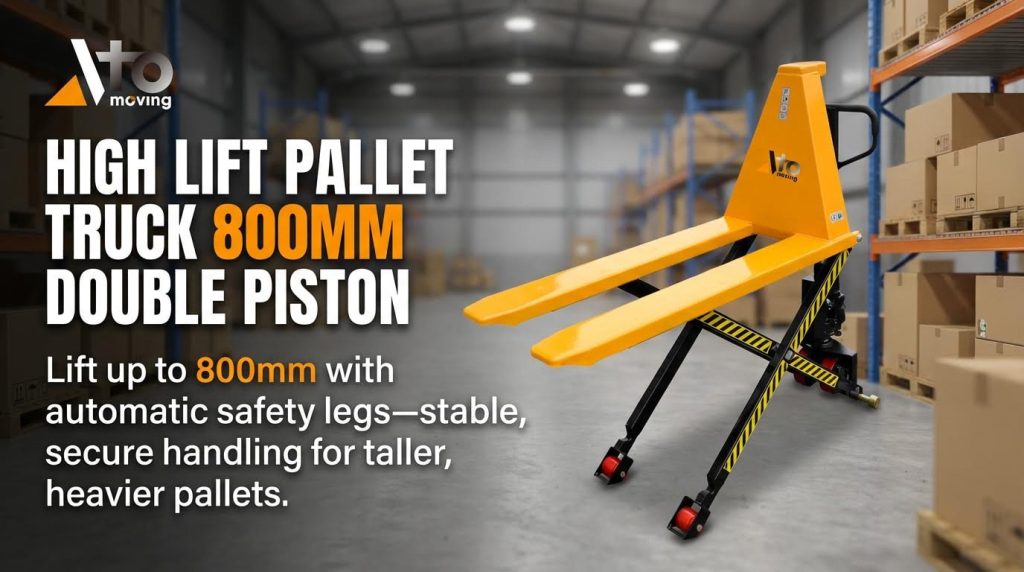
Engineers comparing machines that lift pallets must match power level to task profile. The core choice is between manual, electric, and automated pallet-handling systems. Each option changes lifecycle cost, labor needs, and the answer to a common query: what is the machine that lifts pallets most efficiently for a given site. The sections below give a structured way to decide.
Lifecycle Cost And ROI Calculations
Lifecycle cost starts with capital price, then adds labor, energy, and maintenance. Manual pallet jacks and hand stackers usually cost a fraction of electric stackers, often near one-fifth if labor is excluded. However, electric units can cut labor hours sharply in multi-shift work, which changes ROI.
When you ask what is the machine that lifts pallets with best payback, you must model full cycles. A simple comparison framework helps:
- Manual: lowest purchase cost, near-zero energy cost, higher labor minutes per pallet.
- Electric: higher purchase cost, battery and service cost, lower labor per move.
- Automated: highest capital, lowest direct labor, extra spend on controls and IT.
Case data showed electric stackers saving about $30,000 per year in labor in two-shift use. In that scenario, payback dropped below one year, even with higher capital cost. For low-throughput sites, manual units often keep the lowest five-year total cost of ownership because labor is not fully utilized.
Throughput, Labor Intensity, And Shift Patterns
Throughput targets and shift patterns usually drive the power choice. Manual pallet jacks and hand stackers suit up to roughly 60 pallets per day on a single shift. Cycle times were about 55 seconds to reach a 2.7 metre rack at full load, which limits sustainable moves per hour.
Electric pallet trucks and stackers run faster and keep speed late in the shift. Typical lift speeds around 0.12 metres per second and single-operator use support around 180 pallets per day. They also reduce physical strain, which lowers fatigue-related errors and injury risk.
Automated options, such as stacker cranes or conveyor-fed palletizers, support high and stable throughput over 24 hours. These systems match plants that run three shifts and need predictable output. For operations that often ask what is the machine that lifts pallets with minimal staff increase, automation becomes attractive once volume and labor cost cross,
Frequently Asked Questions
What is a machine that lifts pallets called?
A machine that lifts pallets is commonly referred to as a forklift or pallet jack, depending on its design and use case. Forklifts, also known as lift trucks, are versatile machines used in warehouses, distribution centers, and construction sites to move heavy loads with precision. Forklift Types Guide.
- Forklifts: Ideal for lifting and stacking heavy pallets at various heights.
- Pallet Jacks: Best suited for ground-level movement of lighter pallets in smaller spaces.
What types of machines are used to lift and move pallets?
Several types of machines are designed to lift and move pallets, including counterbalanced forklifts, reach trucks, stackers, and powered pallet jacks. These machines operate using hydraulic forks to lift, carry, and stack pallets efficiently. Powered pallet jacks, also called electric pallet trucks, are motorized for handling heavier and stacked pallets. Pallet Equipment Overview.
- Counterbalanced Forklifts: For heavy loads and high stacking.
- Reach Trucks: Designed for narrow aisles and high racking systems.
- Powered Pallet Jacks: For moving pallets at ground level in tight spaces.