Operations teams asking what lifts loads onto pallets now face a wide range of machine options. This article maps out the full landscape, from high‑throughput robotic palletizers to forklifts, reach trucks, pallet jacks, and ergonomic pallet positioners.
You will see how core machine types compare on payload, lift height, and maneuverability, then how design and selection criteria such as load characteristics, stability, and ergonomics guide the right choice. Later sections explain how automation and digital tools integrate palletizers with conveyors and warehouse systems, and how simulation, AI maintenance, and cobots support retrofit projects in tight spaces. The final summary links these ideas so engineers can match each palletizing need with the most suitable machine architecture.
Core Machine Types For Pallet Loading
When engineers ask what lifts loads onto pallets, they usually mean four machine families. Each group suits different load sizes, cycle times, and layouts. This section compares robotic palletizers, industrial trucks, walkie equipment, and pallet positioners from a mechanical and operations view. It helps you map machine types to product mix, aisle width, and ergonomic targets.
Robotic Palletizers And Cobots
Robotic palletizers answered the question of what lifts loads onto pallets in high-throughput lines. Typical payloads range from about 30 kg for lighter boxes up to about 800 kg for heavy units, depending on robot size. Cycle rates often reach about 30 cases per minute in well-engineered cells. Robots stack boxes, bags, drums, or buckets using tailored end-of-arm tools.
Modern palletizing cells often use vision systems and sensors. These systems identify SKUs and guide pick and place paths. A single robot can build different pallet patterns on multiple stations in one cell. This improves line flexibility when product sizes or case counts change.
Key engineering advantages include:
- Compact footprint compared with long manual lines.
- Consistent layer quality and tight pattern repeatability.
- Easy reprogramming for new SKUs or pallet formats.
Cobots target slower, mixed-product tasks. They work near people with reduced speeds, force limits, and safety-rated stops. Cobots suit low to medium throughput where frequent changeovers and small batches dominate. They help facilities automate without major guarding or layout changes.
Forklifts, Reach Trucks, And Turret Trucks
Forklifts remain the most common answer to what lifts loads onto pallets in warehouses. They move full pallet loads between docks, buffer areas, and racking. Standard counterbalance trucks handle typical pallet weights in the 1 000 kg to 2 500 kg range. Mast designs support lift heights from low staging up to multi-level racking.
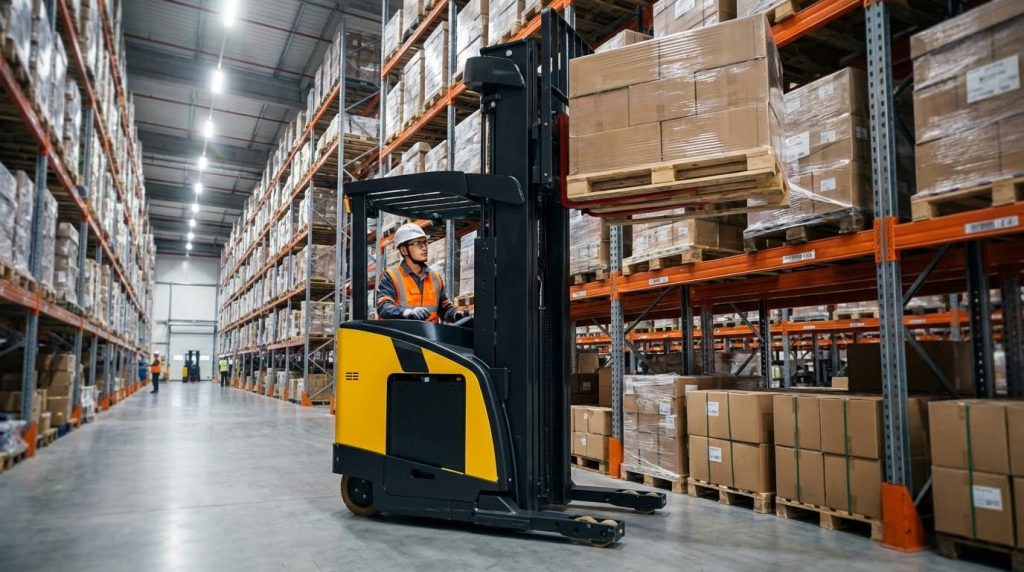
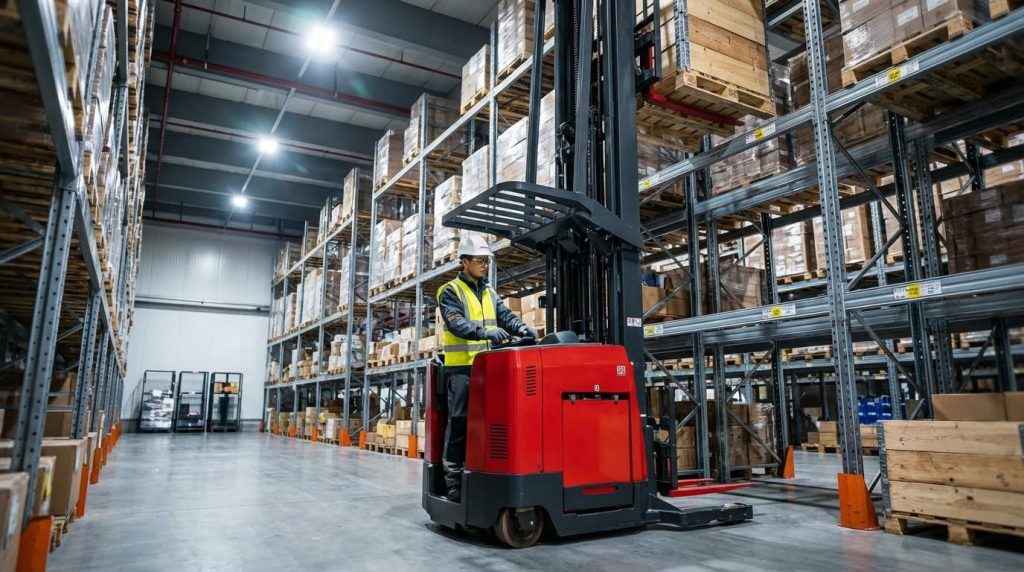
Reach trucks add pantograph or moving mast mechanisms. These allow the carriage to extend into racks while the truck body stays in the aisle. High-capacity reach trucks can lift loads well above 10 m, while still keeping cycle times competitive. Stability systems, four-point chassis designs, and rigid mast frames reduce sway at height.
Very narrow aisle turret trucks use rotating and articulating fork carriages. They place or retrieve pallets from both sides of an aisle without turning the truck. Typical systems work in aisles only slightly wider than the pallet. Guidance systems, such as wire or rail, keep the truck centered and protect racking.
When selecting industrial trucks engineers compare:
- Rated capacity at maximum lift height.
- Aisle width and turning radius.
- Battery runtime, regenerative lowering, and energy use.
- Operator visibility and assist functions for high-bay work.
Pallet Jacks, Stackers, And Walkie Equipment
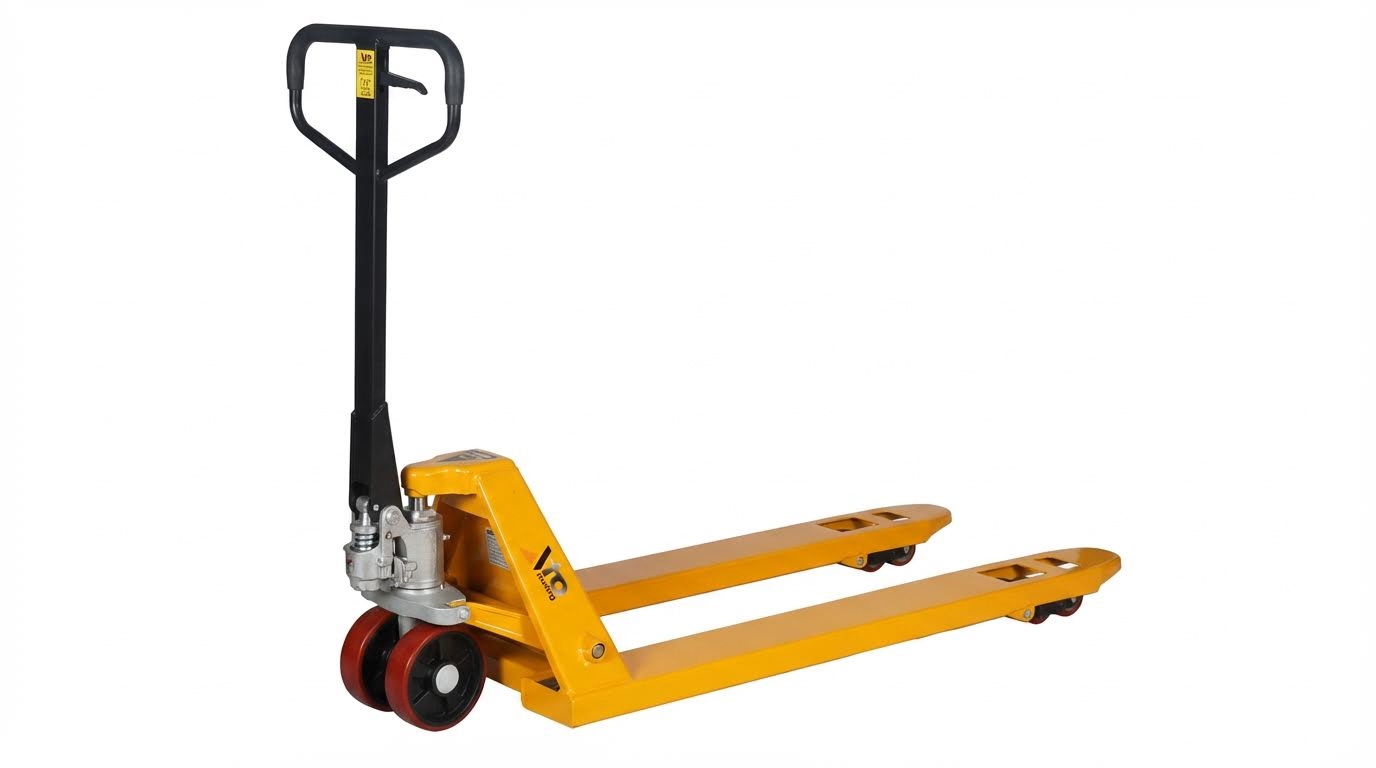
Pallet jacks and walkie stackers handle what lifts loads onto pallets at floor level and low heights. Hand pallet trucks typically move 1 000 kg to 3 000 kg over short distances. They rely on manual push or pull and a small hydraulic pump in the tiller. Their compact frames suit trailers, small stores, and tight production cells.
Electric pallet jacks add powered drive and lift. This reduces operator effort and improves speed on longer runs. Advanced units slow automatically on sharp turns to keep loads stable. Typical lift height only clears the floor enough for travel, not for stacking into racks.
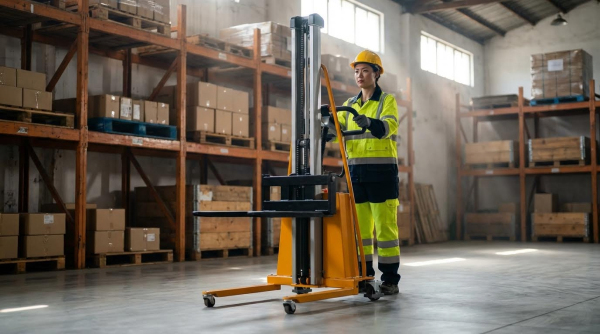
Walkie stackers extend that concept with taller masts. They can raise crates, bins, or pallets to about 1,5 m to 3 m, depending on model. Options include manual foot pump, AC or DC electric lift, or air-over-oil systems. Narrow chassis versions work between close-spaced machinery or in small storerooms.
Engineers usually apply these machines when:
- Throughput is moderate and aisles are narrow.
- Full-size forklifts are not economical or safe.
- Loads are lighter and lift heights are modest.
They also serve as backup equipment when primary lift trucks are offline. Proper selection considers load weight, fork length, wheel materials, and floor condition.
Pallet Positioners, Lifts, And Ergonomic Aids
Pallet positioners close the gap between lifting and safe manual handling. They do not move pallets across the plant. Instead, they keep the working height and reach distance within ergonomic limits. That directly reduces back bending and twisting during loading or unloading.
Self-leveling positioners raise or lower as the load changes. Spring, pneumatic, or weight-sensing mechanisms keep the top case near waist height. Many platforms rotate 360 degrees, so workers can stand in one place and build layers by turning the pallet. This improves cycle time and reduces fatigue.
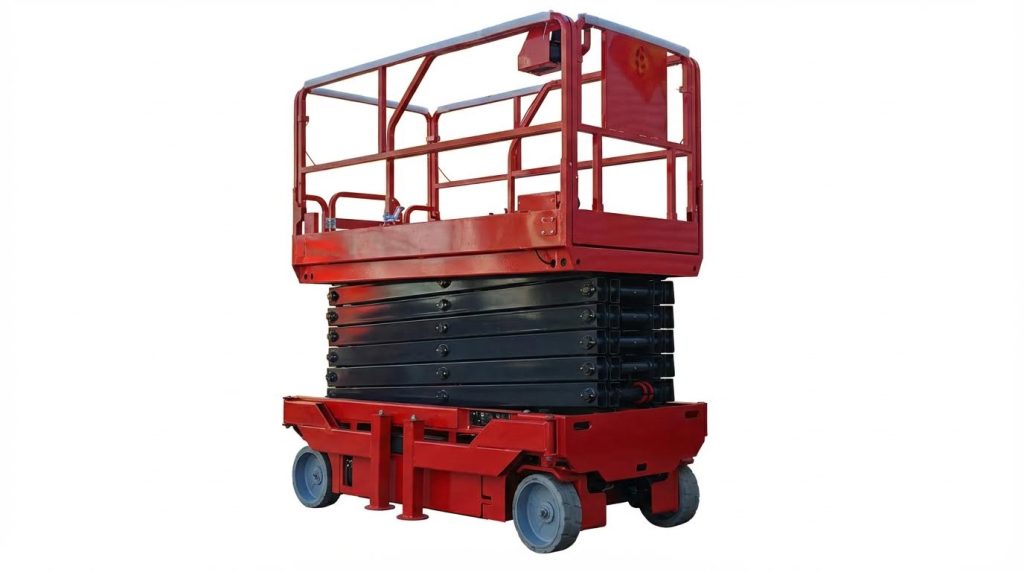
Powered pallet lifts and scissor tables use hydraulic or pneumatic drives. Operators adjust height with a control pendant or foot switch. These units handle mixed box weights and irregular layer patterns better than fixed-rate self-leveling designs. Stainless steel versions suit washdown or corrosive environments.
Key use cases include:
- End-of-line packing and manual pallet building.
- Rework stations and quality inspection areas.
- Cell-based assembly where pallets serve as movable work surfaces.
Engineers often pair positioners with simple transport devices. Examples include pallet jacks or small conveyors. This combination keeps heavy lifting mechanical while preserving human dexterity for complex packing tasks.
Design And Selection Criteria For Palletizing
Engineers who ask what lifts loads onto pallets need clear selection rules. Design choices must match load, cycle rate, and operator risk. This section explains how to size and specify palletizers, lift trucks, and positioners for safe and efficient pallet loading. It links mechanical limits, stability, tooling, and ergonomics into one selection framework.
Load Characteristics, Throughput, And Duty Cycle
Start with the unit load. Define mass, footprint, center of gravity, and packaging stiffness. Palletizing robots in industry handled payloads from roughly 30 kg up to 800 kg. Typical pallet jacks, stackers, and reach trucks handled loads from roughly 700 kg to over 2,000 kg. Always keep a clear safety margin between rated capacity and worst‑case load.
Throughput drives the choice of what lifts loads onto pallets. A manual pallet jack might support a few pallet moves per hour. A palletizing robot could place up to about 30 boxes per minute on a pallet. High‑capacity reach trucks with fast lift and travel cycles increased pallet moves per hour in racked storage.
Duty cycle matters for component life and energy use. Define shifts per day, operating hours, and average load. For continuous end‑of‑line palletizing, prefer robots or fully powered trucks with regenerative lowering and efficient control systems. For intermittent loading, lighter electric pallet jacks or walkie stackers often give lower lifecycle cost.
Use a simple comparison table during selection:
| Machine type | Typical payload range | Best use case |
|---|---|---|
| Robotic palletizer | 30–800 kg per pick | High throughput, fixed line |
| Reach / turret truck | Up to ~2,000 kg per pallet | High racking, narrow aisles |
| Walkie / stacker | ≈500–1,800 kg | Short moves, light stacking |
| Pallet positioner | Full pallet on top | Ergonomic loading |
Stability, Mast Design, And Lift Height Limits
Stability defines safe lift height. Every truck that lifts loads onto pallets uses a stability triangle and a rated capacity curve. As lift height increases, allowable load decreases. High‑reach trucks in industry lifted up to about 13.7 m but only at reduced capacity. Engineers must match rack beam height to the truck’s capacity at that height, not at ground level.
Mast design controlled sway and operator confidence. Heavy‑duty mast frames with boxed sections and four‑point stability reduced lateral movement at height. Features such as mono‑mast or deep mast rails improved torsional stiffness. Less sway meant faster, safer pallet storage and retrieval in narrow aisles.
When comparing options, review:
- Rated capacity at maximum height.
- Mast deflection limits under full load.
- Visibility through or around the mast.
- Available stability or traction control systems.
Very narrow‑aisle turret trucks often used guidance systems and stability monitoring. These systems helped maintain safe travel speed and lift limits in tall racking. For floor‑level palletizing, stability concerns shifted to level floors, tire choice, and controlled acceleration and braking.
End‑Of‑Arm Tooling And Pallet Pattern Flexibility
For robotic systems that lift loads onto pallets, end‑of‑arm tooling (EOAT) determines what products can be handled. EOAT designs included vacuum plates, mechanical grippers, bag clamps, fork tools, and hybrid grippers. Industry systems handled boxes, bags, buckets, drums, canisters, batteries, and plastic containers with the correct tooling. The goal was secure grip with minimal product damage.
Pallet pattern flexibility affected both throughput and changeover time. Modern palletizing cells supported multiple SKUs on the same line. Vision systems identified each SKU and guided the robot to the correct pallet. Software allowed quick switching between patterns and layer schemes.
When specifying EOAT, engineers should check:
- Payload and moment limits at the robot wrist.
- Grip force versus packaging strength.
- Changeover time between SKUs or formats.
- Ability to pick single units or full layers.
Simulation tools for palletizing let designers test hundreds of unit load patterns in 3D before installation. This reduced commissioning time and ensured that reach, clearances, and layer stability were acceptable. It also helped verify that conveyors, pallet dispensers, and sheet applicators aligned with the robot work envelope.
Ergonomics, Safety Standards, And Risk Reduction
Ergonomics is central when deciding what lifts loads onto pallets. Poor layout forces bending, twisting, and reaching. Pallet positioners and lift tables keep the work zone near elbow height. Self‑leveling positioners raised or lowered the pallet as layers changed. Some models rotated 360 degrees so workers did not walk around the pallet.
Manual and powered pallet trucks used shaped tillers and low rolling resistance wheels to cut effort. Narrow and reach trucks offered seated or standing cabs, adjustable controls, and clear mast views. Touchscreen displays and simple control handles reduced cognitive load. These features lowered fatigue and error rates in multi‑shift operations.
Safety standards required guarding, interlocks, and emergency stops around robotic palletizers. Risk assessments considered crushing, impact, and fall hazards. For trucks, features such as operator presence sensors, speed reduction in corners, and overload protection reduced incident risk. Guidance systems and location‑based speed control added further protection in narrow aisles.
Practical risk reduction steps include:
- Match equipment to floor condition, gradients, and aisle width.
- Limit manual lifting by combining trucks with pallet positioners.
- Train operators on rated capacities and height limits.
- Use visual markers for safe pallet stack heights and travel paths.
Well‑chosen machines, combined with ergonomic aids, cut musculoskeletal injuries and unplanned downtime while maintaining high palletizing throughput.
Automation, Integration, And Digital Technologies
Automation changed how plants decide what lifts loads onto pallets and how they control that process. Modern palletizers, forklifts, and positioners now connect to conveyors, sensors, and warehouse software instead of working as stand‑alone units. This section explains how integrated systems improve throughput, layout use, and lifecycle cost. It focuses on digital tools that help engineers match machine choice to pallet patterns, SKUs, and space limits.
Integrating Palletizers With Conveyors And WMS
Engineers who ask what lifts loads onto pallets in high‑volume lines usually start with robotic palletizers tied to conveyors and a warehouse management system (WMS). Conveyors meter cartons or bags to the palletizer at steady pitch, while sensors track gaps and orientation. High‑capacity palletizing robots can handle payloads from roughly 30 kg up to about 800 kg, so the infeed and pallet conveyors must match this range.
WMS integration assigns SKUs to pallet IDs and target patterns. The palletizer then stacks mixed SKUs by reading barcodes or using vision guidance. A typical design links:
- Infeed conveyors for cases, bags, or buckets
- Interleaf or slip‑sheet dispensers
- Pallet dispensers and pallet conveyors
- Stretch wrapper or labeling stations
Robotic cells often reach up to about 30 cases per minute, depending on pattern and tooling. When linked to WMS, the cell can switch recipes automatically as orders change, without manual re‑teaching. That flexibility reduces changeover time and helps balance line speeds between upstream packing machines and downstream shipping docks.
Simulation, Digital Twins, And Layout Validation
Simulation tools help engineers test what lifts loads onto pallets before installing hardware. Software such as dedicated palletizing cell simulators lets users model robots, conveyors, pallet magazines, and safety fencing in 3D. They can generate hundreds of unit load patterns and check reach limits, interference, and cycle times.
Digital twins go further. They mirror live sensor data, WMS orders, and robot states in a virtual model. This approach supports layout validation for narrow aisles, low ceilings, or shared conveyors. Engineers can compare options such as:
| Design choice | Impact checked in simulation |
|---|---|
| Robot reach vs. pallet position | Collision risk, joint limits, cycle time |
| Conveyor accumulation length | Starvation or blocking at palletizer |
| Pallet pattern and layer count | Stability, load height, wrap coverage |
| Forklift interface zones | Aisle safety, waiting time, throughput |
Validated layouts reduce commissioning time and change orders. They also help justify capital spend by showing how a given cell will meet required pallets per hour under realistic order mixes.
AI Maintenance, Energy Use, And Lifecycle Cost
Once engineers choose what lifts loads onto pallets, lifecycle cost often exceeds the purchase price. AI‑supported maintenance uses data from drives, encoders, and hydraulic or pneumatic systems to predict failures before they stop the line. Typical monitored signals include motor current, temperature, vibration, and cycle counts for critical joints or lift cylinders.
Energy use is another key factor. Electric palletizers and reach trucks now use regenerative lowering to feed energy back into batteries when loads travel down. This feature extends shift life and reduces battery changes. For a full cost view, teams compare:
- Energy per pallet moved
- Planned vs. unplanned downtime hours
- Spare part consumption rates
- Labor hours per shift for supervision and rework
AI tools can rank root causes of stops, such as misaligned cases on conveyors or unstable pallet patterns, and propose parameter changes. Over time, this reduces maintenance interventions and improves overall equipment effectiveness without major hardware changes.
Cobots, Space Constraints, And Retrofit Projects
When space is tight, cobots and compact palletizers often answer the question of what lifts loads onto pallets. Cobots work at lower speeds and payloads than large industrial robots but fit into small footprints and can sit at the end of existing conveyors. They suit payloads where manual lifting would exceed ergonomic limits yet do not justify a large cell.
<p,
Frequently Asked Questions
What machine lifts loads onto pallets?
A pallet jack, also known as a pallet truck, is commonly used to lift and move pallets. It’s ideal for transporting conventional loads on pallets and skids in various environments. Pallet Jack Guide.
How does a pallet jack work?
A pallet jack uses hydraulic power to lift pallets off the ground. The operator pumps the handle to raise the forks and then moves the pallet to the desired location. Pallet jacks are especially useful in tight spaces where larger forklifts cannot operate. Pallet Jack Details.
What safety tips should be followed when lifting heavy pallets?
When lifting heavy pallets, it’s important to use proper techniques to avoid injury:
- Use your feet as base support by placing them shoulder-width apart.
- Keep your upper back straight to maintain a neutral posture.
- Avoid twisting your body while lifting.
What other equipment can be used to lift pallets in a warehouse?
Order pickers are another type of material handling equipment used in warehouses. They help pick and transport items from shelving or pallet racking to fulfill orders. Technically, they are a specialized type of forklift designed for high-reaching tasks. Order Picker Overview.